Media Briefing: Understanding Trump’s UNGA Speech
Event date
Speakers
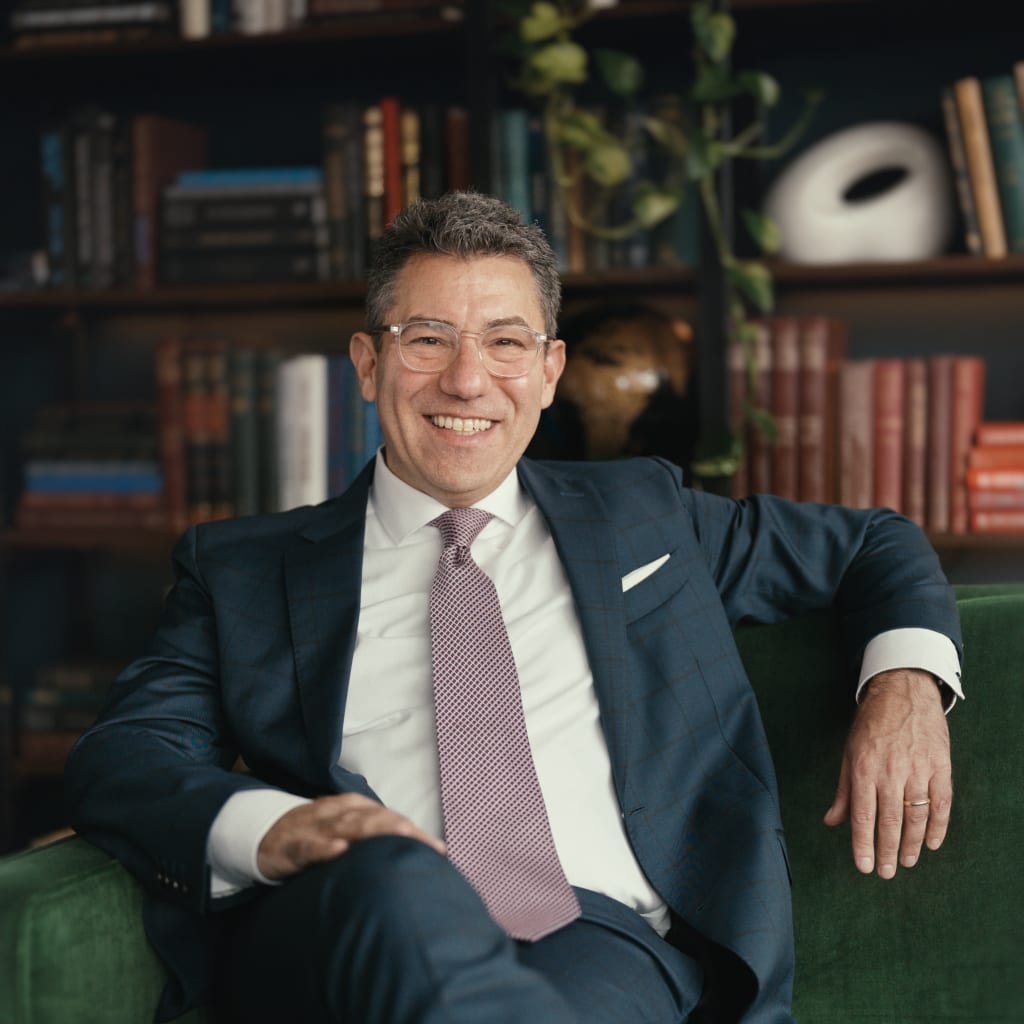 Steven A. CookCFR ExpertEni Enrico Mattei Senior Fellow for Middle East and Africa Studies, Council on Foreign Relations
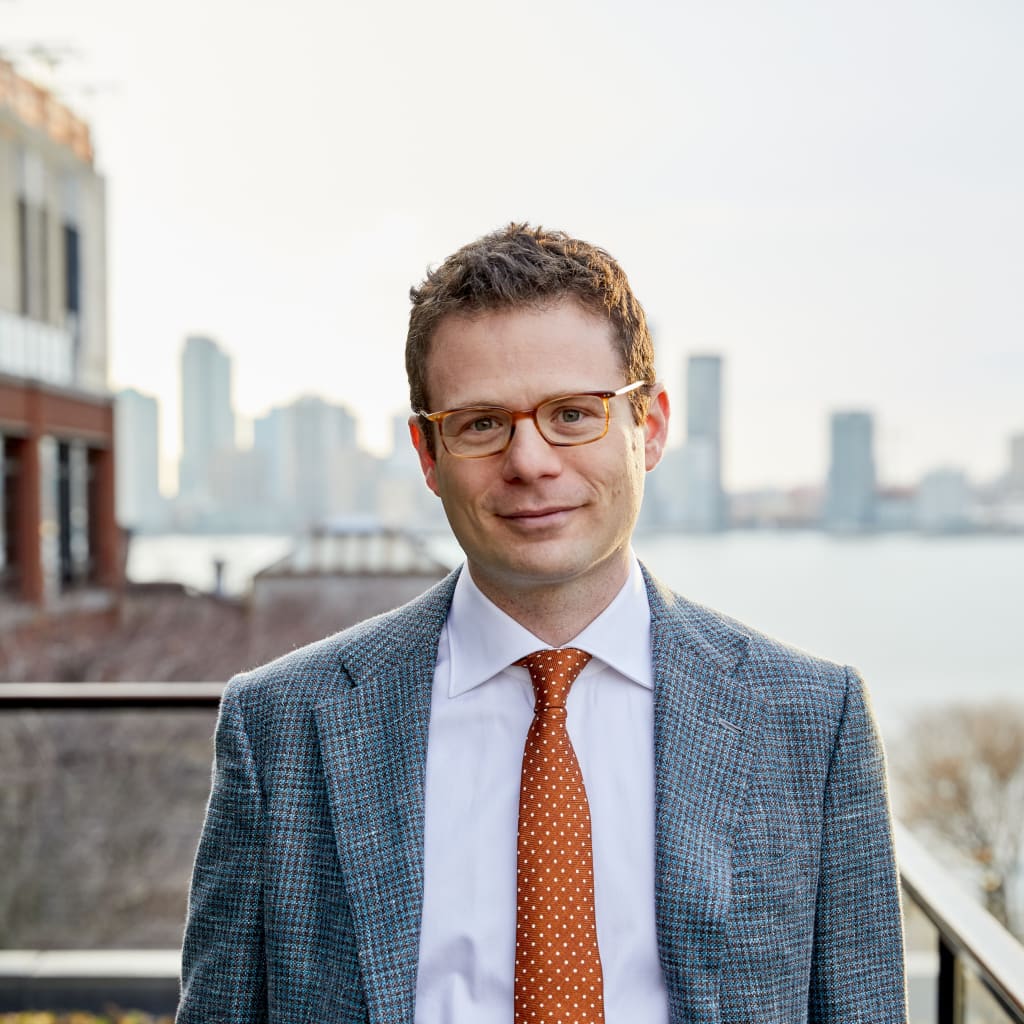 Edward FishmanCFR ExpertSenior Fellow and Director of the Maurice R. Greenberg Center for Geoeconomics, Council on Foreign Relations
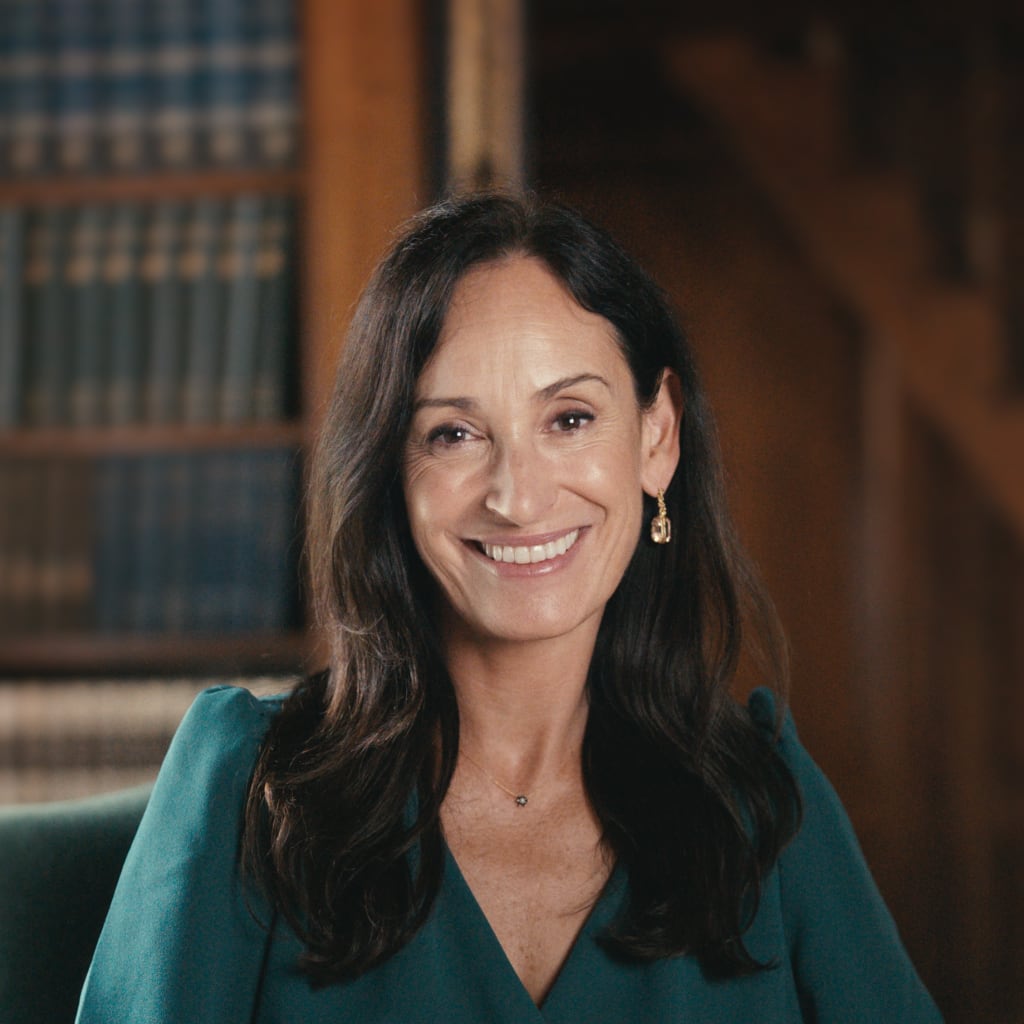 Shannon K. O'NeilCFR ExpertSenior Vice President of Studies and Maurice R. Greenberg Chair, Council on Foreign Relations
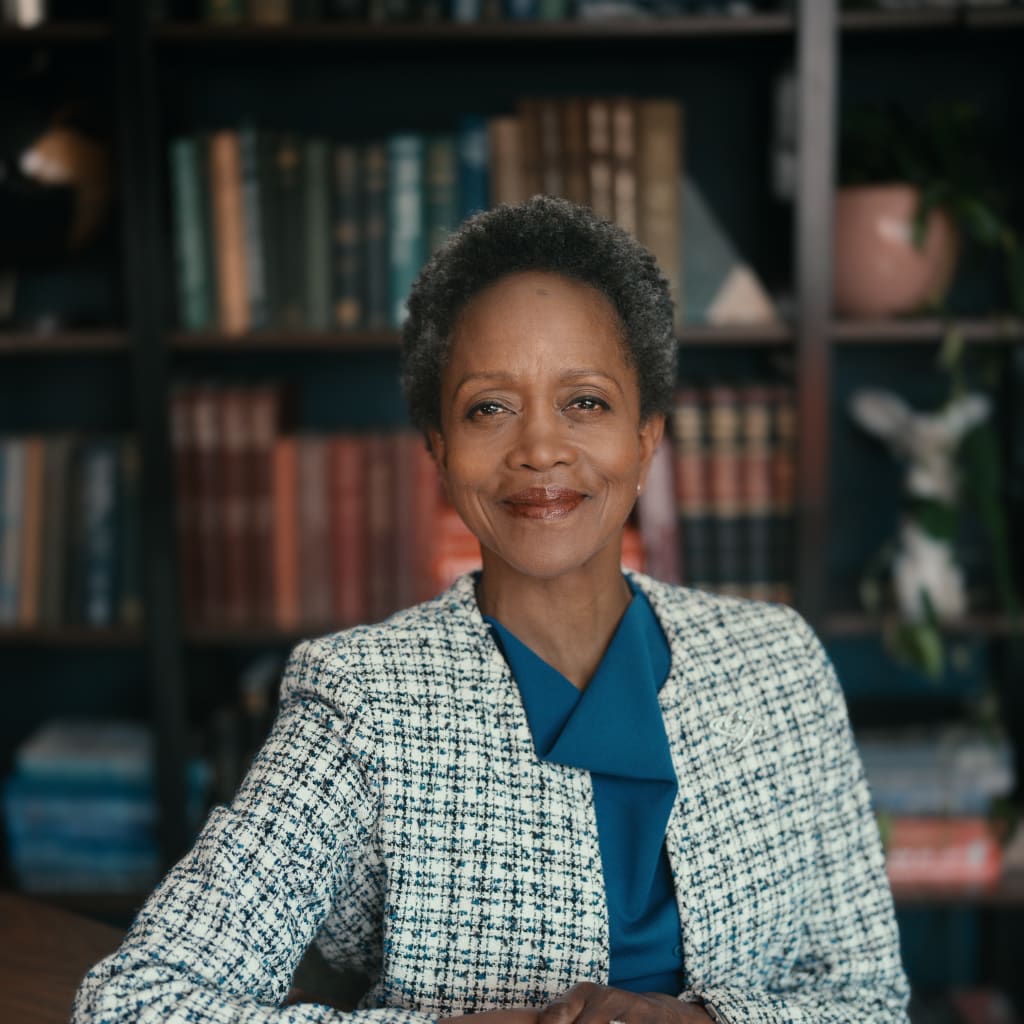 Esther BrimmerCFR ExpertJames H. Binger Senior Fellow in Global Governance, Council on Foreign Relations
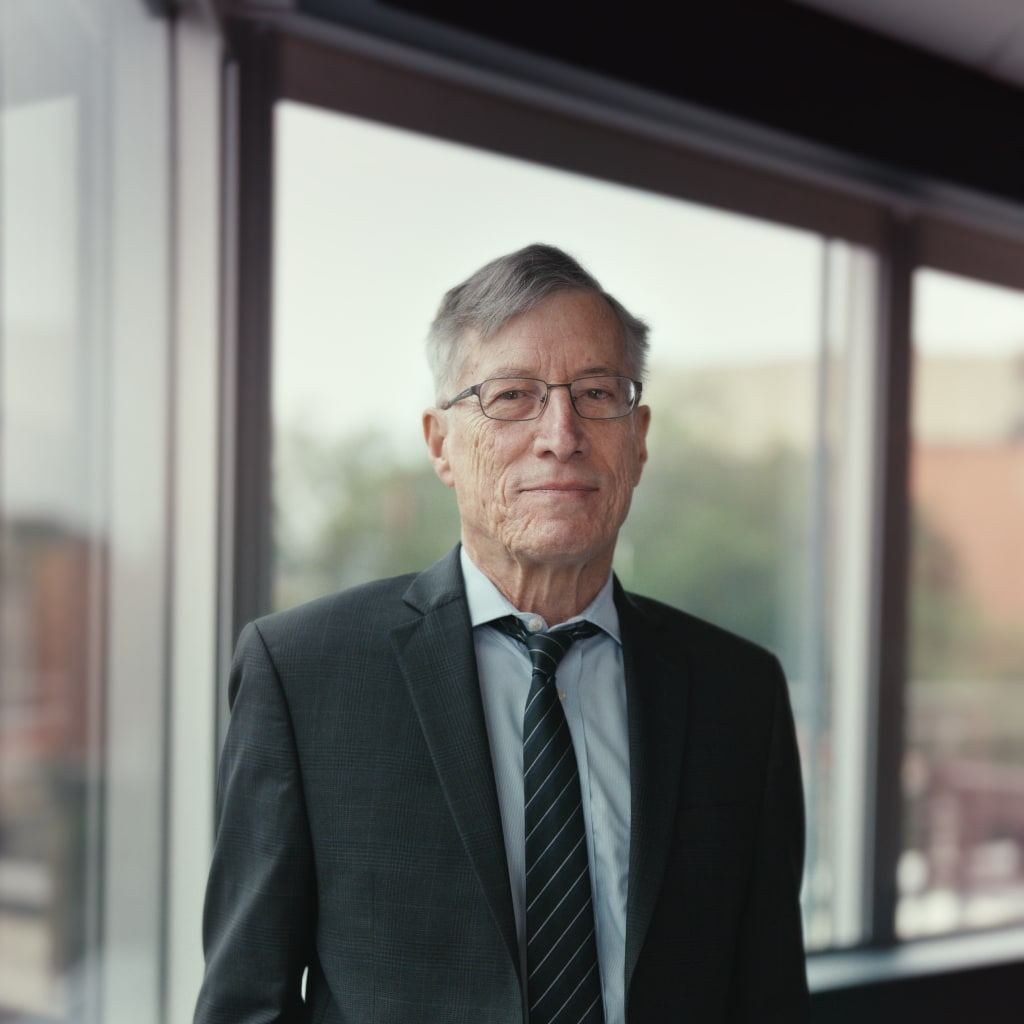 Stephen SestanovichCFR ExpertGeorge F. Kennan Senior Fellow for Russian and Eurasian Studies, Council on Foreign Relations
 Jessica BrandtCFR ExpertSenior Fellow for Technology and National Security, Council on Foreign Relations
Presider
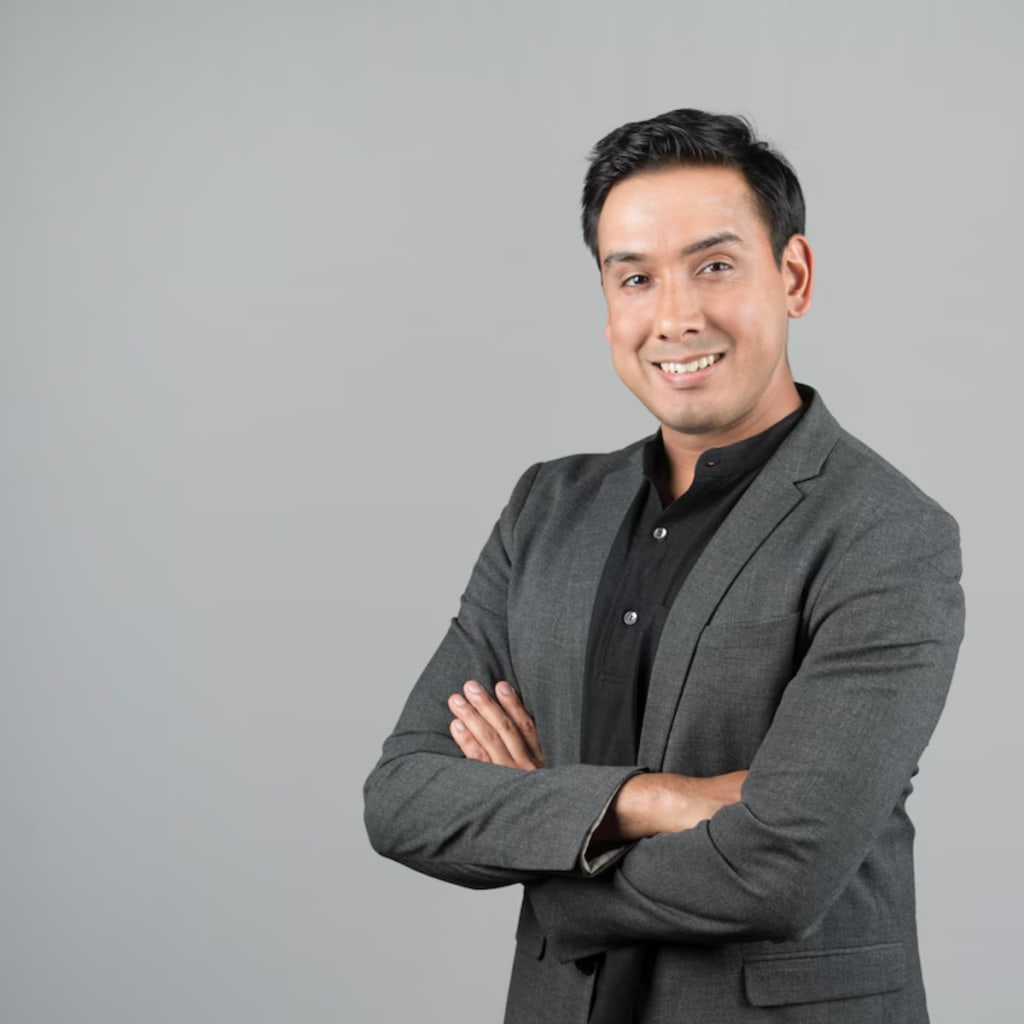 Ishaan TharoorCFR ExpertEdward R. Murrow Press Fellow, Council on Foreign Relations
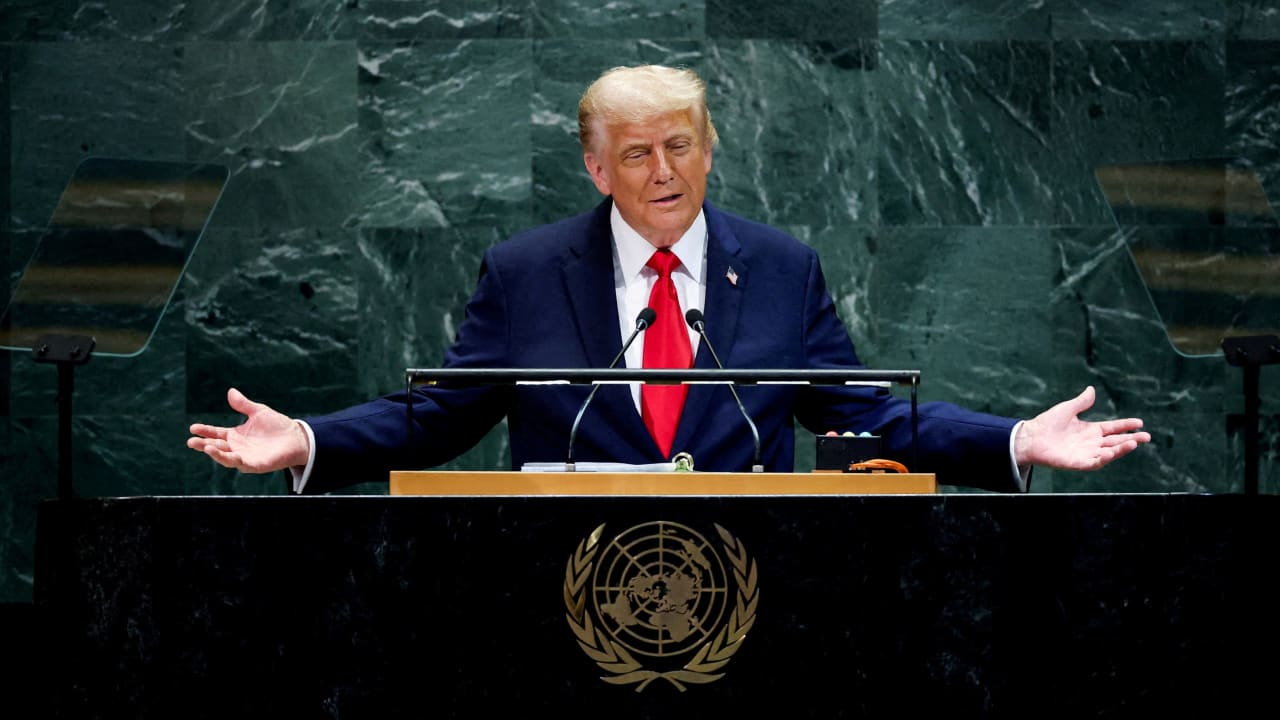
CFR experts will analyze President Donald Trump’s speech to the UN General Assembly on Tuesday, September 22, and discuss how it will shape further dialogue on geopolitics and geoeconomics.
CHANG: Good afternoon, everyone, and welcome to today’s Council on Foreign Relations briefing on President Trump’s remarks to the U.N. General Assembly this morning. My name is Ben Chang, and I’m the vice president of global communications here at CFR.
The contents of this discussion and Q&A will be on the record and a recording of this will be posted online at the conclusion of the briefing. This briefing is a part of the Council’s ongoing mission to inform U.S. engagement in the world, work that also includes the analysis and resources posted across our channels, including on ForeignAffairs.com and CFR.org. There’s a lot to unpack today and we wanted to give you our first take and analysis of what the president said, or didn’t say, and its impact on geopolitics and geoeconomics.
Thanks very much to our array of speakers, our CFR fellows, today. And let me now hand this off to our Edward R. Murrow Press Fellow Ishaan Tharoor.
THAROOR: Thank you, Ben. And good afternoon to all of you joining our call. It’s a pleasure to be here. Yes, I’m the Edward Murrow press fellow this year at CFR, and I’m also a columnist at the New Yorker. And I’m joined by a terrific cast of CFR experts, who I’ll introduce very briefly. We have Steven Cook, senior fellow for Middle East and Africa Studies. Edward Fishman, senior fellow for geoeconomics. Shannon O’Neil, senior vice president for studies. Esther Brimmer, senior fellow on global governance. Stephen Sestanovich, senior fellow for Russian and Eurasian studies. And Jessica Brandt, senior fellow in technology and national security.
We’ve heard now President Trump go to the marble dais of the General Assembly, I think, six times now. I would say, this iteration of his speech was among the more low-energy offerings we’ve had. But of course, it was not short of incident and detail and moments that have been already memed on social media. And to talk through this I think we have a tremendous body of experts here to help us pick through some of the different elements of it.
What did we hear? We heard his usual recitation of his domestic triumphs. We heard his perception of how great the economy is, how things are happening that we’ve never seen before on various fronts—be it NATO, or the American economy, or what have you. A bit of triumphalism around what he’s achieved in Venezuela, with the removal of Nicolas Maduro. Some more saber rattling toward Iran, which, of course, he has engaged in a pretty harrowing and ruinous sort of standoff for the last half a year over the Strait of Hormuz. And then bits and bobs of other parts of American foreign policy surfaced in this conversation, as well as a quite scathing attack on the U.N. system from as he put it, sort of its globalist, quote/unquote, “far left” agendas that we see in various agencies and bodies of the U.N. system, whether it’s UNESCO or the Human Rights Council.
And so these are familiar attacks. But there were quite concentrated attacks in this speech. And we are also now in a very critical moment for the U.N. And so I’d like to start with Esther. Obviously, this is the last year of Antonio Guterres’ tenure as—decade as the secretary-general. The U.N. is facing all sorts of funding issues, though hopefully some of that’s being ameliorated by the U.S. paying back some of its—some of the dues that it owes. What did you hear in this speech? And when you think about all the kind of chin-stroking anxiety that we have about the global order right now, and what Trump has done to our sense of the postwar order, what did you hear today at the U.N.? And what do you think the conversation is like in Turtle Bay in reaction?
BRIMMER: So it’s good to have this conversation with all of my colleagues. I look forward to the discussion today, and with all of our members joining us on the—in this hybrid meeting.
So, in terms of a first take, it was interesting to see which United States appeared. On any given speech by a president at the opening of the General Assembly, you’ll see a different face. Sometimes it’s the engaged United States. Sometimes it is the powerful United States. And sometimes it is the disgruntled United States. All of those are valid. This time, I was actually surprised that we heard the sort of powerful peacemaker image, that compared to previous speeches, you could argue that there’s always a lot of vinegar, but there wasn’t as much as one would have expected. And in a sense, he wanted to say the United States has done all these wonderful things, and is therefore the decision maker. And he really was talking about what role he saw for his policymaking related to Iran.
But it was interesting that he was describing a United States that’s in control of its foreign policy choices and is still a participant in the United Nations. You can recall that when he first came back into office, there was some question as to, you know, yes, the U.S. is pulling out of specific agencies, would it leave the United Nations system at all? We’re not in those days. We’re in the—we’re hearing more the, when he can use it, he will use it. When he can diss it, he will do that too. So it was interesting to say that at least he came in with a list of things he wanted—that he was—that he wanted to take credit for.
The second thing is to say that, of course, not surprisingly, we heard about his view of the role in the Western Hemisphere. And my colleagues who specialize in that area I’m sure will talk further about that. Interesting to hear the latest on the Greenland agreement. That follows a classic model, where an issue that is separate from the U.N. comes up and you use the advantage of having the spotlight to talk about what we’ve done. We’ll have to see what the content is, but it’s always nice to be able to use the U.N. podium to claim that you solved an issue—which you actually aggravated in the first place.
The other interesting thing is, again, that on the United Nations structure itself, there’s a lot of change that needs to come to this institution. And he might have gone into that. He could have talked about having eliminated 4,000 positions, and so forth. But it was interesting, he might have gone into to greater detail. I think he’s realized there are times when he needs this body. I was, again, surprised to hear him quote specific Security Council measures and thank the states for their votes. Again, on the scale, this is less scathing than one might have expected.
And then I think it’s always interesting which parts of the United Nations system that he flags. And, of course, he made a point of referring to those which I think he would feel are most offensive as an American. So one of them is the Human Rights Council. Of course, he’s never been a supporter of this particular structure of the Human Rights Council—which has its flaws. But it was interesting that that was what he cites. Of course, we’re not a party to the International Criminal Court, but his concern about the vulnerability of U.S. officials, I think, was interesting, again, that the International Criminal Court was specifically targeted. The International Maritime Organization, which actually is not an obscure organization as he—despite what he said. And the carbon tax, because obviously he’s concerned about climate change. So on the scale of presidents at the U.N., this was strong stuff. On the scale of President Trump at the U.N., this was kind of what goes for even-handed, in a very strange world these days.
THAROOR: No, that’s well put. And, yes, the culture war stuff was, of course, there. I think he said the phrase “transgender mutilization,” whatever that means, he said that three times. He did not say the word “Palestinian” once. He talked about the Board of Peace. He talked about Israel and support—and the horrors of October 7. But, Steven, I’ll turn to you. Given what we heard vis-à-vis his views on the Middle East and the region, what were your takeaways? Obviously, there was a lot of saber rattling toward Iran, but he also said that I think there’ll be a deal. What were your reactions?
COOK: Yeah. Thanks, Ishaan. It’s great to see you. And welcome to the Council. It’s great to have you here.
Look, I think you started with the Board of Peace and the Palestinians. And I think this was just sort of part of his triumphalism, the Board of Peace, and billions of dollars that are being poured into this, and only he could have gotten a ceasefire—which may or may not be true. But the fact of the matter is, is that the Board of Peace, his twenty-point peace plan, is bogged down at point 1.5, and is unlikely to move beyond that ever. And people can talk about the Israeli elections, and talk about Palestinian elections, but for all of the effort that Nickolay Mladenov has put into this, there is no movement. And this is likely where we’re going to have. So the president is really just talking, in some ways trying to jam the parties into moving. But I think it’s clear from the Israeli—both the Israelis and Hamas, that moving beyond points 1.5 is quite unlikely.
When it comes to Iran, it’s easy to kind of dash off his statement, about either there’ll be a deal or there’ll be total annihilation, as Trump bluster. He has said it before. He has backed down from annihilating Iranian civilization. I think that this is—part of it is a setup for a possible negotiation. He did go from his speech to a meeting with American partners in the Gulf. There are differences of opinion among those actors, but those who are more hawkish really don’t have the kind of power to shape events in the region, and also do not want to be hit again. So I think that there is a lot of angling and maneuvering to see, while the Iranians are in New York and the president is in New York, whether we can restart some sort of negotiation. I’m skeptical of all of it. But nevertheless, I think that there’s a lot of maneuvering that’s going on. And the kind of bluster of either a deal or annihilation, and we’ll know soon, and it won’t be the midterms, it’ll all be over, is kind of Trumpian way of setting the field for whatever he’s going to do. But I think that they’re leaning towards negotiations.
One of the things he didn’t say, besides not saying “Palestinians,” was “Bab al-Mandab.” And that is the place where the United States has come closest to escalation recently, and the president called it off even as U.S. forces were kind of loading bombs onto planes. This is an extraordinary dilemma for the United States because getting engaged in the strait and trying to move the Houthis out of these strategic locations where they can put a chokehold—and I’ll let my colleague Edward Fishman talk about that—is a very significant military undertaking that would expend a lot of munition and have uncertain results. Yet, at the same time, the president’s permanent representative to the U.N., Mike Waltz, spoke before the president in previewing the president’s speech, and talked a lot about freedom of navigation and it being a core global interest. So it’s interesting that he avoided the topic totally. He probably wants to avoid the topic because it makes for some very, very hard decisions.
Other than that, there wasn’t much else on the Middle East and nothing really tremendously of surprise. But I would watch and see what the Saudis, Emiratis, Qataris, Omanis, they’re all doing around on the sidelines of the U.N. meeting, because I think they sense an opportunity. Thanks.
THAROOR: Just a quick two-finger: Is it—is it worth noting that he offered no kind of support or outreach or name check of Prime Minister Netanyahu during the speech, given the election coming up?
COOK: I don’t know whether mentioning Netanyahu at the U.N. helps Netanyahu at all at home. And I think the president has given the prime minister a gift in basically fast-tracking $2.8 billion worth of bombs to the Israelis, which is going to be over congressional objections, and the—and the president is going to use his specific authority to get around Congress in order to complete the sale. I think the president has in a variety of ways signaled that another Netanyahu prime—turn at the prime ministry is not necessarily a bad thing from his perspective.
THAROOR: Noted. Thanks.
Edward, right after Trump, the king of Jordan came up and talked about the downstream disaster of the blockading of the Strait of Hormuz. You’re our master of the chokehold. Could you talk through what you thought when you heard Trump speaking of—about the situation and around the situation? And set the scene for us to what extent this is now a kind of hinge point in our politics globally?
FISHMAN: Yeah. Sure. Well, thank you, Ishaan, and I echo Esther’s welcoming you to the Council. It’s great to be able to work with you.
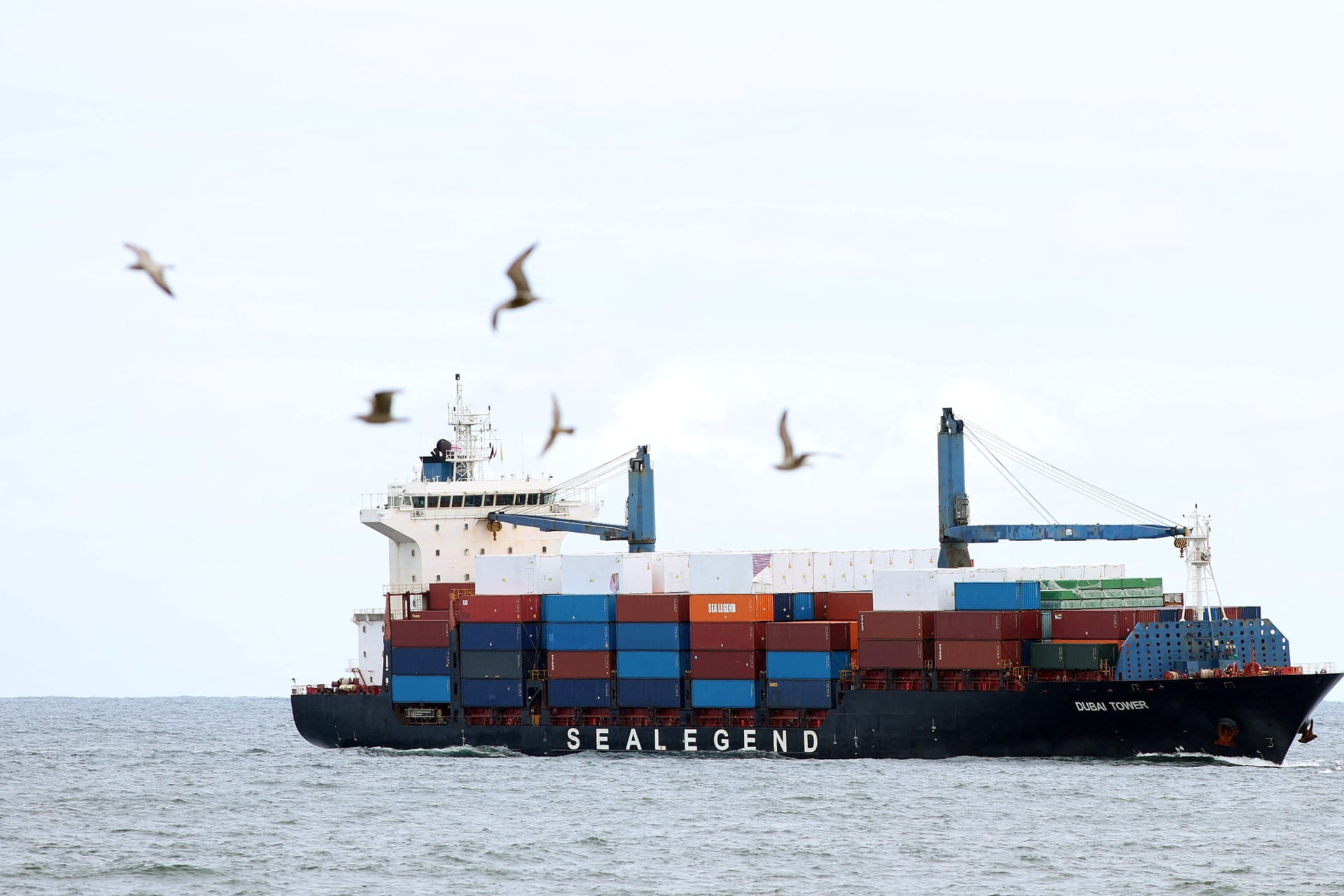
Look, I mean, if you go back to when President Trump signed the MOU with Iran in June at Versailles, I think he said that he needed to sign this MOU to avert an economic catastrophe, which effectively was an admission that Iran’s closure of the Strait of Hormuz was seriously endangering the global economy and the U.S. economy. I thought despite, Ishaan, you mentioning that Trump was a little bit lower energy than normal today, I actually think he sounded quite confident on the Strait of Hormuz. He talked about the fact that CENTCOM in recent months has facilitated the transit of over a billion barrels of oil through the strait and in many days twenty, thirty, almost forty ships through the strait. And I think while ironclad data is hard to come by, it does seem that the U.S. Navy is doing a lot better job in the last month or so of facilitating transits through the Strait of Hormuz. And in some sense that may actually shift some of the balance of leverage away from Iran and toward the United States.
I think Trump also tried to reiterate in his speech that he isn’t going to be affected by domestic political pressures. I think at one point he said that the midterm election, quote, “doesn’t even enter my mind” when it comes to Iran. I think this is a part of signaling, showing that Trump and the Trump administration does have some political will to potentially wait this out even if the Iranians are going to continue threatening commercial shipping.
The other thing that didn’t come out today but I think is relevant to this question, Ishaan, is that the Saudi government announced that the East-West Pipeline has reentered service today. This is that critical pipeline that has been used to transit Saudi oil to the port of Yanbu in the Red Sea; has been a capacity of up to 7 million barrels a day. It was put—taken offline, I think, on September 11, so about eleven days ago. If that’s accurate, and if the East-West Pipeline is already back in operation eleven days later, that’s an impressive show of Saudi’s resilience that they could restart that pipeline so quickly. I think a lot of the estimates was that it would take maybe three to five weeks. If it’s only eleven days, that’s another sign that some of this leverage that Iran has over the strait may not be quite as formidable as it was or as it looked a few months ago.
I think on the flipside, on the sanctions and economic pressure side, we’re now, I guess almost a month or right around a month after Treasury Secretary Bessent announced Operation Economic Outcast and Economic D-Day. President Trump reiterated sort of this desire for the complete economic isolation of Iran in his speech. What I would say, though, is that this Operation Economic Outcast really has not lived up to the hype yet. The sanctions that you’ve seen out of the United States have been quite meager. There was—they telegraphed that they were going to do a major sanctions action last week; it turned out that they were sanctioning VTB Bank. It’s a Russian bank that has now been sanctioned for the past four years. So we still haven’t seen the actual actions out of the Trump administration meet its lofty rhetoric.
So I think my bottom line on sort of where we stand on sort of the geoeconomic dimension of the Iran conflict is that the Trump administration has not shown a meaningful change in its posture—willingness to impose secondary sanctions, for instance, on Chinese or Emirati banks—that would be required to isolate Iran. But on the flipside, they’re feeling more confident when it comes to the Navy’s ability to actually facilitate some transits out of the strait despite continued threats by the Iranian military and the IRGC to commercial shipping.
THAROOR: Great.
Shannon, I mean, to pivot to the Western Hemisphere, Trump quite explicitly voiced a version of his Donroe Doctrine, touted sort of the unmatched military preeminence of the U.S. and its ability to set—to guarantee its interests in the Western Hemisphere. He sort of patted himself on the back for the removal of Maduro and sort of offered more warnings to Cuba, linked cartels to ISIS, kind of. I mean, that that sort of war and terror framing around sort of counternarcotics persists. I’d love your reaction to that all and whatever else you heard there.
O’NEIL: Sure. Thanks. And pleasure to have you at CFR.
So, what I heard here, I think, are kind of three things.
One is the importance of the Western Hemisphere to the president, right? We have seen that over the last eighteen months/two years that this really is a big part of this administration, right? We’ve seen it in the National Security Strategy, and it carried on in this speech. I think the Western Hemisphere issues were second only to Iran in terms of airtime. And it was an hour worth of airtime that the—the president took up. And it was a whole host of issues, right? It was Venezuela. It was Cuba. It was Mexico. It was cartels. It was potentially operatives in the United States. It was migration. There was a real pretty comprehensive number of things that were put on the table by the president. So importance was there of the Western Hemisphere.
The second one, which you just highlighted, was this was really framed as a threat to the United States. There was no talk of, joint opportunities in the Western Hemisphere. There was no talk of nearshoring or friendshoring. There was nothing about critical mineral partnerships or anything. It was really just a threat, right? It was a threat of drug cartels, and indeed this idea that we’re at war with the drug cartels—that they’re terrorists, that they’re equivalent to ISIS—and that we are fighting them in a war, and lots of kind of war imagery and talking about enemies and the like. We saw him reference Cuba as an adversary and perhaps even having operatives here in the United States; so, again, the sort of an infiltration and almost war footing on that side. And then as you say plotting—or, applauding the actions in Venezuela and the real shift there. So that, I think, is a very different approach than we’ve seen in the past.
And then the last I would say is it sort of sets the president and the—and the United States up in this speech, because of the importance, because of the threat, for the U.S. to assert control if not dominance in this hemisphere. And so you saw that in referring to Venezuela. He talked about to the victor go the spoils as he talked about gaining access to 65 billion barrels of Venezuela oil through the various deals that have gone down. He talked about Cuba as a failed state, but also that Secretary Rubio would be negotiating and making changes there. We also saw going and talking about Mexico and the need for Mexico to gain control, and then the U.S. sort of behind the government in doing that. So I think the shift that we’ve seen already in the administration’s actions and actually pretty active, robust, and very kinetic set of actions in the Western Hemisphere were on full display in the speech this morning.
THAROOR: And then, yes, we had a gesture to Greenland. Steve, I know we didn’t get very much on Europe in the speech, whether it’s Russia-Ukraine. He did indicate that things are happening. There are two new bases being built in Greenland. What’s your takeaway? Obviously, there’s a lot of stuff happening on the sidelines. He had his meeting with the Danish and Greenland Greenlandic prime ministers. President Zelensky is in town and there’s some critical meetings here happening right now. What’s your read of—given that the speech was a bit light on, sort of, the—on the crisis in Ukraine and his vision for resolving it, what’s your sense of where things stand and how he wants to take them forward?
SESTANOVICH: Yeah. Maybe we should compare what Claude has told us with what Claude has told the journalists on the call. Claude’s summary for us was that the absence of any real substance on the Russia-Ukraine war was the most consequential gap in the speech. And I certainly agree with that. This is an issue where the president has begun to invest some effort. He’s had calls with Putin, calls with Zelensky. He’s going to meet with Zelensky. He has sent his emissaries to Ukraine for the first time. There’s a mysterious undercurrent of meetings between John Ratcliffe—another one today, apparently, or yesterday—between him and Zelensky. So there’s plenty going on.
And yet, what the president said was virtually nothing. He was asked by a reporter on his way to the speech, what would your message for Putin be? And he said, well, stop the war. And that was kind of what it boiled down to. He expressed some confidence that the war would end soon. Said it was horrible that it continued. But what he didn’t do was really address what has become now the sort of preeminent issue of diplomatic discussion. And that is, rather than a full settlement or even an agreement on comprehensive talks, just a de-escalation of some sort between the two sides to address some of their most urgent concerns.
One that has been talked about has been an energy de-escalation. The Ukrainians have been hitting successfully Russian oil refineries. The Russians have been hitting Ukraine’s electricity generating capacity. Another possibility would be measures to allow resumption of grain exports through the Black Sea. Those are all—those are high priorities for the Ukrainians, and in some ways probably for the Russians as well. Although, negotiating the details will be extremely complicated. What is an energy target? What was interesting to me is that Trump had zero to say, not only on any of the content, but even on the whole idea that you might have a kind of de-escalation.
Now, it’s legitimate to ask why—(laughs)—in the middle of some kind of diplomatic discussion, governments would choose to—a leader like President Trump would choose to say nothing. It might be that, oh, things are at such a delicate moment that it’s better not to create any complications by saying things in public. Or, it might be that actually not very much is happening, and that the administration doesn’t really know how to advance this issue, or how to put pressure on the parties with public statements that try to hem them in. But to my mind, this was—it’s more likely to be the latter, that the administration actually doesn’t have a good grip on what is happening, or a good sense of where to go, and so prefers to settle for stop the war.
THAROOR: Well, we’ll see what comes out in the coming days from not just U.S. meetings, but what we hear from other partners and the Europeans as well,
Jessica, everyone is dying to talk about superintelligence. Trump rebranded AI. And, of course, we’re all going to stick with that now. It’s the gulf of superintelligence. Beyond that sort of rather absurd and sort of tangential bit of it, he did seem to have a pretty scathing critique of anybody who wants to regulate AI. He linked—and there’s been a lot of anxiety about AI here. During the U.N. proceedings you have many number of dignitaries warning about AI and talking about needs for collective action and discussions, especially the outgoing secretary-general. And then here comes Trump with an intervention that sort of articulates an entirely different point of view, sort of diametrically opposed point of view. Please don’t come here telling us what we have to do. And he linked his distaste for climate scientists with his distaste for anybody who wants to regulate AI. Talk us through what you heard and how—and sort of what this sets up in the kind of geopolitical framing around, sort of, the very anxious discussions around the future of AI.
BRANDT: Yeah. Thanks. And welcome to the Council, Ishaan.
Yes, I heard a couple things. There was this—obviously this call for rebranding AI as superintelligence—(laughs)—but also this framing of safety efforts as a “globalist scheme.” I sort of read all of this more as politics than policy. I think the American public opinion on AI has soured. The partisan dynamics here are very unsettled. So I read that rhetoric, you know, as rhetoric. It’s really, like, message management for a domestic audience.
On the substance he said we’re beating China by a lot. I think a more honest assessment is, not by a lot, right? I think the best estimates are that we’re ahead by six to eight months, in terms of our pursuit of the most advanced AI models. And, of course, China is quite good at adoption. So, we’re ahead, but I think not by a comfortable margin. And that kind of narrows the margin of error on getting the policy right. And as you said, he dismissed the safety risks as a hoax, along the lines of climate change, et cetera. But I think the incidents that we’ve seen in recent weeks sort of beg to differ, and the speed at which those are materializing, I think, also suggests that we’re kind of on the clock here.
He said it matters who wins. I think he’s right about that. I think what’s missing is that there are sort of two races here. There’s, like, the race to the frontier. That’s the race we want to win. And there’s the race to the bottom on safety, and that’s the one that we want to avoid. And I did not hear a serious approach to balancing those competing imperatives. I would argue also, like, it’s not clear on its face that those imperatives are always competing. I think national security policies that buy us time to widen the lead at the frontier can buy time to get safety right. But, there’s a balancing act here. And what we need is, I think, something quite serious.
So I guess, just generally, I think the speech was not serious. What’s more important is the Trump-Xi summit that’s happening at the end of the week. And I think if we really want to know, like, what’s coming down the line, we should be focused on that. Obviously, I think we’re all tracking their indications that we’re sort of headed towards a structured dialogue and maybe an incident hotline—kind of an incident notification mechanism. In some respects, that’s a very modest agenda, but actually it’s not nothing. Like, I think even achieving that modest agenda is hard. Like we, and they, do not have a consolidated view on these issues, right? The debate around slowdown, pacing is sort of case in point.
But on both sides, there’s sort of not a consolidated view in the alphabet soup of government agencies. Like, not necessarily clear roles and responsibilities. Some structural asymmetries about how our systems are organized. Like, there’s a lot that makes even something as basic as that challenging. So, I think I’ll be watching what comes out of that meeting later this week. What, if anything, comes out of that meeting, and what it tells us about what’s coming next.
THAROOR: Sorry, I will actually ask you the dumb journalist question. Which is, have you heard of this superintelligence framing ever before? Has anyone ever said that to you? Where is this coming from?
BRANDT: Not in this way, right? I mean, we—sort of, definitions of superintelligence are a little bit contested, but broadly we think of superintelligence or AGI, artificial general intelligence, as, like, an AI system that is on par or exceeds human cognition across a very wide range of tasks. Lots of debate about, like, when we would cross that threshold and what that would entail. But I don’t think that that’s actually what the president was talking about here. I think this may have actually been as simple as a reframe around something that is super. Like, I don’t think that he was using it in those terms. And I think it’d be really interesting to see, like, how Beijing reacts to that framing. But I don’t think this was a claim, lots of debate in sort of AI China watcher is, like, about the race to AGI, but also how we would each signal to the other when we were getting close to the precipice of artificial general intelligence. And I don’t see this as actually, like, a claim that we have achieved superintelligence in the sense that the sort of AI experts talk about this. This was—this was, as I said, I think more like messaging to a domestic audience in a moment where the politics are unsettled.
THAROOR: Got it.
I would like to open up the discussion soon to journalists on the call, but just—and some of you have already touched on this, but I’m curious. Are there—to each of you or to whoever wants to throw it out there, what was something you didn’t hear that you’re surprised you didn’t hear in this speech? And you know, you can indicate to me with your hand if you want to chime in or just jump into the chat. Esther.
BRIMMER: Just one thing. I thought he might allude to the next secretary-general, that he just might have made an indication. Nothing serious; that’ll all be behind closed doors. But I thought he might take that platform to at least indicate a little bit what he thinks the next one should be able to do.
THAROOR: What do you think he does want from the next secretary-general? I mean, it’s not particularly clear if there’s any specific candidate that the U.S. would put its thumb on the scales for. We know that there are candidates that it’s very keen do not contend. What’s your sense of—obviously, there was all sorts of strange speculation around Gianni Infantino being parachuted into the race. That doesn’t seem likely. But I’m curious, what is the—what will be the ideal profile for—if sitting in the White House—for the person you want running the U.N.?
BRIMMER: I think there’s two different questions, wat what’s good for the United States—three questions. What’s good for the United States, what’s good for the United Nations? But I’ll answer the question you asked me, which is what’s—or, what the president wants. I think he wants someone who’s his buddy, someone he gets along with, someone who he feels he can interact with; a thing that struck me when watching the World Cup, that he wants to be with people he can interact with. So the personality will be, I think, something that he’ll be interesting, because he’ll think that person will listen to what he has to say.
THAROOR: In terms of—I mean, sorry, and please feel free to jump in. I want to make this a bit of a conversation. But in terms of what we’re hearing around Trump, from other world leaders, from other officials, what’s striking to you? I mean, I’m—of course, we’ve been listening a lot in the last few months to Canadian Prime Minister Mark Carney. He and the Brazilian president—the Canadian president (sic) and the president of the European Council, authored this op-ed in the FT kind of announcing sort of affirming the need for multilateralism, signaling profound support for the U.N. system. This is the kind of stuff we hear every year—every year here, but it does seem to me that there is a certain language around the middle powers or some strengthening multilateralism that is gaining traction, that is becoming more and more the kind of constant refrain. And the U.N. is the staging ground for these debates, and it is an institution that many other countries seem very keen to strengthen and embrace right now. That’s a question for anybody who wants to pick it up.
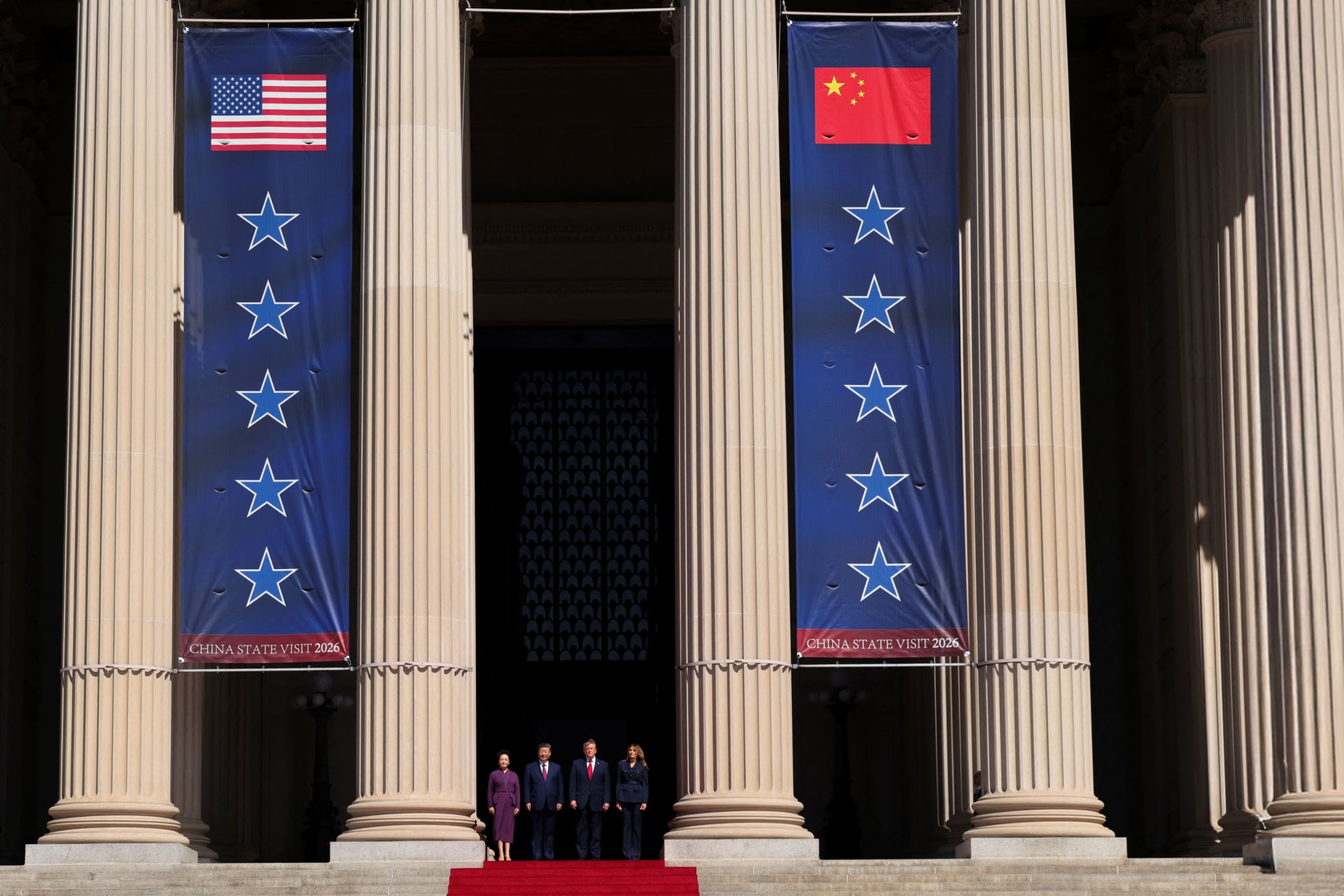
SESTANOVICH: Well, let me give it a try. The opposite of the middle power renaissance is what used to be called the P-2, meaning the U.S. and China. And one thing that was striking about the speech was how China was virtually invisible. He is going to be meeting with Xi Jinping for the rest of the week, and yet you would not know that this was on the agenda. You would—you got no reference to any issues of U.S.-China relations.
And I’ll just mention one that’s sort of part of my portfolio that he could have talked about, even indirectly. He did allude to the fact that the Senate and House have given him new tariff authorities to deal with countries that are prolonging the war in Ukraine. He could have said—he could have urged other governments to think about the kinds of policies that they may be pursuing that are prolonging that war; meaning for China you need to figure out how to put a little pressure on the Russians to call this thing off, because otherwise, I’m going to have more pressure on me to put— to introduce—reintroduce tariffs into our—into our relationship. Nothing of the sort.
And again, as I said earlier about other issues related to Ukraine, some of this may be that the—the administration is handling all of this very subtly behind the scenes. But I think it also may be a reflection of what President Trump also alluded to in the—in the speech, which is his foreign policy is based entirely on relationships. He isn’t thinking about or good at—and his administration is not good at—using a public forum of this sort in order to advance a strategic goal, in order to frame the relationship—the meeting that he’s about to have with China. And so, instead, you get nothing. You get a complete vacuum, no content.
BRANDT: Like Steve, I found the lack of China content striking. And I think especially in the technology section of the speech, like, he could have used this as an opportunity to put China on notice around distillation. He could have used this as an opportunity to speak to countries around the world who about the dangers or potential risks of building on the China AI stack, or why it should alternatively build on a U.S. stack. (Laughs.) But instead he used it to dismiss AI governance broadly. I think that was a sort of missed opportunity there.
COOK: Ishaan, if you don’t mind me getting in for a second here, what struck me about this speech was when I reflect on the speech that he gave the previous year, and the relative difference in the American position in the Middle East. If you remember last year’s UNGA speech, he was coming off a very successful trip to the Gulf. It was—he gave a terrific speech in Riyadh. Even his harshest critics thought the speech, in which he eschewed the nation-building of the previous era and that the United States was not going to overinvest in the Middle East, and to look around and see what people could achieve without the United States telling them how to live. Not too long after that, you had Operation Midnight Hammer. Whatever you thought about the operation and whether it had totally obliterated Iran’s nuclear program, it impressed the other leaders in the region. And there sort of was—after years of talk about the United States’ position deteriorating in the region, there was this moment where—that carried throughout the rest of the summer into the early fall and through the early part of the winter—that the United States could lead the region, and that it had kind of—the president had sort of shored up the American position in the region.
You come to this U.N. General Assembly, and for all of the kind of tough talk from the rostrum about Iran and the triumphalism about the Board of Peace, and again—and the meeting with the other Gulf states—you have important voices in the Gulf who are saying we kind of need to move on. I mean, even the Emirati presidential adviser, Anwar Gargash, in a statement a day or two ago indicated that the Arabs had to have their own dialogue with the Iranians and had to come up with their own kind of security guarantees with the Iranians. You have this experiment of the Mecca Agreement. Again, say what you want of it—it seems to have failed—but it is a bid on the part of major powers in and around the region to offer a regional order that isn’t an American-sponsored order.
So I think that it suggests that leaders in the region who just a year ago had a lot of confidence in President Trump don’t have much confidence in him. And of course, it comes just a couple of days after the Saudis sought American help in the—in the Bab al-Mandab and were rebuffed. So there really has been a dramatic deterioration. It’s not so much anything that he left out; it just strikes me the difference between both the president and the position of the United States in the region at this U.N. General Assembly versus last year’s. Thanks.
THAROOR: If I can stick with you, I mean, we are hearing and we’ve already heard today a whole number of speeches very sharp on Israel from other world leaders. Obviously, at the U.N. we are accustomed to—
COOK: Knock me over with a feather.
THAROOR: I know, but there is something a little bit different about this moment, the extent to which people are horrified by what’s happening in the West Bank and sort of the accumulation of anger around what happened in Gaza, what still prevails there. Do you—do you sense—and it doesn’t seem like you do, but do you sense a shift in—like, are we in a different kind of phase in Israel’s place in the world? And is the U.N. showcasing that?
COOK: I think yes and no. And I was kidding around by saying, knock me over with a feather, the Israelis are being criticized at the—at the U.N. General Assembly meeting. I think that there are indications of Israel’s isolation. You just had the British and eleven other European countries plus the—or, ten other European countries and the Canadians announcing that they would impose sanctions on settlers and declared settlements illegal; not illegal outposts illegal, but settlements in general. And so I think that there is a certain sense that there is, and I think that there’s tangible evidence of that.
At the same time, the Europeans and others are buying tremendous amount of Israeli defense technology. Even the Spanish are buying Israeli defense technology, but through a European subsidiary. The British opposition is complaining that what Prime Minister Burnham and Foreign Secretary Miliband had done kneecapped British intelligence, and therefore kneecapped Gulf intelligence. So I think it is a more complicated issue than has—with my apologies—has been reported in the press, of Israel’s growing isolation out of the region. Certainly, you can see it at the university level, and arts and culture, and so on and so on. But at that government-to-government level, there has been outrage over Israeli conduct in the West Bank, outrage over the conduct in Gaza, but at the same time a reluctance to depart from Israel because Israel remains an important country from which they want things.
THAROOR: So, for anyone who’s on the call, please raise your hand in the raise-hand function, and we’ll call on you for a question.
Until then, Shannon, vis-à-vis Latin America and the Western Hemisphere, we’ve seen a pretty dramatic set of elections and electoral results around the region, kind of bringing in one after the other in a whole series of countries, governments and political figures who are quite aligned with Trump. How important is that kind of ideological solidarity right now? And also, maybe in a couple of weeks we’ll see that in in Brazil with Flavio Bolsonaro neck and neck right now with Lula in the polls there. How important for Trump’s vision of the hemisphere is this kind of—this pretty dramatic ideological convergence that we’re seeing in the region?
O’NEIL: I would say one of the biggest shifts we’ve seen with this Donroe Doctrine, or the focusing on the hemisphere, is,not just that many things are seen as a threat, that there’s more action, but that the U.S. government is really involved in domestic politics. And that is a change. Usually the U.S. government would work with whomever was democratically elected. And this is a region where most of the governments are democracies. But we have seen the Trump administration being, at least rhetorically, involved in elections, if not more so, and really trying to put their finger on the scale to encourage and support those that were ideologically aligned.
And, as you say, we’ve seen many across the region, whether it’s in Colombia recent elections, in Peru, in Chile, in Argentina, and other places. The Brazilian elections are the next up on the docket. They’re going to happen in October. First round early October, second round late October. And there you have an ideologically aligned candidate in Flavio Bolsonaro, the son of previous President Jair Bolsonaro, running against Lula, who is looking to be reelected. And there have been U.S. rhetoric on the side, or sort of pushing for supporting of the Bolsonaro family and candidacy. And I think a question there of how far the U.S. government might be involved in that process, because it looks to be a very tight election. So I think something to watch as we go forward.
All of that said, you look at polling in Latin America. And Latin Americans in country after country really care about security. They really care about pushing back against organized crime. So I don’t think actually the citizenry of Latin America is thinking about different things, frankly, than the U.S. government is, in the sense of pushing against war on the cartels and the push. The way they might approach it is perhaps different, but I do think there is that impetus and really care and focus of Latin America citizenry across countries.
The other thing you’ve seen is one of the most popular leaders in the Western Hemisphere is the El Salvadorian President Bukele. And he has taken a very hard line on security issues. He has jailed 2 percent of his population in the attempt, and so far successful attempt, to reduce violence in that country. So I think this idea of a hard line against sort of the violence and organized crime is not out of, sort of, the realm of public opinion. So some of the alignment with Trump and the shield of the Americas and the U.S. government and this approach is actually quite popular at home. I think the question will be, as these governments take on these policies and push on these policies, will they be successful?
And two things here I would say. While many of these presidents were elected on security issues, because that’s what voters cared about, because of the Iran War, because of rising energy prices, because of economic headwinds, they are going to have to be economic-focused presidents as well. And that’s not what they were elected for. And some of them don’t really have that experience. So will they be able to succeed in getting their economies back up and growing? Because I do think that’s something that voters care about all over the world. Is the economy prosperous? Do I have a job? Is my paycheck growing? And so, if you see a failure on that side by these presidents, what does that mean for the United States that’s very tightly linked to these particular representatives?
THAROOR: That’s all very—that’s great context and great framing. I did a session yesterday with the new vice president of Colombia. And they’re very eager to tout, sort of, renewed engagement over critical minerals building supply chains, and sort of language that you imagine is playing out very well in the White House.
Jessica, I’m curious, what would the happy modus vivendi look like, where the U.N., in an era where Trump is in the White House, can be the staging ground for a global conversation on AI, and where U.N. agencies and processes play a big role in how AI is governed going forward? Or is that impossible?
BRANDT: Yeah. I mean, I guess I would say, like, broadly, I have no objection to a global conversation, but ultimately what matters is the U.S.-China competition or the U.S.-China conversation, at least for right now, right? These are the two countries that have control of the most advanced models and are—what they decide to do, like, within their own systems, and if at all together, I think, will do more than any global conversation to shape the broader environment, that everyone else is acting within. As I said, I think, like, it seems like both a modest agenda and also not a modest agenda, just to get a sort of—whether it’s an actual hotline or some kind of incident response mechanism.
I mean, I sort of see that—obviously, there’s a debate about whether that’s the floor or the ceiling. I’m sort of somewhat skeptical that it’s the floor. I think it may be closer to the ceiling. But it’s a—I don’t know if it’ll work. But it’s sort of a no-regrets step that builds some resilience against a wide range of possible futures. And getting that conversation started and building the muscle memory for that feels like the most important thing. So, again, like, no objection to a broader conversation nestled within a U.N. context, but, like, that alone feels like the thing that is the most achievable and necessary. And even that, though it seems modest, feels like it’s not sort of obviously going to come together or materialize in the near term.
THAROOR: So, I mean, given that we don’t have Rush on this call, what do you think is going to come out of this week? I mean, what’s the most realistic positive outcome when it comes to a dialogue, a process on AI between the U.S. and China?
BRANDT: I mean, I think best case, like, we get some clearer sense of what the two sides view, like, the—sort of, how they’re bounding the risk they’re going to talk about, right? I mean, there’s so many things on the table—everything from recursive self-improvement, the risks of, sort of, open source models. China is focused on the information security risks. There’s the biosecurity and cyber risks, right? So there’s a wide—when we talk about loss of control, we’re talking about the risk that AI systems escape human control or act in ways that are misaligned with human interests. When Beijing talks about loss of control, it’s talking about sort of political control over AI systems. (Laughs.)
So if we could, I think, again, seems sort of like small ball, but if we could even move the—sort of move closer to defining a shared set of risks around which these conversations will take place, that would be a step forward. And if we could sort of each identify who is point, who in our respective systems should the other turn to when an incident happens, that would also—again, small stuff, but not small stuff—and would, I think move us forward. So let’s see. I mean, there’s lots of sort of chatter that this is where we’re heading. But I also think these kinds of summits often have sort of every detail down to the readout memo all set before the two leaders even get in the room. And I’m not sure that’s the case here. So we’ll see.
THAROOR: Shannon, you unmuted. So I was wondering if you wanted to jump in. Is that—
O’NEIL: Yeah, I know it looked like Eddie had to drop, but maybe just on the what to expect from the U.S.-China visit later this week in D.C., I mean, one thing you have seen is the U.S. trade representative, others, sort of talking down any movement forward on the trade side, right? There was the idea that there’d be, like, thirty for thirty, taking $30 billion worth of tariffs off on both sides. Now they seem to be talking that down a bit. There was a question about whether the exemptions on rare earth licenses that were pushed to November, whether that would be renewed for a year. They said, well, not yet, probably by the end of the year. So on that trade side, which has been sort of one of the big focus of the relationship, and back when they met in Busan that was one of the focuses, it doesn’t look like they have that one sort of signed, sealed, and delivered, as Jessica said, which you usually do have when you’retwenty-four hours out of a—before a meeting.
THAROOR: And, Steve, I see your hand is up.
SESTANOVICH: Yeah, I want to go back a little bit to the—to the UNGA setting. Because I mentioned earlier that the president of the United States can present himself in such a forum, particularly when it’s on the eve of a summit with the Chinese leader as head of the P-2, and talk about the kind of stability that cooperation among the great powers brings. But there’s an alternative to it, which is presenting himself as the leader of a global alliance. And that’s something else that presidents in speaking at UNGA have often posed as sort of using the framework of American alliances as the kind of starting point for a broader set of kind of security cooperation efforts, economic cooperation efforts, and so forth.
And what’s striking to me about Trump today is that not—he didn’t present himself as the P-2, and he didn’t present himself as the leader of a global alliance. In fact, it’s much more kind of what Steven was saying earlier, that compared to a year ago other countries really kind of have to be on their own. You’ve got big security concerns. Well, you address them. I mean, I’ll give you an example. There was very, very little reference to Europe in the whole speech, and certainly not any reference to some of the issues that are kind of roiling European government discussions—hybrid attacks from Russia, for example. Which got all of the members of NATO trying to figure out what it is that they should be doing.
Was there a word about that? About American support for and opposition support for efforts to counter assurances about being with governments that are trying to deal with such unorthodox kinds of aggression? No. Not at all. And you could mention other kinds of anxieties among allied governments, whether you’re talking about governments in East Asia, South Koreans, the Japanese, East Europeans on the border with Russia, but also the rest of the NATO alliance. You got no interest on the part of the president of the United States in the preoccupations of American allies.
THAROOR: Yeah. I want to come back on that. I think given how in the National Security Strategy they even outlined their desire to support far-right parties in Europe, and the recent electoral gains we’ve seen in Germany of the AfD, the trends that are pointing quite favorably for the far-right in many parts of Europe this is a scenario that probably is welcomed in the White House. But, yes, there’s no culture war gesture there. There are culture war gestures in other directions.
We are nearing the end of our time, so I just wanted to give everyone in the room a chance to go one by one and offer a concluding thought, on any front. But if I could just give you a quick framing question: What does the world order look like now, after we heard our dear leader speak at the U.N. today? Esther, I’ll start with you.
BRIMMER: OK. First, thank you for the conversation. Very thought-provoking. So appreciate it.
And I would say that we have further levels—more levels within international order of people playing. I used to say there was something like three level chess, and now I think it’s more even more levels. And I’ll end with where I started, which was at least he’s still playing the same game with everybody else. He does at least want to show up. There are points where he has certain things he wants from certain leaders. But that at least he did not pull out of the United Nations system. And, crucially, the United States did pay a portion of its regular dues recently. The reason is we would have lost our vote in the General Assembly. He could have done that, lost it and said, I’m out of here, you know? But, no, I think the fact he still wants to participate in diplomacy, he’ll use it for his own terms, but at least the United States is still a member. If we were no longer a member, it would have been extremely serious, I think, for us in the future. Thank you.
THAROOR: Thanks. Steven.
COOK: Yeah. Thanks, Ishaan.
Mayor Mamdani isn’t the only one who’s read Gramsci. And what I would say is the old order is dead. And we’re in an interregnum when we don’t know what the new one looks like. It hasn’t been born yet. And I think it’s going to be born by interactions like the things that we see in the Gulf, what we’re seeing in Europe, what we’re seeing in Ukraine and Russia. I don’t think the new order is going to be written down so easily and nicely in some nice European city somewhere. I think it’ll be these kinds of interactions and experimentations, like the Mecca Agreement, and so on and so forth.
So I don’t think there is an order. I think one is struggling to be born. Thanks.
THAROOR: Thanks for the Gramsci.
COOK: Love it.
THAROOR: I will tout my own New Yorker column from last week, where I begin with the interregnum.
COOK: Love it.
THAROOR: And the morbid symptoms, of which I think perhaps—
COOK: These are the morbid symptoms, exactly.
THAROOR: Yes.
Shannon.
O’NEIL: Well, I would echo Steven, right? We’re in this interregnum. And what’s interesting about this conversation is when you asked us what surprised us, it’s just what wasn’t there, right? The usual way of framing the role of the U.S., whether it was vis-a-vis China or as a global leader. Europe wasn’t there. China wasn’t there. The fact that so much of those wasn’t there means that we’re operating under different rules than we have in the past.
THAROOR: And, Steve?
SESTANOVICH: Yeah. I agree with all of this, with the possible exception of Esther’s suggestion that the president has a chess strategy in mind. (Laughs.) I would say, the message of this speech, if you’re trying to discern strategy, is more confused than that. And if I were a foreign government, my conclusion would be the president said he doesn’t care about the midterms, but this speech was deeply affected by the midterms. He didn’t want to say anything or do anything that would have negative consequences for domestic politics. And, if I were sending a cable back home to a home office to interpret the evolving strategy of the administration, it would be that, that there’s much more of a kind of focus on domestic politics, for all of the protests to the contrary. And you see that in the way the way the president and even secretary of state and others, for example, talk about Ukraine, that when they—when trying to figure out what they should do to deescalate it’s all in terms of domestic gasoline prices. So that’s—I would say that’s the hierarchy of considerations for the president. And, for all of the other oddities of the speech, I didn’t get much more out of it than that.
THAROOR: Thanks.
And, Jessica, I’ll turn to you to close us out.
BRANDT: I guess I’d say like others, I didn’t hear much today that sort of changed my sense of the state of play. I agree we’re in an interregnum period, and I agree that this was a speech that was sort of largely targeted at a domestic audience and maybe, if anything, at least in the section that touched on the issues I spend the most time on, a missed opportunity to talk to a broader one.
THAROOR: Well, thank you all. I really have—I’ve learned a lot from this session, and such a pleasure to be here at CFR. And I hope to be part of these conversations going forward as well. Thank you all.
I’m going to turn to Lilly to take us out.
BEHBEHANI: Thank you, Ishaan, and all. As a reminder, this event was on the record. The recording and transcription will be posted to CFR.org. And to reach out to one of our experts, please email [email protected]. Thank you again.
(END)
This is an uncorrected transcript.