The Myth of the AI Race, With Alvin Wang Graylin
This episode unpacks U.S. and Chinese AI strategies, regulation approaches, and the future implications for society and security.
Published
Host
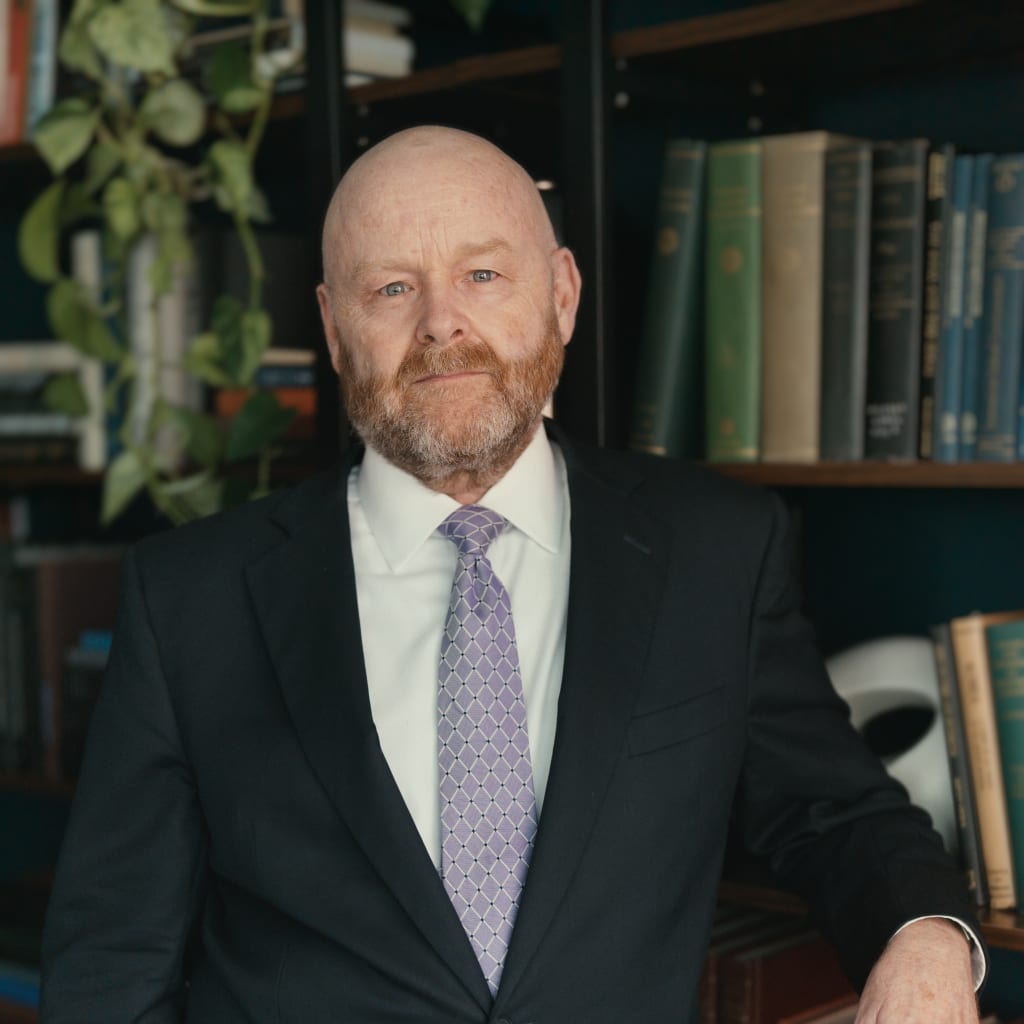 James M. LindsayCFR ExpertMary and David Boies Distinguished Senior Fellow in U.S. Foreign Policy
Guest
- Alvin Wang Graylin
[Video: https://youtu.be/iC_pIYn9Ri0?si=pGvkTC3b8GPC7x-n]
TRANSCRIPT
GRAYLIN:
I think this is one of the biggest misunderstandings about U.S. and China AI is that, you know, everybody thinks, you know, if we slow down, China won’t, and they’re going to win the race. And so we can’t let authoritarian AI win. So we’re going to have to run as fast as possible.
And it’s complete BS.
LINDSAY:
Rapid advances in artificial intelligence are fueling visions of breathtaking economic growth and stunning scientific breakthroughs. But fears are also growing that the AI revolution will supercharge threats to humanity.
CBS NEWS:
Anthropic says its newest AI model named Claude Mythos is too powerful and dangerous to be released to public.
LINDSAY:
Buffeted by hope and fear, the United States are competing to turn AI to their advantage and to prevent it from being used to their detriment. Who is winning the AI race? Does it even make sense to think of it as a race?
And what are the prospects that China and the United States might cooperate to maximize the promise of AI and ward off its dangers?
From the Council on Foreign Relations, welcome to the President’s Inbox. I’m Jim Lindsay.
Today, I am being joined by Alvin Wang Graylin, Senior Fellow for Technology at the Asia Society, a Digital Fellow at the Stanford Institute for Human-Centered Artificial Intelligence, and Professor of AI Tech Policy at the University of Washington. Alvin, thank you very much for joining me.
GRAYLIN:
No, thanks for inviting me. I look forward to a fun chat.
LINDSAY:
Well, I really want to pick your brains, Alvin, because you have spent some 35 years working in this space, working on AI, working on cybersecurity and related things. You actually understand the technology at hand. And I thought maybe we could begin with something you wrote recently.
Let me quote you. You said, the United States needs to re-examine the race we think we’re running, the game we think we’re playing, and the strategy we’ve chosen. Because right now, the evidence suggests that our current strategy may be incomplete or over-concentrated on a single dimension of competition.
Explain what you meant by that.
GRAYLIN:
Yeah, if you listen to most of the folks, whether in the Valley or in DC, there’s a very over-emphasis on scaling, on building more compute, on how many GPUs we have, and the size of models. And this is based on an idea that came out of the Valley a few years ago called essentially the scaling law. The bigger the models are, the smarter they get, and the more powerful they are.
And that’s been the case for probably maybe four out of the last seven years. But what’s happening recently is that in addition to scaling, there’s a lot of other things that are going on that are actually helping make AI more capable without necessarily being bigger, by making them more quantized, by having different memory techniques, by training on different types of data, and using different types of chips for inference than you do for training. And these are the kind of things that are actually bringing bigger gains than the scaling laws themselves.
Because in general, pure raw scaling brings logarithmic scaling, which means if you go up 10x in terms of how big your compute capacity is, it might give you a 2x increase in terms of a reduction in terms of your error rate. Whereas if you can change one line of code that changes how you might have your algorithm be done, you could get a 5 or 10x increase in benefits. And this is where most of the gains are actually coming, not necessarily just from having more compute, because we’re getting to a point where these data centers are hundreds of thousands, if not millions, of chips.
And to go 10x from that is near impossible. And we’re seeing that today with the various build-out issues that we’re having in America. So we really need to start thinking about other ways of improving the capabilities, but also we need to think about beyond the concept of just models themselves.
Because it also depends on whether the models are closed or open, and how that affects how the world uses it. And whether it’s small or big actually also affects on what type of devices they run on. So there’s just a lot of different aspects of what is involved in AI that people are not considering, because I think most of the people in DC really haven’t come from that industry.
LINDSAY:
Oh, they certainly haven’t. And we don’t refer to the valley around here. I assume you mean Silicon Valley, as opposed to San Fernando Valley or some other valley that might be out there.
Sorry. I’m just sort of struck, Alvin. It seems to me that there’s sort of two big assumptions embedded in US policies, governmental policy, toward AI.
One of those is that we’re actually in a race, and that you can win the race. And I guess maybe I’ll ask you, is that even the right sort of framing? Because I sort of think of other so-called general purpose technologies, like electricity, or the internal combustion engine that revolutionized how societies orchestrated.
And I’m not sure you can really say that somebody won the electricity race.
GRAYLIN:
Yeah. And I think this is actually a really important question, because the answer to this question changes how we approach what’s happening from a policy perspective. There is a narrative in DC that essentially whoever gets to AGI first will then use recursive…
LINDSAY:
What is AGI?
GRAYLIN:
AGI is Artificial General Intelligence. Essentially, it’s intelligence as smart as the average person, so it can replace people in cognitive white-collar jobs. And then you use something called RSI, Recursive Self-Improvement, which then teaches itself, so it gets better and better every day, except it’s doing it at, rather than human speed of programmers, you’re doing it at the speed of AI improving itself.
And very quickly, you get to something called ASI, Artificial Superintelligence. And then you have this thing that rules the world. And I think it’s a false narrative, and this narrative is actually driving us to make a lot of bad decisions in terms of overspending, in terms of over-indexing on controlling compute, in terms of over-protection, in terms of access to our models, making the US a very unfriendly partner to the rest of the world.
And all of these things are actually based on the idea that once you have this God model, you’ll be able to break into anybody’s banks and turn up anybody’s power grids and hack into anybody’s encrypted systems. And really, I don’t know how true that is, because even if you have something very intelligent, without the information and data underneath of it, you can’t necessarily answer. So intelligence does not mean omnipotence or omniscience in terms of knowing everything, just because you could have a million IQ, but if you were stuck in a room and all you saw was some game shows, you have a very limited view of the world.
And this is the issue, is that for you to really make breakthroughs, you have to have actually access to the world and experiments and do various type of thought experiments as well as physical experiments to validate, and then you actually get new knowledge. And that takes time, and that takes access to information, access to tools, access to various experiments. And this fast takeoff concept is something that too much indexing is going into American policy, and it’s called decisive strategic advantage.
And I don’t think that’s really playing out. And because of that, we are spending over a trillion dollars a year right now, doing something that the Chinese are spending 50 to 80 billion dollars a year, and coming within 2% of us or 3% of us in terms of all the benchmark tests.
LINDSAY:
So Alvin, let me draw you out on that. How does China see AI or the race for AGI?
GRAYLIN:
So what they are focused on, you know, so in the U.S. there’s something called being AGI-pilled, which means that you believe in what I just said that, you know, essentially having AGI means everything, and it’s worth betting anything on. China doesn’t seem to believe that, and their focus is saying, I want to get good enough AI to as much of my industry as possible, and they have something called the AI Plus plan, which probably you’ve heard of, and it’s essentially saying, how do we get AI into our industry, 70% of the industry within the next, you know, four or five years, and then, you know, 90% within the next nine to 10 years, getting, you know, essentially every company to adopt this thing, whether you’re, you know, in healthcare, in education, in manufacturing, etc., etc., right. You know, where they have real incentive programs within the government with long-term processes to make that happen, and that’s their focus.
There may be one or two labs in China that want to do, create AGI that have similar type of mindset as the U.S., but it is a minority.
LINDSAY:
So I just want to make sure I’m following your argument, Alvin. In a sense, the Chinese view is, don’t let the perfect be the enemy of the good enough, that what you really want to do if you want to maximize the benefits of AI is to figure out how to get it out into society, into the workplace, into government, and be able to exploit the productivity gains that come from it, as opposed to winning some theoretical benchmark race as to who has the most powerful or fastest AI.
Exactly.
GRAYLIN:
And I think this is the issue with the benchmark test is, as you know, every week and maybe every two weeks, you have a new leader, right? And did it really matter for you to be in that lead for a week or two in the benchmark? It really, it’s almost meaningless, except you have to spend 10 times or maybe 100 times as much as the guy that, you know, came in and followed you a few weeks later, a few months later.
So, you know, we’re really betting the farm on something that may not really pay off.
LINDSAY:
So how much of the Chinese approach to AI, Alvin, is driven by sort of the economic system in China versus being directed from the top down by the Chinese Communist Party?
GRAYLIN:
Yeah. So this is also, I think, a misnomer, because a lot of times you hear in news, you know, Chinese model XYZ is now doing something, something. And, you know, you think that there is a master plan to say, OK, you know, DeepSeek is now the national champion and we’re going to give them all the resources to do this.
And the reality is that, you know, the Chinese government didn’t even know or care about DeepSeek until they came out with, you know, with DeepSeek V3 and actually R1 January of last year. Right. They were just a little tiny lab that had 100 people in it and they somehow made something that, you know, our billion dollar, trillion dollar companies here were creating and got to almost near equivalent levels.
And here’s the funny thing is DeepSeek was as much a product of American policies, you know, Trump and Biden policies, as they were Xi Jinping policies. But not from the perspective that you might think, is that the reason that DeepSeek, which used to be a hedge fund, High-Flyer, started to get into AI was because Xi Jinping said, OK, we’re going to limit quantitative trading, which is, you know, kind of unfair to the retail investor. And so he bought, you know, this thousand GPU cluster and couldn’t do anything with it.
And he said, OK, I might as well get into AI because I heard AI is really good with these GPUs. And then the reason that he was able to get so many good AI scientists was because Americans wouldn’t let the Chinese top students come to America or made it very difficult. So he was able to recruit top talent that was graduating from Tsinghua and Beida universities, which became, you know, his star students.
It’s essentially his entire team. None of them had actually ever went to school or worked in the U.S., which is because of U.S. policies. And, you know, the reason that they actually had to make breakthroughs in terms of making it cheaper was because they couldn’t buy the latest and best models or best GPUs from the U.S. So they had to buy kind of a nerfed GPUs that had limited capabilities. And so they had to make new algorithms that quantize these systems and make them a mixture of experts so they could make, you know, smaller models that piece together to make a big model. So all these innovations were forced upon them because of U.S. policies.
LINDSAY:
Necessity is the mother of invention, even when it comes to AI. Yeah. So my sense also in China, Alvin, correct me if I’m wrong, is that it is a very competitive space.
A lot of companies have moved into AI. I mean, I was struck if you look at the automotive industry in China, there are a large number of companies. You have to assume that a fair number of them are not going to survive this sort of cutthroat environment.
Same thing seems to be the case with AI. So everybody’s looking to innovate because essentially it’s innovate or die.
GRAYLIN:
Yeah. And, you know, on the robot side, there’s 150 robotics companies, humanoid robotics companies in China right now. There’s no way for that market to sustain that type of volume.
We’re talking, you know, probably 50,000 units or 100,000 units being sold this year divided across 100 companies. There’s no way for that type of market to sustain that type of diversity of companies. And the same right now with AI models.
There’s probably about 10 or 12 near frontier AI models. There’s probably, you know, a few dozen other smaller ones in China that are working on models. But here’s something funny.
Last week, one of the biggest food delivery companies in China came out with a frontier 1.6 trillion parameter model that tested within the top benchmarks around the world. A food delivery company, right? I mean, it’s Alibaba getting it’s good, you know, makes sense.
ByteDance getting it makes sense. Tencent having a model makes sense. But for a food delivery company to come in with no notice and become almost instantly within the frontier of open source AI, that’s really interesting and impressive.
LINDSAY:
Any senses to why a food delivery company decided that it wants to get into this crowded space, Alvin?
GRAYLIN:
Well, I think it was a side project by the founder, which, you know, I guess didn’t get a lot of attention. And then he decided to bring it into the main fold and put some money behind it. And then here’s the interesting thing is that particular model was completely trained on Huawei chips, right?
So they clustered together 50,000 Huawei chips and trained a 1.6 trillion parameter model, which, you know, essentially is as large as Opus 4.6, which is the, you know, or 4.8, which is the leading, you know, available to public model from Anthropic, right? So, you know, essentially, it’s a few months behind what the US is. And to be having trained that on just Huawei chips, that really changes the equation of what we thought we had in terms of a chip advantage and the ability to deny chips and how that’s going to set back AI development in China.
LINDSAY:
Alvin, I want to come to the issue of denial as a strategy. But first, I want to talk a different approach in China to AI development and regulation compared to the United States. One of the things that strikes me, and maybe I’m making too much of this, but I often see US AI models described as being proprietary.
OpenAI owns it, or Elon Musk’s firm owns it, or Anthropic owns it. What I read a lot about the Chinese models is that they’re open source models in which people can get to see the guts of it, tinker with it and adapt it. Why the fundamentally different approach?
GRAYLIN:
So, I guess one of the benefits of open source and in general open source software and open science is the ability to capture the minds of the world to help you build it, right? You look at something like the Alibaba Qwen model, which is the most popular open source model in the world. There’s about 200,000 variants of it, which means somebody downloaded this model, went and retrained it, and then posted it back up and said, here’s all the things and experiments I did, here’s something I made it better for this particular vertical use case, or I shrunk it down so now it fits on my laptop or maybe even on my phone, right?
So, people are able to experiment with it and that allows you to get the two or three million people who are AI researchers around the world to participate. Whereas right now, no matter how wealthy you are as a proprietary lab, you’re somewhere around two to maybe 5,000 researchers that are part of your talent pool. So, that’s one way to accelerate with less resources, which has been a relatively successful strategy.
But I think it was also a little bit of an emergent strategy because Liang Wenfeng was the CEO for DeepSeek, he is just a big believer in open source. In fact, when he first released it, he got his hand slapped by the Chinese government to say, why did you release such a good model out to the public? Now, everybody’s going to have it.
But then, I think, because of the positive response everywhere in the world, they’re like, oh, maybe just keep doing that. That seems to be a good thing for us. So again, it’s not this national strategy to say we wanted to open source.
It just became an emergent strategy. And now, because it seems to be a way to develop faster and get other people to help you and get feedback and get testing, everybody’s following it. Now, there is a few companies.
I think Tencent and ByteDance and part of Alibaba have actually closed source either part or all of their models. ByteDance, because they’re like the YouTube or the meta of China. And so, they already have a cash cow business and they want to use this to make money.
So they’re the leader right now in terms of the video models. I’m not sure if you heard the Seedance model, but it is by far the best video generation model in the world. With the 2.0 that came about six months ago, and they now just came out with 2.5. And in that six months, America had really no answer to making a better model than they did.
LINDSAY:
Can I just stop you right there, Alvin? Why do I care whether somebody has come up with a better artificial intelligence image generator so I get more realistic cat videos, I suppose? But what’s the economic or national security implications of being able to produce better video?
GRAYLIN:
Yeah. So, I mean, for them, they did it because they’re one of the biggest short format. They used to own TikTok before America bought it.
But they essentially are the biggest creator of these short format videos. So using AI to do this helps them make money, right? That’s why they made it.
But I think from a national security or a soft power perspective, America used to be the generator of content of Hollywood, was one of the biggest exports, right? And of our ideas and our philosophies and American dream and so forth, and superheroes and so forth, right? Whereas now, anybody can essentially create cinematic Hollywood quality videos with a few hundred dollars.
Scenes that used to cost a million dollars now can cost $5. And that allows anybody to tell the stories they want. So this does commoditize kind of American soft power in some way, if it wants to be weaponized by anybody around the world that wants to use video as a form of storytelling, I guess.
LINDSAY:
But I imagine it’s not a great development if you work in Hollywood, since I would imagine it’s going to put a fair number of people out of work.
GRAYLIN:
Yeah. And in fact, I was just in LA a couple weeks ago for a big conference and talking to a bunch of film people, and they’re saying, we’re integrating this stuff into our workflow. Every studio today is integrating AI model generation or generated video into their production process and cutting costs.
And some of them are essentially also reducing a lot of the cost of extras. So it’s definitely changing the entire cost basis for how hard and how long it takes to make these and how much it costs. And also the value of the celebrities and stars that they’re using.
LINDSAY:
Alvin, something else about the differing approaches to AI between the United States and China that strikes me has to do with regulation. My sense is that Washington, until maybe recently, has taken the position that it is best to have a hands-off approach to regulation. That’s how you’re going to get the most innovation.
And if we were to regulate AI, and China’s not regulating AI, they will get to the finish line first. They will win all of the gains. But my sense is that China doesn’t have an entirely hands-off regulatory approach to AI.
Help me understand that aspect. Yeah.
GRAYLIN:
So I think this is one of the biggest misunderstandings about US and China AI is that everybody thinks, and I hear this from, in fact, yesterday, I just saw an interview with Demis Hassabis and Dario Amodei, who are the heads of Google and Anthropic. And they said, oh, we’d like to slow down, but if we slow down, China won’t and they’re going to win the race. And so we can’t let authoritarian AI win.
So we’re going to have to run as fast as possible. Even though we know that actually slowing down is probably better for the economy and it’s better for safety, but we really can’t do it. And it’s complete BS.
Because the reality is that not only is China regulating the AI industry more than the US, it’s actually regulating the AI industry more than Europe. And Europe is the king of regulation. And the AI Act from Europe has been in discussion and formation for the last couple of years, but I think this August, part of it gets implemented in force.
And some of the key constraints around the regulation won’t actually be enforced until December of next year. So everything is just getting pushed back. Whereas three, four years ago, China was already having various rules around the provenance of the data, the labeling of AI and deepfakes.
The models had to be checked for safety, had to be checked for their propaganda, their messaging. But all models had to be certified before they’re released. And there’s been over 700 or 800 models now that has been checked through the Cyberspace Administration of China before they have been released.
So this is something that has been in place for three, four years. In fact, they also have a rule against creating addictive content. They have rules against anthropomorphizing AI so that you create essentially virtual girlfriends and boyfriends because they think these are unhealthy type of use cases.
And most importantly, they have liability on the AI labs who create harm in society. So this creates a forcing function for self-policing that does not exist today. I mean, I’m sure we’ve all heard about the people who are using a chatbot and then committed suicide because they had a talk with them.
And none of the AI models that were related to those cases had any punishment. So these are things I think we need to realize that China is already regulating. And so it’s actually okay for us to regulate because it really hasn’t slowed them down that much.
But it probably made their society a little bit safer.
LINDSAY:
Are we seeing any real movement in the United States toward regulation, Alvin? I know that the Trump administration recently issued an executive order, but I don’t have a sense as to how restrictive that EO is.
GRAYLIN:
Well, I think that the EO itself is supposedly voluntary. But the interesting thing is within a few days of that EO, essentially, the Commerce Department went and told Anthropic, you have to take your model offline. So it became mandatory because of potential cybersecurity threats of their fabled model.
And then in fact, another two weeks later, when OpenAI came out with their 5.6 model, they were also requested to make it limited access. So every single customer who gets it had to get approval from BIS to be able to release it. So what seems to be voluntary is really now fairly mandatory.
But it’s really only, I think, focused on the security side. It’s not really around liability of harm. It’s not around deepfakes or provenance of data or child addiction or algorithmic biases and any of the other things that are being enforced today with the Chinese models.
LINDSAY:
Now, Alvin, when President Trump was in Beijing in May for his summit with Xi Jinping, Trump came out of it and said that he had had conversations with Xi about possible U.S.-Chinese cooperation on generating standardized AI regulations. Do you see any evidence that that proposal is going anywhere? And if so, what it actually means?
GRAYLIN:
Yeah. So I think it wasn’t necessarily regulation, but I think they discussed having safety guardrails around AI, because the reality is that neither China nor the U.S. wants these very powerful models in the hands of non-state bad actors. That’s a shared risk for everyone.
Is that the biggest risk? I actually think that’s a much bigger risk than the state-to-state risk. The reality is that we’ve had weapons pointed at each other for decades, and nobody’s done anything because we know it’s a bad idea.
And once you start it, this escalation doesn’t end well for anyone. And it will be the same for these AI models. Even if we got this God model, will we really use it the next day to then turn off the Chinese grid, or will they use it to turn off our grid?
Probably not, because they know that that’s just going to escalate things. And so the people who don’t care about that are the bad actors, the terrorists, the hackers. I spent a number of years in cybersecurity space, and I can tell you the first day that a exploit is available is the most dangerous thing, because once it gets out, the hackers will use it on day one.
And they call it a day-zero risk. When they find it and nobody has it, that means they have free reign to get into networks or to do whatever bad things that they want, and when they can make the most impact. Some of them maybe actually save it for when they have a special occasion, but these people don’t care about the retribution.
In some cases, they maybe wish for retribution, because it gives them some kind of recognition.
LINDSAY:
That’s certainly the case with terrorists. I mean, hackers don’t want retribution, they want cash.
GRAYLIN:
Yeah, yeah. But there’s different kinds of bad actors.
LINDSAY:
Or cyber criminals, I guess, want cash.
GRAYLIN:
Yeah, yeah. And particularly if you’re working on chemical weapons or bioweapons, you know, you will unleash it. And, you know, if it creates harm in the world, it creates instability in the world, you’ve been successful, right?
And that’s the job of or the goal of a lot of these bad actors.
LINDSAY:
So sort of thinking about your diagnosis of the situation the United States finds itself in, Alvin, what is your policy prescription? I take it you’re skeptical about the value of denial strategies. And not only that they may not work, they could be counterproductive because they simply spur others to innovate.
Yeah, well, I mean, And you lose even more control of the supply chain.
GRAYLIN:
This is exactly what’s happened, because I actually worked in China for the last 18, the last 20 years, I came back a couple years ago. And I was there when the various sanctions against the Chinese, against Huawei, and all the different chips and all the EUV, machines went in. And I can tell you the next day, I was talking to my friends in the semiconductor space, and every one of them got calls from the government saying, Hey, do you need some money?
We can help you make your chips better, we can help bring customers for you. And, you know, and then they started getting regulations that forced the data centers to buy a portion of their chips that were domestic. So they were saying, you know, nobody used to buy from me because my stuff was three or five years behind.
But now, you know, I have real customers that allows me to have a revenue stream to build better chips. And that’s essentially every fence that we’ve erected, taught them how to climb better, right, and made them innovate.
LINDSAY:
And is that the reason why the Chinese government didn’t take President Trump up on his offer to buy, or I guess we would sell, I think it’s H200 Nvidia chips?
GRAYLIN:
Yeah. So I mean, there was a lot of kind of this debate in DC about, oh, you know, we’re giving away the farm, we’re letting them catch up. And then China said, you know what, you give it to us, but we don’t want it.
Right. I mean, so this is actually a really good example of why we’re running different races, right? You’re only running a race, if you’re trying to get to the same endpoint.
And if they wanted to get to AGI as fast as possible, if you give them a chip that was 5% faster, they would have bought it. And these things are probably twice as good in terms of performance than what Huawei is building today. And they decided not to buy them because they wanted to create a more indigenous market for their own chip vendors.
And there’s four or five companies there that are creating solutions in that space. And so if they can make their own company survive, it allows them to have technology independence. And to them, that’s more valuable than being a month or two or three months faster to get to that benchmark advantage that is not durable.
LINDSAY:
So if denial doesn’t work, what is the strategy for the United States? What are the practical policy prescriptions the administration should be following?
GRAYLIN:
I think there’s different types of strategy. The strategy about working on safety, I think, is a no-brainer because we both want this AI to be safer, right? There is a non-zero chance that something bad can come from it and it becomes a terminator scenario.
But I actually think that that’s the lower probability issue. The one that we know there’s 100% chance is hackers and terrorists using this for creating instability in the world. And that we need to have essentially alert hotlines that both sides will pick up so we don’t mistake attacks for state attacks when they’re actually terrorist attacks.
We need to share threats so that when we find holes in each other’s banks and each other’s state grids that we tell each other so that the bad actors don’t get there before we fix them. We need to actually create signatures for viruses so that all of those, not just for design, but for the synthesis, right? The danger is actually synthesizing these viruses or proteins or molecules, which right now, the machines that make them are all really coming from either China or America.
And if we can lock those down and say, okay, don’t make anything with these types of signatures, that makes the world safer, even if somebody can design it. And to be honest, you don’t need the latest anthropic models to make a super virus. In fact, you look at the AlphaFold, everybody thinks, oh, AlphaFold is like a super big model.
You know how big AlphaFold is?
LINDSAY:
I have no idea.
GRAYLIN:
It’s 93 million parameters, 93 million, not billion, not trillion, right? Million parameters. So this thing will run on my laptop today.
And it’s been available for several years, right? So if people want to make this stuff and they want to make special proteins that are going to hurt people, the technology is out there, right? The thing that’s actually missing is the signatures and the recipes that are now being made available to these private labs.
So this Project Genesis, I don’t know if you’ve heard or know much about it, but essentially we’re opening up all the national lab data to Anthropic and to OpenAI and to Grok and to these companies who are not used to handling confidential or classified information. They’re leaking their own code every month or so. So it’s not necessarily a great idea to make that kind of data available, whether it’s nuclear data or chemical data or bio data that is going to be made available to them because we’re in this race condition.
But those are the kind of data that would be very damaging if they got into the hands of bad actors. So we really should be thinking about how can we centralize this data into a place where people know how to keep things secure. And I think at least the national labs have proven they’ve done that pretty well for decades.
So why do we want to release it into private labs that have proven they can’t do it? But the other thing we need to do is outside of safety is actually, I think we should think about creating a CERN for AI model. And people have talked about this on and off for a while, but right now, because we have every lab duplicating efforts, we have essentially a hundred labs around the world that are all trying to create the latest model and essentially all building things that are two or three or four percent better or worse than each other.
But we’re creating demand for chips, memory, energy, water, et cetera, that makes this a hundredfold what the real demand could be if we made a CERN model where everybody just said, okay, let’s pull together. In fact, if we just took the data centers that we have already today, it would be enough for us to build a very, very capable model. And then once that model is there, then you take this and you let the various labs create their custom use cases, whether it’s for enterprise or for medicine or whatever, and they can still have a good business model without creating the strain on the entire supply chain.
It used to cost $10 to $12 billion to create one gigawatt of data centers. Right now it costs about $45 to $50, and that happened in the last two to three years. So it’s costing more and more for us to make these data centers.
The funny thing is the cost per token is coming down at the same intelligence level around $10 to $40 per year. So what you’re selling is going down at a price of $40 per year, $10 to $40, but the cost is going up about doubling every year. This is a recipe for economic disaster.
That’s the problem. One of the things that we are doing that I think, from a policy perspective, makes America vulnerable to the potential bursting of this economic bubble or this inflated AI bubble. Even though people see it as an economic risk, I think it’s as much of a geopolitical risk because if our economy goes down and we lose jobs and we have instability at home, this makes war a lot more likely and it makes civil war also very likely.
LINDSAY:
On that very sobering note, I’m going to close up the president’s inbox for this week. My guest has been Alvin Wang Graylin, Senior Fellow for Technology at the Asia Society, Digital Fellow at Stanford’s Institute for Human-Centered Artificial Intelligence, and a Professor of AI and Technology at the University of Washington. Alvin, thank you very much for joining me.
GRAYLIN:
Thank you, Jim. That was a fun conversation. Look forward to seeing you again in person.
LINDSAY:
Today’s episode was produced by Justin Schuster with Head of Production Jeremy Sherlick, Senior Video Producer Grace Raver, and Director of Podcasting Gabrielle Sierra. Our Recording Engineer was Jorge Flores. Additional assistance was provided by Oscar Berry.
This transcript was generated using AI and may contain errors.
We Discuss:
- Whether the framing of an AI “race” with China is accurate or helpful, and why it may be producing costly policy distortions.
- The concept of AGI (artificial general intelligence) and the thesis that underpins U.S. policy.
- China’s focus on broad industrial adoption over frontier model development.
- How U.S. export controls and visa restrictions spurred the innovations behind DeepSeek.
- Why China turned down the offer to purchase NVIDIA H200 chips.
- Why Beijing regulates AI more extensively than either the United States or Europe.
- The Trump-Xi discussions on AI safety guardrails and the shared interest in preventing non-state bad actors from weaponizing AI.
- The economic bubble risk posed by rapidly rising data center costs.
Mentioned on the Episode:
China’s “AI Plus” Initiative, State Council of China, August 2025
China’s New Generation Artificial Intelligence Development Plan, State Council of China, 2017
Opinions expressed on The President’s Inbox are solely those of the host or guests, not of CFR, which takes no institutional positions on matters of policy.
Associate Producer, Video and Audio
- Associate Producer, Video and Audio
Head of Production
- Director of Video
Editorial Director and Producer
- Director, Podcasting
More Episodes
 33:42Podcast
 36:05Podcast
 41:07Podcast
 39:26Podcast
 35:04Podcast
 31:46Podcast