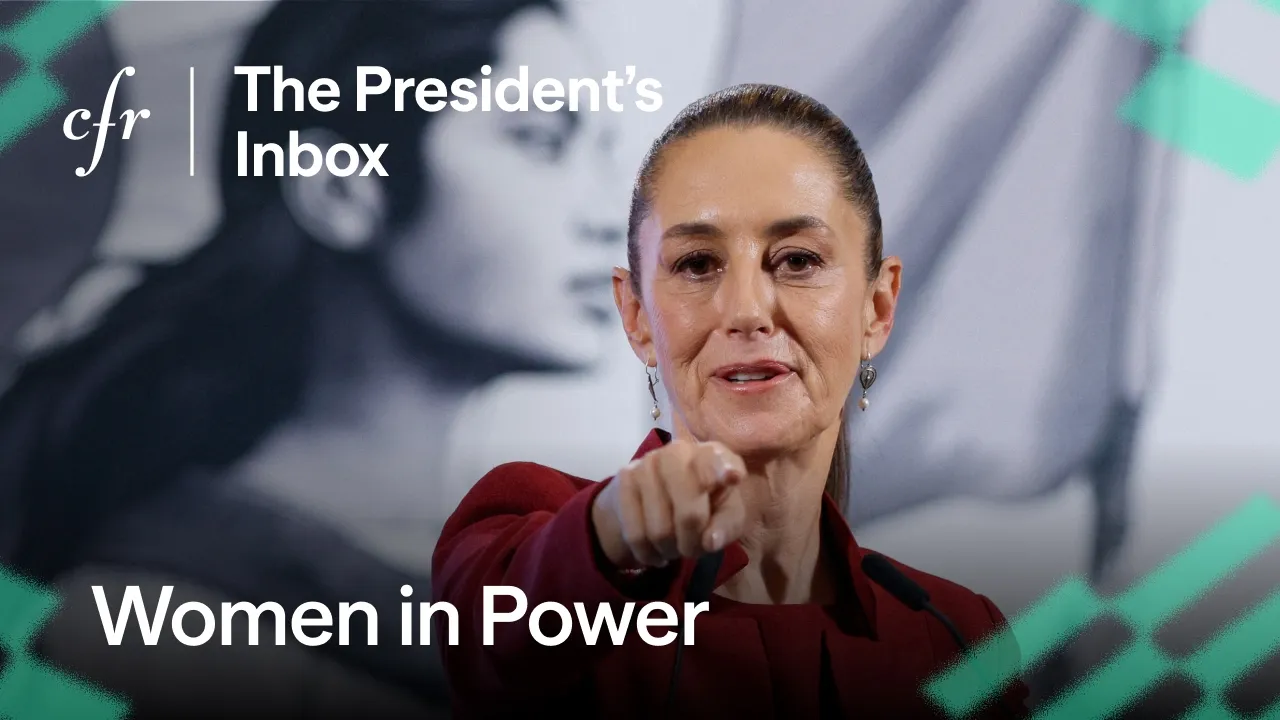
Women in Power, With Linda Robinson
This episode unpacks the unique challenges faced by women leaders, their contributions to democracy, and the critical lessons they offer in the fight against authoritarianism.
Published
Host
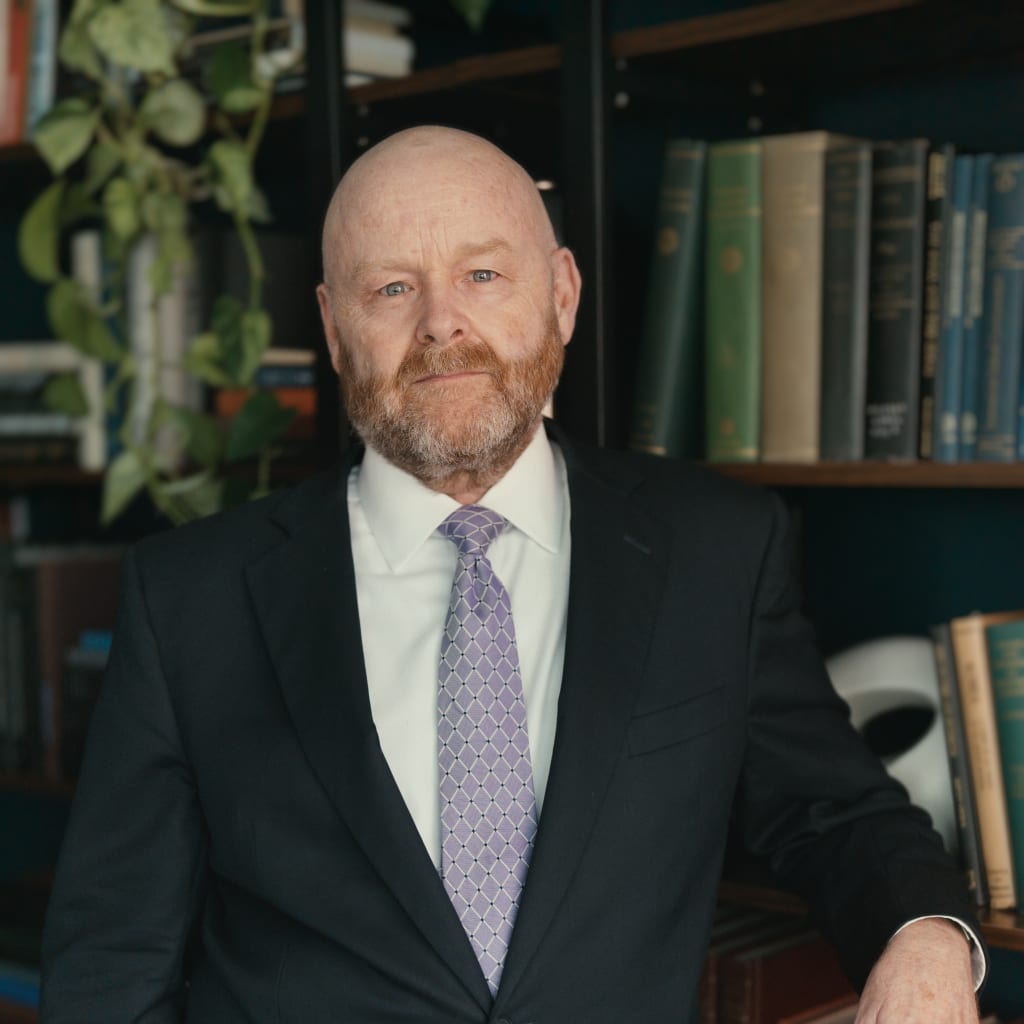 James M. LindsayCFR ExpertMary and David Boies Distinguished Senior Fellow in U.S. Foreign Policy
Guest
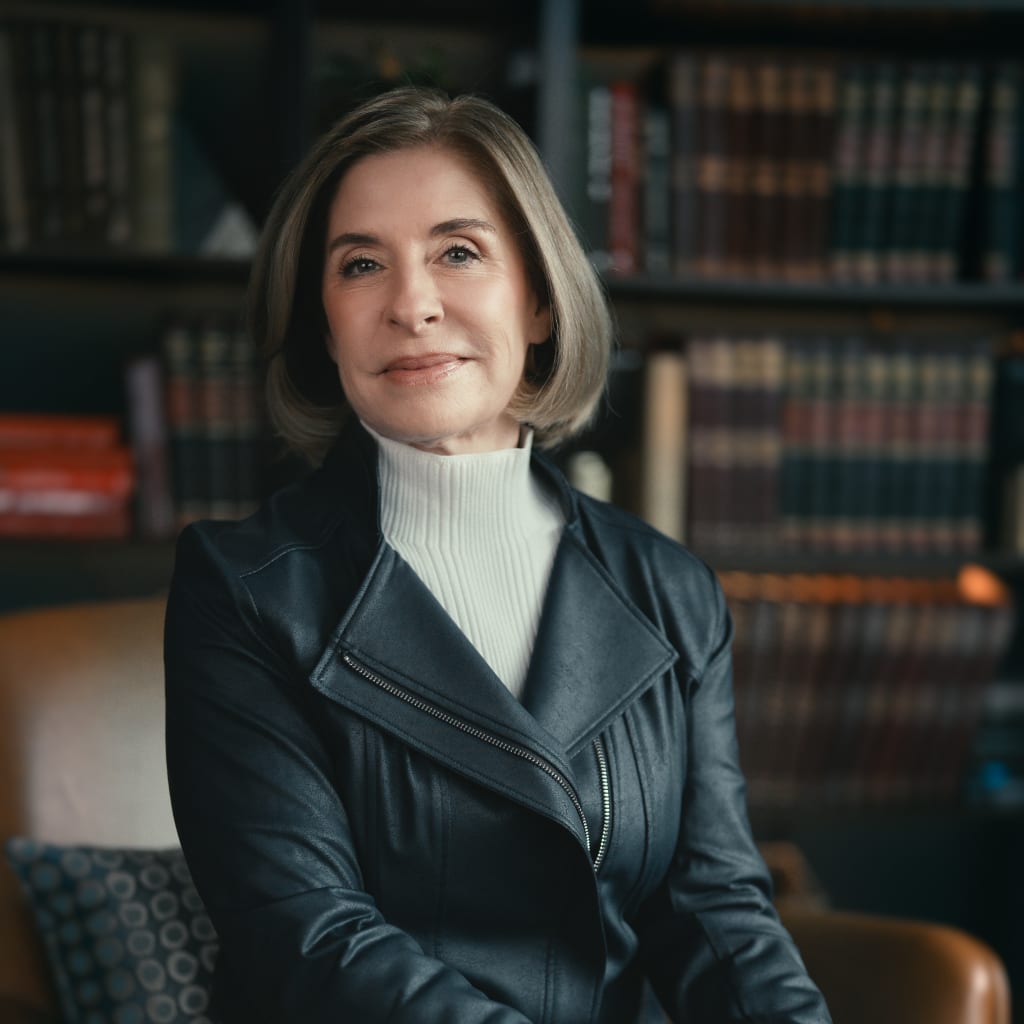 Linda RobinsonCFR ExpertSenior Fellow for Women and Foreign Policy
[Video: https://youtu.be/I0158WRq77c]
TRANSCRIPT
ROBINSON:
Many authoritarians may not be inherently misogynistic, but they see this as a brilliant tactical move to sideline half of the competition.
LINDSAY:
Around the world, anti-democratic forces are taking aim at women leaders. But women leaders are fighting back. They’re at the forefront of countering Russian hybrid warfare and crafting strategies to fend off possible Chinese aggression while working to forge inclusive domestic policies at home.
Do women leaders face unique challenges? Why do authoritarian movements frequently seek to diminish the role of women in politics? And what lessons are women leaders providing amid the current global crisis of democracy?
From the Council on Foreign Relations, welcome to the President’s Inbox. I’m Jim Lindsay. Today, I’m joined by Linda Robinson, Senior Fellow for Women and Foreign Policy here at the Council and author of the new book, Women in Power, Fighting for Democracy in an Age of Authoritarianism.
Linda, thank you very much for joining me and congratulations on the publication of Women in Power.
ROBINSON:
Thank you very much, Jim. I’m so happy to be with you on the President’s Inbox.
LINDSAY:
Well, I see you’ve mastered the first art of book sales, which is always to hold it up when the book is mentioned. Before we turn to our conversation, Linda, I want to tell our listeners how they can get a free copy of Women in Power. To do so, they should go to cfr.org forward leaning slash giveaway, where they can read the terms and conditions and register their entry. The registration for the giveaway will remain open for two weeks after this episode goes live. After that, we will select 10 names at random to receive a free copy of Women in Power, and you can find the giveaway link in this episode’s show notes. With those logistics out of the way, Linda, let’s begin.
You argue that we are currently witnessing a tandem crisis of democracy in women’s leadership. What do you mean by that?
ROBINSON:
So I see both the democratic backsliding, which has been very well advertised. You hear it each year in reports like Freedom House, which says we’re in the 20th year of democratic decline worldwide. You often don’t read, though, about women’s political representation, which has entered a stall at this time.
So I looked at what was happening, both with democratic erosion, generally how it’s affecting women, but also the rollback of women’s rights and the opportunity for them to be even more represented than they had been over past decades.
LINDSAY:
And so what have you found?
ROBINSON:
Well, I have found that there are really three trends that are either new or much more impactful for women, and that is the advent of an authoritarianism, mostly from the right wing, that really is preaching that women should be in the home, having families, and not having a public career, political career. And that’s become quite pronounced in many countries, I would say including our own. There’s also been a normalization of violent misogyny, the rhetoric and actual threats and violence that has crept into our mainstream discourse and politics.
And then the last one is the effects of digital technology, and very significantly recently, artificial intelligence, which has spawned a rash of deepfake, often pornographic or sexualized. And these are really delegitimizing for women in politics, and it’s very prevalent. And those are happening not just because users wish to create them, but often as with Grok recently, it just auto generates and auto posts these.
LINDSAY:
Auto posts?
ROBINSON:
Yes, Grok has its own X feed, and it can promote these created videos and images on its own feed.
LINDSAY:
Do we know why it’s self-creating these videos?
ROBINSON:
Well, it’s a very popular item on the internet, and we know that the digital technologies are really designed to create a stickiness or user engagement and maintain it, but also to propagate it to others who haven’t even requested that material.
LINDSAY:
But is it reflecting what its customers are already posting?
ROBINSON:
In some cases, yes, but you can often have adjacent, the algorithms will often serve it up to new people who’ve never requested that, and it’s in the design of these algorithms.
LINDSAY:
So as you look at these three trends, what impact is it actually having on the number or percentage of women who are serving in public office, particularly at senior political levels?
ROBINSON:
Yes, and I did focus on senior levels, but the most robust data is gathered on women parliamentarians in the legislature. So after decades of incremental but steady gains, the numbers of women serving in parliaments has entered a stall. And right now, worldwide, there are 27% of women in the world’s legislatures.
And when you consider they’re 50%, that’s far, certainly, from parity. 22% of the world’s cabinet ministers, and only 7.5% of women presidents and prime ministers. So we’re at a low level, and because of these trends, women are, according to one study by the Interparliamentary Union, women are actually leaving before their term is out at a rate of one out of every six.
So they’re just finding these, as I call them, headwinds to be very ferocious and discouraging for them. And candidacy data is a little spottier, but there are a lot of anecdotal reports that women, young women especially, are declining to really consider entering the political ring, all of which is bad news if you consider equality and equal representation be part of a healthy democracy.
LINDSAY:
Well, let me draw you out on that, because I think the question often comes up in these conversations is, does it matter if political leaders are women or not? Do women govern differently? Do they have a different take?
Do they put different issues on the table? What is your sense of how that question gets answered?
ROBINSON:
Yes, well, there are two basic answers. One is a fairness issue. When you’re talking about half of the population, more equal representation is considered by many to be fair, and women certainly fought for that in the third wave of democratization.
LINDSAY:
Which was when?
ROBINSON:
The 1970s is when it began, and you had increasing representation and governments committing to do so through various measures, adoption of quotas, other measures to support women who wanted to get into the ring. But there’s also a practical matter that’s been documented very well by the CFR program, our Women and Foreign Policy program, that you have a tendency among women to be more attentive to health, education, and welfare issues. You can see it in the legislation that’s passed, the funding that’s passed.
And increasingly, there’s also new research that shows women tend to be more concerned about climate change and some of the other systemic reforms. And that’s, I think, all in the column of benefits of having women in. But I also focused on how women deal with national security and foreign policy issues, because that is, of course, for women at senior levels, presidents and prime ministers, they have to be equally good at that as men to be elected.
LINDSAY:
And just to be clear, you’re not arguing that women are uniquely democratic in their governing style? Because I can certainly come up with a long list of women who did get to the top of the ladder and did not govern as Democrats, small d.
ROBINSON:
Thank you. Absolutely. And the caveats are important.
But just as we wouldn’t argue that all men are good leaders, there’s no argument here that women are ipso facto good or better leaders. And they’re not certainly not all Democrats. And Sheikh Hasina of Bangladesh was the longest serving authoritarian leader until she was thrown out in a popular and youthful uprising.
Her main opponent was actually a woman whom she put in jail. So women are certainly capable and have been authoritarians as well. But I think there is an important argument to be made that women have every right and every competence.
They’ve thoroughly closed the education gap there. There’s competence there that isn’t being tapped. So I also would make the argument that if you exclude or discourage half of the talent pool, you’re just not getting fully competitive elections to bring in the best candidates.
LINDSAY:
Let me ask you a question from a different perspective. And that is a lot of authoritarian governments, particularly thinking back in the 60s, 70s and 80s, communist governments argued that they did much more for women, empowering women than democratic governments did. Is that a fair critique?
ROBINSON:
Well, there were certain formal provisions adopted and there were women’s representation. And we should also say numerical representation is just the beginning of power and influence. It matters what substantively they do and can do.
And there are certainly authoritarian governments that have boosted their numbers in what’s called gender washing by having women in positions that aren’t necessarily in power.
LINDSAY:
Yeah, I will not. I look at China, which is interesting in many ways. It is empowered women.
But when you look at senior ranks of the Chinese Communist Party, you have to look really hard to find women.
ROBINSON:
And in fact, the Politburo for the first time has zero women under President Xi. So it’s actually been gone from tokenism to nothing.
LINDSAY:
So you focused a lot of attention on the role of authoritarian governments or right-wing movements in trying to roll back the accomplishments of women and sort of gaining political power, particularly senior positions in governments around the world. Help me understand why it is that rolling back women’s rights is so important, so central to either the right wing or authoritarian movements you see around the world.
ROBINSON:
Well, there is a very strong correlation in the research between authoritarian tendencies and what they call social dominance orientation. So a real predilection to marginalizing women or not treating them as equals, a misogynistic outlook on life, if you will. You could call it traditionalism, but in this day and age, I think it’s fair to say it’s very exclusionary.
The second point is that many authoritarians may not be inherently misogynistic, but they see this as a brilliant tactical move to sideline half of the competition. So by keeping women out.
LINDSAY:
Help me understand that, Linda. Why is playing the misogyny card, and we’ve seen it across democratic countries, so effective? Why is it so powerful?
ROBINSON:
Well, there is, in fact, according to the Human Values Survey, a good deal of latent prejudice remaining against women and women in politics in particular. And what is interesting when you look at the data, while men are more prejudiced or more doubtful that women can or should be in the public and political sphere, women share that as well. They’re less prejudiced, but they are.
So it’s an effective way of sidelining women so they don’t compete for power that their voices are lessened.
LINDSAY:
Do we have a sense of why it is that these attitudes exist? I mean, particularly referring to the studies that show that women can be misogynistic, which seems counterintuitive.
ROBINSON:
Yes. Well, I’ll just give you one data point, and it is not an area of my research in particular, but white women voted for President Trump. The plurality of them voted for President Trump, and even more of them voted for President Trump in his second election.
And he displays a lot of behaviors that would turn off many women. So I think it’s very interesting. They’re identifying perhaps not just from their gender, but from their religion, from their race, from concerns about migration, illegal immigration, crime, et cetera.
So I think, and historically, we’ve seen women often adopt very traditional attitudes. The forefront of the campaign against the Equal Rights Amendment, which still hasn’t been incorporated in our Constitution, Phyllis Schlafly and Anita Bryant were the poster women for that movement.
LINDSAY:
Well, that’s an interesting point, because what I noticed that in some countries, the nationalist parties, nationalist movements are headed not by men, but by women. You have the current Prime Minister of Italy, Giorgia Meloni, who led a far-right nationalist party. In Germany, the Alternative for the Future of Deutschland was led by Alice Weidel.
In France, we have the national rally headed by Marine Le Pen. Help me understand that, because the way you’re laying out it, it seems contradictory in a way.
ROBINSON:
Yes, but I think this is a good example of the phenomenon I just mentioned, that these women are identifying more as white and Christian, and they see an invasion of immigration, of other religions. And Giorgia Meloni has made it quite clear that she sees herself as a defender of European white Christian civilization. But I will say, and we might talk about her more later, but she’s undergone an evolution from some of her earlier positions.
And just on the woman front, she was attacked by deepfake porn and went to court over it, and she’s been very vociferous and vocal about the need to strengthen some of the guard rails and ensure that women aren’t attacked in this fashion.
LINDSAY:
Now, that’s interesting, because you’ve pointed out a number of women have been very successful in gaining entry into politics, but then opted to leave politics because of these social media assaults, being trolled, worrying about their security, security of their family. But you have someone like Giorgia Meloni, who didn’t quit the playing field, but battles it. Do you have a sense of why that is?
ROBINSON:
Why women leave?
LINDSAY:
I understand why women leave. I guess maybe the question is, why do they stay? Is there something that you’re in a different space if you are leading a right wing party than if you’re leading a center or left or center party?
ROBINSON:
Well, there isn’t in these cases we’re talking about. There’s not a cross country study. I do know the volume, the vitriol, the violence in the case of Jacinda Ardern was just phenomenal.
LINDSAY:
Tell me a little about that, because it is stunning to read what she experienced.
ROBINSON:
Yes, so Jacinda Ardern was actually the third woman who served as prime minister of New Zealand, and she was at the time the youngest female leader in the world. She had a very successful first run as the prime minister. She dealt with major crises, COVID, the Christchurch massacre, a horrible natural disaster.
But then she began, because she had very strict COVID policies, in part to protect their Maori indigenous population, and a real campaign began against her. And there was actually a study, university study done that showed she received 90% of the online abuse and violence and threats, death threats tripled against her in the final two years of her term. And she had a young child, a daughter.
She was very concerned. She was being chased. She’d look out her government window and see a noose strung over a tree.
So it was really a very threatening environment. And she did decide to resign, but I will say she’s maintained a high international profile and continues her counter-extremism campaign. And I think she chose, and I think it’s the right of women to decide when they’ve had enough.
But she and some other younger women who stepped back, criticizing what they were facing, could come back again for another day. Jacinda Ardern is now the most popular figure in New Zealand politics. She’s at the top of the polls.
LINDSAY:
But the interesting thing is, maybe the sad thing, is she is not the only woman politician, woman leader in this situation. You’ve talked about, is it Sanna Marin, former prime minister of Finland, who finally had enough and decided she wasn’t going to pursue a political career. I just wonder, sort of looking at that, what do you think the consequences might be of women leaving?
Does it, do you think it’s going to, in essence, get societies to face up to the misogyny? Or does it in some way ratify it?
ROBINSON:
Well, Sanna is someone who’s still very much on this scene as well. And she’s just written a memoir and a documentary was done about her term in office. And I think what was obscured by a lot of the gendered abuse, and there was the viral video of her dancing at a private party, which was considered a scandal, even though it was a completely innocuous thing.
She and her women fellow cabinet members were attacked at 10 times the rate of her male cabinet members. And so there was that evidence of the abuse, but it obscures her real achievement, a crime of which was bringing Finland into NATO following the Russian invasion of Ukraine. And she’s continued to be one of the foremost proponents, not only of aid to Ukraine, but very importantly, this idea of Europe standing up and getting an integrated defense.
And Finland and Sweden are major parts of that. So it’s a loss for the governing world that she stepped back. But she is, again, she’s very young.
She’s part of the advisory group that Tony Blair has founded. She’s very much still on the world stage. And I have a feeling she will be back.
But she’s also speaking around the world about her experience as a leader. And when she chose to step down, she went on stage to the tunes of Aretha Franklin’s Respect. And she’s been very vocal in pushing back.
And part of changing norms is people being willing to push back and call it out, because it used to be that women would try to pretend it wasn’t happening. It’s so vicious and viral now that I think the first step is to call it out. Second, to look at some systemic fixes, most of which I would say is in the realm of product safety responsibility for the tech companies, but also social norms and the evidence of these women governing well and in very existential challenges, Russia, China, climate change.
They’re doing an excellent job. And I think that track record, that’s what motivated me to really sell, go into depth in studying their policies. That evidence that they do just as well as men, I think, can help in some cases have done better and better, at least as well.
LINDSAY:
So one of the things I’m struck by is that there clearly is a double standard. We talk about men who are leaders versus women who are leaders. And I saw the video of Sanna Marin, which caused controversy in Finland.
I don’t necessarily understand the cultural context in which it emerged, but it seemed relatively harmless. So how is it that women are dealing with this, what at least to me seems to be a double standard? Because I can’t imagine that a video of a male prime minister dancing would have caused great outrage.
ROBINSON:
Yes, I think that that is what’s remarkable. And women around the world posted videos of themselves dancing in solidarity with Sanna. But you’re quite right to point out.
And I think it’s very helpful when someone like you says we have to recognize this is a double standard. I think there’s even in a country like Finland, which rates very high in the gender equality indices, it’s surprising that that surfaced. But I think it’s important to note it’s not a majority of the population in many countries.
There was a right wing populist party from which a lot of this was emanating, a right wing populist party across the channel in Estonia, which is very close and they have a lot of ties. So this is also kind of a transnational movement of these right wing parties, movements. The violent misogynists that live online in a space called the Manosphere.
And it’s all really this toxic stew. And I think we should understand we’ve had backlash periods before, but it’s really a vicious place now. And I think people who care about democracy should be joining in this fight.
So it’s not just a women’s fight alone.
LINDSAY:
On that point, Linda, do we know to what extent the social media campaigns against women leaders politicians are homegrown versus being stoked by authoritarian governments? And there’s no secret that the Russians and the Chinese and the Iranians and who knows whom else have been trying to meddle in politics in democratic countries, sowing division. Do we have any real sense?
ROBINSON:
Yes. So there have been some good forensics on cases to bring that to light. And you’re right.
It’s definitely both homegrown, but also coming from abroad and often as part of a hybrid warfare campaign. And a couple of examples, Tsai Ing-wen, the first woman to be president of Taiwan, two term president, landslide elections. The Chinese created a video and a digital book that basically portrayed her as a prostitute.
And this is a very professorial, accomplished woman. And it was just the most debasing kind of propaganda that was designed to be fed out into social media platforms. And they were able to trace that back.
And she did face gendered abuse in her campaigns at home. But it was a very systematic part of what China’s been leveling at Taiwan, at the island. In the case of Moldova in Europe on the border with Ukraine, Maia Sandu faced an incredible campaign of gendered abuse that came from Russia, which has been trying to control the former Soviet Republic through an intensive hybrid warfare campaign.
And they were able to document both Russian sources of it, as well as other, the Russian Orthodox Church and other social movements that were trying to portray her as unworthy of being president.
LINDSAY:
I’m glad you raised both of those examples, but particularly the Taiwanese president, because one of the, it seems to me, challenges that women leaders face or women politicians face in trying to win high elected offices, whether they can handle tough national security challenges. And I think we saw that in 2024. And then candidate Donald Trump really leaned into the notion that Kamala Harris didn’t have what it took to stand up to Xi Jinping or to Vladimir Putin.
He talked about her as being a toy in their hands.
ROBINSON:
Play toy, yes.
LINDSAY:
Help me understand, because obviously, if you are running for president of Taiwan, security, national security, foreign policy has got to be one of the big issues because of the whole question of where things stand with China.
ROBINSON:
Yes, so here I think credentials and popular support really were critical to President Tsai’s winning bid. First, the party came to her when it was suffering a corruption crisis scandal, and she ran, agreed to run for president, did not win the first time. The second time she did win, and she had been the lead negotiator for Taiwan’s accession to the GATT, Global Agreement on Trade and Tariffs, and the World Trade Organization, and then was asked to be the head of the Mainland Affairs Council.
So she was very familiar with cross-strait relations. So she understood the issue. She was a known figure.
She was in the Legislative Yuan. But she also was for a transparent culture, and this played to her benefit because there was a student uprising, the Sunlight Protest, that objected to the backroom negotiations with China, and she became really, I think, a darling of the youth of Taiwan. She embodied this reality now that the great majority of people in Taiwan see themselves as Taiwanese, not Chinese.
And then when she came to power, she really adopted a very comprehensive plan to bolster the social safety net of Taiwan, which was fraying, but also be inclusive about bringing in women, bringing in indigenous people. She fought for all kinds of measures to make her society more resilient, which is part of defeating hybrid warfare. They’re in a much stronger place now as a result of her eight years of presidency.
LINDSAY:
So do you see any lessons or common themes that emerge when you look at women politicians who face this question of whether or not they could handle tough national security challenges, nonetheless got elected? Do we see anything we can draw on as this is the way to tackle the issue?
ROBINSON:
Yes. Well, I think in Tsai’s case, I would just say she was very careful not to tip into a provocative. There was no question of declaring formal independence.
She says they already feel independent. They’re defending their rights. And it is.
It’s ranked in the top 10 democracies in the world. I think people maybe don’t realize that, but she did prove herself through that track record. And I think that the formula that I saw as I looked across these cases, and there are about 14 women in the book that are discussed in some detail, but the theme that began emerging with the Taiwan case was an emphasis on domestic resilience.
And part of that is to be unifying and not divisive. The idea that you can have social policies that benefit everyone economically and so forth, but also bring in the people who’ve been marginalized or discriminated against to have information in cyber policies that prevent these attacks from abroad, but also the divisive social media. So I think that was the main theme.
But I also saw women being quite adept at understanding they were being attacked from abroad by a hybrid warfare strategy. So not just military. Yes, they did defend a strong defense policy, but they saw it was equally important to have economic, informational, social, what we call all elements of national power as part of their defense.
Finally, they all looked to international partners and reforming the international system so they would have a stronger coalition, if you will, to help bolster them. Because in many cases, these leaders came from smaller countries. They could not hope to prevail against these existential challenges without partners and allies.
And so I think that predilection to build strong partnerships is there as well.
LINDSAY:
Can I draw you out more on that, Linda, in terms of partnerships? Because I think it’s very clear, and you’ve alluded to this, that when you look at right wing parties, there’s been a lot of cross border transnational collaboration, I guess collective learning, if I could put it that way. Are we seeing anything like that as women leaders try to learn from the successes of others, encouraging others?
Because again, while I take your base point that we’ve seen a decline in women’s political participation, as you look around the world, there are still a fair number of women who are running their countries. In Japan, you have Sanae Takaichi, and Giorgia Meloni mentioned in Italy. So help me understand to what extent we’re seeing collaboration in terms of knocking down these barriers that women leaders face.
ROBINSON:
Yes. Since she stepped down as a term limited, President Tsai has actually really been trying to form a democratic coalition around the world. And I use that in an informal sense of the word.
LINDSAY:
A democratic small date.
ROBINSON:
That’s right. Yes. And a coalition in that it’s a collective of like minded countries rather than a formal name like NATO.
So she has really traveled around widely doing that. It’s great you mentioned Sanae Takaichi, because one of her first acts in office was to come out and speak in defense of Taiwan and indicate that Japan- And that made Beijing very unhappy. Very unhappy, but very important to Taiwan, of course, but also all the countries around the world that are worried about the ambiguous signals from the US and whither the democratic community.
The other very important center of gravity is Europe. So you do have a preponderance of women. Half of the women leaders in the world today are in Europe.
And that’s a legacy of not only their culture and history, but the European Union literally requires both democratic standards and a gender equality framework for people to enter into that 27 state union. And I think you have now 40 percent in the European Union are the vice presidents in the commission. So they have significant representation.
Mette Frederiksen has been one of the standouts in Denmark as prime minister of Denmark. But you have a collection, Kaja Kallas of Estonia, now the senior, the high representative and vice president for foreign policy and security policy in the EU. These women have really made this hallmark of being strong on the democratic principles and strong on uniting against not just Russia, but building up this coalition approach, the middle powers you hear.
That was Mark Carney, the Canadian prime minister’s term. But I think you’re seeing a gathering in under the umbrella of democracy. And I think that’s important that women, they’re not seen as governing for women.
They’re helping to form a big tent in favor of democracy, but an inclusive democracy.
LINDSAY:
And I want to close on the question of what the policy recommendations are that flow from the work you’ve been doing. I take it that part of it is up to people individually to mobilize and to act and to participate. But particularly when you look at issues like the role played by social media, advances in AI, you’ve talked about deep fakes, the ability to troll anonymously.
Does that suggest a policy platform that we should be talking about in terms of changing how social media operates?
ROBINSON:
Yes, and in fact, to go back again to the European Union, that is one of the entities that has legislation, the Digital Services Act, that is squarely centered on this idea of product safety, and that it’s the responsibility of the companies to ensure their products are safe. And it requires them to assess their products for risk, including the risk of promoting gender-based violence, a number of other systemic risks. They have to evaluate it, adopt mitigations, show they are taking action.
And if not, they have a very hefty 6% fine of gross revenues that can be levied. So that’s the kind of action. Australia has also been a leader in that regard.
Many other countries are starting to adopt laws in this regard. And I think it’s essential for people to understand it’s about product safety, not censorship. So I actually see, and if I may say, the U.S. has adopted its first law, the Take It Down Act last year, and the first lady, Melania Trump, advocated for it. And it’s the first law to criminalize the sharing of intimate images and deep fakes. We’re not seeing much implementation yet, but it’s a law in the books. The other thing is, are democracies as representative as they can be?
And electoral reform in many countries, including this one, I think is a growing topic. And again, it’s not- What would that look like? So there is the American Academy of Arts and Sciences came out with a report last October advocating that Congress adopt a multi-member district proportional representation.
And that kind of scheme is a way to ensure the popular vote is more adequately reflected.
LINDSAY:
It would get rid of the problem of political gerrymandering.
ROBINSON:
That, yes. And really attack the polarization problem we’re living, because everyone would have representation where the middle now is really suffering from that. And as a part of that, you would see more women in government.
So it’s one of those solutions that I really think is important to look at what’s good for democracy and also good for women.
LINDSAY:
On that note, I’ll close up this episode of The President’s Inbox. My guest has been Linda Robinson, Senior Fellow for Women and Foreign Policy here at the Council, and the author of the new book, Women in Power, Fighting for Democracy in an Age of Authoritarianism. Linda, thank you very much for joining me.
ROBINSON:
Thank you so much, Jim.
LINDSAY:
Today’s episode was produced by Justin Schuster with Head of Production, Jeremy Sherlick, Senior Video Producer, Grace Raver, and Director of Podcasting, Gabrielle Sierra. Our recording engineer was Jorge Flores. Additional assistance was provided by Oscar Berry.
This transcript was generated using AI and may contain errors.
Enter the CFR book giveaway by July 8, 2026, for the chance to win one of ten free copies of Women in Power by Linda Robinson. You can read the terms and conditions of the offer here.
We Discuss:
- Why women’s political representation has stalled at roughly 27 percent in the world’s legislatures.
- How right-wing authoritarianism and the normalization of violent misogyny have combined to create ferocious headwinds for women in politics.
- Whether women govern differently from men, and what the research reveals about their attentiveness to health, education, welfare, and climate issues.
- Why rolling back women’s rights is central to authoritarian and right-wing movements, and why playing the “misogyny card” proves so effective, even among women voters.
- Why some of the most prominent nationalist movements—in Italy, France, and Germany—are led by women, and how right-leaning figures like Giorgia Meloni complicate the picture.
- How authoritarian governments use hybrid warfare and gendered disinformation against women leaders, including Chinese campaigns against Taiwan’s Tsai Ing-wen and Russian campaigns against Moldova’s Maia Sandu.
- Which common themes emerge among successful women leaders.
- Which policy reforms could strengthen both democracy and women’s political participation.
Mentioned on the Episode:
Linda Robinson, Women in Power: Fighting for Democracy in an Age of Authoritarianism, Columbia University Press
Sanna Marin, Hope in Action: A Memoir About the Courage to Lead, Scribner
“Freedom in the World 2026: The Growing Shadow of Autocracy,” Freedom House
“Expanding Representation: Reinventing Congress for the 21st Century,” American Academy of Arts and Sciences
“TAKE IT DOWN Act (S.146),” U.S. Congress
“The Digital Services Act,” European Commission
“First Five,” HBO Max
Opinions expressed on The President’s Inbox are solely those of the host or guests, not of CFR, which takes no institutional positions on matters of policy.
Associate Producer, Video and Audio
- Associate Producer, Video and Audio
Editorial Director and Producer
- Director, Podcasting
Head of Production
- Director of Video
More Episodes
 38:03Podcast
 33:42Podcast
 36:05Podcast
 41:07Podcast
 39:26Podcast
 35:04Podcast