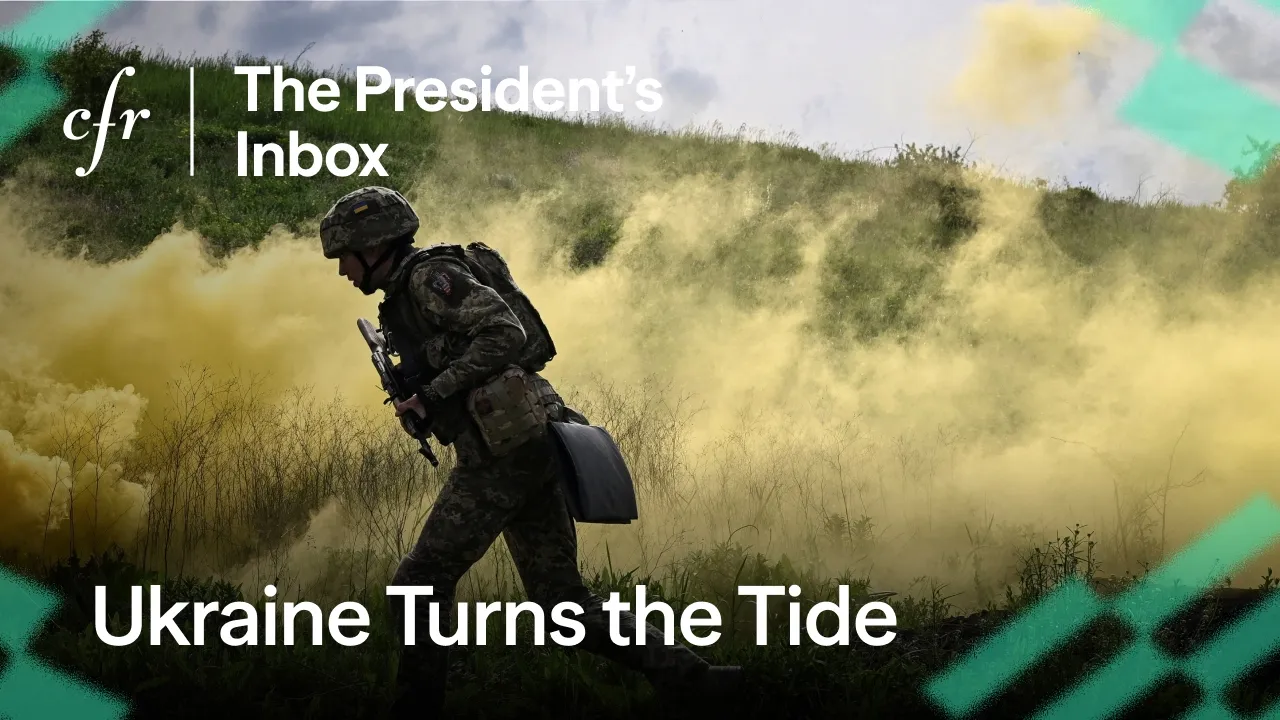
Ukraine Turns the Tide, With Liana Fix
This episode unpacks whether Ukraine has turned the tide against Russia on the battlefield and assesses the new security relationship between Ukraine and Europe.
Published
Host
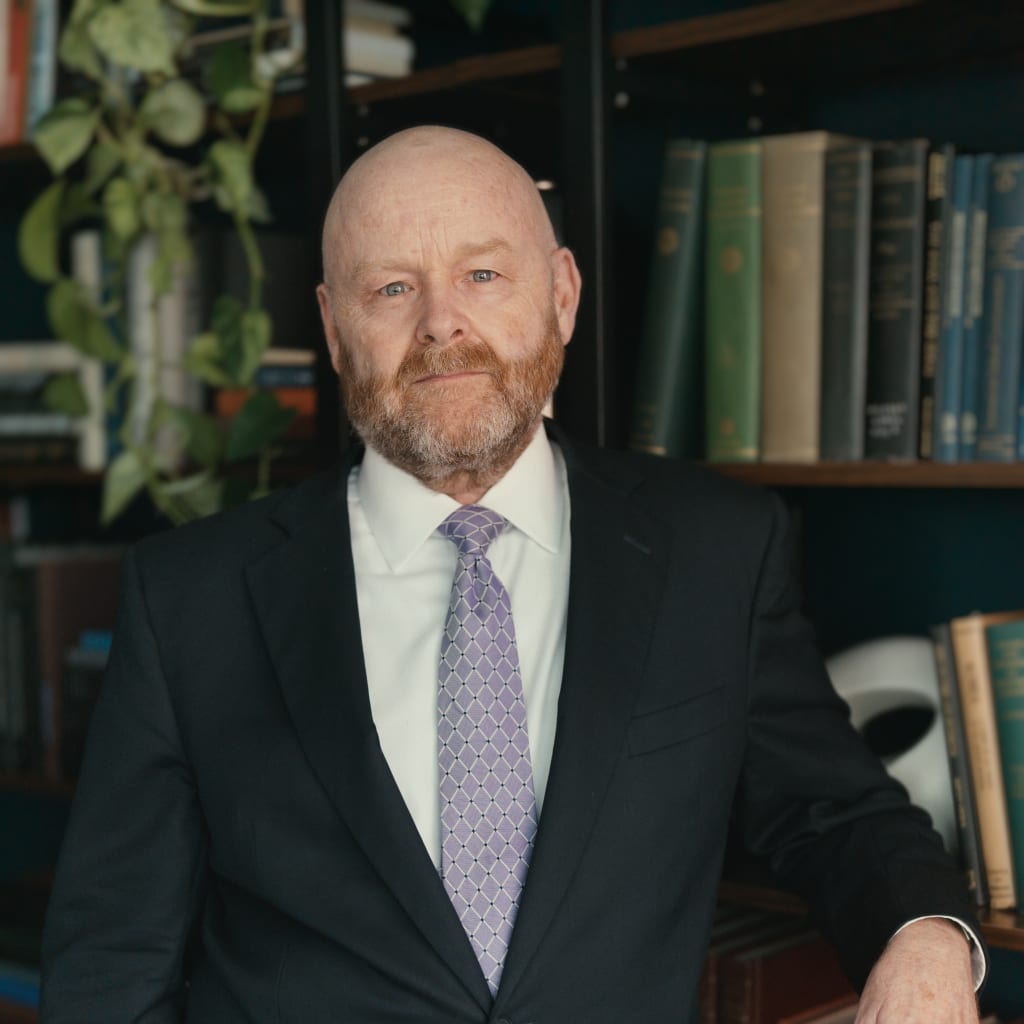 James M. LindsayCFR ExpertMary and David Boies Distinguished Senior Fellow in U.S. Foreign Policy
Guest
 Liana FixCFR ExpertSenior Fellow for Europe
[Video: https://youtu.be/WG078xSebys]
TRANSCRIPT
FIX:
Russia could have walked away from the table with real gains.
LINDSAY:
But Putin refused to do that.
FIX:
Putin didn’t want to do that. He’s so radicalized in his ideological beliefs that he can’t accept what is on the table, even if it’s an amazing deal for Russia.
LINDSAY:
Russia attacked Ukraine in 2022 expecting a quick victory. But the fighting turned into a war of attrition. Russia gained Ukrainian territory at a grudging pace and at a great cost.
Last month, however, Russia suffered a net loss of territory in Ukraine for the first time since 2023. Ukrainian drones have played a major role in negating Russia’s military forces. Have we reached a turning point in the war in Ukraine?
Can Kyiv sustain its recent successes? And what are the prospects for securing a lasting ceasefire in the conflict that is changing how wars are fought? From the Council on Foreign Relations, welcome to the President’s Inbox.
I’m Jim Lindsay. Today, I’m joined by Liana Fix, Senior Fellow for Europe here at the Council on Foreign Relations. Liana, thank you very much for joining me.
FIX:
Thank you, Jim.
LINDSAY:
Liana, the war in Ukraine passed a milestone last week. The fighting there has now officially lasted longer than World War I in length. The Ukraine war, of course, has often been likened to World War I.
Both wars began with lightning strikes that the aggressor thought would yield a quick victory, only to turn into grinding infantry assaults and static battle lines. Can you give me a sense from your perspective of where things stand in the war in Ukraine now that we’re at almost four and a half years?
FIX:
Yeah, so just like World War I, the war in Ukraine has really changed in its nature throughout those last four years. And what we witnessed in the last year in particular is a change where the front line is not only dominated by drones, which has been the case already for a long time. You have a death zone of around 18 miles between the movement of the two troops.
And you see basically everything. The Ukrainians have a very advanced system of integrating all the input that they get from the battlefield. So that is the case.
But what we also see throughout the last year is that Russia’s hopes that it could just wait and either win the war on the battlefield or through negotiations with Donald Trump have disappeared. Russia hoped that once Donald Trump came into office, there could be quick victory for Russia at the negotiation table by demanding the entirety of the Donbass, the eastern region that Russia is fighting for. Or if that would not come to pass by just winning the Donbass militarily.
And Russia had, in terms of manpower, Russia certainly had an advantage over Ukraine. Russia was able to generate more manpower so less Russian soldiers were dying than Russia was recruiting with great incentives in terms of financial incentives to everyone who wanted to join the war. But that calculus has changed.
By now, Ukraine has gotten better in attracting new soldiers, in training those soldiers. And if I may plug a fantastic piece on foreign affairs by the British analyst, Jack Watling, he argues that now we have come to a point in the war where an actual ceasefire between Ukraine and Russia that negotiated either directly or with help of the United States or Europe might actually be possible. And Russia might agree to a ceasefire without the maximalist conditions that it has put up front when Donald Trump came into power.
So that’s the interesting point. That’s the first time that, as Jack Watling rightly puts it, Ukraine could fight Russia into an unconditional ceasefire.
LINDSAY:
Okay, you put a lot on the table. Let’s sort of break that up. I want to basically begin with the question of how is it that Ukraine has been able to negate what everyone assumed was an overwhelming Russian advantage on the ground?
Again, it’s no surprise to you, much of the conversation was simply on how Russia, after it failed to get its quick victory, was simply going to grind much smaller, less well-equipped Ukrainians and gain victory. Explain to me exactly how that was avoided.
FIX:
The main Russian advantage on that was its manpower advantage. Russia, without asking for general mobilization across Russia, which would have been met by a lot of social protest, was able, through financial incentives, to just send soldiers into the meat grinder of the Ukraine war. Russia did not pay a lot of attention to training.
It was just the masses that it was able to attract. And the casualty, and by that Russia was able to offset the incredible casualty rates that it had, 23,000 per month on average in 2025. I mean, imagine, that’s a huge number.
And with that, the sheer manpower helped Russia to grind forward, but only in very small ways. Russia was not able to make the big breakthrough that it would have needed to occupy the entirety of the Donbass. At the same time, Ukraine was going through some reforms that were necessary in the structure of its army that makes it easier now for Ukraine to offset the losses that it has itself.
So there’s, for the first time, as Jack Watling reports, there’s, for the first time, a net positive inflow into the Ukrainian army. And this positive assessment of where Ukraine stands is also shared by Europeans, by European officials, that for the first time, the sort of grinding forward behavior from the Russian side is not yielding any more gains. And if we combine that with the advantages that Ukraine has on the technological side, I mean, the incredible cycle of innovation in drone technology- Let’s talk about that.
LINDSAY:
Go ahead. My sense is that the drone strategy that the Ukrainians have been pursuing has evolved. Initially, it was using drones to attack Russian troops on the front lines.
Then the Russians developed the capacity to conduct drone strikes deep in Russian territory, and indeed have been very successful at taking some of Russia’s domestic oil production and gasoline refinement offline. And now the Russians are focused on what might be called mid-range attacks, reaching down maybe 100 miles or so and disrupting Russian logistical supply lines. How has that sort of changed the shape of the fighting?
FIX:
Well, let me put that into context, because the reason why Ukraine is able to do that is a change in the political context too. I mean, with the Trump presidency, of course, for Europeans, the considerations have changed what they would allow Ukraine to do and what they would accept from Ukrainian side to do. If you remember back then under the Biden administration, but also under European leaders like Olaf Scholz in Germany, there was a lot of hesitation that Ukraine could provoke Russia if it goes too far, if it goes too deep into Russian territory, and that that would unnecessarily escalate the war akin to what we saw in September 2022, when we had a real nuclear crisis that is being talked and analyzed until today.
To what extent was that a real nuclear crisis where Russia threatened a nuclear response in response to Ukrainian gains? So there was a lot of hesitancy, but that hesitancy has disappeared for two reasons. Firstly, because Europeans are now alone with their support for Ukraine.
There’s no US support apart from intelligence and air defense missiles that are even now questioned because of the Iran war coming in. So Europeans have to become more bold in the support for Ukraine. And at the same time, Ukraine is also developing and expanding its own range of its drones.
So it does not need the European weapon systems that some European countries have denied in the past. For example, Germany has denied the Taurus missile to Ukraine. Ukraine is building its own weapon system.
LINDSAY:
It’s the mother of invention.
FIX:
Exactly. That reached really deep into Russian territory. And by that, Ukraine has been able to bring the war into Russia’s homeland in a way that it has not done so before.
And the war has become more present in Russia than it has been before. And that adds to what I just said before, the change in the battlefield and the dynamic that Ukraine is looking quite okay when it comes to manpower right now and has this incredible innovation cycle when it comes to drone technology and the frontline.
LINDSAY:
Okay. So you’ve talked about both the Europeans and the United States in their relative levels of support for the Ukrainians. I want to drill down a bit more on the United States because obviously Donald Trump famously told Zelensky in the Oval Office that he didn’t have the cards.
Give me a sense of what it is the United States has been doing for Ukraine and what has it declined to do?
FIX:
It’s not only that the United States has declined to do something, there’s literally no military aid coming in from the United States to Ukraine in 2025 and the first few months of 2026 and only a very small amount in 2025.
LINDSAY:
So the large tranches of funds under the Biden administration have all been exhausted, spent.
FIX:
They have all been exhausted. If you look at the overview of what is coming in from the U.S. side, it is very small and I think the most important part of that that Ukrainians still rely on that they really need is the intelligence sharing, right?
LINDSAY:
Okay. So that hasn’t been cut off. Has it been restricted in any way?
FIX:
Well, it has been cut off once but then quickly resumed, I think it was about a year ago because of the tensions with Ukraine exactly after the Oval Office meeting that you mentioned but that intelligence sharing is still continuing at this point.
LINDSAY:
And that’s significant.
FIX:
It is significant for Ukraine because just the intelligence that the United States can provide, especially in terms of targeting, is really difficult to…
LINDSAY:
So do we know exactly what kind of intelligence is being provided when you say helps in targeting? What does that mean in a practical sense?
FIX:
Well, obviously, Ukrainians and Europeans are very cautious to talk about.
LINDSAY:
Understood. We’re not giving out any classified secrecy.
FIX:
But it does help to have U.S. support and both from the CIA but also other agencies in mapping out the Russian side of the front line and also in identifying the targets on the Russian side. And although French President Macron has said that France could substitute a lot of that intelligence publicly, I think many are skeptical that this is possible. So that intelligence line is still important for Ukraine.
And the other part that has been important for Ukraine is that European NATO allies have bought weapons for Ukraine. This is called the NATO PURL List, a priority list.
LINDSAY:
Are they buying those weapons from U.S. manufacturers?
FIX:
They’re buying those weapons from U.S. manufacturers for Ukraine. That has been the case throughout the last year.
LINDSAY:
So the Trump administration has allowed that to continue?
FIX:
They have allowed that to continue. And there’s a list, a priority list, this famous Pearl List that has been developed for Ukraine. The problem now only is, which will put both Ukraine but also Europeans in a really tough position, is that the United States just does not have those weapons anymore because they have spent up so much on air defense and on the weapons that are needed in Ukraine for the war against Iran and in Iran.
And that is a real challenge both the Europeans and Ukrainians are struggling with. I mean, they assumed, OK, perhaps the United States is not gifting those to Ukraine anymore, but at least we can buy them. But now sort of the line for orders from the United States, especially on air defense, is going twice around the block.
LINDSAY:
Right. The United States has been actually asking some of its allies to lend it or give it interceptor missiles and things like that.
FIX:
Exactly. So Europeans, I mean, both Europeans and Ukrainians are scrambling in terms of, you know, what they can produce themselves, which is never as good as what the United States has. But I mean, the necessity makes it possible, right?
You need to come up with some kind of, some kind of, some kind of alternatives. So that line of U.S. support is diminishing. So we end up with intelligence support, which is the most important one from the U.S. side right now and because of pressure from the Congress. And so it’s still continuing. There’s also legislation on the Congress that, you know.
LINDSAY:
Well, the House just passed a bill that would provide weapons to the Ukrainians, but that would still have to get through. It will still have. And we’d have to see what the president did with that legislation if it passed, which I don’t expect would pass anytime soon.
FIX:
Yeah. And Congress has really worked on anchoring intelligence sharing for Ukraine in legislation, which is also a bipartisan case, because, I mean, intelligence sharing against Russia, what is there not to like, even for the MAGA administration? And Europeans have really filled the gap.
I mean, if you just look at the numbers, I think that the peak in U.S. and European support, military support for Ukraine was in probably 2023, when there was around 3.5 billion U.S. going to Ukraine. Europeans, then U.S. support, military support has now entirely disappeared in 2025 in the first couple of months of 2026. And Europeans are holding a level of around 2 billion euros to 2.5 billion U.S. themselves that is going to Ukraine. So they have really done a big jump on that. And the most interesting dynamic that I find this is that this is increasingly becoming a two-way street, right? I mean, Europeans are increasingly giving money for drone defenses to Ukraine.
LINDSAY:
Well, Ukraine is the cutting edge of drone technology.
FIX:
It is the cutting edge. And for co-production, Germany, Denmark, the Netherlands are setting up co-production facilities. So military support for drone production has actually quadrupled since 2022.
It was around 400 million euros. Now it’s at 1.6 billion euros. And that sort of benefits both sides.
It’s not only that, you know, the Europeans are helping Ukraine altruistically, right? Because they’re such nice beings. It’s also because they get technology back that they need themselves.
And remember the drone attacks from Russia on NATO territory last year. Europeans really need that technology themselves.
LINDSAY:
How sustainable is European support for Ukraine? And I ask that, Liana, against the backdrop of a lot of political turmoil in major European countries, elections coming up. You grew up in Germany.
There’s been a lot of talk about the surge of the right-wing party, the Alternative for Germany, and that members of that party are much more sympathetic to Russia. And asking, why is it that Germany is in this conflict which is alienating the Russians? Is that a trend that has some legs that we have to worry about?
Or is that something that newspaper journalists from the United States just write about because it makes for good copy and gets you on the front page of your paper?
FIX:
If I were very honest, I would say, Jim, it’s the latter. Because we’ve been discussing this question, you know, throughout the last four years when I’ve come to your podcast, right? Like, how sustainable is it?
LINDSAY:
Well, I asked you because you’re German. I agree. You have a better sense of the pulse.
And it’s true.
FIX:
I mean, it is a big question how sustainable is that support, but it still is throughout those four years, right? And I think what’s often exaggerated, there are two dynamics that make that support more sustainable. First of all, much of that money is now coming through the European Union and not directly from member states, especially the financial side.
LINDSAY:
Does it help that Orban is no longer?
FIX:
It helps that Orban is no longer, yeah, that helped to bring the latest 90 billion package through, which is financed through joint debt in the EU, which is very rare that that happens. And everything that comes from the EU is a little bit more protected, right? Because it takes more to undo it even if, you know, a populist government would come in into a big European and a big European country.
Then we have the example of Italy and of Giorgia Meloni, who has become a real supporter of Ukraine, right, and of NATO and the Western Alliance. And there are other far right parties and some even consider that even if the Rassemblement National, the far right party in France would come into power, they would not stop supporting.
LINDSAY:
But that’s not for at least another year. The French presidential election is 2027.
FIX:
So the real threat that I do see is from the Alternative for Germany, because they are the most radical far right party by far in Europe and most sympathetic to Russia. But that is also something that, you know, to be wrote about down the line in like 10 years or something. It’s not something that’s going to happen in the next election cycle.
So we have more of an institutionalization of Ukraine support in Europe through the EU, through NATO lists. And we have far right parties in Europe that also realize, and this is, I think, the most interesting dynamic, that when the United States retreats as the main security guarantor from Europe, which it is doing right now, very obviously, then Ukraine support becomes even more important because Ukraine becomes a security guarantor for Europe, not the other way around, right? By now, the tables have really, have really shifted.
I mean, the tables have been out for, it’s the Europeans that need Ukraine more than they ever needed Ukraine to pin down the Russians, to fight back the Russians, because they cannot rely on the United States anymore.
LINDSAY:
Let me ask you, specifically on that question, you say pin down the Russians. To what extent do you think it is a realistic or plausible scenario that the Russians would attack NATO? I’ve heard a lot of speculation, particularly about attacking in the Baltics.
Is that, again, something that Europe is genuinely and realistically worried about? Or is that, again, just people sitting around with too much time in their hands, whipping up things to worry about?
FIX:
So two responses to that. First, from a European perspective, a ceasefire in Ukraine is considered a greater risk, right? So for military planners, they do think, well, you know, if there’s a ceasefire in Ukraine, Russian forces will be freed up to do whatever they want to do in the neighborhood.
There doesn’t need to be an invasion of the Baltic states immediately. But, you know, they can just mess around in a way that they could not before. So that is true.
But the other scenario, and I think to me, this is the more dangerous and more likely scenario, we actually just had a confidential workshop in Florence. I’m not complaining about the location.
LINDSAY:
I’ll put aside why you chose Florence.
FIX:
So it was a confidential workshop with European officials and European experts about a different scenario. And that is Russia not invading the Baltic states, but Russia using the U.S. retreat from Europe as a means to put Europeans under political and military pressure and to blackmail them, right? For nuclear blackmail, for conventional blackmail, they don’t need to invade the Baltic states.
LINDSAY:
Intimidate, essentially.
FIX:
They can intimidate the Europeans. And if the United States does not respond in the way that Europeans would hope for, for example, if the United States says, well, you have to negotiate with Russia. This is your turn.
You know, we cannot solve this for you. Then Russia can put demands on the table, on Ukraine support and so on.
LINDSAY:
Wouldn’t that be the end of NATO?
FIX:
It would be the end of NATO, but I mean, what kind of NATO do we still have now? I mean, I think that’s, we, it’s, I think the term NATO disintegration is actually quite correct because NATO is still there.
LINDSAY:
Yes, but there’s a difference between being uncertain about where NATO is and being clear where NATO is. And that is on the ash heap of history.
FIX:
Well, let me just say that Europeans, especially after the Greenland episode at the beginning of this year, have actually started to consider a plan B. If I last year have asked Europeans, what about a plan B? And they all told me, no, we’re not considering that the United States is still there.
We might have a more European NATO, but that’s it. This year, they’re taking very serious steps and they have some very broad conceptual outlines of how European defense would look like. I mean, there’s no plan.
There’s no European defense planning, but there are ideas that are consolidating, right? I mean, there’s wargaming around the use, Article 5, Article 42.7. There are discussions ongoing on command and control, how Europeans could organize that themselves if they didn’t have access to NATO. There are discussions ongoing on France’s nuclear contribution to Europe.
So and all that kind of comes together. And Ukraine has a key part in that and much more central part than it would have with U.S. protection. Because with unchallenged U.S. protection, the Europeans would not need Ukraine necessarily. It’s nice that Ukraine pins down Russia. But if the U.S. retreats, then Ukraine’s value to Europeans becomes much bigger. And so, for example, in Florence, we had a discussion about burden sharing between Europeans and Ukrainians.
And not in terms of what is Europe’s burden in supporting Ukraine, but what is Ukraine’s burden in fighting off Russia for the Europeans. And I think this is the discussion that we will have in the future in Europe. It’s not anymore about helping Ukraine.
It’s Ukraine helping us.
LINDSAY:
Let’s put a pin in that. We’ll come back to that in 6 or 12 months. I’ll ask you how all that’s going.
I want to flip this script and talk about Russia and that is, how is the Kremlin reacting to what is happening on the battlefield? I will note that in the last week, Russian economic and financial officials have been quoted as warning that the economic burden of the war is becoming unsustainable. Is there a sense that Vladimir Putin is reconsidering his maximalist position on the war?
FIX:
So there is a sense that if you talk to deep Russia analysts, you know, who especially have a good grasp of the economic situation, there is a sense that something is off, right? That there are increasingly voices who speak out publicly in Russia about a problematic economic situation, that this cannot be upheld. And part of this dynamic is also that the hopes that were associated with the Trump administration have all but disappeared.
If you look at the way how the Russian president of Vladimir Putin has approached his negotiations with Trump, it’s just really difficult to comprehend that he has been offered so much, a lot. He has been offered from the Trump administration more than any other US administration would have ever offered him. I think the Trump administration, at least, well, actually, since I can think of, has been the most forthcoming in terms of Russian demands.
All it would have needed from the Russian side would have been a small concession. It would have been something to say, like, let’s do, you know, land swaps, small land swaps across the front line. But in general, we will accept a ceasefire in Ukraine.
And Russia could have walked away from the table with real gains. But Putin refused to do that. Putin didn’t want to do that.
And that’s something that we’ve already observed in 2014 and afterwards, after his first invasion of Ukraine and with immense negotiations and so on. He’s so radicalized in his ideological beliefs that he can’t accept what is on the table, even if it’s an amazing deal for Russia. And I think that also contributes to some of the frustration in the Russian elite, which is, look, we had this fantastic opportunity.
We thought it’s all, you know, coming our way. The US administration is coming our way. The battlefield situation is coming our way.
And now everything, all of that is collapsing. And you can sense this frustration. I mean, there was an opportunity for restored US-Russian business relations, perhaps even the return of US credit cards to the Russian market.
I mean, what an opportunity. And just because Vladimir Putin really wants the last centimeter of the mass, that has not come about. And I think that’s the sense of dead end right now, right?
I mean, the political pathway has not worked with Donald Trump and is unlikely to work again after all these rounds. The military pathway doesn’t seem to work. So where’s this going, right?
I mean, the whole theory of the case that Vladimir Putin had throughout the last year is slowly collapsing. And I think this is becoming apparent among the Russian elites.
LINDSAY:
Let me ask you a question about that. Do you have the sense that the offer that President Trump put on the table is still an offer that Putin can take or that Trump is willing to make? And I ask that because if, in fact, as you described, that sort of the tide of battle is changing and has changed, Russia is in a weaker position.
Among other things, that would make it harder for President Trump domestically to justify the kind of offer he’s made up to this point. So is this an offer that may have already expired?
FIX:
I mean, the Russians talk about the spirit of Anchorage, right? So they adhere to some kind of idea that a deal was struck, which then the U.S. side did not comply with, which, I mean, again, the U.S. side of these negotiations has been very incoherent. So it’s not really clear what the deal has been.
But that is sort of the stab in the back most that they’re currently developing, right? The U.S. has not complied with its side of the deal. And I think it will be very difficult for the U.S. side to return to negotiations, both because of the frustration in Moscow, because of the feeling that, you know, the U.S. administration has not been able to follow up on what it promised. And that reconfirms a long-held view by Vladimir Putin that, you know, the U.S. system, regardless of Trump, is still the U.S. system. That’s what he thought.
LINDSAY:
Well, the House vote would suggest that’s the case, that there’s, even among Republicans, continued support for backing Ukraine and not a lot of enthusiasm for a one-sided deal that favors Russia.
FIX:
Yeah, and Vladimir Putin thought, well, the second Trump term might change that. It might change the system. And, I mean, we can probably all agree that the system is changing or has been changed compared to Trump’s first term.
But from the Russian side, that was not enough, right? And so it goes back to the view that, you know, whatever, even with Donald Trump in the second presidency, we will not reach what we want to reach. And so from my perspective, it is much more likely, if we will see a ceasefire between Ukraine and Russia, it is much more likely to be something that is negotiated along direct lines between Ukraine and Russia.
LINDSAY:
Well, let me ask you about that.
FIX:
Or with the support of Europeans.
LINDSAY:
President Zelensky recently wrote an open letter to President Putin calling for direct face-to-face talks. I don’t know how much of that letter was simply a troll job to annoy President Putin, how much it reflected President Zelensky’s frustration that the United States seems to have gone to the sidelines on the whole issue of trying to find a peace. I don’t know if you have a take on which of those two explanations is the more dominant one.
FIX:
There’s some frustration in Ukraine, which is also why Zelensky has encouraged Europeans to open up a channel with Russia, because he sees that the US channel is not reliable. The Americans are really distracted.
LINDSAY:
Who in Europe would open that channel?
FIX:
Well, now we come to the favorite discussion that is taking place in Europe right now. Of course, instead of thinking about how that channel could look like and what could be achieved, the first thing that Europeans do is like throw names around. And Vladimir Putin has been very good at trolling the Germans by suggesting former German Chancellor Gerhard Schröder, who is a good friend of Vladimir Putin, which actually sparked a serious debate in Germany about Gerhard Schröder.
Unbelievably so. But that sort of side note.
LINDSAY:
You should point out, former Chancellor, he was on the board of which of the Russian gas companies?
FIX:
He was on the board of Rosneft. And he, I mean, he is a friend of Vladimir Putin. He seems far too sympathetic.
He is not only far too sympathetic. He is a friend of Vladimir Putin. He stays a friend of Vladimir Putin.
I think that one can be that honest.
LINDSAY:
But Chancellor, Merz is not volunteering to be the voice to conduct.
FIX:
Well, I mean, there are certainly many, many observers converge on the idea that you need someone who has a relationship with Vladimir Putin, but is also strong on defense. So the Finns come up, Niinistö, who is a former Finnish president and has always written a couple of reports on European security and defense, has come up as a name. He is a good person.
He has played hockey with Vladimir Putin in the past. So that would be certainly someone to do that. Angela Merkel has kindly declined that offer.
But she has said something, which I think is true. If you want to negotiate Vladimir Putin, you might have to do it yourself. It might, because identifying an envoy in Europe will take forever.
And in the end, it is a job of the current leaders, if they want to do that, to go ahead with it. The question is sort of, you know, what’s going to be the setup? Because the United States very jealously still guards this negotiation.
They really don’t want Europeans messing around with that. They see it as something that Donald Trump should deliver as his peace message to bring peace in Ukraine. And so it has to be very carefully orchestrated together with the Americans, with the Ukrainians.
And perhaps in the end, we will see a much more direct Ukrainian-Russian negotiation, perhaps not directly between Zelensky and Putin.
LINDSAY:
Well, I should note on that score that the Kremlin’s response to Zelensky’s offer was fine. Come to Moscow.
FIX:
Well, yeah, that’s what they’ve said for a long time. I mean, it’s obviously not a great idea for Zelensky to come to Moscow.
LINDSAY:
But he can go. He may not be allowed to return home.
FIX:
Exactly. But we could see sort of lower levels of negotiators on the Ukrainian-Russian side, which is sort of driving this, plus Europeans as, you know, the supporters for Ukraine and that. I think that is not unrealistic.
It just has to be put into a political context that works also for the American side. But I mean, I’m not sure if we will see that this year, but I think for next year, it’s definitely something that is…
LINDSAY:
So let me ask you about it. Where do you think we’re headed? Where are we going to be six months from now?
FIX:
If the current dynamics continue, if there’s no major change, of course, from the Russian side, no reform effort from Vladimir Putin said about the way how he’s conducting this war. I do think the pressures on Russia will mount. And I mean, there’s a reason why the rumors about Vladimir Putin’s successor are sort of rolling up again.
I have been in the last couple of weeks.
LINDSAY:
What about the argument that as the pressure mounts on Putin, his response will be to lash out? It’s a famous story about Putin when he was a child in St. Petersburg, saw a cornered rat. And of course, this gets us back to the conversation of Russians attacking, particularly the Baltics.
FIX:
Yeah, the question is, how can he… I mean, what options does he still have left to lash out? I mean, lash out could mean he does, you know, a mobilization within Russia.
Not possible, right? Because it will blow up the whole way how he is…
LINDSAY:
Well, there’s increased sabotage, so-called little green men.
FIX:
But I mean, how much more sabotage can there be? Right? I mean, already they tried to kill the head of one of the biggest German defense companies, Rheinmetall.
So, I mean, the sabotage is already at levels that are, you know, pretty dark. They can send over more drones into European territory, of course, but the Europeans are preparing for that. And that would bring them very close to a NATO Article 5 case if you have casualties associated with that.
So, I mean, they’ve already done a lot in the hybrid warfare, even if I don’t like the term, space.
LINDSAY:
That’s why you didn’t use it.
FIX:
They can, exactly, they can go nuclear again. But I mean, would they, unless there is a real significant Ukrainian push forward, which I also think is not particularly likely, plus they still have the relationship with China to manage, which will also make it unlikely to go back to nuclear threats, that Russia will go back to nuclear threats. So, I don’t see many options how in this situation Vladimir Putin can escalate.
He doesn’t have the troop numbers to invade the Baltic states right now. Sending more drones into NATO territory will only make Europeans more resolved and will only sort of, you know, put at risk the U.S. withdrawal from Europe that the Kremlin loves to see, right? So, send more drones into Europe, get more outrage about possible casualties, and it will be even more difficult for the Pentagon and for Elbridge Colby and others to justify their retreat policy, especially with the upcoming summit in Ankara by NATO and so on.
So, he’s always good at coming up with creative options. But right now, I don’t see that many options that he has left to escalate.
LINDSAY:
On that note, I’ll close up the President’s inbox for this week. My guest has been Liana Fix, Senior Fellow for Europe here at the Council on Foreign Relations. Liana, as always, a delight to chat.
FIX:
Wonderful to chat with you, Jim.
LINDSAY:
Today’s episode was produced by Justin Schuster with head of production Jeremy Sherlick, senior video producer Grace Raver, and director of podcasting Gabrielle Sierra. Our recording engineer was Bryan Mendives. Research assistance was provided by Oscar Berry.
This transcript was generated using AI and may contain errors.
We Discuss:
- The state of the battlefield in Ukraine after four and a half years of war.
- How Ukraine’s drone strategy has evolved from frontline attacks to strikes deep inside Russia.
- Why Russia has failed to achieve its goals on the battlefield and at the negotiating table.
- Growing frustration among the Russian elite and what it signals about Putin’s position.
- What U.S. intelligence sharing still provides Ukraine and why direct military aid has effectively ended.
- How European countries have filled the military support gap left by the United States.
- Whether European support for Ukraine is politically sustainable.
- What escalation options Putin has left.
Mentioned on the Episode:
Jack Watling, “Ukraine Turns the Tide,” Foreign Affairs
Sauli Niinistö, “Safer Together: Strengthening Europe’s Civilian and Military Preparedness and Readiness,” European Commission
Opinions expressed on The President’s Inbox are solely those of the host or guests, not of CFR, which takes no institutional positions on matters of policy.
Associate Producer, Video and Audio
- Associate Producer, Video and Audio
Head of Production
- Director of Video
Editorial Director and Producer
- Director, Podcasting
More Episodes
 33:42Podcast
 36:05Podcast
 41:07Podcast
 39:26Podcast
 35:04Podcast
 31:46Podcast