Adam Smith’s “The Wealth of Nations” Turns 250 + Free Markets Face Off Against Industrial Policy
On the 250th anniversary of Adam Smith’s The Wealth of Nations, this episode revisits a book that laid the foundation for modern economics and then considers the tensions between free markets and industrial policy today. It highlights the ways in which specialization and global trade remain powerful drivers of prosperity, reflecting Smith’s insight that self-interest can benefit society when shaped by competition and institutions, while noting the ongoing relevance of his warnings about moral judgment, the rule of law, and resistance to cronyism.
Published
Hosts
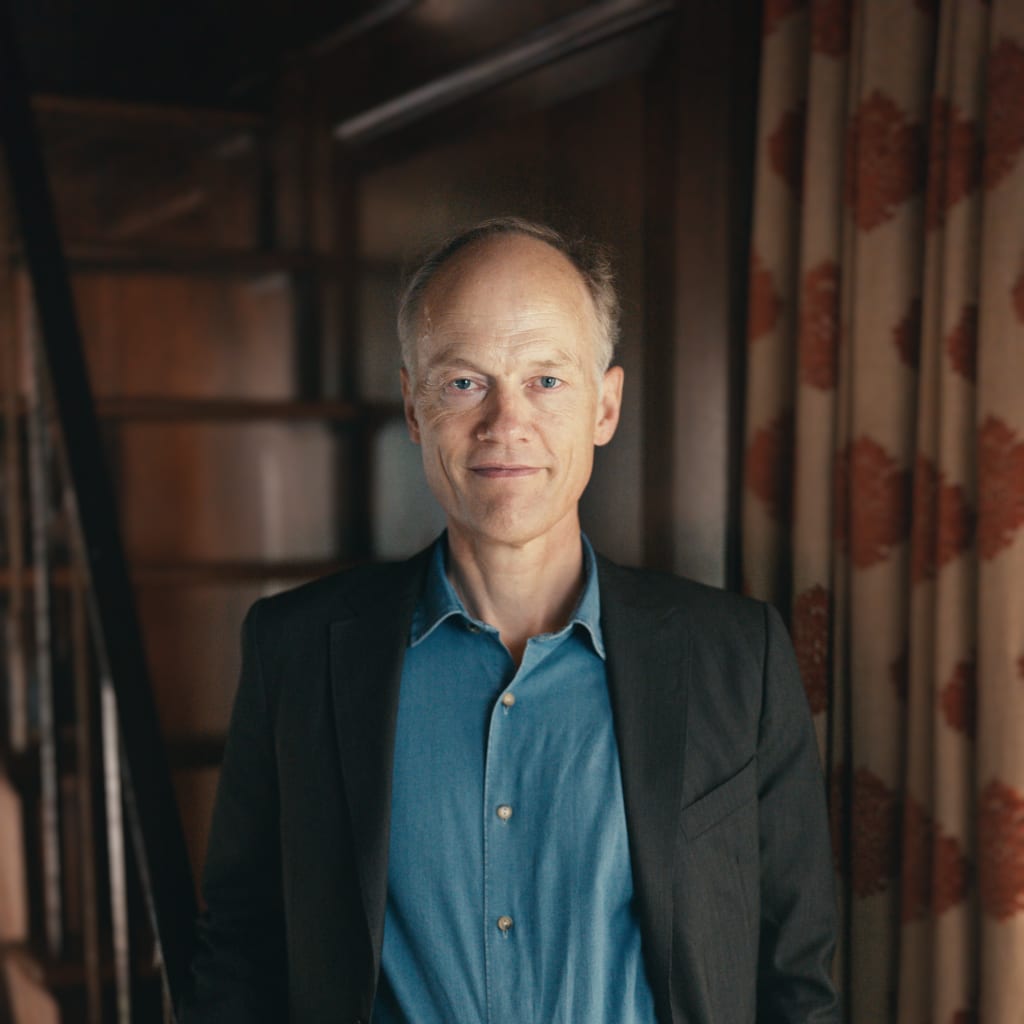 Sebastian MallabyCFR ExpertPaul A. Volcker Senior Fellow for International Economics
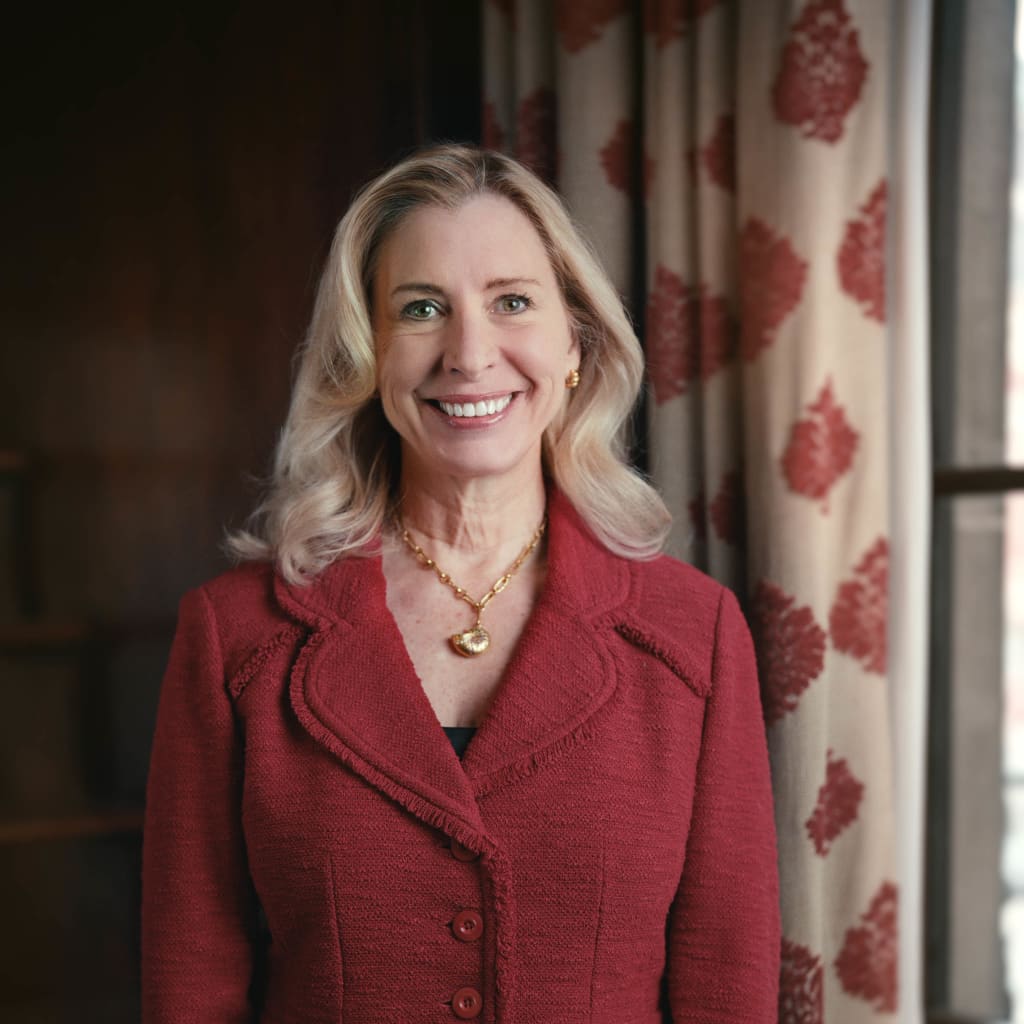 Rebecca PattersonCFR ExpertSenior Fellow
[Video: https://www.youtube.com/watch?v=D2-xDefdPDE]
Transcript
PATTERSON:
Hi, I’m Rebecca Patterson.
MALLABY:
And I’m Sebastian Mallaby.
PATTERSON:
Welcome to The Spillover.
Each week, we examine the ripple effects of global events, providing insight on the most important topics, crossing over economics, financial markets, technology, and geopolitics.
MALLABY:
We appreciate all your engagement as we’ve been developing this podcast. Please continue to like and subscribe as you’ve been doing so far. It really makes a difference.
PATTERSON:
Absolutely. We really appreciate the feedback from our small but quickly growing Spillover community. And some of you in that community heard our special emergency episode recently on the Supreme Court striking down a lot of the President Trump’s tariffs. So the current, ever-evolving tariff policy is an example, really, of a larger debate over government intervention in markets, which ranges from antitrust policy to industrial policy to the increasing use of subsidies, embargoes, sanctions, even ad hoc threats from policymakers against specific companies and executive leaders.
The consensus favoring free trade laissez-faire in a level playing field for business has been fundamentally eroded. That is the big point.
And it’s not just in the US. A few years ago, the UK carried out its most dramatic experiment and trade disruption and deglobalization in modern times by exiting the European Union. And we see populist, interventionist economic agendas increasingly across Europe. And China, of course, has been a leader in state-controlled or at least state-guided capitalism for decades now.
And strangely enough, going back 250 years might actually help us better understand the moment. See, Sebastian knows where I’m going here. That’s why he’s got that wry little smile on his face. And I’m not talking about America’s 250th birthday, which is coming up this July, although it’s not a horrible guess, I’m talking about March 9th.
And for those of you who don’t know the significance of March 9th, it’s the 250th anniversary of the book that’s credited with inventing the idea of the invisible hand. Of course, that book is The Wealth of Nations, published in 1776 and written by Adam Smith, the Scottish Enlightenment thinker who fundamentally shaped how we talk about the economy, money, markets, and government.
MALLABY:
Right. I mean, 250 years is quite the birthday. Smith is often called the father of modern economics. And his ideas are still culturally alive enough that when his own copy of the masterpiece, The Wealth of Nations, was auctioned a few years back, it sold for almost a million pounds at Christie’s.
I remember when I wrote my book about Alan Greenspan, he was telling me about how he made a pilgrimage of his own to Kirkcaldy. I think I pronounced that right. It’s a modest town in Scotland where Adam Smith was born, and Greenspan went all the way there to pay his respects, even though, rather disappointingly, he found when he got there that actually the house where The Wealth of Nations was written is no longer standing.
But you’ve got other examples. Argentina’s leader, Javier Milei, is a libertarian and a self-professed believer in Adam Smith’s ideas. And Margaret Thatcher, famous laissez-faire leader, was said to carry a copy of The Wealth of Nations in her handbag. Although when you consider quite how big that tome is, the story seems likely to have been somewhat apocryphal.
PATTERSON:
All right, Sebastian, now that’s crazy, so show and tell time. I did read The Wealth of Nations back in college, but ahead of this podcast episode, I wanted to reread it to familiarize myself. So I went and got a paperback copy thinking, “Oh, I can take it on plane trips.” All right, here we are, this is like two point font. I don’t know what it is. And it’s over 1,100 pages paperback. There is no way Maggie Thatcher carried this around in a purse, Sebastian. This thing weighs a ton.
MALLABY:
If she did carry it around in her purse, as you Americans say, then she would be even more of a force of nature than we thought already. But the main reason here, as you said earlier, Rebecca, to be talking about Adam Smith is simply that his ideas or those ideas that are attributed to him are very much on the back foot right at the moment. I mean, industrial policy is on the rise, trade skepticism was on the rise, and so it’s a good time to reconsider Adam Smith.
PATTERSON:
Yeah. And some people even say it’s not his ideas per se, but a caricature of his ideas. So talk about that, Sebastian.
MALLABY:
That’s where it gets interesting because Smith’s ideas are inevitably more complex and contradictory than people remember. He’s remembered above all as the supposed author of the idea of the invisible hand, the notion being that people can be selfish, but their selfish actions will lead to a socially optimal outcome because of the magic of this invisible hand, which works through the price mechanism. His most famous line and one of his most famous lines is, “It is not from the benevolence of the butcher, the brewer, or the baker that we expect our dinner, but from their regard for their own interest.” But the catch is that actually Smith wasn’t blindly laissez-faire. He certainly wasn’t pro-selfish. And we’ll get into all that.
PATTERSON:
But then we can take all of that conversation and fast-forward it to today and use Smith in the book as a way to better understand the current tensions between the state and the market, why it exists now, and really importantly, why does it matter, why should we care about this? I think the difference between a world with a true invisible hand and a world where my former Bridgewater associate colleagues would call it modern mercantilism, the difference there has a lot of spillovers that we should be considering.
MALLABY:
Are you saying that at a hedge fund like Bridgewater people debated Adam Smith?
PATTERSON:
Oh, my gosh, yes. Are you kidding me? Yeah, yeah, actually all the time. But let’s get in first to who Adam Smith was. Sebastian, why don’t you take it away?
MALLABY:
Okay. So Smith, the person, he was born, as I mentioned, in Scotland in Kirkcaldy. His father had been a successful lawyer and a civil servant, but he died before the young Adam was born. And even though he therefore grew up without a father, Smith had a very comfortable, well-to-do upbringing. His mother came from a landed family, his father had bequeathed some money to the family. So he went to one of the best grade schools in Scotland and had a classical education, mathematics, Latin, and so forth.
There was one rather random interruption to this placid upbringing, which I’ll mention for fun, which is that he was actually kidnapped when he was four years old, playing outside his grandfather’s home. He was kidnapped by what were called tinkers, basically traveling repairmen who would fix metal pots and pans and stuff like that.
And this event has given rise to two amusing things. One is that, of course, people rather eccentrically speculate that had Smith not been recovered from those kidnappers, modern economics might not have been born, of course. It would have been. But anyway, it’s a fun, counterfactual to think about. And the other is that John Rae, Smith’s 19th century biographer, was able to opine, “Well, it was a good thing that he was recaptured because he would have made, I fear, a very poor tinker,” which I think is a masterpiece of deadpan British understatement.
PATTERSON:
Oh, my gosh, that is a comment that only Brits would really, truly, deeply appreciate, Sebastian.
All right. So personally, I think if you’re four years old, your father died, you’ve been kidnapped, slightly traumatic childhood. But all right, what happens next? Where does Mr. Smith go from there, not Washington?
MALLABY:
Okay. So Mr. Smith studies social philosophy at the University of Glasgow in Scotland, and then he goes on a scholarship to Oxford, although he hated Oxford because he said the teaching was substandard.
PATTERSON:
Wow.
MALLABY:
And then Smith came back to Scotland. He became a professor of moral philosophy at the University of Glasgow, and he proceeded to conform to stereotype of the absent-minded professor. Lost in thought, he would wander around the town in his dressing gown and stuff like that.
He actually wrote two books. The first was called The Theory of Moral Sentiments published in 1759, and then came An Inquiry into the Nature and Causes of The Wealth of Nations. And that’s the famous one which we abbreviate to The Wealth of Nations, written in 1776, The Year of the Declaration of Independence. So there you are. There’s my capsule on Adam Smith.
PATTERSON:
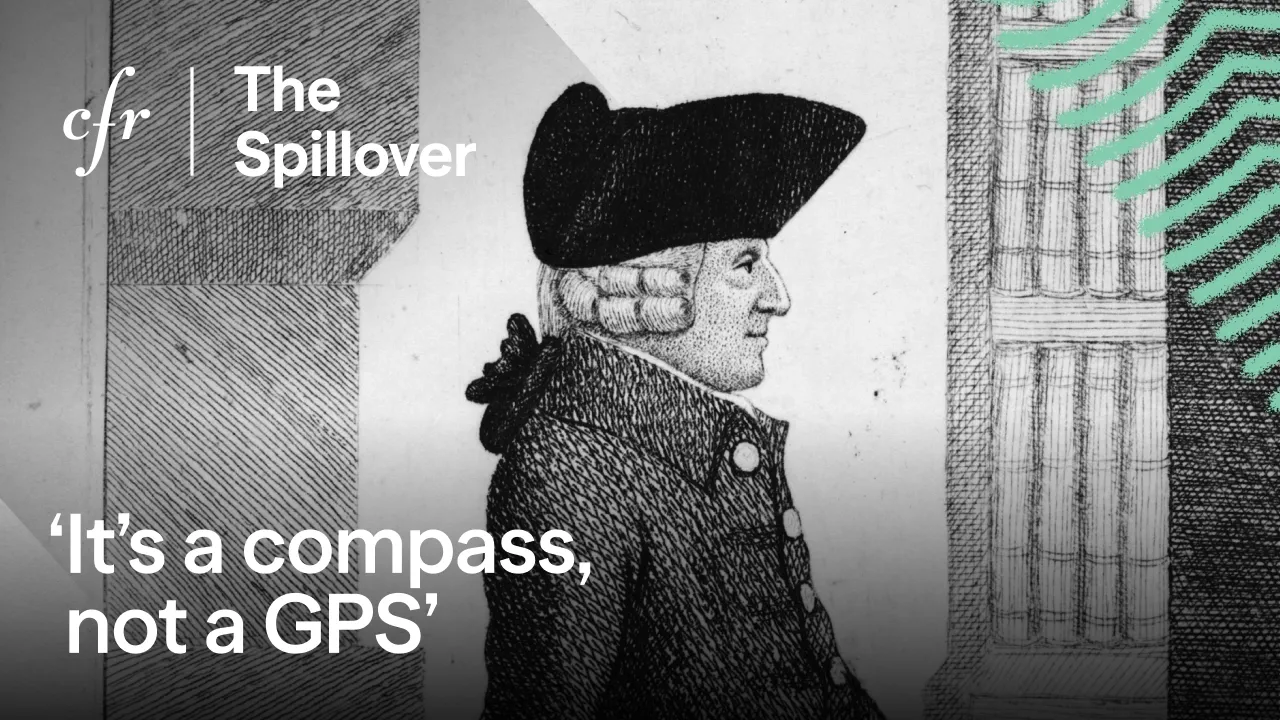
Oh, that’s great. I love the picture of him. And it is still pretty incredible to think now how much that he wrote 250 years ago and more that’s still so relevant today. It actually is worth reading the book.
But let’s have a quick take on the first book, the Theory of Moral Sentiments. The title doesn’t exactly tell you, and frankly, you don’t get how forward-thinking the book was just from the title, but it did have somewhat of a focus on behavioral economics, what drives people and how they behave and how all that shapes politics and policy, right?
MALLABY:
Right. So as I said, Smith was a social philosopher and very much a philosopher before he turned to economics, which, of course, makes complete sense since the field of economics hadn’t been invented yet because he hadn’t invented it. So when he wrote this book before The Wealth of Nations, The Theory of Moral Sentiments, the first thing you notice that the stereotype of him is way, way too simple, because this book, the main point is that human beings have what we call or he called sympathy, we might call it empathy. When we see others experience joy or pain, we experience what Smith called fellow-feeling. When we choose our own actions, we imagine what Smith termed “an impartial spectator, somebody who judges if we are doing right or wrong.” And the reason we do this is because we care what other people think.
So as a social philosopher, Smith believed that the root of our ethics was that we are rooted in society. And the basis of morality therefore, in Smith’s view, is not God’s commandments, as some earlier philosophers might have suggested, or indeed a utilitarian argument that something is ethical if it has a good consequence. Rather, the basis of his morality is that human beings are capable of putting themselves in other people’s shoes.
PATTERSON:
It’s amazing that he had that insight. It really is. And it’s a lot more subtle, as you said, than a lot of people just assume. Let’s stop with Moral Sentiments for a minute and fast-forward to The Wealth of Nations.
MALLABY:
Right. That’s the one that makes the leap to economics and, in a way, creates economics. And the fascinating thing about it is that although you might think, “Well, that makes it a totally different book.” Furthermore, it has the idea of the invisible hand, which seems to be a greed is good kind of claim, and yet the Moral Sentiments one is about empathy and sympathy and so forth. So there must be just totally opposite.
The interesting thing is that Smith didn’t think of it that way at all. In both cases, both when he was writing about morality and about economics, he was explaining human behavior in social terms. So ethically, we coexist with other members of society by caring what others think. Economically, we coexist with other members of society by providing for ourselves and simultaneously providing for others. And that balance between providing for yourself and providing for others is orchestrated by that invisible hand, which is basically the price mechanism.
So if consumers buy more of something, the price of it will go up, and that will incentivize producers to produce more of it. If consumers don’t like it, it’s not useful to them, they’re free, which is very important to Smith. It’s an ethical … The kind of liberalism, which was going to be born in the years after Smith wrote, was about freedom. And the freedom of the consumer not to buy would send a signal to the producer that, “Hey, the price just dropped because nobody bought it, which is a signal to you to do something more useful with your resources.” And that is way more productive than the command economy in terms of allocating scarce resources to producing stuff that make people happier.
PATTERSON:
I’m so glad, Sebastian, you’re doing all this right now because if we’re talking about Adam Smith, I mean, it would be nice if you could do a Scottish accent, but British is pretty close for this, and it just sounds so much better with you saying it than me, frankly. So keep going. You’re doing great. I love it.
MALLABY:
All right. In accent terms, we’re getting as close as we’re going to get.
All right. So what I was going to add is that it’s not just that there is not a contradiction between Smith’s Theory of Moral Sentiments and The Wealth of Nations in the sense that both books were explaining how individuals operate in society. It’s also that actually the Moral Sentiments underpins The Wealth of Nations because Smith believes that you need people to be empathetic in order for the market to function. A great salesman understands deeply what the consumer wants. Market transactions involve an act of empathy. The invisible hand only functions because human beings are capable of thinking both of their own interests and of others. It’s not pure altruism, but it’s not pure selfishness either. And that stress on how empathy underpins markets is the origin of the familiar modern idea that market economies involve trust and that trust needs to be based on the rule of law, on the legal system. You need to punish fraud, you need to punish cheating because otherwise market economies can’t function.
And I think we should discuss, as we get in later to the tensions in the modern debate between the market and the state, we should reflect on the idea that ethics and the rule of law are indispensable to market economies because that’s a deep insight that Smith provides us.
PATTERSON:
Yeah. No, I mean, there’s so much there. With the empathy, my brain immediately went to television commercials around the holiday season, or frankly, in the United States during Super Bowl. And the ones that stick with you are the ones that channel that empathy. Obviously, this company is trying to sell me X or Y, but they’re doing it by putting themselves in my shoes and pulling at my heartstrings. Again, it’s interesting that something written 250 years ago, I can immediately tie it to something happening in my life a few weeks ago.
And to your point on trust and rule of law, absolutely we should get into that. And that, I guess, is why Smith was in favor of the market, but not in favor of business elites or monopolies or what we would call today crony capitalism. He didn’t want the state to have a big role in the economy precisely because it wouldn’t be disciplined by the invisible hand to produce the stuff that consumers wanted. The monopolies of the 18th century probably frustrated the heck out of them.
I’ve been trying to read up on Smith, again, not the book, I’ll admit, but reading up on Smith ahead of our conversation today. And I came across one perspective, Sebastian, that I thought was really interesting from one of my favorite publications, The Economist magazine. The authors there suggested in an essay that Smith had been not only misrepresented, and I think we’re touching on that a little, but overrated, which I thought, “Ah.” As someone who loves studying economics all my life, I was like, “That feels like blasphemy.”
But the misrepresented part, I think we’ve touched on it already a bit. Smith isn’t pure free market libertarian where greed is good, markets always are right and self-correct. He did lay out some roles that he thought the state should play, things like defense, justice, public works. He just didn’t want the state to get in the way of the invisible hand or be captured by those crony capitalists.
MALLABY:
So what’s the bit about being overrated?
PATTERSON:
I know. I’m still like, “Pshhh.” So the striking factoid, if you will, in The Economist piece I mentioned is that in all of his writing, so they did a study of everything Smith ever wrote, he only mentioned the invisible hand three times. And only once in this huge book I just showed you earlier, Wealth of Nations, he mentions invisible hand one time.
The Economist quotes Emma Rothschild of Harvard University, and Emma wrote that Smith does not particularly esteem the invisible hand. So if you believe that, then his most famous idea may not have actually even been his idea. Somehow he got credit for it. And then there’s just the more general allegation that Smith actually didn’t invent many of the ideas that we credit him for. Rather, he just synthesized everything, sort of like my AI model will synthesize all the facts it can scrape off the web and share them to me as truth.
MALLABY:
Yeah. Actually, The Economist also did a podcast on The Wealth of Nations called The Poverty of Notions.
PATTERSON:
Oh, funny.
MALLABY:
Which I thought was quite a good line.
PATTERSON:
Yeah, it was.
MALLABY:
Anyway. But look, I’m actually seriously not so surprised by this idea that not everything Smith is given credit for was actually his idea because attributing genius ideas is always incredibly difficult. Multiple people contribute to them. It’s very common in intellectual history for three people to invent a similar thing in different geographies at the same time because the climate is ripe for that invention. This is true both of philosophical ideas and also actually of technical breakthroughs in my experience.
And so what happens is that there’s a feedback loop. We are, as a society, very attracted to the idea that we can illustrate and humanize a genius breakthrough by saying there was one individual genius who came up with it. It’s just an irresistible storyline. And so what happens is that if you’re famous and celebrated for invention in some way, people will love to invoke your name, “Einstein, Einstein, Einstein,” constant. And then after a while, people attribute more and more things to you and including things that you probably didn’t think of.
So this is a occupational hazard of any kind of intellectual history project, but I think we shouldn’t let that get in the way of the reality that Smith remains a fantastic springboard to talk about the present-day debate between the state and the market.
So maybe we move on to that, the second part of the episode, and maybe focus on three big ideas that we should get into that Smith provided that offer a lens on today’s debates.
PATTERSON:
That sounds good, Sebastian. So let’s talk about three ideas from Wealth of Nation. And I’ll lead you off with the first one I think we should talk about, which is the division of labor. So that’s not, I go make the appetizer, you make the main course, and we sit down and have dinner. Talk to us about the division of labor.
MALLABY:
Yeah. So the idea is breaking production into specialized tasks makes everything more efficient because people can really learn how to do one task fantastically well, and then they do it really quickly, and it’s repetitive, but it’s efficient.
And so there’s the famous illustration that Smith gave of the pin factory where he observes that if one worker tried to perform every step in making a pin, from creating the wire, straightening it, cutting it, sharpening the end, et cetera, et cetera, that person would probably struggle to produce one pin in a day. But if you have a factory that breaks down the process into distinct parts, the factory can create thousands and thousands of pins daily.
PATTERSON:
Right. So if we relate that to our world now, I would say global trade and global supply chains are the ultimate expression of division of labor. Different countries, just forget one factory, the world, different countries specialize in different parts of production of different goods.
I mean, I think we had our AI podcast last week, and you think about the AI-related supply chain, Taiwan has excelled in semiconductor chips and now has the world’s dominance in making the most advanced chips. The US excels in software and design. China has captured mining and processing of critical minerals and so on. And that specialization and trade across borders has lowered costs, and lowered costs, frankly, has been a benefit to everyone in the world that needed those chips, but it also created risks, especially if the trust and the rule of law that Smith discussed in his book on moral sentiments was lost or questioned.
And that’s part of why we are where we are now, focusing more on resilience and reshoring, at least in strategic sectors. The US wants to make its own chips, its own steel, its own medicine. I mean, in a way, we’re saying we want to make the pin from start to finish. So is that going against the logic that Smith laid out 250 years ago?
MALLABY:
Well, yes and no. I mean, it’s clearly going to be less efficient to make everything domestically because you are reducing the specialization. And Smith was right about the division of labor, it is highly efficient.
And I’d also add actually that during COVID particularly, global supply chains came in for a lot of criticism. People blamed global supply chains, for suddenly we couldn’t get access to something that we had been used to importing. And the lesson people drew was, “Oh, well, we shouldn’t import things.”
But there are lots of cases where, in fact, global supply chains increase resilience. They are anti-fragile. And the reason is that if you have a supply chain where you have many suppliers, you can switch between suppliers when one or two of them get hit.
If you think recently, in 2022 or thereabouts, the Ukraine war started, which hit a country which had been a bread basket for the world, producing a lot of grain. At the same time, there was heat waves in Kansas, there was drought in France. So various agricultural countries were hit, but Brazil had a bump a year, and so that offset the countries that were having difficulty supplying the global supply chain.
Well, you just think about the episode we had last week where we were discussing the oil market. The Middle East is at war, that’s bad for oil supply, but on the other hand, you’ve got the US, which has more than doubled production of energy, and you’ve got lots of deep sea drilling, which is coming online. And so the more diversified and complex your supply chain is, the better it can be.
But there are cases where it’s true that global supply chains make you fragile. Interestingly, it’s normally where, although the supply chains go globally, they originate from one node, one producer has a monopoly. We should note that, as you said earlier, Rebecca, Smith hated monopoly. So he would’ve been critical of this, but that is a source of fragility.
So Taiwan and its position in advanced chips, as you mentioned, is that’s the paradigmatic example of fragility from supply-chain interaction. And Smith would’ve acknowledged that. That’s what I mean earlier on when I’m saying the legitimate critics of the market are actually going to be supported by Smith. And I think saying that because of the need for resilience, you need to diversify away from Taiwan, that is something that if Smith was sitting here in the studio or on Riverside with us, he would’ve agreed.
PATTERSON:
Yeah. I mean, ideally it seems you want to optimize to get the lowest cost on the good for the broad consumer’s benefit and you want to do it as efficiently as you can, but you also want to do it in a way that maintains national security or whatever other strategic priority the country in question has, at least for the kinds of things we’re talking about now. I mean, that seems to me an argument for friendshoring more than completely reshoring.
The US, if we’re thinking about critical mineral supply as an example, we’re better off partnering with Canada and Mexico and maybe Australia, et cetera, et cetera, than doing it completely on our own because we’ll have lowest cost and, in a way, it reduces fragility because God forbid something happens within the United States that we lose that source of supply for whatever reason. We can keep going on this, but in the interest of time, maybe we go to our next big idea.
MALLABY:
Okay. So I think that’s the one that you mentioned, the invisible hand idea. Why don’t you unpack that one?
PATTERSON:
Okay, sure. So as we said, the idea of the invisible hand is that when individuals pursue their own self-interest, they unintentionally produce good outcomes for society. So essentially the market generates good things even if nobody is actually steering it.
MALLABY:
Yeah. I mean, whether or not, as we said earlier, Smith actually did invent the idea or not, I’m a big fan. I think if people internalize the idea of the invisible hand better, there would be less slightly shallow criticism of corporations and corporate greed and less resentment of capitalism. I mean, the insight that market transactions involve the producer understanding what the consumer wants and responding to the feedback that the consumer gives, if the consumer doesn’t buy it, the producer will go off and buy something else. I think understanding that mechanism would just curb a lot of the anti-capitalist sentiment, and I think that would be a great thing.
At the same time, the invisible hand, obviously not going to take care of everything. You need the visible hand too. The market won’t generate enough of lots of things, which we tend to describe as public goods these days, everything from national defense to law courts to highways, fundamental science. These are the public goods, and the public sector has to create them.
And then there’s a different category of reason why there’s a limit to the invisible hand, and that is where you might have a private good. For example, healthcare is mostly a private good. If I receive the healthcare, I’m getting the benefit, but it’s a private good that’s quite expensive. And if you just leave it to the market, lots of people won’t be able to afford it. And we’ve decided as free democratic societies that just letting people fall by the wayside, not get healthcare, not get education, that’s just unacceptable. So we favor the state, the visible hand to intervene and create certain goods, which might be private goods, but are viewed as too crucial not to create for everybody. So I think invisible hand is a marvelous metaphor, a sound reminder that profit-seeking can be good, but there are limits.
PATTERSON:
Yeah, of course. I don’t think anyone disputes that there are and should be limits. I think Smith himself actually believed that the government has important functions. He believed in the visible hand as well as the invisible one, and he urged the state in his writings to provide education.
This is interesting. He actually favored legal caps on interest rates. And I’ve been reflecting, I’m like, “Ooh, President Trump would love Adam Smith. ‘You can’t raise interest rates anymore.’” But to Smith, the big debate was where and how do you draw the line between the government and the market? And honestly, that feels like the same debate we’re having today, should every one and anyone be allowed to bet away their retirement money in prediction markets? If it’s a free market and a free society, yeah. If they don’t like the product, they won’t buy it. To your point, the producer will get that feedback, and they’ll go out and make something else. So let a thousand flowers bloom, have a free market.
At the same time, if you think this could create a huge financial problem for the entire economy 40 years from now because a cohort of people don’t have any retirement savings, then maybe there should be a visible hand involved.
I think it’s so interesting. I mean, more recent, well, not so recently, but Biden administration, their small yard, high fence, that was their attempt at visible hand. They wanted to have free trade, except for this little yard with a high fence in China where it had a lot of strategically important goods.
And I think most people, if you talk to people on the street, would say, “Yeah, there is scope for some industrial policy. We should care about domestic production in strategic sectors.”
And even free-market types, I think, would say there are some situations where tariffs make sense. If you have a small, nascent growing industry, for example, I think about Asia after World War II in the 1950s, they put up barriers to help them grow before they had to compete in the free market. So I think there’s good reasons for some visible hand. I think the question is how much of this government intervention is too much, and what are the unintended consequences when the visible hand gets to be too big?
MALLABY:
Yeah, exactly. There’s a trade-off, but with respect to the politics of right now, I think what you can’t claim is what President Trump claims, which is that high tariffs are win-win because not only do they protect specific industries, they’re going to be actually good in aggregate for the whole economy. Smith would definitely not agree with that. He would point out that restricting trade means that you’re asking the American consumer essentially to subsidize certain specific industries and probably at the expense of the other ones. So that kind of picking winners is something that he explicitly disliked. He despised the British crown’s old mercantilist system for that reason.
PATTERSON:
Right. No, Smith’s invisible hand definitely was not meant to be a magic wand that solves everything, but he did think it was the most efficient way to lower the cost of living for the average person. So when you use the visible hand or the state intervention, if you will, to block imports or subsidize domestic steel, what have you, Smith would argue that we’re actually making the country poorer in the long run, even if it feels like a near-term victory for a given factory in Ohio or Pennsylvania or wherever. A win for politicians in those states who are trying to build a brighter future for local workers, yes, but at the cost of potentially raising prices for the entire household base in the country.
MALLABY:
Yeah. So back to the tall fence, narrow yard idea, I think that’s what Smith might say. I mean, national security exception does justify some intervention in the market function. The Taiwan semiconductor example probably would meet with his approval, but for most things he would say, “Let the market figure it out.”
PATTERSON:
Yeah. And that’s probably a good segue to go to the third idea we wanted to highlight from Wealth of Nations, which is the rule of law and the dangers of, we’re paraphrasing, but of crony capitalism.
MALLABY:
Yeah. So this is perhaps the most modern feeling part of Smith’s writing. He was obsessed with the idea that in order for the market to be free, it has to be fair. That’s why he didn’t like big business that might be rigging prices, using market power, monopoly power to fix prices and rip off consumers. He warned the big business, I’ve got a quote written down here, “Big business is always plotting a conspiracy against the public or some other contrivance to raise prices.” So definitely in favor of antitrust, the Lina Khan writer. And he also warned that the collusive nature of business interests, forming cabals and all that, would “squeeze out the buyers.” And he didn’t like lobbies. He hated businesses which used their wealth to buy political influence.
PATTERSON:
Yeah. He had a biding quote about how, and I’m going to read this now, “The proposal of any new law, which comes from merchants, ought always to be listened to with great precaution.” So basically he’s predicting the modern lobbyist. And sadly, at least in the United States, corporate capital has become essential for political campaigns. I mean, you can see how corporate interests pretty regularly turn into policy. It’s not always bad policy, but it often deviates from what free markets or the invisible hand would probably get us.
MALLABY:
Yeah. So being pro-market doesn’t necessarily being pro-individual businesses. And when you see tech giants in Washington or Brussels lobbying for complicated regulations that only the largest companies can afford to follow, that’s an example of state capture, exactly what Smith was warning against. So he didn’t want business-dominated political system. He wanted a system with “the impartial spectator,” being able to look at the law and the functioning of the market and say, “This benefits everybody, not just the CEO and his friends.”
PATTERSON:
I fear a lot of people would say that right now, that it benefits the CEO’s friends. But anyway, if the state is busy giving special favors, then the invisible hand basically gets tied behind its back, so to speak. And we know that’s wasteful. I mean, the IMF, International Monetary Fund, so many credible researchers have looked at this rise in state intervention that we’ve seen, I think, especially since the pandemic, but probably even before the pandemic, what the IMF called the new industrial policy. And there was really a structural break around the pandemic where advanced economies shifted from market-led growth towards state-led strategies.
And even before 2020, governments were intervening economically because they were concerned about things like climate change. That was visible hand. And since preventing global warming was a public good, Smith, he might’ve approved of that. It’s a visible hand, but it’s doing something that helps, that benefits the many.
But since 2020, the visible hand interventions have become much more about supply chain resilience and national security. And I think Smith would probably approve of some of those, but he would’ve been wary of others and certainly wary of companies making all those self-interested claims and dressing them up as national security. And you see that sometimes.
I think the IMF also, in the research it’s done, has found that some of these post-2020 interventions have led to resource misallocation. The subsidized sectors get some benefit, but that’s because they’re taking resources away from sectors that haven’t been targeted. And that can result in a negative impact on aggregate productivity, and that can lead an economy to grow slower than it would’ve otherwise.
And meanwhile, those industrial policies … I promise I’ll get off my soapbox in a minute, but this is like, I’ve been thinking a lot about this, Sebastian. The industrial policies are also adding to the national debt, and that is becoming a bigger worry across the advanced economies.
I just saw the last week or so, The Committee for a Responsible Federal Budget published that US interest on the debt, just the payments on the debt, it has nearly tripled since 2020. It’s now well over what we spend on defense.
MALLABY:
Yeah, that’s super interesting. I mean, what you’re saying makes me think of something else along similar lines, which is I often hear American CEOs make an apology for the Trump administration almost. And their argument is, look, the Biden administration just never wanted to talk to us, didn’t care about us, ignored us, but at least with President Trump, if we have an issue in our business, which is getting in the way, we can get access to him. We know how to do it. It’s very simple. You either give money to the reconstruction of the White House that Trump is keen on or you whatever, you buy some crypto or something, and you get an audience with him and you speak eye-to-eye and you say, “Here’s the problem that’s impeding my business.” And he tends to listen, and he tends to resolve the issue.
And I can see that if you are a chief executive, that is extremely seductive, because you’ve got a problem, you fix it, you feel like a hero. And at the same time, you have the heady experience of negotiating directly to either the President of the United States or maybe the senior surrogate, but that makes you a player, that feels good.
But what you’re not thinking when you have a soft spot for that sort of transaction-based policymaking is that you may have gone to the White House once in the past year, but on the other 364 days, other people were going into the White House, including rivals of yours, CEOs of other companies, and demanding their special favor. And the net of that is that policy becomes ad hoc, the rules become, A, unstable because they’re shifting based on every supplication, but also just inconsistent because the supplications don’t add up to a coherent plan. And in the end, that kind of lack of rule of law, lack of transparency level playing field, that’s going to be bad for the way the market functions.
PATTERSON:
I mean, that’s certainly the risk that the market won’t function optimally because of all that. And certainly the constant evolution and uncertainty could weigh on growth.
And we see something similar, honestly, going on international finance. The US administration has been using quite a heavy visible hand, if you will, to try to reshape the Federal Reserve. Going after Governor Lisa Cook, starting a Department of Justice investigation into the Chairman of the Fed Jerome Powell and being very vocal about a desire to see lower interest rates, regardless of what the economic data suggests the Fed should be doing.
And look, even if lower interest rates are justified, if market participants believe that this isn’t invisible hand, it’s visible hand, that they’ve lost some of that trust and some of that rule of law, then that’s going to create a perception that inflation could go higher, and that perception could actually lead inflation higher, and it’s going to lead to more risk premium in bond yield, so higher borrowing costs. I mean, again, that’s the risk. I’m not saying it has to play out, but it certainly could play out. And that leaves investors less sanguine about owning dollar-denominated assets. We saw that last year. The trade-weighted dollar fell about 9, 10% in 2025, and it wasn’t completely because of this, but it was partly because you saw more and more investors globally hedging dollar risk on exactly those fears.
MALLABY:
Yeah, exactly.
PATTERSON:
So, all right. So what’s the takeaway here? I mean, as we meet here in March 2026, celebrating all things Adam Smith, and discussing the strengths and maybe some of the question marks around what he advocated for, is The Wealth of Nations a guide we should be looking at more or has it become a historical relic?
MALLABY:
Well, I think it’s a compass as opposed to a GPS. It’s not going to get you exactly-
PATTERSON:
That’s a good line, Sebastian. I like that one, I like that.
MALLABY:
Okay. Compass, not a GPS.
PATTERSON:
Good.
MALLABY:
It’s not going to get you exactly the answer to how you should conduct a trade war with China or something, but it does tell you and remind you that the north star of your policy should be what is good for consumers and a little bit of what is good for their security, that’s the caveat. But it’s the person buying the bread, the person buying the smartphone. It’s not the power of the state or the ego of the merchant or the policymaker that matters. It’s ultimately the individual.
PATTERSON:
I love that, I love that. For me, I think the lesson isn’t to blindly accept and follow Smith. It’s actually, yes, pick up the book, actually read him and think about what he’s saying. If you just use him as a slogan for greed is good, 1980s, you miss the man who spent his life thinking about empathy and fellow-feeling that we owe our neighbors. And I know in some people’s ears, this whole conversation is going to come across as left-leaning, woke, touchy-feely empathy, but actually it’s all about free market capitalism, but done in a way that ties all these things together.
MALLABY:
Let me see if I can pull out the lessons here from our discourse on The Wealth of Nations. So I think first, specialization, the division of labor, that’s an incredibly powerful source of human advance, economic advance. Global supply chains are mostly therefore a wonderful thing. Yes, there can be moments when you have to worry about resilience, but actually quite often these supply chains are anti-fragile. They add to resilience.
Number two, self-interest can be a force for good, but only if it’s balanced by something else. And that’s something else can be internal to us. In other words, Smith’s idea of sympathy or empathy, but quite often it’s really the rule of law.
In fact, towards the end of his life, I think Smith was planning to write a big treatise on the rule of law, and all his papers went up in smoke in his house on his orders at his death. So we don’t exactly know, but he did write quite a bit about the importance of the rule of law, and that is an essential underpinning of any free market system. And when we see attacks on the rule of law in advanced democracies, and you know which one I’m thinking of, we should remember that this is actually an attack on the free market.
And the last point, I think, which comes out of our discussion, is we should be aware of the “merchant,” the corporation who asked the government for a favor. It’s almost never a favor for the rest of us.
PATTERSON:
Yeah. Or at least a favor coming at a material cost to the rest of us. So for this week, I’m going to go with something completely different. It’s been a crazy year so far, and I definitely find myself needing moments of calm and just good old-fashioned joy to take a break from the reality. And I grew up in Florida. Sebastian, I think you know that. And I’ve always been a water person. So the thing I’ve found, which I’m absolutely obsessed with, is called Coral City Camera. It’s an underwater livestream. It’s free on the internet, just off the shore of Miami, Florida. And it is insane when you turn this thing on, within a 24-hour span, how much wildlife you see.
I would think, with all the ships and, frankly, unfortunately, pollution, that you wouldn’t see this, but in 24 hours, you will see sharks, you will see stingrays, you’ll see moray eels, you will see dolphins, manatees, and a huge array of fish, and some decently, not perfect, but decently healthy coral. It’s free, although they do take donations, and it’s just very peaceful. So that’s mine. How about you this week?
MALLABY:
Well, that was niche, but uplifting, I would say.
PATTERSON:
It is niche.
MALLABY:
So my one starts from the fact, which I haven’t concealed terribly much. I think you know, Rebecca, I do have a book coming out soon.
PATTERSON:
Yes.
MALLABY:
And you also know I’m about to go to China tomorrow because Chinese do everything faster. So the Chinese edition of my book comes out first. I have to go there to talk about it. So I’m flying off tomorrow. In fact, we’re recording this podcast early in order to get ahead of that.
Now, when I was reading up about our mutual friend, Adam Smith, I came across a very sobering piece of life advice. Apparently he said that he wouldn’t talk about his books because it would reduce their sales. And there’s a quote from one of his contemporaries who said that Smith “made it a rule, when in company, never to talk about what he understood.” So if I took that position, if I just canceled the next couple of months or so of book tour, I would have a whole lot more free time on my hands, but then I guess I would be both bored and boring.
PATTERSON:
Oh, well, you’ll never be boring, Sebastian. And I think you’re going to get all sorts of great color and anecdotes and learnings from your book tour, which will make our podcast even more rich.
MALLABY:
I hope so.
PATTERSON:
So I’ll miss you, but I look forward to your travels and what you hear back from them. Frankly, I think we should do an episode on China soon, given that they have some pretty important parliamentary meetings coming up. Their economy is in a super interesting position right now with both cyclical and structural strengths and weaknesses that make it not straightforward to understand. So we’ll put that on our to-do list.
But for now, I want to say thank you to all our listeners, and I am going to read some credits.
For resources used in this episode and more information, please visit cfr.org/podcast/spillover and take a look at our show notes. If you have an idea or just want to chat with us, please email [email protected]. Be sure to include The Spillover in the subject line. Also, don’t forget, subscribe, comment, and like us if you do like us.
This episode was produced by Molly McAnany, Gabrielle Sierra, and Jeremy Sherlick. Our video editor is Claire Seaton. Our sound designer and audio producer is Markus Zakaria. Research for this episode was provided by Liza Jacob and Daniel Hadi.
The Hook: Adam Smith’s The Wealth of Nations, the book largely credited as the foundation for modern economics, marks its 250th anniversary.
The Spillovers: Smith’s book is a timeless lens through which to consider economic trends, spanning its push to reduce regulation and encourage free markets, to increased government intervention in the name of national security. Specialization and global supply chains continue to be powerful engines of wealth, creating both efficiencies and, at times, surprising resilience through diversified sourcing. Smith’s insight that self-interest can serve the common good still holds, but only when tempered by morality and protected by the rule of law, without which markets cannot function properly. Finally, his warning about merchants seeking government favors endures, reminding readers that cronyism undermines competition and rarely benefits society at large.
The Spillover is a production of the Council on Foreign Relations. The opinions expressed on the show are solely those of the hosts and guests, not of the Council, which takes no institutional positions on matters of policy.
Mentioned on the Episode:
Gita Gopinath, “Geopolitics and its Impact on Global Trade and the Dollar,” International Monetary Fund (IMF)
Caitlin Oprysko, “Trump’s Return Supercharges Lobbying Revenues,” Politico
Producer
- Producer, Podcasts
Supervising Producer
- Director, Podcasting
Supervising Producer
- Director of Video
Audio Producer
- Audio Producer & Sound Designer
Researcher
- Research Associate, Finance, Business, and Technology
Researcher
- Research Associate, Geoeconomics
More Episodes
 41:30Podcast
 35:24Podcast
 48:01Podcast
 47:25Podcast
 50:17Podcast
 47:25Podcast