Is the Gulf Still the Capital of Capital? + How War Could Hurt America’s Tech Funding
This episode explores how the Gulf region transformed into a global “capital of capital” and what happens if war in the region disrupts that role. It examines the ripple effects on global markets, U.S. tech and AI investment, and the broader balance of economic power if Gulf capital starts turning inward to focus on defense.
Published
Hosts
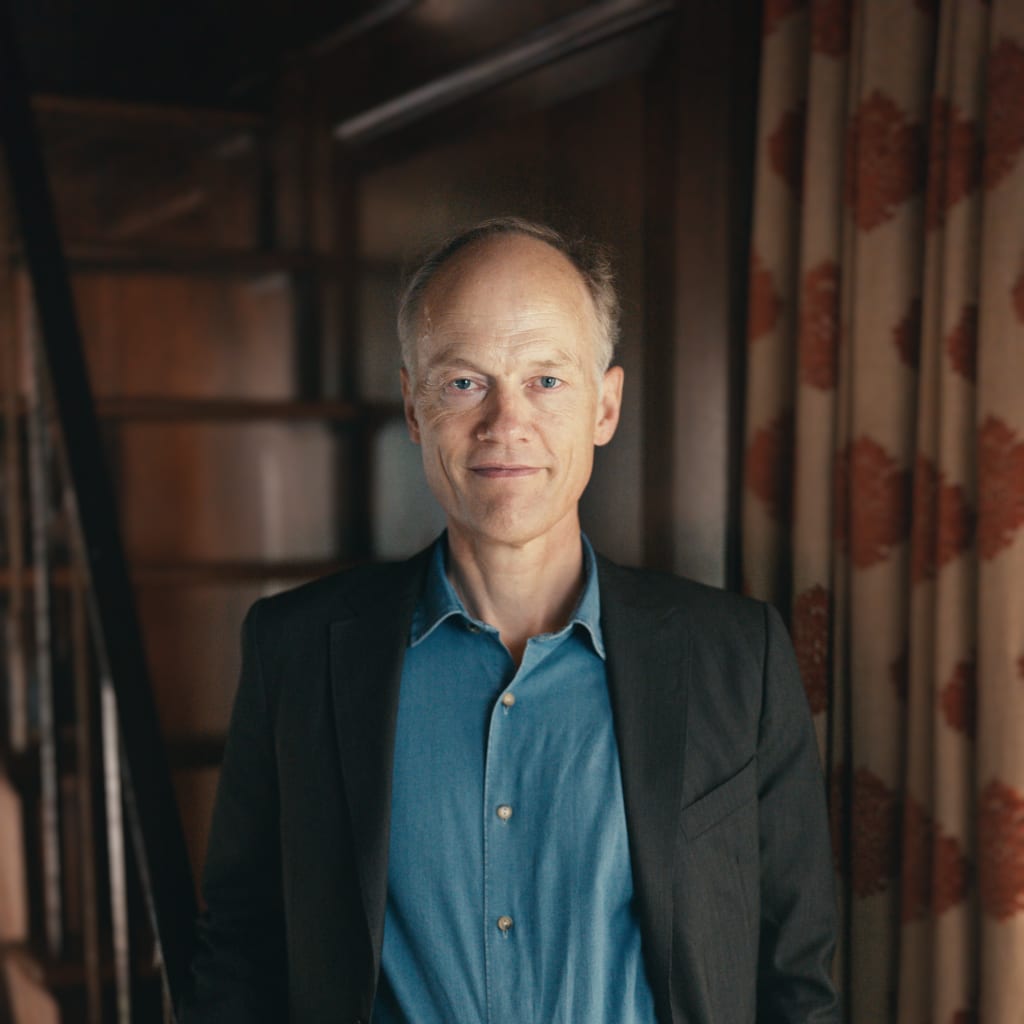 Sebastian MallabyCFR ExpertPaul A. Volcker Senior Fellow for International Economics
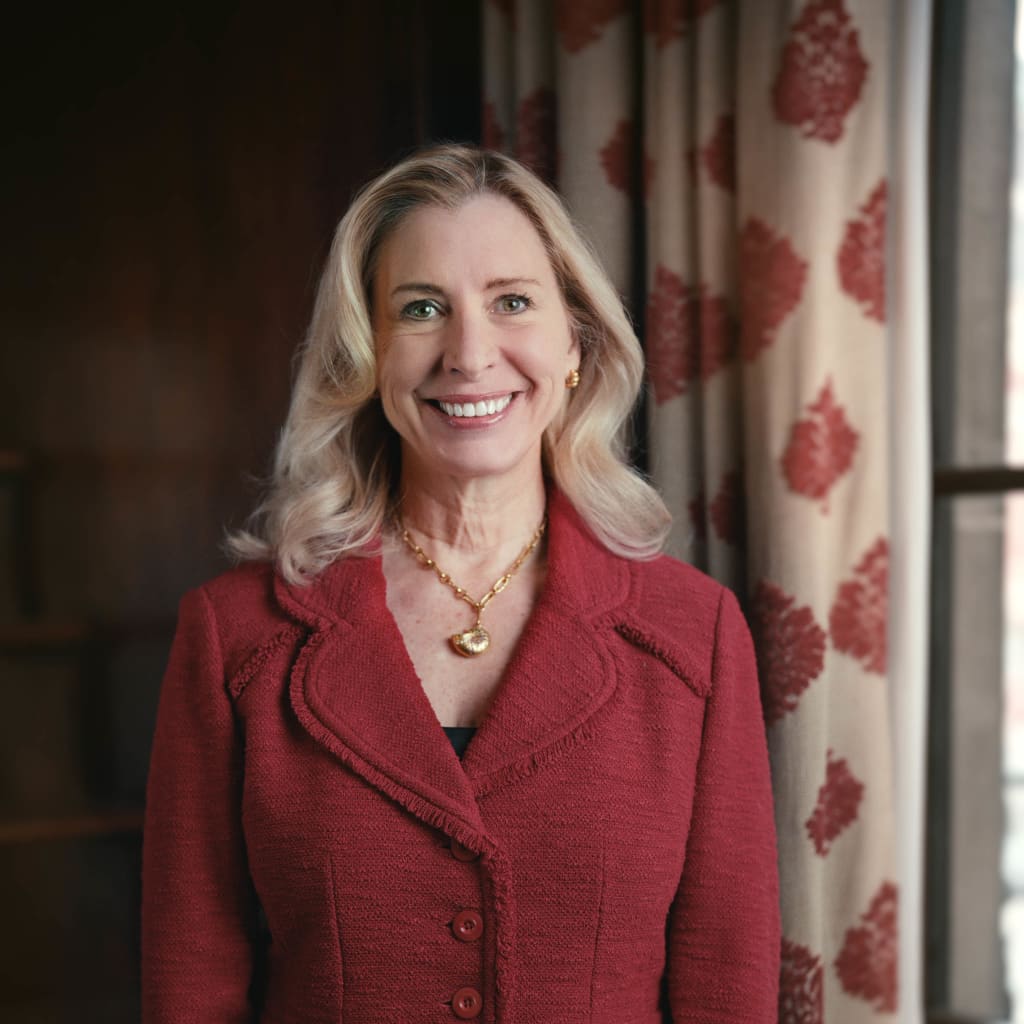 Rebecca PattersonCFR ExpertSenior Fellow
[Video: https://youtu.be/lKM1oeEKQpw?si=fOxNSeyIjMpeT58S]
Transcript
MALLABY:
I’m Sebastian Mallaby.
PATTERSON:
And I’m Rebecca Patterson.
MALLABY:
Welcome to The Spillover. Each episode, we examine the intersection of economics, finance, technology, and geopolitics, connecting the dots on the spillover effects of major global events.
PATTERSON:
And we do that from lots of different places. Last week, if you tuned in, you saw me in Washington, D.C. I was there for the IMF World Bank Spring Meetings. Sebastian, you’ve been a global traveler of late with your book tour.
Where have you been? Where are you now?
MALLABY:
Okay, so I think in the last week or so, I’ve been in London, San Francisco, then LA, then San Francisco, and now I am in Boise, Idaho, which turns out to be the headquarters of a very important semiconductor maker, Micron. And so I am speaking to their offsite about AI. And right now, in preparation, in warm-up for that major event, I am in a very beige hotel room.
PATTERSON:
Beige in Boise. It could be the Pantone color of the year, I think. Now, wait, Sebastian.
MALLABY:
What is Pantone?
PATTERSON:
This is not panettone, which is a delicious Italian dessert. Pantone is an American paint company. And I feel like this is one of those American things, Sebastian.
Americans just can’t get one type of milk or one type of butter. We have 50 types of milk and 100 kinds of butter. Paint.
If you decide to paint the walls of your apartment in New York City, you have 100, I don’t know, maybe more shades of white. We’re just talking white. I think our producer, Molly, said the color of the year last year was cloud.
So I think Boise beige. I think we could do something with that, Sebastian.
MALLABY:
It’s got potential, right? If this podcasting thing doesn’t work out, we can launch a paint company.
PATTERSON:
Or just be marketers for Pantone, and then we can eat panettone on the side.
MALLABY:
All right. So figuratively, though, I am actually in the Middle East. I mean, that’s what I’ve been thinking about today ahead of this podcast.
Listeners already know that in the Middle East, there is a shaky ceasefire, on and off peace talks, on and off violence. At one moment, Vice President J.D. Vance is headed to Pakistan for peace talks. The next moment, whoops, he’s not going after all.
My friend Gideon Rachman at the Financial Times had a good line just recently. He said, you know, we’ve all heard of the fog of war. This is now the fog of peace, because it’s all utterly confusing.
But we’re going to stand back from those headlines a little bit. And we are going to talk about how the Middle East emerges from this economically, what that means for the world. And we’re going to do this particularly because before the war, the Gulf region was in a very interesting transition.
It was positioning itself as a new center of economic gravity in the world economy, a place where money flows easily, high-end talent relocates, and increasingly where the infrastructure for artificial intelligence might be located. So I went to Dubai, for example, the first time back in the 1980s, when I was about 20. And it was a very sleepy little town.
And now it’s this sleek metropolis, you know, famous not for being in the middle of an oil region, but rather famous for its chocolate. And so the question is, how much of this transition, this transformation, was based on the idea that the Gulf was secure, it could rise above geopolitics, it could sidestep, in a way, the spillovers from the rest of the political turbulence in the world. Obviously, that assumption with the Iran war has been challenged.
So we’re going to look at what now changes.
PATTERSON:
Yeah, no, I think that was beautifully put. And maybe if I can try to just double down on that, what are the global spillovers from the Middle East that were in place before the war? And how might they change if this conflict continues?
Again, as of five minutes ago, the ceasefire has been extended, according to President Trump. But fog of peace, we don’t know where we’re going to be in a week, in a day. And what is this going to mean for the Gulf economies?
So I think what we’re going to try to do, Sebastian, is talk a little bit about where these countries are, where their economies are now, how they got there. Because the history leading up to this is really interesting. And then what are the implications?
What are the spillovers? If the war keeps going on, what is the rest of the world going to lose if things in the Gulf change in a structural, not just a tactical way? I have a feeling that the fallout from this conflict is going to be broader than people have so far realized.
I think it has a capital markets implication, globally and especially for the US. And that could filter through to some of the big private equity, private credit firms, and some of the biggest US tech firms at a time when they really need capital to build out their infrastructure.
MALLABY:
Yep, sounds good. And maybe we should begin just by defining what we mean when we talk about the Gulf. I once came up with a sort of acronym to help myself remember which are the six countries that are the members of the Gulf Cooperation Council or GCC.
It’s my acronym, which isn’t quite an acronym, but it’s got a sort of, I think, a bit of a rap to it. Qboxa UAE.
PATTERSON:
Qboxa UAE, all right.
MALLABY:
Qatar, Bahrain, Oman, Kuwait, Saudi Arabia, and UAE.
PATTERSON:
Okay, Qboxa UAE.
MALLABY:
Those are the members. So, you know, before the war, there was this very clear narrative about the Gulf, and that was that the region was becoming bigger, broader, and more interesting than just oil. So first off, it was also about capital.
The region became one of the most important financial centers in the global economy, a place where you could originate capital, you could move capital, you could deploy capital on a really big scale. So the numbers are pretty striking. Gulf sovereign wealth funds now oversee more than $5 trillion in assets.
That’s up from just around $3 trillion five years ago in 2021. They make tens of billions of dollars of fresh investments every year. And about three quarters of those, and this is important to remember for the later part of the podcast, three quarters of those fresh investments tend to be outside the region, in the U.S. or in the West or in Asia, but not in the Gulf itself.
PATTERSON:
And that’s the capital flowing out. There’s also people flowing in. So the GCC countries accounted for about 70% of all the Middle East airport arrivals last year.
So people going to that region are going to the Gulf countries. And before the war, regional airports were an increasingly important point just between East and West as well. So people would stop in Dubai or stop in one of these cities on their way to Asia or on their way from Asia to the West.
Now they’re going there as a destination as well. And Dubai is probably the clearest example of that, I think. Last year, it’s amazing.
Again, when you think about what it was like when you were there in the 80s, last year, the city recorded nearly 20 million international overnight visitors. And the UAE was projected to attract about 9,800 millionaire migrants last year. And that would have surpassed the number of millionaires migrating to the United States.
So people are actually preferring to go to the UAE than to the US as millionaires now.
MALLABY:
Right. Okay. So we’ve got the capital moving out of the region, the people, including the millionaires, moving into the region.
Then on top of that, we’ve also got this push into technology. The Gulf countries have invested in partnerships with the big American AI companies, Amazon, Microsoft, Oracle, OpenAI, Google. These companies have all announced big projects in the Gulf.
Sometimes that’s the case of the US companies putting in their own capital. Sometimes they’re getting the capital from sovereign wealth funds or other sources of money, which are themselves located in the Gulf. But either way, the point is that the Gulf has become intertwined with the story of Silicon Valley and the build-out of AI.
PATTERSON:
Yeah. No, they’ve been so smart about it. I mean, they’ve really positioned themselves as a place you can park money in very tax-friendly ways.
So the private wealth, as we mentioned a minute ago, is going there. They have a fairly light regulatory ecosystem. So it’s an attractive place to build and grow your company and operate globally without getting dragged into political or geopolitical issues.
And the goal clearly is for these economies to diversify away from oil, which has been the dominant and still is the dominant source of fiscal revenue. That’s not going to change overnight, but they’re trying to reduce that dependency as much as they can. But all of it together is making them an increasingly important player in global power dynamics.
And it now wants to be the global capital of capital. That’s part of those global power dynamics.
MALLABY:
Part of this was about creating the leisure and entertainment industries that drive the tourism boom that you were talking about. So you see a lot of money going into sports, for example. Qatar hosted the World Cup last time around.
I think it welcomed more than 2.5 million foreign visitors. Saudi Arabia has signed big contracts with famous soccer stars like Cristiano Ronaldo. It set up its own golf circuit called LIV to compete with the more famous PGA.
And Saudi also has ambitions, by the way, to host the World Expo in 2030 and the World Cup in 2034. So this was all in the service of an image that was sort of telling the world that the Gulf is a fun, glamorous place to be, as well as a place where your wealth would be safe and somewhat insulated from politics. I think before the war, there was really some anecdotal feel that this was working.
I live in London, Rebecca, as you know, and recently, London or Britain hit foreign wealthy residents with a tax increase, quite a big one, by abolishing the so-called non-dom status. And that drove a lot of people away. And typically, in the past, they would have gone to Switzerland, Zurich, Geneva, et cetera.
If they were really off-piste, they might go to Milan. But recently, actually, the Gulf has been one of the favorite destinations. We saw a lot of people choosing the Gulf as their expatriate haven of choice.
But then comes the war, right? And it casts all of this in doubt. And it’s no longer to be taken for granted that talent and capital really wants to sit in the region.
But I guess what I want to ask you, Rebecca, is how we situate this setback in the context of history. I mean, the Gulf has experienced setbacks before. There have been boom-bust cycles in the region for quite a while, right?
PATTERSON:
No, I think understanding how we got to this moment where millionaires are going there, companies are going there, it seems like really just in the last decade, they’ve had these trillions of dollars to invest overseas, especially in the United States. How did we get to where we are now? And I think the history does explain it a lot.
So for decades, the GCC’s economic fortunes have really just been a function of oil prices. So if prices are high, the government revenues rise. And even a decade ago, oil revenues could be as much as 70% or 90% of total government revenue.
So to plan infrastructure, to plan social safety nets, it was all a function of oil prices, which obviously can be very volatile. So when times are good, they’re really good. But equally, if oil prices fell, the fiscal picture got bad very fast.
And I think the cyclical and volatile nature of oil prices and some worries about peak supply of oil, not just peak demand, but peak supply of oil, all of those things contributed together to these economies forming OPEC plus in 2016. So they could work together and try to reduce some of that volatility, basically colluding and managing production together to try to have more stability in the oil price.
MALLABY:
Right. One of the examples that always stuck in my mind of one of these boom-bust cycles happened right after the financial crisis in 2008. And Dubai was building what I think was going to be not only the biggest, tallest skyscraper in Dubai, but actually globally.
And it was halfway through this project, financial crisis hits, they don’t have the buffers to sustain that, and they have to be bailed out. And they get bailed out by their richer neighbor, Abu Dhabi. And in the course of negotiating that bailout, it feels like Dubai had to make a concession.
And the concession was to rename the skyscraper from the very gratifying Burj Dubai, kind of the Tower of Dubai, which felt great if you were a Dubai patriot. They had to rename it to Burj Khalifa in honor of the late Emir of Abu Dhabi, the guy whose family was bailing them out. So I always felt that was a rather ironic and sad outcome for the patriots in Dubai.
PATTERSON:
Yeah, I remember that one. And then there was another one, 2014-15, when oil prices collapsed, Brent went from around $110 a barrel to under $30 a barrel very quickly. And you saw the exact same pattern.
You know, projects got delayed, subsidies were cut, fiscal balances got strained. And again, it happens rapidly. And that period, the more recent period I’m talking about was notable because it was happening at the same time, and maybe partly because U.S. oil producers had finally been able to scale fracking and horizontal drilling, these two technological advancements to get more gas and oil out of the ground. And so OPEC before then had really had a chokehold on global production. And OPEC, which had been formed many, many years ago, really had the final word on what prices would be. And the U.S. becoming a net energy exporter in this period of time really changed that equation. But what was interesting then is that the OPEC members said, we’re going to hurt ourselves to hurt the U.S. So rather than stopping production to support prices, they let prices continue to fall. It hurt them, but it hurt the American producers at that moment even more. So they lost that battle.
But it’s not clear to me they won the actual war, the bigger picture, because the U.S. continues to have a much bigger footprint in global oil markets today than it did. And I think it was that period, remember, this was 2014-15. If you fast forward one more year, 2016, that’s when Saudi Arabia had partnered with McKinsey and launched what it called its Vision 2030.
And this was this big blueprint that got a lot of attention at the time because Saudi Arabia was asking American consultants to help it define its future. So it was quite controversial at the time. But the whole point was they had this aha moment.
They couldn’t keep playing this game, especially with the U.S. now such a big exporter. They needed to do something totally different. And that was the beginning of the diversification push.
And it was also an inflection point for Saudi’s main sovereign wealth fund, PIF. It became a much bigger and more active player instead of just owning treasuries and a few local things here and there. Man, it grew very fast from 2016 and had a much bigger footprint.
MALLABY:
Yeah, it’s funny you mentioned about hiring McKinsey. I actually remember at some point, probably about five years ago, my son had just gone to, I think he was either about to leave college in London or had just left maybe. And some of his friends were over at our house in the kitchen.
So you have these people who just left college and they’re kind of sitting around. And I say, well, what do you do? What do you do?
What do you do? Three of them were management consultants and they all were working on different Saudi-related Vision 2030 projects in different capacities. Like one was doing a kind of outlook on the hotel sector.
The other one was doing the sports sector. They were all being paid ultimately. And you look at these people in their early 20s in London, what do they know about the hotel sector?
So you’re slightly worried about the feasibility of that vision. But I mean, I think you’re making the right point in big terms, which is that the Saudis then at this point, when they launch Vision 2030, they have a double incentive to get out of oil dependency. The first is just it’s always volatile, boom, bust, as you were saying.
And the second is that with the US muscling in with fracking and horizontal drilling, all of a sudden it’s not only cyclical to being dependent on oil, it’s also you’re not actually controlling the prices you used to. And so that’s the big incentive to get out. I think the then young leader of Saudi Arabia, Mohammed bin Salman, talked specifically about ending the nation’s addiction to oil, quote unquote.
And hence all these splashing new projects. So I mentioned the golf league, but there’s also was a ski resort, which is kind of amazing when you think about, yeah, there’s no more than a tiny smattering of snow, even at great altitude in Saudi Arabia. So when you have a ski resort, it’s all artificial snow.
And then they had this sci-fi inspired, kind of linear city called Neom, which is like a long line. I think it had a train going down the middle of it and it was very futuristic. And there was a plan to host the winter Olympics.
Again, remember, it’s all going to be artificial snow. So the whole thing was very ambitious. And in one sense, yes, it was an effort to diversify away from dependency on oil.
But in another sense, all of these ambitions were, of course, being financed by oil revenues. And so when the oil price fell back again a little bit later, Saudi started canceling some of these projects. And even before the Iran war, this was evident, I think in January, they said, oh, well, maybe we won’t try and host the winter Olympics after all.
So I guess what I’m thinking is that in some sense, this is an old movie, right? More cyclicality, more boom busts based on extravagant ambitions financed by oil. But in another sense, what’s going on now is different, but maybe not in such a reassuring way.
Because in the past, the busts in the Gulf came from a drop in the price of oil. And the reassuring thing about that was that everybody knew that oil was cyclical. So presumably, there would be a boom again at some point.
Now, this time with the Iran war, the price of oil is quite high. But the ability to sell it is what’s collapsed because of the blocking of the Strait of Hormuz. So this is not a price shock.
This is like a crisis in trade, access to markets, shipping routes, and so forth. And so the big question, I guess, is, is this instability from war a bit like oil, that it’s a shock you recover from because it’s cyclical? Or is this really a different kind of shock where once security, peace, and confidence are destabilized, it’s not cyclical.
It doesn’t come back. It’s kind of permanent. I mean, I guess it depends on how the war ends, right?
Does it end with a feeling that, you know, now we really have peace? Or does it end with a feeling that Iran is still mad, antagonistic, aggressive, and the war is going to start up again at some point?
PATTERSON:
Right. No, I agree completely. I mean, part of it, of course, depends how long the conflict lasts, how long the strait is closed.
So how much fiscal damage there is and confidence damage there is to the region. You can picture a scenario, and I have no idea what the likelihood is, that Iran is somehow able, as part of peace talks, to say, we’re going to charge a toll if you go through the strait. I mean, that could change fiscal math.
That could change confidence. There’s so many pieces on this, but I think it’s the right question. There is a non-zero probability that there is a structural hit to the region from this, that it’s not just cyclical.
And I think that’s what we need to think about. It was fascinating to me, and this was an aha moment. This was a major spillover moment when the UAE, just in the last few days, was reported in the Wall Street Journal.
The UAE was asking the U.S. Treasury about the possibility of a currency swap line, basically getting emergency dollars from the United States. And you think, this is a country that has huge sovereign wealth fund reserves. They have all this oil in the ground that they own, and yet they need cash.
It just shows you how fiscally fragile they can become. And President Trump, just earlier today, before we recorded, confirmed that they are having those discussions. So you can’t benefit from high oil or anything else if the strait and normal business and tourism are all effectively shut down.
And look, I know I’m stating the obvious here, but Sebastian, I think we should call out that the hit to these different economies is different, right? Each country, each place is slightly different. So maybe it’s good to just talk about that a little bit.
MALLABY:
Yeah, I guess there are countries which are pretty directly tied to energy exports, like Saudi Arabia, Qatar. And they feel the hit through lost revenues, through infrastructure that has been hit by missiles. And then there are others which actually are not so tied to oil, like Dubai.
But there the hit is to confidence, because they do depend on tourism, on expatriates wanting to live there, and on the real estate business that arises out of those first two things. And aviation, huge revenues from the fact that people stop off in Dubai for a night on the way back and forth from Asia to Europe or the US. And so Dubai is not an attractive hub for now.
It’s interesting to wonder which kind of situation bounces back faster, right? Is it the ones that have energy exports? Well, they’re going to take a while because they need to rebuild the infrastructure.
Or is it actually the ones where it’s all about confidence, like Dubai, where people don’t have to go to Dubai. They can take a different airline route. They can go on vacation somewhere else.
If they’re footloose millionaires, they’ve got a lot of choices. So maybe in the short term, the infrastructure hits to the physical energy exporters bite harder. Maybe in the medium term, depending on the atmosphere in the Gulf, if there’s still this feeling of insecurity, it winds up being the Dubais that pay the higher price.
PATTERSON:
Yeah, and that alone is going to be incredibly relevant for what happens with the global economy and financial markets. And we know this, we’ve talked about this on previous episodes. It’s also important to remember that whatever happens there, in addition to affecting each of those cities and states, it’s going to matter for the global economy and supply chains, energy, of course, and all the derivatives.
But it’s the prices, it’s the trade flows, it’s even the balance of global power that’s being affected by what’s happening with this conflict in the Gulf right now. And it does raise the broader question about whether the Gulf will continue to play the same role it has on the global stage when this is done. And again, as we were just saying, part of it depends on how long it lasts, part of it depends which of these hits affects different parts of the region more.
And we just don’t know that part yet.
MALLABY:
Sure. Let me talk a bit more about that. Where does the region go from here?
PATTERSON:
Yeah, sure. So maybe to answer that, it helps to break down the different roles the Gulf has been playing. And we’ve touched on this a little bit already, but I think we can go deeper in it.
You know, there’s the energy and derivative products from energy production, of course, right? So the oil, the gas, the fertilizer, the helium, all those things that have now, you’ve read about over and over again in the papers, the shortages and the various products those affect. But then there’s also the finance side of it, the tourism side of it and the technology side of it.
And those things are all very, very connected, you know, and let’s just take, for example, investment management and technology. So if you think about right after the pandemic, we had a lot of monetary easing, we had fiscal easing, we had lots of demand, thanks to people getting checks from their governments and not enough supply. And so we had that huge run-up in prices.
And so central banks, especially the Fed, were late, but then they came in and they were raising rates aggressively. And that caused a big pullback for equity markets and credit conditions. It hit valuations, it hit financing.
Companies didn’t disappear. They were hurt from this, but they needed to go find new sources of capital. And increasingly, with the geopolitical risks around China, China had been a big source of capital, really until President Trump’s first term.
And then it became a little less politically correct, if you will, to get all your money from China’s sovereign wealth funds. And so after this period in 2022, this period of stress, all of a sudden you had this increased focus. It was already there, but it definitely grew in 2022 and on.
Looking to the Middle East to be that primary source of capital, the sovereign wealth funds, the state-backed vehicles, they were willing to give you patient money. And that includes some of the most important companies in and around tech today, especially with AI. And that all goes back to the Gulf.
So we talked about Saudi Arabia’s PIF. It has stated that the U.S. is its single largest foreign investment partner. And that since 2017, it has invested $170 billion just in the U.S. economy. $170 billion in about eight years. And that’s just one of the region’s funds, right? So times that by five, six, seven.
And it’s not just about the funding. The Gulf, as you know, Sebastian has been trying to position itself as a place to build, building data centers, cloud infrastructure, AI capacity. So you had both sides of the system, capital flowing out of the Gulf into global tech firms, through entities like Andreessen Horowitz and KKR, and investment vehicles backing tech, along with infrastructure being built in the Gulf by U.S. firms to support that technology. And then the question becomes, what happens if this flow changes? If the Gulf feels enough pressure fiscally, because they can’t ship and they can’t make the revenue. And at the same time, they know they’re going to have to spend more on defense.
They’re going to have to spend more rebuilding their infrastructure. What if they pull back? So the foreign capital spigot gets turned off, or at least partially turned off.
I think that could matter a lot.
MALLABY:
And I think if you look at the infrastructure damage in the Gulf, the danger of this pullback becomes very tangible. The executive director of the International Energy Agency has said that more than 80 energy facilities have been attacked since the war began. And about a third have been severely damaged.
So states like Qatar will need to use their capital repairing their own facilities. And there are estimates that could go on for two to five years. And the point here is, that doesn’t just portend energy prices will be higher for longer, which I think is kind of the standard.
If it takes five years to rebuild Qatar, that’s very bad for natural gas prices. But it’s also that over this period of reconstruction, capital that might have been flowing out of the Gulf into the U.S. or elsewhere has to stay at home because it’s needed to pay for the repairs. So I’ve seen numbers suggesting that the cost of fixing energy infrastructure could be 25 billion.
The cost of building new pipelines, if these countries want to have an alternative to the Strait of Hormuz, that could add another 30 or 40 billion to the bill. Then you’ve got to factor in higher defense spending and a period of lower GDP growth, which obviously means lower tax take and more fiscal strain. So it’s pretty easy to imagine that that big number you cited for Saudi Arabia, 170 billion, I think, over eight years, that could kind of pretty much collapse, right, at least for a while, while the Gulf has to spend money on its own problems.
So then as you’re saying, the question is, what does that do to U.S. financial markets? And the Trump administration claims, for what it’s worth, that just in the 15 months since the president took office, Saudi Arabia, Qatar, and the UAE have jointly committed to 3.4 trillion of investments in the United States. So that’s 3.4 trillion with a T. I mean, it’s so big that we might take it with a grain of salt or two. But I mean, just to put it in context, we get excited about the fact that half of GDP growth in the U.S. is being driven by these expenditures on AI infrastructure with hundreds of billions of dollars going in. Well, you know, if that 3.4 trillion expected from the Gulf were anywhere near real, allowing for the fact that that’s over several years, you know, it would be pretty much equal to the full size of the AI infrastructure built out. And so that’s just the sort of the general magnitude of the potential threat that we’re talking about. It’s the center of the stakes here. So I think this really could be quite significant for asset prices in the U.S. and globally.
PATTERSON:
Agreed. We have to take the White House numbers with a grain of salt. We don’t know the time frame.
We don’t know if these are things that were committed already. But the point is that that number is at risk the longer the war goes on, because even if they’d like to make $3 trillion of investments, they might not be able to if they have to spend money rebuilding, investing in defense, et cetera, at home. And we’re starting to see, you know, some early hints that they’re pulling back.
As you said earlier on this episode, Sebastian, there were hints even before the war started. You know, again, Saudi’s PIF had come out around the turn of the year and said they wanted to get more efficient with their investments. So maybe not spreading the love quite so broadly instead of, you know, focusing more strategically on where they were putting their money.
And now it does seem like that includes a greater emphasis on projects domestically. So with the war, I think that emphasis is just going to increase even further. You mentioned the golf thing, and there’s talk now that they might not keep doing that.
I’m sure the PGA would be very happy if that happened. But, you know, it is possible that over the coming weeks, again, especially if the conflict lasts or the strait stays shut, you could have a ceasefire. But if the strait is not open, the pain’s still going on, that you see more announcements like that of them pulling back.
And I also think, and I think this is, you know, having spent a couple years living in Singapore, which I absolutely loved, but it is very different from living in the United States. And I feel like we’re seeing some of that reputation management coming out of the gulf states right now. They’re trying to control this public perception to minimize that possible hit to confidence, the hit to tourism, the non-oil stuff that they’ve been benefiting from.
So the UAE, for example, it reopened all their schools this week. You know, the conflict is still going on. There are still reports that there’s, you know, drone strikes, et cetera, happening, but schools are open, you know, all is normal.
And then this was my favorite, and this is secondhand, but I did read that, you know, all the regional influencers who had been paid to come over to some of these places and talk about how fabulous it is to attract more people to come. When the war started, they started posting like, oh my gosh, a drone hit my hotel, or there’s a fire in the restaurant next to me, and the governments shut it down, shut it down, and said, no, no, no, you can talk about how great life is, and you can eat your Dubai chocolate, and that’s it. And so now that’s what you’re seeing.
Basically, talk about Dubai chocolate or risk going to jail. That’s it.
MALLABY:
There’s a bit of a social, I mean, a bit of a, you know, poetic justice to this, right? Where, you know, you live by social media, you promote yourself by social media, and then you may suffer from social media unless you suppress it viciously.
PATTERSON:
Yeah, yeah, that’s fair. I think that’s fair. You know, I’ve been thinking about this topic for the last several days, and when I was in D.C. last week, I mean, you have a ton of investors, you have a ton of policymakers there, analysts, so I would just kind of ask everyone I had a chance to chat with, do you think the Middle East comes back after this? And people were reflective. There wasn’t a confident, absolutely, yes. There was a probably, but it depends how long it lasts, right?
So I think it’s a topic people haven’t been thinking about that much yet. And I think, again, the longer the conflict goes, the bigger a topic this is going to be. And of course, the million-dollar question is, if the money isn’t coming from the Gulf, where does it come from?
So there are only so many huge pools of capital in the world to fund things like U.S. private equity, private credit, AI infrastructure build-out, China has a huge amount of capital, but global politics has made that a harder pool of capital for Western investors to tap. Japan, Singapore, Norway all have very large sovereign wealth funds, pension funds, but to a degree, they have some restrictions. Norway, for example, does not invest in private companies, for now, at least.
Japan is pretty conservative with its investments. Singapore is a little bit more like the Middle East, but they’re definitely more diversified with their bets. So where does the money come from?
We saw private equity, private credit trying to push into U.S. retail. That’s a big pool of capital. But so far, that doesn’t seem to be panning out the way they had hoped.
So it’s the biggest spillover if this war is prolonged and there’s a big economic hit to the Gulf that I think is just not getting discussed nearly enough. The possibility that we have a reduction in capital from the Middle East, how does that flow through to U.S. and Western investment firms? How does that in turn affect the U.S. AI build-out, which of course will then affect how the U.S. is competing vis-a-vis China in the quote-unquote AI race. This is a big deal. I’m not saying it’s going to push down U.S. equity markets or cause a bond run in the U.S., anything like that. It’s incremental.
But it’s a big enough pool of money that even if it gets cut by a quarter or a third in the coming years, it’s going to have a very material impact.
MALLABY:
You know, just listening to you talk about those spillovers of potentially reduced capital flows to the West, I was thinking about what you said earlier about the swap line that is being negotiated with the Fed and the kind of irony that this region that is supposed to be flush with petrodollars needs dollars. I mean, that seems kind of intuitive. And it strikes me that one story which might explain why the Fed would provide a swap line is that the investments that these sovereign wealth funds have are pretty illiquid, right?
They’ve gone into a lot of private equity, a lot of private credit. They’ve gone into real estate and other kind of illiquid investments offshore. And so that’s sort of, I think, relevant to this question because you could get a pullout which in the aggregate is sort of, you know, five out of ten.
But if it’s concentrated in certain kinds of private asset, it could have a much bigger localized effect. And a bit like the run on private credit we’ve seen where a specific source of capital, namely retail, suddenly panics and leaves. You can get this disproportionate effect if that hit is concentrated in one asset class.
Do you think there’s some possibility? Because otherwise, why would the Fed offer a swap line? If the Gulf countries were holding liquid dollar assets which they could easily sell, you wouldn’t need that.
PATTERSON:
Well, I mean, the UAE, again, according to the Wall Street Journal report, hinted that if it couldn’t get liquidity from the U.S., it could always ask China. And the last thing the U.S. wants to do is put into question the U.S. dollar’s international role. So there might be a little bit of guidance from the U.S., UAE, a little pressure on the U.S. from the UAE in that sense. So that could be one reason that the U.S. would do this. And then the U.S. also wants the UAE to continue being a good ally. It’s important for the United States to have friends in the Middle East when we think about this strategic competition with China.
We don’t want China to be dominating in the Middle East, speaking as an American. So that could be another reason we want to help them out in this case. And then, as we’ve been talking about now for the last 20 minutes or so, there’s more and more U.S. companies and U.S. citizens who have stakes in that region. And so you’re going to get a lot of blowback if you don’t help them out. You know, what happens to everybody who’s built things in the UAE if they have a real recession or financial crisis? So it’s possible the government doesn’t want to risk that either, although I’d say that’s probably secondary.
MALLABY:
Yeah, so we definitely need to keep watching this. If the capital of capital, you know, really turns inward, then the global spillover effects are going to be pretty big, especially in a time when the needs for capital, at least in some quarters, I’m thinking about the indebted governments or the advanced democracies or the AI infrastructure build-out, these huge sources of capital demand. If the capital tap in the Middle East gets turned down or turned off, you know, there’s going to be consequences.
So I guess that’s a wrap. We’ll come back to it, right?
PATTERSON:
Yes. No, I think this is a narrative we want to keep following. And look, I don’t want us to end on a down note, Sebastian.
So let’s go to the fun part of our episode. Every week we try to find something interesting, striking, funny, what have you. And I have to give a shout out to my daughter, Amelia, who was visiting this past weekend from college.
And she is my AI Sherpa. And she introduced me to a word that she said I should know called slopaganda.
MALLABY:
I love that.
PATTERSON:
Slopaganda is a combination of AI slop and propaganda. And it really means AI-created content that is meant to shape our political views. And I had seen an article in the newspaper over the weekend about all these AI-generated, fake political messages that are flooding social media.
And I was pointing it out to her. And she was like, oh yeah, mom, that’s slopaganda. I was like, what?
So now I’m going to overuse the word at every cocktail party I go to, I am sure. But everyone listening to us today, also now when you see it going into midterm elections in the US or wherever you live, whatever election you have coming up, you’re going to see this now and you’re going to say, ah, it’s slopaganda. So that’s mine.
MALLABY:
Okay, so well, mine is also AI-related. You know, I’ve been going around talking about AI because of my book launch. And the big issue, the big excitement in the last couple of weeks has been this new model launched by Anthropic called Mythos, which has terrified everybody in the cybersecurity world because this model can apparently find vulnerabilities in operating systems, web browsers, the infrastructure of the internet, everything that people thought was secure and could rely on.
Actually, if some hackers or terrorists or whoever had this new model, they would be able to find vulnerabilities and exploit them. And so the way this is being dealt with is that Anthropic, the lab that created the model, Mythos, is only rolling it out in a very restricted, controlled way to sort of certain trusted software giants who can use the model to identify problems in their software, fix the problems, and then hopefully, you know, everybody’s safe and nothing crashes when the model is rolled out more broadly if it is ever rolled out at all.
But the kind of threat to this approach is that you get some other lab that essentially figures out how to do the same thing and copies the idea. And so I happened to be, you know, waiting in a security line outside some big event in LA. And I recognized the head of another rival AI lab in the line.
So I asked him, how long until your lab figures out how to do a Mythos and basically render all cyber infrastructure vulnerable? And he said, oh, yeah, about six months. So that’s how long we’ve got to fix this problem before we are really in trouble.
PATTERSON:
OK, well, we are ending on a down note. Maybe, maybe.
MALLABY:
Sorry, I’ve done it again.
PATTERSON:
I’m blaming it on Boise. Well, with that, that’s a wrap. Thank you to our listeners tuning in.
We will see you next week for another episode of The Spillover. Please, please, please comment, like us, tell your friends. We want to keep building our community.
Now, do you want to stay up to date on the latest episode of The Spillover? You can sign up to receive an email alert when new episodes drop at cfr.org slash newsletters, or you can click the link in our show notes. If you have an idea or you just want to chat with us, please feel free to email podcast at cfr.org and be sure to include The Spillover in the subject line of your email. This episode was produced by Molly McAnany, Gabrielle Sierra and Jeremy Sherlick. Our video editor is Claire Seaton. Our audio producer is Markus Zakaria.
Research for this episode was provided by Liza Jacob. You can subscribe to the show on Apple Podcasts, Spotify, YouTube, or wherever you listen to podcasts.
This transcript was generated using AI and may contain errors or inaccuracies.
We discuss:
- How the Gulf transformed itself from a group of oil-dependent economies into a global “capital of capital,” attracting trillions in investment, talent, and tech partnerships.
- The scale of Gulf sovereign wealth funds and why it became a critical funding source for global markets, especially U.S. tech and AI.
- How a prolonged conflict could force Gulf states to redirect capital inward toward defense and reconstruction.
- As Sebastian Mallaby puts it: “If the capital of capital turns inward in any significant way, the global effects could be profound.”
- How the Iran war challenges the core assumption that the Gulf could remain insulated from geopolitics.
- The Gulf’s history of boom-bust cycles and a key difference in the current bust: it’s not about price, but the ability to move energy through key chokepoints like the Strait of Hormuz.
- How disruptions hit different Gulf economies in different ways, from physical damage in energy exporters to confidence shocks in hubs like Dubai.
- The potential global spillover of less Gulf capital flowing into U.S. markets, private equity, and AI infrastructure and what that means for everyday outcomes—higher bond yields, slower asset growth, and ripple effects on things like mortgage rates.
- The big open question: if the Gulf steps back as a global capital provider, who, if anyone, can replace it?
Mentioned on the Episode:
“Sovereign Wealth Funds and Public Pension Funds Tracker,” Global SWF
Want to keep up with The Spillover? Sign up to receive an email alert when new episodes are released.
The Spillover is a production of the Council on Foreign Relations. The opinions expressed on the show are solely those of the hosts and guests, not of the Council, which takes no institutional positions on matters of policy.
Producer
- Producer, Podcasts
Supervising Producer
- Director, Podcasting
Supervising Producer
- Director of Video
Audio Producer
- Audio Producer & Sound Designer
Researcher
- Research Associate, Finance, Business, and Technology
More Episodes
 35:24Podcast
 48:01Podcast
 47:25Podcast
 50:17Podcast
 47:25Podcast
 52:31Podcast