The Modern Oppenheimer + Mailbag Contest Winners
This episode unpacks cohost Sebastian Mallaby’s new book The Infinity Machine and answers audience questions on AI, dollar dominance, the impact of Trump’s foreign policy on midterm elections, and more.

Published
Hosts
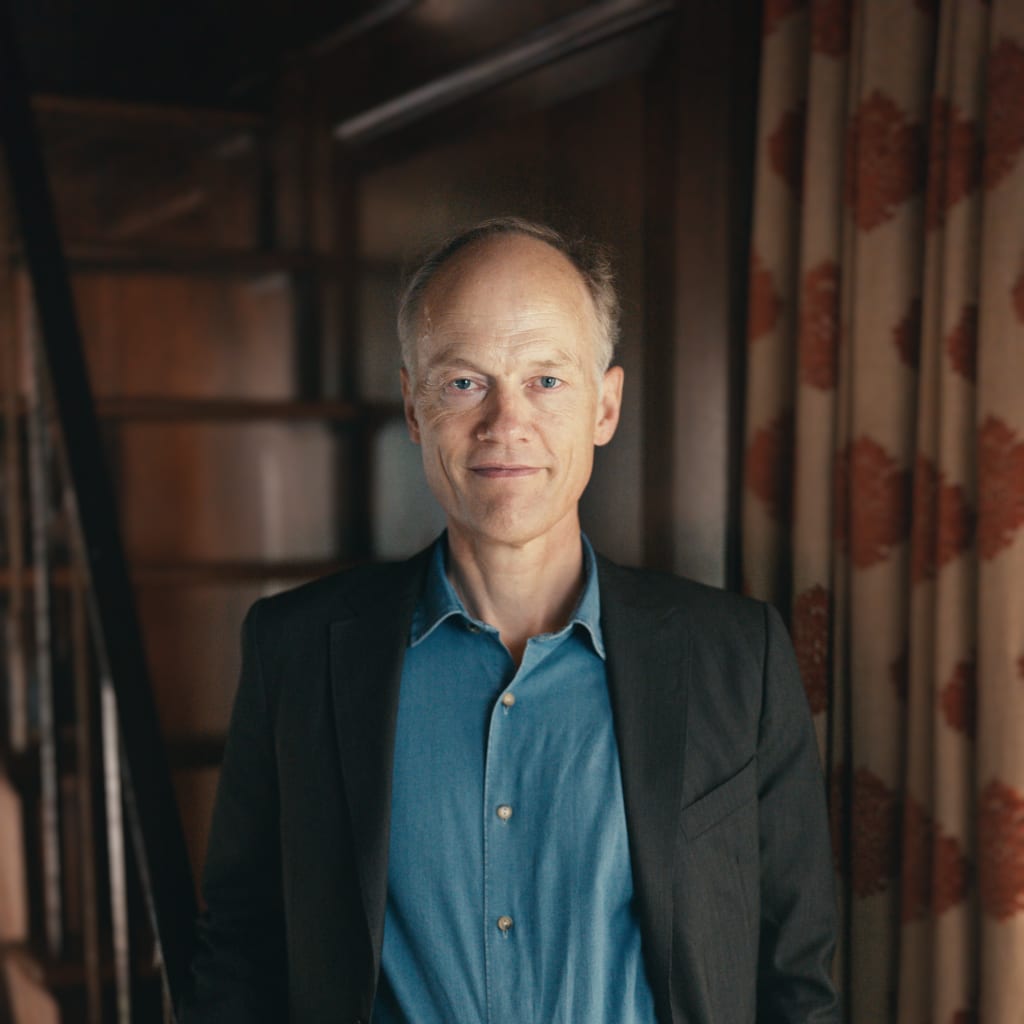 Sebastian MallabyCFR ExpertPaul A. Volcker Senior Fellow for International Economics
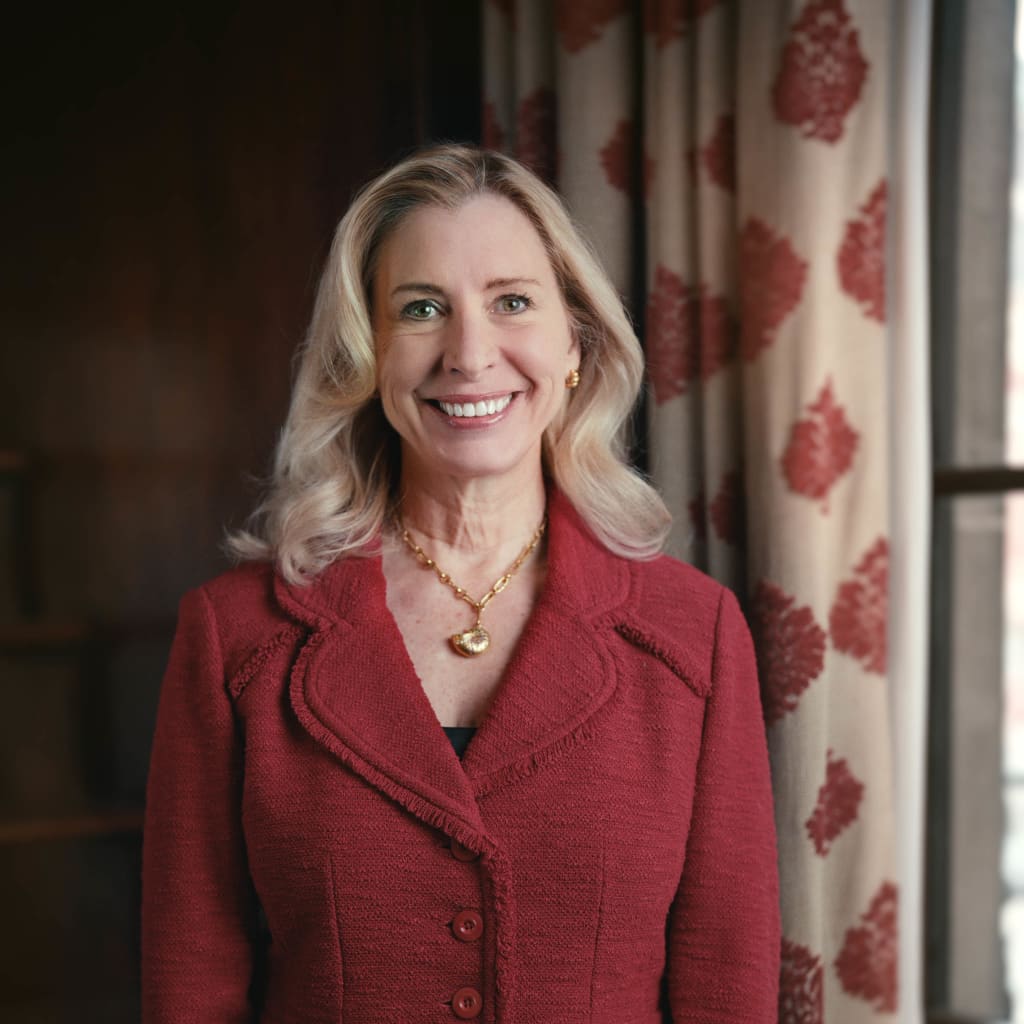 Rebecca PattersonCFR ExpertSenior Fellow
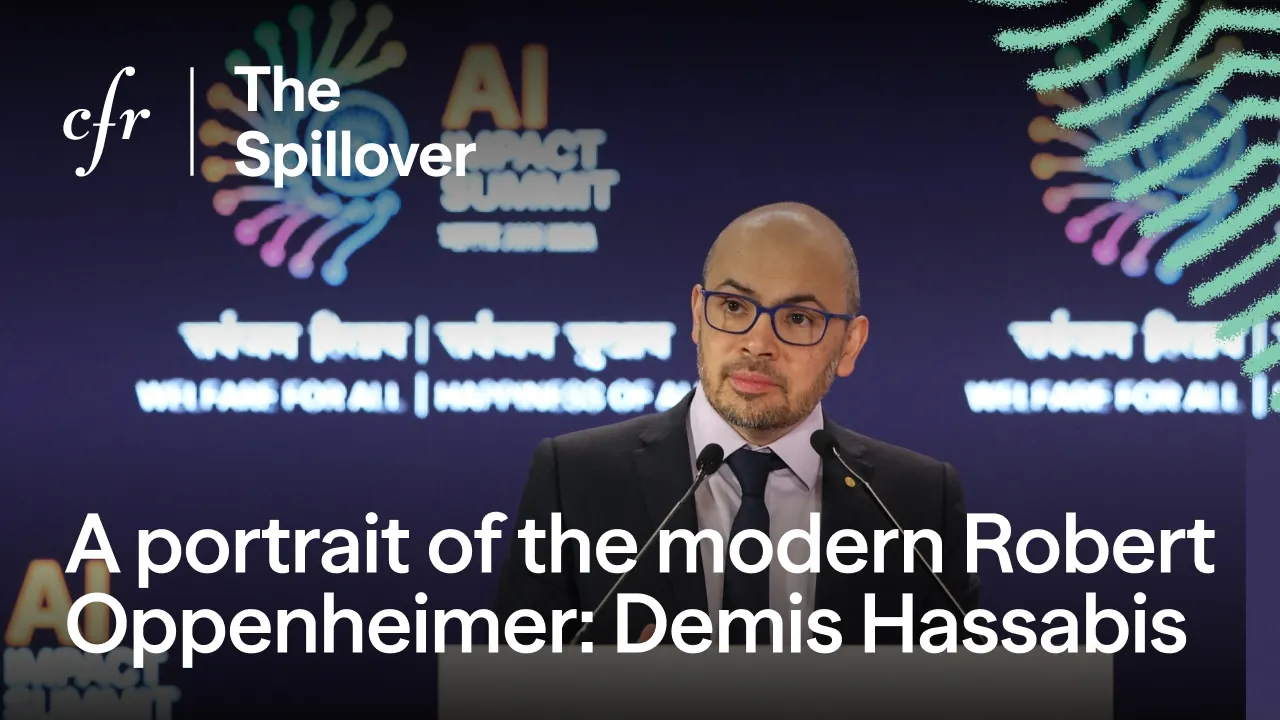
[Video: https://youtu.be/-bm6tkdQTcw]
Transcript
MALLABY:
I’m Sebastian Mallaby.
PATTERSON:
And I’m Rebecca Patterson.
MALLABY:
Welcome to The Spillover. Each week, we examine the ripple effects from global events ranging from economics to geopolitics to technology and finance. Last week, we talked about the spillovers from the Gulf War, including for private credit.
And this week, we’ve got a very exciting and special episode. We’re going to be answering your questions.
PATTERSON:
We’re not just answering questions, Sebastian. Before we do that, we’re going to start the show today with a discussion of your new book, The Infinity Machine, Demis Hassabis, DeepMind, and the Quest for Superintelligence. And if you don’t mind, I’m going to play interviewer this week, okay?
MALLABY:
Sure.
PATTERSON:
Okay. I want to start with the big picture. You know, for people who are about to embark reading this book, is there one big thing you hope they take away?
MALLABY:
I think the main thing the book delivers is a portrait of this extraordinary character, Demis Hassabis, who is the founder of DeepMind in London, which is now the Google AI engine room. And through Demis’ life and career, you really get the full story of the making of modern AI. So it’s both the figure and then the landscape behind the figure.
I always try and do both in my books. And, you know, it’s a funny thing. I’ve been doing the rounds of TV studios in the past week since publication.
And, you know, Demis Hassabis is not a well-known figure. Sam Altman is the poster child of AI. And yet Sam Altman, not an AI scientist, right?
He dropped out of Stanford, doesn’t have a degree. Very smart guy, but not an AI scientist. Demis Hassabis, on the other hand, Nobel Prize.
We’re talking a different range. And the other thing is, you know, Sam Altman only got into this when OpenAI was founded in 2015, whereas Demis had been thinking about this stuff since the 1990s. And he founded DeepMind back in 2010.
So he was the OG. You know, in these TV studios, people can’t even pronounce his name, despite him being the OG.
PATTERSON:
I actually had to Google the pronunciation this morning to make sure I didn’t screw it up today.
MALLABY:
Yeah, that’s right. It’s not Demis Hassabis, it’s Hassabis. You have to put emphasis on the right syllables, okay?
And even actually, the book cover, there’s an image of Demis Hassabis. But it’s kind of fuzzed up deliberately, so that he looks like a mysterious geek, enigmatic. And so he looks cool and interesting and intriguing, even if you don’t know who he is, because the publisher, Penguin Press, thought, we can’t sell this book on the basis of a person who is not really very famous.
PATTERSON:
Right.
MALLABY:
Which is ironic, because he should be famous.
PATTERSON:
Now, you just called him a geek. You’ve gotten to know him for a couple of years now. Does he wear that proudly, or did you just insult him by saying that on our podcast?
MALLABY:
I mean, yeah, he’s actually quite a normal person. He would not maybe choose to be called a geek. There’s a side to him which is totally geek, right?
I mean, he’s this chess prodigy as a child, coding phenomenon later on, wrote a video game before he went to college, sold more than 5 million copies, and made him quite a lot of money.
PATTERSON:
He should be a proud geek.
MALLABY:
So he should be a proud geek. But he’s also kind of approachable, which is unusual. It’s a funny mixture.
PATTERSON:
And tell me a little bit about where he’s from. I always enjoy learning the backstory of leaders, whatever field they’re in. I think we’re all shaped by our childhood.
MALLABY:
Well, so his mom was a Chinese Singaporean, grew up partly as an orphan in her childhood, came to England, and married a Greek Cypriot. So Demis’s parents are immigrants to London, which kind of makes them a typical Londoner, actually. It’s a real melting pot, London.
PATTERSON:
A hundred percent. Yeah, it was one of my favorite things about living in London, because of that melting pot, so many different perspectives, and surprisingly good food. I will say that when I lived there.
But let’s get back to your book. Okay, you said Demis is special because he started his quest for superintelligence earlier than Sam Altman, also because he’s a real scientist and he’s been recognized with a Nobel Prize. And we’d add, too, that being British makes him unique, right?
He’s not from the American-dominated tech world. He’s not a Silicon bro. He founded DeepMind in London before Google bought it.
DeepMind was just an independent British startup. And he did get some money. We need to be balanced here.
He got some capital from Silicon Valley royalty like Peter Thiel and Elon Musk, but he’s not a Silicon Valley figure. I don’t know if you’d agree with this. Is he an anti-Silicon Valley person, right?
He doesn’t strike me as someone who moves fast and break things, you know? Would you agree with that? And then what else do you think is different about him?
MALLABY:
Yeah, I think he has this side to him which is highly competitive and a bit Silicon Valley, but there’s also another side. And maybe that’s what you don’t see so much. I mean, I think if you look at Sam Altman, he really wants power.
You know, he once thought of running for California governor. He is quite willing to be fairly slippery in the pursuit of power. He even thought of running for president at one point and maybe who knows, he’s quite young and we’ll see what happens.
If you look at, let’s take Mark Zuckerberg, right? He’s really about commercial advantage for Meta. He wants AI tools to make meta products like Facebook even more compelling slash addictive.
You know, Demis, the fundamental deep motivation is science. You know, he grew up thinking that he was fascinated by biology, fascinated by theoretical physics and had all this ambition to really advance the field. He said to me once in one of his early electrifying statements, you know, Isaac Newton was a failure.
And what he meant was Isaac Newton was a great physicist, but he didn’t understand the full fabric of reality. So how was he going to surpass Isaac Newton? And the answer was he had to build a tool that would take him further than any of these other physicists had gone.
And that was going to be super intelligence. And he believed this when he was 17, you know, in the 1990s.
PATTERSON:
That’s amazing. I mean, my husband has written books on very successful entrepreneurs, very focusing on the super wealthy. But one thing you just said that struck me because I read it a lot about these people who are also extremely successful is that they are obsessed and singularly focused on whatever that goal is.
And it sounds like that’s true for Demis as well. And I think you have in the book as well that he’s hoping to win not one Nobel Prize, but two. And I was like, how many people have actually won two?
I think you can count them on one hand.
MALLABY:
Yeah, I think you can. I think with him, you know, the idea is he’s got this tool. He’s building it, you know, to be even better.
The tool has already delivered the protein folding system, AlphaFold in 2020, which did him win one Nobel Prize. But now he’s got a platform of super intelligence. You know, why not win some more, right?
I mean, you know, you can crack lots of different areas of science when you have an amazing AI.
PATTERSON:
Yeah, I mean, AlphaFold, certainly when I try to look at what’s the positive potential of AI, it’s easy sometimes to get into that doom loop with, you know, huge job displacement or people using AI for nefarious purposes that run the gamut. But on the positive side, AlphaFold, the ability to, you know, have these agents using this technology look 24-7 for possible cures for diseases that have evaded us for so many decades. I mean, to me, that’s just amazing.
It’s hard to even process how great that could be for humanity.
MALLABY:
Yeah, and we kind of need a positive story about AI because otherwise society is not going to accept it.
PATTERSON:
Yeah, yeah. Well, it’s interesting. I was just finishing a book chapter for a friend’s book on AI and what it means for the global balance of power, and I was looking at the economic side.
And there was a recent Ipsos, am I pronouncing that right, Ipsos poll, that looked at dozens of countries around the world and people’s expectations of AI. Were they positive or negative about it for the next three to five years? What was really striking, to your point, is that the emerging markets, generally speaking, were all very positive.
And the top 10 most negative countries in terms of public perception about AI and what it means for their finances and their lives for the next three to five years, all advanced economies, including the United States. And I have to think part of that is worries about job displacement and other variables like that. But it was interesting to me, the emerging markets see this as a way to close the gap with advanced economies and accelerate their development.
And the advanced economies, generally speaking, seem a lot more cautious.
MALLABY:
Yeah, I mean, I think there’s a couple of ways we can try to make the advanced economies accept AI. One is to make it safer. And in some ways, my book is the story of a good person who wants to make AI safe, but can’t, because he’s stuck in this incredible race.
And when you have a race dynamic, it’s a race to the bottom. And Demis could make his own AI, the Google DeepMind system, safer. But then if other labs didn’t do the same thing, it wouldn’t make the world safer.
So he’s sort of stuck. So the one thing you can push on as an AI leader is to develop applications which are clearly beneficial for humans. And I think medicine, through the structural biology breakthroughs, is a clear example of that.
PATTERSON:
Yeah.
MALLABY:
So, I mean, AI promises both, you know, great benefits, but also great risks. And part of what I wanted to do in this book is to deliver a portrait of somebody who’s got his hands on the 21st century version of the nuclear material. What does that feel like?
PATTERSON:
Oof, okay. Now I am become death destroyer of worlds, right? We’re talking Oppenheimer here.
And that’s kind of interesting timing, given that we have a war going on right now in the Gulf with uranium, a key focal point. It’s both easy and scary, I guess, to think about what Oppenheimer said when he witnessed that first nuclear reaction in New Mexico.
MALLABY:
And the amazing thing to me was I didn’t even have to bring up this parallel with the characters in my book. They brought it up themselves. They’re so conscious of the Oppenheimer story, you know, Sam Altman will tell people unprompted, do you know I had the same birthday as Robert Oppenheimer?
Oh boy. And Demis, one time I was asking him about his first office. What was it like to move into the first office?
And, you know, you’ve been a journalist at various points. And you know that if you ask people to reconstruct the emotion, the feeling around something that happened a while ago, you know, the likely response you’re going to get from them is, yeah, it was cool. I mean, you won’t get anything, right?
PATTERSON:
You’ll get nothing.
MALLABY:
But Demis said, oh yeah, I had the first office. It was in Russell Square in London. It was in the attic.
I would come down from the attic. There was no elevator. I come down the stairs, ding, ding, ding, ding, ding, ding, ding.
And as I came out of the front door, do you know what there was just to the right? Well, there was one of those black, white, black, white, black, white pedestrian crossings on the street. And do you know what happened there?
Well, in the 1930s, the Hungarian nuclear physicist, Szilárd, was crossing black, white, black, white. And he thought of the nuclear chain reaction. And that’s what led to the Manhattan Project, Sebastian.
And that’s perfect because we’re doing the modern version.
PATTERSON:
Singularly focused.
MALLABY:
So yeah, and perfectly aware of these parallels and the sort of existential stakes that are involved.
PATTERSON:
So it seems that all these guys, Demis included, know that what they’re doing could be incredibly dangerous for humanity. So what drives someone to do that?
MALLABY:
I think in Demis’ case, it is this, you know, urge to understand science. As I said earlier, you know, he regards Isaac Newton as a failure to be improved upon. And he feels this with religious intensity, spiritual intensity.
He would say to me, you know, he’d be up at 2 a.m. in the morning, you know, reading some science paper. And he would feel that reality was screaming at him, you know, staring him in the face and saying, discover me, discover me. And that to discover nature, to understand science more deeply is to get closer to the intelligent divinity that may perhaps have created everything.
And so it’s his way of approaching what he would think of, perhaps, as God. Not in a kind of classic religious sense, but this is a kind of spiritual language that I think a lot of people in my book, you know, they’re having trouble processing the magnitude of what they’re doing. And so sometimes they giggle and you think, what’s up with that?
And you realize that contemplating potential human annihilation is absurd to a human. And the absurd is a close cousin of humor. And in other cases, as with Demis, you reach for this sort of spiritual language to explain what you’re really up to.
PATTERSON:
Yeah, I would call that nervous laughter, but either way, okay. So we’re looking at possibly egotistical villains in this space, or we could be looking at this distilled essence of what makes us all human. Maybe it’s a little bit of both, but there’s a lot there to ponder.
And I guess readers of your book, The Infinity Machine, can make up their own minds on what they think of Demis and all these characters right now that are going to shape the next chapter of all of our lives, whether we like it or not. I can’t wait to read it. It’s the next book on my bedside table.
And I’m going to let you know what I think of it too, and we can talk about it more on this podcast. But right now, let’s move on to our questions that we got from our readers. As we promised last week, we asked Spillover listeners to send in their questions, and the questions we picked on today’s episode would get a copy of your amazing book.
And so, shall we dig in?
MALLABY:
Yeah, but they have to read the book, right?
PATTERSON:
Of course, yes. They have to read it. And I’m looking at the camera now.
No cheating with large language models to give us a summary or anything like that. All right. Why don’t I start with the first question?
MALLABY:
Is that okay?
PATTERSON:
All right, good. So we have a question from Abraham Carrasco, and I’m going to paraphrase a little bit, but he’s suggesting with all the doom worries, and we’ve talked about a few of them around AI these days. Okay, we’ve talked about AlphaFold a bit, but more AlphaFold or other, what are some benevolent real-world applications of AI?
MALLABY:
Well, I think AlphaFold remains the sort of top example and generally the field of understanding the shapes of proteins, and then also, how do you make a medicine that binds onto those particular shapes? So just to sort of set the context here, you know, back in the 1970s, there was a Nobel laureate called Christian Amfinsen, and he speculated that if you took an amino acid strand and you understood the DNA sequence in the amino acid, you would be able to predict from the sequence the self-executing origami model that this amino acid sequence would perform. So it kind of curls itself up into this intricate, beautiful shape.
And so this is a long-standing challenge in computational biology. How do you go from the DNA code to a prediction of the actual shape of the protein? And, you know, teams of academics have worked on it for a long time.
DeepMind came along with Demis Hassabis, and they cracked this problem in 2020. And all of a sudden, you know, we know all of the shapes, you know, like 200 million of them, of different proteins, which are basically the building blocks of nature. And these are open-sourced.
Any scientist anywhere in the world can look it up for free in a database. So it’s just gifted to the world. So that’s unleashed a huge amount of faster structural biology research.
And that could be for material sciences. It could also be for medicine. But what maybe is less well-known is that that was the AlphaFold 2 system.
Now we’re onto AlphaFold 4. And there’s basically a suite of proprietary AI products in the sister company of DeepMind called Isomorphic Labs. And there they are looking not just at what’s the shape of the proteins, but what’s the shape of the other molecules that they interact with?
What’s the nature of the interactions? Sometimes you get a protein that’s not, you know, it’s kind of moving around. You need to dynamically bond with this to crack a medical challenge.
And so this is being taken up by Isomorphic Labs, but also by actually other labs in competition. And so I think the whole field of building a platform for very accelerated drug discovery is really on the horizon now.
PATTERSON:
No, that’s so exciting. It’s just, I loved your line about amino acid origami. It’s a wonderful visual.
And of course, we know there’s other examples of AI accelerating science. There’s definitely a lot of excitement around nuclear fusion as a source of clean, non-climate-changing energy. The challenge of controlling super hot plasma inside a reactor, it’s mostly been cracked now by AI-controlled magnetic fields.
I mean, that could be amazing when we think about the warming of the planet and how climate is affecting so many people’s lives around the world. And AI, I think, also is becoming really, really good at proposing novel synthetic materials, things that could be used to help fusion technology. So lots of exciting things.
There’s a lot of benevolent, positive things and more pedestrian, but I’m seeing when I talk to companies and organizations, just very day-to-day uses of AI, and maybe it’s not breakthrough like AlphaFold, but in aggregate, they are going to support productivity and economic growth, and that’s going to benefit everyone. Now, maybe not to the same degree at the same time, but there’s a lift to global GDP that is going to come from this.
MALLABY:
Totally.
PATTERSON:
Yeah.
MALLABY:
Okay, next question. This one is for you, Rebecca. It’s from Richard Brunner, and he asks, what’s the long-term relationship between China and the U.S. dollar as a reserve currency?
PATTERSON:
Oh, okay.
MALLABY:
And how does the euro fit into this question?
PATTERSON:
All right, so we’re getting off AI for a few minutes. That’s fine. And yes, I’m the currency girl here, I guess.
So maybe let me step back for a second because I think it’s important, if we think about how China or even the euro, the Chinese renminbi or the euro could challenge the dollar, you have to think, what are the building blocks that gave the U.S. the dominant global currency to begin with? And I think first is economic dominance. Now, other countries want to do business here.
That means they do foreign direct investment in the United States, which means they buy dollars to make those investments. So it’s economic dominance. Second is just very large, deep financial markets.
And the treasury market, the U.S. government bond market, as the biggest reserve asset in the world, has also meant kind of a captured source of demand for dollars. It’s important too that the Fed, Federal Reserve, is independent because that creates a level of credibility for the treasury market that makes it attractive almost regardless for some investors of what’s happening with bond yields. I think third is that we have a very innovative, profitable corporate sector, which also attracts demand for dollars from everywhere around the world as people want to own tech stocks and other types of companies.
So it’s global trade and global capital flows, both money that wants to stay in the U.S. and money coming to the U.S. that supports the dollar. And the more the dollar is used globally, the cheaper it is to trade. So trading costs go down to a degree that if I’m in Asia, let’s say I’m a Thai company and I’m doing business with a company in Singapore, I would rather transact in dollars than in the two local currencies because the cost differential is just that big.
So all of this together gives the United States huge geoeconomic leverage. Other countries like China have become dependent on dollar-based assets, whether they like it or not. And unless China opens its capital account, right now it is one of the world’s leaders with trade, with the renminbi, but because the capital account is closed, people can’t easily go in and out of Chinese markets.
That’s going to limit them.
MALLABY:
It’s going to preclude them from truly challenging the U.S. I agree with you that China is unlikely to supplant the dollar because of the closed capital account. I do think more about the euro, which was in the question as well. And the reason I think about Europe is that, you know, if you think about the Deutschmark and Deutschmark bonds, I mean, in the old days, that was a very safe asset.
People wanted to hold it and there just weren’t enough of them. Today in Europe, you know, Germany issues bonds, it’s issuing more bonds than it used to because it’s more open to deficit financing. But what would really change the game is if you had more euro kind of eurozone-wide bonds backed by effectively the ECB, that would be a very safe asset.
And that would be very attractive and it would be a way of diversifying. People don’t want to have all their eggs in one basket. So weirdly, despite, you know, China’s tech strength, the size of the economy and so forth, I think a challenge, or at least a sort of counterweight to the dollar is more likely to come from Europe than from China.
PATTERSON:
You know, Europe has the ability to be a real challenger to the dollar tomorrow. All they have to do is decide politically that they’re going to harmonize all of their national bond markets into one European bond market. And if you put all those bond markets together, they would be roughly equivalent to the size of the U.S. Treasury market, which is about $30 trillion. Unfortunately for Europe, getting that political agreement is probably a zero probability for now, for now, at least. And in the meantime, what I think is interesting, and it gets back to the question, is even though the dollar dominance is here to stay for now, other countries are definitely aware of the U.S. leverage with the dollar. And so they’re trying to figure out what they can do to navigate that.
And in China’s case, you know, they’re launching, they’ve launched a digital currency, a CBDC. They have digital Chinese renminbi stablecoins now. And they’re trying to make the renminbi as attractive and easy to use as possible within their regional block, within the emerging world.
And they’re having some progress there. I think China’s also trying to slowly diversify out of dollar-based assets. They want to be less dependent on the U.S. So, you know, God forbid, if something happened in the U.S., try to freeze their reserves as it did with Russia in 2022, China doesn’t want that risk any higher than necessary. So they’re diversifying slowly, buying things like gold into their reserves to do that. So, you know, they’re doing what they can, but there’s limits to how far they can go with this.
MALLABY:
We’ll continue to watch this one, I’m sure.
PATTERSON:
Yeah, I’m sure. And Europe, you know, Europe’s point is more on the digital currency side. So, you know, one of the ways the U.S. is trying to support demand for treasuries and keep yields low in the United States is through stable coins. So the government is very focused on pushing demand for dollar-based stable coins around the world. Anyone who wants to use the dollar around the world, now you have this wonderful digital way of doing it. And in doing so, because they’re stable coins, they have to track the value of the dollar.
You have to back them with short-term treasury T-bills or something equivalent. So they think it’s a way to juice up treasury demand and preserve dollar dominance at the same time. Europe hates this.
The ECB is on the record saying, you know, we might even consider outlying dollar-based stable coins in Europe. I don’t know how one would do that, but they see that this is a potential threat to the effectiveness of their monetary policy. So they’re working pretty aggressively on their own CBDC and to make sure that the euro’s strength and international use isn’t eroded.
MALLABY:
Totally, yeah. Another question.
PATTERSON:
Okey-dokey. Okay, we have another one on AI, actually.
MALLABY:
Okay.
PATTERSON:
All right, good. So this is from Ben Zhang, and he’s asking, AI seems to have a first-mover disadvantage, Sebastian, similar to pharmaceuticals because of model distillation. So if you don’t have patent protections like pharma, can training AI models make sense for the innovators at the frontier?
Interesting. What do you think?
MALLABY:
That’s very interesting. So I think what the question is getting at is that in the case of pharmaceuticals, American consumers get the cutting-edge drugs first because they’re willing to pay the most. And all of the research and development costs for pharmaceuticals are essentially being recouped by selling at a very high price to American consumers.
And then once the drug companies have done the most important deal for them, which is distribution in the US, they look at other markets and they’re willing to sell at a much lower price. So in Europe or Canada, people get the same medicines just later, much cheaper.
PATTERSON:
Yeah, yeah.
MALLABY:
So in some ways, they’re free-riding on the American consumer, which is paying through the nose for getting the cutting-edge drugs first. Now you think about artificial intelligence, and you have something a bit similar, where the US labs are in the lead, they produce the best AI, and it gets to consumers here super fast. But it costs crazy amounts of money to train these systems, I mean, in the hundreds of billions.
And so it makes sense for other places, and China is the best exponent of this, to wait for Americans to produce great models. And then you can do this thing, distillation, where you reverse engineer what a new model is doing. And for much less money, you can create a replica.
It’s good to be in a catch-up position in this game. And so it’s another kind of freeloading. I don’t see this changing for the moment, because I think the American labs feel as if they are in this race they can’t afford to get out of, and they’re just attempting to throw money at frontier models.
But sooner or later, they have to recoup their investment, and then maybe that game changes.
PATTERSON:
Yeah, yeah. No, I see what you mean, that this could be scary for the whole sector on one hand. If there’s not an economic case for the foundational, you know, the frontier builders to invest, they may spend less on data centers.
And then the data center companies like CoreWeave and the chip makers like NVIDIA could be in trouble. But I guess the counter would be that if the foundational models can be commoditized, applications built on top of those foundations, that could get the customer lock-in and be valuable. So maybe it’s companies like Google and Microsoft, they’re not just selling AI, they’re embedding it into products that billions of people already use.
So Demis’ Gemini model, for example, it’s powering Google’s AI research model, it’s embedded in Google Drive and Gmail and so on. Anthropic’s prospects for going public probably depend in part on revenue from business customers that already are paying for Anthropic’s model. So I guess it’s the extent that AI is productized, it can be monetized.
Is that right?
MALLABY:
Yeah, that’s exactly right. And the question is whether that productization and monetization is going to sustain the very high level of investment in the foundation models that we’ve been seeing in the last three years.
PATTERSON:
Right.
MALLABY:
But I think, you know, in some sense, the labs are going to figure this out, the AI labs. And in the end, they’ll make their own choices, which make business sense to them, about how much to spend on research and development. And I think the way that other labs might follow and freeload is part of the equation, but I’m not sure it needs a policy response.
I think, you know, this will reach its own natural level.
PATTERSON:
I mean, in a way, this is capitalism, this is global competition. And if China can be a fast follower and, you know, build things using U.S. tech and come up with something cheaper, better, then the world will benefit from that.
MALLABY:
When I was in China just recently, you know, and I visited Huawei, they are most impressive in the sense that they focus on these applications of AI, you know, AI specifically to repair high-speed trains or AI specifically to do health scans to give everybody access on their phone to a health scan, AI for logistics, AI for, you know, all these different verticals.
PATTERSON:
So productizing.
MALLABY:
Productizing. Yep. And I think they made an explicit decision that they’re not going to win at the frontier, but who cares?
PATTERSON:
Right.
MALLABY:
It’s more about doing an application that you can monetize.
PATTERSON:
Well, and in China’s case also that you can scale. Yeah. Right.
They’re the masters globally of scaling. Should we get to the next question?
MALLABY:
Absolutely.
PATTERSON:
Okay.
MALLABY:
Let me read out the next question. So this is from Henry Milchuk. And Henry asks, you know, have there been surveys or opinion polls of swing voters from 2024?
In other words, voters who provided the margin of victory for Trump, but who don’t identify with MAGA, right?
PATTERSON:
Oh, okay.
MALLABY:
So they’re swing voters. They’re not totally wedded.
PATTERSON:
Yep.
MALLABY:
And he says, I want to know what such voters are now thinking about Trump policies. For example, the war in the Middle East, which by the way, Trump promised to avoid, the violent ICE actions and the incarceration of non-criminals. Are those non-MAGA 2024 Trump voters having buyer’s remorse?
PATTERSON:
So I think the short answer is yes, we are seeing evidence that the swing voters are having some buyer’s remorse. But let me get into some weeds. There’s lots of good recent polls that have come out, even since the war began, that we can talk to here.
And I’m going to look at my screen just so I get the numbers right. So at the end of March, we had a Reuters Ipsos poll showed 56% of Americans think the war is going to have a negative impact on their finances. I almost always go to, what does it mean for my wallet?
Because that’s what drives a lot of American voters. So 56% overall, not happy. And that’s compared to 49%, basically at the beginning of the month.
So as the war continues, as gas prices hit $4 a gallon, we’re seeing those numbers move. You know, what’s interesting about that is a plurality of Republicans. So 39% of Republican respondents shared that view.
And that’s going to include some of those swing voters. And it’s not just going to be gasoline prices. I think there’s increasing perception, at least, that we’re going to see this flow through to inflation generally.
I mean, we saw, for example, Amazon now has a surcharge on delivery that they’re tying to transportation costs. The United States Postal Service just announced an increase in prices tied to transportation costs. There’s expectations of food prices going up.
So it makes sense that this negative perception is there. What’s also interesting to me is MAGA, man, they’re diehards. You know, the supporters in a different but similarly timed poll from The Economist and YouGov showed 81% of self-declared MAGA supporters still approve of how the U.S. is leading the Iranian war. So independents, more centrist Republicans, they seem to be switching sides. The MAGA support hasn’t changed much. I guess one last quick point I’d make on this.
The Democrats, despite President Trump’s falling poll numbers, the Democrats’ poll numbers just aren’t moving. I think there’s still a lot of frustration, according to the polls, at least, with the Democrat Party, that they don’t have a clear singular message yet that’s really appealing to voters. So it’ll be interesting.
I mean, right now, if you look at generic ballots, who would win the next race? They’re only leading by six percentage points. In 2018, the Democrats won the popular vote by about 8.5. So, again, even with everything going on, it’s still not clear that they’re really benefiting from this.
MALLABY:
Yeah, but I mean, forecast models are giving Democrats a 69% chance of winning the House. So there is that. A 43% chance of the Senate, but, of course, only one-third of the seats will be up.
So it’s hard to win the Senate. But at least in the House, they seem like having a two-thirds shot at winning.
PATTERSON:
Yeah, so it’s really who do you dislike least right now, I guess, in U.S. politics. Okay, let’s move on to another question, shall we? Last question today.
There were so many more we got, and we really do appreciate all the questions. And I’m sure we can do this again on another episode. But for now, let me get to Cameron Wolfe.
And Cameron asks, okay, we’re going to go into drones now. Ready, Sebastian? Drone warfare has exploded, pun intended, during recent wars in Ukraine and Iran.
The need for militaries to pivot to accommodate a new risk seems profound. You know, Cameron would love our thoughts on how different countries are approaching this. Who’s ahead?
Who risks being left behind?
MALLABY:
Well, I think the first thing to say is there’s this staggering statistic that in the Ukraine war, fully three quarters of the casualties that the Russians have suffered have come from drones. I mean, that’s a very striking measure. And the other thing is, I think, you know, in the Iran war, what strikes me is that the calculations around closing the Strait of Hormuz, as they used to be described in military scenario planning, have been thrown out of the window because of drones.
So what used to be said is, look, yeah, Iran can mine the Strait, but then there’s all these mines in their own waterway, and taking them out is quite difficult, and that stops their own ships from getting out. So they probably won’t mine the Strait. But now when you have drones, you can selectively threaten ships that you don’t like.
Keep the waterway open for your own ships or for your friends’ ships, and have it both ways. And there’s no, like, post-war hangover where you’ve got all these mines in the water you didn’t want. So that has enabled Iran to go ahead with the closure of the Strait of Hormuz in a way that, you know, there would have been a high bar to it absent drones.
I think drones in both of these wars have changed the games. If you ask, you know, who’s going to benefit from this, what I would say is at a high level, it looks at first with drones as if they are favouring the underdog. So Ukraine versus Russia, Ukraine used them first.
You know, Iran versus America, Iran has this advantage in terms of closing the Strait of Hormuz. But I think as the tech for drones advances, it’s going to get very, very high order complex. So I’m hearing talk about these AI systems that not only control a drone, they control a swarm of drones, like how all these drones coordinate together.
And if you think about a swarm attacking all of a sudden, you know, the way that you counter drones with interceptors ain’t going to work, right? It’s just too many of these. So I think as the drone technology becomes more advanced, it may play back into the hands of the established superpowers who have the technology capability to build the best drones.
PATTERSON:
And the money. And in China’s case, also just this deep history of manufacturing anything and everything at enormous scale. So, OK, it’s a race, just like AI, whoever has the best capabilities, the manufacturing base, the defensive systems probably wins.
I know that the White House budget, whoever is in charge of the White House, rarely becomes reality. But the fact that President Trump has requested $1.5 trillion for defense, it’s kind of a- Trillion with a T. Yes, that’s an eye-watering number.
And it’s not going to become real, but it’s signaling, right? It’s telling you where this administration wants to put taxpayer money, where it doesn’t. And then on the China side of the equation, the latest five-year plan from President Xi Jinping and his team suggest that they’re doubling down on drone warfare research and development as well.
So both sides realize that in the future of warfare, this is where they need to place a lot of their bets. You know, another country that I think we haven’t talked about is maybe underappreciated in the race is Turkey. It became a real force in drone manufacturing early last year.
The sales of their key drones surpassed those of the U.S., Israel and China. So there’s, you know, it’s mainly U.S. and China, but don’t preclude the other countries out there, the smaller ones like Ukraine or a country like Turkey. And I guess one last thing I’d say on the U.S., once again, you know, global supply chains are so interconnected and have become so complex, you can’t win anything on your own anymore. And it’s true with drones. Drones require certain rare earth minerals and 90% of them are coming from China. So if China doesn’t want the U.S. to win on drones, at least with the way technology is today, they can stop us.
MALLABY:
You know, that’s a good segue, actually, because I was going to bring up for our last section of the podcast, you know, where we talk about something which struck us in the past week. Yep. Mine actually is this idea of choke points, which you’re sort of alluding to there, because our great colleague Eddie Fishman wrote this book back in February of last year called Choke Points.
And if you look at sort of a Google Trends chart, you know, this term choke points wasn’t used that much before his book came out. And since his book came out with that title, it’s just like everywhere. And it’s one of those phrases, once you understand what he’s getting at, this idea that you can weaponize some particularly, you kind of, you know, unique and rare piece of the supply chain, could be rare earths, could be, you know, semiconductor lithography machine from Holland.
You know, those choke points, straight and foremost, obviously is a classic choke point. You know, those really matter in geoeconomic competition. And once you see that, you start using this phrase yourself.
PATTERSON:
Yeah.
MALLABY:
And so it’s really gone viral. And so, you know, kudos to Eddie Fishman for picking, not, I mean, the spillover is a great title, but I think he’s got the second best one.
PATTERSON:
I couldn’t agree more. And I’m so glad we have Eddie as a colleague here at CFR. The thing that struck me most this week is more American centric.
But last week, we got a monthly non-farm payroll. So the Super Bowl of Economic Data in the United States, our monthly job numbers, and it was much, much better than expected. 178,000 jobs created in March.
A lot of it was weather related. February weather was terrible. March weather was great.
So you had this big shift. So over the last three months, growth has averaged about 68,000. And over the last six months, it’s only been 15,000, which is not a lot of jobs.
What’s interesting about this, though, Sebastian, is that the amount of jobs we need today in America to keep the unemployment rate steady, which is what the Federal Reserve focuses on, has fallen to close to zero, which is a weird thing to wrap your head around. You know, it’s mainly labor supply. We have so many people retiring in the country.
We have a lot of immigrants leaving the country that the math has changed. But what that means, and I’m going to give a shout out to JP Morgan because they did the research that I’m now going to reference, when you have a break-even rate, so to speak, for job growth for the unemployment rate that is that low, it means that statistically about a third of the time, we’re going to have negative monthly payroll prints. And I think as someone who grew up on trading floors and in investment banks, when you get a negative print, even if it’s largely expected, usually market sentiment is not too happy about that, right?
And so if it’s happening a third of the time, I’m just starting to wonder what is that going to mean over the medium term for business sentiment, for consumer sentiment. If they’re seeing that as the top headline in the newspaper, a third of the time.
MALLABY:
That is very striking. I mean, presumably it means that GDP growth is also going to be down since labor force growth is one source of GDP growth. And if you bring that down, then everything from your debt dynamics, you know, your tax base and so forth, all of that gets affected.
PATTERSON:
Oh, my gosh. You did that on purpose. So we’re going totally back to the infinity machine because the only way to solve this puzzle is more productivity.
So every worker left is more productive. So God bless AI. We have to hope for the best.
MALLABY:
I didn’t think of that promise, but thank you for mentioning it.
PATTERSON:
But you’re very welcome and congratulations on the book again, Sebastian.
MALLABY:
Yeah, and congrats again to our winners. Thank you all of you for your questions. It was great to get them.
I’m sure we’ll do this exercise again because it’s been a lot of fun. And for those of you just tuning in, don’t miss next week’s episode of The Spillover, where Rebecca will be speaking with former New York Fed President Bill Dudley live in D.C. And please keep liking us and commenting on our podcast. It really helps us to get the message out about The Spillover.
Want to stay up to date on the latest episodes of The Spillover? Sign up to receive an email alert when new episodes drop at cfr.org slash newsletters or click the link in our show notes. If you have an idea or just want to chat with us, email podcast at cfr.org.
Be sure to include The Spillover in the subject line. This episode was produced by Molly McAnany, Gabrielle Sierra and Jeremy Sherlick. Our video editor is Claire Seaton.
Our audio producer is Markus Zakaria. Special thanks to Justin Schuster and Todd Yeager for engineering the episode and research for this episode was provided by Liza Jacob and Ishan Thakkar. You can subscribe to the show on Apple Podcasts, Spotify, YouTube or wherever you listen to podcasts.
This transcript was generated using AI and may contain errors or inaccuracies.
We discuss:
- Demis Hassabis as a key architect of modern AI and the force behind DeepMind.
- AI’s upside in medicine and science, especially through AlphaFold and faster drug discovery.
- The tension between building powerful AI quickly and making it safe.
- Why the biggest AI winners may be the ones that turn models into useful products.
- Why the dollar still dominates, even as China and Europe look for ways to challenge it.
- How Trump’s foreign policy decisions on the Middle East and immigration could sway voters in the upcoming midterm elections.
- How drones and supply chain choke points are reshaping global conflict.
Mentioned on the Episode:
Sebastian Mallaby, The Infinity Machine: Demis Hassabis, DeepMind, and the Quest for Superintelligence, Penguin Random House
Want to keep up with The Spillover? Sign up to receive an email alert when new episodes are released.
The Spillover is a production of the Council on Foreign Relations. The opinions expressed on the show are solely those of the hosts and guests, not of the Council, which takes no institutional positions on matters of policy.
Producer
- Producer, Podcasts
Supervising Producer
- Director, Podcasting
Supervising Producer
- Director of Video
Audio Producer
- Audio Producer & Sound Designer
Researcher
- Research Associate, Finance, Business, and Technology
More Episodes
 41:30Podcast
 35:24Podcast
 48:01Podcast
 47:25Podcast
 50:17Podcast
 47:25Podcast