Private Credit’s Black Box + Why It’s Not 2008 (But Still Risky)
This episode dives into how the opaque growth and structural risks in private credit, combined with global supply shocks and market stress spurred by the Iran war, are creating a uniquely fragile and unpredictable economic landscape.

Published
Hosts
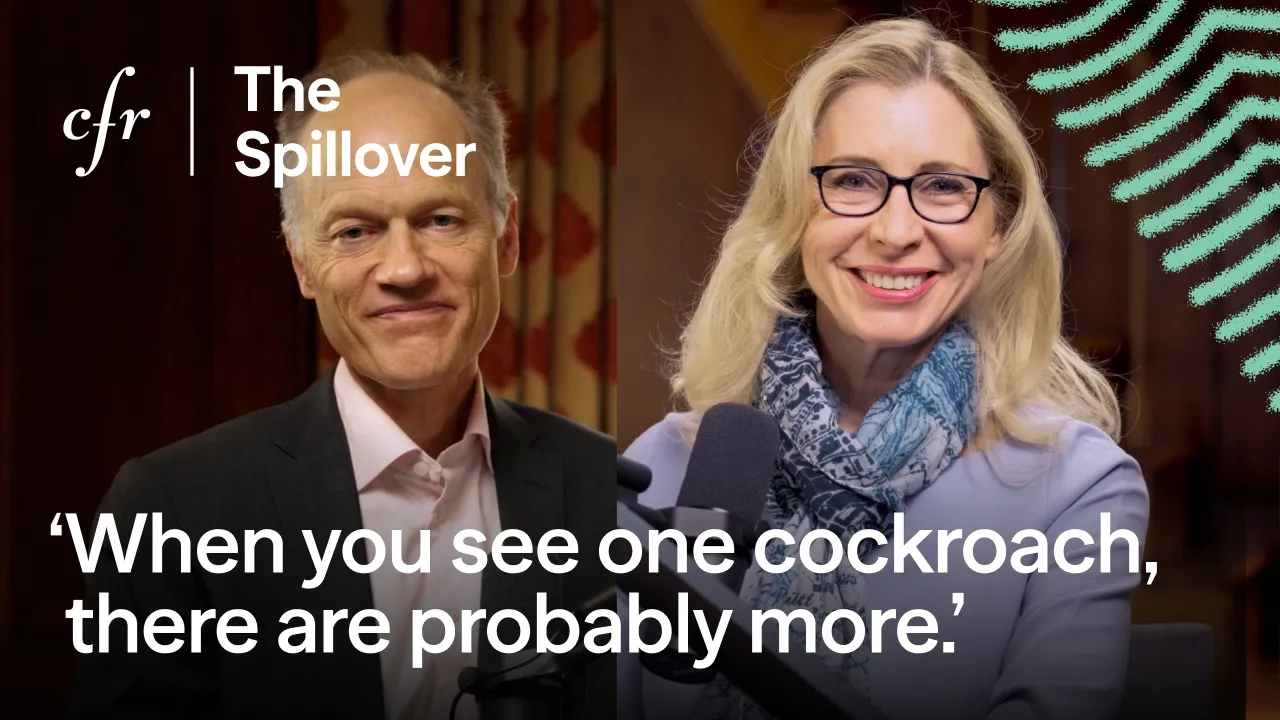
 Sebastian MallabyCFR ExpertPaul A. Volcker Senior Fellow for International Economics
 Rebecca PattersonCFR ExpertSenior Fellow
[Video: https://youtu.be/GyP-1vtVIBc]
Transcript
PATTERSON:
I’m Rebecca Patterson.
MALLABY:
I’m Sebastian Mallaby.
PATTERSON:
Welcome to The Spillover. Each episode, we examine the ripple effects of global events looking across economics, financial markets, geopolitics, policy, and technology. Last week, my wonderful colleagues, Sebastian and Chris McGuire, looked at the geopolitics of AI, focusing on the U.S. and China and issues like governance and chip controls. If you’re enjoying The Spillover, please remember to like us, tell your friends, leave a comment. It does help us build our listening community. So, Sebastian, I am so, so happy to see you this week, especially because the last week I was flying all over the East Coast dealing with those horrible TSA lines.
So, I am grateful to be home and in my chair.
MALLABY:
We’re happy to see you back.
PATTERSON:
Thank you. I am so happy to be back. And I know that we decided we wanted to do a deep dive on private credit today.
But look, the war is now in its fifth week. And I think there’s enough new news and new spillovers that we should probably start there.
MALLABY:
Agreed. And by the way, I think that, you know, private credit will definitely be top of mind if it wasn’t for the war in Iran. But in a funny way, it’s the spillovers from the war in Iran that make private credit even more interesting.
So, we’ll make the most of that.
PATTERSON:
Oh, I like that. We’ve teased it. Now people have to keep listening.
All right, let’s start with the war. You know, we don’t want to repeat the news, of course, but I do think we should touch on what we think are some of the most noteworthy or new emerging spillovers for our listeners to focus on. And I’ve been looking at the war through three lenses, duration, breadth and policy response.
And when I think about the duration of the conflict, as I just said, we’re in the fifth week and we’re starting to see real shortages in more types of goods around the world. We’ve already talked about things like fertilizer and how it could affect food prices in the coming months, maybe even years. Helium for semiconductors, aluminum for auto parts.
And now President Trump has extended talks, I guess, until April 6th. And at the same time, he’s moving more troops to the region. So, there’s reasonable, I think, growing anxiety that this conflict may not wrap up quickly or smoothly.
You know, I think more than what happens with the war, it’s when the strait opens that people really care about in terms of this supply shock.
MALLABY:
Yeah, I think like we said in the early episode, the length issue is complicated by the fact that it’s sort of in Iran’s hands. As long as they want to carry on fighting, they can carry on fighting. Probably it’s very hard to eliminate a bunch of people hiding in caves with drones if it comes to that.
And that actually gets me to the breadth of the war point. Because just as you have sort of a Houthification of Iran, where the Houthis from Yemen are the model. And, you know, they’ve been able to sustain attacks in the Red Sea in the past, despite attempts to wipe them out.
Equally, the worry right now in terms of the breadth of the war is that the Houthis may be getting into it. You know, they’ve just been lobbing missiles at Israel. And there’s a fear that to compound the blockage in the Strait of Hormuz, they’re going to start attacking shipping in the Red Sea.
And if that happens, that’s a huge deal. Because you’ve got 15% of the world’s goods trade, you’ve got 30% of container ships going through the Red Sea, you’ve got Saudi Arabia pumping oil out in that direction. And so if that were to be interrupted by Houthi attacks, that would drive the oil price up in a whole new jump.
So the breadth thing is super important. And you mentioned number three, I think that was the policy response. Right.
And you’re right. You know, you’re seeing a bunch of countries, you know, India and other major Asian players trying to protect and respond in the face of this oil and commodity shock. They are, you know, doing export controls so that, you know, if they do have energy stocks at home, they’re not allowed out of the country.
PATTERSON:
Right. And China just did one with fertilizer, export controls on fertilizer, which compounds that problem.
MALLABY:
Right. And then also subsidies to help consumers weather the price shock, which, of course, has an unfortunate delaying effect on any adjustment because the more that you subsidize a consumer to carry on buying oil as they used to, the more the demand for oil stays up and therefore the price stays up. And so, you know, this policy, the sets of policy choices that get made are going to be pretty interesting to watch.
PATTERSON:
Yeah, the IMF, I believe, has already come out and sort of said these aren’t well thought out policy responses, which is a little concerning. But, and it is the policy response side of things that’s worrying me a little bit right now. Some countries more than others.
And, you know, the combination of fiscal and inflation fears as countries spend more money both on their own defense, but also to subsidize consumers and businesses. You know, we’re seeing that putting some upward pressure on government bond yields around the world because they’re going to have to issue more debt to fund all this stuff. And where’s the demand going to come from?
So I think it’s normal that there’s more risk premium in bonds and those yields have been heading higher.
MALLABY:
Right. And if you think back to our show on the fragile four, the indebted four, I think we talked about Japan, Britain, France, and the US. The problems that we perceived then have definitely been compounded now by the war, right?
Because before we were talking about the need to up defense spending in a tougher geopolitical climate, you’ve got, you know, Russia being aggressive in Europe, you’ve got the rising tension between China and the US. All of these things were going to drive up defense spending. But now you’ve got this near term need to cushion consumers from the shock of an oil price hit.
You’ve got economies going to slow down. That always causes budget deficits to go up. And so the question is, will financial markets remain calm as this pressure mounts?
PATTERSON:
Yeah. And we will see. I definitely am worried about those fragile four.
We’ve seen, for example, in Japan, the dollar yen exchange rate got above 160. We had to get verbal intervention from the Bank of Japan, Ministry of Finance, I should say, suggesting that they might intervene to stabilize the currency. Super important for local companies in Japan, especially those that are doing a lot of export or importing.
They need that currency stability. So what’s interesting when you think about this, usually with a shock of this magnitude, you’d have a flight to safety and bond yields would be falling. People would be focused on the hit to growth and just want those diversifying safe haven assets like bonds.
We haven’t seen that yet. Maybe it’ll happen, but we’re seeing the reverse. And in the case of the yen, usually the yen, like the Swiss franc, is a safe haven currency.
It strengthens in periods of risk aversion, if we want to call it that, or a conflict or a stress. And we’re seeing the opposite reaction today. So for investors who have modeled portfolios on the last 30 years of reactions to wars, it’s not working right now.
And again, I think that comes back to a degree to our fragile four comment, that these countries have high debt levels, high budget deficits already. Now it’s compounded because of the spending tied to the war. And that’s causing some very different market reactions from what people are used to.
MALLABY:
Yeah. And Europe is a little bit like Japan too, because again, high levels of debt, high dependence on oil coming out of the Strait of Hormuz and on energy imports more generally. The Europeans had already cut off their dependence on Russian natural gas exports because of the Ukraine war.
And now they’ve had a second round of forced adjustment because they switched to liquefied natural gas. And now Qatar has been attacked and that’s a problem. So Europe has high debt, a high dependence on imported energy, doesn’t have the support from some sort of AI infrastructure boom that the U.S. might have. So it’s kind of a triple whammy for Europe.
PATTERSON:
Yeah. No, I think all the central banks are going to be very challenged here. If you know that this is going to destroy demand and weigh on growth, ultimately, do you raise rates to fight inflation and keep your inflation credibility intact?
Do you cut rates to try to support growth? This is very different from COVID. COVID was clearly a growth shock in 2020.
Central banks could feel very comfortable cutting rates aggressively. Now we’ve got both things, inflation and the underlying economy at risk. And so it’s going to be a lot harder.
We had Chairman Powell from the Fed just today, we’re recording on Monday, speaking and saying that for now, they just need to wait. No one has any idea what’s going to happen and whether it’s going to be more of a growth shock or an inflation shock. So I think central banks are going to be watching, trying to get some clarity on how bad and how long this war is, what the impact is.
But, you know, if you’re someone like the Federal Reserve and you’ve missed your inflation target for five years, you’re going to be thinking really carefully before you start cutting rates, even if there is some risk of growth downside. Because if you keep cutting despite that inflation going higher, and now it looks like a core PCE, the Fed’s main measure is at 3.1%. I’ve seen some estimates that could get over 4% this year. So are you just saying we’re going to let the inflation credibility go?
It’s going to be fascinating to watch.
MALLABY:
Right. And so, and they have a double challenge at the central banks, right? Because on the one hand, they have to think about core inflation, where is their federal fund rate or the equivalent elsewhere?
But then in addition, they’ve got to be looking at the financial market functioning. And I mean, you know, I think there’ve been a few signs about that. But, you know, you could get into a sort of conundrum like in 2022 in Britain, where on the one hand, the central bank was trying to tighten.
At the same time, it was providing more liquidity to financial markets, because there was that moment when the pound was falling, you know, bonds were falling, that kind of list trust panic moment. Right. Do you think we see any signs of that now?
PATTERSON:
You know, this last week, we started to see some like early signs, warning lights, if you will, that Treasury market functioning was deteriorating. And that is something the Federal Reserve cares deeply about. You know, one of the reasons that so many investors around the world use the Treasury market as its benchmark, I mean, it has depth, it has liquidity, but they also can count on the Federal Reserve to make sure it’s running smoothly.
And so if you see dysfunction in that bond market, there’s a good chance if it gets bad enough and threatens the underlying economy, the Fed’s going to step in. So last Wednesday, Thursday, you started to see that liquidity in the bond market deteriorating pretty sharply. It’s early days.
I’m not saying anything’s going to happen anytime, but it’s the sort of thing I’d watch for. And again, if you have a Federal Reserve that maybe inflation’s running hot, all else equal, they might be inclined to raise rates. And I’m not saying they would this year, but it’s not impossible.
At the same time, they might have to be injecting liquidity into the system, doing a mini QE, basically like the UK did for financial stability purposes. And communicating that to the public is not easy.
MALLABY:
And it’s not easy to communicate it to the White House either, right?
PATTERSON:
No, no.
MALLABY:
One of the interesting things about this discussion we’re having is that it runs exactly opposite to the express preferences of President Trump’s two favorite central bankers, Governor Stephen Miran, and then Kevin Warsh, who is going to be apparently installed as chairman of the Federal Reserve.
PATTERSON:
Once he gets through the Senate confirmation.
MALLABY:
Exactly. Exactly. He’s been nominated.
He hasn’t been confirmed. But both of these people, Kevin Warsh and Stephen Miran, have expressed a desire to shrink the central bank’s balance sheet and not add more liquidity. So what we’re discussing now as a potential threat action in the face of bond market dysfunction would be precisely what they don’t want.
And one can only imagine, if the central bank were to do that, what would this do to the already frayed relationship between President Trump and the Fed?
PATTERSON:
Yeah, I would not want to be in that room when those conversations happen. But again, it would be a huge communication challenge because Miran put out a paper this past week, gave a speech on the balance sheet. He wasn’t necessarily calling for balance sheet reduction, but he was laying out the different ways it could be done.
So kind of putting his toe in the water. But I think, you know, just like in the UK in 2022, they had to really thread a needle to explain, yes, we’re raising rates, but that’s for monetary and for financial stability. We’re going to ease with more liquidity, but it’s temporary and don’t look, you know, they’re very separate.
You know, it’s certainly possible to communicate. I think the Bank of England did a good job in 2022. But given the current environment in the U.S., it is definitely gonna be a challenge for the Fed. My hope is by the time Kevin Warsh is installed as the Fed chair, I’m assuming that’s happening here, that the war will be done. And any dysfunction in the bond market will be behind us.
MALLABY:
I just want to note, Rebecca, you know, what you call a huge communication challenge is what I call a dirty great fight. You know, I mean, the Fed would be doing one thing, you know, President Trump would not like it. And, you know, I’m just worried that we’ve already had enough conflict between the executive branch and the central bank.
PATTERSON:
It’s fair, but at the same point, I don’t think the administration wants destabilized financial markets. Historically, President Trump has been happier when financial markets are doing well. And so as long as he is explained that this effort will stabilize markets and that is in his interest, maybe you don’t get a big fight.
MALLABY:
So you’re seeing President Trump as organization man, stabilization man. Good, good. I’m very, very, you know, reassured by this.
PATTERSON:
Okay. All right. Well, let’s, again, I’m hoping the war is done soon and this is all a moot point.
MALLABY:
Right, right. You know, in the meantime, there is, okay, get this, this is the segue coming here.
PATTERSON:
Okay, I’m ready.
MALLABY:
The financial market spillover from the war is hurting investor confidence generally.
PATTERSON:
100%.
MALLABY:
So people want cash, right? And when they want cash, they go to their private credit investments and they say, give me the cash. I want to cash out.
And so we’re seeing cracks in private credit as that happens. Now, some of these cracks had appeared before the war began. How’s that for a segue?
PATTERSON:
That’s, that’s good. That’s a perfect segue.
MALLABY:
Thank you.
PATTERSON:
Before we get into how the war might be influencing private credit, Sebastian, I think we probably want to just make sure for any listener who doesn’t live in this world, we just explain briefly what it is.
MALLABY:
Sure. So private credit is basically lending, like bank lending, but it’s not a bank. This is done out of a fund.
It looks like a hedge fund or something like that. And they don’t take deposits. They just go to investors, raise capital from the investors, and then lend that capital on mostly to private, medium-sized companies that would like to have, you know, a loan that is quick, a loan that might be structured in a certain bespoke way.
Banks don’t want to make those loans anymore because of the regulation after the 2008 crisis. And so this industry of private credit has grown up and grown very fast just in the last five years or so.
PATTERSON:
Right. And so all this capital has gone into private credit, expecting these great returns, and then it started hitting a wall. And the wall wasn’t the war.
The wall actually started getting hit last September. And we had two companies that had a decent amount of debt, an auto lender, Tricolor, a car parts maker, First Brands. You know, those bankruptcies were not expected.
And when those little data points hit, those headlines, you know, I think there were people like myself who lived through 2008, 2009, who said, oh, we’ve seen this before. You know, I remember 2007, early 2008, when you’d get this business division had a problem, this little hedge fund went bankrupt. And as the crisis unfolded, you realized those were the canaries in the coal mine.
Those were your warning signals. And so I think there were some investors reading into those. And then, of course, maybe a month after the bankruptcies, JPMorgan CEO, Jamie Dimon, giving a speech somewhere said, I wrote it down.
When you see one cockroach, there are probably more. But the point is that we don’t have a lot of transparency into private credit. They don’t have to provide as much data as publicly traded instruments do.
And so that certainly didn’t help sentiment either. And now this year, there’s been enough momentum with investors saying, I want my cash back, tied to the war, tied to other factors that private credit firms have been forced to push back. And Blue Owl kicked it off.
They put up gates or limits on redemptions, how much money people could take out in February. And then a bunch of other firms followed. And Sebastian, I think it’s probably important just to remind people, why would you go into these instruments to begin with?
And alternatives, generally speaking, the potential promise is higher returns, low correlations with everything else in your portfolio, and excess return over what you can get in the public market or alpha. And exchange for these characteristics, which are really attractive, you give up liquidity and you pay a higher fee. So in the case of private credit, it’s usually about a five year lockup.
In other words, you can’t touch your capital for five years aside from a smidge, which you can get out every quarter. And that’s what the gates were. Everyone wanted their smidge at the same time.
And you hit that limit on the redemptions. And that’s created even more panic.
MALLABY:
Right. I think in the first quarter, there was something like 10 billion of requests to get money out of private credit.
PATTERSON:
That’s more than a smidge, I guess.
MALLABY:
Well, we’re talking about an asset class that’s worth 1.5, 2 trillion, maybe more.
PATTERSON:
Yeah, 2 to 3 trillion.
MALLABY:
I see numbers anywhere from 1.5 to 3 trillion.
PATTERSON:
When you get trillions, you know.
MALLABY:
You know, 10 billion, you know, it’s real money, but it’s not a big percentage. Only 70% of that 10 billion of requests has been honored so far. And the panic that is related to that with lots of people wanting to get money out, not being able to get money out, is that the stock prices of the companies that manage these private credit vehicles are down quite a bit.
So, you know, Blackstone, KKR, Blue Owl, Ares, Apollo, all these names, they’re down by 25% or more, you know, just this year.
PATTERSON:
Yeah. And what we’re talking about here is a classic challenge or problem in finance. When you have a liquidity mismatch, you have long term investments, in this case, five years or more in private credit versus the company’s desire to get more investors by offering shorter term liquidity.
MALLABY:
Yeah. And it’s important to stress that the five-year lockup isn’t sort of incidental. It’s actually what makes the whole private credit world attractive to the companies that borrow from those private credit firms.
You know, when you’re a medium sized company, you prefer not to, you know, take money from a lender that’s going to syndicate that loan to multiple other players who you didn’t choose, you don’t know who they are. Maybe some of them are going to try to use the credit they have in your business as a tool to kind of, you know, force management change or make trouble in some way. And so the fact that, you know, with private credit, one private credit company says, I’m lending this money.
I’m with you for five years. I’m a long term patient source of capital. That is the attraction.
PATTERSON:
Right, right. And frankly, until now, a lot of the investors in private credit have been very happy for that lockup. You know, historically, private equity, private credit was really for institutional investors, sovereign wealth funds, very big pension funds, those sorts of players.
And they actually saw the illiquidity as a feature, not a bug. Because if it’s locked up, you only get mark to market or new valuations every quarter. So if the stock market goes down 10%, your private equity looks beautiful until the end of that quarter.
So you have a little window where it smooths your total return. And that can actually make your performance look less volatile, less risky. For people who have to present performance to boards of directors, they kind of like that.
So it’s been a feature. But we have a problem now in that these institutional investors had so much in private equity and private credit, these very liquid assets. And then when we had interest rates rising in 2022, the stock market was getting more volatile.
The institutional investors were not getting their distributions, their returns from these assets as much as they had in the past. They said, well, hang on a second, we’re going to slow down how much new capital we give you. And if I am any of these private managers, I’m saying, well, gosh, I need a different source of capital, then look around who’s got lots of capital.
Oh, retail investors.
MALLABY:
So the private credit managers, they’re seeing that they can’t raise money so easily from institutions. So they want to go after the high net worth individuals. Is that why they start issuing the option of getting your money out every quarter?
PATTERSON:
Yeah, I think they realized for this set of investors, they needed to have better liquidity provisions. And I’m sure at the time they thought this, the odds of a run were pretty small. I mean, historically, it’s it’s an exception, not a rule that you actually have a run.
So it was a risk they were willing to take. And it was also an opportunity they needed. I mean, when you look at high net worth U.S. households today, they have something roughly around $49 trillion. And their allocations to alternatives are relatively small. Now, there’s not a lot of great data on this, Sebastian. But the estimates I’ve seen today suggest that high net worth retail investors have maybe 15 or 20 percent of all the private credit assets.
So they’ve got a toehold in there. But, you know, it’s still tiny compared to the institutional allocations.
MALLABY:
So that’s what generates this liquidity mismatch. That’s what tempts the private credit providers to offer the liquidity. And then that makes them vulnerable to a run.
But I also want to go back to something else you were saying earlier, because I’ve always been troubled by this idea that not marking to market is a good thing. I totally get it. If you are, you know, working for an endowment, right, and you have to report to your bosses every month or every quarter, then something that looks super stable and isn’t marked to market, that’s kind of lovely because you don’t have to go and justify some big market collapse.
And why did you buy this? And now it’s down 50 percent. So I understand the temptation of disguising the liquidity.
But we should just be clear here. It is a disguise, right? The underlying assets are changing.
And so the nature of private credit and not marking it to market is that you actually create another run risk, it seems to me. Because if you think about it, a negative shock comes in the economy. Could be a war, could be just the economy slows down, whatever the shock might be.
If you’re talking about the stock market, the liquid bond market, those assets reprice immediately. So anytime an investor chooses to sell, she or he is getting the fair price at that very second. But with something that doesn’t mark to market, there’s always this lag.
So the bad news comes, you as the sophisticated or smart investor, you know that really your private credit holding has just lost a lot of value. But it’s not announced in the price. So if you can get liquidity at that moment, you’re selling at a good time because the price is artificially propped up by the lack of mark to market.
So doesn’t that create a second run risk on top of the liquidity mismatch?
PATTERSON:
Yeah, absolutely it does. And on top of that, there’s still more. Private credit and private equity don’t have the customer or household protections that public market instruments have.
Silicon Valley Bank was an interesting test in 2023. But in general, people don’t usually pull their money out of banks or bank deposits because they know they have federal government guarantees up to a certain amount. Private credit, you don’t have that government backstop the same way.
You don’t have deposit insurance and the banks or the instruments don’t have access to a Fed discount window. So all those things, I think together, Sebastian, make that run risk relatively greater.
MALLABY:
Right. So we’ve talked about all these structural fragilities in private credit. But what was the trigger for the current panic?
It wasn’t just Jamie Dimon and his cockroach comment, right?
PATTERSON:
No, no, no, no. I think after Jamie and the cockroach and before the war, we had one more big thing chipping away at private credit confidence, and that was the SaaSpocalypse or software as a service. We talked about this in a prior spillover episode.
Banks have avoided SaaS companies primarily because these companies don’t have a lot of collateral, physical collateral, things like inventories and machines and buildings. Private credit decided that it’s fine with these companies. They have reoccurring revenue in the form of subscriptions.
They felt they were fairly safe, good bet. Now, I have only read estimates. So I’m going to take it with a grain of salt.
But the financial media suggests that the SaaS and the software related loans were as much as a fifth, 20 percent of some private credit portfolios.
MALLABY:
So that was meaningful, right? And then that fifth gets hammered because people start to lose faith in the business model of SaaS companies, right?
PATTERSON:
Right, right. Well, remember in January, Anthropic released Claude Cowork, which was agentic AI that could perform complex tasks autonomously, stuff like legal filing, basic accounting, coding, you know, things that your SaaS companies also do. And so investors got worried that some of those companies, if they defaulted on their loans and there were liquidity issues, that would also eat into private credit.
MALLABY:
Yeah, we’ve discussed the SaaSpocalypse before, as you said. And I think I said then, and I still believe that I’m not so sure that all these SaaS companies deserve to be, you know, dumped in the trash quite so quickly. I mean, there’s no obvious reason why a foundation model builder, whether that’s Anthropic with Claude or Google with Gemini, why they’re going to eat the lunch of the SaaS companies.
The SaaS companies have customer relationships, their enterprise software is embedded in corporations. It’s a pain in the neck to rip it out. And so it seems to me the SaaS companies could upgrade their software offerings with AI, kind of built into the enterprise software.
And that would be a much easier way for the customer companies to start using AI because it’s built into the software they’re used to. And so, sure, I’ve read reports along the lines that, you know, 15% of these SaaS company borrowers are having trouble servicing their debt. But that means 85%, you know, presumably okay.
And I guess that some of those are going to do pretty well. So I can see that if you were a private credit operator, and you’ve made lots of loans to SaaS, and then all of a sudden, the market’s just discounting your entire portfolio. I wouldn’t agree with that if I was them.
And I think, you know, they might be right.
PATTERSON:
No, I actually agree with your point completely. When I was out on the West Coast a few weeks ago, I met with one of these big SaaS companies. And they were very proudly showing us all the different ways they were incorporating AI into their processes.
And we also talked quite a bit about multi-year contracts they have with companies. So even if you want to get rid of your SaaS company and go with a Claude Cowork sort of agentic AI solution, are you really going to unwind a contract suddenly pay whatever penalty to do that? So I again, I agree with you.
I think to the degree there’s this switch from SaaS to agentic AI solutions, it won’t happen 100%, it’ll be partial, and it’s going to happen over time, not automatically. But all that said, it still takes us back to something we were talking about earlier, which is you don’t know what you don’t know, right? These private credit firms don’t have to give you a lot of transparency.
So you don’t know which SaaS companies they have. You don’t know if they’re the ones that have the great contracts and will survive and adapt, or if they’re the ones that are about to default. So I still think because of that, it makes sense that you have a run.
MALLABY:
Yeah, I mean, so it’s this interaction between the intrinsic, you know, run risk in private credit that we were talking about before, because they are not like banks, they don’t have deposit insurance. And they’re not like the bond market, they don’t have instant repricing of what the assets are worth. And so people are going to be intrinsically suspicious.
And then when you get uncertainty, people panic, they assume the worst. And so it does show, you know, the virtue of transparency, if you lack it, you’re susceptible to this kind of hit.
PATTERSON:
Yeah, yeah. No, and that brings us maybe back to the war. You know, you have these things that have happened in private credit starting last September, some unexpected bankruptcies, some comments that fed into the negative sentiment, then you had the SaaS worries, all of these things compounded, then you have this shock.
And you have inflation, maybe interest rates are going up, it’s going to hurt costs for some of these companies that have the loans, you possibly could have a growth slowdown that could also undermine the financial health of some of the firms with the loans. And it’s going to hurt investors’ sentiment about putting new money into private credit right now. So the war definitely had at least an indirect effect on private credit.
MALLABY:
So how much of a worry is this really? I mean, I’ve read descriptions of how, you know, there are parallels between the subprime sector back in 2006, 2007, and private credit right now. And in both the sectors that grew really, really fast.
Yeah. Both are opaque. In terms of size, I think the subprime paper was kind of 1.5 trillion aggregate. You know, whatever the number is for private credit, it’s at least that.
PATTERSON:
Yeah.
MALLABY:
So do we worry or should we worry about this being another 2007, 2008?
PATTERSON:
I mean, I guess I’ve learned over the years to always worry a little, because often the things that cause the crisis are things you didn’t predict or didn’t see coming. So I would never say, oh, it’s fine, don’t worry. But I do think when you think about 2008, the subprime and all the different instruments that were created around it, I agree with you, they were opaque, they grew fast.
But there were some other differences, right? So the US housing market was a big transmission vehicle for the crisis in 2008. It affected every homeowner, every would-be homeowner in the country.
And the assets, those CLOs, CLO squared, all those fun acronyms were spread out in a lot of portfolios. So more people were affected by it than I think in this case, where it’s not a tiny number of people, but it’s much more concentrated. So that would be one difference.
I think a second difference from then to today is that leverage in the system. If you remember back 2007, 2008, I’ll never forget the TV show, Flip My House, right? So households had tons of leverage on their own balance sheets and corporates had tons of leverage.
Today, when we look across the world and say, where are things vulnerable? Where is the leverage? As we’ve talked about before, it’s really moved to the governments.
Households and businesses broadly, not all of them, look much, much better shape than they did going into 2008.
MALLABY:
So if there’s an overstrained borrower these days, it’s not the households, it’s the government. And I guess it’s probably a good thing for the system that the country where you have the most private credit is the United States. And because of the reserve currency status of the dollar still, there’s probably scope to deal with this fiscal hit, at least in the short term.
PATTERSON:
Yeah. I mean, the one thing I would say, just as a cautionary note on private credit, we did see governments, we saw the Fed, we saw every entity in existence coming out to the rescue of the household in 2008. And as we’ve been talking about, private credit sits outside that formal safety net.
There’s no FDIC, there’s no Fed backstop, no lender of last resort for credit funds. And it’s not clear to me if we’re wrong, and this gets significantly worse from here, what kind of backstop would private credit get? Remember, after 2008, there were regulatory changes and they removed the Fed’s authority to lend to troubled institutions.
So you could argue that that emergency hatch has been closed.
MALLABY:
Yeah, I guess it probably could be opened again, if there was an agreement between the Fed and the Treasury, that it was essential. I mean, a lot of the 2008 story was kind of, you know, unprecedented actions invented on the fly.
PATTERSON:
That’s true.
MALLABY:
Because there was a very close relationship between the Fed at the time, and the Treasury, and certain leaders in Congress were willing to buy into the consensus of those two institutions. I guess the question is now in a more polarized political climate, with all this tension we referred to before between the Treasury and the Central Bank, you know, would you get a coordinated policy response if you needed one?
PATTERSON:
So Sebastian, what I’m hearing from you is there’s a lot of risk still, and there’s a lot of potential spillovers that we have to keep watching and discussing on our podcast, even if we don’t think a crisis is in the works here. And I do think even if there’s no crisis, there are some big lessons to be learned for these alternative investment managers who want to break into this high net worth retail space. There needs to be so much more education before mom and dad truly understand what they’re buying and what it means for them.
And you can debate, is that up to the private credit or equity manager? Is that up to the financial advisor? It’s probably both.
And I also think it’s in these firms’ interest to give more transparency to the public on exposures on holdings. I know they don’t want to. It’s costly.
It’s time consuming to put all that data together. But I think it would go a long way to building trust in these instruments, and that trust might prevent some of the run risks we’ve been talking about.
MALLABY:
Well, great. I think that’s a wrap. We’ll come back to this, no doubt, in future episodes.
But now to the fun part of the episode, Rebecca. We want to end every podcast with something that caught our attention, something unusual. And mine this week is that I’m reading an unpublished manuscript by a great Financial Times commentator called Camilla Cavendish.
And she’s written a book about declining fertility. And she comes up with this killer statistic, which is the number of children being born to teenage mothers in the United States is smaller than the number of women giving birth in their 40s. So we used to think that, you know, teenage pregnancy was just this huge issue.
Apparently, that’s really declined. But what’s happened instead is people are delaying the commitment to parenthood for longer and longer and longer. And, you know, this book suggested that might be a concern.
PATTERSON:
I mean, honestly, we should get her on this podcast at some point, because there are so many spillovers from that one statistic, whether we’re talking about demographics, the costs of raising a family, what that means for the economy, what that means for how people invest, like that one statistic. I’m not surprised she’s writing a book, there is a whole book to discuss there. We’ll have to beg her to come on.
MALLABY:
Totally. What’s your special thing for the week?
PATTERSON:
I actually had to Google for a while because I didn’t believe it when I first read it. So it was a piece of news I picked up last week that I just want to make sure is on folks’ radar screens. Fannie Mae, which you know, Fannie and Freddie, they’re the government-sponsored enterprises that act as secondary mortgage market players.
They’re central for the U.S. housing market, right? They own a large share of the country’s mortgages. So they announced that they’re going to be accepting Bitcoin and U.S. dollar coin, which is a dollar backed stablecoin, so it’s less volatile, as collateral for mortgages.
MALLABY:
Collateral.
PATTERSON:
Collateral. So borrowers can pledge crypto when they’re securing a Fannie Mae mortgage loan without selling their holdings. So stablecoin is okay, I guess, but Bitcoin is incredibly volatile.
How can you use an instrument like that as collateral for a mortgage loan?
MALLABY:
Wow.
PATTERSON:
I was shocked.
MALLABY:
Yeah, I mean, that does sound like an outrage. I mean, it feels to me like ever since the election, the Trump administration has been trying to figure out ways to boost the value of crypto and related tokens. It hasn’t necessarily worked terribly well just recently.
But trying to pretend that, you know, Bitcoin is a suitable form of collateral for buying a house, that strikes me as, you know, newly ingenious and newly troubling. Anyway, I will note, before we close out this week, Rebecca, that the giveaway for my upcoming book on AI has officially closed. And we’re very excited to go through all the questions you have submitted.
Tune in next week to see if your question has been chosen, if you’re a winner of my new book, The Infinity Machine, Demis Hassabis, DeepMind, and the Quest for Superintelligence.
PATTERSON:
I am looking forward to that episode, Sebastian. I’m looking forward to answering all of the questions our listeners have asked us. And I’m also really excited to read your book.
I’m waiting for my autographed copy, though. So hopefully that’s coming soon. Thanks, everyone, for listening to The Spillover.
And we will look forward to seeing you next week. If you want to stay up to date on the latest issue of The Spillover, please sign up to receive an email alert when new episodes drop at cfr.org front slash newsletters, or click the link in our show notes. And if you have an idea or just want to chat with us, please email podcasts at cfr.org and be sure to include The Spillover in the subject line.
This episode was produced by Molly McAnany, Gabrielle Sierra, and Jeremy Sherlick. Our video editor is Claire Seaton. Our sound designer and audio engineer is Markus Zakaria. Research for this episode was provided by Liza Jacob and Ishan Thakkar. Special thanks to Justin Schuster and Todd Yeager.
You can subscribe to the show on Apple Podcasts, Spotify, YouTube, or wherever you listen to podcasts.
This transcript was generated using AI and may contain errors or inaccuracies.
We discuss:
- The rapid rise of private credit, its lack of transparency, and why recent bankruptcies are raising red flags.
- How $10 billion in redemption requests were submitted to major private credit funds in the first quarter of 2026—including major funds Apollo, Ares, and Blackstone.
- Why this moment isn’t a repeat of 2008, but still presents real risks due to government debt levels and the lack of safety nets for private credit.
- As Rebecca Patterson, CFR senior fellow, puts it: “No one has any idea what’s going to happen—and that’s exactly the challenge right now.”
- Current structural risks in private credit, including liquidity mismatches, redemption limits (“gates”), and growing exposure to retail investors.
- Why financial markets are behaving unusually, with rising bond yields and weakening traditional safe-haven assets.
- How central banks are stuck between fighting inflation and supporting growth, creating a far more complex policy environment than past crises.
Mentioned on the Episode:
Sebastian Mallaby, The Infinity Machine: Demis Hassabis, DeepMind, and the Quest for Superintelligence, Penguin Random House
Want to keep up with The Spillover? Sign up to receive an email alert when new episodes are released.
The Spillover is a production of the Council on Foreign Relations. The opinions expressed on the show are solely those of the hosts and guests, not of the Council, which takes no institutional positions on matters of policy.
Producer
- Producer, Podcasts
Supervising Producer
- Director, Podcasting
Supervising Producer
- Director of Video
Audio Producer
- Audio Producer & Sound Designer
Researcher
- Research Associate, Finance, Business, and Technology
More Episodes
 35:24Podcast
 48:01Podcast
 47:25Podcast
 50:17Podcast
 47:25Podcast
 52:31Podcast