After Khamenei: Planning for Iran’s Leadership Transition
Contingency Planning Memorandum
Overview
Suzanne Maloney, vice president and director of the Brookings Institution’s Foreign Policy Program, recommends that the United States reconsider its assumptions around eventual leadership change in Tehran, revive regime accountability efforts, prepare for opportunistic escalation by proxy groups, and ready itself for renewed nuclear diplomacy.
- Suzanne MaloneyVice President and Director of Foreign Policy, Brookings Institution
Introduction
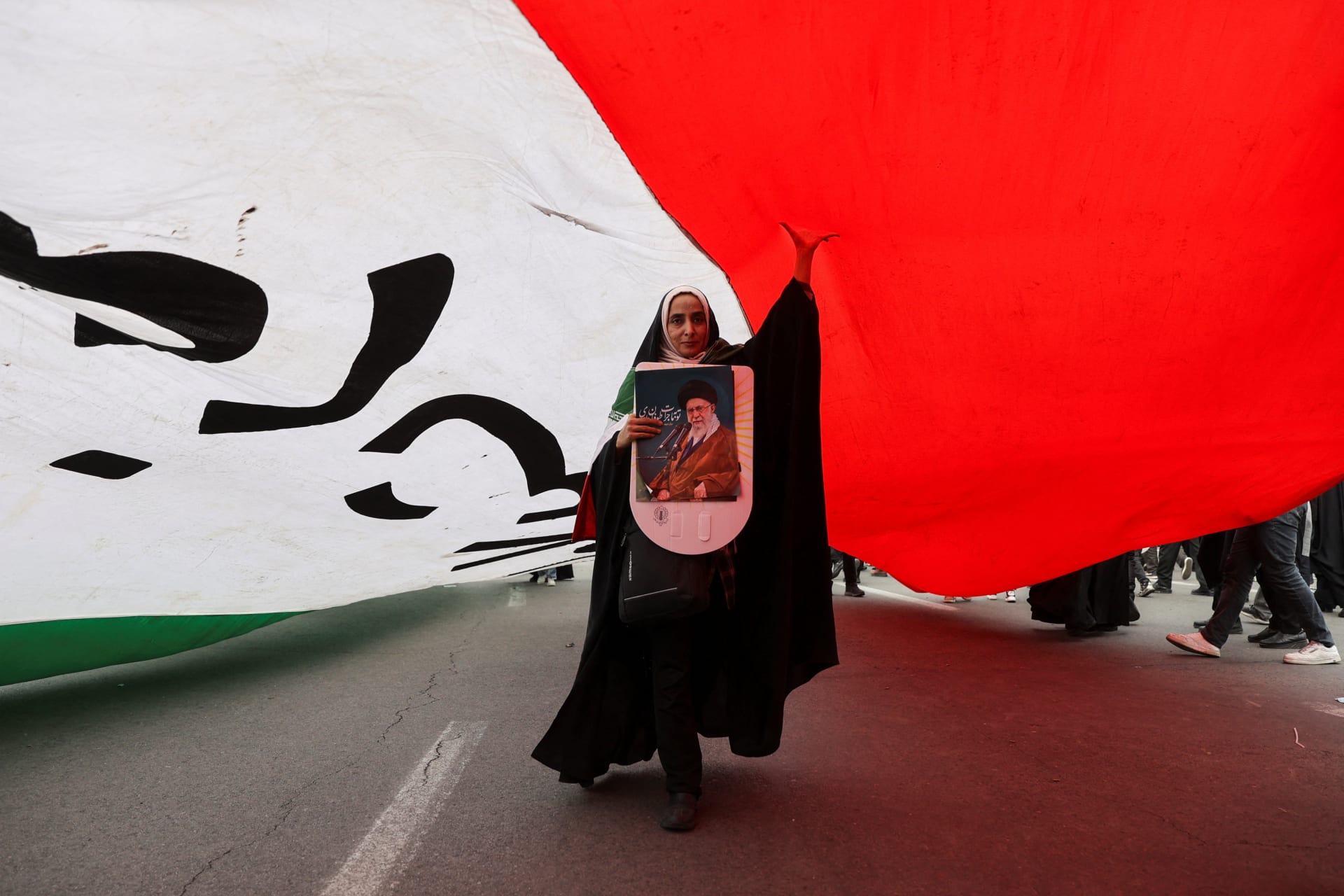
Iran is at the cusp of a historic transition. The Islamic Republic, the regime established after Iran’s 1979 revolution, is reeling from dramatic reversals to its regional posture and nuclear program, as well as repeated public uprisings against the regime that have only been suppressed by violent mass repression. At eighty-six years old, Iran’s supreme leader, Ayatollah Ali Khamenei, is the Middle East’s longest-serving head of state. His almost thirty-seven years in power cemented the unique dominance of his office and expanded Iran’s influence across the region. His ouster, death, or incapacitation will precipitate only the second leadership change in Iran since the regime’s establishment nearly fifty years ago, and its implications will reverberate across the Middle East and around the world.
Washington is deeply interested in the outcome of any change in Tehran’s leadership and governance. Khamenei’s regime has perpetrated violence against U.S. personnel and interests, partners, and allies across the region and has undermined Iranians’ aspirations for individual freedoms, political stability, and prosperity.
Given Khamenei’s age and the intensification of internal and external pressure on Tehran, it is clear that change is imminent. However, the outcome remains highly uncertain. As Secretary of State Marco Rubio told the Senate Foreign Relations Committee in January 2026, the future leadership of Iran is “an open question. . . no one knows what would take over” after Khamenei.
As another Iranian transition approaches, U.S. policymakers need to be prepared to seize opportunities that advance an alternative pathway for Iran, deter potential escalation by its hardliners, and incentivize whomever—or whatever—succeeds Khamenei to choose a more responsible path forward.
In 1979, Washington’s failure to anticipate the political disruption triggered by a dying Iranian leader ended in catastrophe for Iranians, the broader Middle East, and U.S. national security. As another Iranian transition approaches, U.S. policymakers need to be prepared to seize opportunities that advance an alternative pathway for Iran, deter potential escalation by its hardliners, and incentivize whomever—or whatever—succeeds Khamenei to choose a more responsible path forward.
The Contingency
Leadership transition has been a perennial source of uncertainty for the Islamic Republic. Sweeping to power after the collapse of Iran’s secular monarchy, the post-revolutionary regime, and the role of supreme leader, results from an unorthodox interpretation of religious doctrine and is opposed by much of the transnational Shia religious establishment. Few expected that the cleric-led system would outlive its founder, Ayatollah Ruhollah Khomeini.
For similar reasons, the future of Iran’s leadership has perennially provoked speculation, heightened by Khamenei’s health. A 1981 terrorist attack cost him the use of his right hand; in 2014 he was treated for prostate cancer; and his demise is regularly reported as imminent. After enduring Israeli and U.S. strikes in June 2025 in an underground bunker, Khamenei appeared frail and for the first time since assuming his role, he failed to appear at an annual event commemorating the military’s support for Iran’s 1979 revolution.
Uncertainty about the coming transition is heightened by the aging of Iran’s revolutionary regime, a precarious regional context, and intensified internal turmoil. Any change in leadership will come at a pivotal juncture for the future of Iran and its relationship with its neighbors and the world.
Leadership change in Iran could take three primary trajectories—regime continuity, military takeover, or regime collapse. Those are not mutually exclusive; in fact, it is entirely possible that Iran’s leadership transition could begin as a managed process intended to preserve continuity, only to stumble or be thrust into an explicit military takeover or state collapse.
Notably, none of those anticipated scenarios envisage a positive transformation of Iranian political conditions in the twelve-to-eighteen months following a transition, despite the regime’s manifest governance failures and the evident aspirations of many Iranians—shared by much of the world—for a more democratic and accountable government. Despite internal and international opprobrium, the current Iranian regime remains deeply entrenched, bolstered by institutions that have weathered intense disruptions and employed mass violence to remain in power.
For this reason, any mere change at the top of Iran’s leadership remains insufficient to topple the current system. Over time, a political movement capable of challenging the regime could yet emerge, but any forthcoming leadership transition in Iran is unlikely to result in a beneficial change in the regime itself.
Managed Continuity
For decades, Iran’s Islamic Republic has sought to ensure its durability by planning for Khamenei’s death or incapacitation. Any transition managed by the current regime would be guided by Iran’s constitution, which outlines the process and criteria for appointing the supreme leader, as well as its expansive authority over the government’s executive, legislative, and judicial branches and role as Iran’s commander-in-chief. The Assembly of Experts selects, and nominally supervises, the supreme leader. Its eighty-eight members are chosen through Iran’s semicompetitive electoral process, which restricts candidacy to clerics approved by Khamenei-appointed theologians.
Until his death in a May 2024 helicopter accident, President Ibrahim Raisi was positioned as the establishment candidate thanks to his familial ties, hardline ideology, and administrative experience. The only other prominent contender is Mojtaba Khamenei, the second-eldest son of the current supreme leader. However, that selection could prove contentious, given his lack of formal administrative experience, his modest theological credentials, and the regime’s aversion to any suggestion of hereditary rule.
In the vacuum that has widened since Raisi’s death, the current supreme leader reportedly named three clerics as prospective successors, much as Ayatollah Khomeini reportedly signaled his preference for then-President Khamenei in the months before his own death.
The candidates’ identities have not been publicly confirmed, but media speculation centers on senior functionaries with credible administrative and theological credentials. The possibilities include Ayatollah Alireza Arafi, a member of the Guardians’ Council and the Assembly of Experts who currently leads Iran’s seminary system; Hojjat-ol-Eslam Mohsen Qomi, a key advisor in Khamenei’s office; Ayatollah Mohsen Araki, a long-time member of the Assembly of Experts; Ayatollah Gholam Hossein Mohseni Ejei, the head of Iran’s judiciary; and Ayatollah Hashem Hosseini Bushehri, the Qom Friday prayer leader.
The promotion of one of Khamenei’s favored apparatchiks would perpetuate the current balance of power—essentially leading to “Khamenei-ism without Khamenei.” Indeed, such a slow-motion transition could already be well underway, with the supreme leader’s public presence attenuating while his extensive network operates with increasing autonomy.
Elevating a clerical functionary could preserve the regime’s unique amalgamation of religious and republican authority, but it also presents risks. Except for Chief Justice Mohseni Ejei, none of the likely contenders have had high-profile positions and they do not appear to have public support or familiarity beyond the regime’s inner circle. And none but Ejei have exercised national security responsibilities.
Selecting an apparatchik would require Khamenei’s successor to make a monumental transition at a time of historic precarity for the regime. From a largely internal, subordinate bureaucratic role, he would assume vast authority and responsibility for mobilizing the theocracy’s internal constituencies as well as its transnational religious and military networks. A new, untested supreme leader would have to learn on the job how to exert influence across a complex state apparatus, shape economic policy with limited resources and intensifying strains, project power across a challenging region, and maintain domination over a citizenry that has repeatedly rallied against its rulers.
In this sense, a continuity scenario could provide a successor who resembles Khamenei, but not necessarily one who delivers similar political outcomes, especially regime longevity. Most establishment candidates are in their mid-to-late sixties; Khamenei was fifty when he became supreme leader. This scenario would likely test whether the revolutionary system can adapt to more frequent changes in top leadership. Although the guardians of Iran’s revolution may see an apparatchik as their safest bet, an inexperienced successor could hasten the system’s obsolescence.
For this reason, Iran’s decision-makers could prefer to hedge their bets with leadership redundancy through the establishment of a leadership council in lieu of a single individual. This option was seriously contemplated when Khomeini died, though ultimately rejected. Still, Khamenei’s early tenure coincided with the empowerment of the presidency and his first decade in office relied on an uneasy partnership with the influential President Akbar Hashemi Rafsanjani. Institutional power-sharing helped smooth the transition, facilitating wider elite and public buy-in and creating time and space for Khamenei to grow into the role. Similarly, today Iran’s power brokers could see collective leadership as a mechanism for navigating external threats and internal instability.
Alternatively, after the recent protests and brutal government crackdown that started in late December 2025 and continued through February, the regime could attempt to mitigate domestic strife by rehabilitating Iran’s moderate or reformist factions, which support the regime but advocate for expanded social and political freedoms and economic opportunities. A figure such as Hassan Khomeini, the grandson of the Islamic Republic’s founder, could help sustain the revolutionary system while working to undo Iran’s international isolation, sanctions, and popular dissatisfaction. Though the arrest of several key reformist politicians in the aftermath of the recent upheaval makes this outcome unlikely, Hassan Khomeini’s February 2026 substitution for Khamenei at an important revolutionary occasion could suggest his candidacy remains viable.
Hard Right Shift
A second scenario for leadership transition in Iran would entail a hard shift toward an even more authoritarian system through the explicit assumption of formal leadership by elements of the Islamic Republic’s military and security forces. Until recently, the military has shared a symbiotic but historically subordinate relationship with the current cleric-dominated power structure, with which it is deeply intertwined through familial, economic, social, and political connections. In previous times of internal tensions, such as the 1999 Tehran University protests, Iranian military leaders have threatened the regime’s elective institutions, but their fealty to the supreme leader appeared absolute.
However, the January 2026 popular uprising and the government’s brutal response reinforced the military’s position as the essential actor for sustaining any semblance of the post-revolutionary system. Unlike the political class of clerics who have ruled since the 1979 revolution, the security services have a very deep bench, including a committed younger generation whose loyalty was forged on battlefields across the region and who resent their predecessors’ proclivity for graft.
With the prospects of additional U.S. and Israeli strikes looming large, Iran’s military commanders hold the country’s future in their hands. That imperative could well expand their appetites, and when Khamenei passes from the scene—either as a result of natural causes or decapitation strikes—so too could any effort to sustain the pretense of religious legitimacy in favor of military rule.
A regime dominated by the Islamic Revolutionary Guards Corp (IRGC) would formalize a shift in the balance of power that has been underway for decades. Since the end of the Iran-Iraq War, institutions and individuals associated with the security services have dominated important sectors of Iran’s economy and governing institutions. If they gain the upper hand, the generals will likely retain Iran’s radically anti-American orientation as well as some trappings of the existing system.
Elected institutions such as the parliament would likely atrophy with their authority and legitimacy eroded by authoritarian control, leaving few formal avenues for internal challengers to contest the military’s control.
Mojtaba Khamenei could emerge as a central figure in a militarized Islamic Republic. Mojtaba studied under the extremist hard-line cleric Ayatollah Taqi Mesbah Yazdi and wields significant influence behind the scenes through his extensive ties with security forces and the IRGC. The recent uprising and intensifying U.S. military presence in the region have reportedly strengthened Mojtaba’s hand.
Other key figures in a post-clerical Islamic Republic would include the triumvirate of longstanding senior regime figures with previous military service: Mohammad Baqr Qalibaf, Ali Shamkhani, and Ali Larijani. In their current roles as speaker of the parliament, the head of the newly established Defense Council, and the chair of the Supreme National Security Commission, respectively, they are pivotal players in Iran’s next act.
Although the policy implications of a military-led Iran will be highly contingent on the individuals who lead the transition, the most relevant models are Egypt or Pakistan—highly repressive states with widening gulfs between regime insiders and large and impoverished populations, relying on force rather than ideological narratives for legitimacy, while focusing on strengthening the state and the economy. Iranian military leaders could prove more pragmatic around some the currently divisive cultural policies (e.g., the imposition of mandatory hijabs), but they are unlikely to embrace the West or implement any meaningful economic or democratic reforms.
This vision of a strong state and a more stable economy apparently has some support across the system, including among some reformists who have advocated for a Bonapartist solution. However, any Iranian Bonaparte will struggle to achieve tangible progress in addressing the multiplicity of complex challenges facing Iran today: a deeply distorted economy, persistent inflation and a collapsing currency, urgent water and energy shortages, endemic corruption, widespread public despair and terror, and an erosion of the state’s regional posture and its deterrence against external adversaries.
Regime Collapse
A final future scenario for Iran that needs to be contemplated is the effective collapse of the Islamic Republic without a formal or stable transition to a new leader or system. That could transpire as the result of U.S. or Israeli military action that eliminates a wide array of the current regime’s existing political and military leaders; an accelerating cycle of internal crises, unrest, and official crackdowns; or the interplay of those two dynamics.
Regime collapse would likely unfold gradually and then all at once, accompanied by the accumulation of disarray and infighting within the Islamic Republic’s power centers as well as a rising tide of protests, strikes, and challenges to regime authority. Those conditions could be accelerated by a U.S.-led military campaign, especially if Washington succeeds in eliminating Khamenei or any of the regime’s more public faces.
The progressive devolution of state authority amid persistent social instability in a system that has exerted such dominance for nearly half a century could strain credulity. However, the Islamic Republic’s collapse cannot be considered inconceivable, as the experience of the once impregnable regimes in Syria and elsewhere in the region underscore.
Today, the high likelihood of another round of U.S. or Israeli military strikes on Iran amplifies the volatility among Iranians and their leadership and expands the aperture of the potential near-term trajectories for leadership change in Iran. Additionally, the tactics of Iran’s current leadership, including its recent willingness to commit mass atrocities against unarmed citizens to preserve its rule, could accelerate the centrifugal forces that threaten the current regime.
Though no one in the United States will mourn the Islamic Republic’s demise, the immediate effects of regime collapse could be profoundly problematic. In 1979, the nascent revolutionary state struggled to impose its authority amid the disintegration of the existing order, which precipitated a rising tide of internal violence—tribal revolts, uprisings by ethnic minorities, localized competition for power among nascent paramilitary groups, and organized terrorist attacks—that persisted for several years.
Today, regime collapse in Iran would likely end with a military takeover, but any interregnum could be disruptive and destabilizing well beyond Iran’s borders. The Islamic Republic’s implosion without a successor system in place could activate aspirations among some of the country’s minority groups—or their kindred communities across the border—for greater autonomy. The prospect of revived activism among Iranian Kurdish or Baloch citizens could spark concerns among neighboring states about wider instability. Even for its secure and wealthy Gulf neighbors, the prospect of sustained turmoil in Iran would evoke anxiety about another failing state along their periphery, jeopardizing their own security and economic plans.
Depending on the sequence of events and the duration of any power vacuum, regime collapse would have wide-ranging implications for regional security and, potentially, the global economy. This scenario is the most challenging one for the United States and its regional partners to grapple with effectively, and it is likely the most complex to prevent or mitigate.
Warning Indicators
A number of indicators could signal that the transition is approaching. A planned transition would likely be preceded by some or all of the following conditions:
- Changes in the tempo and publicity around Khamenei’s public presence. The current supreme leader has not traveled internationally since assuming his current role and his periodic provincial visits have dwindled to annual engagements at religious shrines. Similarly, he has significantly reduced his presence at Tehran’s Friday prayer ceremonies and other engagements outside his compound. His stem-winding speeches have been replaced by truncated, raspy addresses. His three-week absence from public view during the June 2025 war with Israel and the United States—and selective participation in routinized public engagement more generally—indicates that Khamenei is taking a less active, public-facing role than in previous crisis, perhaps as a result of age or illness. It also reinforces speculation that Khamenei’s rule is already receding.
- Increases in the frequency and volume of speculation on succession by Iranian media and public figures. Previously, Tehran sought to minimize chatter about potential successors to preserve the leader’s influence and undercut pressure—or vulnerability—around presumptive candidates. However, in the past two years, official commentary surrounding succession has intensified. In November 2024, Khamenei addressed the issue directly in a well-publicized meeting with the Assembly of Experts. During the June 2025 war, the Assembly confirmed that it was actively vetting prospective successors, presumably to blunt opportunism at a precarious moment.
- Band-wagoning among Iran’s political elite in efforts to stabilize the existing system. This process could include the assignment of new roles and responsibilities. Signs of this dynamic emerged after the June 2025 war. Rouhani reemerged to publicly campaign for policy and institutional reforms. Iran’s security leadership was reshuffled: veteran politician Ali Larijani resumed a main role at the helm of the Supreme National Security Council and quickly appointed a hard-line deputy, signaling renewed sensitivity to cross-factional harmony.
- Intensifying debates within the Shia religious establishment in the leading religious centers of Karbala, Najaf, and Qom. The institutional foundation of Iran’s post-revolutionary state—velayet-e faqih, meaning rule of the jurisprudent—has always been controversial among leading Shia clerics. The revival of Iraqi seminaries and the reemergence of competing religious authority with Iraq’s Grand Ayatollah Ali Sistani have prompted new debate over the clergy’s role in politics. How the seminaries react to any successor in Iran could provide signals on the legitimacy and durability of Iran’s theocracy.
- Deterioration of Iran’s socioeconomic condition. Thanks to mismanagement, sanctions, and corruption, Tehran has long struggled to implement coherent economic policies that create sufficient employment and opportunity for its disproportionately young population. As those factors have served as the most likely precipitant for internal unrest within Iran, worsening economic indicators could signal a higher possibility of regime precarity.
- Escalating internal and transnational repression. Regime insecurity before, during, and after any transition is likely to prompt Iran’s military to lash out ruthlessly against perceived opponents, as they did in response to the protests earlier this year. During Khomeini’s final months, he authorized the execution of thousands of political prisoners and issued the infamous fatwa condemning novelist Salman Rushdie to death as a means of reinforcing the revolutionary state’s ideological fervor.
- Defections, especially of military and security personnel. The resignation of senior officials or evidence of mass resistance to government policy or military orders would suggest that Iranian leaders have begun to lose control of the regime’s enforcers. That could be compounded by signs of exit strategy planning by regime officials, such as transferring financial assets or family members outside Iran.
Implications for U.S. Interests
Any change in Iran’s leadership would profoundly affect U.S. security and economic interests in the Middle East and beyond. Khamenei was initially underestimated as a weak and uncharismatic figure, but he proved to be immensely consequential, strengthening the supreme leader’s dominance, ensuring the regime’s preservation, and vastly extending Iran’s regional influence. Whether his successors sustain that legacy—and how they do so—will determine the stability, security, and prosperity of the Middle East and, by extension, the degree to which the United States is able to meet its priorities elsewhere.
Unfortunately, the most likely outcomes for leadership change in Iran are also the least auspicious for U.S. interests. A new supreme leader drawn from Khamenei’s orbit or a shift to military leadership would likely extend the theocracy’s most destabilizing policies, including Tehran’s immense investment in proxy militias and its nuclear program, and its heavy-handed authoritarianism at home. And though regime collapse could appear to be a favorable outcome, this would likely intensify regional instability.
In any scenario that follows Khamenei’s death or incapacitation, the regime is likely to become even more dangerous, seeking to flex its muscles by encouraging escalation by its proxies, naval forces in the Persian Gulf, or malicious cyber actors. In addition, any transition will likely precipitate a host of Iranian missteps and confusing signals, as transpired during Khamenei’s initial months as leader.
Khamenei’s death or removal and the advent of new Iranian leadership could precipitate profound second-order effects as well. Potential repercussions include the intensification of internal repression, the eruption of protests and unrest, worsening economic conditions, and heightened activism by Iran’s diaspora opposition groups. Any of those dynamics could prompt unanticipated counterreactions from the new leadership and create a crisis of its own.
And even though any new supreme leader or military ruler is likely to retain Iran’s longstanding foreign policy doctrines, including its antagonism toward the United States and Israel, the changing of the guard will almost certainly create both risks and opportunities around central points of contention with the United States and the rest of the world. Those include its nuclear program; its funding, training, and coordination of proxy militias and other terrorist organizations; and its relationships with its neighbors. Escalation in any of those arenas could precipitate a crisis or conflict.
Despite the potential hazards, even if the succession process does not produce transformative regime change, the outcome could produce some net benefit for U.S. interests. The various outcomes could magnify fissures among regime elites and ultimately curtail the lifespan of the existing system. And a regime focused on the economy and distracted by internal instability could have less interest in and capacity for regional adventurism. hobbling its attempts to compete with China’s partnerships throughout the world.
Preventive Options
Since the war and the January uprising, the regime has become even more desperate to retain control . . . . With a leadership that perceives any threat as existential, the fallout from any U.S. intervention in Iran could be catastrophic for U.S. interests as well as those of the wider region.
Leadership transition in Iran is inevitable, essential, and in some respects already underway. Prevention is not a viable or desirable U.S. policy outcome. The central question for U.S. policymakers is whether to actively campaign to shape any change in hopes of advancing U.S. interests or to adopt a more passive approach.
An active campaign could entail a variety of tools, including public diplomacy to signal U.S. preferences around Iran’s future political evolution; direct collaboration with aspirants to power in Iran, including those within the diaspora such as Reza Pahlavi, the son of the former shah; military strikes to disrupt the regime’s ability to prevent internal mobilization against the system; and covert activity to destabilize the regime and provide support to civil society and opponents of the system. Washington could undertake those efforts alone or with regional partners that have greater influence in or access to Tehran.
An alternative approach would recognize that after forty-seven years’ absence from Iran, the United States has few reliable relationships and little dexterity to steer developments in its favor. With the notable exception of Israel, Iran’s neighbors largely prefer the devil they know to the possibility of a new round of regional violence and instability. The Islamic Republic has assiduously stoked popular resentment around the legacy of U.S. intervention in Iran’s domestic politics, particularly the U.S. and British role in the ouster of populist Prime Minster Mohammad Mossadegh in 1953. And since the revolution, U.S. leaders have routinely misread the complex internal politics of the Islamic Republic and mishandled successive attempts at outreach.
The June 2025 war demonstrated Israel’s highly effective intelligence penetration of Iran, but historically, U.S. espionage networks within Iran have fared less favorably. Since the war and the January uprising, the regime has become even more desperate to retain control, making attempts by Washington or other governments to intervene even riskier. With a leadership that perceives any threat as existential, the fallout from any U.S. intervention in Iran could be catastrophic for U.S. interests as well as those of the wider region.
Mitigating Options
In addition to avenues for influencing specific outcomes around Iran’s future leadership, Washington should consider steps to mitigate the most unwelcome fallout. Policymakers can take steps to protect U.S. interests before and during the transition.
In preparation, the U.S. government could ramp up intelligence and monitoring around Iranian leadership dynamics and undertake scenario planning for each prospective trajectory. That would allow it to devise contingency plans for various outcomes, including
- developing outreach options with potential interlocutors (public or private) within any new Iranian leadership and enhancing Persian-language media engagement aimed at the Iranian people;
- identifying emerging figures within the hard-line clerical factions and security establishments to facilitate the rapid designation of prospective new leaders under existing U.S. sanctions authorities;
- crafting confidence-building measures that Iran’s new leadership could undertake around its nuclear infrastructure, regional posture, and internal security orientation to facilitate diplomacy; and
- maintaining a high tempo of U.S. regional force posture and identifying actionable responses around prospective threat escalation, including proxy activation and nuclear breakout steps.
In addition, Washington could coordinate with allies in Europe and Asia, as well as regional partners such as Qatar, Saudi Arabia, and the United Arab Emirates, around intelligence sharing, messaging, and early engagement with Iran’s new leadership. Switzerland provides a formal communications channel for the United States in Iran, and a variety of regional actors have used their own ties to Tehran to facilitate indirect diplomacy. Those channels can be used to reinforce with the new leadership the potential advantages of a more responsible and responsive posture as Tehran undergoes any future transition. By the same token, quiet coordination between the United States and Israel can ensure that the two countries are closely aligned on preferred options and outcomes.
This messaging could be complemented by efforts to refine U.S. public diplomacy, with an emphasis on the buoyant vision of opportunity presented by President Donald Trump in his remarks and social media commentary. In May 2025, Trump addressed an investment conference in Riyadh and encouraged Tehran to adopt a “new and a better path,” adding that his track record demonstrates that “I am willing to end past conflicts and forge new partnerships for a better and more stable world, even if our differences may be profound.”
Even if dismissed by Iran’s new leadership, public messaging and official gestures from the United States provide a potent reminder to Iranian civil society that the regime has repeatedly squandered its resources and their future in service of a futile ideological crusade—despite a better alternative.
The United States could also work with allies in Europe and Asia to develop joint action plans for each of the various succession scenarios and the second-order effects. Plans could include responses to the intensification of proxy attacks or other destabilizing actions by Tehran, the eruption of mass unrest within Iran, the escalation of hostage-taking in Iran or by its proxies, and new evidence of revived activity around Iran’s nuclear program.
Recommendations
The following steps should be taken in preparation for a change in the leadership of Iran’s Islamic Republic.
Before the death or incapacitation of the current supreme leader:
- The intelligence community should refresh its assessments around the full range of scenarios for leadership change as well as prospective second-order contingencies, including a proxy surge or threats to Iran’s territorial integrity; elite infighting that threatens central government control; intensification of internal repression; and/or a race to nuclear breakout.
- Historically, Washington’s poorly informed assumptions on Iran have set back core U.S. interests. Most notable was the 2003 invasion of Iraq, which lacked adequate preparation and manpower to manage a stable transition and insulate the new government from Iranian influence. U.S. policymakers should seek to manage any transition in Iran with a clear focus on realistic steps that can support long-term prospects for positive change.
- Specifically, the State Department should revive support for initiatives that can ensure greater accountability for regime repression; provide financial and technical support to Iranian civil society, labor organizers, and independent media; and engage strategically with credible Iranian opposition leaders to help prepare the next generation of Iranians to take advantage of any future transitions to press for democracy and rule of law in Iran. As communications will be critical to navigating any future change in Iran, the White House should continue efforts to provide Starlink and other mechanisms that preserve internet connectivity among Iranians.
- In addition, the executive branch as well as members of Congress should refrain from advocating on behalf of particular aspirants to power in Iran, including diaspora leaders such as Pahlavi or the discredited Mojahideen-e Khalq. And U.S. outreach and messaging should resist the temptation to weaponize Iran’s ethnic diversity and territorial integrity as a means of weakening the Islamic Republic’s grip on power. Such tactics will ultimately backfire.
- Finally, Washington should develop and ensure readiness around disrupting Tehran’s capabilities to engage in another round of mass repression. This could include cyber as well as kinetic options.
[After] forty-seven years’ absence from Iran, the United States has few reliable relationships and little dexterity to steer developments in its favor. With the notable exception of Israel, Iran’s neighbors largely prefer the devil they know to the possibility of a new round of regional violence and instability.
Once a formal succession process is underway:
- The State Department should activate formal channels via Switzerland and informal channels via Iraq, Oman, Qatar, Saudi Arabia, and the United Arab Emirates to deliver initial messages to Iran’s new leadership around key parameters for any future diplomacy. Over time, those channels could provide a conduit for testing the possibilities of structured dialogue on important issues, including conflict prevention; hostages; proxies; and nuclear transparency, including options for targeted and reversible economic incentives.
- The Pentagon should develop operational plans for deterring possible Iranian escalation as well as messaging that reaffirms longstanding U.S. defense commitments to Israel and Gulf Cooperation Council states. Those messages should warn that attacks by Iran or its proxies will meet commensurate response, and that Washington will not tolerate opportunistic escalation. U.S. forces should develop plans for surging maritime, air, and missile defense coverage over the Persian Gulf and Levant as warranted.
- The White House should privately convey to key capitals and interlocutors with militia groups, including Lebanon, Iraq, and Yemen, that any proxy strikes during the transition will be attributed up the chain and met with proportionate response.
- The departments of Defense, Treasury, and State should step up proxy disruption efforts with new financial sanctions on logistics facilitators, cyber and law-enforcement actions against procurement nodes; and expanded interdictions of armed drones, missiles, and components.
- The Department of Defense should reinforce air and missile defense networks and maritime deployments across U.S. Central Command’s area of responsibility. Officials should also intensify regular coordination with Iraq, Israel, and key Gulf state partners to be prepared to degrade Tehran’s internal coercive capabilities in the event of renewed internal turmoil, limit IRGC-linked militias’ room for maneuver, and deter regional adventurism by Iran’s new leadership.
- The State Department should continue to discourage Americans from traveling to Iran. The special envoy for hostage affairs should press for safeguarding Western detainees and expediting their release. Backchannel messaging can be amplified with an early public marker that hostage-taking will limit economic engagement with the new leadership.
- Treasury and State should coordinate with Canada, European partners, and other states with significant trade and investment relationships in Iran such as Japan and South Korea to link future economic engagement to the release of dual nationals and human rights protections, as well as a constructive regional posture by Iran’s new leaders. Once that multilateral messaging is developed, the United States and its partners should follow up with measures targeting the most notorious abusers.
- The White House should press to revive nuclear diplomacy by coordinating with Berlin, Brussels, London, Paris, and International Atomic Energy Agency to craft an interim package of sequenced steps, including an end to or caps on enrichment and stockpiles; full accounting of centrifuge deployment; and new limitations on Iran’s missile capabilities—all subject to real-time monitoring that could be sequenced with limited, reversible sanctions relief strictly conditioned on verified steps.
About the Author
Suzanne Maloney is the vice president and director of the foreign policy program at the Brookings Institution, where her research focuses on Iran and Persian Gulf energy. Prior to being named vice president and director, she served as the deputy director of foreign policy for five years. Maloney serves on the External Research Council for the National Intelligence Council and is a frequent commentator in national and international media. Maloney has advised both Democratic and Republican administrations on Iran policy, including as an external advisor to senior State Department officials during the Obama administration and as a member of Secretary of State Condoleezza Rice’s Policy Planning staff.
Earlier in her career, she served as Middle East advisor for ExxonMobil Corporation, where she was responsible for government relations related to all corporate activities in the region. She has authored or edited three books on Iran: The Iranian Revolution at 40 (Brookings Institution Press, 2020), Iran’s Political Economy since the Revolution (Cambridge University Press, 2015), and Iran’s Long Reach (United States Institute of Peace, 2008). Maloney has also published numerous book chapters and articles in a variety of academic and policy journals as well as news media such as the Washington Post, the New York Times, the Wall Street Journal, and Foreign Affairs. In 2004, she directed and authored the Council on Foreign Relations Task Force on U.S. policy toward Iran, chaired by former National Security Advisor Zbigniew Brzezinski and Secretary of Defense Robert Gates. Maloney received a Ph.D. from the Fletcher School of Law and Diplomacy at Tufts University and studied in Tehran as part of the first academic exchanges between the United States and Iran since the 1979 revolution.
This report was made possible by the generous support of the Carnegie Corporation of New York.
 Report
 Report
 Report
 Report
 Report
 Report