America Revived
A Grand Strategy of Resolute Global Leadership
Overview
CFR Senior Fellow Robert D. Blackwill outlines the conceptual pillars of five grand strategy schools and analyzes arguments for and against those strategies advanced by their proponents and critics. He then proposes an alternative American grand strategy: resolute global leadership.
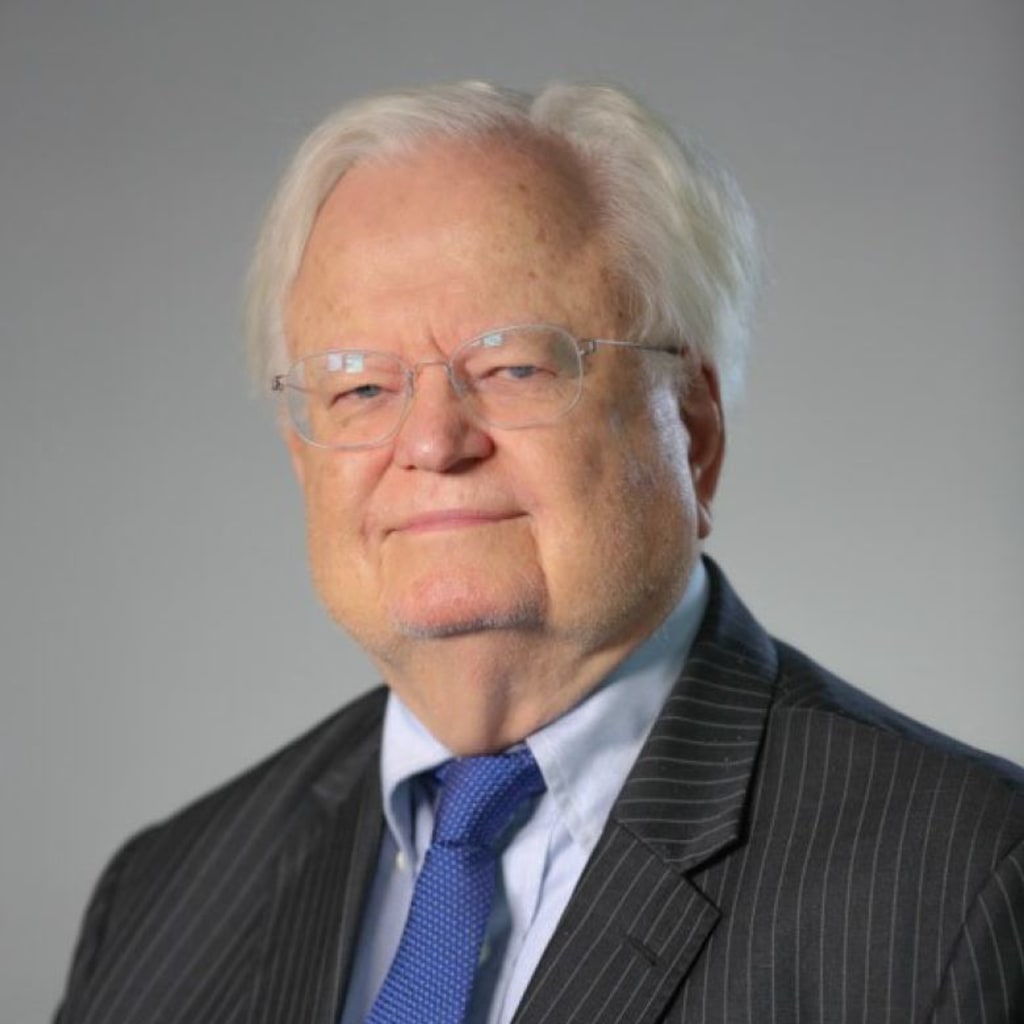 Robert D. BlackwillHenry A. Kissinger Senior Fellow for U.S. Foreign Policy
Executive Summary
The United States faces the most dangerous international circumstances since the end of World War II, and perhaps in its history. An ever more formidable, authoritarian China remains determined to replace the United States as the leading nation in Asia and eventually the world. The need for an effective U.S. grand strategy to deal with that threat, among others, is accordingly urgent. Grand strategy refers to a nation’s collective deployment of all its relevant instruments of power to accomplish key strategic goals. Given the United States’ longtime material, institutional, and ideational strengths, American grand strategy involves projecting its great power for the survival of world order. To that end, sustaining prosperity, which derives substantially from the United States’ dominance in technological innovation, becomes the economic precondition for protecting its own homeland, the homelands of its allies, and its diverse national interests. It can achieve those goals through both military and non-military methods, but force is acceptable only if it represents an inescapable choice to protect vital national interests. Promoting democracy is never such an inescapable choice.
CFR Senior Fellow Robert D. Blackwill proposes an alternative American grand strategy: resolute global leadership.
This report analyzes five alternative schools of American grand strategy and then proposes a sixth school, resolute global leadership. The primacy school of grand strategy, which includes neoconservatism, asserts that the United States must remain the world’s unrivaled superpower in every region and, toward that end, prevent the reemergence of a peer competitor. The liberal internationalist school envisions a U.S.-led, open, rules-based world order that champions the rule of law, liberal democracy, and human rights, and accepts using military force as a last resort to safeguard U.S. vital national interests. The restraint school, often associated with realism and offshore balancing and scarred by recent unsuccessful wars, seeks to slash American global commitments and argues that U.S. military intervention is almost always ill-advised. The American nationalist school insists that the United States should concentrate its attention and strength on the Western Hemisphere, that previous presidents have foolishly agreed to trade and security agreements that hollowed out the nation’s economy, and that only U.S. power, not alliances and global organizations, guarantees enduring benefits for the United States. And Trumpism, a version of American nationalism that depends on the personal preferences of President Donald Trump, radically redefines U.S. vital national interests to emphasize bilateral and transactional trade relationships, business deals, and quick diplomatic successes over geopolitical considerations—without collaboration with traditional U.S. allies or fidelity to core American values, including human rights.
This report argues that the competing strategies of restraint, American nationalism, and Trumpism all fail on different counts. Restraint presumes that abdicating the United States’ global military presence will enhance both prosperity and security, a claim that has not yet been corroborated and is dangerous to test. American nationalism discounts international legitimacy and complaisantly expects that the United States can uphold prosperity and security by focusing predominantly, if not exclusively, on the U.S. homeland and its hemisphere and on bilateral trade. And Trumpism risks undermining the nation’s prosperity, security, and legitimacy simultaneously because of its determination to advance American national interests at the expense of others.
Drawing from the grand strategies of primacy and liberal internationalism, the grand strategy of resolute global leadership is superior to all other alternatives. Like primacy, it affirms the importance of American military might, especially potent instruments for deterrence and force projection, to parry varied threats and defend the United States and its allies as far forward as possible to preserve favorable balances of power in critical regions. But unlike primacy, resolute global leadership accepts that China has emerged as a peer competitor, and this grand strategy does not believe in using military force for ideological goals. Like liberal internationalism, resolute global leadership emphasizes the requirement to underwrite international institutions, both to increase U.S. and worldwide prosperity and to create an international environment conducive to U.S. national interests. Resolute global leadership recognizes, however, that military power is still central to geopolitics, and it treats global institutions as important but useful only insofar as they advance those interests.
Although the current political landscape is unfavorable to resolute global leadership, it is the best grand strategy to sustain prosperity, enhance security, and cement the legitimacy of the United States as a powerful force in the international system. When the country confronts the implications of its experiment with Trumpism, resolute global leadership will offer the clearest route to a revival of American strength.
Introduction
The United States faces the most dangerous international circumstances since the end of World War II, and perhaps in its history.1 An ever more powerful authoritarian China plows ahead in its determined effort to replace the United States as the dominant power in the Indo-Pacific, and eventually the world.2 As former Singaporean Prime Minister Lee Kuan Yew, a lifelong advocate of U.S. power projection into Asia, drilled home, “[t]he U.S. cannot stop China’s rise. It just has to live with a bigger China, which will be completely novel for the U.S., as no country has ever been big enough to challenge its position. . . . It is not possible to pretend that this is just another big player. This is the biggest player in the history of the world.”3
To confront the China challenge, address other threats to U.S. national interests, and seize opportunities when they arise, the United States requires an effective grand strategy. That demands sustained coordination of U.S. foreign policy in the face of limited resources. This Council Special Report defines grand strategy, analyzes its fundamental connection to American vital national interests, surveys grand strategies the United States has followed since 1776, tests the strengths and weaknesses of five alternative U.S. grand strategies for the next decade and beyond (primacy, liberal internationalism, restraint, American nationalism, and Trumpism), and proposes a composite U.S. grand strategy of resolute global leadership for this dynamic era.
Although the term “grand strategy” can be traced back to at least the nineteenth century, the modern formulation originated in the works of military scholars B. H. Liddell Hart, J. F. C. Fuller, Julian S. Corbett, and Edward M. Earle during the interwar period.4 For Liddell Hart, “the role of grand strategy—higher strategy—is to coordinate and direct all the resources of a nation, or band of nations, toward the attainment of the political object of the war.”5 Likewise, Fuller argued that grand strategy was the synchronization of “all war-like resources towards the winning of the war.”6 Thus, the main tenet of grand strategy emerged: the collective deployment of diplomatic, economic, military, ideological, moral, and bureaucratic means to attain strategic ends.7 That expansion of the idea inevitably led to the recognition that grand strategy pertains to a larger realm beyond conflict. As captured succinctly by international relations scholar Joshua Rovner, while strategy simply describes a “theory of victory”—“how to use force in order to achieve political objectives in war”—grand strategy represents “a theory of security,” that is, “how to make oneself safe in an unsafe world.”8
The primacy school of grand strategy, including neoconservatism, asserts that the United States must remain the world’s unrivaled superpower and, toward that end, prevent the reemergence of a peer competitor.9 The liberal internationalist school envisions an open, U.S.-led, rules-based world order that champions the rule of law, liberal democracy, and human rights, and accepts using military force as a last resort to safeguard U.S. vital national interests. There are critical differences between primacy and liberal internationalism, as the former prefers more often to use military force—including escalatory measures—on behalf of vital national interests, while the latter employs it only as a last resort and otherwise wishes to build a rules-based world order led by the United States through international organizations.
The restraint school, often associated with realism and offshore balancing and scarred by unsuccessful recent wars, seeks to slash American global commitments and argues that U.S. military intervention is almost always ill-advised.10 The American nationalist school insists that the United States should concentrate its attention and strength on the Western Hemisphere, that previous presidents have foolishly agreed to trade and security agreements that hollowed out the nation’s economy, and that only U.S. power, not alliances and global organizations, guarantees enduring benefits for the United States. And Trumpism, a particular version of American nationalism that depends on the personal preferences of President Donald Trump, radically redefines U.S. vital national interests to emphasize bilateral and transactional trade relationships, business deals, and quick diplomatic successes over geopolitical considerations—without collaboration with traditional U.S. allies or fidelity to core American values, including human rights. Those three schools question U.S. international commitments, but for vastly different reasons: restraint seeks to prevent the United States from getting dragged into a conflict that does not directly affect vital interests; American nationalism preoccupies itself with the Western Hemisphere and restoring domestic industry; and Trumpism, while endorsing many elements of American nationalism—including a “Trump Corollary” to the Monroe Doctrine—pursues global diplomatic and commercial successes.
Given the wide diversity of opinion within each school, however, those thumbnail sketches of alternative grand strategies should not obscure that this subject is a notoriously slippery concept for scholars and policymakers alike. Moreover, American presidents sometimes stray from the purest principles of the grand strategy that they profess. As former U.S. Secretary of State Henry Kissinger noted, “No country can act wisely simultaneously in every part of the globe at every moment in time.”11 And statesman and U.S. Army General George Marshall emphasized that, when deciding what to do, one is also deciding what not to do, a difficult task for every government at every level.12 Thus, grand strategy requires clear national objectives that the strategy aims to achieve, best framed through an articulation of U.S. national interests.
Since President George Washington’s farewell address, core U.S. national interests have not changed: to ensure the fundamental security of the homeland and its people.
Since President George Washington’s farewell address, core U.S. national interests have not changed: to ensure the fundamental security of the homeland and its people. As another founding father, Alexander Hamilton, phrased it, “Self preservation is the first duty of a Nation.”13 And until the resurgence of American nationalism and the advent of Trumpism in the past decade, U.S. vital national interests for seventy years after World War II were defined by a bipartisan consensus, with more recent revisions that reflect new threats:
- to prevent the use and reduce the threat of nuclear, biological, and chemical weapons and to ward off conventional attacks as well as catastrophic terrorist assaults or cyberattacks against the United States, its military forces abroad, or its allies;
- to stop the spread of nuclear weapons, secure nuclear weapons and materials, and reduce further proliferation of delivery systems for nuclear weapons;
- to prevent the emergence of hostile major powers or failed states in the Western Hemisphere;
- to maintain global and regional balances of power, especially in Eurasia, that promote peace, stability, and freedom through domestic U.S. strength, the projection of U.S. power and influence abroad, and the vitality of U.S. alliances; and
- to ensure the viability and stability of major international systems (trade, financial markets, public health, energy supplies, cyberspace, the environment, freedom of the seas, and outer space).14
Today, China challenges all five of those vital U.S. national interests.15
The most elegant and refined grand strategy is not a detailed road map to future success, but at best only a conceptual compass inevitably filled with uncertainties. As British historian Frederic William Maitland is credited with saying, “one must remember that events long in the past were once in the future.” Despite what is sometimes taught in academia, grand strategy is not complete when discussed in the abstract, untouched by implementation, the responses of other actors, erroneous and incomplete information, insufficient analysis, errors in judgment, bureaucratic and personality conflicts, and all the other inherent weaknesses of the human species. Unsurprisingly, therefore, successful U.S. grand strategy hinges on the quality of the people who develop and implement it, beginning with the president.
The United States should not despair. It possesses enormous strength and capacity to sculpt world order, even if that power is often underused or misapplied. Although the current political landscape is unfavorable to resolute global leadership, it is the best grand strategy to sustain prosperity, enhance security, and cement the legitimacy of the United States as a powerful force in the international system. When the country confronts the implications of the Trumpism experiment, resolute global leadership will offer the clearest route to a revival of American strength.
The History of U.S. Grand Strategy
The American Revolution marked the start of U.S. grand strategy, as the colonies marshaled military, economic, and diplomatic means to achieve a single goal: independence.16 Diplomacy was indispensable as the 1778 alliance with France secured vital financial and security assistance and ultimately culminated in the 1783 Treaty of Paris, which affirmed the United States as an independent nation.17 From there, the consolidation of the young republic and noninterference from colonial powers crystallized as the United States’ primary strategic objectives. To steer the new nation away from entanglement in European conflicts, Washington first issued the 1793 Proclamation of Neutrality and subsequently endorsed a broader policy of neutrality in his farewell address.18
By the turn of the nineteenth century, the new nation had pivoted to a century-long grand strategy of American nationalism.19 It sought to conquer and fortify the continental homeland, shore up regional security under the banner of the 1823 Monroe Doctrine, steer clear of Europe, and expand international trade and investment—especially in China, Japan, Korea, the Philippines, and Latin America—through favorable balances of power to the United States’ commercial advantage.20 In the early twentieth century, President Theodore Roosevelt, following the war between the United States and Spain that ended Spanish colonial rule in the Americas and resulted in U.S. acquisition of territories in the western Pacific and Latin America, launched a flurry of diplomatic activity in the Western Hemisphere and Asia, including negotiating the end of the Russo–Japanese conflict.
Once the old empires became mired in the trenches of World War I, however, the United States’ long-standing avoidance of European involvement briefly gave way for the first time to a grand strategy of liberal internationalism, as outlined in President Woodrow Wilson’s Fourteen Points. Wilson aimed to build a stable, rules-based international system through multilateral cooperation enshrined in the League of Nations and the projection of American values to render the world “safe for democracy.”21 But those historically radical objectives stirred up a domestic political hornet’s nest, and Wilson failed to carry either the Senate or the country. Beginning with the Coolidge administration in 1923, U.S. grand strategy again championed American nationalism, including a concentration on the Western Hemisphere and a continuation of high tariffs.22
As Nazi Germany surged in the 1930s, President Franklin D. Roosevelt maneuvered against strong domestic public opinion to attempt to slowly rewire U.S. grand strategy from American nationalism to liberal internationalism, with its emphasis on avoiding a hegemon on the Eurasian landmass.23 Whether he would otherwise have succeeded domestically in enshrining liberal internationalism became moot when, in December 1941, Japan attacked Pearl Harbor and German Chancellor Adolf Hitler declared war on the United States.24
As the Soviet Union’s aggressive intentions became clear in the years following World War II and were propelled by the Korean War in June 1950, liberal internationalism became the enduring U.S. grand strategy.25 It was anchored in the belief that only American global leadership could prevent a hostile hegemon, in this case the Soviet Union, from overrunning Eurasia and destabilizing world order. Liberal internationalism’s principles were reflected in U.S. diplomat George F. Kennan’s “Long Telegram,” which advocated containment of the USSR; the Truman Doctrine; the Marshall Plan; the Berlin Airlift; the creation of NATO; and the National Security Council report NSC-68—all of which embodied U.S. power and democratic values to forge and safeguard a stable international system.26 Not surprisingly, those developments were anathema to the American nationalists, who were beginning many decades in the U.S. policy desert.27
A liberal internationalist, President Lyndon Johnson committed over five hundred thousand troops to Vietnam by believing that the hegemonic objectives of China and the Soviet Union had, in part, generated North Vietnam’s intervention in South Vietnam. In that context, the restraint school was born, arguing for a dramatically scaled-back global military footprint, emphasizing the need to eviscerate overseas commitments, and stressing that U.S. military intervention almost always compromised U.S. security.28 The restraint grand strategy, however, although popular to this day in some political and academic quarters, failed to gain traction as American government policy.29
President Richard Nixon and Kissinger maintained most of the liberal internationalist principles of Presidents Harry S. Truman, Dwight D. Eisenhower, John F. Kennedy, and Johnson but made great power diplomacy paramount through the opening to China and détente with the USSR.30 Presidents Gerald Ford and Jimmy Carter sustained those Nixonian initiatives, although Carter also accentuated core American values in U.S. grand strategy, such as the protection of human rights.31 As détente eventually unraveled through Soviet adventurism, U.S. grand strategy shifted to a more confrontational form of liberal internationalism under President Ronald Reagan, with major increases in defense spending to combat the Soviet Union.
After the collapse of the USSR during the classically liberal internationalist George H.W. Bush presidency, a grand strategy of primacy was possible for the first time in U.S. history.32 In that unipolar period, liberal internationalist Presidents Bill Clinton and George W. Bush could have piloted a primacist grand strategy but did not do so. Bush’s campaigns in Afghanistan and Iraq laid bare that even with its enormous power, the United States could not force success in those regional conflicts.
By the mid-2010s, as the rise of Chinese power gradually dissolved the possibility of American primacy, President Barack Obama worked to sustain a liberal internationalist order, including through the Paris climate accord, the Iran nuclear agreement, the New START Treaty, and the ill-fated Trans-Pacific Partnership (TPP).33 Condemning liberal internationalism, Trump in his first term illustrated his American nationalist impulses even as his conservative national security advisors partially hemmed him in. He exited the Iran nuclear agreement, the Paris climate accord, and the World Health Organization; withdrew from the Intermediate-Range Nuclear Forces and Open Skies Treaties with Russia; continuously disparaged the U.S. alliance system; and started a trade war with China.34 Then, in 2020, lifetime liberal internationalist Joe Biden was elected president. In office, he invested in U.S. alliances and rejoined international agreements.35
Given past policy and current power realities, Trump’s potential successor will have six grand strategies from which to choose.
On his return to the White House in 2025, Trump, no longer checked by establishment advisors, unleashed a radical departure in American foreign policy that repudiated the post–World War II consensus on U.S. vital national interests and centered American power and prestige almost solely on the occupant of the Oval Office. Given past policy and current power realities, Trump’s potential successor will have six grand strategies from which to choose.
Primacy
Pillars of Primacy
The nine pillars of primacy are as follows:
- Promote American global and regional military, economic, and diplomatic hegemony by preventing the rise of any peer competitor, substantially expanding the defense budget, employing military force—including escalatory measures—on behalf of vital U.S. interests, undertaking nation-building when necessary, and ensuring victory in the high-technology race with China.
- Maintain a rules-based international order through overriding American dominance.
- Prevent the use and spread of nuclear weapons.
- Pivot U.S. security forces to Asia to prevent China’s hegemonic objectives, drawing down U.S. military deployments in Europe and the Middle East while maintaining regional leadership, security commitments, and a presence in both theaters.
- Urge U.S. allies in both Asia and Europe to play a much greater role in regional security and deterrence, with substantially increased defense spending.
- Strengthen U.S. alliances and enhance bilateral partnerships through diplomacy, especially to deal with China, Iran, North Korea, Russia, and international terrorism.
- Use American unipolar power to preserve the viability and stability of major global systems and institutions for trade, financial markets, freedom of the seas, energy, space, and health.
- Bolster U.S. preeminence by using force to promote domestic democratic institutions and practices in selective situations.
- Favor market-based approaches to clean technology over binding international emissions targets as the preferred strategy for combating climate change.36
Defense of Primacy
For both its own national interests and the largely U.S.-engineered world order, primacy proclaims that the United States should abide as the world’s sole superpower.37 In the primacist view, the United States as the single global hegemon, unrivaled in its ability to project diplomatic, military, and economic power, furnishes the public goods essential to world peace and prosperity.
Primacists believe that the United States should block threats not only to American national interests but also to the interests of Washington’s allies and partners.38 Enforcing a U.S. alliance system dissuades nations from conflict with each other and deters potential adversaries.39 No lesser coalition of like-minded middle powers can muster the necessary military force and political will to deal with predatory international aggressors and shepherd world order. Without sustained American hegemonic power and leadership, conflict among contending major powers is potentially only a crisis away. “The alternative to Pax Americana—the only alternative—is global disorder,” columnist Bret Stephens opined in 2014.40
Preponderant American might is the cornerstone of primacist grand strategy. Only dominant U.S. military power provides the basis for effective deterrence; diplomacy regarding China, Russia, aggressive rogue states, terrorism, and proliferation; and the promotion of democracy through force. It underpins and assures the stability of American global leadership and world order. As former Secretary of State George Shultz stressed, “Strength, strength, strength. Never let it leave your mind.”41
Critique of Primacy
Critics of primacy argue that it was constructed during a brief twenty-year bygone era, as extinct as VCRs. Conceived in a transitory unipolar moment, it misreads a current world in which power is widely diffused and a peer competitor—China—increasingly challenges U.S. regional and global dominance.42 Primacy breeds global dynamics that compel Washington to contend with ever more problems with limited resources, too much ambition, and too little regional knowledge. American preeminence encourages partners to free ride on the U.S. taxpayer and to act recklessly because they are confident of rock-hard American assistance.43 Primacy’s weaknesses echo Senator J. William Fulbright’s 1966 assertion that “power confuses itself with virtue and tends also to take itself for omnipotence.”44
Liberal Internationalism
Pillars of Liberal Internationalism
The nine pillars of liberal internationalism are as follows:
- Foster via diplomacy a rules-based world order led by the United States through international organizations, democratic coalitions, and like-minded partners.
- Prevent the use or spread of nuclear weapons through diplomacy and, if necessary, force.
- Maintain deterrence and a stable global and regional balance of power through diplomacy, without increases in the defense budget or major U.S. military interventions.
- Manage China’s expansionist international objectives as a peer competitor using active diplomacy, while avoiding U.S.-China military conflict through strong alliances, U.S. soft power, American values, and global opinion—and collaborate with China to promote international institutional reform and regulation, including with respect to high technologies.
- Urge U.S. allies in both Asia and Europe to play a much greater role in regional security and deterrence, with substantially increased defense spending.
- Strengthen U.S. alliances and enhance bilateral partnerships through diplomacy, especially to deal with China, Iran, North Korea, Russia, international terrorism, and global challenges.
- Advance the viability and stability of major global systems and institutions for trade, financial markets, freedom of the seas, energy, space, and health.
- Support vigorously democracy and human rights around the world, and consider using military force to avert genocide.
- Address climate change as a profound global threat requiring multilateral cooperation, binding international agreements, and U.S. leadership in environmental standards.45
Defense of Liberal Internationalism
Liberal internationalism seeks a world order based on international law, intense diplomacy, multilateral institutions, and the global spread of democracy, human rights, and prosperity while avoiding using major U.S. military force.46 According to this school, the international system should be upheld by collective institutions such as NATO, the United Nations, the World Bank, the International Monetary Fund, and the World Trade Organization, as well as ad hoc coalitions of like-minded states, with the promotion of democracy as a central guiding principle. Liberal internationalism facilitated democratic transitions and economic liberalization globally. It created a framework for post–World War II economic rebuilding and fostered alliances where former enemies became partners. It established a decades-long deterrence and defense strategy that avoided war among major powers. There are not sufficient reasons to abandon this extraordinarily successful grand strategy.47 As Kennedy insisted in 1960, “peace must be based on world law and world order, on the mutual respect of all nations for the rights and powers of others.”48
Even if American relative power and influence wane, liberal internationalists assert that their grand strategy can survive.49 That is because if the rules-based international order is stewarded through a partnership of nations large and small, rather than through balance-of-power rivalries, then the system’s stability will endure even if one state’s influence diminishes.50
Unlike proponents of the other schools of grand strategy, liberal internationalists also call for greater U.S. engagement with nonstate actors such as civil-society groups, nongovernmental organizations, social media platforms, multinational businesses, and even private individuals. As New America CEO Anne-Marie Slaughter argues, “without these stakeholders, the world does not have the resources, reach, expertise, or energy necessary to achieve the agendas it has set for itself.”51
Critique of Liberal Internationalism
Critics charge that liberal internationalism rests on wishful thinking about both the conduct of nation-states and the character of humanity. They point out that in the past fifteen years, liberal internationalism has failed to halt China’s militarization of the South China Sea and resist its mounting pressure on Taiwan; to punish Russian aggression in Crimea and the Donbas, which emboldened Moscow’s full-scale invasion of Ukraine in 2022; to quickly send the most advanced weapons to Ukraine to defend itself; to halt Iran’s proxies, which grew in strength and capability across the Middle East; to permanently prevent Iran’s enrichment of uranium well beyond the 3 percent threshold for civilian use; to enforce its “red line” on Syria’s chemical weapons use; to avoid an unwise and disastrous withdrawal of U.S. troops from Afghanistan with severe damage to American credibility and competence; to defend the international trading system that brought untold global prosperity; and to safeguard the U.S. southern border.52
Moreover, according to critics, many countries essential to advancing U.S. national interests fail to meet the democratic standards of liberal internationalism—including Brazil, Egypt, Indonesia, Pakistan, Turkey, Vietnam, and the Gulf monarchies. That traps liberal internationalist governments in a permanent bind—either adhere to their core democratic principles and thus compromise American national interests or shelve those principles to protect the nation.
Finally, some liberal internationalists are what could be called multipolar pessimists.53 In their worldview, the fundamentals of world order have permanently shifted, and American power has so thinned that the United States can no longer decisively shape the international system. That means that in this new world, the United States needs to reexamine every principle of liberal internationalism, since none now has prima facie virtue.54
Their critics argue, however, that those strategists chronically underestimate the American capacity to decisively mold world order. The United States commands roughly the same share (26 percent) of global gross domestic product (GDP) as it held in the early 1990s.55 It fields the world’s most powerful military, devoting $849 billion to defense in 2025.56 It possesses global diplomatic reach, if deftly exercised. Its treaty alliances and close partnerships in Asia, Europe, and the Middle East remain intact. And its power outmatches all the emerging nations combined, which in any case harbor sharply differing views on many global issues.57
Restraint
Pillars of Restraint
The nine pillars of restraint are as follows:
- Recognize that global politics has no central authority and that states are forced to defend themselves, as international cooperation is fragile.
- Reduce radically U.S. global forward military deployments and security commitments, and do not wage unnecessary wars because few foreign policy crises threaten U.S. vital national interests.
- Enhance democracy and human rights through diplomacy, never through force and never through ideological nation-building.
- Shrink substantially the U.S. defense budget.
- Demand that U.S. allies in both Asia and Europe play the primary role in regional security and deterrence.
- Prevent the use or spread of nuclear weapons through diplomacy.
- Manage China’s regional and global objectives through intense U.S.-China diplomacy and strong American alliances, while collaborating with China to promote international reform and stability, including with respect to high technologies.
- Advance the viability and stability of major global systems and institutions for trade, financial markets, freedom of the seas, energy, space, and health.
- Engage in vigorous international cooperation to address climate change.58
Defense of Restraint
Proponents of restraint echo Secretary of State John Quincy Adams in 1821: “Wherever the standard of freedom and Independence, has been or shall be unfurled, there will her heart, her benedictions and her prayers be. But she goes not abroad, in search of monsters to destroy. She is the well-wisher to the freedom and independence of all. She is the champion and vindicator only of her own.”59
Deeply scarred by what it regards as failed wars, including those in Afghanistan, Iraq, Korea, and Vietnam, the restraint school argues that U.S. military interventions consistently weaken the nation.60 However good the intentions, using force inevitably makes bad situations worse through U.S. overreach, arrogance, ignorance, deeply flawed policies, unintended consequences, and eventual loss of public support. Thus, diplomacy should in almost every case be the sole instrument to protect and promote U.S. vital national interests.
Promising to dramatically cut costs and risks, a grand strategy of restraint aims to reduce American global commitments, lower the defense budget, shrink U.S. force structure, bring home most U.S. military deployments abroad, and reject using military force unless there is an immediate threat to the homeland. In that context, U.S. allies and friends should shoulder responsibility for their regions’ security, with the United States providing diplomatic support and, if hostile hegemonic objectives arise such as in Ukraine, with it supplying financial aid and military equipment too.
In short, if the United States continues to search abroad for dragons to slay, it will continue to find them at the nation’s expense.
Critique of Restraint
According to critics, it is delusional to suggest that the United States can safeguard its national interests and preserve world order by substantially diminishing its international power and influence, markedly pruning its global security commitments, dismantling its extensive network of U.S. foreign bases, and assuming U.S. allies and friends will effectively fall in behind.61 American withdrawal would spawn security vacuums in every vital region, which adversaries (such as China, Iran, North Korea, and Russia) would exploit. Because prospects for resistance without U.S. support would dim, allies and partners would grow ever more vulnerable to hostile pressure, while the United States itself would lose the ability to prevent regional hegemons from dominating areas vital to its economic and security interests.62
Strategist Frank Hoffman underlined the point in 2016: “Were we living in the 1990s, at the apex of the Unipolar Era, this strategy [restraint] would be relevant. Today, it risks power vacuums, entices regional aggression, and puts U.S. military forces at both a strategic and operational disadvantage.”63
Finally, critics allege that there is no reason to believe that the planet’s other major challenges—climate, sanctity of sovereign borders, the global economy, pandemics, international terrorism, and mass migration—can be effectively addressed without decisive American global involvement and leadership. “The price of greatness is responsibility,” British Prime Minister Winston Churchill admonished in a 1943 speech. “One cannot rise to be in many ways the leading community in the civilized world without being involved in its problems, without being convulsed by its agonies and inspired by its causes.”64
American Nationalism
Pillars of American Nationalism
The nine pillars of American nationalism are as follows:
- Reject the classic post–World War II expression of U.S. vital national interests.
- Abandon multilateral diplomacy as an instrument to promote U.S. national interests.
- Ensure that any use or spread of nuclear weapons does not endanger the American people.
- Use U.S. military force only to neutralize direct threats in the Western Hemisphere.
- Flatline or lower U.S. defense spending.
- Declare that the United States should not defend treaty allies in Asia or Europe.
- Pursue protectionist trade policies to maximize the U.S. trade surplus, win the high-technology race (including artificial intelligence [AI]), and bring American companies back to the United States.
- Refuse to interfere in the domestic affairs of other nations, including to defend human rights.
- Dismiss climate concerns, partly because of constraints on U.S.sovereignty.65
Defense of American Nationalism
For almost the entire post–World War II period, the Washington elite took for granted that American leadership to advance a stable and interconnected world order best served U.S. national interests. American nationalists reject that view and the historic bipartisan consensus on U.S. vital national interests.
They seek to reclaim a bygone era—before the United States underwrote, indeed largely created, the world order after World War II. At its core, that grand strategy prescribes limited global engagement and champions a foreign policy that cements American dominance in the Western Hemisphere and locks in advantageous access to foreign markets. It asserts that since 1945, U.S. allies have taken advantage of American power, global institutions have handcuffed the United States, and foreign crises have dragged the country into a string of failed wars.66
Global trade is a central foreign policy concern for American nationalists. They charge that globalization, incompetent U.S. negotiators, and unfair trade agreements have prevented prosperity for U.S. workers over the decades. To ensure a healthy economy in which middle-class Americans flourish, only protectionist trade policies, tariffs, and a positive balance of payments will deliver the goods.67
Finally, American nationalists dismiss threats to U.S. vital national interests from China (except as they menace the U.S. economy); the outcome of the war in Ukraine; Iran’s quest for a nuclear weapon; or the plight of billions in the developing world.68 They believe that those dangers do not touch the prosperity and quality of life of the American worker and certainly do not justify using U.S. military force, which should be confined to the Western Hemisphere, including against illegal migration across the U.S. southern border.69 U.S. statesman Henry Cabot Lodge in 1919 expressed the essence of American nationalism: “The United States is the world’s best hope, but if you fetter her in the interests and quarrels of other nations . . . you will destroy her power for good and endanger her very existence.”70
Critique of American Nationalism
Opponents of American nationalism point out that the U.S.-steered post–World War II world order served as the basis for the most extraordinary advances ever in the human condition, including in the United States, and brought safety and prosperity to billions around the globe.71 It averted war among the great powers for the longest period in five centuries and prevented the use and slowed the spread of nuclear weapons.72 It is that enormously beneficial world order that American nationalists aim to deconstruct.
Critics argue that by scorning diplomacy and alliances, American nationalism abandons a crucial U.S. advantage against China: the United States’ network of collaborative democratic allies and regional partners with shared national interests. If Washington does not contest Chinese hostile actions in the Indo-Pacific and beyond, Beijing would eventually squeeze the Western Hemisphere and U.S. regional and global trade, at which point the United States would be compelled to respond from a weakened position. It would blunt the U.S. ability to capitalize on some of the largest and fastest-growing global economies. It would deny Washington access to critical resources required for emerging high technologies. It would embolden Russia to further territorial aggression in Europe, which would again pull the United States into war through the NATO Article 5 commitment or, worse, leave it to watch as hegemonic powers subjugate Eurasia. It would disrupt the Middle East, risk terrorist attacks on the American homeland, and destabilize world energy prices.
Further, opponents assert that American nationalist protectionist tariffs would hobble the U.S. economy based on the false premise that the United States can resurrect the industrial economy of the 1950s.73 Though framed as tools to dominate high-tech industries such as AI or to reduce the trade deficit, those measures would sap U.S. innovation, investment, and supply chain efficiencies that spring from global economic integration, and over time would erode the quality of life of American workers.74
In short, critics believe that American nationalism would leave the United States poorer, weaker, and more vulnerable to the very dangers it seeks to avoid.
Trumpism
Pillars of Trumpism
The nine pillars of Trumpism are as follows:
- Question the classic post–World War II expression of U.S. vital national interests, while pursuing Trump’s personalized foreign policies and practices.75
- Regard bilateral trade, not geopolitics, as the driving engine of vital American national interests, which previous presidents have systematically undermined.76
- Assert that the overriding U.S. security concern should be its immediate neighborhood, including safeguarding U.S. borders, while remaining suspicious about security commitments such as NATO.77
- Accept that world order should be organized primarily through regional spheres of influence and that international agreements, organizations, and regimes have persistently undermined U.S. national interests.78
- Employ ultimatums in search of rapid diplomatic successes and threaten to walk away if demands are not met.79
- Consider the European Union a longtime adversary of the United States, while treating the leaders of China and Russia with personal warmth and professional respect.80
- Flatline or reduce defense spending and refuse to employ military force if it would produce substantial U.S. casualties.81
- Prevent the use or spread of nuclear weapons through verbal threats, diplomacy, and potentially force—if the conflict can be quickly resolved without American casualties or boots on the ground.82
- Reject U.S. government actions and international strategies regarding climate change and human rights.83
Defense of Trumpism
The heart of Trump’s vision is that the liberal internationalist world order is irreparably broken because it is based on naïve assumptions—chief among them, the belief that international institutions, multilateral cooperation, and shared global norms can override raw power, national interests, and bilateral dealmaking.84 Nations hustle, claw, and fight for power and influence, while ignoring international rules and norms that get in the way.85 Therefore, there should be no long-term U.S. commitments and obligations, only a permanent quest for American advantage.86 To the contrary, previous presidents have been hesitant to use the many instruments of U.S. power, especially economic threats to bludgeon acceptance of their preferred policies. Trumpism has ended that pusillanimous approach.
As Trump’s allies see it, in the first year of his second term he has reestablished the United States as the globe’s most powerful and influential nation.87 He has strengthened the U.S. economy through high tariffs and a massive influx of foreign investment, stopped illegal immigration across the U.S. southern border, prevented or ended through his unique negotiating skill at least ten conflicts around the world, forced U.S. allies to finally pay their fair share of collective defense, and obliterated Iran’s nuclear weapons programs.88
“Rather than pursuing a traditional establishment foreign policy, Trump is weighing all these international engagements through the lens of U.S. national security. In other words, he is guiding his policies on what will contribute to the security and prosperity of the American people rather than in pursuit of some abstract greater good,” argued Victoria Coates of the Heritage Foundation, Trump’s former deputy national security advisor.89
For Trumpism, trade is the cornerstone of U.S. national interests.90 In Trump’s view, global trade has gutted American manufacturing, and the imposition of tariffs and trade barriers is not just a tool of negotiation but a central requirement to redress the systemic inequities of previous trade policies.91 He uses international crises as an opportunity for dealmaking and to elevate the U.S. global role under his singular leadership, but shrinks from employing military force that risks American casualties.92
The Trumpists conceive world order as largely composed of regional spheres of influence, in which great powers—the United States, China, and Russia—control their respective neighborhoods.
The Trumpists conceive world order as largely composed of regional spheres of influence, in which great powers—the United States, China, and Russia—control their respective neighborhoods.93 In the words of one commentator in October 2025, Trump portrays “the Western Hemisphere as America’s natural sphere of destiny.”94 The leaders who deserve the most respect are not the heads of democracies in Europe and Asia but the two other sphere-of-influence principals, Chinese President Xi Jinping and Russian President Vladimir Putin.95 NATO, the United Nations, and other international organizations inherently violate U.S. sovereignty and restrict American options and freedom of action in this belligerent world.96
Trump supporters assert that his grand strategy has chalked up notable successes. They argue that, as of December 2025, he has hammered out new trade arrangements with nine of the top fifteen U.S. trade partners, with more in the pipeline.97 Trumpism proponents argue that after securing billion-dollar trade and investment agreements with Association of Southeast Asian Nations states, Japan, and South Korea during his October 2025 Asia tour, Trump also received concessions from China on soybeans, rare earths, and fentanyl restrictions.98 In a major victory for Trump, the United States and EU agreed to a 15 percent tariff on EU goods imported to the United States but no tariffs on American exports to Europe.99 The agreement also stipulates that the bloc will purchase $750 billion of American energy by 2028 and hundreds of billions of dollars of U.S. weapons.
His supporters contend that Trump’s diplomatic and security policies have coerced NATO members to ramp up their defense spending (toward 5 percent of GDP), a long-held aim of successive U.S. administrations.100 He has pledged $1 billion in vital weapons to Ukraine, paid for by European nations; pressured Russia to end the war; ended Iran’s nuclear weapons program through his devastating attacks on the Fordow, Natanz, and Isfahan enrichment facilities; negotiated ceasefires between India and Pakistan, Israel and Iran, Cambodia and Thailand, and Rwanda and the Congo; and fostered an end of hostilities between Armenia and Azerbaijan.101 And on November 19, 2025, he stated that he would make a new effort to end the war in Sudan.102
Trumpism proponents argue that one of Trump’s most impressive feats was to broker a ceasefire between Israel and Hamas in October 2025—the best chance of peace in the Israel-Palestine conflict since the Oslo Accords.103 After two years of fighting, the deal led to the release of all living Israeli hostages and a withdrawal of Israeli forces from nearly half the Gaza Strip.104 Columnist Walter Russell Mead stressed the scale of that achievement: “Mr. Trump’s genius was to find a framework within which these different powers with their different priorities could work together toward their common goal. It is a real accomplishment and deserves the world’s gratitude and respect.”105 Indeed, that framework was then approved by the UN Security Council on November 17, 2025, another U.S. foreign policy victory.106
The strategist Hal Brands succinctly captures the Trump Doctrine, which “emphasizes using American power aggressively—more aggressively than Trump’s immediate predecessors—to reshape key relationships and accrue U.S. advantage in a rivalrous world. In doing so, Trump has blown up any talk about a post-American era. Several U.S. presidents pledged to use force to keep Tehran from crossing the nuclear threshold; Trump really did it.”107
Critique of Trumpism
Critics argue that Trumpism constitutes a highly dangerous, personalized, and improvisational approach to U.S. foreign policy, molded by the impetuous temperament and autocratic political instincts of one individual.108 Its essence is embedded in the personality of Trump and his thirst for renown, applause, and personal wealth.109 Thus, he wades diplomatically into Ukraine, the Middle East, and South Asia (without experienced foreign policy experts) in a search for a Nobel Peace Prize and family commercial benefits.110 Kissinger once warned, “any negotiator who seduces himself into believing that his personality leads to automatic breakthroughs will soon find himself in the special purgatory that history reserves for those who measure themselves by acclaim rather than achievement.”111 Trump appears not to have received the message.
According to the school’s opponents, Trumpism asserts that one state’s gain is necessarily at another’s expense, that compromise is a fool’s game, and that international rules and norms do not apply to him as the American president.112 That attitude is bad for the United States, bad for the peace and prosperity of ordinary Americans, and bad for world order.113
The American-led international system created unprecedented mutual prosperity, which Trump would discard for a “might is right” world of dangerous uncertainty and conflict.114 Critics opine that, with his theatrical bluster, empty threats, and erratic policies, Trump tarnishes Washington’s image as a credible international actor, rattles allies, and heartens adversaries.115 He purges experts on China and Russia from the intelligence community when the most serious threats come from those nations.116 He decimates the leadership of the U.S. military.117 He boasts that his negotiating skills have prevented or ended ten international crises, but can only name six, and many of those are suspect.118 He orders attacks on ships in the Caribbean that purportedly carry drugs, actions that his critics contend are illegal or even war crimes, which former Secretary of Defense Leon Panetta charged on December 1, 2025.119 He announces massive trade deals, most of which are only general frameworks with none of the details worked out—including those from his October 2025 Asia tour.120 He asserts that in the context of those trade agreements, colossal private investment will flow to the United States even though most governments cannot force their firms to do so.121 He claims that his foreign policy will put the United States first and not interfere in other countries’ domestic affairs, even as he denounces the internal governance of nations ranging from Germany to South Africa, and in November 2025, he threatened to use force in Nigeria to protect Christians.122
Although there are those in the Trump administration who accurately view China as a security threat, such as Secretary of State Marco Rubio and Secretary of Defense Pete Hegseth, critics say Trump is blind to its growing economic, diplomatic, and military capabilities, its ratcheting pressure on Taiwan, its aggressive posture in the South China Sea, its influence operations abroad, and its ambition to revise global institutions at the expense of U.S. national interests.123 For instance, by calling into question American treaty commitments, Trumpism fundamentally weakens extended deterrence and stirs debates in Japan and South Korea about acquiring nuclear weapons, or Trump’s December 2025 decision to sell H200 advanced Nvidia chips to China, which his own Department of Justice called the “building blocks of AI superiority,” and opponents say will undermine American leadership in the AI race.124
Opponents point out that, although Trump proclaims that the United States has the best military in the world, he has reduced the defense budget in real terms.
Critics argue that Trumpist economic nationalism is also fundamentally flawed. Trade deficits signal a strong service and tech sector, not weakness, and they result in part from the United States’ highly beneficial privilege of issuing the world’s reserve currency.125 Meanwhile, as most economists argue, tariffs hurt U.S. consumers, manufacturers, farmers, American allies, and partners alike.126 The United States thrives on the global ideas, people, and trade that Trump seeks to shut down.127 Hoover Institution Senior Fellow Steven J. Davis described in October 2025 how the Trumpist approach to trade has created “a rupture in the international trading order that, despite its many flaws, fostered prosperity and security for more than eighty years.”128
Opponents point out that, although Trump proclaims that the United States has the best military in the world, he has reduced the defense budget in real terms. Though headlines have widely reported that he has raised defense spending to $1 trillion, that figure reflects a one-time reconciliation bill and does not represent an increase to the baseline budget—which is a cut in real terms compared to Biden’s term.129 And for the first time in American history, under Trump, democratic values vanish from U.S. foreign policy. In his pathbreaking May 13, 2025, speech in Riyadh, Saudi Arabia, the president declared that “far too many American presidents have been afflicted with the notion that it’s our job to look into the souls of foreign leaders and use U.S. policy to dispense justice for their sins. I believe it is God’s job to sit in judgment—my job [is] to defend America and to promote the fundamental interests of stability, prosperity, and peace.”130
Most important, critics contend that Trump embodies the most serious threat to American constitutional democracy since the Civil War and thus undermines the fundamental basis for U.S. power projection and influence in the world.
Resolute Global Leadership
Given the limitations of each of the alternative schools of grand strategy, a U.S. grand strategy grounded in primacy and liberal internationalism is best recalibrated to reflect the particular challenges of the era. Primacy’s emphasis on preserving U.S. military superiority and liberal internationalism’s focus on global engagement and international cooperation are crucial going forward, but the United States now needs to reconcile itself to a world in which American dominance no longer goes unchallenged. In short, a grand strategy of resolute global leadership enshrines Reagan’s dictum “peace through strength” rather than attempting to attain peace through unipolar dominance, withdrawal, or bluster.
Enduring American Advantages
Although China has substantially reduced its strategic and tactical disadvantages vis-à-vis the United States in the past decade and a half, the U.S. grand strategy of resolute global leadership is moored to the United States’ immense economic, military, and diplomatic power, both real and potential.
With a GDP of over $30 trillion, the United States has the largest economy in the world.131 It not only has the globe’s greatest concentration of material wealth but also enjoys extraordinary levels of distributed prosperity. With a per capita income of over $85,000 in 2024, Americans are far richer than the Chinese, whose per capita income is slightly more than $13,300.132 The United States commands just over 26 percent of global GDP, the same share it did in the early 1990s; China’s share peaked at 18.5 percent in 2021.133 Since 2020, U.S. real GDP has grown by 10 percent, or triple the Group of Seven (G7) average.134 Just under 58 percent of all foreign exchange reserves are held in U.S. dollars, which remains the world’s primary reserve currency.135 American labor productivity has soared by 70 percent since 1990, compared with 29 percent in Europe, 46 percent in Britain, and 25 percent in Japan.136
Despite concerns about the American industrial base, manufacturing contributed $2.3 trillion to U.S. GDP in 2023, and the United States has the second-largest manufacturing sector in the world (behind China), surpassing those of Germany, Japan, and South Korea combined.137 In 2023, it channeled roughly $940 billion into research and development, the most of any nation.138
Although it is far too early to conclusively judge how the AI race between the United States and China will evolve, U.S. AI start-ups have amassed over $100 billion in 2025 through August alone, while Bank of America estimates that in 2025, Chinese public-private AI investment could crest at $98 billion.139 The American AI titans secure more funding than those in China: for instance, OpenAI’s Stargate Project has already acquired at least $100 billion and aims to raise $500 billion in private backing.140 The four most accurate large language models, according to the most difficult standard of AI benchmarking analysts, are American-made.141 The United States also commands 75 percent of global supercomputer capacity, stacked against China’s 15 percent—a critical advantage in American AI infrastructure.142 The United States produced forty notable AI models in 2024 according to Stanford University’s AI Index Report, compared with China’s fifteen.143 And despite China’s efforts to transition its companies to domestic semiconductor providers, the country’s most successful AI model (DeepSeek) still relies on American Nvidia chips for training.144
Since 2019, the United States has been a net energy exporter, and in 2024, it exported roughly 30 percent of the energy it produced—about $332 billion in revenue.145 That provides Washington with critical leverage. It allows the United States to reduce its energy dependence, as well as the dependence of allies, on an unstable Middle East, and since 2022, Europe has accounted for over half of all American liquid natural gas exports as European states lessen their reliance on Russian energy.146
Moreover, according to the 2025 Times World University Rankings, seven of the top ten universities are American.147 The United States attracts far more foreign researchers than any other country, delivering major innovation benefits: since 2000, immigrants to the United States have won 40 percent of the Nobel Prizes awarded to Americans in chemistry, physics, and medicine.148 The United States also tops the list of countries with the highest number of highly cited researchers, with 36.4 percent of the global total against China’s 22.3 percent in 2024.149
Thanks to its powerful economy, the United States deploys the most formidable military in the world, with a $849 billion defense budget for fiscal year (FY) 2025.150 U.S. defense spending constitutes 37 percent of global military expenditures and exceeds the next nine countries combined (see figure 1).151 In FY 2025, the Pentagon will allocate $141 billion on research—roughly equivalent to Russia’s entire defense budget.152 It remains the world’s leading military equipment manufacturer, accounting for about 43 percent of arms exports in 2024, with five of the ten largest arms producers.153
The United States wields a nuclear triad—land-based intercontinental ballistic missiles, submarine-launched ballistic missiles, and nuclear-capable strategic bombers—of around 1,700 deployed strategic nuclear weapons, with a secure second-strike capability.154 It marshals 2.1 million military personnel—including over 1.4 million in the army—with almost 400,000 armored vehicles, over 100,000 more than China and Russia combined.155 It fields the world’s largest and most advanced air force with over 13,000 aircraft, more than the next 4 largest air forces (China, Russia, India, and South Korea) combined.156 It deploys the most state-of-the-art navy, the largest in tonnage and second largest (after China) in number of vessels, including 11 aircraft carriers and 71 nuclear-powered submarines.157 It operates 750 military bases in at least 80 countries, approximately 247 military satellites, and a sophisticated Cyber Command.158 Its intelligence agencies influence and penetrate governments around the globe.159
The United States has also harnessed lethal AI systems more effectively than China. As American defense contractors such as RTX, Anduril, and Palantir design and produce next-generation drones and AI for warfare, the Pentagon’s Replicator Initiative aims to provide thousands of autonomous drones and robotic systems across air, land, and sea domains within an eighteen-to-twenty-four-month timeline.160 Chinese academics frequently bemoan how they trail the United States in military uses of AI.161
Based on that enormous economic and military power, American diplomatic reach, in principle and if skillfully applied, outstrips that of any other country. The United States is virtually always the prime negotiating intermediary around the world to try to prevent, end, or suspend conflict—in recent times, between Russia and Ukraine, Israel and Hamas, India and Pakistan, Rwanda and Democratic Republic of Congo, Cambodia and Thailand, and Armenia and Azerbaijan.162 (Beijing has had a fraction of Washington’s diplomatic sway over the actors in any of those confrontations.)
With major influence over most of the region’s actors, the United States holds the dominant diplomatic position in the Middle East—as seen in the 2020 Abraham Accords, its attempts to broker rapprochement between Israel and Saudi Arabia, its close ties to the United Arab Emirates and Qatar, its efforts to coax the new Syrian government toward responsible international behavior, its diplomacy to reestablish productive ties with Turkey, and its intense work to ostracize Iran.163
In Europe, the United States has singular influence over NATO and the European Union, as they often follow its lead, most recently in response to the 2022 Russian full-scale invasion of Ukraine and to transatlantic alignment on China policy.164 Similarly, the United States has the preeminent position in the Indo-Pacific, buttressed by allies Australia, Japan, the Philippines, and South Korea, as well as the Quad coalition of the United States, Australia, India, and Japan.165 The United States is also an institutional leader, occupying the central position of influence at the World Bank, G7, and the Group of Twenty, as well as veto power in the UN Security Council. And the United States has traditionally possessed not merely its raw strength but rather the acquiescence, if not consent, of large portions of the world to its policy preferences.166
Meanwhile, Beijing’s ambitions are undercut by problems at home. The National Bureau of Statistics reported that China’s economy expanded by the suspiciously exact official target of 5 percent in 2024, but the independent Rhodium Group estimates growth was between 2.4 and 2.8 percent, which would mark one of the worst years for GDP growth since the death of People’s Republic of China founder and leader Mao Zedong in 1976.167 China’s debt ratio surged from 150 percent of GDP in the late 2000s to over 300 percent of its GDP in 2024, as many Chinese real estate developers struggled to stay afloat.168 Its youth unemployment rate remains stubbornly high at nearly 18 percent as of September 2025, even after Beijing altered its methodology in an attempt to lower the number.169 China’s demographic profile deteriorated in the aftermath of its one-child policy, with its population growth declining 94 percent between 2011 and 2021, the working-age population rapidly dwindling, and the median age of its citizens climbing.170 Even after China announced a three-child policy in 2021, its fertility rate has remained alarmingly low—at 1.0 as of 2024 (far below the 2.1 replacement rate).171 In 2024, the United Nations predicted that the Chinese population will decline by 43 percent from 1.4 billion today to 633 million in 2100.172 As CFR Senior Fellow Sebastian Mallaby has observed, “You have to go back to the plagues and famines of the late medieval period to find a loss of population so severe.”173 That plummeting Chinese population, coupled with an increasing old-age dependency ratio, will further weaken China’s economy over the long term and thus the foundation of its power projection.174
In 2024, the United Nations predicted that the Chinese population will decline by 43 percent from 1.4 billion today to 633 million in 2100.
China has suffered military problems as well.175 The People’s Liberation Army (PLA) struggles with an untested command structure and insufficient joint operations capabilities, while its defense industry remains dependent on the United States and its partners for critical high-tech imports.176 China’s armed forces also face issues of corruption among the top brass and lower-level officials as Xi has called for an “early warning mechanism for integrity risks in the military.”177 Nine senior generals were expelled on October 17, 2025, on charges of corruption and abuses of power, the largest public military crackdown in decades.178 The purge removed the powerful vice chairman of the Central Military Commission and the commander of the Eastern Theater—the regional command most important to any war over Taiwan.179
Such purges have harmed the PLA’s readiness for combat.180 According to Bloomberg, sources in the U.S. intelligence community report that “corruption inside China’s Rocket Force and throughout the nation’s defense industrial base is so extensive that U.S. officials now believe Xi is less likely to contemplate major military action in the coming years than would otherwise have been the case.”181 Other defense deficiencies affect China’s goal of integrating Taiwan, including insufficient numbers of large amphibious ships, a lack of combat experience for a military that has not seen conflict since the 1979 land war with Vietnam, mediocre capabilities in carrier operations and submarine stealth, and an inadequate supply of skilled recruits for its booming fleet.182
Given the reality of the United States’ unique international strengths and China’s profound weaknesses, U.S. grand strategy can chart only one of two directions. Washington could enact destructive policies that diminish its power and influence. In a world of highly competitive international politics and a hostile peer rival, such a choice would be bizarre, but the policy prescriptions of the restraint, American nationalism, and Trumpism schools have precisely that effect.
Which leaves only the second alternative: to restore and apply American power. That approach is best exemplified by the grand strategy of resolute global leadership, rather than primacy, which fails to recognize China as a peer competitor, or liberal internationalism, which is overly reliant on international institutions to advance American vital national interests and underestimates the importance of military power in a competitive world order. If that is the sole surviving responsible option, the principal aim of U.S. grand strategy should be to consciously consolidate and skillfully apply the extraordinary power and influence of its structural strengths, and especially to reverse its dangerously inadequate response to the rise of Chinese power. The superiority of resolute global leadership as a grand strategy is evident in how effectively it fulfills the three criteria by which strategies should be judged: greater prosperity, improved security, and stronger legitimacy.
Sustaining Prosperity
The United States’ ability to reestablish a sturdy international system hinges on its capacity to sustain a flourishing economy. Maintaining the potency of the U.S. economy depends on preserving its efficiency in allocating the factors of production, and there is no better instrument for that purpose than free markets at home supervised by an effective state able to correct market failures and advance the common good. With a highly efficient economic system, U.S. companies are almost always first or early movers in disruptive technologies, including AI and quantum computers.183 That dominance produces supernormal returns that both increase the country’s standard of living and facilitate its superior military.
The U.S. economic system outclasses other nations, but its domestic market is not large enough to adequately consume all the goods it produces. Therefore, U.S. policymakers after the Second World War forged a relatively open global trading system so that the American economy could benefit from enlarged markets beyond its national frontiers.184 (Geopolitical considerations obviously played an important role too, as trade helped the war-torn economies of Asia and Europe speedily recover and thus better resist communism.185) Those markets expanded the efficiencies of a division of labor that previously occurred primarily only within the United States to new territories abroad.186
As a result, manufacturing, which was once an American specialty, steadily migrated to other locales such as China and the other East Asian Tigers. The United States remained a net beneficiary, however, as the returns from expanded foreign trade raised the purchasing power of American consumers across the board.187 The shift in manufacturing abroad provided lower-cost goods for the U.S. public at home, who, as a result, have morphed into the world’s largest consumer market and an important driver of global demand.188
It is now well established that countries that dominate the leading technological sectors of an age either become its major powers or preserve their position at the top.189 Because the United States possesses a prodigious “national innovation system,” it is well positioned to lead the emerging high-tech industries.190 The factors that underwrite that leverage are in many ways unique to the United States, and traditionally include a deeply competitive and highly flexible market system; an entrepreneurial culture resilient in the face of failure; a large venture capital pool; a vibrant research-and-development ecosystem that encompasses world-class universities; a vast private sector; significant governmental support for innovation; a robust regulatory framework that enshrines the rule of law, sanctity of contracts, and the protection of intellectual property; and highly skilled and talented labor at all levels of the productive enterprise.191 The global power, influence, and values of the United States in the postwar period have been its best calling card, serving to attract foreign capital, skills, and collaboration in ways that have crucially enhanced U.S. national interests.
Although that remarkable regime has enriched the country in the aggregate, it has imposed transitional costs on different slices of the population, as when the “China shock” of the 2000s dislodged sections of the laboring class involved in mass manufacturing.192 The gradual transformation of the United States into a knowledge economy also heaped burdens on those Americans who are not well educated and were less able to take advantage of, as sociologist Daniel Bell put it, “knowledge, for the purpose of social control and the directing of innovation and change.”193
The current turmoil in American politics represented by the rise of Donald Trump is driven in part (if the cultural roots of contemporary resentment are excluded) by a desire to rectify the failings of the U.S. political system to support those buffeted by the transformations wrought by trade, automation, and the growing knowledge centricity of the American economy.194 Confronting those problems, which the United States needs to address to protect the material foundations of its international influence, requires considered policies. Those cannot consist, however, of broadsides against the international trading system, assaults on immigration, challenges to the rule of law, slashes in federal funding for basic and advanced research, and attacks on universities and other national incubators of groundbreaking scientific and technological discoveries, which all weaken the building blocks of innovation and, by extension, prosperity.195
Those counterproductive responses have erupted at a moment when China has emerged as a powerful and sophisticated peer rival with an alternative model of technological progress, one that, according to Chinese-auto-industry expert Michael Dunne, “combines government financial support, methodical long-term planning and aggressive innovation” to produce world-class industries that could eclipse their American counterparts as the fountainhead of knowledge production.196 Unlike the Soviet Union—which possessed insignificant technological prowess outside the military sector—China is a formidable economic competitor.197
Although some seek to ape China when they institute industrial policy at home and wreck the international trading system abroad, such efforts will not help Washington compete with Beijing.198 There are compelling reasons, however, to reconfigure the current pattern of globalization to protect the critical supply chains of national defense, specialized raw materials, and public health, complemented by more stringent export controls on critical technologies flowing to China, Iran, North Korea, Russia, and other foes.199
By sustaining an open society and an open economy that engages in international commerce with the widest set of trading partners, Washington will possess inherent systemic advantages in its contest with Beijing: openness secures access to critical assets, multiplies the sources of innovation, and means that while Beijing can mobilize state power, Washington can take advantage of the dynamism of a far wider global network.200 The alternatives of statism, autarky, and mercantilism, which the Trump administration lionizes in its pursuit of bilateral trade deals, fall woefully short in terms of growing the global economy, boosting the U.S. share of it, and maximizing American material and thus strategic power.201
Economic prosperity requires global trade integration, efficient markets, and well-designed domestic policies that support innovation and protect those affected by economic change. The United States can also increase American prosperity through deeper trade ties with emerging economies in which foreign middle classes desire American goods and services. At home, the best course for the United States is to safeguard the rule of law, fortify its institutional structures, retool its regulatory systems, and sustain its open society to make markets as efficient as possible, while strengthening the safety nets that help those jostled by the markets’ continual adjustments.202 Moreover, the United States should focus on research and development. That type of spending delivers the largest long-run returns because new knowledge spills across firms, compounds over time, and seeds entire industries. There is a role for limited state activism—which could include, as a report by the Information Technology and Innovation Foundation recommended, initiatives such as increasing research-and-development tax credits or establishing a new advanced research projects agency, which translates into prosperity through lower after-tax costs and decreased risk from innovation.203
Enhancing Security
The stability of world order and the success of Washington require the United States to increase its extraordinary power projection abroad. After all, the nation cannot pursue its multifarious interests at home or abroad if its territory and its people are threatened by attack. Ringed by friendly (and weaker) neighbors to its north and south and by vast oceans to its east and west, the continental United States already enjoys enviable protection.204
If any other country had chanced into such secure geography, it would have considered itself remarkably lucky. Not surprisingly, many strands of American nationalist and Trumpist schools brand international engagement as largely dispensable because the nation is safe within its borders and can afford to be indifferent to distant developments.
Unfortunately, the geography of the United States (even if considered only in its continental dimension) is insufficient to preserve its physical security. When American national interests are superimposed upon its geography, the country is not as invulnerable as it first appears. In an age when weapons have intercontinental reach and when U.S. rivals possess such catastrophic instruments, the well-being bestowed by geography is highly porous. Cyber capabilities make that fact even clearer: attacks launched from anywhere on the globe can potentially penetrate U.S. financial net- works, critical infrastructure, and military command systems in seconds. Those realities undercut the argument of restraint advocates who claim that oceans shield the United States from danger.
Moreover, U.S. strategic responsibilities today extend vitally to the defense of its far-flung allies and are no longer limited to its home and outlying territories alone. To shield those allies is not to give American alms to foreign beggars. Rather, it allows the United States to mobilize coalitions to confront acute and chronic dangers.205 Over time, the United States has harnessed confederations of like-minded states to serve multiple aims: to exploit their requisite geographic advantages, to magnify U.S. military strength against common adversaries, to reap the benefits of legitimacy deriving from multiple partners wedded to common causes, and to blunt the challenges that could be posed by members of its own syndicates were they to stand independent of the United States.206
Those diverse advantages of U.S. alliances and strong partnerships are often missed when they are viewed exclusively through the lens of burden sharing. Driven by that narrow view, the claim that U.S. allies need to match the United States’ military contributions to ensure an effective common defense has surged in popularity. If allies were independent militarily, however, that would likely undermine American influence over those partners. Far from remaining beneficiaries of American protection, they could decouple in ways that would potentially not serve long-term U.S. interests.207
Thus, the United States should cajole allies to increase defense spending, but not to the extent that would permit them to shed their reliance on the country nor confidently oppose U.S. national interests. The U.S. alliance system aims to accumulate the capabilities necessary to defend and promote U.S. national interests, defeat common threats, and secure American leadership. For instance, were Europe freed from dependence on Washington’s NATO Article 5 security guarantee, it would be more likely to adopt policies at odds with U.S. preferences and more acutely feel China’s already-strong gravitational pull on trade, climate, global health, and even Taiwan.
The U.S. economy is still bigger than the economies of the thirty European members of NATO combined.
The U.S. economy is still bigger than the economies of the thirty European members of NATO combined.208 In the Indo-Pacific region, the comparison is even more lopsided: the U.S. economy is over three times larger than the Australian, Japanese, Philippine, and South Korean economies combined.209
The bottom line is clear: while there are trade-offs, the United States can afford to increase its larger contributions to collective defense to preserve its extraordinary influence, and it can do so without impoverishing its population. Seeking greater allied contributions makes sense: it increases combined military capabilities, it promotes greater allied responsibilities, it broadcasts to adversaries that the allies are willing to bear burdens to protect their security, and it soothes the complaints of U.S. domestic constituencies who accuse the allies of free riding.210 But as the data already indicates, the frequent accusations that American treaty allies are free riders in collective defense are consistently exaggerated.211 Thus, aiming for equal contributions is both quixotic (given the disparity in U.S. and allied economic strength) and perilous to the defense of American global leadership and influence.
Once one accepts that allies lie at the core of U.S. grand strategy, two other goals emerge as essential to American security: to preserve favorable balances of power in critical regions of the world and to defuse threats far from the American homeland.212
There are four centers of gravity in the international system where the United States has vital national interests. Each is marked by large concentrations of economic, technological, and military power. The most important area is obviously the United States’ own hemisphere, which the nation has historically shielded from great power contests and external security threats.213 Beyond the Americas, however, the United States has sought to ensure that the vast Eurasian landmass is never subdued by any hostile power that could mobilize its resources against the New World.214 That has translated into commitments throughout Europe, the Indo-Pacific rimland, and the greater Middle East, trip wires that trigger American intervention whenever a single state threatens to dominate an entire region.
The formal alliances that the United States maintains in Europe and in East Asia and the de facto alliances in the Middle East ensure those regions remain zones of American power and influence and not territories subjugated to China, Iran, North Korea, or Russia. Since the end of the Second World War, those security arrangements have rightly counted as the foundation blocks of the U.S.-led world order. They enable the United States to resist its adversaries closer to their homelands rather than within the American hemisphere, while mobilizing the resources of its allies to collectively forestall the ambitions of various adversaries. Absent those arrangements, the United States would have to oppose such threats independently or rely at best on transient coalitions, which do not guarantee durable security.215
The preservation of permanent confederacies requires allies and partners that remain aligned with the United States and an American readiness to compromise. Neither arises by nature. While allies responsibly contribute toward collective defense, Washington should seriously consider their policy preferences, which have been too often ignored.216 But it is even more important that the United States sustain a comprehensive military superiority over its adversaries to checkmate its rivals in their own backyards and defend its allies in situ, thereby protecting the United States without depending entirely on homeland defense.
Military superiority should be coupled with sound technology controls. Because both economic and geopolitical success depend on choking off opponents’ easy access to critical technologies, even within an otherwise open trading system, the United States cannot afford to assault its allies and partners more than it confronts its adversaries.217 Failing to grasp the fundamental difference between friends and foes sets the United States on a path where it could shed the former without defeating the latter, in both the arena of trade and the profound realm of geopolitics.
The greatest long-term threat to the security of the United States and its partners is, of course, China. As a result, the United States should redeploy military forces to Asia from Europe and the Middle East—without vacating either—to stifle China’s hegemonic ambitions in the Indo-Pacific and beyond. That approach would entail a reengineered division of labor: European and Middle Eastern allies take point in regional defense with the United States offering robust backup, while in Asia, the United States and its allies there, bolstered by new and expanded capabilities, would concentrate on that region.218 Along with those modifications, Washington should intensify U.S. diplomacy with Beijing to avoid war, which will require compromise on both sides, and collaborate with China to address global problems such as climate change, terrorism, illegal drugs, and pandemics.219
Cementing Legitimacy
The United States possesses a unique global reach and capabilities thanks to its large, vibrant, and innovative economy. Successful U.S. policies over time also need sufficient international legitimacy, however—a general acceptance by its allies and partners of the validity of Washington’s international objectives and the strategies to achieve them. Those collaborators support and thus legitimize American policy based not only on its merits but also on the exceptional American power and influence in the world that underpin them.220
The importance of securing legitimacy derives from inequality in the global system. Since international politics is a competitive realm, the immensity of American power can menace the interests of states that, depending on their own national capabilities, would perhaps rally against the United States on their own or with others.221 That process of balancing is neither automatic nor instantaneous, and it can be arrested by the behavior of the larger power. A stronger state employing blatant and persistent force against weaker ones can accelerate the balancing behavior of smaller countries. But artful international conduct—one that provides benefits systemwide, espouses an attractive ideology, and restricts force—can elicit acquiescence and even consent.222
Given the significant power asymmetries in favor of the United States, a grand strategy of resolute global leadership prioritizes making American advantages palatable to the largest number of countries. That covers, at minimum, Washington’s myriad allies, but should also encompass as many of the “nonaligned” nations as possible. If Washington succeeds on that count, this grand strategy will magnetize the support of most states, except for a small number of inveterate foes.
U.S. policymakers intuitively valued international legitimacy during the Cold War because they understood that the contest was not simply a military, technological, and economic competition but an ideological one as well.223 That was welcome news for the United States, as it was advancing an attractive vision of world order. It respected sovereign states; set out to raise prosperity through the expansion of foreign assistance programs, free markets at home, and open trade abroad; and created and cultivated a diverse set of international institutions that collectively sought the peaceful resolution of disputes in a well-ordered global system.224
Although U.S. practices often departed from those ideals, their stark contrast to the worldview espoused by Soviet communism ensured American normative dominance for more than four decades. Both Soviet communism and liberal internationalism envisioned a hopeful future, but Soviet communism imploded because its intellectual foundations proved unable to sustain the necessary productive economic base. In parallel, Moscow’s naked imperialism could not contain both the realities of nationalism in the Soviet republics and the desire for freedom on the part of its east European client states.225
Despite periodic blemishes, liberal internationalism thrived because of superior and diverse American power, and because the United States championed an open international system.
Despite periodic blemishes, liberal internationalism thrived because of superior and diverse American power, and because the United States championed an open international system. Emphasizing the sanctity of inalienable individual rights that flourish in elected governments with limited power, the global security order upheld the stability of state boundaries, untangled interstate disagreements through negotiation rather than war, and sponsored varied organizations to help manage international interactions in both high and low politics. The trading system steadily expanded international commerce and erected a nondiscriminatory system of tariff reductions and structured dispute resolution. The financial order focused on sustaining the stability of the international monetary system and poverty reduction through loans and technical assistance. And the nonproliferation regime successfully prevented the use of nuclear weapons and markedly slowed their spread.
The collective success of this liberal international order opened its doors to all states, irrespective of their capabilities, and offered the possibility of peaceful change despite ever-present rivalries.226 As fresh challenges surfaced, such as public health and climate change, the international regimes created since the Second World War multiplied to address them.
But it bears repeating that, although the liberal international order relied on the mutual interest of states for its long-term success, it could not have been brought into existence, or endured over its many decades, without the overwhelming power of the United States. Only the United States could bear the exceptional costs required to keep such a system aloft.227
In contemporary U.S. domestic politics, the price of upholding the liberal international order is often cast as a waste of national resources or as an unrequited favor bestowed upon undeserving states.228 Those sentiments are understandable given that many nations that benefit from U.S. power sometimes pursue policies that undermine American aims—Saudi Arabia took the lead in imposing an oil embargo on the United States during the Yom Kippur War, while protected by U.S. force of arms; for decades, Europe sheltered behind American military strength while pursuing trade policies at U.S. expense; and India has purchased discounted Russian oil, which strengthens Russia’s combative objectives in Ukraine, while depending on the United States to balance the rise of Chinese power. But defending the liberal international order is fundamentally in U.S. national interests because it cements the legitimacy of U.S. power. The United States’ singular ability to provide collective goods that benefit all, as well as those additional goods it extends to its friends and allies, induced much of the world for more than half a century to make peace with American strength.229
The creation of those public goods carries advantages beyond legitimacy; they flow back into U.S. coffers as material gains.230 Their absence would accelerate the proliferation of nuclear weapons, ignite wars for territorial aggrandizement, and intensify the chaos and consequences of financial crises—all threats that would imperil the United States directly. The United States undoubtedly pays more and risks more than others to maintain the various regimes that help prevent such outcomes, but it does so because, as the most powerful state, it has the most to lose if the larger system were to crumble around it. Consequently, bearing the costs to buttress the world order, especially when Washington can afford it better than others, is essential.
To fully reap the benefits of legitimacy, the United States has three obligations. First, it should furnish public goods that help the world at large. The absence of those goods, with consequences such as increased threats to freedom of navigation or the proliferation of nuclear weapons, will create greater incentives for other states to ignore American interests, thus raising the costs of exercising U.S. influence globally.231
Second, the United States should treat its allies and partners respectfully and factor their national interests into its policies. For the most part, Washington is graced with close associates who are relatively wealthy and who, being part of the political and strategic West, converge on a common vision of world order. Consequently, those states are willing to contribute to the upkeep of various global regimes that benefit themselves and the United States.
Third, the United States should fund and uphold liberal norms at home and abroad to bolster world order. The uniqueness of the American-led liberal international order consists of the United States’ willingness to bind itself to certain universal rules in exchange for international acceptance of its centrality and privileges.232 That does not imply that the United States is always condemned to accept international preferences if they harm its vital national interests. But it does require Washington to be much more sensitive to how it exercises power, especially military force. Force is only acceptable if it represents an inescapable choice to protect vital national interests. Promoting democracy is never such an inescapable American choice.
Pillars of Resolute Global Leadership
The eleven pillars of resolute global leadership are as follows:
- Preserve and protect the American constitutional order.
- Maintain American military superiority and the willingness to use force on behalf of vital U.S. national interests by substantially increasing the defense budget over the next decade and winning the high-technology race with China, especially in artificial intelligence.
- Revitalize and reform a rules-based world order through sustained American leadership and intense diplomacy to advance the viability and stability of major global systems and institutions for trade, financial markets, freedom of the seas, energy, space, and health.
- Prevent the use and spread of nuclear weapons, including through force.
- Stave off China’s hegemonic objectives by pivoting U.S. military forces to Asia from Europe and the Middle East, strengthening American alliances, leading the collaborative reform of the international trading system, and taking seriously the views and needs of the developing world.
- Demand that U.S. allies and partners in Europe and the Middle East play a prominent role in their regional security and deterrence with substantially increased defense spending, supported by continual and comprehensive American military and diplomatic backup.
- Intensify U.S. diplomacy with China to avoid war over Taiwan, while collaborating with China to address global problems such as the climate, international terrorism, illegal drugs, and pandemics.
- Increase diplomatic and economic engagement with the Western Hemisphere, especially the Arctic passage, the Caribbean, and North America, through additional trade agreements with an emphasis on supply chains for critical minerals, semiconductors, and energy.
- Defend vigorously democracy and human rights around the world, without the use of military force except to avert genocide.
- Treat climate change as a profound global threat requiring multilateral cooperation, binding international agreements, and U.S. leadership in environmental standards.
- Encourage governmental frameworks and incentives that stimulate healthy, transnational private actors on behalf of U.S. national interests.
Assessing Resolute Global Leadership Against Its Alternatives
The notion of resolute global leadership is rooted in the tradition of pragmatic realism that marked postwar U.S. policy. Because it assumes a conflictual global system, the approach holds that preponderant U.S. power, including military power, is indispensable for protecting the United States and its allies.233 It recognizes the limitations of international institutions and the necessity of military tools—although force should always be used wisely, sparingly, and overwhelmingly when necessary.
Resolute global leadership has much in common with primacy. Both hammer home that U.S. influence in the world rests on the global projection of military power, which is the foundation for American economic and diplomatic fortunes. Both schools emphasize the need to shore up major global systems, such as alliances and global trading institutions. Both oppose the use and spread of weapons of mass destruction, especially nuclear weapons, including by force. Both back pivoting U.S. military forces to Asia while retaining substantial capabilities in Europe and the Middle East. Both support a rigorous technology control regime to cease the outward flow of advanced technologies to U.S. adversaries and reduce supply chain vulnerabilities in defense, critical minerals, and public health. Both emphasize that the United States should strengthen alliances and bilateral partnerships to deal with global problems. And both urge the United States to mind its neighborhood and collaborate more with partners in the Western Hemisphere.
The main difference between the two schools is that resolute global leadership accepts that the United States now has China as a peer competitor, whereas primacists believe the United States should be unrivaled in every region. Though primacists would employ American power regardless of whether they enlisted the support of partners, the United States must now draw on the strength of allies and partners to compete with China. America alone is likely America defeated.234 In addition, the two grand strategies diverge on whether to deploy military force for ideological goals such as promoting human rights and democracy. Unlike primacy, the grand strategy of resolute global leadership rejects military force to obtain those objectives, except to prevent genocide.
Of course, if preventing a peer competitor from emerging had been possible, both schools would have rejoiced. But given that the rise of China is now an indisputable fact, resolute global leadership emphasizes the need to balance China’s power rather than seek to overthrow its regime.235 Military, diplomatic, economic, and technological balancing in response to China’s substantial gains over the last fifteen years requires resolute allies and partners, and as much support as possible from developing nations across the globe.
Although it shares some perspectives with liberal internationalism—support for international institutions, the multilateral trading system, climate action, deeper engagement with the developing world, backing for NATO and Ukraine, and a place for American values in foreign policy—the grand strategy of resolute global leadership also differs in important ways. It contends that military power is still central to competitive geopolitics and cannot be replaced by multilateral organizations, and thus calls for substantially increased U.S. defense spending. It foresees that the era ahead will be bipolar and not multipolar. It treats global institutions as important but instrumental: they count insofar as they advance U.S. national interests. It stresses that international bodies do not arise spontaneously but are forged and sustained by superior American power. It would defend Taiwan. It would employ military force to stop Iran from quickly acquiring a nuclear weapon through large stockpiles of highly enriched uranium.236
The irony is hard to overstate: the members of an agreement principally promoted by the United States to advance multilateral international trade now debate whether to permit entry to peer competitor and adversary China, while the United States stands aside.
In the aftermath of the TPP fiasco, some liberal internationalists (like American nationalists and Trumpists) increasingly declare that the multilateral trade regime is dead.237 That would surprise the nations that make up the Comprehensive and Progressive Agreement for Trans-Pacific Partnership (CPTPP)—Australia, Brunei, Canada, Chile, Japan, Malaysia, Mexico, New Zealand, Peru, Singapore, the United Kingdom, and Vietnam.238 Signatories saw an increase in intra-CPTPP trade of 5.5 percent from 2018 to 2021.239 China applied to join in September 2021, and experts estimate CPTPP membership will increase China’s GDP by up to an additional 2.27 percent and its exports by up to 10.25 percent.240 The irony is hard to overstate: the members of an agreement principally promoted by the United States to advance multilateral international trade now debate whether to permit entry to peer competitor and adversary China, while the United States stands aside.
Thus, as some pronounce the multilateral trade system purportedly buried, the rest of the world raises Lazarus. On top of the 2018 CPTPP, in 2019 the African Continental Free Trade Area was established as the largest free-trade area by number of member states after the World Trade Organization.241 The Regional Comprehensive Economic Partnership entered into force in 2022 to aid trade between Indo-Pacific states that encompass 30 percent of global GDP and 28 percent of world trade.242 Overall, 375 regional trade agreements are in force in 2025, compared to just 83 in 2000—a 352 percent increase.243
All that is occurring because the economic benefits of plurilateral agreements far exceed those of bilateral deals, since the former can accommodate the complex, multicountry production networks of modern manufacturing and services.244 Global value chains (GVCs), which are especially suited to multilateral trade deals, account for roughly 70 percent of all international trade, and economists estimate that a 1 percent increase in GVC participation boosts per capita income levels by more than 1 percent.245 In addition, so-called plurilateral deals—adding signatories to existing bilateral agreements—which the naysayers prescribe as an alternative to multilateral agreements, are nothing new.246 The United States has combined bilateral with regional and multilateral accords for at least fifty years, including the original Trans-Pacific Partnership, which was built on earlier bilateral free-trade agreements.247
In short, the old system is not dead. It continues in arrangements, rules, standards, and norms that have facilitated international commerce for decades and produced a 4,500 percent growth in trade volume since 1950.248 High-quality bilateral, plurilateral, and regional accords—anchored in an international trading system with the United States at its nucleus to guide, expand, and integrate agreements—will best advance American interests under a reformed and revitalized World Trade Organization.249 A liberal internationalist president should articulate a convincing defense of a reformed trading system to the American people.
Alongside its inability to uphold the international trading system, contemporary liberal internationalism failed to adequately respond to the rise of China. For fifteen years, as China ratcheted up its power and influence in Asia, the United States combined increasingly hostile rhetoric with limp policies. American defense spending as a share of GDP trended down from 2010, with far too little enhanced power projection.250 The U.S. pivot from other regions to Asia was a figment of the White House’s imagination.251 American economic leadership in the Indo-Pacific disappeared.252 Paltry reactions from U.S. leaders encouraged a dangerous Chinese conviction that the United States was in long-term decline, distracted and divided, systemically unable to guard its vital national interests. Across the Indo-Pacific, friendly nations reluctantly began to draw similarly bleak conclusions and worried about U.S. commitments, reliability, and staying power.253 And all that occurred before Trump’s second term.
The other three alternative grand strategies fail even more consequentially than contemporary liberal internationalism. Restraint advances two contestable assumptions. First, it wagers that the United States is sufficiently secure within its own geography and does not need international entanglements to protect its national interests. Second, it asserts that even if the rise of a peer challenger poses a threat to the United States, the nation should simply rely on the balancing by regional powers that will supposedly convene to block those dangers. If an aggressor threatened to overrun regional players, some versions of the restraint doctrine would have the United States station offshore forces that would thunder down like the U.S. cavalry to rescue partners at the last moment.254
Resolute global leadership rejects those assumptions. Although the United States is geographically advantaged relative to others, it is vulnerable to over-the-horizon attacks. While American military strength can deter and mitigate such dangers, it is not foolproof and needs to be supplemented by resilient forward forces. Alliances and foreign deployments reflect the reality that geopolitical balancing often fails—a phenomenon that creates great empires. Should that occur, the security challenges facing the United States would arise closer to home and grow tougher to combat.255
An American forward military presence is crucial in East Asia, Europe, and the Middle East.
Hence, an American forward military presence is crucial in East Asia, Europe, and the Middle East. The restraint school sometimes endorses a suitably minimized defense of Asia and Europe but scoffs at the need for American defense in the Middle East given that the United States is no longer dependent on energy imports from that region. Even if the considerations of defending Israel and the moderate Gulf monarchies are discounted, the Middle East still contains vast energy resources that U.S. competitors could dominate, a reality that justifies U.S. military protection and diplomatic attention. It would be reckless to completely divest American power and influence in the region.
Restraint provides a sensible reminder that the United States should apportion resources wisely and avoid futile military adventures, but it ignores the linkages between the United States’ global military presence, its guardianship of world order, and the viability of the international trading system. All of those elements promote peace and stability by attenuating regional security dilemmas and knitting together the productive economic ties that enrich Americans and others.256 Although the costs of those obligations fall largely to the United States, it remains well within the country’s ability to purchase the public goods that enhance its influence.
American nationalism suffers from similar weaknesses. Taken to its logical conclusion, that approach would be satisfied so long as the United States is safe and prosperous in its own local environs, with its legitimacy being largely irrelevant to those limited national interests.257 As long as other great powers do not contest the country’s hemispheric dominance, American nationalism is comfortable with other major powers establishing their own spheres of influence elsewhere.258 U.S. prosperity in that conception is protected through the country’s own economic engines and bilateral trade agreements with other states.
Resolute global leadership rejects American nationalism on the grounds that it posits a highly truncated conception of the U.S. role in the world, one that takes little advantage of its standing as the most powerful nation. The United States acquired that status after painful experiences of defeating other great powers that imperiled U.S. security once they dominated their own regions.259 Because hostile nations now attempt to redraw the international map and malignantly recast regional and worldwide institutions, conventions, and practices, resolute global leadership retains the U.S. postwar policy compass, rejects spheres of influence, and upholds American diplomacy, economic power, and a robust military forward presence. Denying all rivals from securing expansive beachheads from which they can build up their power and ultimately challenge the United States remains a cornerstone of resolute global leadership.260
Unlike all the other grand strategies, which contain a coherent internal logic, Trumpism is a particular alternative that vacillates largely on the idiosyncratic preferences of a single individual, Trump. It holds that the United States is a great and exceptional power, but one diminished by its international relationships, which are inherently exploitative and detrimental to U.S. national interests. Consequently, every manifestation of U.S. engagement with the world, beginning with its alliances, continuing through its provision of global collective goods, and ending with its trade, delivers evidence that, as Trump has put it, the United States has been “ripped off for decades by nearly every country on Earth.”261
Trumpism as a grand strategy promises to redress that abuse. It justifies the president’s current policies, for example, to coerce allies into increasing their defense expenditures on the premise that U.S. security guarantees are merely a favor proffered to ungrateful wards; to abandon many international agreements and decry the U.S. provision of global public goods, such as climate change mitigation and development assistance, on the grounds that they are wasteful expenditures that yield no benefits to the United States itself; and to levy extortionate tariffs on U.S. trade partners in order to offset current American trade deficits and alchemize them into permanent surpluses.262
While Trumpism undermines international stability, an ascendant China and lesser revisionist powers—Iran, North Korea, and Russia—join forces to subvert the West.
Such policies self-evidently suggest that Trumpism cares nothing about legitimacy as an abiding American goal. While some other schools take U.S. preponderance for granted, this one does so most of all. Trump’s coarse use of American power corrupts the international system, often heedless of U.S. national interests or the valid rights of others.
Trumpism, in rejecting the liberal international order, permits U.S. adversaries, especially China, to present themselves as the true guardians of a desirable global system.263 Thus, Trump’s disregard for U.S.-created international institutions and alliances carries perils that transcend the loss of legitimacy. While Trumpism undermines international stability, an ascendant China and lesser revisionist powers—Iran, North Korea, and Russia—join forces to subvert the West.264
The Trumpist illusion of eliminating those dangers through presidential negotiation has already fallen short, for example, in the case of Ukraine.265 Because momentous strategic threats persist while the Trump administration undermines U.S. alliances, if a great power conflict occurs, Washington could have to contend with its adversaries largely without the relationships it had long cultivated for that occasion.266 The heart of the Trumpist theory of security is the conviction that the United States can deal with its adversaries better without its allies than with them.
That approach, telegraphed most clearly by Trump’s indiscriminate tariff war, could have been vaguely defensible to some if, for all its legitimacy and security deficiencies, it could amplify the prosperity of the American people. In fact, no imaginable circumstance exists in which unique bilateral trade agreements can enhance U.S. GDP growth, the welfare of the American population, or the resources the United States can mobilize. Trade agreements designed to reduce specific strategic vulnerabilities are sensible. But quixotic efforts at correcting trade deficits with all partners symmetrically, or repatriating manufacturing without regard to its strategic value or efficiency, are simply untenable given every accepted understanding of how modern economies work.
In contrast, the grand strategy of resolute global leadership sets out to preserve the United States’ strengths through sustained engagement and leadership in global commerce, including high-standard trade agreements such as the CPTPP, as well as reforms of multilateral regimes such as the World Trade Organization. Further, it envisions increased U.S. defense expenditures to buy back the capacity for dominating power projection, especially along the Asian rimland.267 Readiness to apply force is essential to successful deterrence, but principally in the face of extraordinary and immediate threats to rigorously defined vital national interests, and never when plausible alternatives are available. Finally, the United States needs to reprise its traditional role of strengthening global order through intense diplomatic engagement with friends and adversaries alike. To all those ends, long-standing U.S. alliances and partnerships are indispensable.
The failures in Afghanistan and Iraq damaged the domestic consensus about the United States’ international position, fiscal stability, and military capabilities. Those two wars stoked calls for the United States to fundamentally reduce its global role.268 Although such sentiments are unsurprising, the alternatives proposed by restraint, American nationalism, and Trumpism would thrust the United States into deadly international competition stripped of much of its armor and its network of essential allies and partners.
To vivify, the Trump administration’s national security strategy (NSS), released in early December 2025, is a revolutionary redefinition of the foundations of American foreign policy.269 With American economic nationalism as the driving engine of the NSS, it condemns the policies of all Trump’s predecessors since the end of the Cold War. It stresses American dominance of the Western Hemisphere as the preeminent vital U.S. national interest; focuses on combating illegal immigration and drug trafficking; and pledges to keep the Trump Corollary to the Monroe Doctrine, which will “deny non-Hemispheric competitors the ability to position forces or other threatening capabilities, or to own or control strategically vital assets, in our Hemisphere.” It calls for a free and open Indo-Pacific and refers to China as a “near-peer” economy, without directly criticizing Chinese domestic or foreign policies. It bitterly castigates democratic Europe for “censorship of free speech and suppression of political opposition,” mass migration, unfair market regulation for U.S. firms, weak defense efforts, and a loss of “civilizational self-confidence.” It argues that Europe should take “primary responsibility” for its own defense and that European leaders hold unrealistic expectations about the outcome in Ukraine. It declares its intention to mediate between Russia and NATO in negotiations over Ukraine and other crises, rather than lead the transatlantic alliance in exchanges with Moscow, thus implicitly weakening the U.S. Article 5 commitment. The NSS contains no criticism of Russia.
It reduces the current strategic importance of the Middle East to the United States, while emphasizing economic and business opportunities throughout that region. It urges U.S. allies around the globe to increase their defense spending. It contends that tariffs occupy a central place in efforts to reestablish a fair trade balance for the United States. It insists the United States drop its misguided experiment with hectoring nations into abandoning their traditions and historic forms of government in favor of democratic or other social change. It rejects “the disastrous ‘climate change’ and ‘Net Zero’ ideologies.” It highlights the dominating role of the sovereign nation-state in the international system and minimizes the contributions of international organizations to global peace and stability.
In short, it embodies the pillars of Trumpist foreign policy.
Policies of the Six Schools of Grand Strategy
Table 1 indicates how each school would instinctively address current major issues in American foreign policy, with the caveat that immediate circumstances and presidential personalities could well shift those judgments. Even the steadiest presidents sometimes surprise. The chart seeks only to give an overall picture of the substantive thrusts of the alternative grand strategies.
America Revived
It is clear that the grand strategy of resolute global leadership will be embraced by neither the current president nor the current Republican Party. But the fact remains that there is no irreparable break in the post–World War II order. Most of Trump’s dangerous initiatives can, with concerted effort, be reversed. A visionary next president, wedded to constitutional constraints at home and drawing on the enormous inherent power of the United States and its alliances abroad, can, through prudent choices and skillful implementation, restore the United States’ preeminent role in shaping a favorable world order, while promoting and defending vital U.S. national interests.
To that end, Trump’s successor should reject executive aggrandizement and the current assault on the separation of powers and rule of law. The United States should effectively contend with Chinese power in all of its regional and global dimensions. It should substantially increase the U.S. defense budget and publicly uphold the commitment to NATO’s Article 5 obligations and bilateral defense assurances to allies and partners in Asia and the Middle East. While pivoting to the Indo-Pacific, it should expand U.S. naval and airpower capabilities, as well as defensive and offensive space and cyberwarfare assets. It should intensify collective efforts to end the Iranian nuclear weapons program and to contain North Korean proliferation. It should repudiate the U.S. domestic shift toward state capitalism; eliminate indiscriminate global tariffs, especially those on allies and partners; and restore international economic engagement while safeguarding the nation against China’s predatory exploitation of trade. It should reinvest in the liberal order by resolving the imbroglio over the World Trade Organization appellate system, joining the CPTPP as well as other international organizations and regimes it exited in recent years, and resuscitating the U.S. Agency for International Development (USAID). It should protect government support for domestic research-and-development institutions and U.S. universities, and their academic freedom. And it should pursue a sensible immigration policy that prioritizes welcoming highly skilled individuals to the United States.
To quote former Secretary of State Madeleine Albright, the United States can again be the “indispensable nation,” but only if it behaves like one, which it is entirely capable of doing.270 Revived U.S. international leadership based on an effective grand strategy is not only possible in 2029, it is imperative.
Acknowledgments
I am grateful for the thoughtful comments of Council on Foreign Relations President Mike Froman, who first suggested this project, Director of Studies Shannon O’Neil, and Associate Vice President of Studies Stuart Reid. For their insights over eight sessions from October 2024 to May 2025, I am indebted to the sixty members of the CFR Study Group on Alternative U.S. Grand Strategies. This Council Special Report benefited from the presentations to the study group by Eric Edelman, Peter Feaver, Richard Fontaine, Ionut Popescu, Barry Posen, Anne-Marie Slaughter, Stephen Wertheim, and Robert Zoellick. I am also appreciative of critiques of the text by Graham Allison, Richard Haass, Sean Mirski, Ashley Tellis, Philip Zelikow, and Robert Zoellick.
Special thanks to Turner Ruggi for his invaluable research and logistical management; to Kendall Carll, Alex Gerstenhaber, and Lee Block for their research assistance; and to Patricia Dorff and Cassandra Jensen for their editorial contributions.
I alone am responsible for the analysis and conclusions presented here.
About the Author
Robert D. Blackwill is the Henry A. Kissinger senior fellow for U.S. foreign policy at the Council on Foreign Relations, a senior fellow at Harvard Kennedy School’s Belfer Center for Science and International Affairs, and a distinguished visiting fellow at Stanford University’s Hoover Institution. Under President George W. Bush, he was deputy national security advisor for strategic planning, presidential envoy to Iraq, and U.S. ambassador to India from 2001 to 2003. Blackwill was the recipient of the 2007 Bridge-Builder Award for his role in transforming U.S.-India relations, and was honored with India’s Padma Bhushan Award in 2016, the first U.S. ambassador to India since John Kenneth Galbraith to receive the award.
From 1989 to 1990, he was special assistant to President George H.W. Bush for European and Soviet affairs, and was awarded the Commander’s Cross of the Order of Merit by the Federal Republic of Germany for his contribution to German unification. Earlier in his career, Blackwill was the U.S. ambassador to conventional arms negotiations with the Warsaw Pact, director for European affairs at the National Security Council, principal deputy assistant secretary of state for political-military affairs, and principal deputy assistant secretary of state for European affairs.
He is the coauthor, with Graham Allison, of LeeKuan Yew: The Grand Master’s Insights on China, the United States, and the World (2013) and, with Jennifer M. Harris, of War by Other Means: Geoeconomics and Statecraft (2016). Blackwill’s new book Lost Decade: The US Pivot to Asia and the Rise of Chinese Power, coauthored with Richard Fontaine of the Center for a New American Security—was published in 2024. His previous CFR reports include Revising U.S. Grand Strategy Toward China (2015, coauthored with Ashley Tellis), Repairing the U.S.-Israel Relationship (2016, coauthored with Philip H. Gordon), Containing Russia (2018, also coauthored with Philip H. Gordon), Trump’s Foreign Policies Are Better Than They Seem (2019), The End of World Order and American Foreign Policy (2020, coauthored with Thomas Wright), Implementing Grand Strategy Toward China: Twenty-Two U.S. Policy Prescriptions (2020), The United States, China, and Taiwan: A Strategy to Prevent War (2021, coauthored with Philip Zelikow), and No Limits? The China-Russia Relationship and U.S. Foreign Policy (2024, coauthored with Richard Fontaine).
 Report
 Report
 Report
 Report
 Report
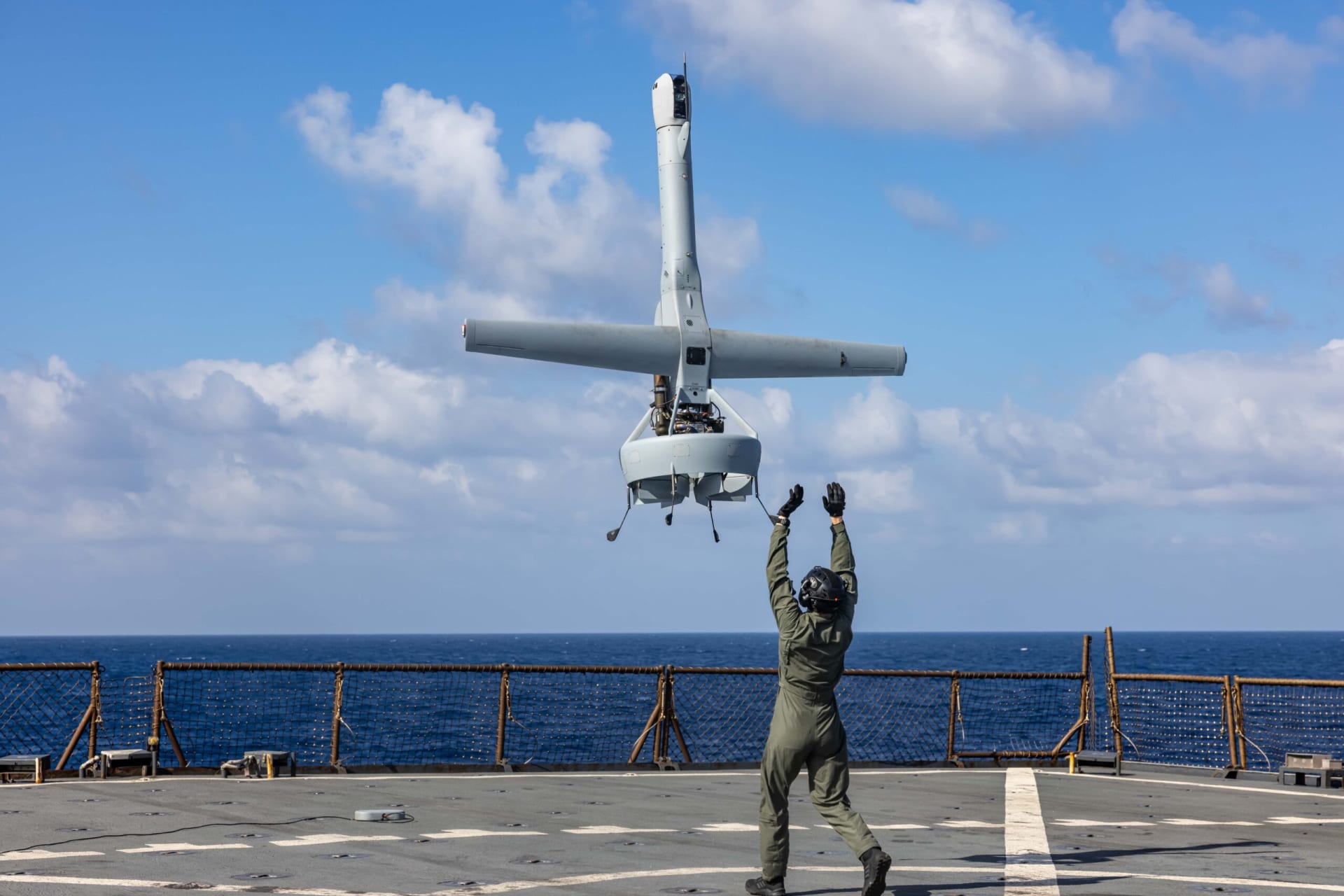 Report