Russian Annexation of Belarus
Contingency Planning Memorandum
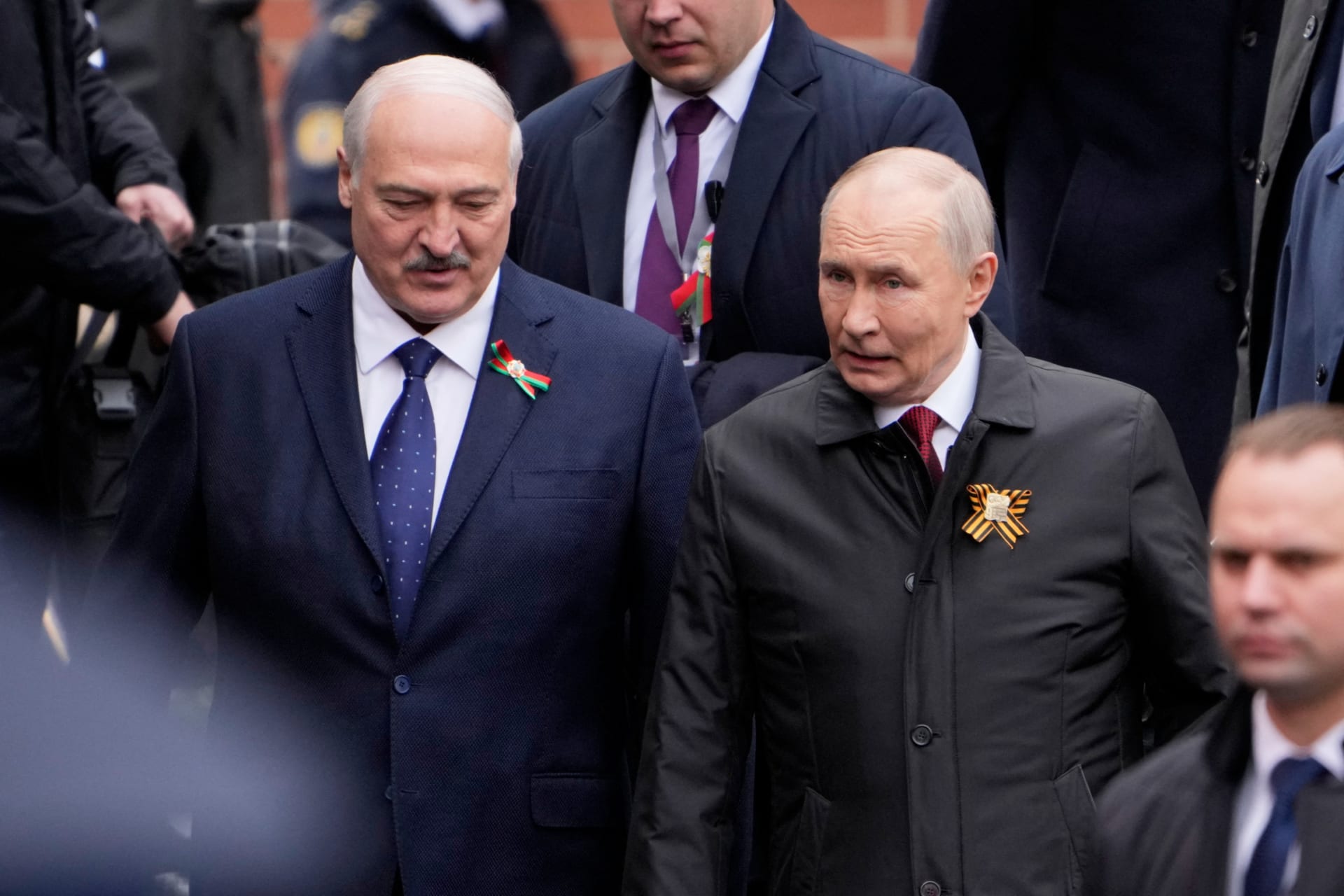
Overview
Washington needs to pursue a Belarus policy that cautiously renews relations with Minsk, engages Moscow to reduce the risk of overreaction, and prepares for annexation despite Washington’s best efforts to prevent it, argues CFR Henry A. Kissinger Distinguished Fellow Thomas Graham.
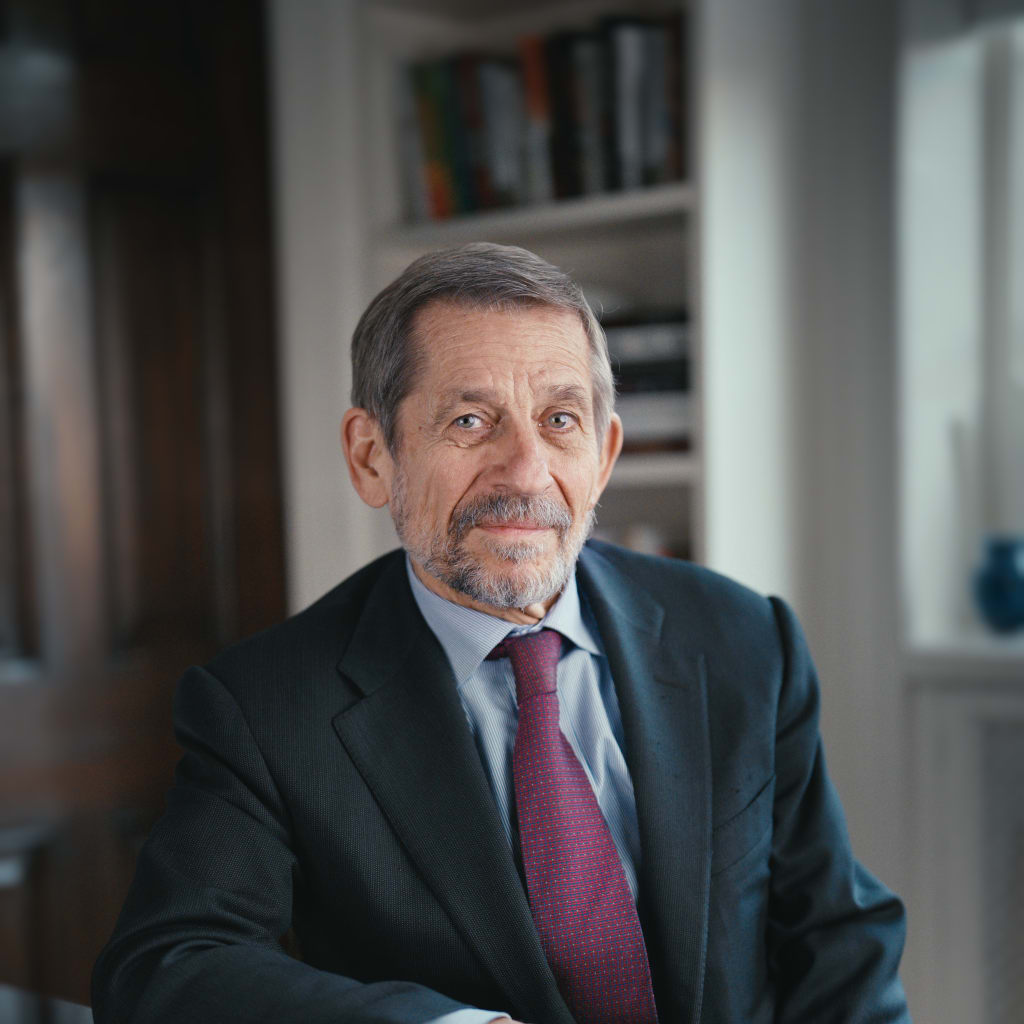 Thomas GrahamCFR ExpertHenry A. Kissinger Distinguished Fellow
Introduction
Since the breakup of the Soviet Union, Russia has made a concerted effort to keep Belarus in its sphere of influence. Belarus’s political, economic, and military autonomy has ebbed and flowed over time, depending on geopolitical circumstances, Russia’s needs, and Belarusian President Alexander Lukashenko’s political adroitness. Nevertheless, the present moment poses unique challenges for Belarus-Russia relations. Heightened security concerns over the war in Ukraine, uncertainty about Lukashenko’s succession, and warming ties between the United States and Belarus could lead the Kremlin to conclude that Russia’s security requires formally annexing Belarus within the next two years.
Such a step would have far-reaching implications for Russia’s relations with the United States and Europe, whether annexation proceeded incrementally through absorbing Belarusian institutions into Russia’s administrative framework or abruptly through force. In either scenario, stability along the Russia-West frontier, stretching from the Barents Sea to the Black Sea, would be further endangered, with the effects felt most acutely in the NATO members that border Belarus: Latvia, Lithuania, and Poland.
For the past year, the Trump administration has been slowly renewing relations with Belarus, partly to enhance that country’s autonomy and thus diminish Russia’s ability to use Belarus to pressure NATO’s eastern flank. The warming fits a broader pattern of U.S. outreach to Armenia and Azerbaijan in the South Caucasus and to Kazakhstan and Uzbekistan in Central Asia, also with the goal of restricting Russia’s influence. But Washington needs to tread carefully. The challenge is to reduce Russia’s sway over Belarus without provoking Russia to formally annex the country, while preparing for that eventuality regardless.
The Contingency
In the 1990s, Belarus and Russia institutionalized their close ties, culminating in the creation of the Union State of the Russian Federation and Belarus in 1999. Although the original plan was to create a confederation, the Russian elites feared Lukashenko would dominate an ailing Boris Yeltsin. Because they would not tolerate a Belarusian leader running Russia, they insisted the two countries remain nominally independent.
Russian elites and reformers in the Kremlin strongly opposed Lukashenko’s authoritarian, Soviet-style economic policies, seeing them as a major threat to Russia’s sovereignty and democratic reform. The two states have maintained their independence ever since.
Today, Belarus serves as a buffer state, even as it remains solidly within Russia’s sphere of influence. Russia uses the country as a forward operating base for the projection of power into Ukraine and Europe and has deployed tactical nuclear weapons there as a deterrent against greater European support for Ukraine. At the same time, maintaining Belarus as a buffer reduces the risk of direct military conflict with NATO forces and allows the country to serve as a convenient venue for East-West dialogue.
Yet the Kremlin could come to believe that it needs to reinforce its control over Belarus, as its presence wanes across the former Soviet space—a consequence of the resource demands of the war against Ukraine and the encroachment of outside powers, including the United States. Two contingencies merit attention: creeping, nonconfrontational annexation and abrupt, coercive annexation.
Creeping, Nonconfrontational Annexation
In many ways, gradual annexation represents the logical endpoint of the current trajectory of Belarus-Russia relations, set by the formation of the Union State and accelerated after Russia helped Lukashenko suppress massive anti-regime protests following a rigged presidential election in 2020. As Russia has slowly accumulated power and influence inside Belarus, formal annexation would mark the anticlimactic culmination of its ambitions since the breakup of the Soviet Union. The Kremlin could decide to speed up that process, while keeping it nonconfrontational, in response to several developments:
- unexpectedly rapid progress in resetting U.S.-Belarus relations, especially when coupled with further deterioration in Russia’s presence across the former Soviet space
- significant deterioration in Lukashenko’s political or physical condition, which would raise concerns about a near-term succession crisis while weakening Minsk’s ability to resist any Kremlin push for closer integration
- discontent within the Belarusian military and special services over Russia’s war in Ukraine, especially should Russia cease to make tangible battlefield gains
- public protests over mounting socioeconomic problems in Belarus
Creeping annexation would unfold through the gradual erosion of Belarusian sovereignty: adoption of the Russian ruble, full integration of security services, Russian control over media and education, and eventually the formal incorporation of Belarus, as a whole or as individual provinces, into the Russian Federation. At each stage, the changes could be presented as consensual and consistent with existing treaty arrangements, making it difficult for the West to mount a coherent response.
Abrupt, Coercive Annexation
Abrupt annexation would entail a rapid, coercive move to formalize Russian control—likely involving the deployment of additional forces into Belarus, the installation of a pliant leadership, or the outright suppression of Belarusian resistance. Driven by a sense of urgency in the Kremlin, that approach would represent a dramatic acceleration of existing trends.
The same developments that could prompt creeping annexation could also trigger abrupt annexation if they were to sharply intensify or occur simultaneously: a dramatic warming in U.S.-Belarus ties, Lukashenko’s sudden departure from power, a rapid deterioration in Russia’s position in Ukraine, perceived anti-Russian plotting within the Belarusian military and special services, or mass protests over deteriorating socioeconomic conditions.
Abrupt annexation would be far more destabilizing than the creeping variety. It could trigger popular resistance within Belarus, including among elements of the Belarusian military, and prompt Ukraine to strike targets in Belarus now that it would be formally part of the Russian war machine. A coercive annexation, particularly if conducted with visible brutality, could produce a major humanitarian exodus toward Latvia, Lithuania, and Poland, substantially increasing tension along NATO’ s borders and raising the risk of incidents that could embroil alliance forces.
Warning Indicators
There are few discrete indicators of either creeping or abrupt annexation, largely because both Minsk and Moscow have stated their desire to cooperate more closely within the Union State framework. Washington should therefore monitor the pace of developments closely and watch for steps by Moscow that are at odds with peaceful, deliberate integration.
Indicators of imminent nonconfrontational annexation would include
- an accelerated push to establish Union State institutions, including moves toward a common currency, unified tax system, or merged regulatory bodies;
- deepening integration of the Belarusian military and security services with their Russian counterparts, including joint command structures and more frequent joint exercises;
- increased Russian economic penetration, including acquisition of strategic Belarusian enterprises and deeper integration of energy and transport infrastructure, which could occur as part of the process of greater economic integration within the Eurasian Economic Union (which includes Russia and Belarus, along with Armenia, Kazakhstan, and Kyrgyzstan);
- the Russification of Belarusian media and education;
- Kremlin-inspired narratives emphasizing the historical and cultural unity of the Russian and Belarusian peoples—analogous to Vladimir Putin’s 2021 essay on Russo-Ukrainian unity, which preceded Russia’s full-scale invasion; and
- a progressively lower public profile for Lukashenko, less frequent meetings with Putin, and other evidence that he is being sidelined.
Indicators of a shift toward abrupt, coercive annexation would include
- a significant buildup of Russian forces along the Belarusian border or a sharp augmentation of Russian troops deployed inside Belarus beyond current basing arrangements;
- activation of Russian-backed front organizations inside Belarus calling for reunification with Russia;
- a sustained campaign in Russian state media denouncing Lukashenko for disloyal or anti-Russian behavior;
- Russian warnings of an imminent socioeconomic crisis in Belarus due to government mismanagement; and
- Russian warnings of a destabilizing succession crisis in Belarus, coupled with credible reports of Lukashenko’s severe illness, his sudden disappearance from public view, or signs of elite fragmentation.
Indicators of a shift toward abrupt, coercive annexation would include
- a significant buildup of Russian forces along the Belarusian border or a sharp augmentation of Russian troops deployed inside Belarus beyond current basing arrangements;
- activation of Russian-backed front organizations inside Belarus calling for reunification with Russia;
- a sustained campaign in Russian state media denouncing Lukashenko for disloyal or anti-Russian behavior;
- Russian warnings of an imminent socioeconomic crisis in Belarus due to government mismanagement; and
- Russian warnings of a destabilizing succession crisis in Belarus, coupled with credible reports of Lukashenko’s severe illness, his sudden disappearance from public view, or signs of elite fragmentation.
Implications for U.S. Interests
Belarus would not significantly augment the power of Russia, which has a population of around 145 million and a nominal GDP of more than $2 trillion. . . . But geography matters.
At first glance, it could appear that Russia’s formal annexation of Belarus touches little on U.S. interests in Europe or elsewhere. With a population of about 9 million and a nominal GDP of some $75 billion, Belarus would not significantly augment the power of Russia, which has a population of around 145 million and a nominal GDP of more than $2 trillion. Moreover, formal annexation would not radically enhance Russia’s current control over Belarus’s resources.
But geography matters. A Belarusian buffer helps reduce the risk of direct military confrontation, not only between Russia and its neighbors but also between Russia and the United States. Eliminating it would have far-reaching consequences for the military and strategic landscape in Europe, for U.S.-Russia relations, and for regional security architecture.
Military and Strategic Setting
Russia’s formal annexation of Belarus would extend Russia’s power westward into Europe, increasing the direct threat to Latvia, Lithuania, and Poland and exacerbating tension along the entire Russia-West frontier—especially if annexation precipitated a mass refugee exodus westward. Russia would be in a position to exert greater pressure on the Suwalki Gap, the narrow strip of land along the Lithuanian-Polish border that would then separate mainland Russia from its Baltic exclave, Kaliningrad. Russia’s military presence in western Belarus would also compress the Western decision-making timelines in a future crisis by allowing for a swifter Russian military buildup on NATO’s borders. Moreover, Ukraine’s security situation would substantially deteriorate; Belarus would no longer serve merely as a staging ground for operations against Ukraine but would contribute its own military and security forces, fully integrated with Russia’s.
U.S.-Russia Relations
Annexation would immediately eliminate Belarus as a buffer, depriving both the United States and Russia of a suitable meeting place and a channel of communication. The United States would also lose a point of leverage for contesting Russian influence in the former Soviet space. More broadly, annexation would complicate U.S. efforts to build more constructive relations with Russia. It would call into question Russia’s ability to serve as a trustworthy interlocutor, and almost certainly derail peace or ceasefire talks on the Russia-Ukraine war. Finally, annexation could strain transatlantic relations as the United States and its European allies debated the severity of the threat posed by Russia’s action and the appropriate response.
Regional Security Architecture
Russia’s annexation of Belarus would send shock waves through the former Soviet space, particularly among states with troubled relations with Russia, such as Armenia, Georgia, and Moldova. The latter three would likely turn to the United States and Europe for support against potential Russian aggression. Annexation would also accelerate Europe’s effort to develop its hard-power capabilities, and Poland and the Baltic states would almost certainly demand an enhanced NATO presence in their region, complicating U.S. efforts to decrease its military engagement in Europe. Annexation would also effectively foreclose any negotiated security settlement for Europe for the foreseeable future.
Preventive Options
Washington is seeking to rebuild relations with Belarus, at least in part to constrain Russian power there, while Russia wants to maintain or enhance its position in that country to augment its power in Central and eastern Europe. The challenge for the United States is to pursue its goal without provoking Russia’s annexation of Belarus—put differently, to challenge Russia’s position in Belarus without appearing to do so. Washington could pull off that feat by pursuing a policy of “creeping independence” to counter Russia’s policy of “creeping annexation.” Even then, the goal would not be the genuine independence of Belarus so much as preserving the delicate balance between the U.S. and Russian presence in Belarus that sustains the country’s role as a buffer state serving the interests of both powers. The degree to which Minsk tilts westward or eastward would change over time, but within a narrow range.
The challenge for the United States is to pursue its goal without provoking Russia’s annexation of Belarus—put differently, to challenge Russia’s position in Belarus without appearing to do so.
Immediate actions the United States could take include
- pursuing the slow, deliberate normalization of relations with Belarus—encompassing diplomatic, political, commercial, cultural, and people-to-people ties—so that the process appears a natural progression of developments rather than a U.S.-driven effort;
- eschewing regime change (or democratization) in Belarus as goals and avoiding flagrant, direct interference in Belarusian domestic affairs, while maintaining contact with Belarusian opposition forces abroad, in part to maintain leverage over Lukashenko;
- minimizing frontal challenges to Belarus-Russia ties by avoiding any public encouragement of Belarus to distance itself from Russia; and
- maintaining back-channel communications to the Kremlin through Lukashenko, without elevating his international legitimacy.
If the warning indicators for creeping, nonconfrontational annexation emerge, the United States could
- coordinate with European allies to normalize relations with Belarus on parallel tracks, reducing the appearance of a U.S.-led effort;
- foreclose NATO expansion to Belarus, while recognizing the legitimacy of the Russia-led Collective Security Treaty Organization, of which Belarus is a member; and/or
- support European security arrangements that codify the current territorial status quo, while ensuring that Belarus has a role in whatever pan-European structures and forums are revitalized or newly formed.
If the warning indicators for abrupt, coercive annexation emerge, the United States could employ tactics similar to those used ahead of Russia’s 2022 invasion of Ukraine, including
- shifting NATO’s military posture in Poland and the Baltic region, in coordination with allies, to monitor and deter aggressive Russian action;
- coordinating with NATO allies to issue a joint warning to Russia that annexation would trigger a significant response;
- shining a spotlight on Russian preparations and releasing, to the extent possible, intelligence that reveals Russia’s intentions; and
- engaging China, India, and other major countries from the Global South to warn against Russia’s coercive annexation of Belarus.
Mitigating Options
The official response to a Russian annexation of Belarus should depend on how it occurs. If the process is largely consensual, as a continuation of the institutionalization of the Union State, with or without the formal approval of the Belarusian people, the United States should recognize the annexation as legitimate. By contrast, if the annexation is a clear case of coercive seizure, the United States should refuse to recognize it.
In either case, Russia’s annexation will reshape the geopolitical and security environment in Europe, demanding a firm U.S. response. The first priority would be enhancing NATO’s deterrent posture along the frontier with Russia, especially in Poland and the Baltic states. That should include a public U.S. recommitment to Article 5 security guarantees and stepped-up joint activities in the Baltic region to demonstrate the capacity to resist Russian aggression. In parallel, the United States should help Ukraine fortify its border with the former Belarus and provide greater material and intelligence to support its worsened security situation.
Abrupt, coercive annexation would call for additional steps to counter Russia’s aggression. To focus world attention on Russia’s malign action, the United States should table a resolution before the UN Security Council condemning Russia’s annexation and, after Russia’s inevitable veto, bring a similar resolution before the UN General Assembly. To penalize those Russian entities and officials directly engaged in the action against Belarus, the United States should consider targeted sanctions, while encouraging allies and other states, especially those in the Global South, to take similar actions. To exert pressure for political change in Belarus, the United States could engage more actively with the Belarusian diaspora without making it the centerpiece of official policy.
Washington should not, however, suspend all official ties to Moscow. Maintaining diplomatic and other channels of communication will be critical to managing the fallout from annexation.
Recommendations
Washington needs to pursue a Belarus policy that cautiously renews relations with Minsk, engages Moscow to reduce the risk of overreaction, and prepares for annexation despite Washington’s best efforts to prevent it.
As the United States continues to normalize relations with Belarus, it should be clear about its main goal: to enhance Belarus’s autonomy so that Russia cannot easily use it to project power into East-Central Europe. Washington need not seek to transform Belarus to advance that goal. Indeed, creating onerous criteria for domestic reform as necessary for improved relations would almost certainly derail the current effort and provoke a harsh Russian reaction. Nevertheless, to maintain leverage over Lukashenko, the United States should develop a calibrated relationship with the Belarusian opposition in exile, dialing up support should Lukashenko withdraw from or attempt to stall conversations with the United States and dialing it down should those conversations continue apace.
With Moscow, Washington should put regional issues on the bilateral agenda so that concerns about Minsk’s annexation can be aired in a confidential setting. In those discussions, the Trump administration should underscore its public statements in opposition to further NATO expansion eastward. That could reassure the Kremlin that U.S. interests in Belarus are pragmatic and measured and remove one of Russia’s pretexts for accelerating annexation.
Finally, the United States should begin formal contingency planning for both the creeping and abrupt annexation of Belarus, including consultations with allies. That effort should include developing an intelligence-based early warning protocol focused on the indicators identified above, with clear escalation thresholds that trigger more assertive preventive measures. If Russia moves more troops to the Belarusian border, for instance, the United States and its allies might coordinate intelligence to broadcast Russia’s actions on the global stage and prepare, if necessary, to shift their military posture.
Taken together, those steps would allow the United States to advance its strategic goals in Europe and vis-à-vis Russia while minimizing the risk of an adverse Russian reaction.
Acknowledgments
The author would like to thank Sam Bowden for his research assistance and advice in preparing this report.
About the Author
Thomas Graham is the Henry A. Kissinger distinguished fellow at the Council on Foreign Relations. His book, Getting Russia Right, was published in September 2023. He is a cofounder of Yale University’s Russian, east European, and Eurasian studies program and sits on its faculty steering committee. He is also a research scholar at Yale University’s MacMillan Center. He has been a lecturer in global affairs and political science since 2011, teaching courses on U.S.-Russian relations and Russian foreign policy, as well as cybersecurity and counterterrorism. Graham was special assistant to the president and senior director for Russia on the National Security Council staff from 2004 to 2007, during which he managed a White House-Kremlin strategic dialogue. He was director for Russian affairs on the staff from 2002 to 2004.
Graham served as an advisor to Kissinger Associates from 2008 to 2021. He was a Foreign Service officer for fourteen years. His assignments included two tours of duty at the U.S. Embassy in Moscow in the late Soviet period and in the middle of the 1990s, during which he served as head of the political internal unit and acting political counselor. Between tours in Moscow, he worked on Russian and Soviet affairs on the policy planning staff at the U.S. Department of State and as a policy assistant in the office of the undersecretary of defense for policy.
Graham serves on the advisory board of Russia Matters, a project of the Harvard Kennedy School’s Belfer Center for Science and International Affairs with the goal of enhancing the understanding of Russia among policymakers and the interested public.
Graham holds a BA in Russian studies from Yale University and an MA in history and a PhD in political science from Harvard University.
This report was made possible by the generous support of the Carnegie Corporation of New York.
 Report
 Report
 Report
 Report
 Report
 Report