At October 7 Anniversary, Israelis Face an Election and an Unfinished Reckoning
A foiled hijacking and an approaching election have put Israel in a reflective mood three years after October 7, even as its security doctrine hardens and its international isolation grows.

Elliott Abrams served as deputy assistant to the president and deputy national security advisor in the George W. Bush administration, where he supervised U.S. policy in the Middle East. He later served as special representative for Iran and Venezuela in the first Donald Trump administration.
Israel’s third commemoration of the October 7, 2023, attacks reflects not only the events of the three years since but also two new events: the recent terrorist attack on an airplane carrying Israelis home from Dubai, and the impending national election.
The Omani copilot’s alleged effort to crash his own FlyDubai flight reminded Israelis of the continuing threats to their lives from Islamic terrorism and of their own ability to resist and to prevail. It gave a genuine boost to public morale at a difficult time. The election season has not been uplifting, because it has been a reminder of old divisions—including over who bears responsibility for the failures that meant October 7 cost so many lives.
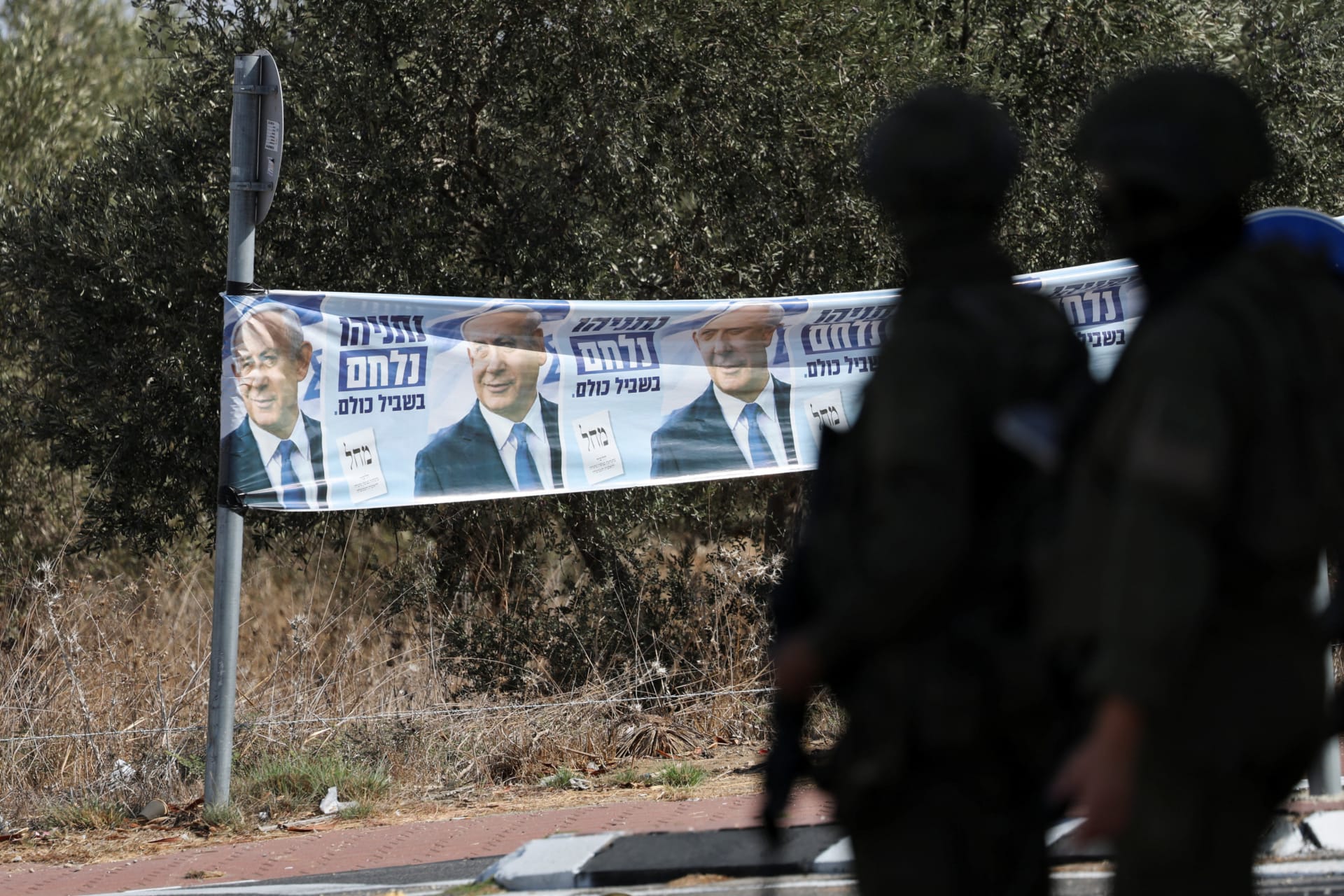
Responsibility has been debated endlessly over the past three years, and several new books have added fresh facts to the conversation—but there is no official or accepted version. The Israeli way to reach such conclusions, a formal national commission, has been blocked by Prime Minister Benjamin Netanyahu and his Likud Party. So, facts emerge and stories are told, but it will be up to history to find a more widely accepted judgment. In the meantime, the election will provide a shorter-term verdict. Few thought the prime minister could survive the aftermath of October 7, 2023, politically, but the race is tight. No party has anything near a majority, and there may need to be a second round of elections if weeks of postelection bargaining fail to produce a majority coalition.
Meanwhile, Israel’s security doctrine and its objective circumstances have changed. The idea of deterrence has largely been abandoned when it comes to threats like Hamas and Hezbollah. Even with respect to Iran, the new approach replaces efforts to understand the psychology and intentions of enemies with a more mechanical assessment of their capabilities. Believe those who say they want you dead and gone, and count their missiles and soldiers. Always be ready to act first, and to attack in the enemy’s territory. This is, as many have pointed out, actually an old doctrine and not far from the views of Israel’s first prime minister, David Ben-Gurion.
In the years since October 7, Israel’s adoption of this doctrine led it to break the “ring of fire” Iran was building around it by severely weakening both Hamas and Hezbollah, setting back the Iranian nuclear program, and helping create the circumstances under which the Assad regime in Syria fell. In that sense, Israel’s security is far greater than it was three years ago.
But Israelis have also learned two sobering lessons over the past three years.
First, the old demand that Israel must be allowed to “defend itself by itself” is not achievable. Israel’s attacks on the Iranian nuclear program required U.S. help to hit the hardest targets, and its air defense against Iranian missiles benefited greatly from cooperation and assistance from both the United States and several Arab countries. Israel also needs weapons and ammunition, from F-35 jets to missile interceptors, that are manufactured abroad.
Second, Israel’s military achievements have been shadowed by increasing political criticism abroad, especially in Europe and the United States. It is impossible to know how far this criticism will turn into delays or denials of military cooperation or into economic boycotts, but the intensity of it is severe and still growing. It has been visible in several European elections and is also playing a part in U.S. contests.
Although many in Israel and abroad blame Netanyahu for this problem, it is unlikely to be solved by his defeat in the election. Looking at the dangers and risks that their country faces, few Israelis (including those on the left) are willing to contemplate a sovereign and independent Palestinian state. Nor will policy toward Gaza, Iran, or Lebanon change much, for those are consensus issues in Israel. The struggle over international public opinion, isolation, boycotts, and antisemitism will continue no matter who is in power.
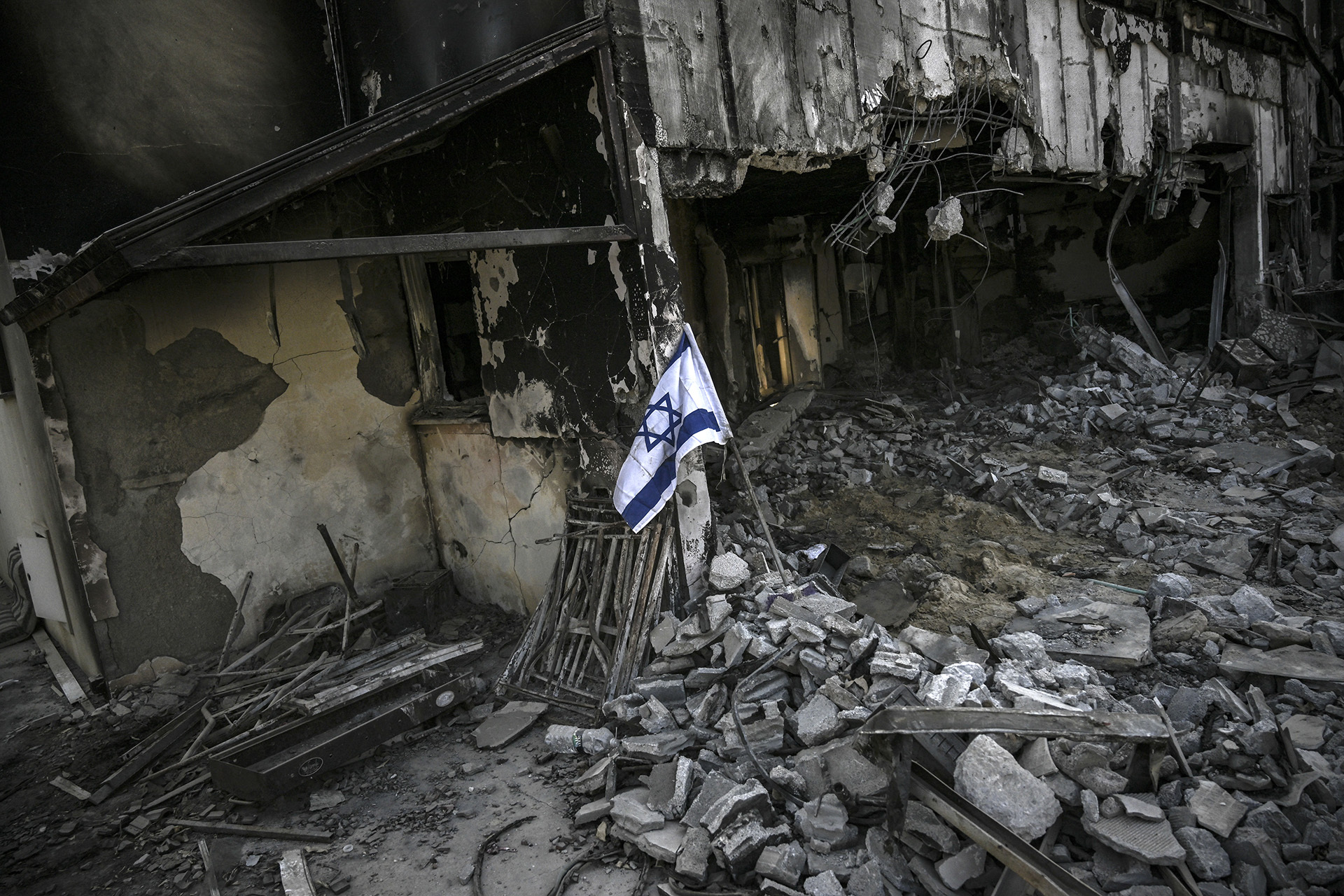
This third anniversary is a time for renewed reflection on Israel’s damaging failures and soaring achievements: defeats like October 7 but victories like the attacks on Iran’s nuclear weapons program; growing political isolation but also growing military partnerships; unending hostility in parts of Europe and the Arab world but some new alignments that bolster Israeli security. The election itself, with Israel’s longest-serving prime minister in office and running again, contributes force to the desire to take stock.
The overall security situation at the third anniversary leaves several critical issues to be addressed by a new government, and foremost among them is the size of the military and the participation of ultra-Orthodox Haredi men in it. Few of them now serve, but more soldiers are needed because the threats are clear. This issue has simmered and boiled for three years, and the next government will have to address it.
The terrorist attack on the FlyDubai flight provides an irresistible metaphor for Israel’s situation on the third anniversary. The dangers appear in new and old forms, and even vacation travel can turn into a life-threatening crisis, but Israel can still triumph. Moreover, it was Israeli passengers who overwhelmed the copilot, and to many Israelis that’s an additional metaphor: the people act and rescue themselves when the state does not function effectively or when it fails catastrophically, as it did on October 7 three years ago.
October 7 will be a somber day in Israel for many years to come, even when the wounds are not so fresh. This is something Americans should recognize because we just experienced such a day, the twenty-fifth commemoration of September 11. Israelis know that what happened on October 7 cannot happen again—not in exactly the same way. But they also know that they are not safe and that they are widely condemned for actions they believe are essential to guard themselves, their families, and their future. Remembering October 7 is also an exercise in pondering whether all of that can ever change.
This work represents the views solely of the author(s). The Council on Foreign Relations is an independent, nonpartisan membership organization, think tank, and publisher, and takes no institutional positions on matters of policy.