CFR Report Takeaways: How to Reshape U.S. Defense Production to Counter China
A new Council on Foreign Relations report finds that long production timelines and supply chain bottlenecks—worsened by munitions stocks depleted in the Iran conflict—mean the United States must enact policy reforms and scale precise mass capabilities to counter China in the next few years. One of the authors provides critical takeaways from the report on the alternatives the U.S. government should pursue.
By experts and staff
- Published
 Michael C. HorowitzCFR ExpertSenior Fellow for Technology and Innovation and Director of the Defense and National Security Program
Michael C. Horowitz is a coauthor of the Council on Foreign Relations (CFR) report Out of Ammo: A Two-Year Sprint to Rebuild the American Arsenal and Deter China. He previously served as deputy assistant secretary of defense for Force Development and Emerging Capabilities and director of the Pentagon’s Emerging Capabilities Policy Office. He is now the director of Perry World House and Richard Perry professor at the University of Pennsylvania.
Operation Epic Fury and the ongoing conflict with Iran have pushed a long-simmering problem onto the front page: the U.S. military does not have enough of the weapons and platforms it needs to deter and fight wars. The consequences are reverberating not just in the Middle East, but around the world.
Before the topic hit the headlines, the China Strategy Initiative and the Defense and National Security Program at CFR convened a study group to review the future of the U.S. defense industrial base and the reforms needed to maximize U.S. military power over a two-year period and a ten-year period. Drawing on the conversation in the study group—which included experts with extensive military, policy, industry, acquisition, and congressional experience—CFR has released a new report that illustrates how the United States’ exclusive reliance on exquisite, expensive, hard-to-produce weapons and platforms is unsustainable.
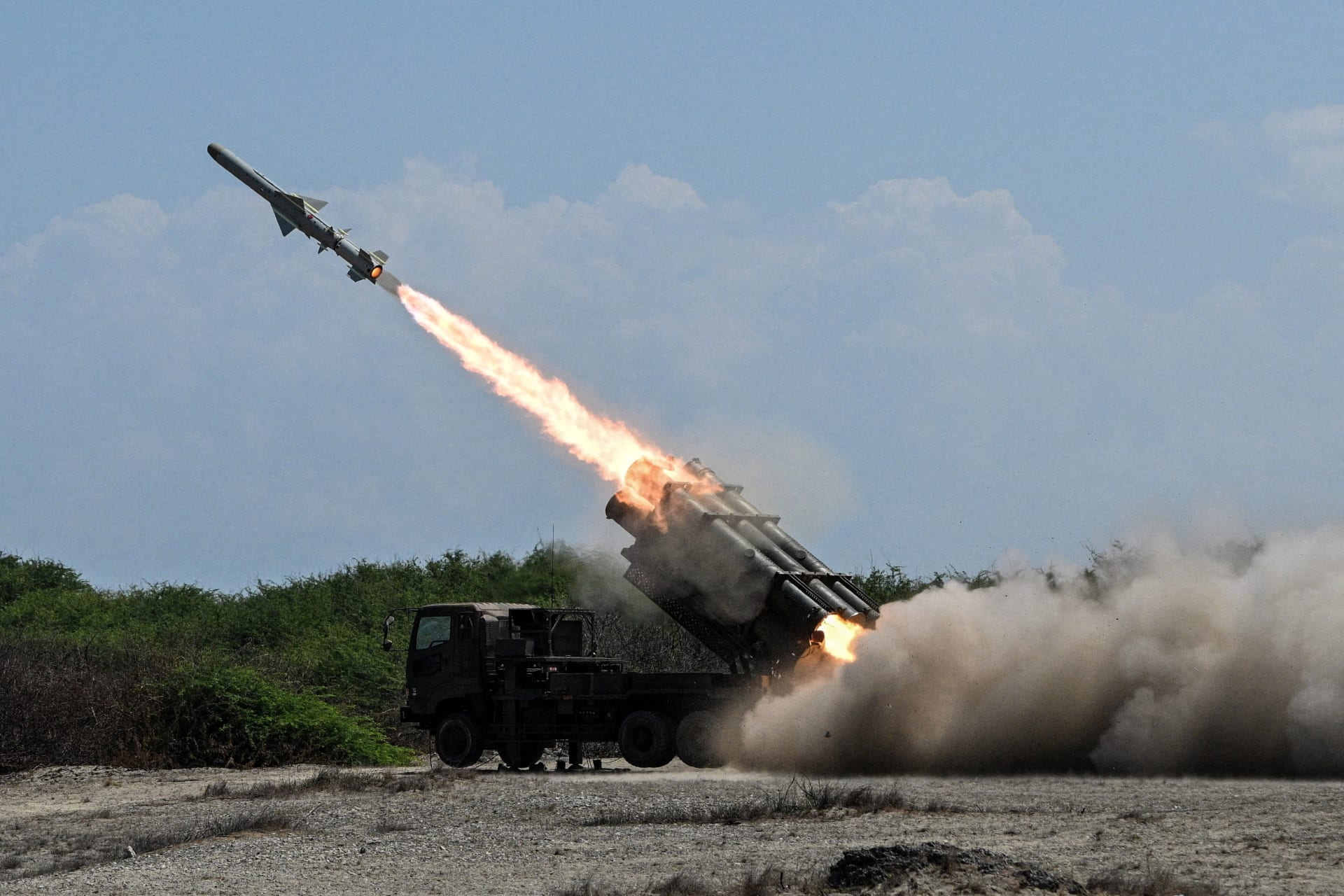
This is especially true given ongoing military operations around the world and the magnitude of the challenge posed by China’s military modernization. Rebuilding an arsenal of expensive cruise missiles, exquisite air defenses, and hard-to-produce ships cannot occur within a two-year period regardless of the resources the government or private sector invests. Although government and industry are working with newfound urgency to boost replenishment rates for these munitions—which are central to the current U.S. warfighting strategy in the Pacific—their efforts will take many more years to bear fruit. The U.S.-Israeli war with Iran has also severely depleted stocks of critical munitions, including air defense interceptors and precision-guided munitions, that will need to be rebuilt.
Instead, the authors concluded that the United States should spend the years ahead, especially the next two, maximizing its investments in precise mass systems—lower-cost, more attritable, more autonomous weapons, sensors, and platforms—that can be built based on commercial manufacturing and draw on lessons learned from Ukraine’s fight against Russia and even Iran’s operations against the United States.
Read some of the report’s main takeaways below and the full report on CFR.org.
The next two years matter
Without urgent action, the United States is becoming increasingly ill-equipped to deter or defeat Chinese aggression in the Western Pacific, particularly if China were to invade or blockade Taiwan. To address this gap, the Department of Defense and Congress should implement far-reaching reforms to enable the production, acquisition, and deployment of precise mass systems: an emerging class of military capabilities that includes drones, sensors, and enabling technologies. Precise mass systems can be manufactured cheaply, fielded rapidly, expended freely in combat, and sustained readily at scale in wartime.
If tension with China escalate in the next two years, victory could depend on spending already appropriated funds more quickly, relaxing procurement rules, and using every available industrial policy tool to expand production rapidly.
Unlike legacy munitions and platforms, precise mass systems can be scaled in a two-year period due to their use of commercial manufacturing, less exquisite designs, and lessons learned from Iran, Ukraine, and the inventions of U.S. industry over the last several years. Adopting precise mass at scale over the next two years is the most viable way to deter China from pursuing military conquest and coercion or deny it success if it chooses such courses of action.
Given the two-year window, this report does not attempt to redesign the entire defense industrial base or propose sweeping structural reforms (the next report will tackle a ten-year period). Some recommendations are temporary departures from normal practices; others are durable reforms. All recommendations will strengthen U.S. military capabilities in theaters beyond the Pacific. Washington needs to immediately put production of precise mass on a wartime footing. Waiting until conflict begins will be too late.
Congress and the White House should act now
The report outlines several critical recommendations, including these four that Congress and the White House should implement today.
- The United States should unlock industrial speed. This means giving program offices in the Pentagon substantial authority to prioritize schedule and get every already appropriated dollar on contract each year. Additionally, while the government needs to move fast, and industry should deliver, the process needs to be transparent and accountable. A rapid, transparent, clean process can provide predictability to industry and get capabilities in the hands of warfighters faster.
- The Pentagon needs to accept more risk in procurement. The urgency of the challenge and the rate of technological innovation mean that the United States will have to accept more risk when it comes to acquiring lower-cost, attritable capabilities. These systems will be updated quickly as technology evolves, as opposed to submarines or aircraft carriers designed to last for decades. And because they are based on commercial technology, multiple vendors can often produce them. The Pentagon should therefore implement portfolio-level risk tolerance guidance to prevent the perfect from being the enemy of the good for these systems.
- Defense acquisitions require multiyear budgets. Conditioning the acquisition of the United States’ arsenal exclusively on yearly appropriations cycles is a recipe for uncertainty, especially given how often Congress relies on continuing resolutions instead of full-year appropriations. The United States needs to align its strategy, budgets, and industrial targets. Locking in multiyear demand signals legislatively will allow industry to plan and invest with confidence and help get to greater scale faster, particularly in rebuilding in the wake of operations over the last year.
- Fix the bottlenecks. With an eye toward the present and the longer term, the Pentagon needs to continue focusing on resolving known constraints that are stalling production. This includes upgrading the factories that make critical components in the U.S. supply chain and stockpiling the ones that take too long to build. U.S. supply chains have to be designed to be more resilient. By investing in second-source suppliers, the Pentagon can rebuild the small manufacturer ecosystem that big primes depend on.
Each of these changes is within reach of the current Congress and Pentagon, but they require a new level of urgency. The two-year clock is already running.
This work represents the views solely of the author(s). The Council on Foreign Relations is an independent, nonpartisan membership organization, think tank, and publisher, and takes no institutional positions on matters of policy.