China and Climate: China’s New Coal Development Plan
August’s edition of China and Climate discusses China’s latest plan for coal development, new U.S. tariffs on polysilicon, and China’s activity in the Arctic.
By experts and staff
- Updated
- Research Associate, Climate and Energy
- Research Associate, Climate and Energy
- Research Associate, Climate Change Policy
The China and Climate primer series tracks and breaks down China’s engagement with energy and climate issues around the world.
China Releases New Plan for Coal Development
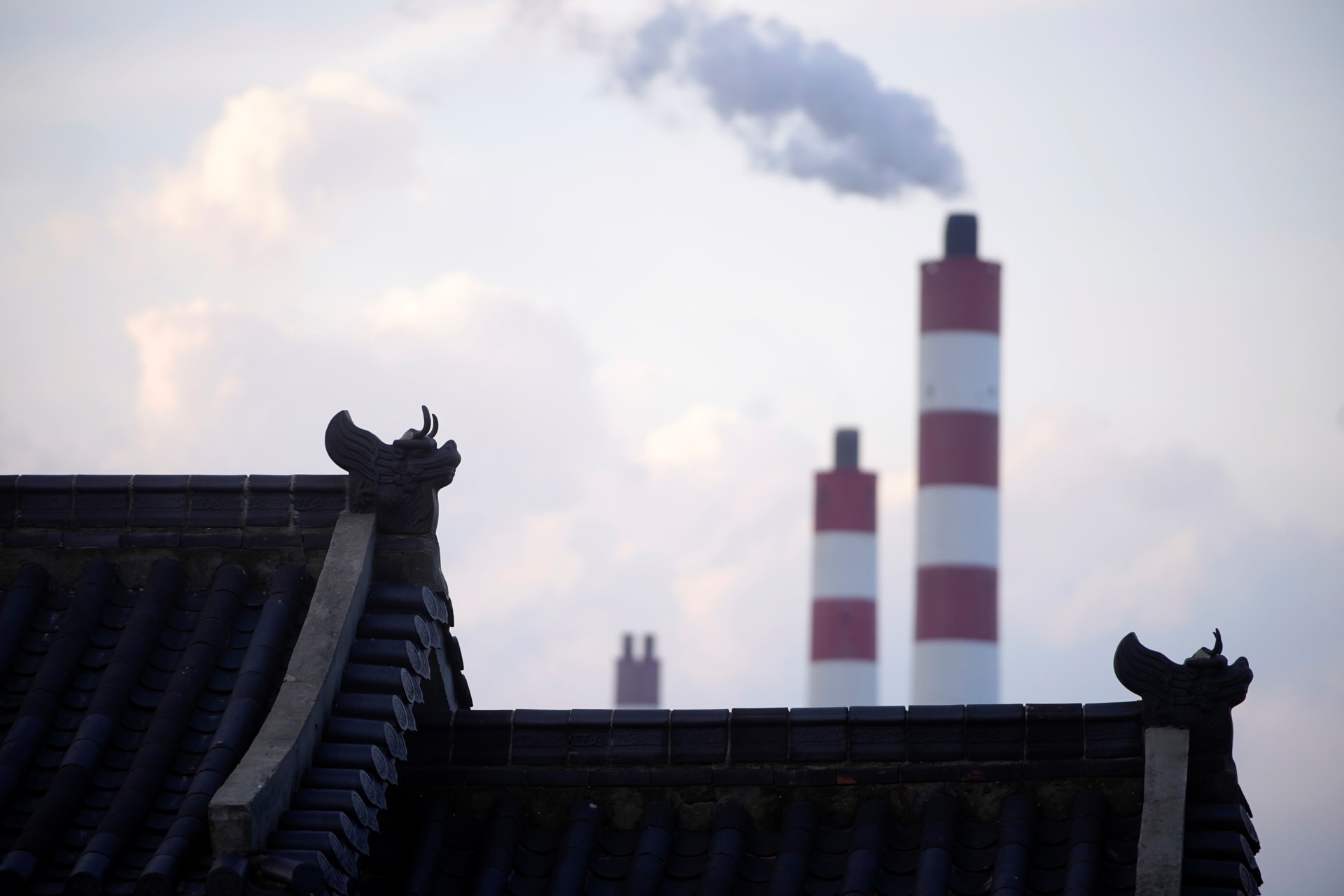
On August 10, China released its fifteenth Five Year Plan for coal development, after announcing that coal accounted for less than half (49.7 percent) of its electricity output in the first half of 2026. Over the same period, renewables supplied a little over 41 percent of energy. Those trends reflect China’s pledge to peak carbon emissions by 2030 and achieve carbon neutrality by 2060. At the same time, China’s electricity demand is growing, and, in its quest for energy security, the country’s five-year plan for oil and gas, released a week after the plan for coal, signals that domestic production in those sectors will also likely increase. Although coal’s share of the country’s energy output may be declining and renewable’s growing, the five-year plan indicates that coal will remain a large piece of China’s energy outlook in the future.
However, the plan offers no specific year for China’s peak coal consumption. Instead, it opts to peak coal consumption between 2026 and 2030. It also reaffirms coal’s role as an important and dependable source of energy for China. The plan notably does not hold the coal industry’s feet to the fire, rather allowing for flexibility in when to peak coal usage and making no commitment to phase out coal use. After all, China is estimated to have added 30 gigawatts of coal power generation in the first half of 2026 and has more in the works.
Typhoon Dolphin Brings Heavy Rainfall to Eastern China
On August 9, Typhoon Dolphin made landfall near Yuhuan in Zhejiang Province as a category 1 hurricane bringing heavy rainfall and high-speed winds. Dolphin traveled a whopping 6,000 kilometers (more than 3,700 miles) before reaching China’s eastern shore, bringing an average of about 215 millimeters (8.5 inches) of rain to Zhejiang Province. Fourteen meteorological stations had their daily rainfall records broken. Taizhou recorded an average of 438 millimeters (17.2 inches) of rainfall, about half of what Seattle gets in an entire year and the most of any area in China affected by Dolphin. Even areas accustomed to lots of rain were drenched by the storm. Shanghai, for example, receives around 1,150 millimeters (45.2 inches) of rain a year but had just shy of 313 millimeters (12.3 inches), or almost a quarter of its average annual total, fall in one day.
Over one million people were moved out of harm’s way. And the evacuation appears to have succeeded, with no officially reported deaths from the storm. The central government announced it was making funds available, with the National Development and Reform Commission providing ¥200 million ($29.5 million) to support recovery efforts in Zhejiang. It provided an additional ¥120 million ($17.7 million) to the provinces of Jiangsu, Zhejiang, Anhui, Fujian, and Jiangxi, and made a separate ¥80 million ($11.8 million) available for Henan, Hubei, and Anhui Provinces. Dolphin traveled farther than any other typhoon that has made landfall in China, standing out in an incredibly active Typhoon season for China as El Niño intensifies in the Pacific.
New U.S. Tariffs Target Chinese Market Control of Raw Polysilicon
On August 6, U.S. President Donald Trump released a proclamation that placed a 15 percent tariff and a price floor on all imports of raw polysilicon. Although the tariff and price floor will increase prices of polysilicon from all countries, the move is an attempt to counter China’s market control of the materials. China leads in the polysilicon supply chain production, and this new move aims to further hinder China from circumventing restrictions through third-party countries. Those restrictions were placed on the grounds of national security concerns and to promote the scaling of semiconductor production and the polysilicon supply chain in the United States.
Raw polysilicon is a material that is a primary input for both solar technology and semiconductor manufacturing supply chains. The United States has largely relied on a country-by-country approach to investigations of third-party countries with unfair trade practices linked to Chinese solar production. The new requirements aim to shift the focus to boosting domestic production of those materials overall. Such moves will potentially bolster the strength of U.S. producers—but it will likely also raise costs for manufacturers across the value stream in the United States.
China Takes on the Arctic
Chinese company Sea Legend Shipping launched the first weekly cargo-shipping service from China to the United Kingdom using the Northern Sea Route, an Arctic shortcut from Asia to Europe that passes the Bering Strait and along Russia’s Arctic coast. The operation is set for recurring departures between August 12 and October 27 using a fleet of seven small- to medium-sized container ships.
The first departure, Dubai Tower, sailed from Qingdao, China, to Felixstowe, United Kingdom, carrying goods such as solar panels, batteries, and components for renewable energy technology. Compared to the normal route through the Suez Canal, using tthe Northern Sea Route shortened the distance by about 3,500 nautical miles and offers natural low temperatures for heat-sensitive goods such as batteries and energy storage systems.
The United States has long contested Russia’s claim over the Northern Sea Route, arguing it is inconsistent with the UN Convention on the Law of the Sea and should instead be treated like an international strait. China’s use of that route, which requires receiving permits and paying entrance fees to Russia, implicitly validates Russia’s claim and underscores U.S. geopolitical concerns over the region.
The new commercial shipping service also garnered environmental concerns; though the company has cited that they will release fewer emissions due to the faster route, more ships entering the waterway can accelerate warming in the Arctic.
This work represents the views solely of the author(s). The Council on Foreign Relations is an independent, nonpartisan membership organization, think tank, and publisher, and takes no institutional positions on matters of policy.