China in Latin America: January 2026
In January, China condemned the United States’ capture and arrest of Venezuelan president Nicolás Maduro. Brazil reacted to China’s 55 percent tariff on beef imports by preparing to scale back production. Argentina received its first shipment of Chinese electric and hybrid vehicles amid Argentine president Javier Milei’s sweeping trade deregulations.
By experts and staff
- Published
- Katya BandouilAssistant Manager, Audience Development & Digital Analytics, Foreign Affairs, Council on Foreign Relations
Trade
On January 1, Chinese cars and motorcycle imports to Ecuador received a new tariff reduction as part of a trade agreement that gradually lowers tariffs for a range of products until they reach 0 percent in 2044.
A legal battle between ecommerce marketplace Mercado Libre and Chinese-owned Temu reached the Argentine supreme court. According to a report by La Nación, Mercado Libre filed a complaint in July 2025 to the Argentine ministry of economy accusing Temu of using misleading advertising and pricing, four months after the Chinese retail platform began operations in Argentina.
Argentina received an unprecedented shipment of more than 5,800 electric and hybrid vehicles from Chinese auto manufacturer BYD amid Milei’s sweeping trade deregulations.
At the beginning of 2026, China officially implemented a 55 percent tariff on beef imports that exceed annual quotas from countries such as Argentina, Brazil, and Uruguay. Brazil, whose leading beef consumer is China, is preparing to scale back production in response to the restrictions.
Diplomacy
On January 23, Brazilian President Luiz Inácio Lula da Silva and Chinese President Xi Jinping spoke over the phone. Xi called on his Brazilian counterpart to “jointly uphold the central position of the United Nations and international fairness and justice.” That call came on the heels of U.S. President Donald Trump’s official ratification of the U.S.-led international organization Board of Peace. Lula also announced in an X post that Brazil will “grant exemptions for certain categories of short-term visas to Chinese citizens, in reciprocity to the exemption measure adopted by China since 2025.”
In a press conference, Chinese foreign ministry spokesperson Mao Ning responded to Trump’s call for Cuba to make a deal “before it’s too late” and his threat to cut off Venezuelan oil exports to the country. “We urge the U.S. to stop the blockade, sanctions and coercion of all forms against Cuba at once, and act in ways conducive to regional peace and stability,” Ning asserted. On January 27, China’s foreign ministry reaffirmed the country’s commitment to providing aid to Cuba. The Chinese government approved an aid package including $80 million in financial assistance and sixty thousand tons of rice to Cuba as the island nation faces an ongoing economic crisis.
The Chinese government denounced remarks by U.S. Representative John Moolenaar, who stated that Washington “cannot allow China’s influence to grow in the Western Hemisphere, and we must ensure it does not gain control over critical infrastructure. The Panama Canal is an engineering marvel and a crucial part of the economy, and our military must always have the right to transit the locks whenever it needs to.” Moolenaar made that statement while leading a congressional delegation to Central America to discuss Chinese influence in the region and review Panama Canal operations. China’s foreign ministry responded that “China firmly opposes certain U.S. politicians pointing their fingers at the normal exchanges between Central American countries and China.”
While attending the World Economic Forum in Davos, Switzerland, Milei defended his country’s economic relationship with China while maintaining a close alliance with Trump. “I want an open economy,” Milei remarked. “If you look at China’s weight in the world, you’ll understand I have to trade with China.” Milei went on to praise the United States’ ideologies in another Davos appearance, claiming “America will be the beacon of light that reignites the whole of the West.”
Maduro Arrest
In early January, U.S. military forces captured Venezuelan leader Nicolás Maduro and his wife Cilia Flores on charges of narcoterrorism following a naval blockade and increasing economic and military pressure in the region. As a close ally and top Venezuelan oil consumer, China reacted with condemnation on all fronts.
“These hegemonic acts by the United States seriously violate international law and the sovereignty of Venezuela, and threaten peace and security in Latin America and the Caribbean. China firmly opposes them,” said China’s foreign ministry on January 3. “We call on the U.S. to abide by international law and the purposes and principles of the UN Charter, and stop violating other countries’ sovereignty and security.”
According to a report by the New York Times, U.S. Secretary of State Marco Rubio urged interim Venezuelan President Delcy Rodríguez to expel official advisors from China following the Maduro arrest.
Chinese Ambassador to the UN Sun Lei further condemned “the unilateral, illegal, and bullying acts by the United States” at an emergency UN Security Council meeting.
On January 31, Trump announced he is open to Chinese investment in Venezuelan oil. “China is welcome to come in and would make a great deal on oil,” the U.S. president said to reporters.
Infrastructure
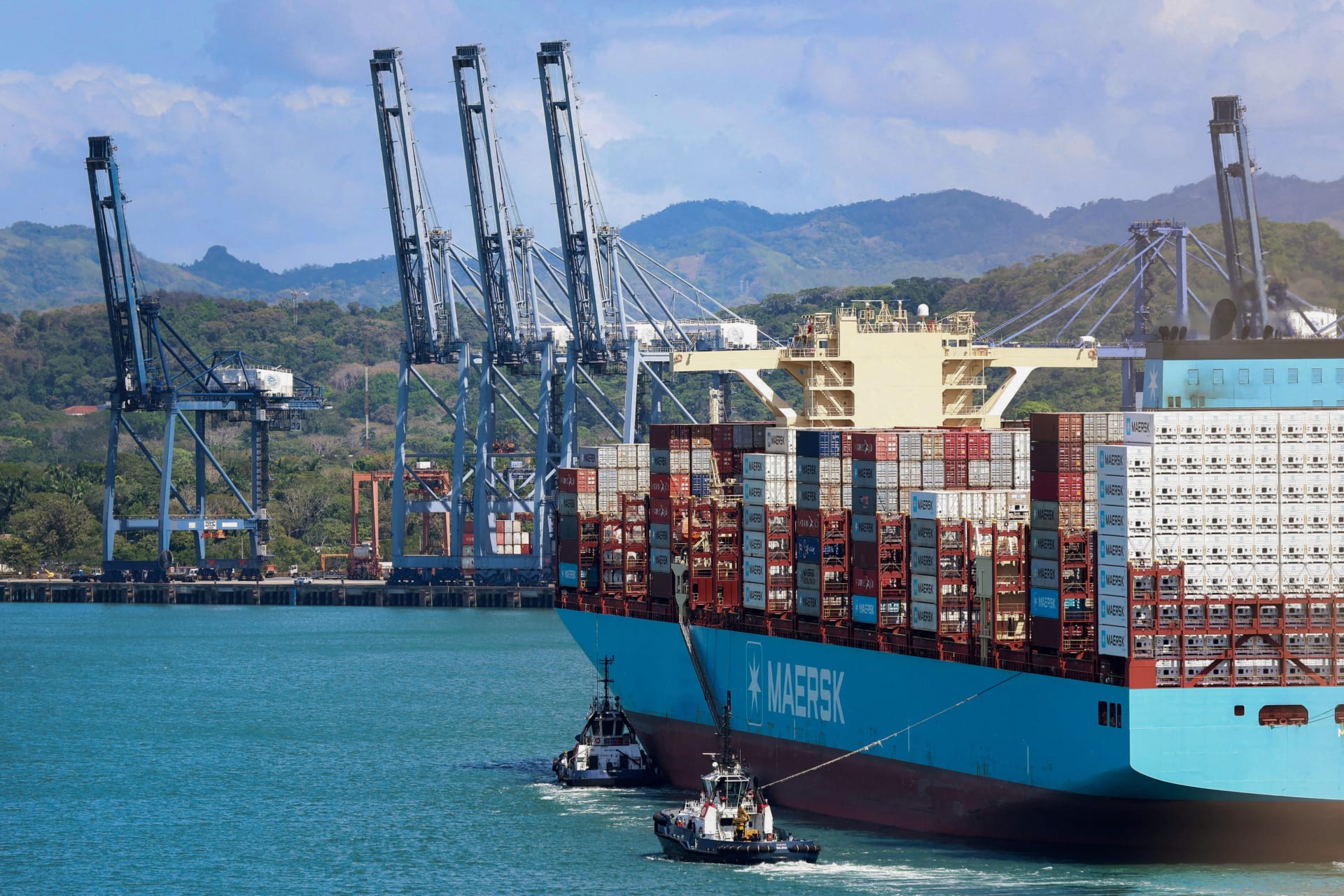
Panama’s supreme court ruled to annul port contracts along the Panama Canal held by Panama Ports Company, a subsidiary of Hong Kong–based CK Hutchison. That decision advanced Washington’s goals to regain influence along the waterway. In 2025, the Trump administration supported a deal involving a U.S.-led multinational consortium acquiring CK Hutchison’s ports, including two along the Panama Canal. During a press briefing, Chinese ministry of foreign affairs spokesperson Guo Jiakun responded that “the Chinese side will take all necessary measures to resolutely safeguard the legitimate rights and interests of Chinese companies.”
Ecuador’s ministry of environment and energy extended a contract with Chinese oil company PetroOriental until 2040, which includes a $36 million investment to increase production and social programs.
The government of Argentina’s Santa Cruz Province received a $136 million loan from China to restart work on a hydroelectric dam, a project that has been stalled since December 2023.
Chinese-owned Great Wall Motors signed a commitment agreement with Brazil’s Espírito Santo government to build a second manufacturing plant. Last August, GWM opened its first factory in São Paulo, Brazil.
Chile called off the Cerro Ventarrones astronomical observatory project, a joint initiative between the Catholic University of the North and the National Astronomical Observatory of China, following concerns raised by the United States about potential satellite tracking capabilities.
Bloomberg Linea reported that Bolivia canceled a $350 million zinc refinery project due to overpricing and lapses in contract compliance, according to Bolivian Minister of Mining and Metallurgy Marco Calderon.
This work represents the views solely of the author(s). The Council on Foreign Relations is an independent, nonpartisan membership organization, think tank, and publisher, and takes no institutional positions on matters of policy.