What’s the Renminbi Got to Do With it?
A closer look at the impact of China’s currency on China’s export growth.

There is an argument—made in the recent Geneva Report and by various former IMF officials—that China’s current export surge is the simple consequence of the housing downturn and the resulting weakness in Chinese internal demand.*
The weakness in the RMB in this story is entirely incidental to the increase in exports, which is, more or less, a mechanical response to weak internal demand.
Cannot sell excavators at home? Export them.
Built more modern car capacity than your internal market supports? Export that too…
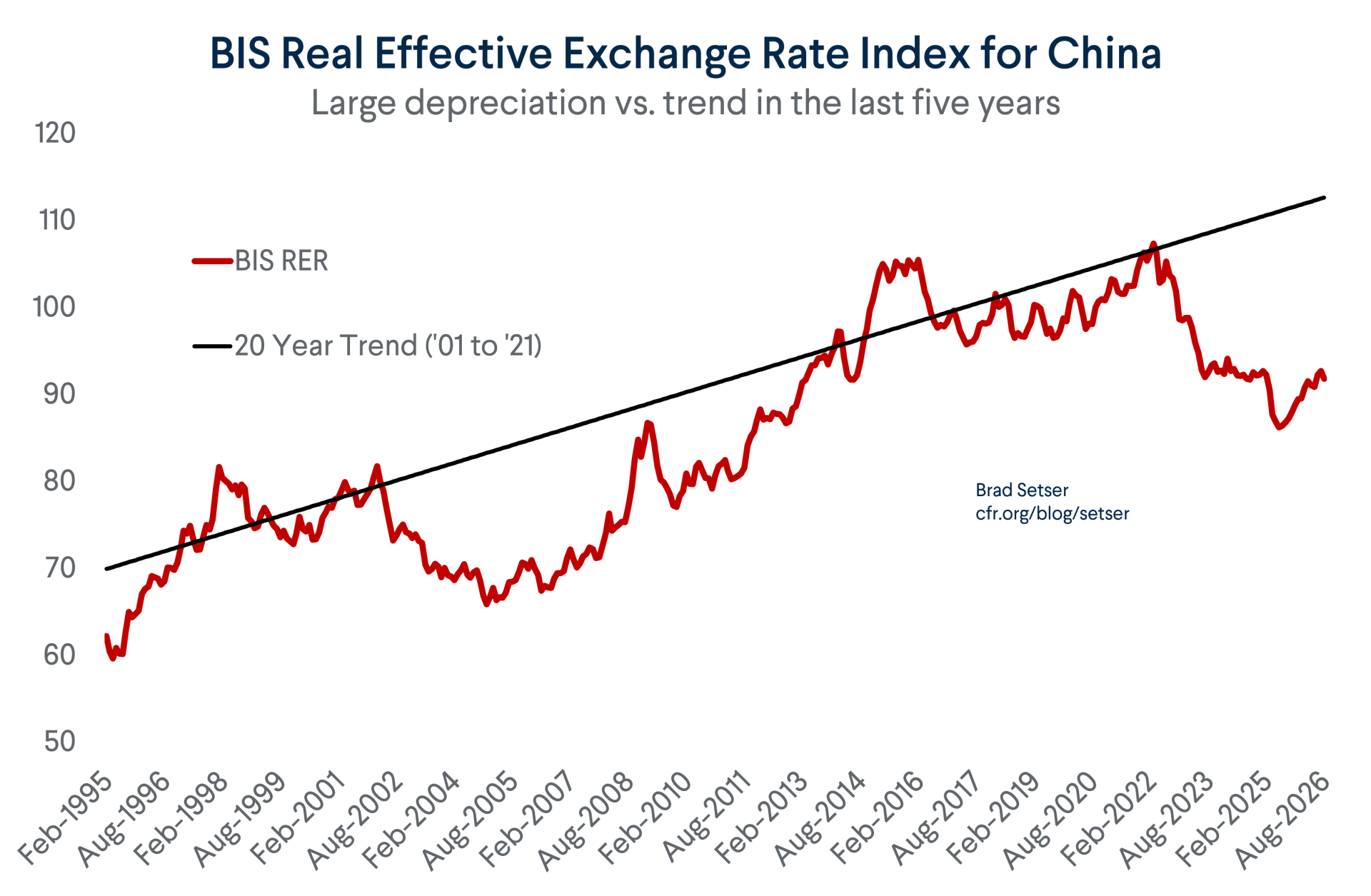
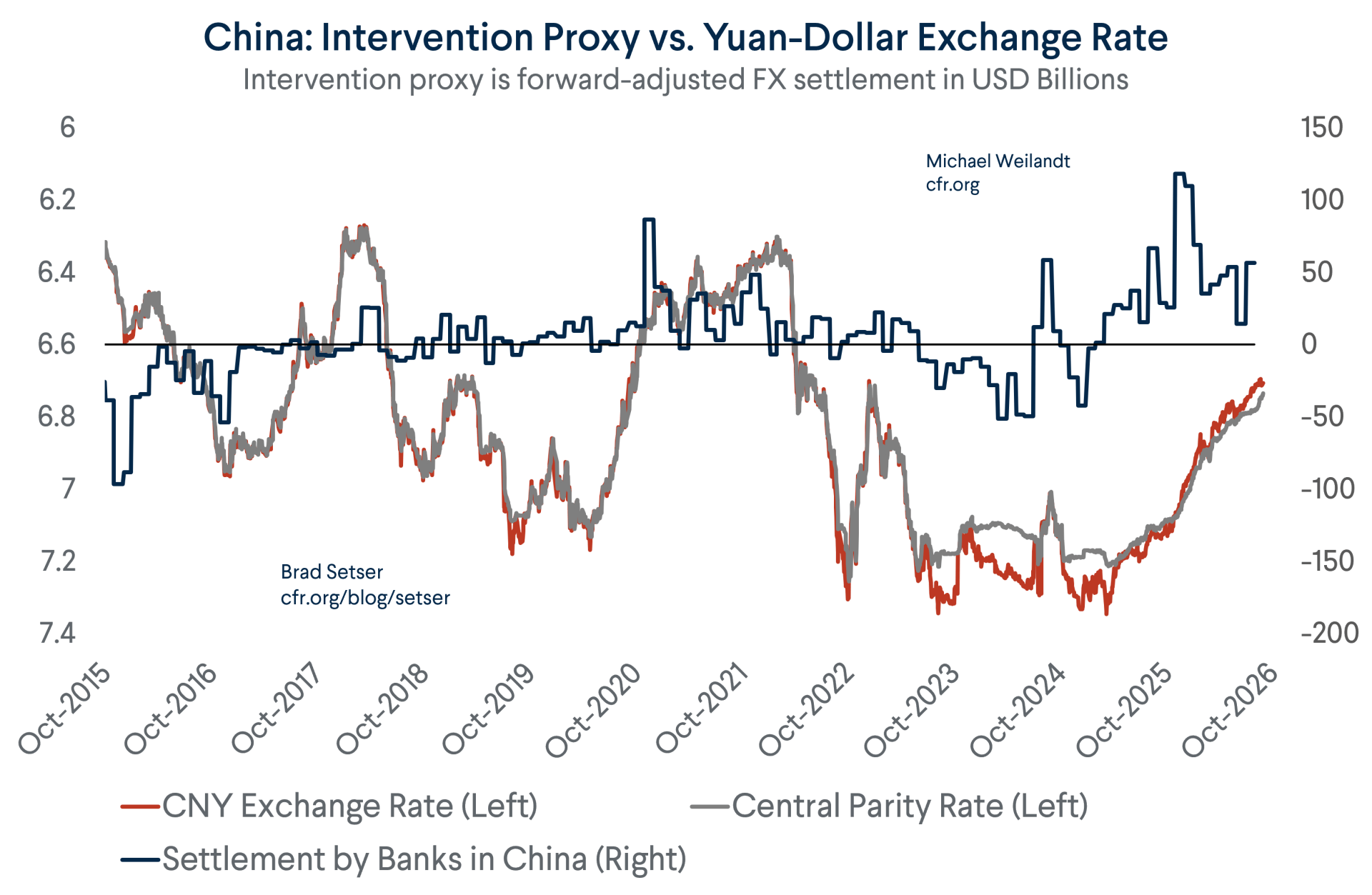
The fall in the nominal RMB over the course of 2022 and the first half of 2023 in nominal and read terms was simply a function of domestic macroeconomic weakness, and a growing rate differential. It wasn’t an active policy choice by China’s central bank.
Now, some might note that China’s currency doesn’t always move with rate differentials. The RMB didn’t consistently get pulled up when Chinese rates were higher than U.S. rates (2002-2020 generally speaking), and it has appreciated modestly since the middle of last year, even as the PBOC policy rate (the reverse repo rate) remained well below the U.S. policy rate.
China doesn’t have an open financial account. As a result, equilibrium in the foreign exchange market is thus driven far more by exporter conversion and current account flows than by rate differentials and financial flows.** That, together with China’s ongoing management of the exchange rate and a trade surplus that can generate significant inflows, means that the value of the RMB is much more of a policy variable under the independent control of the Chinese authorities than a simple byproduct of monetary and fiscal policies.
The modern IMF is reluctant to accept this conclusion. Its surveillance has generally ignored China’s currency management (even if that management is relatively obvious; see the data on FX settlement) and its recent comprehensive assessment of China’s economy completely ignored the balance of payments and exchange rate management.
But it is pretty obvious to the market, even if the PBOC, rather absurdly, officially insists that market now plays a decisive role in exchange formulation. I agree with Mark Sobel:
“The renminbi is still heavily managed and the authorities have acted to slow appreciation. The paper states that the PBoC phased out ‘regular’ foreign exchange intervention in 2017. But it has many means at its disposal to achieve the same effect through extensive capital controls, administrative guidance, signalling at the fix and deploying state-owned commercial banks. These means are heavily used. Thus, the word ‘regular’ must be taken with a pinch of salt. The comparison to Japan, which intervenes occasionally, is spurious – the yen largely floats freely in integrated global markets. The same cannot be said for the renminbi.”
In reality, the PBOC’s daily fix now plays the decisive role in the currency’s path, and the market is often a bet on how the PBOC’s management of the yuan will evolve.
That is clear from the lack of volatility in the yuan’s rate against the dollar. The yuan’s move down against the dollar in 2022 was a controlled 10 percent move, and the appreciation over the last 16 months has been even more controlled crawl.
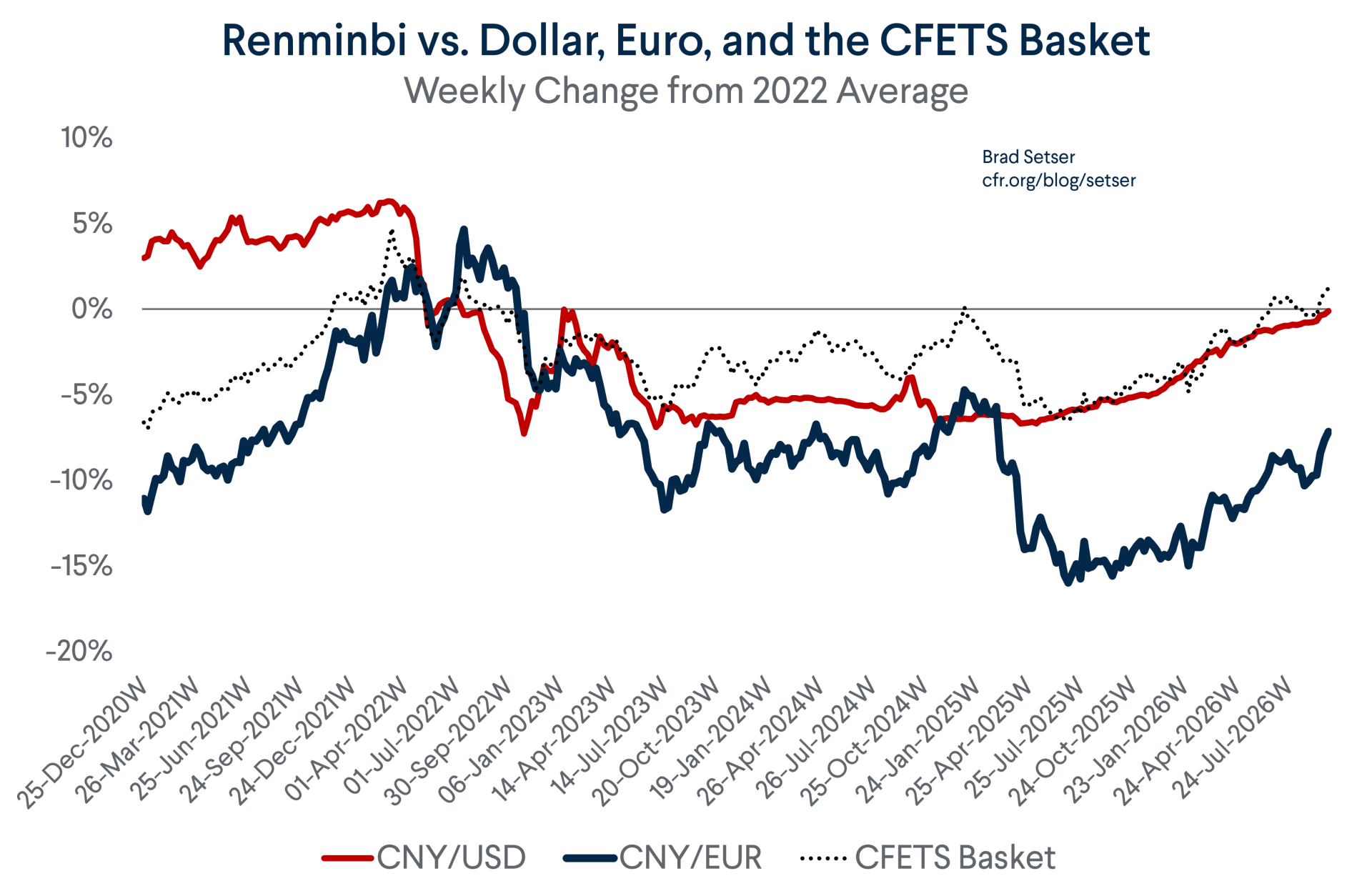
And the fact that the pattern of changes in the monthly FX settlement data looks exactly like the pattern of intervention of a central bank managing its currency around a tight band (the state banks in practice buy FX to keep the CNY from testing the strong side of the band, so there is an asymmetry in how the CNY is managed)
None of this would matter much if China’s economy was small. But that obviously isn’t the case. Nor would this matter much if China’s exports didn’t respond to changes in the RMB’s real (and nominal) value. But that is also not the case.
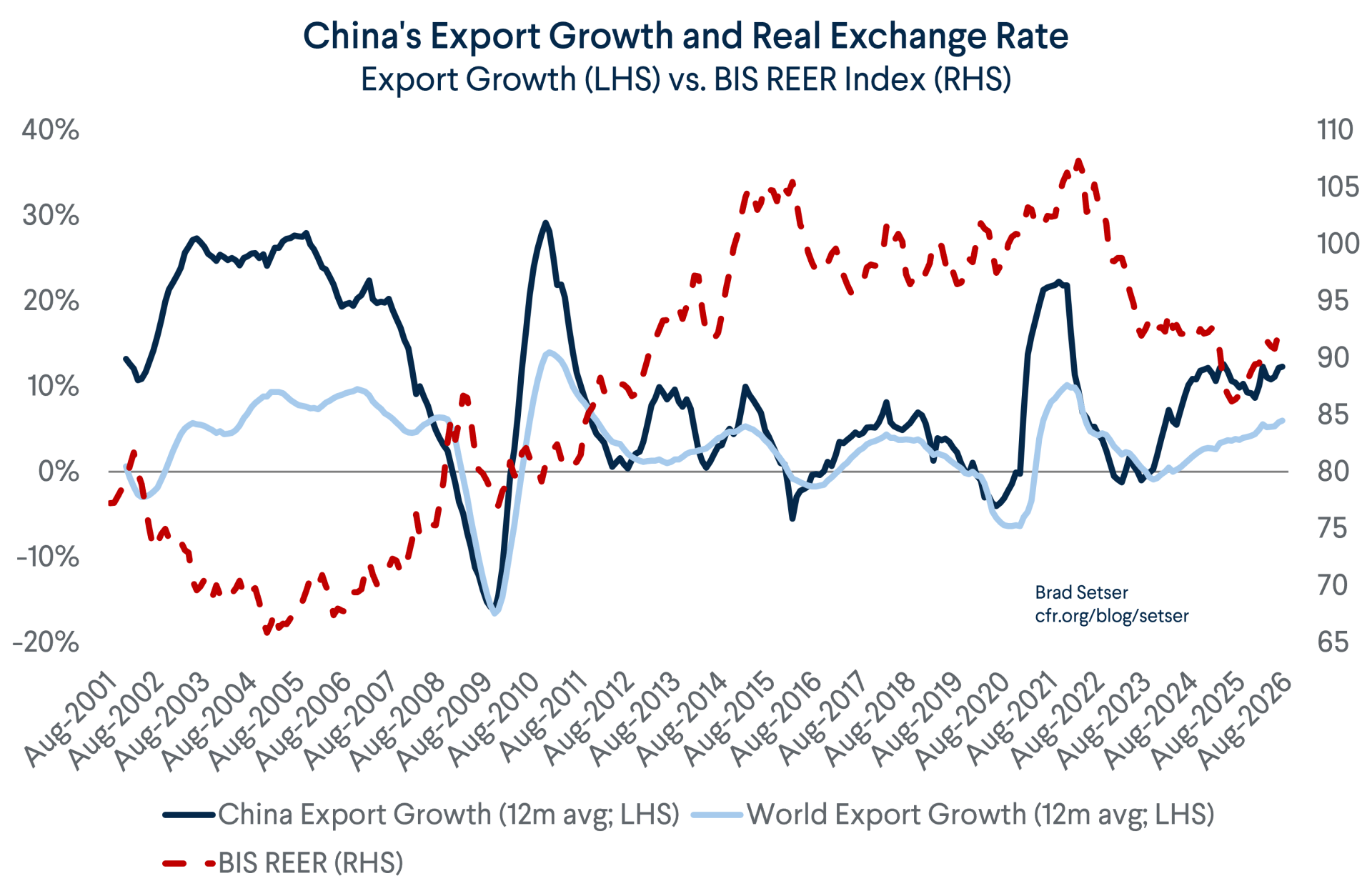
There is abundant evidence that China’s exports do respond to moves in the currency. Periods of RMB weakness have consistently been associated with periods of especially rapid Chinese export growth.
Chancellor Merz and President Macron got this right, even if macroeconomic issues haven’t yet figured prominently in the EU’s dialogue with China.*** As they note in their open letter to the European Commission:
“An appreciation of undervalued currencies towards a value more in line with fundamentals would help support the rebalancing of trade accounts with the EU in the short and medium term … European policy discussions focused on forging a common understanding of these exchange rate issues and their interaction with global imbalances would be useful.”
The best evidence that exports responded to changes in the currency, and not simply to changes in the path of China’s internal demand, is the acceleration in China’s export growth after the RMB’s depreciation over the course of 2022.
This is the killer chart.
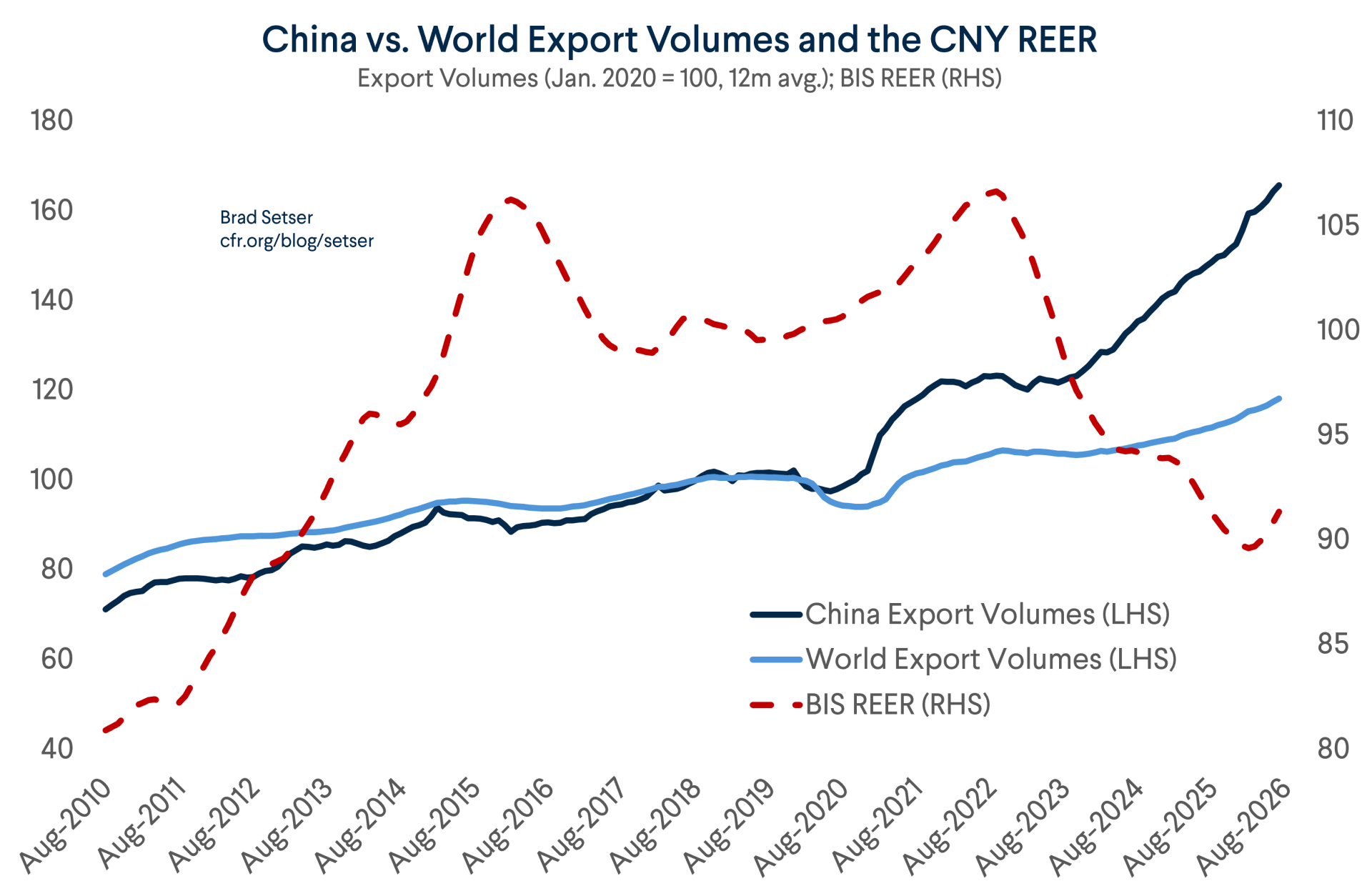
Now, you might ask: what of the acceleration in export growth in 2020 and 2021? That was pretty clearly tied to the global increase in goods demand that came with the pandemic and work from home requirements. It was expected to fade when the world economy normalized. But it didn’t. By 2023 Chinese export growth again topped global trade growth.
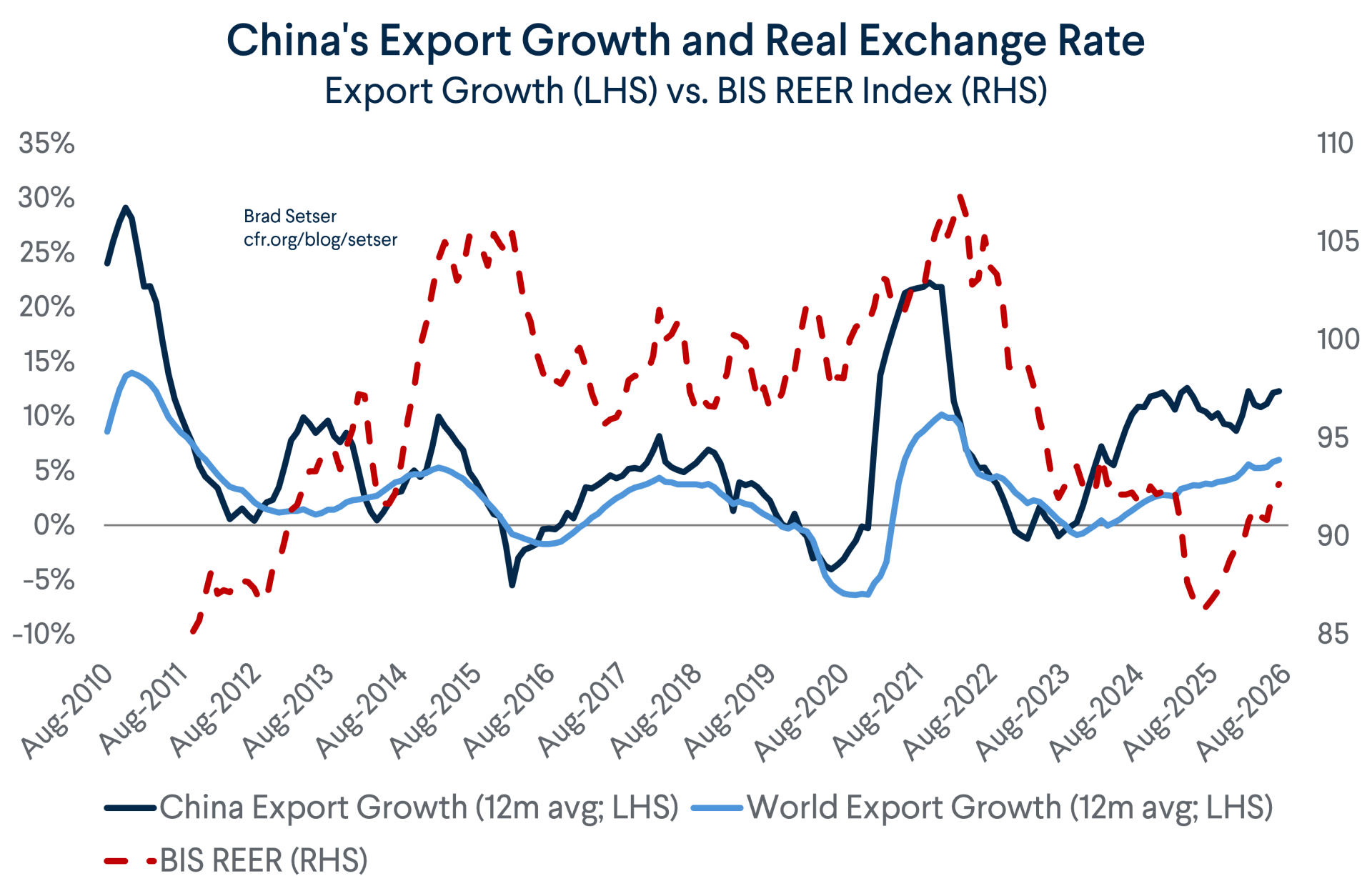
I would argue that neglecting the exchange rate was the key reason the IMF’s kept forecasting, incorrectly, that China’s current account surplus would fall (See this blog with Shahin Vallee). The IMF certainly didn’t warn that China’s property downturn and the RMB’s real depreciation risked a second China shock in its 2022, 2023, or 2024 surveillance reports.
Concretely, the weaker RMB appears to have contributed to a very large outperformance of China’s exports relative to global trade. See the following chart
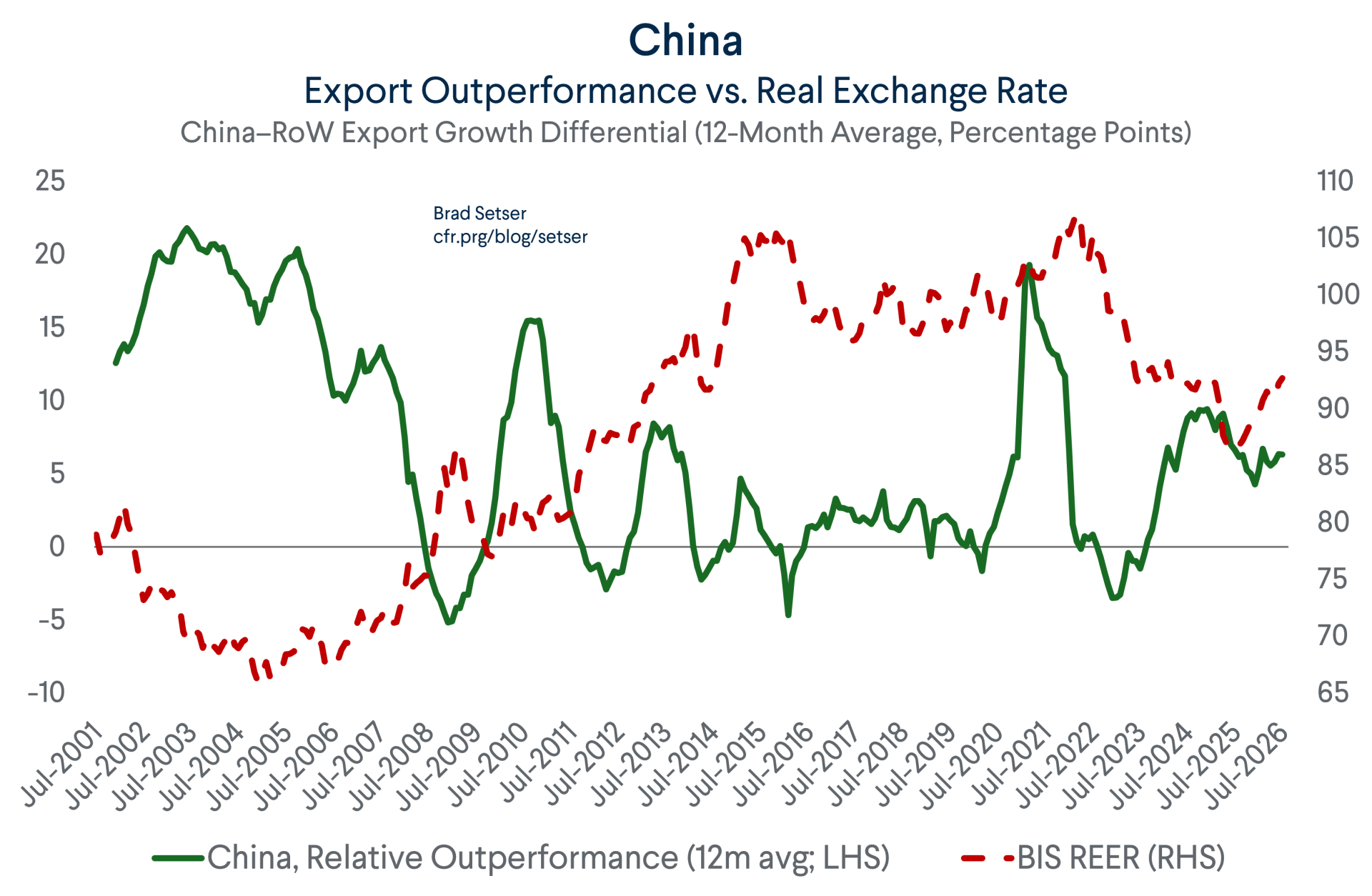
That incidentally also happened after the RMB followed the dollar down in 2003.
In both periods, there were significant structural shifts. The WTO accession in 2002, and the success of Chinese industrial policies in the “green” industrial sectors and autos in 2022. In both cses exports were turbocharged when structural shifts that should have resulted in a stronger currency were instead amplified by currency weakness.
No matter. Paul Krugman has noted that a country that is converging technologically with its trade partners should see a trend appreciation in its currency. China got the technological convergence, but not the real appreciation—at least not until this year. And the move since the middle of 2025 has corrected the depreciation of the RMB that occurred when the RMB followed the dollar down on liberation day, but not the structural overvaluation.
Now, there is an argument that exchange rate adjustment is too hot an issue to make it a priority.
The PBOC isn’t interested it seems.
And some believe that in the interest of comity and good relations with China, the IMF should mirror the PBOC’s views. After all a stronger RMB would slow China’s exports and thus slow China’s economy at a time when China needs export growth to escape deflation and generate employment. Or so the argument goes. Concerns about “external balance“ and the negative global spillovers from China’s rising goods surplus should be ignored and the Fund’s sole focus should be on policies that lead to internal balance. That provides one rationale for the Fund’s ongoing decision to essentially ignore the contentious issue of the PBOC’s ongoing exchange rate management.
That argument, however, assumes that China’s economy is small and thus China’s external surplus can safely be ignored because it isn’t a drag on the growth of the IMF’s other members.
And it isn’t clear that China is more interested in having a negotiation over its level of basic pension benefits or the size of its fiscal deficit (where the IMF continues to make timid recommendations that would not move the needle—and certainly wouldn’t meaningfully reduce China’s external surplus) than a discussion over its currency practices.****
Back in the world of fixed but adjustable exchange rates, there was an expectation (not always met to be sure) that surplus countries would allow their currencies to strengthen to bring their economies back into external balance, and that other policy tools would be used to ensure internal balance.
I would argue that China’s exchange rate (against both the dollar and the basket) has many similarities to the old world of fixed but adjustable currencies. True, it moves on a controlled path when it moves between different levels rather than jumping up and down. But the PBOC does frequently target a level, and that targeted level does change over time.
I would further argue that steps like the recent tariff rate quota that will limit China’s exports of hybrid cars to Europe to around 350,000 units next year (up from 2025, but well below the 800,000 units of 2026) aren’t going to address the underlying imbalance on their own. They can provide a bit of a buffer for specific sectors.
But that buffer, while necessary, won’t address the broad-based erosion of manufacturing capacity outside China. This erosion will persist as long as an undervalued RMB sends the entire world a signal to use China as its production base.
The new system of managed trade that is emerging in autos would need to be progressively expanded to an ever-increasing set of sectors if protection is used as a substitute for both domestic reform in China and exchange rate adjustment.
That is now the direction of travel, but it doesn’t address the underlying systemic issues.
Incidentally, those who believe the path of internal demand is critical to rebalancing and that exchange rate moves are secondary need to explain how an acceleration in domestic demand would, on its own, lead China’s external accounts to adjust. One important, stylized fact about China is that domestic demand growth is no longer feeding over to import growth (ex-gold, that is).
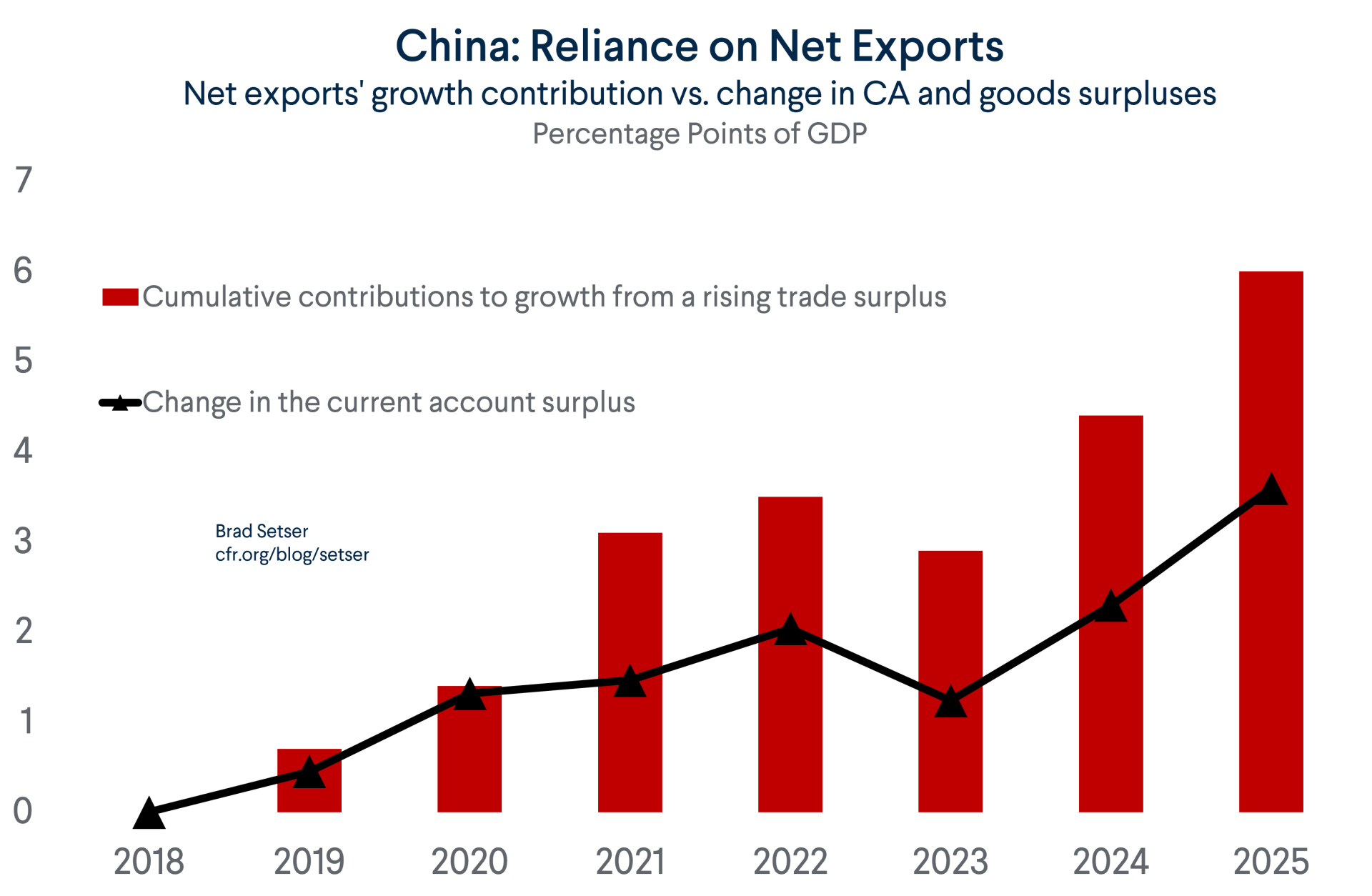
Bottom line: China, which needs a 1.5 percentage point contribution from net exports every year, is on a collision course with its trading partners without a currency correction that provides the basis for more balanced trade even in the absence of trade restrictions.
And there isn’t a realistic path towards balance that doesn’t involve a stronger RMB; there aren’t, as Paul Krugman once put it, immaculate transfers.
* That downturn shows up in domestic deflationary pressure, and weak job growth/high rates of (at least youth) unemployment. China, in other words, isn’t in “internal balance.” I really liked the report from Kamakshya Trivedi and Hui Shan of Goldman Sachs arguing China needs two tools to hit two targets (internal and external balance).
** To be sure, rate differentials matter for exporter conversion—but so does the expected movement of the RMB. The market understands this better than the Fund. The Chen and Suwanapruti (Goldman Sachs) note uses a framework similar to mine to describe the CNY’s moves in Q3:
“In our view, sizeable FX inflows have continued to support RMB appreciation despite unfavorable interest rate differentials, as strong export receipts and increased exporter FX conversions have outweighed portfolio outflows. Our estimated FX conversion ratio rose to 63% in August, compared with around 45% in normal years, likely reflecting a shift in market expectations from RMB depreciation to appreciation.”
*** Šefčovič has jurisdiction over trade policy (narrowly defined), but not broader macroeconomic policies. Europe’s institutional architecture for exchange rate coordination is not well-developed.
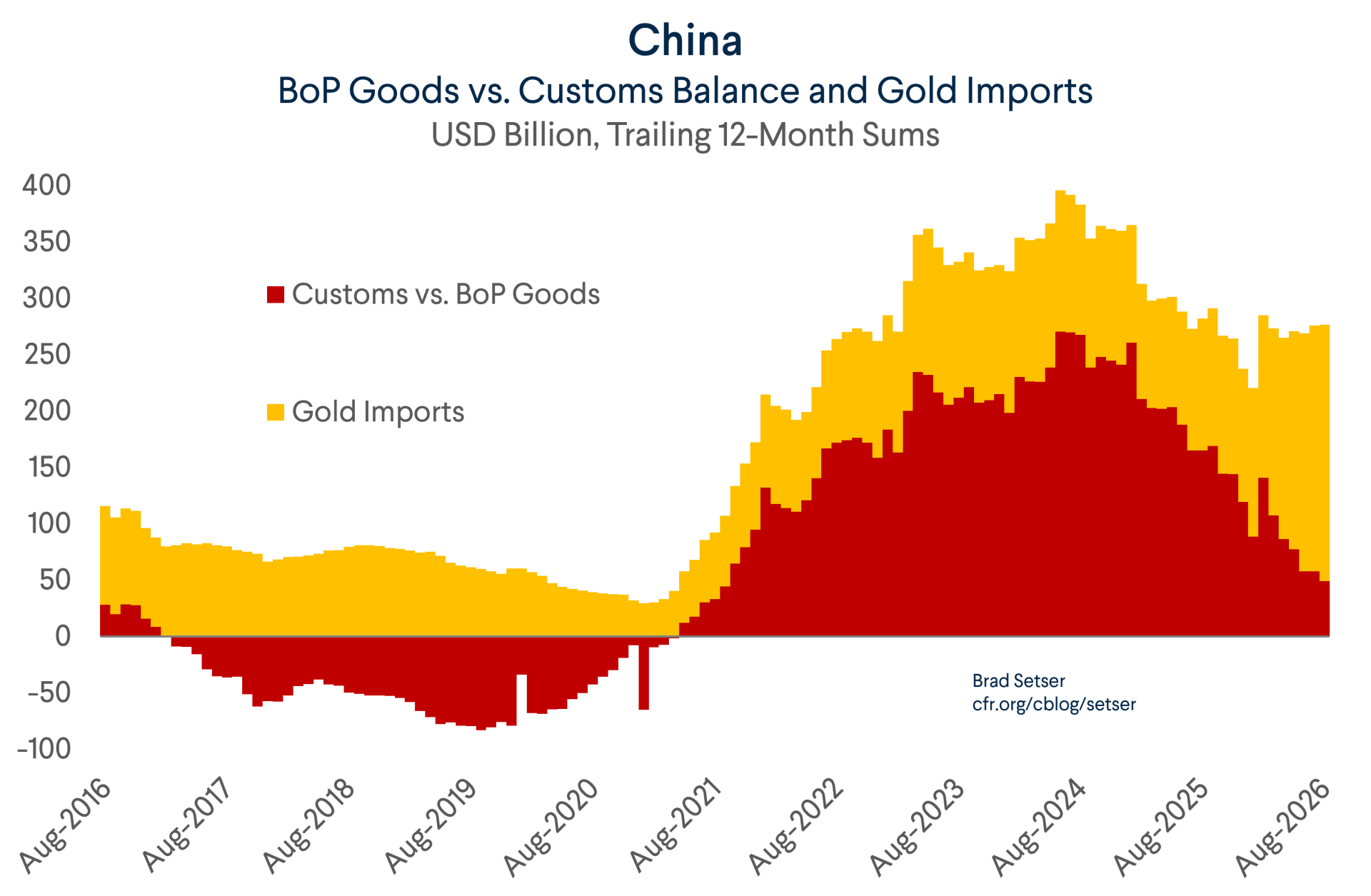
**** The current account surplus is no longer masked to the same extent as in 2023 and 2024, as SAFE has fiddled with its BoP methodology once again (per the Federal Reserve) and the BoP goods surplus is no longer significantly below the customs goods surplus. Of course, there are still problems in the data—the deficit in the investment income account most obviously, but also the recent surge in “customs” gold imports.
This work represents the views solely of the author(s). The Council on Foreign Relations is an independent, nonpartisan membership organization, think tank, and publisher, and takes no institutional positions on matters of policy.