Is Brazil the Exception? Explaining Latin America’s Rightward Political Shift
Latin America has experienced a rightward political shift in recent years, driven largely by voters’ growing concerns over crime, security, and the economy. Experts say the reelection of left-wing President Luiz Inácio Lula da Silva in Brazil bucks this trend, but doesn’t halt it.
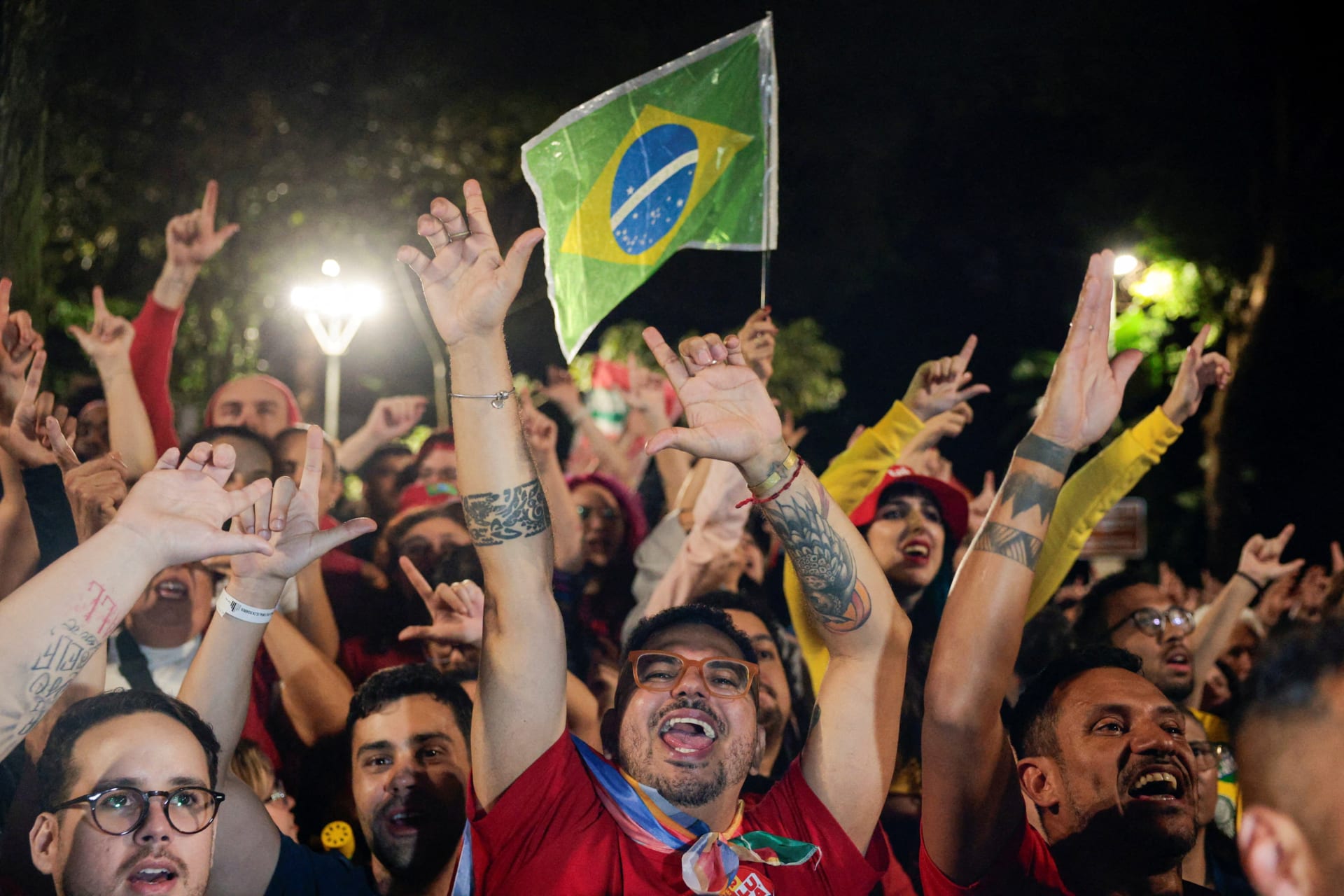
The momentum behind Latin America’s rightward political shift appeared to have faltered after left-wing incumbent Luiz Inácio Lula da Silva won a historic fourth term in Brazil’s runoff, defeating right-wing Senator Flávio Bolsonaro, son of former President Jair Bolsonaro. Yet Lula’s reelection may be an exception in a region that has increasingly rejected the left-leaning politicians it turned to in the early 2020s.
“Lula’s victory is an outlier from the anti-incumbency trend across Latin America,” Shannon K. O’Neil, CFR senior vice president of studies and Maurice R. Greenberg chair, said. However, right-leaning parties are set to control a majority of seats in Brazil’s congress for the first time in decades, she told CFR, underscoring the persistence of the region’s broader rightward shift.
Since Daniel Noboa and Javier Milei won elections in Ecuador and Argentina, respectively, in late 2023, a growing number of right-wing candidates have taken power across the region. This trend is widely considered a reversal of the so-called second Pink Tide of the early 2020s, when a wave of left-wing and progressive candidates won races over growing concerns about economic and social inequality and the fallout from the COVID-19 pandemic.
However, experts say this most recent conservative shift may not reflect voters’ ideological conversion but could instead stem from their frustration with left-wing governments that they feel have failed to address persistent problems. “The answers offered by right-wing candidates are often simplistic but they resonate with voters,” Michael Reid, former Americas editor at the Economist, told CFR. He pointed to widespread concerns over “mediocre economic growth, a lack of opportunity for young people, and the poor state of public services.”
The region’s rightward political shift also comes at a consequential moment for U.S.-Latin America relations, as U.S. President Donald Trump, who has endorsed some of the region’s right-wing candidates, looks to strengthen Washington’s ties with the hemisphere.
What’s driving Latin America’s rightward shift?
Experts say several issues are influencing voters to choose right-wing or conservative candidates at the ballot box, including:
Crime and security. Although overall homicide rates in Latin America fell in 2025, violence has risen in several countries—notably Colombia, Ecuador, and Peru—driven in part by the expansion of transnational drug trafficking, cartel-related fighting, and an increase in organized crime. Extortion has also become a major concern. In response, many right-wing candidates campaigned on tough-on-crime platforms, including proposals to deploy the armed forces for domestic public security and build maximum-security prisons.
Brian Winter, editor-in-chief of Americas Quarterly, attributes the growing focus on law and order to two trends: the explosion of cocaine production across South America, which the UN Office on Drugs and Crime reports has quadrupled since 2014, and the influence of El Salvador’s hard-line security model under President Nayib Bukele. “The progress that El Salvador has made in dramatically reducing homicides and other crimes has captured the imaginations of voters all over Latin America,” Winter said. “Maybe they don’t want an exact copy of Bukele’s policies, but they believe that if they elect the right person, they won’t have to live in fear anymore,” he added.
Corruption. Corruption consistently ranks among the top issues in opinion polls across Latin America and remains one of the region’s most persistent challenges. In a 2025 survey by the Organization for Economic Cooperation and Development, 49 percent of respondents said corruption was one of the three biggest challenges facing their country, while nearly half expressed low or no trust in their national government. Corruption scandals are also common, with many leaders and other high-ranking officials across the region facing legal troubles.
Economic frustration. Economic growth has lagged in Latin America. Between 2014 and 2023, the region experienced a second so-called lost decade of economic growth during which the average annual GDP growth rate was less than 1 percent. In an October 2026 world economic outlook, the International Monetary Fund projected that Latin America will grow only 2.3 percent in 2026 and 2.5 percent in 2027, below global growth projections of 3.1 percent and 3.4 percent, respectively. The region is also battling persistent inflation, which economists attribute to the energy and commodity shock primarily caused by war in the Middle East.
Additionally, a lack of opportunity has fueled public dissatisfaction with incumbent governments. Around 55 percent [PDF] of Latin American workers are employed in the informal economy—which includes food delivery and ride-hailing drivers—meaning they lack official work contracts, employee benefits, and social security.
Inequality. Latin America and the Caribbean is the most unequal region in the world, with the top 10 percent of earners making, on average, twelve times as much as the poorest 10 percent, according to the Inter-American Development Bank. Although inequality across the region has fluctuated over time, it worsened during the COVID-19 pandemic, as tens of millions of people fell into poverty. Latin America also faces an affordability crisis, driven by rising housing costs, high inflation, and stagnant incomes.
Is this a lasting political realignment?
Latin American politics have long acted like a pendulum, swinging between left-wing progressive movements and conservative or right-wing backlashes. This has especially been the case since 1998, when Venezuela’s election of Hugo Chávez kicked off a nearly two-decade-long Pink Tide movement that saw a wave of left-wing and center-left electoral victories across the region. This wave, which was largely a response to the market-oriented reforms of the 1990s, was later pushed back by a surge of conservative gains.
The shift also reflects changes in voters’ priorities. “The focus on crime and security definitely favors the right, especially since leaders on the Latin American left have for the most part been unable to convince voters they are serious about tackling crime,” Winter said. Even voters who do not identify ideologically with the right may gravitate toward right-wing candidates if they believe those candidates are better equipped to tackle insecurity, he explained.
Whether this most recent rightward shift will last is unclear. “Clearly anti-incumbency is a factor,” Reid said. “Since the end of the commodity boom, Latin Americans have generally voted for the opposition because they feel ill-served by their governments.” He noted that the longevity of the latest shift will depend in large part on how the new right-wing governments perform and whether they can deliver on their promises. “So far, most have disappointed,” Reid said, pointing, for example, to the lack of cohesive security strategies by the new presidents of Chile, Colombia, and Peru.
Failures on the economic and security fronts could lead the political pendulum to “start swinging back left again,” Winter said, adding that this could happen as early as Argentina’s October 2027 election. Next year will also see consequential general elections in El Salvador and Guatemala.
O’Neil offered a similar warning. “In Latin America’s other democracies, new right-leaning presidents will be judged on what they can deliver at home,” she said.
What is the role of the U.S. and China in the region’s politics?
Experts say Latin America’s political shift is occurring as the Trump administration seeks to assert greater U.S. influence in the region while countries are also seeking to maintain deep economic ties with China.
The Trump administration has leveraged economic measures as a pressure tactic in what experts have dubbed the Donroe Doctrine—a foreign policy framework that emphasizes U.S. regional dominance and reflects a more transactional approach to diplomacy. In October 2025, for example, the administration announced that the Treasury Department was providing Argentina with a $20 billion currency swap to prop up its ailing peso, just weeks ahead of the country’s legislative elections.
For other countries, U.S. pressure has come in the form of tariffs, as is the case with Brazil, where Trump linked steep tariffs to the country’s treatment of former President Jair Bolsonaro, who was convicted on charges relating to plotting a coup to overturn his 2022 election loss and is currently under house arrest.
Trump has also publicly endorsed several right-wing candidates in the region, including Honduras’s Nasry Asfura and Colombia’s Abelardo de la Espriella, both of whom went on to win their respective elections. But Winter also noted a “two-way street” in terms of endorsements, “with presidents in Latin America also giving endorsements in other races around the region and even in the United States,” he said, pointing to several Latin American leaders’ backing of U.S. Representative Maria Elvira Salazar (R-FL) ahead of the U.S. midterm elections in November.
By contrast, China’s “political efforts so far appear to have been centered on building its soft power rather than backing particular political leaders,” Reid said. Beijing has cultivated close ties with Latin American countries for decades, primarily through foreign direct investment and energy and infrastructure projects. Peru, for example, has been a long-standing economic and diplomatic U.S. partner, but in 2024 welcomed a Chinese-backed megaport on its western coast. China also maintains deep economic relations with other countries in the region, including Brazil, Chile, and Venezuela.
This work represents the views solely of the author(s). The Council on Foreign Relations is an independent, nonpartisan membership organization, think tank, and publisher, and takes no institutional positions on matters of policy.