Six Experts on the Significance of Trump, Xi, and Putin’s First Trilateral Meeting
A first-ever trilateral summit put the leaders of the United States, China, and Russia in one room as the Ukraine war and the U.S.-China trade truce loom. CFR experts explore what came out of the meeting and what comes next.
By experts and staff
- Published
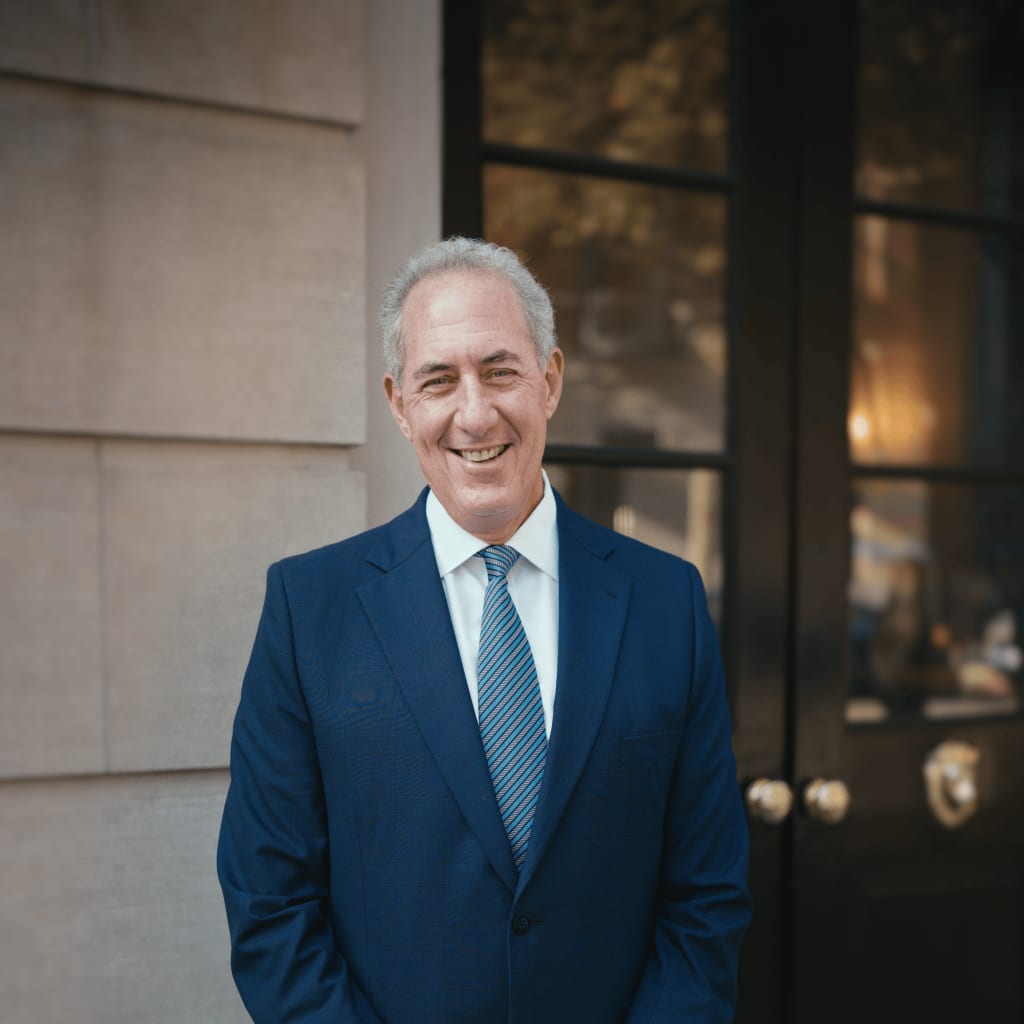 Michael FromanCFR ExpertPresident, Council on Foreign Relations
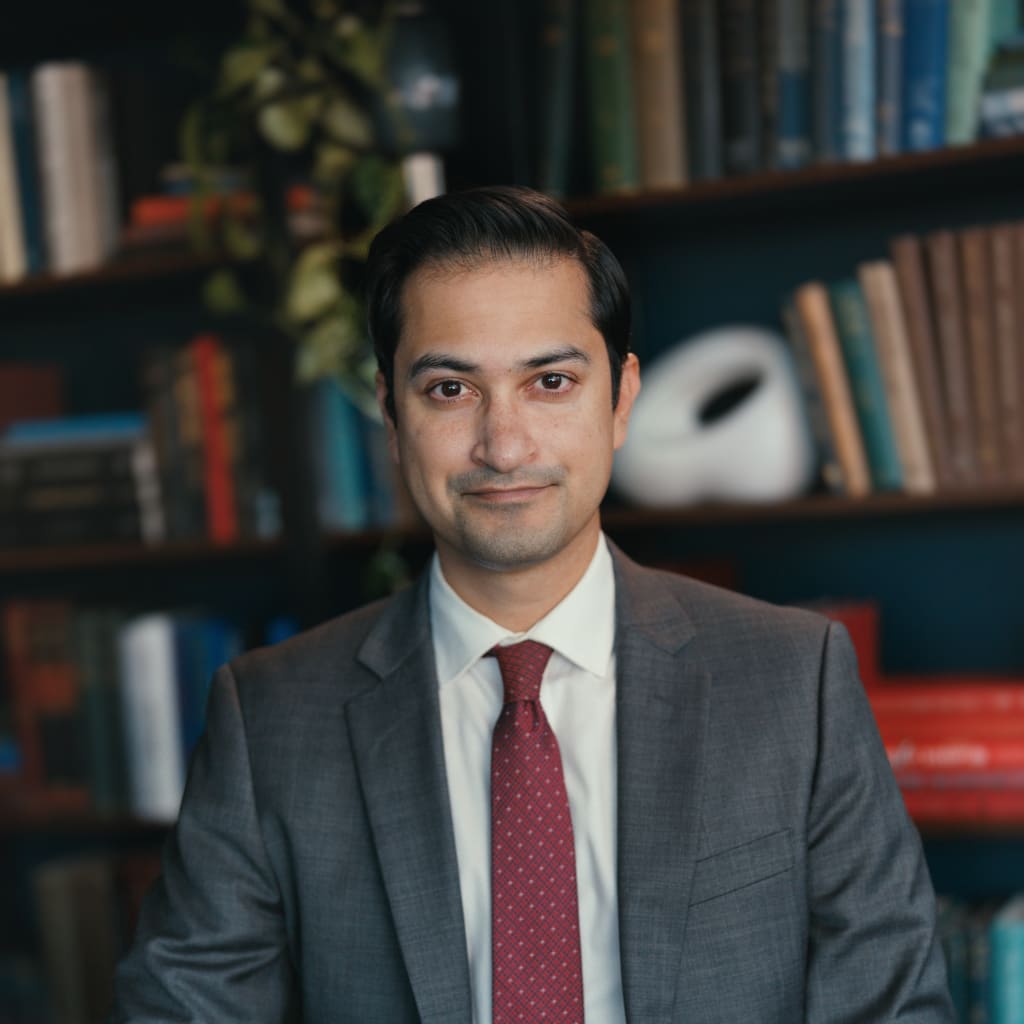 Rush DoshiCFR ExpertC.V. Starr Senior Fellow for Asia Studies and Director of the China Strategy Initiative
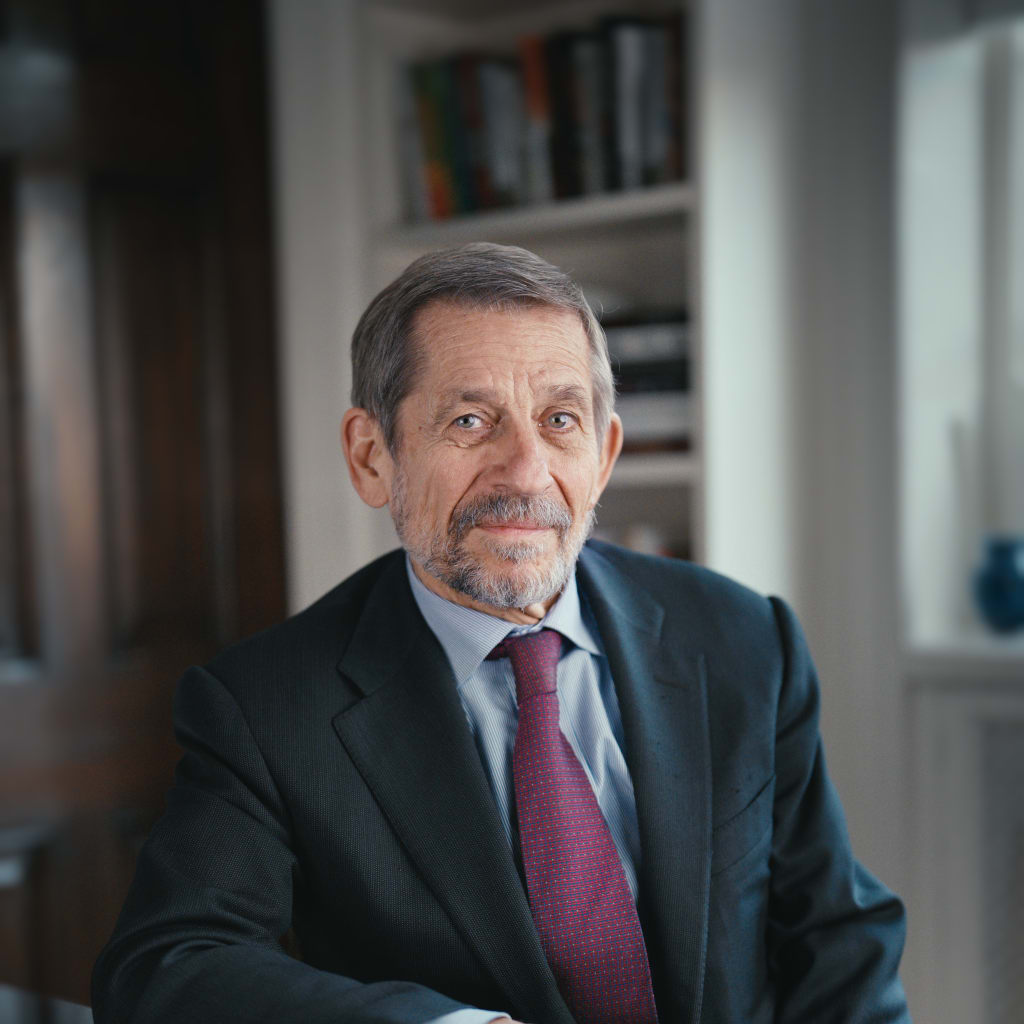 Thomas GrahamCFR ExpertHenry A. Kissinger Distinguished Fellow
 Liana FixCFR ExpertSenior Fellow for Europe
 Erin D. DumbacherCFR ExpertStanton Nuclear Security Senior Fellow and Director of the Defense and National Security Program
 Chris McGuireCFR ExpertSenior Fellow for China and Emerging Technologies
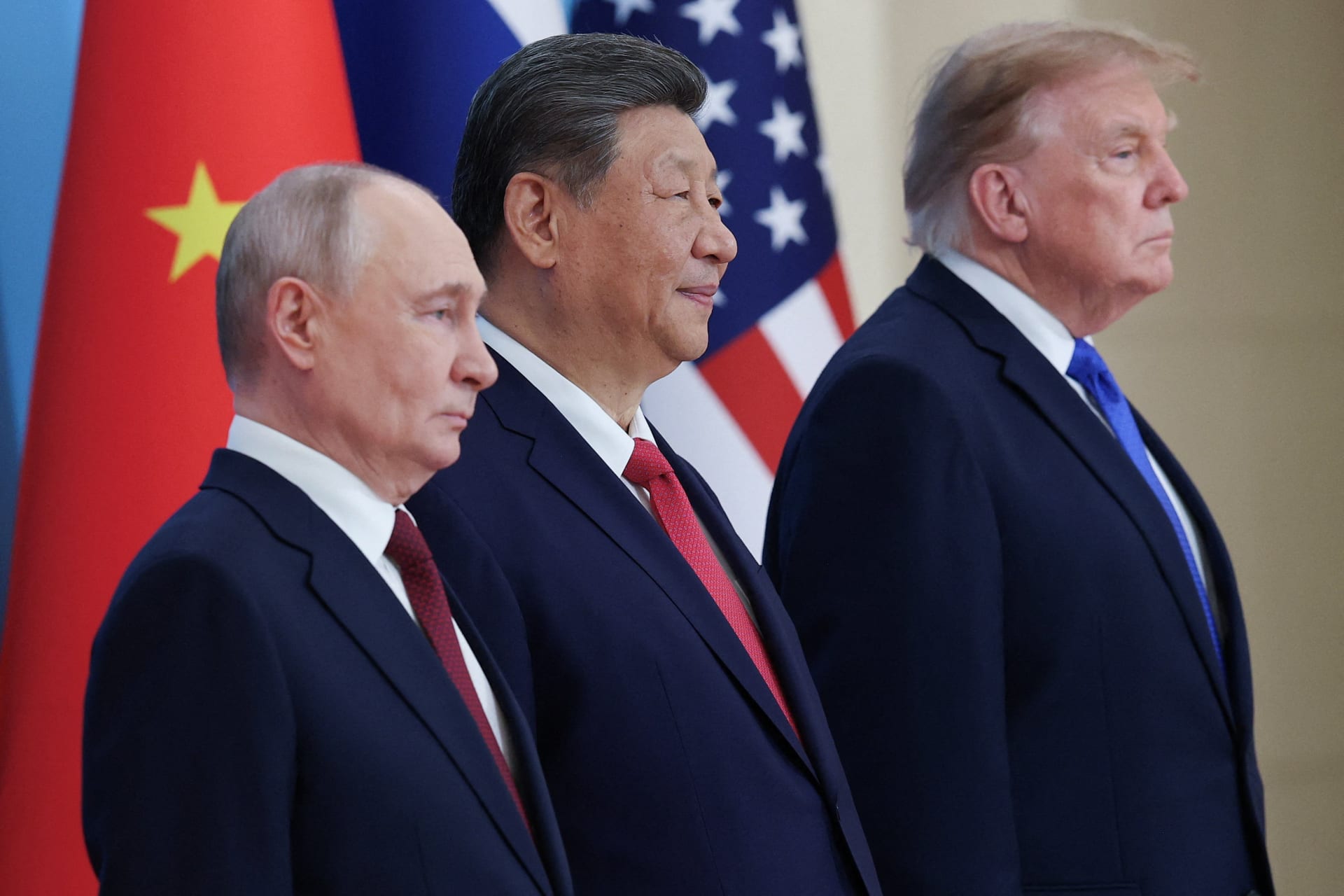
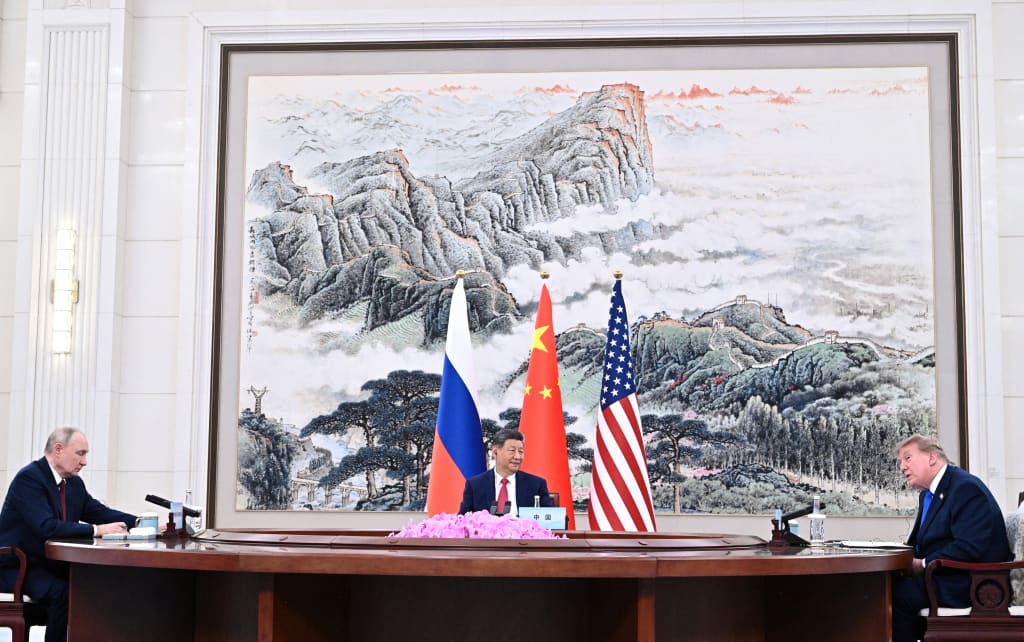
President Donald Trump, President Xi Jinping, and President Vladimir Putin sat down together in Shenzhen during the Asia-Pacific Economic Cooperation (APEC) conference on Thursday for the first trilateral summit between the leaders of the United States, China, and Russia. “Our positive interaction is not optional, but a must,” Xi said in opening remarks. Trump called the three “uniquely positioned” to tackle the globe’s most difficult issues, including the reduction of the world’s nuclear arsenals.
But whether the meeting bears real fruit remains to be seen. What came out of the meeting, and what it means for nuclear arms control, the war in Ukraine, and the trade truce, is still being sorted out. CFR President Michael Froman and council experts Rush Doshi, Thomas E. Graham, Liana Fix, Erin Dumbacher, and Chris McGuire weigh in on what they believe mattered most.
- The big picture: much ado about nothing, at least for now
- Why Xi hosted, and what he got out of it
- What Putin gained in his return to the global stage
- How the trilateral affects Europe and Ukraine
- Did the nuclear arms control talk have substance?
- Did the U.S.-China dynamic shift after the export controls upheaval?
- What to watch
What the Sides Are Saying
The opening remarks:
- Trump: “No problems were ever solved under the old school refusing to talk about them. So, no peace was ever forged by declining opportunities for engagement and speech.”
- Xi: “As leading world powers and permanent members of the UN Security Council, our three countries must set a worthy example, working jointly to respond to global challenges, upholding peace and stability throughout the planet, and increasing our contribution to the cause of human progress.”
- Putin: “We were among the founding members of the United Nations and therefore bear a special responsibility for preserving and strengthening the system of international law that took shape with the establishment of this universal organization…”
After the meeting:
- Joint Declaration: The three countries released the four-point “U.S.-Russia-China Heads of State Declaration toward Peace” in which the leaders outlined plans to reform the United Nations, boost the production and supply of refined petroleum products “for the benefit of all nations,” uphold the “state consent and respect for immunities of state officials,” and “conduct a dialogue on reducing nuclear risks and preventing the proliferation of nuclear weapons.”
WHAT CFR EXPERTS MAKE OF IT
The big picture: much ado about nothing, at least for now
Michael Froman is president of the Council on Foreign Relations.
After President Trump’s visit to the APEC conference, we can all breathe a sigh of relief that allusions to Yalta 2.0 were overblown. Ukraine and Taiwan, though not at the table, were also not on the menu. Optics took precedence over substance. The question is whether this triumvirate has legs and whether it will evolve into a more substantive mechanism, at least during this administration.
Although it was overshadowed by the trilateral in Shenzhen, Trump’s trip to Manila was arguably more consequential for the United States’ position in the world. The United States advanced trade agreements with the Philippines and Thailand, and Trump met with Canadian Prime Minister Mark Carney. Perhaps most significantly, in the first meeting of the Quad (the United States, Australia, India, and Japan) in Trump’s second term, the countries reached agreements to secure supply chains of critical minerals. Trump said the United States would have “everything we need” on rare earths in ten months.
With the fallout from the Nvidia affair and the midterms causing a recalibration in U.S. strategy vis-à-vis China, one open question is whether the fragile trade truce between Washington and Beijing is at risk. Xi could ramp up rare-earth or other supply-chain restrictions in response to stricter enforcement of U.S. chip controls. We’ll have a chance to assess the next chapter in that drama at the upcoming Group of 20 (G20) summit in Florida next month.
Why Xi hosted, and what he got out of it
Rush Doshi is the C.V. Starr senior fellow for Asia studies and director of the China Strategy Initiative at the Council on Foreign Relations.
The trilateral with Russia and China presented a powerful image. Xi Jinping at the center of a large room, flanked to the sides by the presidents of the United States and Russia whom he had convened. For most, the image was a suggestion that the world increasingly revolves around Beijing’s power and preferences. And for U.S. allies in particular, it was unsettling because it suggested that Washington will prioritize engagement with the other great powers over that with its own partners. There was a concrete measure of this prioritization too. The trilateral with Putin and Xi ran twice as long as Trump’s Quad meeting in Manila two days earlier with Australia, India, and Japan.
These symbolic costs were not offset by any substantive gains. The trilateral summit produced little of substance. The so-called joint statement left out the most important questions, such as Ukraine and Iran. Nor did Trump’s bilateral summit with Xi produce much progress either, particularly on the looming expiration of the trade truce in January. That truce now faces new strains. Beijing has throttled the supply of rare earths, contrary to the truce terms, and Washington now has an incoming Congress more inclined to discipline Trump’s accommodating approach and to push for export controls in the wake of the Nvidia scandal.
Beijing has always understood the current detente to be a tactical pause rather than true strategic stability, and it has used the time better than Washington. Over the past year, it has throttled rare-earth supplies, tightened its export control regime, mapped the chokepoints of others so it can squeeze them, and stepped up its coercion of Japan and the Philippines. Xi may leave Shenzhen with what he thinks is a stronger hand, having hosted Trump and convened a landmark trilateral. But as tensions rise, he may soon face a counterpart with less room, and less reason, to keep folding.
What Putin gained in his return to the global stage
Thomas E. Graham is the Henry A. Kissinger distinguished fellow at the Council on Foreign Relations.
Russian President Vladimir Putin got what he wanted: a photo of himself alone with the leaders of the world’s two genuine superpowers, the United States and China. That image validated Russia as a great power and him as a global leader. Along with the family photo with twenty other leaders, it graphically underscored that the Europeans’ effort to isolate Russia diplomatically had failed. Not all was positive, however. Chinese President Xi Jinping made it clear that Putin is not his or U.S. President Donald Trump’s equal: Xi did not personally greet him at the airport, as he did the American leader.
Meanwhile, the trilateral, as expected, produced little on substantive issues. In particular, the joint statement said nothing about the Russia-Ukraine war, which was the issue Putin had originally proposed for discussion. That matter did, however, lie at the center of Putin’s earlier bilateral meeting with Trump. Nothing so far suggests that they made any progress on resolving the territorial issues and security guarantees for both Russia and Ukraine that are essential to ending the conflict. That too was as expected.
How the trilateral affects Europe and Ukraine
Liana Fix is a senior fellow for Europe and leads the Securing Ukraine’s Future Initiative at the Council on Foreign Relations. She is the author of Germany Rearmed: The Return of War and the End of Illusions.
The trilateral meeting has enhanced Russia’s position on the world stage as a great power on par with the United States and China while yielding few actual results in return. To the relief of Europeans, the communiqué that followed the summit has not included any concessions on Ukraine or European security, and the topic does not seem to have been featured prominently in talks. Ukraine’s supporters have gathered in Berlin as a counterpoint to the trilateral summit while it was underway—a strong signal against perceptions of the trilateral summit as a new Yalta (a division into spheres of influence).
The most promising outcome from the final statement could be the pledge to engage in dialogue on reducing nuclear risks and preventing the proliferation of nuclear weapons. The United States has long demanded that China should be included in nuclear arms control discussions given its expanding nuclear arsenal, a demand that China used to reject. “Reducing nuclear risks” is far from nuclear arms control, but still welcome.
Did the nuclear arms control discussion have substance?
Erin D. Dumbacher is the Stanton nuclear security senior fellow and director of the Defense and National Security Program at the Council on Foreign Relations.
It’s a positive sign, of course, that these leaders intend to avoid nuclear war. But as expected when the parties had no significant lower-level preparation, the only meaningful statement on nuclear weapons that the three could agree to was to reuse a statement that they have used before and the world has heard for more than forty years. Past nuclear treaties like New START have had chapters of carefully crafted dos and don’ts, verification measures including on-site inspections, and limits on arsenal size. This statement is far from meaningful arms control. But it’s still a reasonable down payment on stability.
It is notable that they agreed to continue talking on both reducing nuclear risks—pointing to themselves and other states that already have weapons—and proliferation, which would stop the spread of nuclear weapons. We will have to wait and see what comes of such dialogue. Trump is concerned about Iran, but Putin and Xi will have U.S. allies in mind. They don’t want Germany, Japan, Poland, or South Korea to consider building their own nuclear arsenal if U.S. commitments to defend them fall away.
Did the U.S.-China dynamic shift after the export controls upheaval?
Chris McGuire is a senior fellow for China and emerging technologies at the Council on Foreign Relations.
Trump’s trip to China is unlikely to result in any larger trade breakthrough, nor should it. The national security concerns underlying U.S.-China trade tensions on technology issues are only rising as artificial intelligence (AI) rapidly becomes more capable. As a result, both countries are claiming a commitment to upholding the trade truce agreed to in Busan last year, but are simultaneously kicking each other under the table.
Chinese exports of rare earths to the United States and allied countries remain down, and China is continuing to impose new export controls on products such as drones, AI, and solar manufacturing equipment. On Monday, the United States took long-awaited actions to fill loopholes in export controls that enabled China to access the most advanced AI chips, both cutting down on Chinese chip smuggling via Southeast Asia and blocking Chinese companies from renting access to AI chips that they are banned from purchasing. China was exploiting these loopholes to access tens of billions of dollars of the most advanced AI chips per year.
These U.S. actions are a welcome sight, and they demonstrate that the United States is recommitting to using export controls as a tool to preserve U.S. leadership in AI. This action also indicates that the administration believes it can manage the potential for Chinese retaliation against U.S. export controls. The United States retains significant additional economic escalation options, and it should quietly remind China of this. But as a senior U.S. official noted this week, China may not retaliate in a significant way because it has stated publicly that it is not involved with any AI chip smuggling.
What to watch
- Trump and Xi meet again in Miami. The G20 summit is set for December 14-15 at Trump’s Doral resort, and Xi is expected to attend. Putin has been invited, but it is unclear whether he will attend. This is the next opportunity for the leaders to build on anything they established during the Shenzhen talks.
- The U.S.-China trade truce will run out January 10, 2027. The two sides extended the truce to leave time for a broader deal, but time is running out to extend the agreement further.
- Will there be further Ukraine talks? The United States brokered a fourth round of Russia-Ukraine negotiations in Abu Dhabi earlier in November. Previous talks all ended without a concrete agreement.
- A role for Russia and China on Iran? U.S. officials said Trump planned to raise the war but didn’t say what role, if any, Moscow or Beijing would be asked to play in resolving the conflict.
This work represents the views solely of the author(s). The Council on Foreign Relations is an independent, nonpartisan membership organization, think tank, and publisher, and takes no institutional positions on matters of policy.