By experts and staff
- Published
 James M. LindsayCFR ExpertMary and David Boies Distinguished Senior Fellow in U.S. Foreign Policy
Most singers struggle to perform it. No major American sporting event starts without it. It is played at the Olympic Games whenever an American participant wins a gold medal.
I am speaking, of course, of the “Star-Spangled Banner,” the American national anthem. Francis Scott Key wrote it on September 14, 1814.
The Battle for Baltimore
Most Americans know the basic story of the “Star-Spangled Banner.” By late summer 1814, the United States and Britian had been at war for more than two years, and the fighting had turned against the Americans. That April, Britain and other members of the so-called Sixth Coalition defeated France and forced Napoleon Bonaparte to abdicate. With victory secured in Europe, London was free to send more troops to fight in North America. On August 24, British troops sacked Washington, DC, and burned the White House and the Capitol. They then turned their sights north toward Baltimore, then the third largest city and port in the United States. They hoped its capture would force the United States to sue for peace.
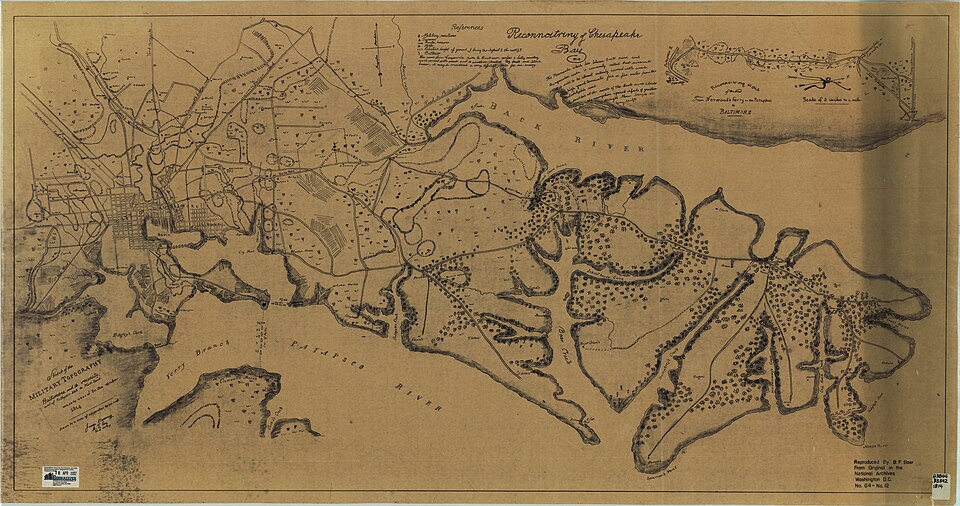
On September 12, 5,000 British troops advanced on Baltimore by land but encountered stiff U.S. resistance. The British ultimately prevailed in the Battle of North Point, but suffered heavy losses, including the death of their commanding general. The Americans retreated and regrouped behind defenses closer to the city. With any attempt to breach those defensive fortifications likely to produce substantial casualties, the British troops decided to wait to see if the Royal Navy could force Baltimore’s surrender.
On September 13, British warships sailed into the Patapsco River. Their target was Fort McHenry, which guarded the entrance to Baltimore’s inner harbor and access to the city itself. The British lobbed as many as eighteen hundred shells over the course of a twenty-five-hour bombardment. When the Fort McHenry failed to fall, the British warships and troops withdrew, ending the threat to Baltimore. Remarkably, only four of the roughly one thousand American defenders died during the fight.
Key watched the sun come up on the morning of September 14 and spotted the U.S. flag still flying over the embattled fort. Moved by what he saw, he penned the words that would make him famous. In doing so, he repeated imagery and language from a poem he had written nine years earlier to honor the U.S. victory over the Barbary pirates in the Mediterranean.
Two Flags, Not One
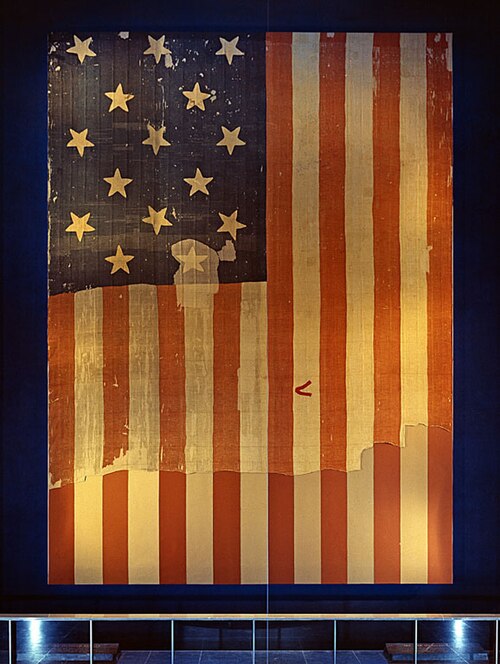
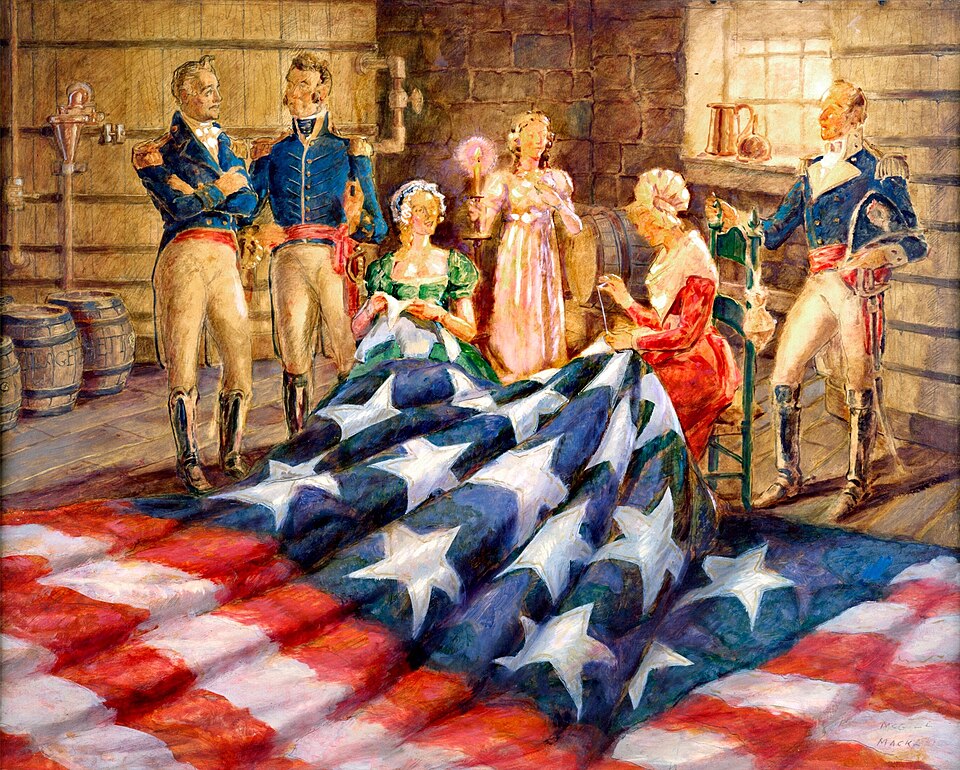
What most Americans do not know is that the flag that Key saw flying over Fort McHenry that morning was not the flag that flew over the fort for most of the battle. A year earlier, Major George Armistead, Fort McHenry’s commanding officer, had commissioned a local flag-maker named Mary Young Pickersgill to make two flags for the fort. One was a smaller storm flag, the other a much larger garrison flag that would be, in Armistead’s words, “so large that the British will have no difficulty in seeing it from a distance.”
With the help of several others, Pickersgill sewed both flags in roughly two months. The storm flag was 17 feet by 25 feet and cost $168.54 to make. The garrison flag measured thirty feet by forty-two feet, used more than four hundred yards of fabric, and cost $405.90 to make. Both flags had fifteen stars and fifteen stripes representing the original thirteen colonies plus the two newest states, Kentucky and Vermont.
The British bombardment of Fort McHenry took place during a heavy rainstorm. As a result, the storm flag flew during most of the battle. It was only as the rain subsided, dawn broke, and the British broke off the engagement that the garrison flag was raised to the tune of “Yankee Doodle.” It was this flag that Key saw. The storm flag has been lost to history.
A Delicate Negotiation
Why was Key in a position to witness the bombardment of Fort McHenry? He was not fighting. Indeed, he had opposed the War of 1812 on religious grounds, though he did serve as a volunteer military aide in 1814.
Key’s presence near the battle was largely happenstance. A lawyer by training, he had agreed days before the attack on Fort McHenry to help the people of Upper Marlboro, Maryland, secure the freedom of their beloved elderly town physician, Dr. William Beanes. The British had arrested him in late August for his role in the arrest of British soldiers who had looted local farms after burning the White House.
Key negotiated Beanes’s release while aboard a British warship in Chesapeake Bay. In doing so, he learned of the British plans to attack Fort McHenry the following day. So the British insisted that Key, Beanes, and another American remain onboard until the British fleet reached Baltimore. The Americans then returned to their ship and watched the shelling of Fort McHenry.
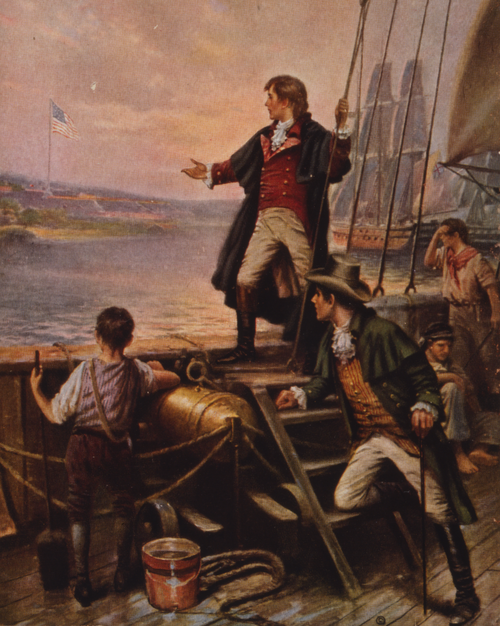
“The Defence of Fort McHenry”
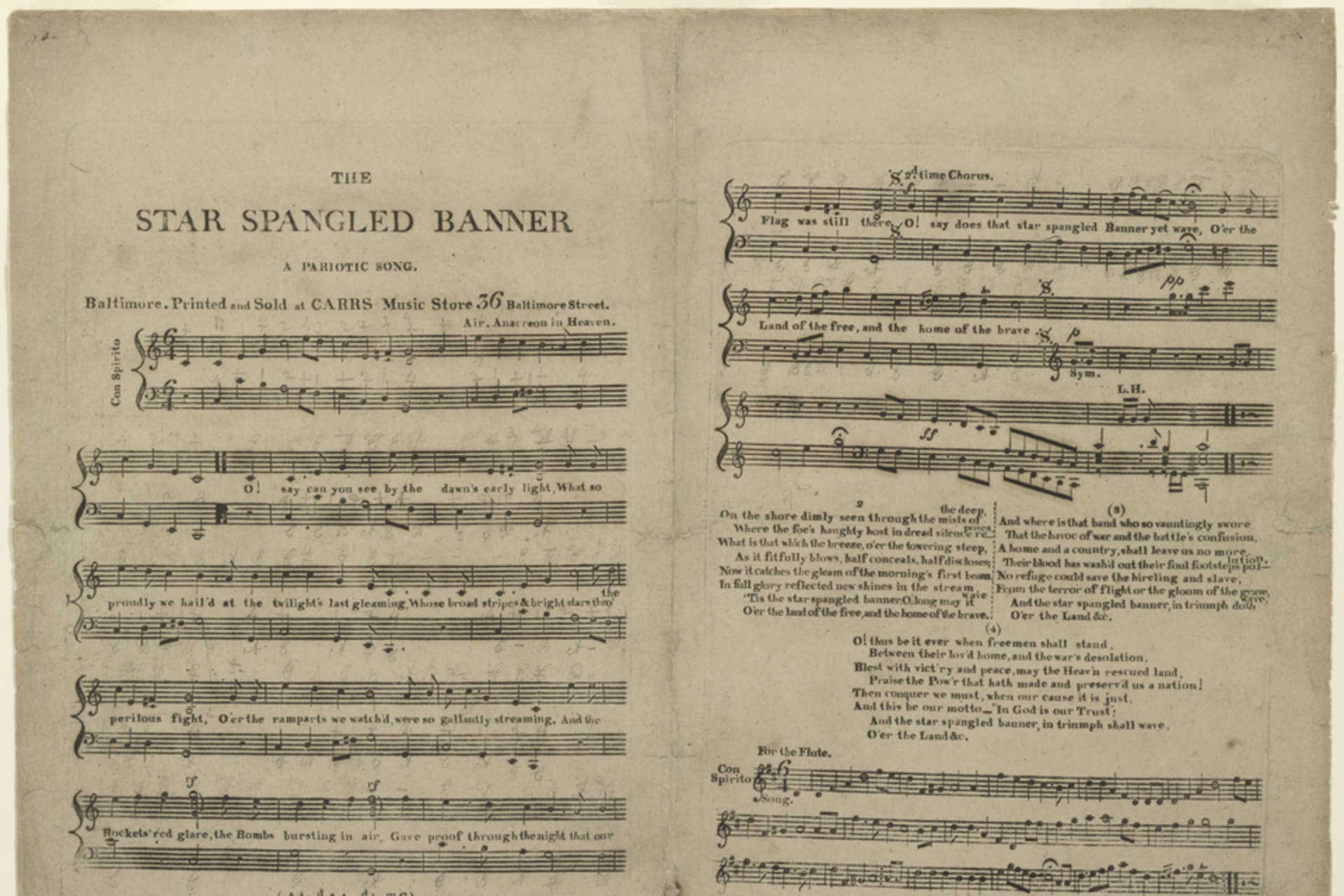
Key’s words were first published in the Baltimore Patriot on September 20, 1814, as a poem entitled “The Defence of Fort McHenry.” He subsequently set his words to the tune of a drinking song known as “Anacreon in Heaven.” The song quicky became popular, but not under its original title. A printer took the liberty of changing it to “The Star-Spangled Banner.” The name stuck.
More than a century passed before “The Star-Spangled Banner” became the official American national anthem. In 1916, President Woodrow Wilson declared that it should be played on all official occasions. In 1917, the Army and the Navy designated it the national anthem for ceremonial purposes. Although Congressman John Charles Linthicum of Maryland introduced a resolution in 1918 to make it the national anthem, other legislators lobbied for songs like “Yankee Doodle” and “America the Beautiful” that had the benefit of being original tunes and easier to sing. But fans of Key’s soaring lyrics did not give up. They filed more than forty bills and joint resolutions in Congress to get their way. In March 1931, they finally succeeded.
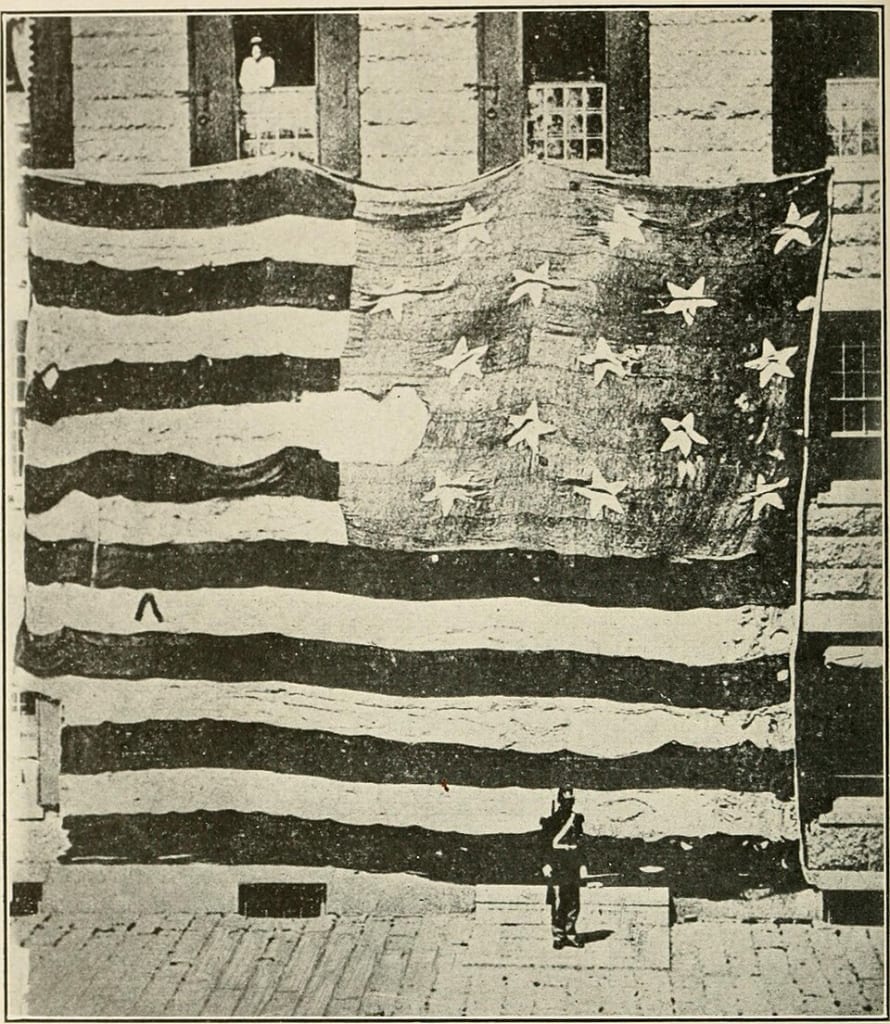
Oh, and if you were wondering what exactly a “spangle” is, the Random House College Dictionary defines it as “a small, thin, often circular piece of glittering metal or other material, used esp. for decorating garments.” So “star-spangled banner” suggests that the flag glittered in the sunlight. Whether it literally did is a matter of conjecture. Key himself was partial to the phrase. In his ode to U.S. victory over the Barbary pirates, he wrote of “the star-spangled flag of our nation.”
Oscar Berry assisted in the preparation of this article.
The United States celebrates its 250th anniversary in 2026. To mark that milestone, I am resurfacing essays I have written over the years about major events in U.S. foreign policy. A version of this essay was published on September 14, 2011.
This work represents the views solely of the author(s). The Council on Foreign Relations is an independent, nonpartisan membership organization, think tank, and publisher, and takes no institutional positions on matters of policy.