What the U.S. Got Wrong in the War on Terrorism
This episode unpacks how the September 11 attacks reshaped the U.S. approach to global threats and internal security.
Published
Host
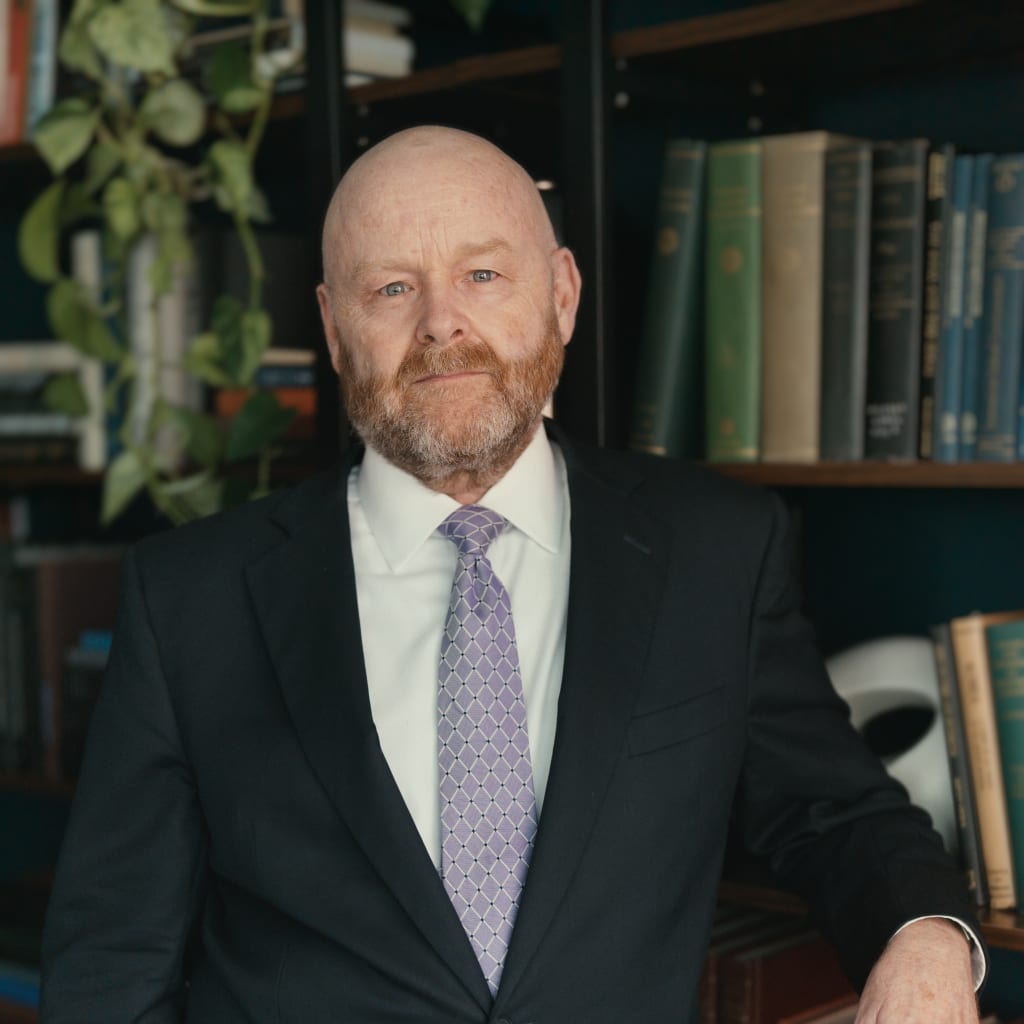 James M. LindsayCFR ExpertMary and David Boies Distinguished Senior Fellow in U.S. Foreign Policy
Guest
- Walter Russell MeadRavenel B. Curry III Distinguished Fellow in Strategy and Statesmanship, Hudson Institute
TRANSCRIPT
LINDSAY:
What can we learn from how the United States reacted to the September 11 attacks? I have been pondering that question as the 25th anniversary of one of the darkest days in U.S. history approaches. The horror of September 11 changed the direction of U.S. foreign policy, and with it the course of world events. The United States launched a global war on terrorism. Within 18 months, the United States had invaded and toppled the governments of both Afghanistan and Iraq, begun counterterrorism operations around the world, and used its immense diplomatic and economic might to disrupt terrorist operations and cut off terrorist groups from state support. This response in many ways mirrored how the United States responded 60 years earlier, under President Franklin Roosevelt, when the country suffered another horrific surprise attack, the Japanese bombing of Pearl Harbor.
Both presidents channeled a national trauma into a fierce commitment to action, but the war on terror failed to produce a decisive victory akin to World War II. The occupations of Afghanistan and Iraq turned bloody. Americans soured on forever wars.
Terrorism eventually faded as a driving force for U.S. foreign policy. To get a better understanding of what we can learn from the September 11 attacks, I spoke with Walter Russell Mead, the Global View columnist at the Wall Street Journal, and the Alexander Hamilton Professor of Strategy and Statecraft with the Hamilton School for Classical and Civic Education at the University of Florida. My conversation with Walter was far-ranging, but left me with three takeaways.
First, understanding the policy choices that the Bush administration made in response to the September 11 attacks requires recognizing the overwhelming fear that Americans felt at the time. More, perhaps even deadlier attacks seemed not just possible, but perhaps even likely. Second, the global war on terror failed because its aims far exceeded what U.S. power could achieve. FDR faced an enormous but well-defined challenge, defeating state adversaries. Bush sought to defeat a decentralized, stateless entity by seeking to remake the world. Third, trying to solve problems is generally harder than trying to prevent them.
The United States failed to stop the September 11 attackers, and the costs were enormous. The challenge we face today, as Walter put it, is to do more to educate the American people to understand more clearly what the dangers are, but also what we can do for peace at this critical moment. Our conversation highlights some lessons U.S. leaders should take from September 11 as they debate and decide how the United States should navigate what remains a dangerous world. Walter, thank you for joining me on the President’s Inbox.
MEAD:
Great to be here, Jim.
LINDSAY:
Walter, I’d like to begin with the September 11 attacks themselves. You and I both lived through them, but for younger Americans, the events of September 11 are something they read about or perhaps they’ve heard about from family members rather than something they experienced personally. Help us understand why September 11 was such a pivotal moment in the history of U.S. foreign policy.
MEAD:
Yeah, you know, it’s really hard to go back to that day. And it was a kind of a shock, really, when I was teaching and realized that I was now starting to get students a few years ago who really did not remember September 11 at all. And for them, it’s like the attack on Pearl Harbor, the assassination of President Kennedy.
One of these things that you hear about, or maybe even the South firing on Fort Sumter, something that you hear about, but everything you know about it is secondhand. It’s a little hard to understand just why it was such an impact. You don’t feel your bones.
We don’t. You know, we were both at CFR at the time. And while that’s not right on the site of 9/11, the physical impact was overwhelming.
You saw people trudging back up. The subways went down a couple hours after the attack. Our phone lines went down.
And you saw people trudging uptown covered in ash and grime. Refugees walking on Park Avenue in New York City. It was an extraordinary thing.
Many of us, including me, couldn’t get home that night because one couldn’t get across the river. There was sort of the mix of impacts at the time. You didn’t know for a while how many people were killed.
Was it 300, 3,000, 30,000? There was no way of knowing. Was something else coming?
There was the attack on the Pentagon. Was this the first in a whole series of waves of attacks? So there was that kind of a moment.
But then there was also the sort of economic consequences. Many people assumed that this would lead to a really sharp economic recession or depression. Would there be attacks overseas?
Were there going to be attacks in Paris and London? One just had no idea what was coming. And then over the next few days, communications went down.
So your information was not as current as you were used to it being. And then over the next few days, we had, if you remember, the anthrax attacks. When mysterious packages of white substance, anthrax, in fact, started showing up in the congressional mail.
We were joking at the Council at the time that, okay, interns answer the mail.
LINDSAY:
Well, I actually was at the Senate when this happened. And because I was in a room above the Senate post office, I had to go through the unpleasant experience of having my nose swabbed and then taking Cipro. So it was something that I felt personally.
MEAD:
Just a little foretaste of COVID there.
LINDSAY:
Well, the swab went further up for this than it did for COVID-19. I mean, I think you’re quite right about sort of the shock. Again, sort of put it in the context of the broader sense of where American foreign policy was at the time.
Because I was always struck, September 10th, President Bush met with President Vicente Fox of Mexico. And the great expectation was that U.S. foreign policy was going to look southward and build up U.S.-Mexican relations. And then all of a sudden, U.S. foreign policy changed on a dime.
MEAD:
Absolutely. Although I remember what our old boss, Les Gelb, said after 9/11. He said, every American foreign policy intellectual will tell you two things about 9/11.
Number one, it changed everything. And number two, it showed I was right all along. That was, in fact, very accurate.
But yeah, the Bush administration saw its historic role as establishing the Free Trade Association of the Americas. Mexico at the time was moving away from a very long period of one-party rule into what looked like a new era of democracy and development. In Europe, you saw nothing but peace.
Russia was not really troubling Europe very much at the time. Democracy seemed to be just steadily taking hold in Eastern Europe, Central Europe, in South America as well. You know, Brazil, Argentina, dictatorships were falling.
Democratic governments were taking hold. It looked as if the world were moving in this amazingly positive direction. And then suddenly this shock appears.
Again, at the beginning, no one knew just how severe this would be. But it was this first sense of maybe history didn’t end with the fall of the Berlin Wall. Maybe, in fact, we are headed back toward some kind of era of struggle, confrontation, danger in a new and really radically different way.
LINDSAY:
No, I think it’s really important, Walter, because the benefit of history, looking back, hindsight, is that you become aware of what didn’t happen. But we live history forward and we don’t know what’s going to happen. And there were great concerns in 2001 into 2002 that these attacks were just the first of many and future attacks might even be worse.
So I think it’s important to put on the table. But obviously, from where the moment we were in September of 2001, Walter, the Bush administration takes us into what becomes called the global war on terror. In some sense, it acts almost as a crusade.
At one point, President Bush, I think it was in his 2002 national security strategy, declared the United States must defend liberty and justice because these principles are right and true for all people. Everywhere. Was it because of the idiosyncrasies of George W.
Bush or the team that advised him that we launched this crusade? Or does it tell us something about the United States as a country more broadly?
MEAD:
Yeah, I am not actually sure how differently Al Gore would have reacted had he been elected in 2000. You know, I think part of what shaped President Bush’s concerns was, you know, the sort of titanic wave of anger and fear in public opinion, which, again, is something if you don’t didn’t live through it, it’s hard to understand just where that was, that it was the president needed to run fast to get to the front of the parade. I think Al Gore would have absolutely felt those pressures.
LINDSAY:
I would just say my friends who supported Al Gore would tell me that 9/11 would never have happened if Al Gore had been president because he and his advisers took the issue of terrorism much more seriously than the Bush administration did. Whether that’s a fair characterization or not, I’ll leave to others to judge, but I’m sure that’s the argument they would make.
MEAD:
I’m sure they would make that argument. But I also think that when you sort of go back and look at one of the reasons that 9/11’s political impact was so interesting in the U.S. was that had Gore been, hypothetically, had Gore been elected and had 9/11 still happened, everyone would have said it’s the Democrats’ fault. Because you had Clinton for eight years, attempts at various points to deal with Osama bin Laden and Al Qaeda, but not particularly successful.
And then had Gore, you know, not somehow managed to prevent it, it would have. But as it happened, you had eight years of Clinton, but you’d had by then eight months of Bush. So whose fault was it?
It was kind of a standoff.
LINDSAY:
And I think people who criticized President Bush for the attack early on came under sharp social criticism. Some people lost their jobs because it really was a rally around the president moment for the United States.
MEAD:
Right. And that, as someone, you know, I had just published a book or just finished a book on the history of American foreign policy, Special Providence. Which I recommend people read.
In the book, the two phenomena that I talked about were, number one, this Pearl Harbor moment when an outside attack causes American public opinion, the American people to react in certain, you know, I would say a little bit predictable ways. And 9/11 kind of followed that script. And one of them is, is you go from not caring at all about foreign policy to suddenly everything is about foreign policy and you want the sort of toughest policy imaginable.
Again, this happened on December 6. Most Americans would have hoped to stay out of World War Two by December 8. The only question was, how do we win it and how fast do we win?
So you definitely had that phenomenon. But I do think that it’s interesting to compare, say, Roosevelt after Pearl Harbor and Bush after 9/11. Roosevelt found a strategy that with a lot of, you know, a lot of mistakes along the way, unnecessary death and chaos, did ultimately win the war in a kind of definitive way.
President Bush’s efforts after 9/11, there were successes along the way, not everything was a disaster. And the fact that there were no repetitions on that scale had something to do with a much better counterterrorism capability that we developed. Nevertheless, it would be hard to say that the war on terror ended in the same way that World War Two did.
So you have two moments of historical trauma for the American people. And the job of a president after that is to harness the emotion, the anger, the fear into national action that in some way gets us to a better place. And Roosevelt, I think, succeeded.
I don’t actually think that the Bush administration did.
LINDSAY:
Walter, I have to agree with you there, and I think most Americans just looking at the polls look back at the global war on terror, which would encompass the war in Iraq, the longstanding occupation of Afghanistan and argue that something went wrong, very badly wrong. What strikes me is that there were a number of people really early on saying that U.S. foreign policy was going off in the wrong direction. On note, you wrote a book called Power, Terror, Peace and War, which came out in, I think, 2004, so about three years after September 11th.
And you wrote that U.S. foreign policy had gone terribly wrong. And I’m just sort of curious because sort of looking back with the benefit of hindsight, it seemed to have taken the United States a very long time to course correct for its mistakes.
MEAD:
I think a lot of it was that a couple of things. Number one, the sort of challenge of 9/11 was different from the challenge of December 7th. You know, in December 7th, you were looking at a well-organized state that was making an attack for conventional political reasons with conventional goals.
And, you know, it quickly, the crisis was a crisis of international politics in the old-fashioned way. What was going on with 9/11 was, you know, you didn’t have a state actor. And the current of feeling that al-Qaeda represented was less the product of a kind of triumphant mobilization of a civilization and almost an aspect of the cultural crisis in which the Islamic world was finding itself at that time.
And it is much harder to fix chaos, you know, or to respond effectively to chaos. So that was a piece of it. It was a really tough problem and perhaps an insoluble problem in the nature of, you know, how is the United States going to stop the causes of terrorism by remedying social and political conditions in some part of the world?
That’s kind of beyond our capability. But this came, and this is the second part, at this moment of enormous national, I would say, overconfidence in the ability of Americans to apply universal principles like freedom and democracy to very, very complex cultural norms and situations. So that, you know, I would actually agree with a lot of things that not only President Bush, but many Democrats at the time were saying democracy is a universal value.
Humanity wants freedom. These things I think are true, but they don’t necessarily lead you to some kind of obvious policy prescription.
LINDSAY:
And it’s not at all clear that other countries or peoples want their democracy delivered to them and chosen for them by Americans. I mean, nationalism has always existed.
MEAD:
Right. But, you know, this was, I think, well, let’s take a step back. I think since the end of the Cold War, we had a kind of a liberal fundamentalism in America, if you can call it.
You know, the idea that liberalism, however…
LINDSAY:
Liberal in the classical sense, not the American political sense.
MEAD:
Well, in both, because I think you have a human rights left liberalism that, you know, that feminism can solve the world’s problems or, you know, this whole, you know, anyone. If we simply enforce the U.N. Declaration of Human Rights, the world will flourish and everything will be fine. And that’s almost an Amnesty International political program.
And then you have the neoconservative version of that, which is similar in kind of arrogance and ahistorical cluelessness, but is, you know, has a different kind of political shape. And I think those were the two defining ideologies in the American foreign policy community around that time.
LINDSAY:
I’m curious if I could flip the script around on you, Walter. Is it possible that we blame too many of the ills we have today in U.S. foreign policy on the global war on terror, on the invasion of Afghanistan?
MEAD:
You know, I still kind of think the, it’s not so much the invasion of Afghanistan. It is the inability to leave early. I think at the time it seemed that the things, particularly in Iraq, you know, OK, if you’re going to do this, you’ve done it.
Now find a general, give them the keys and go home. Or in Afghanistan, you say you want the, you want the al-Qaeda out and whatever. Now put something else in it, but immediately leave.
But no, you know, we ended up having plans for poppy or opium poppy eradication in Afghanistan, girls education in Afghanistan, all kinds of the development of an NGO civil society universe. You know, these are, I’m not going to say that any of these are bad things and some of them are quite good. But we ended up with plans in Afghanistan for everything except how to win the war in Afghanistan.
LINDSAY:
But I think there’s an older story here, Walter, because once you intervene somewhere, it is always going to be hard to leave because there are consequences to leaving. And you may not like those consequences. I mean, I go back to the decision that faced William McKinley about what to do with the Philippines after the Spanish-American War all of a sudden gave the United States control of this archipelago 10,000 miles away from Washington, D.C. And for McKinley, looking around, all of his choices were awful. So he decided the least awful choice was to annex the Philippines. And that became a problem. Likewise, you know, in Vietnam, it was, we were always looking for a general after Diem that would take over and allow us to sort of go home and would run the war for us.
And that really didn’t happen. So there’s sort of a, there’s a tension. Once you intervene, your choice set may just be between or among lousy options.
And there’s a sense of mission creep goes along with that, which we’ve seen many times.
MEAD:
But I think it’s also true that by the time you get to the point of seriously considering intervention, it’s not because you have all of these fantastic choices and you foolishly choose the one bad one on the menu. It’s you’re already in a terrible situation. Because only, only that would make intervention with all of its pitfalls look like a least bad option.
And, you know, I think one of the, one of the mistakes Americans always make about foreign policy is the belief that if we do the right thing, we won’t have problems. That there is a kind of a path through the world events and world history. That is, it’s like people approach foreign policy the way you approach studying a subject in school.
And if you do the homework and take notes and all of this, you will get a good grade on the exam and get promoted to the next level. And foreign policy just isn’t that kind of thing.
LINDSAY:
The way I tend to think about it, Walter, is that most Americans approach foreign policy as if they were orthopedic surgeons. You know, somebody breaks a bone and you reset the bone, the bone’s fine and you’ve solved the problem.
MEAD:
Right.
LINDSAY:
But most foreign policy problems are like the things that internists face. They’re chronic conditions that what you’re trying to do is manage. You’re not ever going to solve them, you know, whether it’s diabetes or, you know, someone who’s been exposed to malaria or what have you.
And it’s more about sort of managing the condition.
MEAD:
Right.
LINDSAY:
But I want to sort of change the focus a bit, Walter, because I want to give you credit for a piece you wrote in 2014 in Foreign Affairs. It had the title about the return of geopolitics. This obviously came after the Russian seizure of Crimea and the rest.
And I just wonder, to some extent, did we miss an opportunity during the time we were fighting the global war on terror to sort of delay the return of geopolitics longer? I mean, there was a time when the Russians were cooperating with the U.S. occupation in Afghanistan. Putin made possible the use of the so-called Northern Distribution Network, whereby the United States used Russian airspace and territory to get things to Afghanistan.
Did we miss an opportunity?
MEAD:
I don’t think so. I think in some ways the American foreign policy world got Russia wrong, you know, very early. If you go back and you look at Kennan’s Sources of Soviet Conduct article, what Kennan says there is our problem with these people is not actually that they are communist.
It is that they are Russian. And then when communism falls in Russia, the entire American foreign policy world, left and right, says, oh, my goodness, Kennan was such a genius containment. He saw this 40 years ago.
No one has ever been this smart. And now that the Russians aren’t communist, we can be friends. And that was, I mean, they heard his prescription, not his diagnosis.
Right. That level of idiocy and sort of lack of self-reflectiveness, to me, points to very, very deep problems in the way Americans think culturally, think about foreign policy. And also, I think, in the way we educate our foreign policy leaders and staffers.
LINDSAY:
Walter, I think I’d be remiss if I didn’t ask you about your assessment of the impact that the September 11 attacks had here at home on domestic politics. How do you see that part of the narrative, that part of the story?
MEAD:
I think the impact has been enormous. One of the things, you know, many of the critics of the war on terror pointed this out. But I think after September 11th, we were we had to do some of these things that there was going to be a vast expansion of the national security state.
And so that organizations, particularly the FBI, was going to become much more powerful. And if you think about presidential politics in the last eight years, a lot of it has been about the power and the role of the FBI. Whether we talk about Hillary Clinton’s emails, we talk about Russiagate, the role of the FBI in American politics has become a much bigger deal.
The sort of fears of and concerns about a national surveillance state have really grown. And so I think, you know, in some ways, one of our biggest successes in the war on terror was the development of a system of national security that that has prevented a recurrence of mass attacks of that nature. But the costs are high.
LINDSAY:
Well, Walter, that takes me back to your book, Special Providence, which you alluded to earlier, because in Special Providence, you really talk about sort of four sentiments or themes or perspectives that run through the history of American foreign policy. One being the Hamiltonian sort of focus on economic development, supporting international trade. They’re the Wilsonians who view the United States as sort of on this moral mission to spread democracy, uphold international law.
Then there are the Jacksonians, the populace, the nationalists who don’t want to hear about the world until the world intrudes on them, and then they want to go full tilt. But then there’s the Jeffersonians who are always sort of concerned that America’s involvement overseas is going to disrupt the American experiment here at home. What sort of happened to that Jeffersonian impulse in American politics?
MEAD:
Well, it’s a complicated question. You know, when Special Providence came out, most of the questions people had were about both the Jacksonian and Jeffersonian traditions because it really seemed after 1945 that those – or 1948, say, that that was in the past. People simplistically equated Jeffersonianism with isolationism and viewed it as having been refuted by history.
And Jacksonianism, this sort of vulgar nationalism, let’s also put that in the background. And so the sort of Hamiltonian-Wilsonian consensus around the Cold War, backed by Jacksonian fear of communism, had been dominant for much of the time. The other factor that I didn’t write much about in Special Providence but which – as I think about it more, one of the main sources of Jeffersonian tradition in American politics through the Cold War – and you think of somebody like Fulbright during the Vietnam War – was the South’s recollection, somewhat blurred and inadequate, of just how bad America is at reconstruction.
Really good at winning wars but this whole notion of making some kind of new order is not actually a very effective part of America’s skill set. And that memory gave a lot of Southern representatives and senators an inner caution about limits of American power even as they were hawkish on defense against the Soviet Union. And what we had in the rising to power in the 90s and early 2000s was the first generation of Southern politicians who weren’t grounded in that kind of memory of a defeated region with a more complex sense of how a historical process works.
And so you had that kind of Republican sunbelt, sunny optimism about everything, including our ability to, say, build democracy in Afghanistan and Iraq.
LINDSAY:
Well, I think that’s partly because that older generation of Southern politicians wasn’t just thinking about reconstruction, what happened in the early 1870s. They were thinking about the very clear attempts to try to remake the South in the 60s and the 1970s because Americans looked at the South and were repulsed by what they saw of Bull Connor at all. I mean, I think there was both a historical memory there and a very present memory that was driving that as the rest of the world, the rest of the country sort of grappled with civil rights and wanted to see African-Americans in the South get their political freedoms.
MEAD:
And this, I think, is part of what, again, it’s hard for the American mind to grasp is that, you know, what Solzhenitsyn, I think, says the line between good and evil runs through every human heart. We like to, you know, the white hats, the black hats, some of the best ideas in American foreign policy came out of some of the worst experiences and even bad people. It’s not a morality play.
And this is something we all need to work on.
LINDSAY:
Because I think that is a real problem in American foreign policy, which is we want to reduce history to a morality play. It’s white hats and black hats. There are no shades of gray.
No one has a complex choice. It is either the right choice or the wrong choice. And, of course, the villains always make the wrong choice.
But, Walter, I want to sort of close by sort of looking ahead. We are less than two months away from Election Day. Once those midterms wrap up, we are going to see certainly on the Democratic side of the aisle a lot of candidates show their hat in the ring for the 2028 presidential race.
I’m not sure when Republican candidates will enter the ring, given the importance and the weight that President Trump has over what’s going to happen on the Republican side of the aisle. But what lessons would you hope that candidates on either side of the political spectrum would take away from September 11 and apply going forward?
MEAD:
Well, I would say number one is the importance of preventing bad things before they happen. Think about if the Israelis had prevented the October 7 attacks, if we had prevented 9/11, or if we had deterred Putin’s invasions of Ukraine in 2014 and 22, how much better off we’d all be.
LINDSAY:
And our intervention is worth a pound to cure.
MEAD:
It’s worth a ton of cure. And so thinking in terms of preparedness and deterrence is, I think, something that we all need to get better at. And letting your defense industrial base decay and your readiness decay as China, say, builds up around the greatest military buildup in history around Taiwan is not an example of clear thinking.
So definitely, what is it? If you want peace, prepare for war, I think is a piece of it. But at the same time, we have to be thinking more, I think, than we really are about how do we align what we Americans want with what people in other countries and parts of the world want.
I actually defended President Trump against some of the criticism when he started talking about America first because he said, you know, what do you want a candidate for the United States presidency to say? America second? America fifth?
I mean, what’s the number that you – there is no other number, right? But then the question is how, what does that actually mean in practice? And so where do we look for allies and partners and what are the key issues that we need to focus on?
And I think at this moment, because the geopolitical competition has reached such an acute level and the world is really in many ways – we could have a whole other conversation about this, I think still drifting more in the direction of 1939 than in the direction of a long peace. How do you educate the American people to understand more clearly what the dangers are but also what can we do for peace at this critical moment? And I really would like to see a lot of thought given to that.
Our political leaders can educate, can lead a national conversation, and I would love to see more of that taking place.
LINDSAY:
On that note, I’ll close up this episode of The President’s Inbox. My guest has been Walter Russell Mead, the Global View columnist at The Wall Street Journal and the Alexander Hamilton professor of strategy and statecraft with the Hamilton School for Classical and Civic Education at the University of Florida. Walter, thank you for the illuminating discussion.
MEAD:
Great to see you, Jim. Thank you.
LINDSAY:
Today’s episode was produced by Justin Schuster with director of podcasting Gabrielle Sierra.
We Discuss:
- Why the September 11 attacks were such a pivotal moment in the history of U.S. foreign policy, and how they are understood by those who lived through them in comparison to younger Americans.
- How the attacks shattered a post-Cold War sense in the United States that “history had ended,” with the world moving inevitably toward greater freedom and prosperity.
- Whether the “Global War on Terrorism” reflected the idiosyncrasies of the Bush administration, or something more fundamental about how the United States responds to attacks.
- How the Bush response to 9/11 compares to Franklin D. Roosevelt’s response to Pearl Harbor.
- Why the United States found it so hard to leave Afghanistan and Iraq, and how mission creep turned those military campaigns into open-ended nation-building projects.
- How “liberal fundamentalism” shaped an overconfident belief that American values could be easily applied to other, complicated societies.
- Why Americans tend to treat foreign policy as a solvable problem rather than a set of chronic issues to be managed.
- The fate of the Jeffersonian impulse in American foreign policy, and what lessons Mead hopes 2028 presidential candidates will take from the legacy of September 11.
Mentioned on the Episode:
Walter Russell Mead, Special Providence: American Foreign Policy and How It Changed the World, Knopf
Walter Russell Mead, Power, Terror, Peace, and War: America’s Grand Strategy in a World at Risk, Knopf
Aleksandr Solzhenitsyn, The Gulag Archipelago, Harper & Row
Walter Russell Mead, “The Return of Geopolitics: The Revenge of the Revisionist Powers,” Foreign Affairs
George F. Kennan (“X”), “The Sources of Soviet Conduct,” Foreign Affairs
This work represents the views solely of the host(s) and guest(s). The Council on Foreign Relations is an independent, nonpartisan membership organization, think tank, and publisher, and takes no institutional positions on matters of policy.
Associate Producer, Video and Audio
- Associate Producer, Video and Audio
Editorial Director and Producer
- Director, Podcasting
More Episodes
 33:42Podcast
 36:05Podcast
 41:07Podcast
 39:26Podcast
 31:46Podcast
 34:45Podcast