A Guide to Major U.S. Sanctions Imposed During Trump’s Second Term
In his second term, President Trump has wielded economic sanctions as a foreign policy tool in an attempt to coerce targets to comply with his demands. His administration has expanded and tightened sanctions programs, targeting countries such as Cuba, Iran, and Russia, as well as various nonstate actors.
By experts and staff
- Published
- Sky CambronIntern, Digital Content, Editorial
- Emilyn LarsonIntern, Digital Content, Editorial
In September 2026, U.S. President Donald Trump signed into law a major sanctions package that gave the White House broad new authority to penalize Russia and countries that buy Russian oil and gas. Just weeks later, however, he signed an executive order waiving the new Russia-related tariffs and sanctions. Stephen Sestanovich, CFR senior fellow for Russian and Eurasian studies, said the reversal reflects what he describes as the president’s “incoherent” approach to sanctions policy in his second term.
Previous U.S. administrations have used economic and financial sanctions to coerce actors to change behaviors or policies, deter specific actions or support to adversaries, weaken opponents by restricting trade and financing, or stigmatize governments and other actors. These sanctions can take various forms, including asset freezes, travel bans, arms embargoes, and limits on trade.
Since returning to office in 2025, Trump has expanded existing sanctions on several U.S. adversaries, including Cuba, Iran, and Russia, as well as nonstate actors he sees as threats to U.S. national security. At the same time, his administration has lifted or waived sanctions in some cases given changes in circumstances. Many of these actions have been a result of Trump’s use of the International Emergency Economic Powers Act, which allows the president to impose sanctions by executive order.
Below are some of the major targets of Trump’s second-term sanctions.
Russia
U.S. sanctions under Trump have focused on targeting Russia’s energy sector, which makes up a significant share of Russia’s economy and government revenue and has been subject to extensive sanctions evasion. After inheriting major energy and banking sanctions from the Biden administration, the Trump administration designated Russia’s two largest oil companies, Rosneft and Lukoil, in October 2025. Both companies were added to the Treasury Department’s Specially Designated Nationals and Blocked Persons List (SDN List), a public database of the individuals and entities targeted by U.S. economic and trade sanctions. The administration cited Moscow’s refusal to end the war and its lack of commitment to peace negotiations as reasons for the designations.
In September 2026, Congress passed a Russia sanctions package, named after the late Senator Lindsey Graham (R-SC), that went much further. It authorized up to 100 percent tariffs on the top five importers of Russian oil and gas, which currently include China and India, and imposed sanctions on Russian military and political officials, financial institutions, and the shadow fleet of oil tankers that Moscow uses to circumvent existing restrictions. The bill also authorized the president to increase tariffs on U.S. imports from Russia to up to 500 percent.
However, Trump’s October 2026 executive order invoked Section 115 of the law to waive sanctions and tariffs pursuant to U.S. national interests. The waiver came a week after Trump announced an agreement to import Russian diesel to ease rising fuel prices ahead of the U.S. midterm elections. Trump later said that pausing the Russia sanctions helped secure the release of Stephen Hubbard, an American who was arrested by Russian authorities a few months into the war in Ukraine.
Iran
Iran has been under U.S. sanctions since 1979. Shortly after retaking office, Trump announced in February 2025 that he was restoring his first-term maximum-pressure campaign on Tehran, which involves sanctions aimed at “driving Iran’s oil exports to zero” to strangle the economy and prevent the government from acquiring a nuclear weapon and intercontinental ballistic missiles, among other objectives.
Since the start of the Iran war in February 2026, U.S. sanctions on Iran have primarily targeted the country’s oil-export network, including oil tankers and firms, as well as individuals and financial institutions. In August 2026, the Treasury Department announced Operation Economic Outcast, an “unprecedented, whole-of-government, economic campaign” against Iran and its “enablers” that seeks to cut off Iran’s remaining oil revenue and force it to negotiate an end to the war. As part of the campaign, the Treasury declared five more Iranian sectors subject to sanctions: aviation, digital assets, gold, shipping, and technology.
Cuba
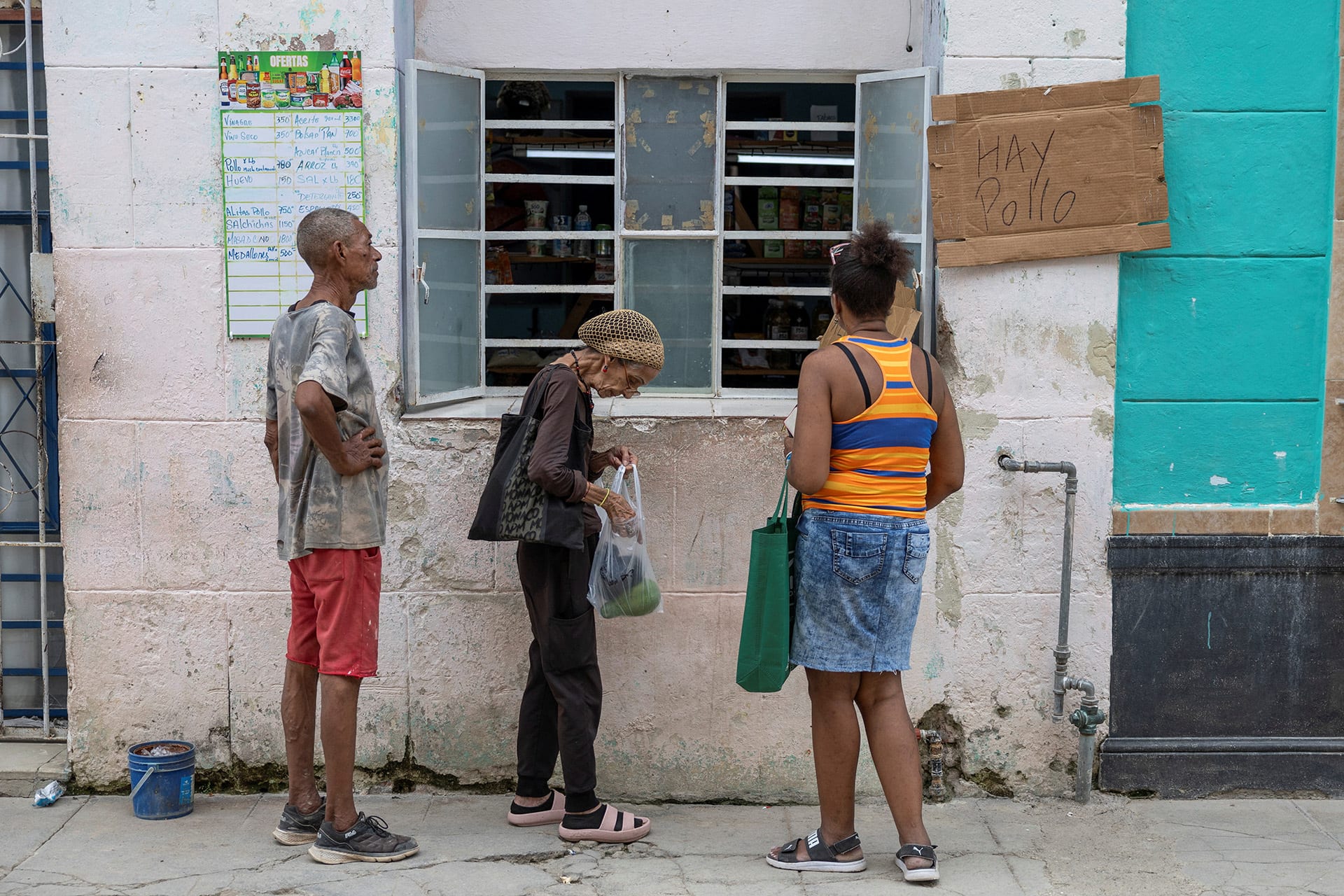
In his second term, Trump has intensified economic pressure on the island. As part of the administration’s maximum-pressure campaign, the United States has broadened existing sanctions on Cuba, imposed new sanctions on individuals or entities that support Cuba’s security apparatus, further restricted travel to the island, and cut off Cuban entrepreneurs’ access to U.S. banks. In January 2026, Trump issued an executive order [PDF] threatening tariffs on any country directly or indirectly supplying oil to Cuba. The Trump administration has also barred U.S. citizens from financially dealing both directly and indirectly with companies on the State Department’s list of restricted entities associated with Cuba and doubled down on its support for a more than six-decade-long economic embargo on the island.
The administration’s actions further isolate Cuba, which has for years experienced prolonged economic, energy, and humanitarian crises. Will Freeman, CFR fellow for Latin America studies, said on an episode of The President’s Inbox podcast that it’s “fairly clear” the Trump administration is seeking “the same old goal of regime change” in Cuba, but that it’s now doing so with significantly more pressure. Trump has raised concerns over the regime’s alignment with U.S. adversaries, including China, Iran, and Russia, and terrorist organizations such as Hamas and Hezbollah.
China
Many U.S. sanctions involving China target Chinese companies and individuals accused of helping other countries evade international and U.S. sanctions. Since January 2025, U.S. sanctions have focused largely on Chinese refineries and shipping firms that buy and move Iranian oil. In May 2026, China issued its first-ever blocking order, prohibiting individuals and entities in the country from complying with U.S. sanctions against five Chinese petrochemical firms and refineries over alleged Iranian oil transactions.
Historically, sanctions have also been one of the United States’ main tools for responding to China’s crackdown in Hong Kong, with U.S. authorities imposing sanctions on Chinese and Hong Kong officials over actions including those that “degraded the autonomy of Hong Kong.” However, in July 2026, Trump allowed the national emergency he declared under a first-term executive order on Hong Kong normalization to expire, easing some sanctions. The order had been issued after Beijing imposed a sweeping national security law on the city and amid a steady erosion of Hong Kong’s autonomy. The Treasury Department removed nine officials sanctioned under the order, although thirty-nine others, including Hong Kong Chief Executive John Lee, continue to face sanctions under a separate list, which imposes tailored restrictions rather than a blanket asset freeze.
Venezuela
The United States has sanctioned Venezuela in some form since 2005, and at the beginning of his second term, Trump escalated pressure on the government of Nicolás Maduro. This involved revoking licenses that had allowed U.S. energy companies to operate in Venezuela; designating major Venezuelan criminal groups as terrorist organizations; sanctioning members of Maduro’s family, shipping entities, and tankers carrying Venezuelan oil; and ordering a “total and complete blockade” of sanctioned oil tankers entering and leaving Venezuela. Trump also issued an executive order authorizing secondary tariffs of 25 percent on countries importing Venezuelan oil, although it was never imposed. In January 2026, U.S. forces conducted an overnight raid to capture Maduro; he was succeeded by his vice president, Delcy Rodríguez, who assumed the interim presidency.
Rodríguez has so far largely acquiesced to U.S. conditions, including by opening Venezuela’s energy sector to U.S. companies. Beginning in January, the Treasury Department issued a series of general licenses allowing major firms—including Chevron, BP, and Shell—to resume oil and gas operations in Venezuela. In March, the Treasury authorized PDVSA, Venezuela’s state-owned oil and gas company, to sell oil directly to U.S. firms and on global markets. The following month, the United States lifted sanctions on Rodríguez herself, who has since made modest political reforms but has yet to set a date for new elections. Some restrictions remain in place, however, with Venezuelan transactions not covered by the licenses still requiring U.S. Treasury approval and Venezuelan oil revenues being held by the United States.
Syria
In his second term, Trump has rolled back most economic and trade sanctions on Syria in support of reconstruction efforts after rebels toppled the regime of Bashar al-Assad in December 2024. In May 2025, a day before meeting with Syrian President Ahmed al-Sharaa, Trump announced that he would lift comprehensive sanctions on Syria, marking a historic shift in U.S. foreign policy.
The following month, Trump signed an executive order formally ending the 2004 Syria sanctions program, saying it marked a commitment to support “a Syria that is stable, unified, and at peace with itself and its neighbors.” The decision also removed more than five hundred individuals and entities, including Syria’s central bank, from the Treasury’s SDN List. The rollback continued in December 2025, when Congress repealed the Caesar Act—a 2019 law that imposed economic sanctions on foreign individuals, companies, and governments that did business with the Assad regime—as part of the National Defense Authorization Act (NDAA) for fiscal year 2026.
Then in August 2026, the State Department rescinded Syria’s designation as a state sponsor of terrorism. However, targeted sanctions on Assad and his associates, illicit drug traffickers, and certain other actors remain. The NDAA allows the president to consider imposing new sanctions if Syria’s transitional government fails to meet the benchmarks set by Congress, such as combating terrorism and drug trafficking and pursuing peaceful relations with neighbors.
Nonstate Actors
In 2025, the Trump administration added more than 1,300 individuals to the Treasury’s SDN List, according to the Center for a New American Security. Many of the individuals added were associated with transnational crime or the international drug trade. The administration has also applied terrorism designations to various Latin American drug cartels and criminal gangs. In February 2025, the State Department designated eight groups, including Mexico’s Sinaloa Cartel, as foreign terrorist organizations and specially designated global terrorists.
These designations trigger severe financial and legal sanctions: U.S. financial institutions must freeze any funds and property they hold, group members are barred from entering the United States, and it becomes a federal crime to knowingly provide the group with “material support or resources,” including weapons and lodging.
The Treasury Department has also targeted the financial networks that help sanctioned governments avoid U.S. pressure. In October 2026, the Treasury designated A7—a payments network that helps Russian companies and Iran’s Islamic Revolutionary Guard Corps move money abroad—as a significant transnational criminal organization and imposed sanctions on it. The Treasury Department’s Financial Crimes Enforcement Network also proposed a rule that would bar U.S. financial institutions from processing transfers involving A7’s sub-agents.
International Criminal Court
In February 2025, Trump signed an executive order authorizing financial sanctions on individuals associated with the International Criminal Court (ICC) for what it described as its “illegitimate and baseless actions” targeting the United States and Israel. (Trump had imposed sanctions on ICC officials in his first term, but Biden lifted them.) The administration later sanctioned several ICC judges for their efforts to “investigate, arrest, detain, or prosecute” U.S. or Israeli nationals without consent from either government.
Then in October 2026, the administration designated the court itself in what is considered an escalation of a previously announced diplomatic campaign to “dismantle” the institution. The court-wide designations prohibit U.S. companies and entities from transacting with the ICC. Secretary of State Marco Rubio said the goal of the sanctions was to force the ICC to take back threats of prosecution against U.S. nationals, but experts say the sanctions also aim to delegitimize the court and its international authority.
This work represents the views solely of the author(s). The Council on Foreign Relations is an independent, nonpartisan membership organization, think tank, and publisher, and takes no institutional positions on matters of policy.