Lebanon: How Israel, Hezbollah, and Regional Powers Are Shaping Its Future
Updated
Lebanon has had a more open political system than many other Middle East countries, but it has long suffered dysfunction at the hands of corruption and mismanagement, sectarian elites, and the force of non-state actors and their external patrons.
- After the United States and Israel launched a war against Iran in early 2026, militant group Hezbollah renewed its attacks on Israel, drawing Lebanon into the widening regional conflict.
- Israel, already conducting targeted strikes inside Lebanon for months, responded with air strikes across the country, including Beirut, and an incursion into southern Lebanon.
- The United States continues to provide support to the Lebanese Armed Forces, which it sees as a critical state institution and counterweight to Hezbollah.
What are backgrounders?
Authoritative, accessible, and regularly updated Backgrounders on hundreds of foreign policy topics.
Who Makes them?
The entire CFR editorial team, with regular reviews by fellows and subject matter experts.
Introduction
Lebanon is again at a critical junction. Following the outbreak of the U.S.-Israeli war on Iran in February 2026 and the killing of Iranian Supreme Leader Ayatollah Ali Khamenei, Hezbollah launched rockets at Israel, opening a new front of the war. Lebanon’s political and economic crisis has since deepened, worsened by its fragile political, economic, and security environment. And yet U.S.-brokered talks between Israel and the Lebanese government in April 2026—the first in decades—offer an opportunity for peace.
Lebanon at a Glance
Despite or—as some analysts have suggested—because of its fragility, Lebanon is seen as one of the most politically and socially liberal states in the Middle East. Freedom House, the human rights watchdog, rates the country as “partly free” in a predominantly “not free” region.
Beirut, the capital and the country’s largest city, has historically been a regional trade and financial center and was once considered the “capital of Arab modernity” for its rich cultural and political milieu. “For decades, Lebanon had lured not just revolutionaries but also poets, ideologues, artists and all types of opposition figures and plotters. A weak state was both a blessing and a curse,” wrote Lebanese journalist Kim Ghattas about the country during the 1970s and ‘80s.
Lebanon’s unique “confessional” democracy has ensured its government has a measure of pluralism, but regional experts say its power-sharing system has choked under the influence of corrupt sectarian elites, powerful militias—chiefly Hezbollah—and intervening foreign powers. “Positions continue to be doled out based on religious affiliation, as are state resources, which are in turn cycled through networks of other officials, bureaucrats, and supportive business interests at the expense of the greater good,” wrote CFR Middle East expert Steven Cook of Lebanon in 2020.
The small Mediterranean country is no stranger to volatility and hardship, having endured a long and bloody civil war (1975–1990), extended periods of foreign occupation, and the humanitarian burden that comes with more than 1.5 million Syrian and Palestinian refugees. But the last several years have seen a Beirut port explosion in 2020, the COVID-19 pandemic, and the ongoing war between Israel and Hezbollah.
In one of the most telling metrics, Lebanon’s economy contracted by 34 percent between 2019 and 2024, according to the World Bank. The country “has been assailed by the most devastating, multi-pronged crisis in its modern history,” the Bank said in 2022. The World Bank reported that the Lebanese economy was on the mend in January 2026, but the war between Israel and Hezbollah has since damaged the country’s infrastructure and internally displaced more than one million people, making an economic rebound unlikely. Israel has said it will not withdraw from territory it has occupied in southern Lebanon even after its war with Hezbollah ends, putting in jeopardy a fragile ceasefire brokered by the United States pending further peace talks.
What is Lebanon’s government?
After gaining independence from France during World War II, Lebanon formed a democracy that put religious affiliation at the center of the distribution and dynamics of political power. Per the country’s decades-old power-sharing agreement, the three major religious groups are guaranteed a specific leadership role in each government: the president is always a Maronite Christian; the prime minister is a Sunni Muslim; and the speaker of parliament is a Shia Muslim. The president is elected by parliament and appoints the prime minister in consultation with parliament. The pair then form a cabinet, the government’s chief executive body.
For the past twenty years, two major political groups have jockeyed for power in Lebanon: the March 8 Coalition and the March 14 Coalition, both of which have traditionally had a mix of Christian and Muslim members. A major political divergence between the groups has been foreign relations. The March 8 coalition, which has Christian and Shia members, including from Hezbollah, favors ties with Syria and Iran; the March 14 coalition, which has typically had Christians and more Sunnis, is generally for closer ties with the United States, France, and Saudi Arabia.
A serious breakthrough in Lebanon came in 2025, highlighting how Hezbollah’s influence has waned following its 2024 ceasefire agreement with Israel. The country was politically paralyzed for more than two years beginning in 2022, when parliamentary elections failed to produce a majority coalition with a mandate to govern—a result of Hezbollah and its political partners blocking agreement on a candidate and stymying the vote. However, the long political stalemate ended in early 2025 when a majority in parliament elected veteran army commander Joseph Aoun as president, and Nawaf Salam, a prominent lawyer and diplomat, as prime minister. Regional analysts say the breakthrough in selecting these technocratic leaders demonstrated Hezbollah’s diminished influence. Hezbollah long opposed Aoun but reportedly acceded to his candidacy to unlock much-needed international aid for Lebanon’s reconstruction.
What is Hezbollah?
The Iran-backed Shia Islamist group was until recently considered to be the most powerful non-state actor in the Middle East, with tens of thousands of foot soldiers and a deep arsenal of rockets and missiles. Founded following Israel’s 1982 invasion of Lebanon, the group is driven by its violent opposition to the Jewish state and its resistance to Western influence in the region. Many countries, including Israel and the United States, consider Hezbollah a terrorist organization.
In addition to its military operations, Hezbollah has also overseen a broad network of social services in Lebanon, including health-care facilities and schools, which accounted for some of its domestic public appeal. Since 2005, Hezbollah ministers have overseen cabinet portfolios such as culture, sports and youth, and parliamentary affairs. The group has also targeted, at times violently, Lebanon’s government— most notably, three Hezbollah members were convicted by a UN tribunal for their involvement in the car bombing assassination of Prime Minister Rafik Hariri in 2005.
However, Hezbollah’s political and military power has greatly diminished over the last few years. Israel has reduced its leadership and rank-and-file since 2023; its major regional allies were toppled by rebels in the case of the Bashar al-Assad regime in Syria and militarily degraded by Israel in the case of Iran. Hassan Nasrallah, the group’s longtime leader, was killed in an Israeli strike in September 2024, which set off a crisis in the group as Israel continued to target senior leaders and commanders in the following months.
A sixty-day ceasefire agreement reached that November between Israel and the Lebanese government called for Hezbollah forces to be disarmed and permanently withdraw from the southern territory up to the Litani River, though Hezbollah operated beyond the south. The group’s disarmament was not a novel demand—it was enshrined in a UN Security Council resolution after the 2006 war. Prior to the agreement, Israel said its aim was to push Hezbollah from Lebanon’s southern border region to prevent the group from launching air or ground assaults on northern Israel. Disarmament was a central focus of the agreement. The Lebanese government agreed to prevent Hezbollah from rearming by controlling all ports, the airport, and other means of smuggling, and by clearing and holding ground south of the Litani River.
What is the Lebanese Armed Forces?
The Lebanese Armed Forces (LAF) is the country’s all-volunteer national military service and largest employer. While it operates as a strong state institution, security analysts have said Lebanon’s highly fragmented political establishment has limited the LAF’s military capabilities, which remain conventional and underfunded, leaving it weaker than Hezbollah prior to Israel’s 2024 assault.
The LAF has long had limited resources for traditional defense operations and focuses primarily on providing domestic security, although critics, including Israel, say it failed to remove Hezbollah from southern Lebanon since the UN Security Council established a demilitarized zone there in 2006.
The LAF is composed of about eighty thousand personnel and draws recruits from Lebanon’s various religious communities, including Shia Muslims, Sunni Muslims, and Christians. The army is by far the largest component with about fifty-five thousand troops, followed by an internal security force of about twenty thousand. Nominal air and naval forces have less than two thousand members each.
Despite its deficiencies, the LAF remains Lebanon’s most trusted public institution (about 94 percent of the population has confidence in the military), according to a 2025 Gallup poll. The United States has long viewed the multiconfessional LAF as a stabilizing counterweight to Hezbollah and has provided it with some $3 billion in security assistance since 2006. Washington and its European allies pledged more funding to the LAF in early 2025, hoping its forces would secure Lebanon’s southern border region in line with its commitments under the ceasefire.
The November 2024 ceasefire called for the LAF to deploy ten thousand soldiers across the stretch of Lebanon south of the Litani River, as Israel and Hezbollah withdrew over the next two months. The ceasefire called on the LAF to dismantle Hezbollah’s military infrastructure in the region and remain the only security force, allowing displaced civilians to return to their homes on both sides of the so-called Blue Line, the de facto border with Israel. Since the start of Israel’s invasion of Lebanon in March 2026, the LAF has withdrawn from multiple border villages in southern Lebanon, as Israeli forces moved north to reoccupy Lebanese territory it held before the ceasefire.
What is the United Nations Interim Force in Lebanon?
The United Nations Interim Force in Lebanon (UNIFIL) is a multinational peacekeeping force in southern Lebanon that today is made up of more than seven thousand people from forty-seven countries. The UN Security Council initially created UNIFIL in 1978 to oversee the withdrawal of Israeli troops from southern Lebanon following their weeklong ground assault against the Palestinian Liberation Organization (PLO), which was based there at the time.
The UN Security Council expanded UNIFIL’s mandate following the 2006 Israel-Hezbollah war. UN Security Council Resolution 1701 called on it to help the LAF secure a demilitarized zone in southern Lebanon between the Blue Line and the Litani River (the same land Israel seized in its recent ground invasion.) Critics faulted UNIFIL (and the LAF) for failing to fulfill its mandate and allowing Hezbollah to remain in the border region. Yet some security analysts countered [PDF] that UNIFIL’s mandate was “obscure and unachievable” given its peacekeepers are largely restricted from using force except in self-defense. UNIFIL’s mission includes demining: it has reportedly destroyed more than thirty-four thousand unexploded ordinances and mines in southern Lebanon since 2006.
Over the last decade, Hezbollah remained in southern Lebanon and expanded its military infrastructure there. More UN peacekeepers—342 as of April 2026—have lost their lives in Lebanon than in any other ongoing UN mission.In March 2026, renewed hostilities between Israel and Hezbollah directly affected UNIFIL, with at least three peacekeepers killed and several others injured.
What foreign countries are involved in Lebanon?
Lebanon has been shaped by other and often competing world powers for millennia. Several continue to have influential roles today, most notably France, Iran, Israel, Saudi Arabia, Syria, and the United States.
Iran. Iran’s primary influence on Lebanon has come through its enduring support for Hezbollah, which since the 1980s has pushed pro-Iran policies in the Lebanese government and Shia communities, and has violently opposed Israel on behalf of Iran. Prior to the 1979 revolution that swept Ayatollah Ruhollah Khomeini to power in Iran, refugee camps in southern Lebanon were a hub for Iranian dissidents, Islamists, and others opposed to the Western-backed Pahlavi regime. Khomeini started sending Iran’s revolutionary guards and money into Lebanon’s Beqaa Valley in the early 1980s to spread the Islamic revolution and recruit Shia youth. The result was the founding of Hezbollah, a group committed to Khomeini and the destruction of Israel.
Iran’s influence in Lebanon has declined markedly following the erosion of Hezbollah’s power there, as well as the collapse of its erstwhile ally in the Assad regime in Syria. It remains to be seen how relations between the two countries might change amid the ongoing regional war in the Middle East—the current Lebanese government has publicly pushed back against Iran’s interference in domestic affairs, and polling before the outbreak of conflict showed Lebanese people opposed Hezbollah dragging the country into war with Israel.
Syria. Syria has also played a central, complex, and meddlesome role in Lebanon’s history, and the two countries continue to have deep ties. As with Lebanon, Syria was part of the Ottoman Empire and came under control of the French in the 1920s, before gaining its independence in the 1940s. However, Syrian leaders have long viewed Lebanon as a lost territory and fertile ground for sowing its influence. Led by Hafez al-Assad, Bashar’s father, Syria intervened in Lebanon’s civil war in the mid-1970s and became the dominant force there for decades. The 1989 Taif Agreement, which ended the conflict, effectively sanctioned Syria’s occupation of Lebanon. Syrian forces, which remained in Lebanon until 2005, allowed Damascus to establish a large intelligence regime and corrupt political patronage networks in Beirut. Meanwhile, Syria helped its ally Iran move weapons to Hezbollah, a mutual proxy in their bitter rivalry with Israel.
Syria’s influence diminished considerably following its withdrawal in 2005, which followed mass protests amid allegations it was behind the assassination of Prime Minister Hariri. Hezbollah later played a major role in supporting Syria’s Assad regime after the outbreak of the country’s civil war in 2011. During that conflict, Syria flooded Lebanon with some eight hundred thousand refugees. The sudden ouster of the Assad regime by Sunni Islamist rebels in late 2024 threw into question the role that Syria, which remains deeply fractured, will play in Lebanon’s future.
Israel. Israel has had perennially fraught relations with neighboring Lebanon. Lebanon joined several Arab states that attacked Israel unsuccessfully shortly after the latter’s founding in 1948, a war that resulted in the displacement of some seven hundred thousand Arab Palestinians, about one hundred thousand of which sought refuge in southern Lebanon. Particularly after the June 1967 war, refugee camps in southern Lebanon became a hotbed for anti-Israel Palestinian militants and other armed insurgent groups from around the world.
Israel has undertaken several and varied military operations over the decades against hostile groups based in Lebanon, including the PLO and Hezbollah. Israel supported the Kataeb (Phalanges), a right-wing Christian political party and paramilitary group that came to power during Lebanon’s civil war. Israeli forces invaded and occupied Lebanon in 1978 and from 1982 to 2000. They waged a monthlong campaign against Hezbollah in 2006 and battled the group once again in 2024. In 2026, Israel once again launched a war on Hezbollah, carrying out air strikes and a ground invasion in the country’s south and expanding targeting to parts of Beirut, the Bekaa Valley, and beyond.
Saudi Arabia. In Lebanon, the Saudis have primarily focused on economic development and countering the influence of Iran, Syria, and Hezbollah, particularly since the 2005 assassination of Prime Minister Hariri. The twice-serving, billionaire prime minister, who played a central role in brokering the Taif Agreement and rebuilding war-torn Lebanon, had extremely close business and personal ties to the Saudi royal family. Some regional experts say his killing was in effect a declaration of war by Iran (and Hezbollah) on Saudi Arabia.
Prior to that, Saudi Arabia and other Gulf states had invested billions of dollars to help Lebanon develop its economy and financial sector. Following Hariri’s death, Riyadh supported the anti-Iran March 14 coalition in parliament, led by Saad Hariri, Rafik’s son, who then also twice served as prime minister. The Saudis have thrown their support behind Lebanon’s new leaders—Aoun and Salam, hoping to reengage with and provide aid to the new government. Riyadh is also working closely with the new leadership in Damascus.
France. France has a much more limited influence on what happens in Lebanon today but claims a prominent historical role since it created and administered what is modern-day Lebanon under a League of Nations mandate following World War I.
French President Emmanuel Macron has sought to maintain France’s diplomatic engagement with Lebanon, pushing for international aid following the Beirut port disaster in 2020 and during past conflicts between Hezbollah and Israel. France also cosponsored the 2024 ceasefire along with the United States and supported Lebanon’s leaders elected in 2025.
United States.The United States is the primary foreign backer of the LAF, which it views as a critical guarantor of Lebanon’s sovereignty and the most viable counterweight to Hezbollah and other Islamist militant groups operating in or around the country, such as the self-declared Islamic State, known as ISIS, and al-Qaeda. Washington has provided the LAF with roughly $3 billion [PDF] in military aid over the last two decades, including training and equipment, and given aid groups in Lebanon another $3.5 billion in humanitarian assistance.
The United States continues to support the implementation of UN Security Council resolutions calling for militias in Lebanon, including Hezbollah, to disarm and disband, and for the LAF to secure all of Lebanon’s territory, particularly in southern Lebanon pursuant to the ceasefire it brokered in late 2024. Washington agreed to serve as chair of the agreement’s monitoring group, sayingit was committed to building international support for the LAF and for Lebanon’s economic reconstruction and recovery. The United States—under the Biden and Trump administrations—also reportedly worked closely with the Saudis and others to end the Lebanese leadership’s long political stalemate and push for Aoun’s election to the presidency.
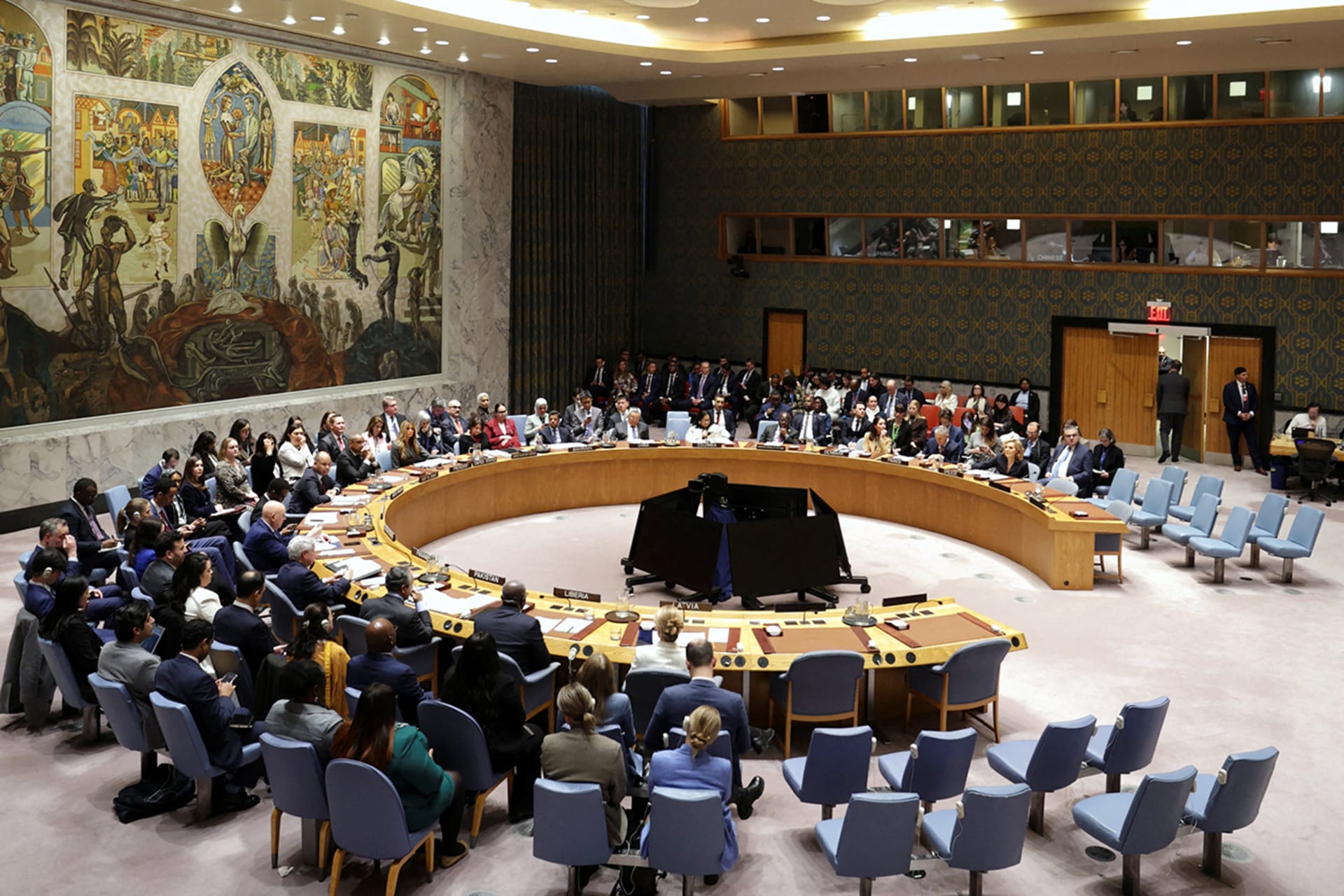
U.S. involvement in the current regional conflict in the Middle East has been limited to Iran, with Washington not joining Israel’s offensive in Lebanon. The U.S. ambassador to the United Nations criticized Hezbollah’s role in the conflict and called on the UN Security Council to “refocus international efforts on supporting Lebanese state institutions, reducing risk to peacekeepers, and pressing Hezbollah and Iran to cease their destabilizing activities.”
How Is Lebanon Involved in the U.S.-Israeli War Against Iran?
The U.S.-Israel war on Iran has embroiled Lebanon in conflict again. Hezbollah responded to the killing of Iran’s Khamenei by launching rockets against Israel in early March 2026, prompting Israel to instigate ground operations in southern Lebanon and carry out extensive air strikes in Beirut and elsewhere. Israeli Defense Minister Israel Katz has said the Israel Defense Forces plans to create a buffer zone by seizing control of Lebanese territory up to the Litani River, an area equal to one-tenth of the country. The campaign marks Israel’s biggest incursion into Lebanon since 2006.
France attempted to mediate, but their efforts proved unsuccessful. Lebanese Defense Minister Michel Menassa rejected Israeli plans to establish a “security zone” in southern Lebanon, calling them “a clear intention to impose a new occupation of Lebanese territory.” France and other European countries released a statement in March 2026 in support of the Lebanese government, including the LAF.
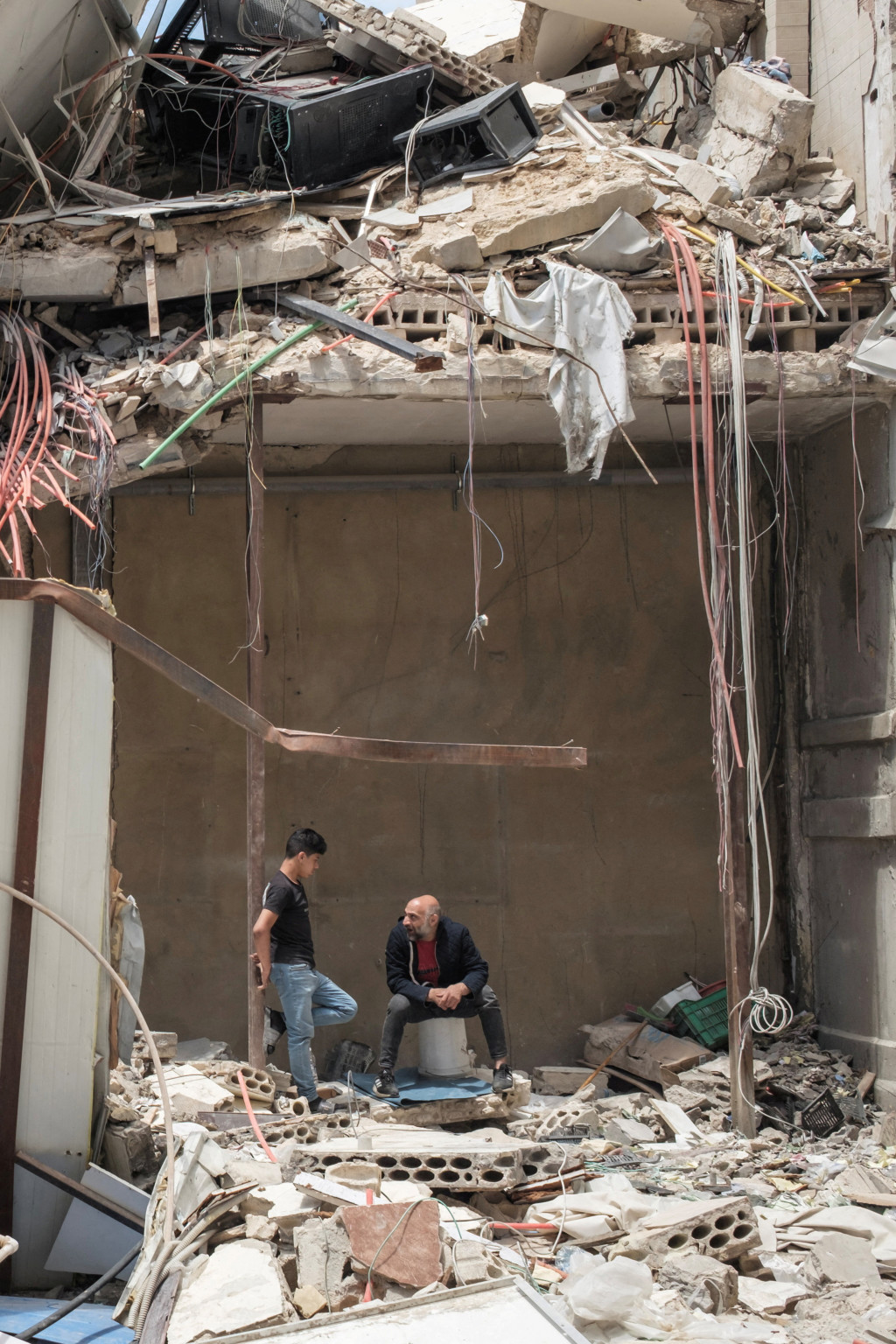
Israel’s offensive, which it has said aims to forcibly dismantle Hezbollah, has exacted a severe humanitarian toll. Since the start of the war in February 2026, more than 1,200 people have been killed inside Lebanon and more than one million others displaced, according to UN estimates from late March. The fighting has also damaged medical facilities and other critical infrastructure, with children, refugees, and at-risk populations disproportionately affected.
The United States, Israel, and Iran announced a ceasefire in the Iran war in April 2026. A separate ceasefire is in place between Israel and Hezbollah, and a historic channel has been opened for direct talks between the Israeli and Lebanese governments, with two meetings occurring in April in Washington, DC, between representatives of the two countries. The parameters of the negotiations are still unclear, while the fragile ceasefire holds until a possible expiration in mid-May.
Surina Venkat and Kaleah Haddock contributed to this Backgrounder. Will Merrow created the graphics for this article.
Colophon
Staff Writers
- Jonathan Masters
Additional Reporting
Header image by Adnan Abidi/Reuters.
 Backgrounder
 Backgrounder
 Backgrounder
 Backgrounder