A General and an Admiral Discuss the Pentagon Purge
This episode unpacks Secretary of Defense Pete Hegseth’s purge of senior military leaders and what it means for civilian control, retention, and the armed forces.

Published
Host
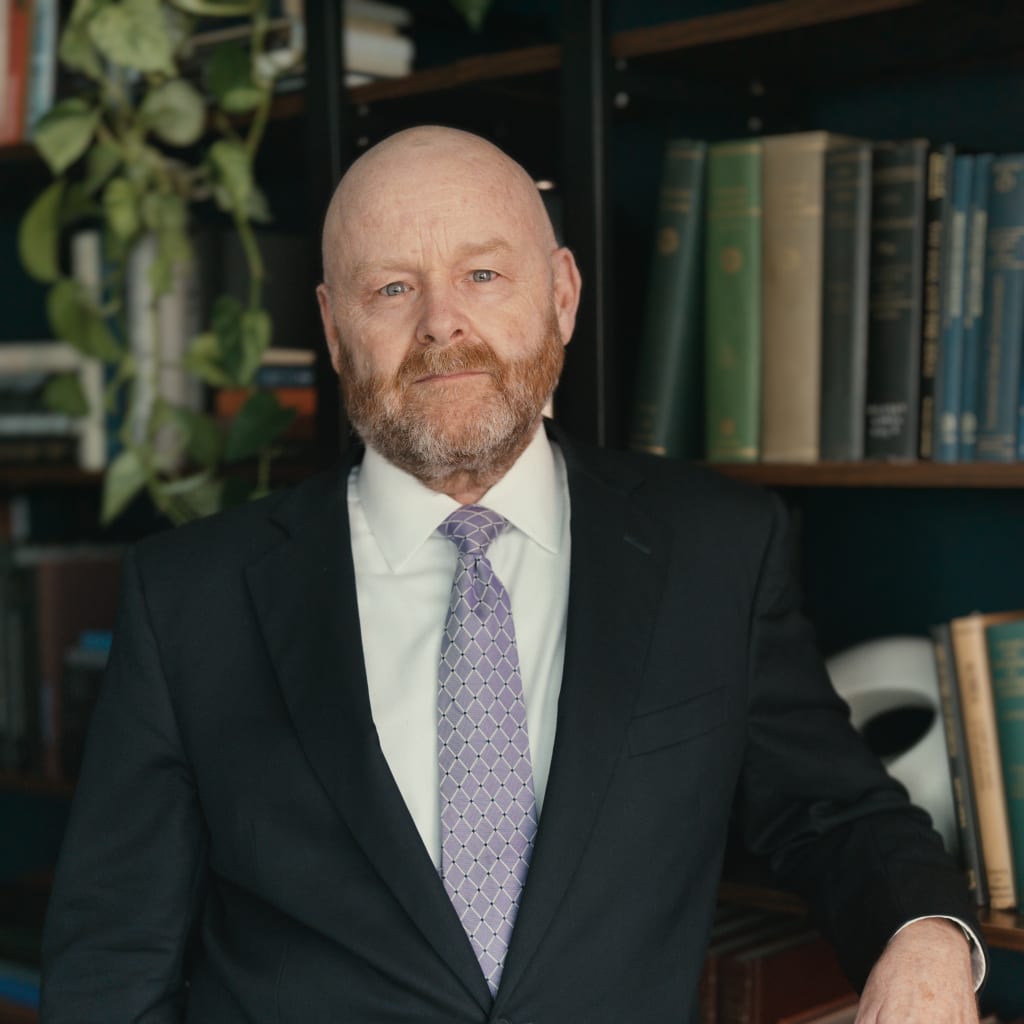 James M. LindsayCFR ExpertMary and David Boies Distinguished Senior Fellow in U.S. Foreign Policy
Guest
- Charles F. BoldenFormer Administrator of NASA
TRANSCRIPT
LINDSAY:
Secretary of Defense Pete Hegseth’s efforts to remake the U.S. military, and the turnover that has followed, has no parallel in U.S. history. Beyond sacking a range of four-stars, Hegseth has blocked or delayed the promotions of 80 or more senior and flag officers. More than half of the officers affected are women or black.
He has also sought to end all DEI programs in the military, saying that the phrase, diversity is our strength, is the single dumbest phrase in military history. Five former Secretaries of Defense have written to Congress to express deep alarm at Hegseth’s efforts. My colleague Linda Robinson recently wrote a report for CFR calling Hegseth’s moves a war on military talent, in arguing that he is driving highly talented individuals to leave their service early, or perhaps never join at all.
These are serious concerns. Hegseth’s efforts to remake the U.S. military were not mentioned in the resolution introduced this week to impeach him, and that the House narrowly dismissed. It is still worth assessing the impact of his personnel decisions.
While the services are unique in what they do, they are also organizations like any other, and all successful organizations rest on their ability to sustain a culture that promotes their fundamental ideals. The problem is, successful cultures are far easier to destroy than to repair. The best way to understand Hegseth’s impact is to speak with people who have been there, done that.
So for this Veterans Day, I spoke with two retired flag officers, Marine Corps Major General and former NASA Administrator Charles Bolden, and Rear Admiral Michael E. Smith, founder and president of National Security Leaders for America. Charlie and Mike, thank you very much for joining me.
BOLDEN:
It’s good to be with you. Thank you very much.
SMITH:
Happy to be here.
LINDSAY:
Our conversation is set to be released on Veterans Day. So permit me to thank you and the millions of other Americans who have served in the U.S. military. I want to discuss the changes that Secretary of Defense Pete Hegseth is making to the United States military, particularly at its senior leadership level.
Credentials, I think, are important in such conversations. So perhaps, Charlie, I could entice you to give us a brief overview of your distinguished military career, and then I’ll come to you, Mike. Yeah.
Because you graduated from the Naval Academy in 1968 at the height of the Vietnam War. What came after that?
BOLDEN:
Well, I’m an old guy, as you just pointed out. I came out the year after the Tet Offensive, as a matter of fact, for the historians in the group who may remember that. But then I chose the Marine Corps out of the Naval Academy, contrary to the fact that I said I would never do that.
Came into the Marine Corps, intending to be a rifle platoon commander. Found out I didn’t like crawling around in the mud and listened to my wife, who recommended we go to Pensacola. Went down, fell in love with flying first time I got in an airplane.
And as a person who’s very impressed by lots of other people, one of my flight instructors in advanced jet training was another Marine by the name of Pete Field, who was a test pilot, who talked about the challenges of being a test pilot. And I decided I was going to apply. And so for the next six or seven years, I applied to the Marine Corps twice a year until I finally got accepted into the test pilot program.
And it was then that NASA selected its first group of space shuttle astronauts. I had no interest whatsoever in the space program, but I met the late great Dr. Ron McNair, who became a dear friend of mine. We both were from South Carolina.
And he came to Patuxent River where I was stationed and embarrassed me into applying for the program. When he got ready to go back to Houston and he asked me if I was going to apply, I said, not on your life. And he asked me, why not?
I said, they’d never pick me. And he said, that’s the dumbest thing I ever heard. How do you know if you don’t ask?
And what he pointed out was I had forgotten what my mom and dad taught me growing up, that you can do anything you want to do if you want to study hard, work hard, never be afraid of failure, never be afraid of having somebody else tell you no. So I applied and I got selected in the second group of space shuttle astronauts. Stayed there in the middle of my Marine Corps career, 14 years in the astronaut program, flew four times on shuttle.
My final shuttle mission was the first joint Russian-American shuttle mission where I had two Russian cosmonauts who trained with us. And then I left the program and came back to the operating forces of the Marine Corps for the next nine years. Served as the first Marine expeditionary force out in Camp Pendleton, California.
Spent a year in Kuwait with Marines there between wars. Came back from that, became the deputy commander of U.S. forces, Japan and Tokyo for two years. And then came back for my final command in the Marine Corps, the third Marine aircraft wing, just before we went into combat in Afghanistan and Iraq.
Had a difference of opinion with the commandant about assignment. And so, as some people say, I made it easy on him by telling him he’d have my resignation the next day. And I did.
And my wife and I went on to happy times for about six years. I did not know President Obama, but I wanted to meet him. So I got an opportunity to come up to Washington to talk to him.
And out of that conversation, he nominated me to be the NASA administrator. So I did that for eight years, both Obama administrations. And then finally tried to retire.
Mike and I both are failing at that, but I gave it my best. And now I’m very active in Mike’s organization, National Security Leaders for America, as well as in an organization founded by several of us former astronauts called Astronauts for America. And that’s sort of where I am now.
LINDSAY:
Okay, Charlie, I just want to state up front, I am old enough to remember 1968. So I remember those days. Mike, tell us a little bit about your career.
You graduated from the Naval Academy as well in 1983, I believe, which means that you were a plebe at a moment in which America was suffering from the malaise of Vietnam and in many ways, morale in the U.S. military was at a low point. Tell me about your career.
SMITH:
Thanks. And yeah, I actually, my father was in the Navy and served in back-to-back tours throughout Vietnam. And by the time I was a midshipman at the Naval Academy, he was commanding a group of destroyers out of Hawaii.
And I remember one of my papers was on the impacts of Vietnam and the readiness of the military and interviewing him and just the trials and tribulations that he was going through, both morale, but the budget and where the Navy was at that time. And then to have witnessed the years since then and the growth in the military. And I was on a ship as a department head, ended up being the most Northern ship in Desert Storm.
And we were involved in, albeit a very brief couple of weeks of combat, but, you know, coming back from that experience to, I was also stationed in Hawaii at the time and to the parades and the positive feeling of America towards veterans that just was such a bookend, even at that young point in my career to see that change. And then later I commanded my own destroyer, a group of destroyers. And when I was a destroyer squadron commander, I was on an aircraft carrier in the Gulf during the Iraq war.
And in fact, I was given an assignment to fill in for a vacant Admiral, usually a coalition Admiral in charge of the Northern Gulf. And my strike group commander was given that, but I was basically acting as in charge of that. And so most of my time ashore working with the Iraqis to get their Navy and their Marine Corps ready to defend their oil platforms and seeing it from that perspective.
And again, just the positive outpouring from America to the veterans, even if they didn’t agree with the policies that those serving were supported. My final command, I was the commanded an aircraft carrier strike group. And before I made Admiral, I had had a couple of strategy tours.
I worked directly for two chairman, really the main time with Admiral Mullen as running a small think tank for him. And then I went out to Hawaii where I worked for the Pacific command commander. And I did the same type of job for him as his executive assistant, but really helping with the strategy aspects.
So in my first Admiral job, I ran the division on a Navy staff where I was responsible strategy and policy. So when it was time to retire, somehow I got into this world where I helped corral, not lead over 1,600 former national security leaders. We have over 300 retired admirals and generals and 200 ambassadors.
And as you can imagine, all of them are very well accomplished. So the best I can do is try and recommend directions they all might go, but we’re all very, very concerned about the direction. Certainly the military is gone.
So that’s really what keeps me going. I never thought I’d be working full time for no pay, but I think that our country’s at a point where all of our voices are needed.
LINDSAY:
I want to jump into that question, Mike, but first I want to flag that when you said you did strategy for the chairman of the Joint Chiefs of Staff, Mike Mullen, that meant you spent time inside the Pentagon, the five-sided building. And I also want to ask you a question, when you’re in command of a carrier strike group, how many vessels, how many sailors are under your command?
SMITH:
You have about 7,000 altogether. So you have the aircraft carrier, which 4,000 or so. You have all the different wing squadrons of the different planes, and then you have a squadron of destroyers under you as well.
So that’s really what includes in an aircraft carrier strike group.
LINDSAY:
Okay. So I want to dive into this question of what Secretary of Defense Pete Hegseth is doing at the Pentagon. And most notably, he seems to be trying to remake certainly the upper echelon of the United States military.
He has fired, if I can use that word, roughly two dozen senior military leaders. Those pushed out include Chairman of the Joint Chiefs of Staff General Charles C.Q. Brown, the Chief of Naval Operations Admiral Lisa Franchetti, the first woman to head up a military service. The Army Chief of Staff Randy George, who I will note was a military fellow here at the Council in, I believe, 2012, as well as Air Force Vice Chief of Staff James Slife.
And the list goes on and actually includes Vice Admiral Nancy LaCore, who, interestingly enough, just won a U.S. House seat from South Carolina in the recent midterm elections. And beyond that, Secretary Hegseth has blocked or delayed the promotions of 80 or more senior and flag officers, more than half of whom are women or black. So let me ask you, I’ll go to you first, Charlie, what do you make of all of this?
And is this sort of turnover typical in your experience?
BOLDEN:
In my experience, this is not a typical turnover. Looking from the outside in, having been on the inside when it was pretty tough to make it to flag rank, it’s doing generational damage because, as Mike will tell you, we start screening young officers when they’re ensigns and JGs to see what kind of leadership potential they have. They work their way through the wickets.
And by the time somebody becomes a commander in the Navy or a lieutenant colonel in the Marine Corps, where they’re about to get command of thousands of sailors and Marines, they’ve kind of stood the test of time. What we’re doing now, in the way that the current secretary is doing, is sort of cutting off the head of the snake and thinking that he can regrow it all of a sudden, you know, instantaneously. And in an organization like the U.S. military, that doesn’t happen. We really depend on seasoned veterans for leading our troops, people who have had experience. You may remember I told you I didn’t feel qualified to talk about decisions inside the Pentagon because in 34 years in the Marine Corps, I never served there. So I can’t be critical of what’s going on in the five-sided building because I was never there.
I go talk to my son when I want to know about what’s going on there because he served, his tour and mine, he served twice. But I did have an opportunity to look at leadership across the government when I was serving as the NASA administrator, which NASA is a subcabinet level organization, but it’s like being the secretary of a department in the U.S. military. And NASA is an organization that looks as much at national defense as they do science and human space flight.
So I know what it’s like when you cut off the leadership that you’ve grown over decades.
LINDSAY:
And I will note, Charlie, it’s very humbling of you to acknowledge that you didn’t do a tour in the Pentagon, but obviously you devoted your life to the Marines and the U.S. military also depends upon things that happen outside of the Pentagon. So I appreciate your acknowledging not having been at the Pentagon, but I think you still bring valuable expertise and perspective to this. Mike, I want to just shift over to you and get your sense where you might agree or disagree with what Charlie just laid out.
I think I agree completely.
SMITH:
The secretary is doing more damage to the ethos of the military as being a non-political organization than I’ve ever witnessed in my career. Recently, for example, on the Navy promotion boards, he took people off the board based on these criteria he had of whether or not they had supported DEI or they implemented the COVID vaccine requirements or they were associated with the withdrawal from Afghanistan or somehow associated with the previous chairman, Milley. But those were just arbitrary things he came up with after the board already picked the one stars for the Navy.
And he did the same thing for those going up to be two stars. So the one star is going to two star, that’s your last board. He removed the only woman in that list and all the folks of color.
I mean, what is that all about? We just decimated a generation. You can’t just suddenly promote people to take that position.
And it’s all based on the fact that those officers supported the previous secretary’s policies. The military is supposed to be non-political. Whatever the political policies of the president, the duly elected president, you go by them.
As long as it’s not an illegal order, you implement them. And if a new administration comes in, you support them. That’s the strength of the military.
And he is politicizing this by now having this metric that, okay, you previously supported policies I don’t agree with, you can’t promote. And the idea that folks at that level are not professional and aren’t going to support whatever his policies are is just unacceptable. And I’m really concerned about what is that doing not only to those great officers who should have been promoted, but what signal are we sending to those who are about to be in those positions?
Should they just retire? How many people are we going to lose because of these policies that the secretary is implementing independently and that go against everything and every democratic norm we’ve ever had about our military?
BOLDEN:
Sure. And if I can add something to what Mike said, I served as a recruiter in the Marine Corps, officer recruiter, when I came back from Vietnam out in California, we had a saying, and it’s true today in the recruiting business, we recruit Marines, but we retain families. And what Mike is talking about, when you go home from work, sitting around the dinner table, you’re talking about what is going to have an impact on your children, your wife and everybody else.
That is not out of your consideration when you’re talking about, am I going to stay around this? I’ll use the term affectionately chicken shit organization. A lot of that discussion goes on.
And if you can’t win the families over, you’re not going to keep these quality officers in the military.
LINDSAY:
Well, I think that’s an important point, Charlie. United States military is a unique organization, or maybe I should say it’s composed of several unique organizations, but they are organizations and there are predictable rhythms in organizations. One of which is that people pay attention to changes at the top in what it signals and what it means for their own careers.
But I want to go back, Mike, if I can, just to a technical question about the idea of promotion boards. I will note most Americans never served in the United States military. So many Americans would hear about a promotion board and hear that the secretary of defense overruled the promotion board.
And we’ll say, what’s wrong with that? Isn’t the principle of civilian control of the military such that a secretary of defense should be able to intervene and change the composition of a promotion board?
SMITH:
Yeah. And in fact, he’s not allowed to. It’s probably the fairest selection process in America.
You bring in together a group of officers, seniors to the positions that you’re promoting people to that themselves are successful and have that experience. And then you brief every individual based on their record and you end up selecting the very best from that group. And that list then goes to the president.
It does go through the secretary of defense, but the secretary of defense’s position is to remove someone who may have done something that the board was not aware of. But the board itself sits down, there are legal precepts that are given to the board. When you look at these officers, we want you to select, maybe they have a specific need for an admiral to be assigned to Beijing.
Please select one officer who has foreign service officer experience or has Chinese language experience, something like that. They will have some specifics, but it’s direction to the board. And then after that, the board does this all on their own based on a complete assessment of the holistic officer in front of them.
And the idea that, for example, I knew Lisa Franchetti. When I had that job I was talking about, my first job in the Pentagon as an admiral, I was in charge of the strategy division. She was in the other division as a captain.
And I remember looking for my captain that worked for me. She was over talking to Lisa in Lisa’s office. So I went in there and they were all huddled around the board.
And I’m like, what are you guys doing? And they’re like, admiral, our admiral will wear this next week. And we’re just, we’re taking a look who’s on.
And I’m like, what are you guys talking about? Both of you are going to make admiral. And at the time I looked at Lisa and I said, and Lisa, we will all work for you one day.
Because she has been that type of officer her whole career. This concept that because she was the first woman, she obviously was not qualified is just ludicrous. And Secretary Hegseth has done that for countless officers.
And we have to change that. That’s not what our military is about. And we are demotivating so many people.
And the issue is we won’t see that for a couple more years. He’ll be long gone before we actually see what happened to the retention of our senior people, let alone like Charlie’s talking about, how do I go recruit somebody if they happen to know somebody in the military who can talk to him about, oh, don’t even bother coming in because minorities never promote.
LINDSAY:
Well, I know, Mike, that Congress has requested testimony from Secretary Hegseth about these decisions. And I guess I would describe his response as mostly filibustering and not answering specific decisions. But there does seem to be, if I am interpreting this correctly, sort of at least two arguments that the Secretary is making.
And the first one is that we have too many flag officers. And indeed, he has posited that under his leadership, they’re going to reduce the number of senior military positions by about 20%. So maybe I ask you, Charlie, is there something to the Secretary’s argument that we have too many people with stars on their shoulders?
BOLDEN:
There’s probably something to his argument, and I would not contest that. But what he is doing is he is reducing that number arbitrarily, as Mike said. Whenever the Secretary makes a decision to do something like that, my experience on promotion boards was if the Secretary had someone on the board that he did not feel was qualified, he or she, they sent the board back, not individuals, but they sent the entire results back to the board and said, okay, we want you to reconvene.
And we want you to follow this particular guidance because it’s the Secretary of the service that writes the precepts, not the Secretary of Defense. You know, if the SecDef has some difference of opinion about what the precepts were that were established, then that’s for that Secretary to take up with his subordinate, you know, the Secretary of the Navy or the Secretary of the Air Force or whatever it happens to be. But not individually go in and cherry pick people out.
When Mike says that’s not legal, that’s not the way the law is set out. We do believe in civilian control of the military. That’s one of the requirements for any nation to become a NATO ally.
They’ve got to change their way of doing business such that their military falls under civilian leadership. So we believe that’s pretty important, but that doesn’t mean one person gets to say everything there is about an individual service, particularly the Secretary of Defense. The span of control of that individual is way more than it would allow him or her time to look into an individual promotion list and know anything at all, mostly, you know, about the people on the board, unless that person’s been around the military and the Pentagon for a while.
But that’s not the case with the President’s Secretary.
LINDSAY:
Mike, I want to ask you about this question as well. Is it your judgment that there’s a reasonable case to be made that we have too many flag officers?
SMITH:
I think every five, six years, it seems like the leadership comes forward and says, okay, we need to reduce the flag and general officers by 10%. This is a constant thing. I think that, of course, any organization can lose 10%.
20%, okay. At the end of the day, the work has to get done. So if you don’t have an admiral or a general doing it, then the colonel or the lieutenant colonel or the major’s going to do it.
The work won’t go away. I think this is the view of Pete Hegseth, Secretary Hegseth’s view of the military based on his experience as a junior officer, as a major. So he has a major’s perspective of the military.
It’s ill-informed. It doesn’t really grasp responsibilities as they go up because he just never experienced that. So he’s bringing that forward and he’s implementing that unilaterally.
And it’s, of course, every organization can do without a certain percentage. As long as you look at it as like, okay, let’s get rid of the right people or the right positions. But the way he’s doing it is he’s getting rid of anybody who doesn’t agree with him and doesn’t agree with his policies, it appears, and that’s just not the way to do this.
I do agree that there needs to be oversight. I think that the previous Congress failed in that. We need to understand what’s behind these decisions and why is he driving this?
And is he violating the law or not? That’s the role of Congress and they’ve abrogated that. And I think last week’s election results clearly demonstrate that the people of the United States feel that Congress should have an oversight role and hopefully we’ll see a huge change and we’ll start holding people such as the Secretary accountable for their potentially illegal actions.
LINDSAY:
The other argument that Secretary Hegseth has made, he’s been very vocal about it, is that he’s trying to end the war on warriors. I believe that’s the phrase that he uses, argues that the United States military has become too woke, it’s been too focused on DEI. I just want to get your sense of whether there’s any merit to that argument.
Maybe I’ll begin with you, Charlie, and if it’s not too much, maybe you might tell the story about how it is that you got into the United States Naval Academy, because I think it bears on some of these issues.
BOLDEN:
Yeah, well, I am a product of the Jim Crow South. So, I’m a very proud product of the Jim Crow South. Michael, I’ll tell you, to get into any service academy, as a general rule, you get an appointment from or a nomination from one of the members of your congressional delegation.
So, that’s either your congressional representative or one of the two senators representing your state. But every young man or woman now is also eligible for a vice presidential appointment. When I applied in 1964, I had actually been applying since I was 12 years old, because I saw a program on television called Men of Annapolis about life at the Naval Academy, and I fell in love with it and decided that’s where I wanted to go to school.
And each year, I would get letters back from these people saying, hey, it’s too early, come back when you’re a senior or junior in high school. And my senior year, when I applied, all the members of my congressional delegation, led by Senator Strom Thurmond, the notorious Strom Thurmond, rejected my application, said there was no way that they were going to make an appointment of that nature. And I knew what of that nature meant.
So, I was going to the vice president, but the night of my football team was going to play for the state championship in South Carolina, when we got word that President Kennedy had been assassinated. For me, that was a double hit because I had lost my president. But personally, I had lost any hope of going to the Naval Academy because I was not eligible for a presidential appointment.
So, with my mother’s encouragement, I sent a half-page typewritten letter to the president saying, you know, I’ve been talking to you about going to the Naval Academy. I really, really, really want to go, and I understand I’m not eligible. I need help.
And I never heard from him. But within weeks, a Navy recruiter came to my door, knocked on the door, asked him for me by name. And several months later, the president sent a retired federal judge, Judge Bennett, around the country looking for young men.
There were no women at the time, but looking for young men of color who were qualified to go to the service academy. So, he, President Johnson, took it upon himself to try to find ways to get a little bit more just or a little bit more fairness into the input to the service academy. So, I ended up getting an appointment from Congressman William Dawson in Chicago, Illinois, going through that process.
So, that’s how I got to the Naval Academy.
LINDSAY:
This is for a kid from South Carolina, Columbia, South Carolina.
BOLDEN:
This is for a kid from Columbia, South Carolina, born and raised.
LINDSAY:
So, as you sort of reflect in your career and you hear these attacks on DEI, do you see merit in them? Do you think it’s overblown? How do you sort of assess it?
BOLDEN:
I have a philosophical, a dramatic philosophical difference with the secretary. I don’t know him. He doesn’t know me.
But I think he is dead wrong when he says that diversity destroys our organizations, that diversity is not our strength, that unity is our strength. That’s his saying. You get unity when you have a diverse input into an organization and you’re able to convince people that what we are about to undertake, they may not like it.
Mike pointed this out earlier. When we came in the military, there were people who joined with us who did not like our policy, but they love the military for one reason or another. And they agreed when they raised their right hand for the first time and swore an allegiance to the constitution that they could live up to that.
Our job is to support and defend the constitution, not a person, not a president, not a secretary, not anybody. And it’s really important for us to remember that. That’s what Mike and I are working so diligently right now to try to do is to remind people of the constitution of the United States, the idea on which this nation was founded.
And it’s founded on diverse input, on people from all over the world coming here because they want to be part of us. So I vehemently disagree. I think diversity is critical to having a strong, knowledgeable, well-run military.
LINDSAY:
Mike, I want your thoughts on this, particularly given the fact that you commanded a carrier strike group. As you said, there are 7,000 individuals under your leadership. That’s a lot of responsibility.
How do you think about these issues?
SMITH:
You know, my whole career it’s all been about how you want the officer corps, the leaders to reflect the military. An enlisted man or woman needs to look up and see that, okay, you know what? There are people who have had my lived experience and they can relate to my challenges and they feel that, okay, I am welcome here.
It’s not about wokeness. It’s about making sure that our military leadership reflects our society. And it’s a hard enough challenge as it is without putting forward these arbitrary issues.
You talked about when I was a plebe. When I was a plebe at the Naval Academy, I was the first class where everyone above me had women. So my seniors, when I was a freshman, had women in there.
That was the first class at the Naval Academy. And I will tell you, I can only imagine the challenges that Charlie went through in his career in the 60s and into the 70s. But I can relate to the challenges that the females in my class above had.
And it was hard. There were people in one or two classes ahead of me who had had leaders that were all male in the class, and they would make comments about that. And even at that point as a freshman, as an 18-year-old, I knew what they were saying was wrong, but I’m like, okay, okay, they will grow out of this.
In a generation or two, they will accept this. And I will tell you that that’s still a challenge today. And obviously, we’re seeing that at the Secretary of Defense himself has this position.
So I think that this will always be a challenge. We have to constantly work on it. The concept that it’s all woke, no, it’s about reflecting a military that is itself a reflection of our country.
What is wrong with that? How can that be bad? How can anybody not want that?
It has to be an all old white men organization leading this. Those days are gone. I don’t know what the opposite of woke is, but he is implementing the same type of political and racial and gender policies that theoretically he is challenging.
He’s just trying to do the exact opposite. And it’s just wrong. And our military to be strong has to reflect our society because we have to keep recruiting.
We have to keep promoting. And why would we not?
LINDSAY:
Well, Mike, that’s an interesting question. It goes back to what Charlie said earlier. And Charlie has practical experience trying to recruit for the Marine Corps.
If you look at demographics going forward, several things stand out. One, the number of Americans under the age of 18 is shrinking. So that means a smaller pool of recruits is coming up.
Number two, as best I can tell, a large number of those potential recruits don’t meet the physical or academic standards to join the military. I’ve heard numbers as high as 75% don’t qualify. But beyond that, if you have a shrinking pool and it’s even smaller because people aren’t eligible, that means you have to really focus on maximizing that pool, half of which is going to be women.
And more than half is going to be people who identify with one or more minority groups. So it’s not going to be sort of a pool of all white people, as you suggest. So how should the services be thinking about this, Charlie?
BOLDEN:
I think we should continue to think the way that we have conditioned ourselves to think through the last few decades. We migrated to where we are today, where we accepted diversity among our ranks as being the best way to do things. When I was the deputy commandant of midshipmen at the Naval Academy, like the vice dean of students, and we looked at incoming classes and then subsequent selections for leadership in the brigade of midshipmen, because the brigade and the Corps of Cadets at West Point and Air Force and the other academies, they’re led by the students themselves.
We find that women, for the most part, were all class presidents, captains of their athletic teams. Almost every woman played a varsity sport. That’s not the case with all the men.
It’s just the women come from an incredibly more competitive group of people that come into the service academies. So we need to continue to look for quality, just as the secretary says. We need to come up with a set of standards.
And I contend that the military underwent, over the last several chairmen, has undergone a number of changes where we were looking to modify our standards so that we would have one standard of performance and qualification, and there was no male standard, no female standard, but one standard. So you can look right now, the reason we don’t have a large number of women in some organizations is because we don’t have a number of them who can meet the individual standard sometimes. But we also have far more men who don’t meet those same standards.
So what’s good for the goose is good for the gander, I like to say. If we’re going to have a set of standards, then everybody needs to meet those. And I think the military has migrated to the point that they are there.
They have those sets of standards.
LINDSAY:
Mike, I want to draw you out on the point you raised earlier about civilian control of the military and how that is a fundamental precept in the American military, such that we expect all the countries we work with to follow a similar rule. In this current context, where the Secretary of Defense has been ousting accomplished admirals and generals, is the code of professionalism of civilian control of the military working against the military in terms of preserving that ethic? And I say that I’m a big fan of history, and I always remember that when James Madison fired his Secretary of State, Robert Smith, back in, I think it was 1809 or 1810, Smith responded by writing a long screed denouncing Madison and extolling all of the great things he, Robert Smith, has done as Secretary of State.
When I turn on TV, I’m not seeing Lisa Franchetti, I’m not seeing Randy George getting out talking about how unjustly they were treated. So in some sense, it seems that the battlefield is, if I can use that phrase, tilted against these people.
SMITH:
The one thing that gives me confidence is that you have years worth of one and two and three and four star admirals and generals who grew up on the ethos that their oath is to a constitution. It’s not to an individual, it’s not to a group, it’s to the constitution. And they believe in an apolitical, a non-political military.
So are they seeing actions taken by this administration that are counter to that? Absolutely. They are seeing that, they don’t agree with that, but they also continue to serve because that is what their oath was to.
Their oath is to the constitution. Are there individuals that are making significant mistakes? Yes.
Some of these things are policy decisions that they may not agree with, but they go along with because it’s the duly elected president and he has the right to have a secretary of defense and they’re going to implement policies that individuals don’t agree with. My concern is not that why aren’t they standing up and being vocal? We don’t want our acting, serving admirals and generals to be vocal.
My concern is more to Charlie’s earlier point that when they go home at night, what’s that decision? That one star needs to decide, do I want to continue on to become a four star? It’s hard.
You’re moving all the time. You’re constantly moving your family. You’re under immense pressure.
There’s so much attention on you and you’re not making a whole lot of money compared to an executive in an equally large organization someplace else. So at the end of the day, I am proud of the fact that the serving admirals and generals are living up to their oath and they are doing what is right. I am very concerned about if this continues and the politicization goes in one way and the good people get out and who is left.
That’s my biggest concern.
LINDSAY:
But how do you stop that, Mike? Because it seems to me this is almost like a virus because once people begin to think that promotions are linked to your politics or having favor with the civilian leadership, it can become self-sustaining. People begin to either question why somebody was promoted or they begin to think, you know, I’m not going to follow that and so I’m going to opt out.
And I will notice you point out people with senior leaderships in the military have the choice of leaving. And the more talented you are, probably the wider choice set you have. And again, it is grueling to be a senior military officer.
So can we put the toothpaste back in the tube?
BOLDEN:
I think you can put the toothpaste back in the tube, but it’s going to be generational. I keep making that point. This is not going to happen.
And, you know, in the next, everybody says we can hang on for two more years. You’re talking about hanging on until this administration is gone. But you have now lost a significant amount of the leadership in the military.
And that is not going to return in two years because you can’t go back and bring all those people back on active duty. They’ve got some good jobs, making a lot of money. And then I’m going to think about coming back.
What we need to do is begin again to groom young officers with the hope that they will stay in and their families will support them throughout their career so that five years or 10 years down the road, we’ll have another crop of highly qualified young men and women who are eligible for subsequent assignment to flag and general officer ranks. My prayer is that we have enough strong people left in the military to lead our troops through this next decade and that we can recover by, again, beginning to grow from the bottom up the way we did before. When I came in the military, this is the way it was.
It would have been very easy to say, screw this stuff. You know, I’m going to do my five years out of the Naval Academy and I’m going to get out. But there were always one or two who were senior to me who would come back and say, hey, hang in there.
You know, I know it’s bad, but it’s going to get better because you’re going to be a part of making it better. And that’s what we’re going to have to do. Continue to go back to our service academies and continue to tell young people it’s really worth it.
Hang in there, do this kind of stuff. My dad, I cried every weekend when I was a plebe at the Naval Academy saying I made a big mistake. I want to come home.
My dad would tell me one thing every single weekend. He’d say, hang in there one more week. So for 52 weeks, I hung in there, you know, and I got through that.
But that’s essentially what we’re going to be asking our young people to do. Hang in there one more week. Hang in there one more year.
Hang in there because we’re going to, with your help, we’re going to get this thing straight again. I just, I’m like, Mike, I have infinite confidence in the young men and women serving in the military today who want to be led by good leaders. One of the strongest things we have is a staff NCO Corps in all of our militaries that most other militaries in the world don’t have.
That’s the heart and soul of the Marine Corps. I can tell you that. And I know it is in the Navy because they helped raise me in my four years.
I was at the Naval Academy, you know, you don’t mess with the chiefs. You know, they tell you when you first come there, listen to the chief and listen to the gunny because that’s where the real leadership in our organization is. And that’s who the troops are listening to.
Some of them, they don’t know who the admiral is and they don’t know who the general is, but I can bet you they know who their chief is and they know who their gunnery sergeant is. So we’ve got to make sure that we don’t pollute. You know, I’m surprised that the secretary doesn’t realize that that’s where the leadership in the military is.
Otherwise, he’d probably be going after them. So if you ever see him going after the sergeant major of the Marine Corps or the master chief petty officer of the Navy, we’re in trouble. But right now, you know, the real heart and soul of our leadership organization is the staff NCOs, and he’s not smart enough to be going after them.
LINDSAY:
Mike, Charlie anticipated my closing question, which is what is your advice to those people who are in the military or young people thinking about joining the military as we go forward, given all that we’re seeing? So I want to give you a chance to weigh in on that question.
SMITH:
I think the advice is to hang in there, that what you are seeing, experience above you is an aberration. It is not what America is about. It is not what the democratic norms of our country are about.
This isn’t Democrat or Republican. This is one individual who is imposing, based on his own personal misunderstanding, all sorts of policies that he should never be allowed to do. But don’t give up on the military.
Don’t give up on what we stand for. Don’t give up on the political norms that really drive what we’re about and what your oath is about. I just talked to a person about coming into the military.
You have to join. If this interests you, you will make it better. And it’s the equivalent of Charlie’s afternoons as a plebe.
It’s bigger than today, and it will be better. And I think we just saw a glimpse of that last week with the elections. I think we’re starting to see the beginning of accountability, and maybe there will be change, but this is just one individual.
This is just one administration. What America and the military is about is goodness, and it’s about good people advancing irrelevant of the color of their skin or their gender or their faith, and that they should join the military to make sure that our democracy is protected and that your families are secure.
LINDSAY:
On that note, I will close up this week’s episode of The President’s Inbox. My guest has been retired Marine Corps Major General and former NASA Administrator Charles Bolden and retired Rear Admiral Michael E. Smith, the president and founder of National Security Leaders for America.
Charlie and Mike, thank you very much for joining me.
BOLDEN:
Thank you. Thanks very much. Thanks for having me.
LINDSAY:
Today’s episode was produced by Justin Schuster with director of podcasting Gabrielle Sierra. Bryan Mendives was our recording engineer.
We Discuss:
- Whether Secretary Hegseth’s removal of roughly two dozen senior officers marks a break with earlier approaches to turnover in the senior military ranks.
- How the military screens and grooms officers for flag rank over decades, and Bolden’s warning that “cutting off the head of the snake” does generational damage.
- What blocked or delayed promotions for more than eighty flag officers—more than half of them women or Black—signal about the politicization of a traditionally nonpartisan institution.
- Whether a secretary of defense can lawfully overrule or reshape a promotion board, and what civilian control of the military actually means.
- Whether there is merit to the claim that the United States has too many flag officers, and how Hegseth’s proposed 20 percent cut differs from past drawdowns.
- What Bolden’s personal experience navigating discrimination in his path to the Naval Academy says about what an inclusive service should look like.
- Why retention and recruiting may suffer for years, and whether the damage to the officer corps can be undone.
- What advice two retired flag officers would give young people weighing military service, and where they still find reasons for confidence in the service.
This work represents the views solely of the host(s) and guest(s). The Council on Foreign Relations is an independent, nonpartisan membership organization, think tank, and publisher, and takes no institutional positions on matters of policy.
Associate Producer, Video and Audio
- Associate Producer, Video and Audio
Editorial Director and Producer
- Director, Podcasting
More Episodes
 31:32Podcast
 31:20Podcast
 38:03Podcast
 33:42Podcast
 36:05Podcast
 41:07Podcast