Can the New Congress Shift Trump’s Foreign Policy?
This episode unpacks what the 2026 midterm elections mean for Congress, bipartisanship, and the future of U.S. foreign policy.
Published
Host
 James M. LindsayCFR ExpertMary and David Boies Distinguished Senior Fellow in U.S. Foreign Policy
Guest
 President, ICON Prime
TRANSCRIPT
LINDSAY:
The Democrats’ resounding midterm victory has sent expectations soaring that U.S. foreign policy will soon change. The Democrats won control of Congress in part by pledging to end the war in Iran and curtail the use of tariffs. But how much can Congress change U.S. foreign policy? Much of U.S. diplomacy lies beyond direct congressional control. Only presidents decide whether to negotiate, whom to negotiate with, and what to negotiate over. Congress can hope that President Donald Trump takes a tougher line with Russian President Vladimir Putin or strikes a deal to end the Iran war, but it cannot impose those views on the White House.
Even in areas where Congress has clear constitutional authority to act, such as tariff policy or appropriations, those powers can be difficult to wield. Congress sets policy by passing laws, but that requires building a consensus on how bills are written and then navigating the obstacles that usually derail them. Democrats stress during the campaign what they were against, but not necessarily what they were for.
Senate Democrats plan to keep the filibuster, even though they do not control the votes needed to break one. And any bill that makes it through Congress faces a possible presidential veto. It’s worth noting Congress has overridden just two foreign policy vetoes in the past 40 years.
So Trump and congressional Republicans will have powerful cards to play come January. How likely are they to play them? Have the midterms made them more likely to compromise with Democrats or more likely to dig in their heels?
Are there some issues where congressional Republicans might desert Trump and send him bills he opposes? And if congressional Republicans do choose obstruction over cooperation, will Democrats be able to use congressional hearings and investigations to force changes in policy? To get a better handle on the answers to these questions, I wanted to speak with someone who has seen Congress operate from the inside.
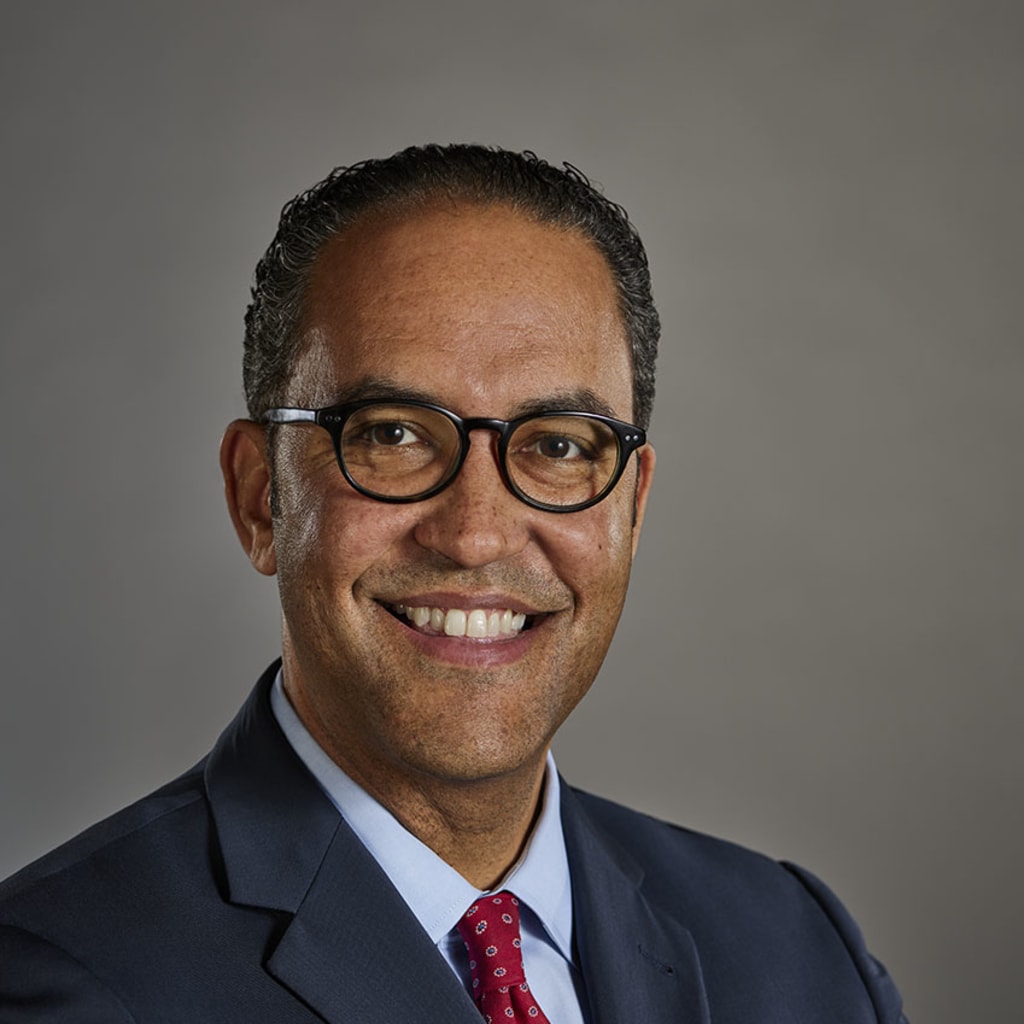
So I spoke with former Republican Congressman Will Hurd. He is a former CIA clandestine officer who represented Texas’s 23rd congressional district for three terms from 2015 to 2021. Will is currently president of ICON Prime, a defense and space technology company, and a member of the Council on Foreign Relations Board of Directors.
Will, thank you for joining me on the President’s Inbox.
HURD:
Hey, Jim, it’s always a pleasure to be on and looking forward to the conversation.
LINDSAY:
Well, I’d like to begin by tapping your personal experience, Will. You were an incumbent Republican member of the House of Representatives in 2018. You won re-election in those midterms, but 41 of your Republican colleagues did not.
That blue wave gave Democrats control of the House. So give me a sense of what it’s like for members on both sides of the aisle when control of the chamber flips.
HURD:
Well, when you’re going from the majority to the minority, it sucks because you no longer, you don’t get to set the agenda. You don’t have oversight responsibilities, right? And for a guy like me, I won that election by 920 votes, right?
I was in the most difficult seat in the House of Representatives the times that I was there, but I was able to win because I worked on bipartisan issues. I work across the aisle. So for someone like me, when we were in the majority, I helped my Democratic colleagues, I worked with them.
And so that favor was returned. But look, it’s everything from you have smaller staff for the leaders of those committees, you have different agenda. And in our case, the majority makers are really the people.
It’s not the far left or the far right that make up these big majorities. It’s people like me that came in in tough districts. So you had this tension between the various edges of the party.
We saw that in 2018, and we’re likely to see that in this next Congress as well, too.
LINDSAY:
Well, let’s talk a little bit about that, Will. And I guess I want to start out with Republicans, because in the wake of Election Day, I have heard two different takes on how Republicans in the House and the Senate are likely to react by what is, by most measures, a historic midterms. One line of argument is that Republicans will be chastised by the results.
They will break with President Trump, and they will look to work with Democrats on at least some issues. The other line of argument I hear is that Republican lawmakers are far more likely to stand by President Trump rather than to desert him, partly because they don’t want Trump to encourage primary challenges in 2028, but partly because they know if Democrats succeed, Republicans are going to find it even harder to take back seats in the next cycle. Which of these do you think is the more likely outcome?
HURD:
To be frank, I think the latter is the more likely outcome, because who are the people that are left, right? The people that won are people that won in overwhelmingly red districts, right? This is what always happens when a party goes into the minority.
It is those really safe seats that are won in primaries, not in general elections. So that’s who you have left. And let’s just look at some of the people that we lost, whether it was because they’re not running again, or they lost, a guy like a Mike Turner and Mike McCaul.
These are guys that are real Atlanticists, right? These are folks that have understood where we stand in the rest of the world. They are people that had relationships all around the world, understood US foreign policy, right?
And these folks are no longer in. So that’s some of the things that we’re going to be missing. And it’s hard.
I always told people when I was running for office, it’s easy to preach to the choir, right? As a Republican, I know how to go in and talk to red districts, right? But in order for me to win, I had to talk to independents and Democrats.
And if you’ve never worked that muscle before, it’s really hard to do. And your district was in Texas around San Antonio, right? That’s right.
From San Antonio, El Paso, I had 820 miles of the border. It was 28 counties, two time zones, roughly the size of the state of Georgia. Roughly the size of the state of Georgia?
That’s right. That’s right. It took me 10 and a half hours to drive across the district.
I’m at 80 miles an hour, which was the speed limit in most of the district. But unfortunately, I found out the hard way. It’s not the speed limit in all of the district.
And so I think the lesson of this election was the majority of voters in a general election do not care about party affiliation. They care about whether elected leaders are doing things that make their life better. And that should be the takeaway.
And whichever party best understands that and meets that will be successful.
LINDSAY:
And do you have a sense that Democrats are learning that lesson? Because I would say that one of the things, Will, that happens with big election victories is that you get soaring expectations about what it is you’re going to accomplish. And at least as I watched cable news networks on election night, I didn’t hear people from the Democratic Party talking about compromising with Republicans.
They talked about enacting their agenda.
HURD:
That’s right. And Republicans are talking about fighting Democrats. And so you’re a student of history, obviously.
History tells us neither party is going to learn the right lesson. And that is going to be the fault lines upon which these important issues that need to be addressed, everything from the affordability issue, to what we do with Iran, to what U.S. foreign policy, how do we rebuild CENTCOM, you know, all of these things are going to be impacted by this political tension that we’re going to see, where the victors misunderstand why they were put in power and those that lost do not reflect appropriately on why they lost.
LINDSAY:
I’m just curious about this, Will, since basically the day after Election Day, a lot of people, certainly here in Washington, began setting their sights on the next election, 2028. In some sense, Washington, D.C. really is in a perpetual campaign. How much do you think the prospect of 2028 is going to hover over decision making on Capitol Hill, particularly in the next year?
Obviously, as you get closer to 2028, it dominates everything.
HURD:
Yeah. So look, I think the people that are thinking about running in 2028, they’re already going to be posturing with their behavior, with their statements, with the things that they want to action, right? And so you’re going to see that.
And as you alluded to, it’s already happening. And it gets amplified because anybody whose name has ever been thrown around as potentially running, they get asked that question by the media almost first. And so more people are interested in what’s going to happen two years from now versus are we going to be able to pass appropriations to fund the government in 2027?
How are we setting up our policy to deal with China? How are we dealing with this data center issue within the view of how are we going to win the AI battles? And so some of that focus on the horse race of 2028 is going to prevent a nuance or a real conversation about policy, which is actually what the voters want.
Voters right now, they’re glad they’re not getting any text messages. They’re glad that all the emails are over. They’re glad the political ads on television are done and they want to see people solve real problems.
LINDSAY:
I have to ask you, since you’ve been in the fire, how does an individual member of Congress make decisions about what issues they want to stake out, how they want to vote on issues? I mean, I’m old enough to remember when both the Democratic and Republican parties were much more heterogeneous, less national. You could find a lot of people crossing the aisle.
That seems to be less true in the modern Congress. So for an individual lawmaker, are some of your decisions already structured for you by party leadership? How do you think about times about when you want to basically not go with leadership?
How does that all work?
HURD:
Well, so somebody who was always the lone Republican or one of three Republicans on a vote, I can give you my perspective, right? And I don’t know if this is germane for the other folks, but for me, what was fascinating representing was in essence a 50-50 district. Hillary Clinton won my district by like five points.
That’s to give you some context of what it was. And now it’s definitely more Republican, even though a Democrat won this cycle. Representing a 50-50 district was very freeing because no matter what I did, half the district was upset with me.
So I did what I thought was best and explained it to people. And here is what, here is why I continue to get reelection when people would always herald my demise. I continue to win because I told people what I was doing and why I was doing it.
And so, so people may disagreed with the action, but they knew why and they appreciated that. And I showed up, right? Like I spent a lot of time in the district.
I set records every year for the number of town halls I would do. And so for me on these big issues, you’ve spent so much time thinking about it and figuring out what is going to be representative of the district. You know how to answer that.
You know, we would get thousands of emails or phone calls a day probably on various topics. And there would be a number of issues that I’m like, I’ve never thought about that. Right.
And so usually if I got 25 or more people asking about a particular topic, that’s when it would get flagged to me and be like, Hey, we’re getting these questions. How are we going to formulate a response? And for me, it started with what makes the most sense and how will this decision improve the life of the people in the district?
So that was my framework, right? Now, oftentimes I bucked leadership and when I was going to do that, I would let them know. And I would be like, guess what?
You know, I’m going to be a yes or no. And be like, Hey, if you fix this thing, you know, I’d get yes. So that’s kind of how I did it.
But again, my pressure, yes, I always had to run tough primaries, but if I didn’t appeal to the most number of voters, I wasn’t going to be successful.
LINDSAY:
Well, I will imagine that a number of the Democrats who are going to be seated on January 3rd are going to face a situation much as you did Will. Because the Democrats picked up seats by winning in what had previously been Republican districts, some of them actually fairly red districts. So I would imagine Democratic lawmakers are going to have the same kind of poll, which I guess obviously creates pressures within the party because some members come from deep blue districts or states where they’re not worried about being challenged by the other party.
They’re worried about challenges in their own primaries.
HURD:
Look, 100% right. Right. And you’re already seeing it.
You’re seeing some of the new Democrats. Right. And look in the House, you’re talking about north of almost 110 new people.
That’s from both sides. Right. So that’s about a fourth of the entire House is brand new.
And you have some Democrats that won and really red seats. And some of them are already joining the Progressive Caucus. And it’s like, that may not be reflective of the district that you came from.
And if that’s an indication of how you’re going to vote and how you’re going to govern, then in two years, you may not see yourself in that seat. And so you’re going to see those tensions within individual offices. You’re going to see that within the wing.
You’re going to see on a number of foreign policy issues from Israel and Palestine to what do we do with Iran to tariffs to AI, how do we deal with China and especially immigration. And you’re still going to have to try to get legislation to the president’s desk. And the president’s going to have to sign it or veto it.
And so that means you’re going to have to make sure that you’re able to get stuff at least to the president’s desk. And if he vetoes it, then you can have the debate about who’s causing what to happen. But if you can’t get to that point because you can’t get your own side together, voters are going to understand that and make a decision based on that.
LINDSAY:
Well, thank you for raising the issue of the presidential veto. When you were first elected, Barack Obama was president of the United States, and Republicans had different positions on a whole range of issues, including and perhaps specifically in the area of foreign affairs. How did you think then about the reality of a presidential veto?
Does that discourage people from wanting to invest the time and energy in an issue because it might get vetoed? Is it, I don’t have to be responsible because I know whatever we deliver to the president’s doorstep, he is going to kill it. And I can basically be on the right side with my voters, even if it’s not the winning side.
How do lawmakers think about that looming threat?
HURD:
Sure. So for me, it was simple. My goal was solve a problem that’s going to make life better for the greatest number of people possible.
And if I can get an 80% solution, I’m going to fight for that instead of holding out for 100% solution. So I want to show that there is some give and take and that we can solve problems together. All right.
Now, I got 21 pieces of legislation signed into law in six years. That’s actually a lot.
LINDSAY:
Yeah, because that’s a pretty good batting average.
HURD:
And I was probably the most targeted Republican by the Democrats, right? So I was able to even pass legislation when Nancy Pelosi was speaker, even though I was her number one target. Because I always started with having a partner from the other side of the aisle on a particular piece of legislation.
So that was my governing philosophy. And I wasn’t there just to fight whatever the other side was doing. And so my philosophy was, let’s push the president to get something that’s reasonable and be the one that’s being unreasonable.
And there’s a particular issue on immigration. We were close to having immigration reform and we had Republicans and were willing to work when we were in the minority. When Democrats came in the majority, they didn’t want to use that bill because it was only an 80% solution versus 100% of what their priorities are.
So legislators that are looking to legislate, the threat of a veto is not something that they’re concerned with. It just means they have two other branches to deal with, the executive branch and the Senate or the executive branch and the House. If you’re a bomb thrower, you love the fact that there is a specter of a veto hanging over because you can say, hey, we did this thing and the other guy is the one getting in our way.
LINDSAY:
I’m struck by the story you just told, Will, because it reminds me of an anecdote I heard from back in the late 40s when a new member of Congress showed up at, I think it was the House Armed Services Committee meeting. And the older senior members were at one end of the table and a more junior member was at the other end of the table, raised his hand and said, may I ask a question? And the chairman said, you just did.
And that was sort of, you know, I guess it gets back to the notion of how much the rhythms of Congress have changed, where it used to be very hierarchical and new lawmakers, when they arrived, were basically supposed to hold their tongue and they would hope over time to build up seniority. But now we have a lot of people, you referred to them as bomb throwers, I think. How does that sort of affect the overall tenor and rhythms of a legislative body when there are people there who don’t have legislating as sort of their top priority?
HURD:
It makes it harder for real solutions that are going to improve the quality of life for the majority of Americans to get done, right? It makes it harder for us to continue policies that have made America the greatest country on the planet, right? And when your interest is clicks or views versus getting a legislation across the line, it makes it harder for legislation to happen.
And look, I can’t speak to what it was like being in Congress in the 40s, but one of the things that has been a problem is the concentration of power in the hands of the few. And so in the late 90s, committee chairmen or chairwomen had probably greater power and authority to pass legislation than the Speaker did. And it was committee chairmen that were setting the direction of legislation.
And those committee chairs would often give more credence and precedence to the members on their committee from the opposing party than they did members of their own party that weren’t on the committee. And so you saw a level of cooperation at that level. And I think that’s why you can say there was more significant legislation getting passed because it wasn’t all being driven from the Speaker’s office, which is really the case, has been the case for the last decade and a half, two decades.
LINDSAY:
I think that’s one of the remarkable things is how much the rhythm of Congress has changed over time. It’s true in the House. It’s also true in the Senate.
Essentially, power has concentrated in leadership for a whole bunch of reasons. And it’s sort of interesting because if you go back in history, turn to the 20th century, so I think early 1900s, at that point, the Speaker actually was the dominant figure in the United States Congress. And I believe it was Speaker Cannon that was eventually rebelling against him, which then over time led to the rise of the committee system where committee chairs really ruled the roost.
So I want to ask you actually something about committees, because you served on the House Intelligence Committee. So to what extent does the House Intelligence Committee operate, let’s say, in a nonpartisan or less partisan way than other committees?
HURD:
Historically, the Intelligence Committee was less partisan. And one reason is most of those committee hearings aren’t on C-SPAN. You’re dealing with classified information.
You’re in closed environments. And so there’s less opportunity to grandstand, and that creates a level of cooperation. And also because the Intelligence Committee is naturally focused on what’s happening outside the United States, there was an expectation of travel to understand what is happening in other places.
So you would be on the road a little bit more during breaks with colleagues from the other side of the aisle. And so there was a little bit more shared esprit de corps because you spent time researching complicated, difficult issues that had an impact, and you got to know members very well on the other side of the aisle. And that was one of the few areas where you have that kind of cooperation.
But those are the things that drive. And then oftentimes, many of the staff that support the Intelligence Committee, whether it’s the majority or minority, come from some of the agencies. And so they didn’t grow up as political animals.
And I think that adds to cooperation across the committees. Now, that’s not always the case. That hasn’t always been the case from even my time.
But that’s historically what has caused the House Intelligence Committee to do that, and especially the Senate side as well.
LINDSAY:
Did you get a sense when you served on the House Intelligence Committee that administrations were cooperative in terms of your oversight or not? And I ask because there’s a famous statement by one member of Congress that on these issues, the executive branch treats members of Congress like mushrooms. They keep them in the dark and shovel them.
I can’t use that word on this podcast. I’ll let you fill in the blank. Sure.
HURD:
Here’s the difference. When you’re out at an embassy or a military base or a station, a CIA station, you’re getting ground truth from the folks that are there. And these are not people that are looking to try to be political.
And I always remind people, I graduated from Texas A&M and went straight into the CIA. Is this where I say Gig ‘em Aggies? That’s right, Gig ’em Aggies.
And so my job was to recruit spies and steal secrets in the CIA. And I didn’t care about what was happening politically because my job was very straightforward. And so when members would come out, I was involved in a lot of oversight visits and things like that when I was overseas.
You’re going to answer the question. So that is why the oversight role is so important. And one of the things that was always fascinating to me when I was on House Intel, many of my colleagues from other countries would ask me questions about their intelligence services because I had a better understanding because we’re one of the few countries that has civilian oversight of Intel and the military.
And so it was even in an incredibly partisan times, that civilian oversight in those areas is important. And that feedback loop that you have on the ground allows you to not be in the dark, right? Now, you got to ask the right questions, right?
You got to have a good background. You got to know what you’re talking about, right, in order to do oversight well. But that’s why I never felt like I was in the dark.
LINDSAY:
I want to sort of explore a little bit more this issue of oversight, because even though oversight investigations are not explicitly mentioned in the United States Constitution, it was established very early on that Congress has significant oversight responsibilities and authorities. It began with the House investigation into why it was that General Arthur St. Clair had his forces routed at the Battle of the Wabash, and it continued up through the 1930s. We had the Nye Committee, which was pretty responsible for the passage of the Neutrality Act, which were a major foreign policy issue before World War II.
You had the Fulbright hearings on Vietnam in the 60s, Church Committee hearings on intelligence abuses in the 70s, January 6th hearings more recently. But you said something that sort of struck me, Will, which is that the Intelligence Committee could have success overseeing because the cameras are off. And so people could have candid conversations or more candid conversations than they might if they had to worry that their soundbite was going to be on MSNOW that night or The Daily Show.
So is it still possible to do serious oversight and hearings or does everything just inevitably disintegrate into a partisan food fight because everybody’s fighting to get the soundbite that will drive the evening news?
HURD:
So I think it is possible. You’re going to have both going on. I held the first hearings on artificial intelligence in the history of Congress in 2017.
2017 seems like a long time ago now, right? Yes, it does. But we should have had hearings on AI well before that.
And what was fascinating there, the conversations deteriorate into is that drone that’s delivering a package going to be peeping in my window, right? But I will say the conversations and the hearings that have been on AI over the last 18 months, yes, there are some people that are grandstanding for the clips, but there’s also very thoughtful questions that are being asked about adopting that into government practices. And so the answer is yes, both can happen, right?
Both can happen. And I think the oversight function is one of the most important functions that is part of the check and balance of our government. And I would always remind people that Congress is a co-equal branch of government.
And one of the ways to do that is through your oversight. And the oversight is not just hearings when the TV cameras are on, it’s meetings at those agencies. It’s understanding the budgets and asking questions about the why.
It’s going out to seeing these projects. And that is something that is important, often gets overlooked. And I will say, I used to chair a subcommittee when I was in Congress, and I was involved in a lot of IT regulations and oversight of cybersecurity hacks.
And the day before a hearing, I would let the people know, here’s my first set of questions, because I want answers to them. And then the opening remarks were over, then I’m asked the first question. They’re like, oh, Congressman, we solved that problem yesterday.
And part of the act of shining a light on something oftentimes solves some of these problems, because nobody wants to answer poorly, right? And so it’s a mix, but we often look at the grandstanding that happens, and that’s never going to go away.
LINDSAY:
In closing, Will, I want to ask you if you see any areas where Democrats and Republicans on Capitol Hill may cooperate in the upcoming Congress? Ukraine, Iran, perhaps tariffs? Are there any issues where you think, and they may not even be issues at the top of the headlines, but issues where we might recover that American spirit of compromise and collaboration?
Or are we destined to just basically have bare-knuckled partisan politics from here on out, my team, your team?
HURD:
Can there be areas, and I can outline, like, I can say there’s an area on streamlining legal immigration, that there could be some cooperation, right? I could argue, you know, one of the issues that we’re going to have to really figure out is how do we rebuild the CENTCOM area of operations, right? There’s never been an official analysis of how many buildings, how large, like some of the rough estimates are about 200 structures, 17 countries, you know, $5 billion.
How do we ensure that we’re able to continue to project power in that region? It’s not the way it was right before the Iran War, and the answer is not zero. I actually do believe there is some area where there can be some agreement between Republicans and Democrats on that particular issue.
So I wish we get to some agreement on Ukraine. There’s been a lot of folks worrying about the military was saying, hey, we got to prepare to be 90 days off of any civilian interaction. And some people have taken that as, oh, there’s going to be an attack.
And guess what? If something like that were to happen, it would come from the Chinese or the Russians. And the best way to prevent that from happening is degrading the capabilities of the Russians over there before it gets here, right?
And so I hope we see some of that, but I don’t know.
LINDSAY:
Well, we saw some of that in the run-up to the election, right? With the passage of the Lindsey Graham Sanctions Against Russia and Iran Act. So I think lawmakers, Democratic and Republican, were disappointed with what President Trump did with the legislation, or should I say his decision to waive sort of the main purpose of the legislation.
HURD:
Yeah. Look, if the leaders decide, we can agree on 80% on most issues. Let’s find that and realize there’s enough credit for everybody to go around, then we can solve some of those problems, right?
And we’re going to find out real soon whether either side of the political aisle is interested or willing to do that.
LINDSAY:
On that note, I will close up this week’s episode of The President’s Inbox. My guest has been former Texas Congressman Will Hurd, President of ICON Prime. Will, thank you for speaking with me today.
HURD:
Hey, Jim, thanks for what you’re doing. And it’s great how CFR is helping the country and the world understand these important issues.
LINDSAY:
Thank you for the very kind words, Will. Today’s episode was produced by Justin Schuster with Director of Podcasting, Gabrielle Sierra.
We Discuss:
- What Will Hurd’s own survival of the 2018 blue wave—winning by 920 votes while forty-one Republican colleagues lost—reveals about who ends up holding the most vulnerable seats.
- Whether a chastened Republican Party will break with President Trump after the midterms, or close ranks to avoid 2028 primary challenges.
- How the departure of Atlanticist Republicans such as Mike Turner and Mike McCaul reshapes the foreign policy center of gravity in Congress.
- Why representing a fifty-fifty district made Hurd freer to buck leadership, and how individual lawmakers actually decide which issues to own.
- How power has concentrated in party leadership, and whether the committee-driven Congress that once passed major legislation can return.
- What makes the House Intelligence Committee less partisan than other committees, and why off-camera oversight is effective.
- Whether Congress can reclaim its oversight role, particularly in an age of artificial intelligence.
- Where Republicans and Democrats might still cooperate in the next Congress, including on legal immigration, Ukraine, tariffs, and rebuilding the U.S. military footprint in the Middle East.
Mentioned on the Episode:
“Sanctioning Russia Act of 2025 (S.1241),” U.S. Congress
This work represents the views solely of the host(s) and guest(s). The Council on Foreign Relations is an independent, nonpartisan membership organization, think tank, and publisher, and takes no institutional positions on matters of policy.
Associate Producer, Video and Audio
- Associate Producer, Video and Audio
Editorial Director and Producer
- Director, Podcasting
More Episodes
 44:29Podcast
 31:32Podcast
 31:20Podcast
 38:03Podcast
 33:42Podcast
 36:05Podcast