The Father of Realism and the Purpose of Power
This episode unpacks the legacy of Hans Morgenthau, the founder of modern realist thought in foreign policy, and what it can teach us about American power today.
Published
Host
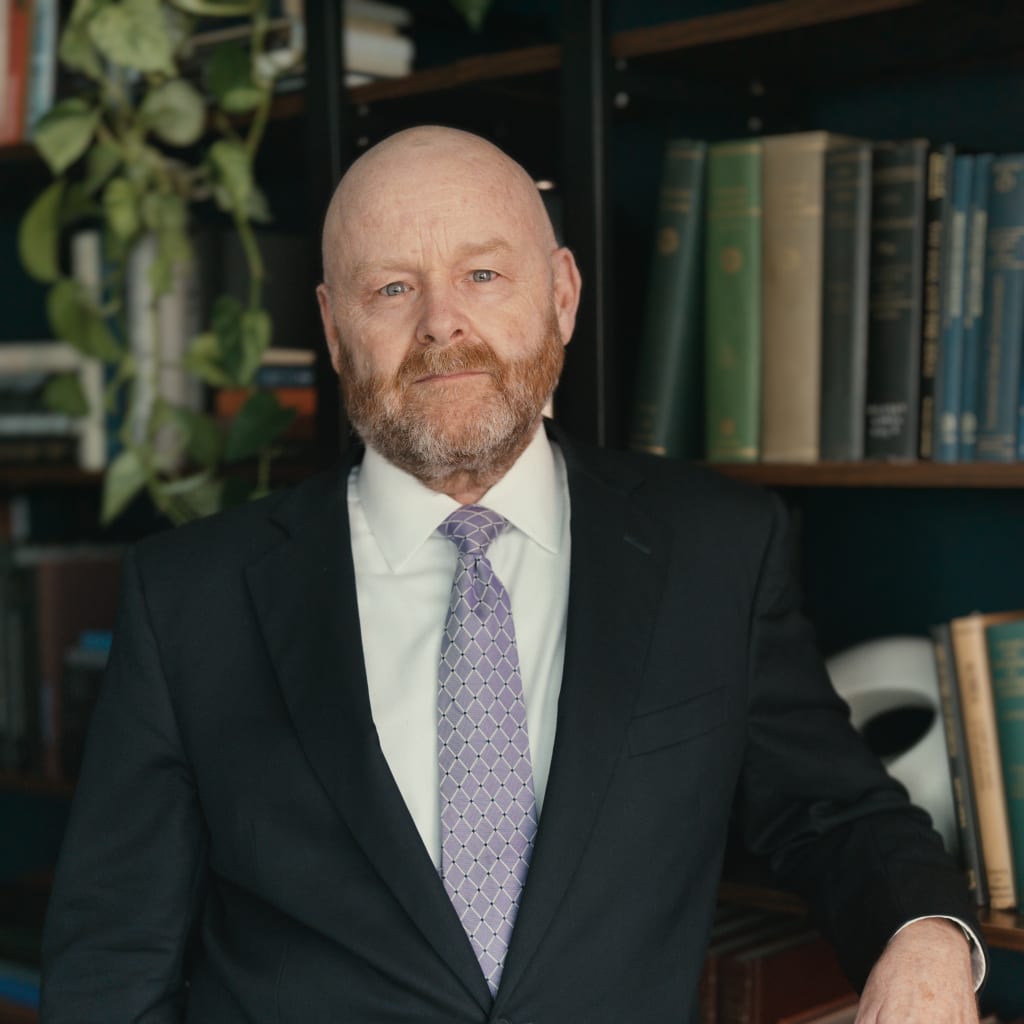 James M. LindsayCFR ExpertMary and David Boies Distinguished Senior Fellow in U.S. Foreign Policy
Guest
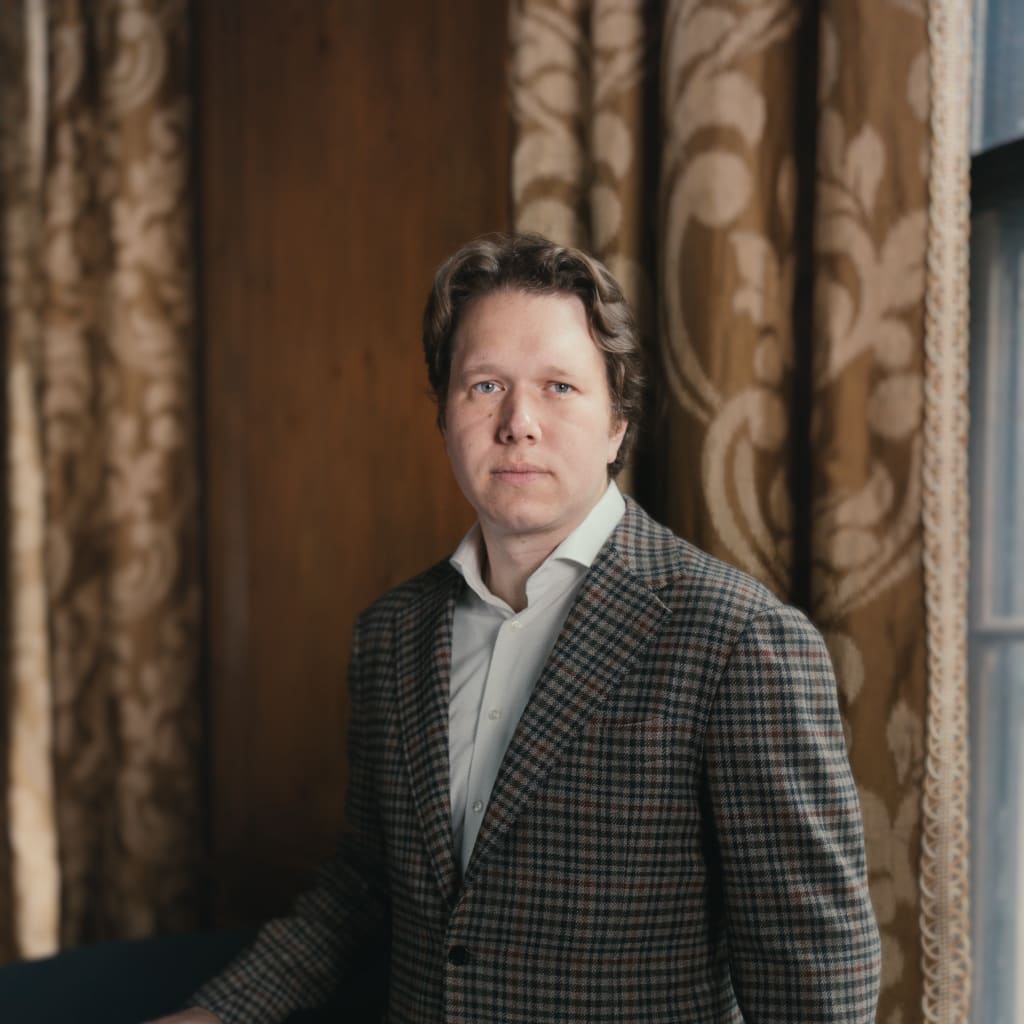 David SacksCFR ExpertSenior Fellow for Asia Studies
TRANSCRIPT
LINDSAY:
Realism is not a manual for foreign policymaking. That statement may sound heretical. Realist thinking has a long and impeccable pedigree, dating back to at least Thucydides’ History of the Peloponnesian War, written some 2,500 years ago.
Legendary thinkers like Machiavelli, Hobbes, and Clausewitz have propounded realist theories, and renowned practitioners like Metternich, Bismarck, have put them into practice. Few would dispute the fundamental claim that realists make about world politics, namely that states operate in an anarchic and competitive arena, and therefore, self-interest is the primary driver of their behavior. States have no higher authority to protect them, so they must rely on their own power, particularly military power, to ensure their survival and success.
In such a world, material national interests trump ideology and lofty moral principles, and great powers tower over smaller ones. But much as understanding the rhythms of the seasons does not tell you what to wear on any given day, translating abstract realist guidance into specific policy choices can be difficult to do. It’s not just that realist thinking comes in many flavors, such as realpolitik, classical realism, or neorealism, each of which stresses a different facet of state behavior.
It is also because reasonable people can and do disagree over what constitutes the national interest, and how best to advance it. Indeed, realists themselves can often be found on the opposite sides of major foreign policy issues. So how should we think about realism?
What are its limits in guiding the choices we make on how the United States should engage the world? And to what extent should the fundamental truths of realism be tempered by other insights into the nature of world politics? To answer these questions, I spoke with my colleague David Sacks, a senior fellow for Asia Studies at the Council, and the author of a new biography, The Realist, Hans Morgenthau and the Purpose of American Power, which profiles a life of the man regarded as the founding father of modern classical realism in international relations.
David, thank you for coming back on the President’s Inbox, and congratulations on the publication of The Realist.
SACKS:
Thanks for having me, Jim.
LINDSAY:
I wanted you to come on the President’s Inbox because I really want to have a discussion about how useful realism is as a way of thinking about foreign policy. And you’re a great choice because you’ve just written a biography of Hans Morgenthau, who is widely regarded as the modern founder of the classic realist school of international relations. While Morgenthau is a towering figure to IR scholars, I suspect he is unknown to most everyone else, a shortcoming you’re working on correcting.
But tell me a little bit about Morgenthau.
SACKS:
Sure. So Hans Morgenthau was born in the winter of 1904 in southern Germany into an assimilated Jewish family, the only child of a physician who treated both Jewish and non-Jewish patients alike, a nationalistic father who was a firm supporter of the monarchy in Germany and a proud patriot. His father Ludwig fought in both fronts of World War I.
After World War I, when Morgenthau was just a teenager, Morgenthau suffers at the hands of his classmates and his neighbors from virulent antisemitism. And this all culminates in a summer day in 1922. And as a top student in the junior class of his high school, Morgenthau was given a leading role in an ancient ceremony in town.
And he rises and ascends a platform and gives a speech to his classmates and neighbors. And they turn their backs on him or even hold their noses at him while he speaks. And he recalls this as the worst day of his life.
Just a few months later, Hitler comes to town, comes to the German town of Coburg, where Morgenthau grew up. And Morgenthau can see Hitler up close. And he can see that as the stormtroopers descend on the town, they’re given orders not to march in formation, not to play their instruments, the band shouldn’t be playing music, et cetera.
But they ignore all of those prohibitions and the police stand aside. A couple of years later, Morgenthau’s father comes under direct attack from the Nazis and ends up losing his medical license. And Coburg would become known as the first Nazi town in Germany, the first town in Germany to elect the Nazis to power at the local level.
And so Morgenthau draws some very difficult lessons from this set of experiences, which is that he could not rely on the law for protection. And these abstract Enlightenment ideals that he was brought up to revere and to think would be respected by all were ignored. And he could see that those with power would do whatever they pleased with the powerless, which was in this case, Morgenthau.
He ends up clerking for a leading left-wing labor lawyer. And at that time, the Weimar Republic is really disintegrating. The judiciary is overwhelmingly conservative, doesn’t support the Weimar Republic on the whole.
And Morgenthau can see that the legal briefs that he’s preparing and that the man he is clerking for presents to the judges don’t really matter. What matters is political power. And that is really the formation of Morgenthau’s world view that he would carry with him for the rest of his life.
LINDSAY:
So, David, Morgenthau leaves Coburg. He, for a number of years, really lives a nomadic existence. He eventually ends up in the United States.
Help me understand at the time sort of what the dominant view of foreign policy or what drove international relations as was understood in the United States.
SACKS:
Morgenthau arrives in New York in the summer of 1937. As you mentioned, Jim, he doesn’t have a reputation. He hasn’t really published a major work yet.
It’s hard for him to find a job. It takes him a long time. And then it’s just as a substitute teacher at Brooklyn College.
So he isn’t really weighing in publicly on all of these debates yet. He’s keeping a low profile. But the things that Morgenthau is responding to, what he sees around him is this notion that human nature is fundamentally good.
That’s how Americans see it. Americans believe that human nature is fundamentally good. History is a story of progress.
And that basically what is happening over in Europe is an aberration. And also it doesn’t necessarily bear on U.S. security. And so there is a notion that the United States intervened in World War I, but then these unprincipled European empires went back to practicing power politics.
Now there’s another conflict about to emerge and does emerge, but that the United States doesn’t really have a dog in this fight. And so what Morgenthau is responding to at the beginning in his first writings is trying to really center power in this debate and say that human nature is not inherently good. Humans seek to dominate others.
And you can scale that all the way up to the level of international politics. And that is what states are after. They’re after power.
LINDSAY:
Okay, so that’s his first book, which comes out in 1946, Scientific Man versus Power Politics. I think it is safe to say that the reviews of that book were harsh. What was the main critique?
SACKS:
So this is a slim book that Morgenthau writes in 1946. And actually for the rest of his life, Morgenthau would recall this as the favorite book that he had written. So it had a special place in his heart, but almost nobody agreed with him.
It was eviscerated by the reviewers across the country. And so what Morgenthau was trying to do in Scientific Man is really to wipe the slate clean, to say that this idea that international politics can be studied empirically and that you can find solutions to the question of conflict is a flawed way of thinking about the world. And he also attacks what he calls rationalism.
And he notes that there is an irrational element that runs through international politics. And as a result, there were limits to how much you could understand about international political dynamics. He’s also railing against liberalism.
LINDSAY:
And he’s a critic of things like international law, arbitration as a way to settle disputes between countries.
SACKS:
That’s right. Collective security as well. Disarmament is another one of the things that he goes after.
He has a famous line that, you know, if you take away everybody’s arms, they will find something else to fight with. And if they can’t find anything else, they’ll fight with their fists. The conflict was inherent in the way that the world works.
It’s a tragic view of the world. But that’s the one that he puts forward. And so I think part of what he’s reacting to as well is that there was this heady moment coming out of World War Two, where the United Nations was going to be able to resolve all of the world’s problems.
You know, if there’s any issues between the great powers, the United Nations would find a resolution to those disputes. And there’s also a notion that actually America’s kind of liberalism or its optimism had been vindicated by the war. Fascism had been defeated.
It was in the dustbin of history. And Morgenthau takes a contrarian view. He says that actually, our misguided beliefs and how the world works led us almost to ruin.
We escaped by the skin of our teeth. And so there needed to be a fundamental rethinking of the way the world worked in order to ensure that this didn’t repeat itself.
LINDSAY:
And I should note that Scientific Man versus Power Politics comes out in 1946. That is the same year that Winston Churchill travels to Fulton, Missouri, gives his Sinews of Peace speech, which is better known as the Iron Curtain speech. And newspapers across the country pilloried that speech, largely because they argued that Churchill was jeopardizing essentially FDR’s one world vision, that after World War II, we had sort of put great power rivalry aside with the United Nations, had set ourselves on a different course, we would settle disputes peacefully rather than on a battlefield.
It strikes me, David, that one of the central insights of classical realism, and again, Morgenthau is seen as being the father of classical realism in its modern variant in the United States, is that global politics is an anarchic and competitive arena. Self-interest is what drives state behavior. States try to secure their own survival and their power and their prosperity.
That’s, I think, a pretty incontrovertible fact. Where I’m stuck is on the question of how you translate that observation about the fundamental driving force of American foreign policy into specific foreign policy choices. In here, one of the sort of great examples of perhaps the indeterminate nature of realist theory is the clash between Hans Morgenthau and Henry Kissinger, another classical realist thinker and policy practitioner over the war in Vietnam.
Tell me a bit about their dispute, because they took very different perspectives on the war in Vietnam.
SACKS:
So if we just rewind the clock a little bit, Morgenthau visits South Vietnam in the winter of 1955. A former student of Morgenthau’s had become a top advisor to the leader of South Vietnam, to Ngo Dinh Diem. And he arranges for Morgenthau to sit down with Diem in Saigon and interview him.
Clearly, he believes that Morgenthau would be sympathetic to the argument that the United States should increase its presence in South Vietnam and prop up the Diem regime. Morgenthau writes a scathing profile of Diem in the Washington Post shortly after meeting him, where he says that Diem is building a replica of the totalitarian regime in the North that he opposes. And he’s urging Diem to liberalize, or else you’re going to be giving the Vietnamese people nothing really to choose from.
And from that moment going forward, Morgenthau starts to oppose U.S. intervention in Vietnam. For Morgenthau, this is rooted in his realist principles. He does not think that Vietnam’s future will have a significant impact on the regional balance of power.
So he says even if Vietnam goes communist, that is not going to shift the entire region into communism. He rejects the domino theory. He believes that communist victories can be localized.
He thinks the United States is faced with a civil war, not a war of foreign aggression in Vietnam. And he urges U.S. policymakers to stand on the side of revolution and change and not try to prop up an unviable status quo. So that’s where Morgenthau is coming from.
And he’s very early and ultimately prophetic in warning against U.S. intervention in Vietnam. Where Kissinger enters this debate opposite Morgenthau is actually in the pages of Look Magazine, which had a circulation of over seven million readers at this moment. And they’re debating in the summer of 1965.
LINDSAY:
And this is as Johnson is deciding to send combat troops in large numbers to South Vietnam.
SACKS:
That’s right. And Morgenthau says we need to reduce our footprint in Vietnam. We need to find an off-ramp and get out. And how that looks is up for debate, but that should be the U.S. strategy. And Kissinger counters and says the choices that the United States faces are not the same choices that it faced in 1961 and that the size of the U.S. commitment had determined its stake in Vietnam. So, you know, we could debate whether we should have gotten involved or not, but the fact that we had gotten involved meant that we needed to see it through to victory. So they are on opposing sides of the debate in Vietnam.
And then in June of 1965, Morgenthau debates the sitting national security adviser, McGeorge Bundy, on national television, on CBS News in primetime. Morgenthau brings these arguments to the American public, and that’s really his breakthrough as a public intellectual and as the face of the anti-war movement in academic circles. Morgenthau leads teach-ins across the country, and he continues to be a thorn in Kissinger’s side after he becomes President Nixon’s national security adviser and secretary of state and oversees further escalation of the war.
LINDSAY:
I must say it’s a different time back in the 1960s. It’s hard to imagine in 2026 an academic being able to debate the national security adviser primetime on CBS. Again, a little bit different in terms of the political context.
Did Morgenthau view Kissinger as abandoning realist principles, or did he view it as Kissinger just not applying them correctly?
SACKS:
I don’t think that Morgenthau ever thought Kissinger abandoned his realism, but there’s a remarkable exchange that they have in 1968 when Kissinger is advising Nelson Rockefeller as he seeks the Republican nomination for President. Kissinger develops Nelson Rockefeller’s peace plan for Vietnam, and they unveil it at the Hilton Hotel in New York. Morgenthau writes a scathing critique of this plan in the New York Review of Books.
He calls it deceptive and unworkable and the most elaborate attempts by supporters of the war to cover their tracks. Kissinger waits six weeks before he responds to Morgenthau. He tells him how hurt he was and that as friends, they should assume...
Because Kissinger, like Morgenthau, was born in Germany and emigrated to the United States. They’re born 60 miles apart, roughly. And so Morgenthau responds and he says, I did not intend to question your motivation.
I intended to question your political judgment. And I think that is the core part for this, which is that for classical realists like Morgenthau, they put a lot of weight in the judgment and prudence of statesmen. And in a sense, that’s a very un-American thing to do, because we like to have these very clear-cut answers to the problems and, you know, we want to have equations to plug in variables and we want to know what is the right and the wrong path.
But for Morgenthau, there is a wisdom to statesmen that he really valued and that you couldn’t quantify or manipulate. And I think that for Morgenthau, Kissinger, in this instance in Vietnam, lacked the judgment that his realism should have given him.
LINDSAY:
How did Morgenthau assess what we would today call the liberal international order that was created in the aftermath of World War II? Was he a fan of what Truman and Acheson and Marshall sought to construct or a critic?
SACKS:
He was quite critical of the Truman Doctrine. The Truman Doctrine in 1947, when it was unveiled, said that the United States would assist people around the world in fighting communism and support them and their aspirations for democracy and freedom. And for Morgenthau and for realists more generally, a nation has a finite amount of power, and it therefore needs to husband that power to protect its truly vital interests.
And it needs to have a hierarchy of interest. Not everything has the same importance. And so for Morgenthau, that kind of language from Truman would imply that the United States has an equal interest in preventing Moldova from going communist as Japan, for instance.
So Morgenthau was explicitly critical of the kind of universalism that we saw from the Truman administration and from subsequent administrations. Morgenthau thought that the United States did have a number of vital strategic interests around the world. And so as Morgenthau outlined to them, it should maintain a balance of power in Europe and a balance of power in East Asia.
It should also be the predominant power in the Western Hemisphere and prevent rivals from gaining a foothold in the Western Hemisphere. But beyond that, this was a question of the United States should be willing to support, you know, other countries and engage in other regions if it didn’t require that much power. But other than that, it should really be focused on just those few vital interests.
LINDSAY:
Did Morgenthau explain, David, how one knows what a country’s vital interests are? I ask that against the backdrop of the fact we have a very robust debate going on in the country right now as to what and where America’s vital interests lie. Do we need to be in the Middle East?
Do we really have to preserve our position of preeminence in the Western Pacific? Can we go away from Europe and leave Europe to the Europeans? What did Morgenthau say about how one defined something that is so essential to his theory of international relations?
SACKS:
He wrote a book in 1951 called In Defense of the National Interest. And it really did help center the concept of the national interest in the conversation. Because even the notion of a national interest was contestable at the time and was a concept that people argued and fought over.
Some people believed that the idea of the national interest was was not really American. So in that book, though, Morgenthau again says that the United States does have an interest, a vital interest in being the predominant power in the Western Hemisphere. He then criticizes Kennedy after the Cuban Missile Crisis for agreeing not to intervene in Cuba as as part of the resolution of the of the crisis and says that the United States erred in allowing the Soviet Union to make Cuba into a military and political outpost in the Western Hemisphere.
In Europe as well, Morgenthau believes that the United States should prevent a rival hegemon from coming to power. Of course, he saw with his own eyes what happened when Germany attempted to become the regional hegemon and what happened as a result of that. And then in East Asia, it’s important China was impoverished just coming out of a civil war.
Morgenthau was very early in arguing that the United States should recognize the People’s Republic of China. But he also said at the same time that if China made a bid for regional hegemony, the United States should make clear that it would be at war with the United States and that it would not countenance that either.
LINDSAY:
I’m struck by the reference you made to Morgenthau’s views on Cuba. He did not know this before he passed, but if the United States had followed his advice, it would have been catastrophic given the fact that the Soviets had tactical nuclear weapons in Cuba and almost certainly would have used them in the event of a U.S. invasion, something he essentially counseled. That takes me to the broader question of if you can identify successfully what your vital interests are, how do you know what the most effective strategy is for achieving that?
And I will note that some policies that we don’t like, we may refer to as appeasement, but the similar policy, if we think it’s done in the right place at the right time, we call accommodation. So, does Morgenthau’s writing shed any light about how you think about specific choices?
SACKS:
Well, it’s interesting because when we think of realism today, I think that what we are really going back to is what we would call neorealism or structural realism, which really focuses on the anarchical nature of the world. It views states as black boxes or billiard balls and the famous metaphors. And so as a result, you don’t really have to get into the internal politics of a state and try to interfere in the domestic politics or shape the domestic politics.
But what was striking to me in doing the research on Morgenthau is that the domestic politics were very important to Morgenthau. And so in Politics Among Nations, he distinguishes between status quo and what he terms imperialist powers. And so to your question, Jim, you can accommodate a status quo power and there can be peaceful change and a relative redistribution of power between two states that basically accept to the rules of the road and accept to the order as it exists.
But accommodating a revisionist or imperialist power leads you in a very different direction. And so, of course, as you know, E.H. Carr wrote the 20 Years’ Crisis.
LINDSAY:
Referring to the interwar years between World War One and World War Two.
SACKS:
Right. And that is in part to justify appeasing Hitler. I mean, that was E.H. Carr’s preferred policy prescription. You know, and he thought that Neville Chamberlain’s diplomacy regarding Czechoslovakia was wise. Morgenthau, though, saw Hitler for what he was and saw that Hitler would never accept a balance of power in Europe and that he was an imperialist or revolutionary leader. And so Morgenthau was actually one of the most perceptive critics of Carr, even though he and Carr are both generally seen as classical realists.
And Morgenthau has a great line where he is talking about Carr, where he said it is a dangerous thing to be a Machiavelli. It is a disaster to be a Machiavelli without virtù, using the Italian word there, which means to not have judgment or skill. And so, again, it goes back to how important statesmen are in understanding the intentions of other leaders and other statesmen and adjusting policies accordingly.
LINDSAY:
That immediately brings to mind for me, David, our current circumstances. It’s very easy to look in the past and say, yes, Hitler clearly was a revisionist power and should have been stopped the sooner the better. But if you look around today, is China today a revisionist power or a status quo power?
Is it a power that can be accommodated and will have whatever its ambitions are sated or a country that if its ambitions are accommodated, its ambitions will simply grow?
SACKS:
I think that that’s the question we are all faced with today. What kind of power does China seek to become? And there are, of course, major differences over that.
And so, I don’t want to sit here and say that this is 100% what Morgenthau would say about China. What we do know about Morgenthau’s view on China, though, is that he believed that mainland Southeast Asia was a natural Chinese sphere of influence. And that’s also partially why he opposed U.S. intervention in Vietnam. So, he would say that any attempt to make Cambodia, Laos, Myanmar, Vietnam not a part of a Chinese sphere is bound to fail. But Morgenthau was also very clearly supportive of the U.S.-Japan alliance and the U.S.-Philippines and Australia alliances, and did say that the United States should station combat power offshore along the first island chain to balance Chinese power.
LINDSAY:
What is the first island chain for people who aren’t used to inside Washington, D.C. lingo?
SACKS:
First island chain runs from Japan down through Taiwan and the Philippines and is basically a natural barrier that in a sense impedes Chinese power projection beyond those limits and enables U.S. access into East Asia. And so, Morgenthau made very clear that he would station combat power there to balance Chinese power. But, you know, this brings up, of course, I think the next question you’re going to ask, which is where Taiwan fits in this?
LINDSAY:
Well, I wasn’t going to go that deep down rabbit hole because I have broader questions I wanted to ask, but I was just simply wanted to tap into your, I guess, other expertise, which is besides being deeply informed about Hans Morgenthau and classical realist theory, you also are an expert on Asia.
SACKS:
You know, one thing that was very interesting is that Morgenthau struggled with the question of where Taiwan fit in this. And so, he was very early in advocating U.S. normalization with the People’s Republic of China. And then, of course, the follow up question was what happens to Taiwan?
And at some points, Morgenthau said, well, of course, U.S. protection of Taiwan would be part of a settlement with China. At other points, he seemed to endorse the notion that Taiwan was historically a piece of Chinese territory and that the United States could maintain a balance of power through Japan, the Philippines and Australia. So, Morgenthau is a little squishy on where exactly he would draw the line in East Asia.
And so, I just thought that that was an interesting thing that I learned through the research.
LINDSAY:
Now, David, I’ve been focusing our conversation on power because power is central to realist thinking regardless of what variant or shade we’re talking about. But I’m struck that you subtitled your book, The Realist, Hans Morgenthau and the Purpose of American Power. It seems to me in reading your book and other things that you’ve written that Morgenthau wasn’t arguing that the United States should maximize its power.
It seems to me that, I guess, an opposite concern was how can you constrain, contain or channel power? So, help me understand that part of Morgenthau’s thinking and how it informs realism.
SACKS:
You know, I think what you can see from Morgenthau’s lived experiences in Germany is that he did not romanticize power and he is not an inheritor to the tradition of realpolitik or machtpolitik. His realism is different. And Morgenthau understood that power that was unbound, that was not tethered to certain norms or certain rules of the road leads in very bad directions.
And that power had to be constrained and channeled in a way that moves the world in a better direction. And so, you know, to give just an example of his thinking, you know, there is an evolution in Morgenthau’s thinking that is quite important. If you read Scientific Man, which we spoke about and comes out in 1946, you know, he could have been writing that about any country in the world.
There is nothing really specific about the United States in his analysis or his prescriptions. But in 1960, he writes this book called The Purpose of American Politics, which my subtitle is riffing on. And it is his attempt to look at domestic politics in the United States and what U.S. foreign policy should stand for and should reflect. And he comes to the conclusion that the United States is a unique power in the world. He says that, you know, the empires of the Huns and the Mongols mean nothing to us because they left nothing for future generations. He says ancient Rome and Greece, they left us a legacy of republican government, of the rule of law.
And therefore we remember them and we’re thankful for their legacy. And he sees the United States as the inheritor of this tradition. And so Morgenthau believes that it is critical for the United States to stand as an example for other countries.
And he says that this is a light to attract strangers, not a flame to spread throughout the world. So he is not somebody who believes the United States should seek to impose democracy or forcefully help democratic movements. But he thinks that the United States should, of course, have a very strong democracy and what he terms equality and freedom that other countries can turn to.
And so for Morgenthau, again, there is a purpose to American power. It is not the United States should do X because it will increase its power. For Morgenthau, power is an instrumental concept.
The question that one should always ask is power in service of what. And for Morgenthau, that is a very important thing, especially for the United States, because he recognizes that the United States is founded as an idea or as an ideal, and you can never separate its foreign policy fully from those.
LINDSAY:
And this, of course, comes back to the point you made earlier, David, about the importance of judgment, which is something that is easier to call for than to know in advance or to exercise. All of this takes us, I think, to the present date and the Trump administration. When President Trump first ran for president, he spoke about his belief in foreign policy realism.
Stephen Miller, who’s now the White House chief of staff, famously told Jake Tapper last year, quote, we live in the real world, Jake, that is governed by strength, that is governed by force, that is governed by power. These are the iron laws of the world since the beginning of time, end quote. Miller is perhaps not as elegant as Morgenthau, but he seems to be describing the same sort of philosophy.
SACKS:
Well, I think that Morgenthau would view those types of statements as a romanticism of power that he did not share. I’ll give a few examples. Morgenthau is a proponent of the balance of power as a way of preventing conflict, especially conflict between great powers.
But he also noted that the balance of power is embedded in a common moral framework and that countries had to agree that there were certain things that they just would not do to one another. And he observed that political action throughout history had always been subjected to ethical scrutiny and that countries consistently did not do certain things that their power theoretically would have enabled them to do. So, for instance, Morgenthau talks about how there was a norm over time against assassinating foreign leaders.
Morgenthau thought that was stabilizing. There were also certain conventions about how you treat prisoners of war, other conventions not to target civilians during conflict and to only target enemy combatants. And so Morgenthau believes that actually, again, in an attempt to sand down the rough edges of the struggle for power that he thought was inevitable, statesmen should seek to erect these kind of normative restraints or constraints on the use of power.
And I think that that’s one of the many things that’s missing from this administration, whether that is, again, kidnapping foreign heads of states, assassinating essentially a foreign head of state in Iran, or whether that’s the boat strikes in the Caribbean. I mean, I think there is a glorification of power and a notion that powers have never agreed to subject their actions to this kind of ethical scrutiny or to constrain their power that Morgenthau would have been very put off by. And I think that he would draw that out.
But again, to get back to the previous question you had as well, there is something uniquely American, I think, that he believed leaders had to keep in mind, which is that American power stems from the example that it sets at home and from its democracy and from the rights that it grants its citizens and that its citizens enjoy. And I think that Morgenthau’s critique of the Trump administration would be very similar to some of the critiques he made during the Vietnam War, which is that if that example erodes at home, then that’s a very different America abroad and in the world. And in the long run, that undermines US power.
LINDSAY:
I’m struck, David, as I’m listening to that last answer, that much of what you seem to be describing can be summarized as enlightened self-interest, a concept that is often attributed to idealistic or writers and thinkers. Is there at some point in which Morgenthau’s thinking overlaps with people who we don’t normally think of as being realists?
SACKS:
You know, one of the striking things to me about Morgenthau’s thought as well is that he really did try to grapple, for instance, with nuclear weapons. And what did they mean, not just for humanity, but for, of course, international politics and the struggle for power that he often wrote about. And he famously wrote that nuclear weapons had rendered the nation-state obsolete and it had made war a suicidal absurdity.
And so for Morgenthau, and I actually think that this is something that he held in common with some other post-war realists like Reinhold Niebuhr and others, he viewed the nation-state as something that was fit for a certain historical era, but would not necessarily be the organizing principle for all of eternity. And he thought that nuclear weapons actually meant that humanity had to start transferring their loyalties away from the nation-state towards some kind of supranational entity. When people said, okay, well, how do we get from here to there?
Morgenthau said, well, I don’t really have an answer for that. He struggled to have a roadmap. But I thought that the very fact that he raised that, people would say, that’s not a realist position, right?
To think that we would move towards world government and that that’s a desirable thing. That is, as you said, an idealist position is generally conceived as such. But Morgenthau has a whole section of Politics Among Nations on world government.
And when he’s talking about nuclear weapons, he talks about these types of issues. And so that is an area where I actually do think that you see Morgenthau take a view that we would generally consider to be an idealistic one.
LINDSAY:
On that note, I’ll close up this week’s episode of The President’s Inbox. My guest has been David Sacks, a senior fellow for Asia Studies at the Council on Foreign Relations and the author of the new book, The Realist, Hans Morgenthau and the Purpose of American Power. David, thank you very much for joining me.
SACKS:
Thanks for having me, Jim.
LINDSAY:
Today’s episode was produced by Justin Schuster with director of podcasting Gabrielle Sierra. Jorge Flores was our recording engineer.
This transcript was generated using AI and may contain errors.
We Discuss:
- How Hans Morgenthau’s boyhood in Coburg—the first German town to elect the Nazis to a majority—watched the rule of law collapse around him and pushed him toward a worldview built around power rather than law.
- Why Morgenthau’s first book, Scientific Man versus Power Politics, was eviscerated by reviewers yet remained the work he most prized.
- Morgenthau’s clash with Henry Kissinger over Vietnam, which showed two realists reaching opposite conclusions.
- How realists decide what counts as a vital interest, and why Morgenthau criticized the Truman Doctrine.
- Whether China is a revisionist power, and what Morgenthau’s realism would mean for U.S. strategy regarding Taiwan and the first island chain.
- What Morgenthau meant by defining American power as “a light to attract strangers, not a flame to spread throughout the world.”
- Whether the Trump administration’s embrace of power politics reflects Morgenthau’s realism or the misuse of power he warned against.
- Why Morgenthau argued that nuclear weapons had made the nation-state obsolete.
Mentioned on the Episode:
E. H. Carr, The Twenty Years’ Crisis: 1919–1939, Macmillan
Hans J. Morgenthau, In Defense of the National Interest, Alfred A. Knopf
Hans J. Morgenthau, Politics Among Nations: The Struggle for Power and Peace, Alfred A. Knopf
Hans J. Morgenthau, The Purpose of American Politics, Alfred A. Knopf
Hans J. Morgenthau, Scientific Man versus Power Politics, University of Chicago Press
David M. Sacks, The Realist: Hans Morgenthau and the Purpose of American Power, Henry Holt and Company
This work represents the views solely of the host(s) and guest(s). The Council on Foreign Relations is an independent, nonpartisan membership organization, think tank, and publisher, and takes no institutional positions on matters of policy.
Associate Producer, Video and Audio
- Associate Producer, Video and Audio
Editorial Director and Producer
- Director, Podcasting
More Episodes
 32:50Podcast
 44:29Podcast
 31:32Podcast
 31:20Podcast
 38:03Podcast
 33:42Podcast