Will There Be Meddling in the Midterms?
This episode unpacks the ongoing threat of influence and interference operations posed by Russia, China, and Iran as the 2026 U.S. midterm elections approach.
Published
Host
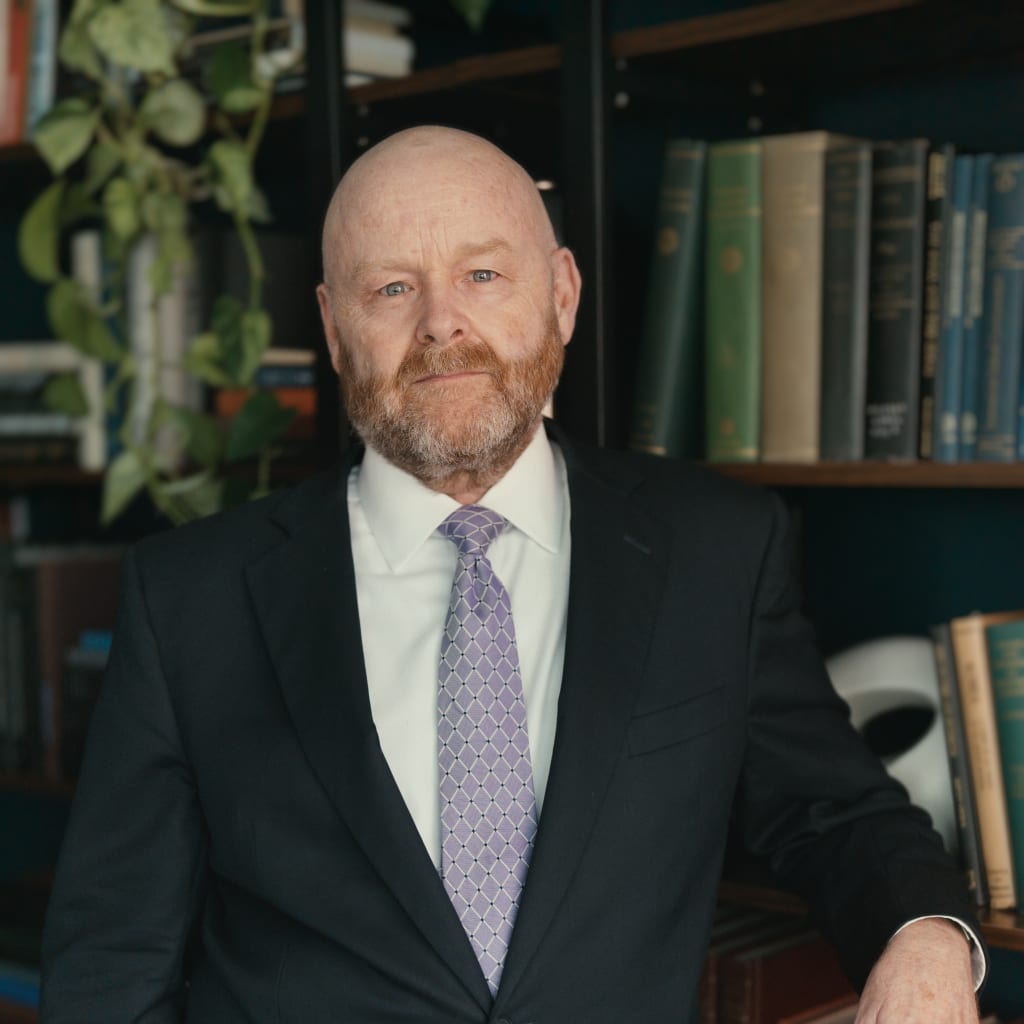 James M. LindsayCFR ExpertMary and David Boies Distinguished Senior Fellow in U.S. Foreign Policy
Guest
 Jessica BrandtCFR ExpertSenior Fellow for Technology and National Security
TRANSCRIPT
LINDSAY:
In July, President Donald Trump delivered a primetime address to warn the nation that America’s election infrastructure was vulnerable to foreign attack, specifically alleged that China had sought to influence the 2020 presidential election. Trump did not provide any evidence that any election had been disrupted or that ballots had been miscounted. Instead, the Chinese actions he cited involved the legal purchase of voter rolls.
Trump notably did not publicly raise the issue of China’s meddling in U.S. elections when Xi Jinping visited Washington, D.C. last month. While Trump’s charges have receded from the headlines since July, foreign efforts to influence and potentially disrupt elections or change their outcomes remain a real concern. Russia has led the way over the past decade in using social media to amplify social and racial divisions in the United States, most famously with its effort to help Trump and hurt Hillary Clinton in 2016.
China has dabbled in similar influence operations, though at a smaller scale and typically focused at down-ballot candidates who have criticized the Chinese government. Iran has been another culprit. It successfully hacked the Trump campaign in 2024.
All three countries are still pursuing influence operations. The development of artificial intelligence may even make such operations easier to conduct as well as more effective. The nightmare scenario would be if foreign governments went beyond poisoning the information environment and succeeded in disrupting an election or changing vote counts.
To limit foreign influence and election interference, the Obama, first Trump, and Biden administrations all took steps to limit the ability of foreign governments to exploit social media and to shore up the integrity of America’s election infrastructure. The second Trump administration, however, has rolled back many of these changes. The stakes for the United States are obviously immense, with the midterm elections just weeks away and control of Congress hanging in the balance.
Democracies rest on the ability of their citizens to choose their leaders. If foreign powers can distort the public debate or worse, change election outcomes, democratic governance is imperiled. To better understand the potential foreign influence and interference threats to the upcoming midterms, I sat down with my Council on Foreign Relations colleague, Jessica Brandt.
She has deep practical experience facing that challenge. She served as the director of the Foreign Malign Influence Center at the Office of the Director of National Intelligence during the 2024 U.S. election cycle, where she led the U.S. intelligence community’s efforts to mitigate foreign influence threats. Jessica, welcome to the President’s Inbox.
BRANDT:
Thanks so much for having me.
LINDSAY:
Let’s jump right into it. I’d like to begin our conversation with some definitions.
I hear two phrases commonly being used when it comes to election integrity in the activity of foreign governance. One is foreign influence operations. The other is foreign interference operations.
Do these two phrases mean the same thing, or do they describe different kinds of activities?
BRANDT:
They don’t mean the same thing, so I’m glad you’re drawing this distinction. Influence campaigns are efforts to shape the popular political attitudes, you know, of another country. And interference campaigns, those are efforts to actually prevent or degrade our ability to conduct an election or conduct the vote.
LINDSAY:
Okay, so influence operations are about affecting what people think or believe, and interference operations are about preventing people from voting or changing the outcome.
BRANDT:
Correct.
LINDSAY:
Okay, so walk me through the first set of activities, foreign influence operations.
How historically have they operated? What kinds of influence operations do we see?
BRANDT:
So this is the bulk of the activity. I would say there are three big actors in this space, Russia, China, and Iran. Russia has conducted influence campaigns that broadly have four goals, right?
They’ve endeavored to shape the outcome of presidential elections. They have endeavored to shape the outcome of congressional races. That has tended to be around degrading support for Ukraine, sort of pro-Ukraine candidates and policies.
We’ve seen them, I think, as is well known, try to undermine confidence in legitimacy of our democratic processes and of our vote, and then more broadly to amplify social splits.
LINDSAY:
How exactly do they do that, though? What are the vehicles that they use historically?
BRANDT:
They use a wide variety of tools and tactics. I think, you know, much of the conversation focuses on what happens online. We have seen them—
LINDSAY:
So social media is a big vector.
BRANDT:
Social media campaigns. You know, I think there have been shifts over the sort of decade or more that we’ve been, you know, talking about this publicly. You know, in 2016, it was the Internet Research Agency, a proxy outfit that produced content memes that you would, you know, many millions of Americans saw online.
But I would argue that wasn’t, you know, the most effective element of its campaign. In 2016, in particular, I think you saw, I know you saw the hack and leak of campaign materials, which shaped headlines in mainstream, you know, news. And I think that was is widely, you know, understood to be the sort of more effective tool that they used.
But it’s not just that, right? I think we’ve sort of seen this evolution away from reliance on proxy, you know, troll farms into sort of more targeted efforts to, you know, hide their hand and to try to disguise influence content as authentic domestic advocacy.
LINDSAY:
So how does that work? Give me an example.
BRANDT:
Well, in 2024, there’s a lot of material now in the public domain about the, for example, the Tenet Media case. And I commend to you that the Department of Justice, you know, there was an affidavit and an indictment, you know, hundreds of pages of documents, including just Russian planning documents. But what we saw is this effort to use witting and unwitting Americans, you know, networks to seed content that appeared to be to give it the credibility and cachet of being, you know, largely domestic content.
And I think Russia well understands that, rightly so, triggers all kinds of complications around, you know, protections for speech, which, of course, is the most important thing here.
LINDSAY:
But in that situation, what’s happening is that the Russians are finding Americans who are either willing to promote a Russian line or will promote a Russian line for pay. And the idea is that since you’re hearing it come from the mouths of people who are Americans, that information has greater credibility than if a Russian press spokesperson were saying.
BRANDT:
Correct. Exactly. And I think often, you know, folks are unwitting.
For example, we saw.
LINDSAY:
And when they get paid, they’re not disclosing the fact that they’re being paid by the Russians.
BRANDT:
But in some cases, you’d see like freelance journalists who are being paid, you know, to produce freelance content. There may be an intermediary or a middleman. They may not know, in other words, you know, who’s been who’s behind that activity, which is.
LINDSAY:
But anybody reading is not going to see a little thing at the bottom of the article saying the Russian government indirectly or directly funded this piece.
BRANDT:
Correct. Correct. Definitely not. And so, you know, that appearance of authenticity is an important way that foreign governments and Russia in particular tries to hide its hand.
LINDSAY:
OK, so now let’s talk about interference operations where you actively disrupt either the casting of ballots or the counting of ballots or change the outcome of votes. Have we seen that so far?
BRANDT:
So the intelligence community has consistently said two things. One, we don’t think that a foreign adversary could change the results of an election, have an effect at scale without detection, either because of physical or cybersecurity monitoring, post-election audits, lots of ways that we would, you know, intelligence collection, lots of ways that we might know about that. And it is also said we don’t see foreign adversaries attempting to conduct that kind of operation.
I think our adversaries do understand that that is a red line and broadly have sought to respect that. I think, you know, there’s sort of the 2016 example of Russia targeting election systems in all 50 states. But that’s kind of the outlier.
LINDSAY:
But my understanding is, and correct me if I’m wrong, the intelligence community has concluded that the Russians, the Chinese, the Iranians, probably other countries, have in theory some capability to either disrupt votes or to impair the counting of ballots. It’s more a matter of they haven’t chosen to do. Is that correct?
BRANDT:
Well, I think the issue here is whether they could do it at scale and do it at scale without detection.
LINDSAY:
Explain what it means to do it at scale.
BRANDT:
To do it in a way that could materially impact the outcome of the votes. And then most importantly, would they be able to do it without us knowing? And I think, you know, there’s broad sort of sense across the expert community that they would not be able to do that without us knowing that they’ve done it.
LINDSAY:
But the first part of it is, in theory, perhaps the Russians or the Chinese or the Iranians could interfere with the mayoral election in Ottumwa, Iowa. That doesn’t mean they could change all the voting across the country.
BRANDT:
Yes. And I think it’s actually a source of resilience that we have no single system. You know, our elections are run at the state and local level.
And so we have a patchwork of different systems and arrangements across the country. And so, you know, that, too, is its own sort of baked in resilience. So, you know, activities conducted in one particular place are sort of localized to that particular district or jurisdiction.
LINDSAY:
So our diversity is our strength. And I’m not in any way disparaging the election security of the voters in Ottumwa, Iowa. I just want to use it as an example.
What about the potential for foreign governments to engage in ransomware attacks? Maybe even it isn’t foreign governments, but foreign criminal organizations perhaps allied with foreign governments. Have we seen that?
BRANDT:
That is also something that folks who protect the cybersecurity of our election systems, you know, have to think about. I would just broadly say, like, these systems are on the whole not connected to the Internet. And that is a layer, you know, as well of security.
LINDSAY:
I remember when I lived in New Haven, Connecticut, we voted by pulling a lever on a machine that must have been 70 years old, long before the Internet was connected. And I suspect in a lot of municipalities, the way votes are cast are not necessarily based on computers.
BRANDT:
You know, and I think 90 percent of voters will go to the polls and have a paper ballot backup, a paper record of their vote.
LINDSAY:
Okay. So as you look at this, you have said that the intelligence community is confident that no foreign power has been able to break into America’s election infrastructure, either to disrupt the vote or to change the outcome. As you know, there are a lot of people who believe exactly the opposite and have argued that certain kinds of voting machines are susceptible to being manipulated by foreign powers.
How do we know that that’s not true?
BRANDT:
So a couple of things. You know, I think there’s three levels at play here. One is, are there vulnerabilities in election systems?
Two is, is there evidence that those vulnerabilities have been exploited? And then three, is there evidence that the exploit of those vulnerabilities has had a material impact? And, you know, I think we sometimes, you know, are at risk of sort of conflating the three.
CISA, the Cybersecurity and Infrastructure Security Agency as part of DHS, plays a very important role in supporting election officials and election systems on the ground, doing penetration testing, helping them to ensure that, you know, the cybersecurity of those systems. And, you know, I think it’s a sign of a healthy system that is constantly looking for vulnerabilities in order to patch them. So no evidence that any vulnerability has been exploited and no evidence that even one step beyond, which would be the exploit of such a vulnerability, had a material impact.
We haven’t even gotten to the stage yet.
LINDSAY:
And I would, but I would imagine at least as far as the concern about election disruptions, that people go to the polls and they can’t vote, voter rolls disappear. We would know if that happened and it hasn’t happened because people aren’t reporting that they showed up, you know, in Billerica, Massachusetts to vote and they were removed from the voter rolls.
BRANDT:
Yeah. Again, you have the physical monitoring of these systems. There is the cybersecurity monitoring of these systems.
You have sensors on these systems. You have, you know, intelligence collection in this space. And then you have that paper ballot backup, that paper record.
And so you can conduct post-election audits. We’re just not seeing evidence to what has been suggested.
LINDSAY:
Well, here, I want to raise President Trump because in July, he had a 25 minute primetime nationwide address in which he talked about, in his view, the vulnerability of the American electoral system. And he particularly talked about the foreign threat. And he spoke about how China had interfered in the 2020 election.
Help me understand what it was that the president actually said, the nature of the charge, and to what extent he was pointing to either new information or to a true vulnerability in American electoral systems.
BRANDT:
Yeah, I think what he was pointing to was evidence that was documented at the time, right? Our federal government is required to conduct an assessment of influence and interference activities targeting every election within 45 days. This is required by Executive Order 13848, which President Trump himself signed out.
And, you know, the post-election assessment in 2020 suggested that China may have sought information about voters and voter rolls. You know, I think the sense there is that that information was about targeting influence campaigns, not about conducting an interference operation.
LINDSAY:
And I should point out the Chinese, as I understand it, in many cases purchased voter rolls, which they’re legally entitled to do because many states, I don’t know if all do, make voter rolls available for purchase.
BRANDT:
Yes. And so this is not about interference. This is about positioning themselves to conduct more targeted influence campaigns.
You know, something that’s quite different.
LINDSAY:
Do we know if President Trump brought this issue up when he met last month with President Xi during Xi’s state visit to Washington?
BRANDT:
I genuinely don’t know.
LINDSAY:
Yeah, I haven’t seen any mention of it in the news coverage. Perhaps they did behind closed doors.
BRANDT:
You know, I do think, though, that it’s important that our leaders message to foreign governments, you know, we view this as a red line, that we object to activity of this nature, that we are paying attention, we care about it. I think that can be an important deterrent. Because as I’ve said, I think foreign adversaries have not attempted interference activities because they understand that it’s a red line for us.
LINDSAY:
Well, that’s why I find it interesting that the Trump administration didn’t make a point of this in its description of Trump’s meetings with Xi, given that the president just two months ago essentially accused China of messing around in U.S. elections. He would have thought that would have been something he would have come back to and stressed. So we’ve been dealing at least for a decade with foreign influence operations.
And I don’t think the history of it is actually much longer.
BRANDT:
You can go all the way back to the Cold War.
LINDSAY:
You can go back to the 1790s with the efforts of the French government to try to influence politics in Philadelphia, which was then the capital of the United States, trying to push the agenda of Thomas Jefferson and James Madison over that of President George Washington and Alexander Hamilton. But let’s sort of focus on the recent threat. I think it’s because it’s different because of the ubiquity of social media.
So this issue burst forth in the fall of 2016. Walk me through what the Obama administration, the first Trump administration, and the Joe Biden administration did to deal with sort of the twin threats of influence operations, but also possibly interference operations.
BRANDT:
So I think what you’ve seen was the evolution and maturation of the government response. At first, you saw government begin to stand up task forces within FBI, etc., that kind of stood up before an election and then went away and then stood up again one cycle later. I think there was broadly an understanding that this approach to standing something up, sun setting it, standing it up, sun setting it was maybe not the most effective way forward.
And so you sort of then saw the development of these organizations, the Foreign Influence Task Force at FBI, the Foreign Malign Influence Center at ODNI, which added to the alphabet soup. But I would say this is a problem that really needs a whole of government response. And I would say it’s much larger than elections.
Elections are a target of opportunity for our adversaries. But these kinds of campaigns, this is a 24-7, 365 kind of problem that target a wide range of political issues. Elections are flashpoints.
They’re not the start or end point of this problem set. And crucially, the Foreign Malign Influence Center, for example, had a broader mandate. It housed the election threats executive and conducted work to protect elections.
But its mandate was to look at the broader suite of activities to broaden that aperture. So by 2024, what you saw was, I think, a very tightly coordinated federal government response where you had FBI conducting law enforcement activity, DOJ prosecutions where activity was criminal, you know, sanctions from Treasury, etc., etc. One of the things that my organization was responsible for...
LINDSAY:
Your organization being the Foreign Malign...
BRANDT:
...Influence Center at ODNI...
LINDSAY:
...Office of the Director of National Intelligence...
BRANDT:
...Yes, was convening a group of senior civil servants who were designated to be the election security leads from across the interagency. So representatives from the State Department, from Treasury, etc., who were tasked with evaluating intelligence according to a set of criteria that were signed out, again, by President Trump in 2019 during his first administration, and to determine whether or not to provide a notification either directly to the target or the conduit of an influence operation or to the public. You know, I think that was a very important means of sharing information with the people who needed to know it.
LINDSAY:
Let me draw you out a little bit more on that, Jessica, as I understand it, you were the director of the office. Just give me a sense of what a day looked like. What was it you were trying to do, and how did you know whether you were succeeding in that objective?
BRANDT:
It’s a great question. This work, which was to implement what was called the notification framework to take information derived from intelligence and to evaluate it according to a set of criteria to determine who needed to see it, that was very core to our work, I should say. The overwhelming majority of the notifications that we did were directly to the target or the conduit of an influence operation.
LINDSAY:
What would that mean? Because conduit and target doesn’t really, I think, color in the lines for people.
BRANDT:
Yeah. So, for example—
LINDSAY:
Give me a theoretical example.
BRANDT:
Well, we talked about witting and unwitting Americans, you know, being engaged in some of this kind of activity where there’s wittingness that might sort of lead you into law enforcement territory.
LINDSAY:
Or Justice Department territory.
BRANDT:
Yeah, but if there’s a sense that the target is not witting and federal government has clear information, then it could go to that individual and say, just so you know, the person that’s communicating with you is not— we don’t think that person is who they say they are, for example. An FBI would conduct those kinds of defensive briefings.
LINDSAY:
In what sort of relations would you have with state and local governments or with companies? Because obviously in the social media space, it’s, you know, Facebook and other big organizations that are the critical players.
BRANDT:
Yeah, really important. So, we conducted exchanges with technology companies to include social media platforms, but also, you know, we were interested in companies that were producing tools that could be used over the lifecycle of an influence operation. So, AI labs to be included there.
Those exchanges happened at the strategic level, kind of 30,000 feet. So, we were not talking at the level of the individual account, but rather—
LINDSAY:
So, you’re not picking up the phone and calling somebody behind a desk somewhere and—
BRANDT:
Have you seen this? You know, to the extent that there was, like, sharing— we call it the term of art, selectors— to the extent that there was, like, the passing of selectors, that would be done by FBI, according to FBI authorities.
LINDSAY:
And is that because there are limits on what the DNI can do domestically?
BRANDT:
It has to do with authorities. And also, we had a sense that to conduct our mission, what we needed to understand was sort of three things. One, you know, here’s the trends we’re seeing.
What are the trends you’re seeing? Are we missing anything? Are you missing anything?
Right?
LINDSAY:
Having that—
BRANDT:
Information sharing. Yeah. Transparency. Yeah.
And it creates confidence that we’re seeing as much of the picture as we can. And because, you know, I would just say, like, the intelligence community, obviously, and for good reason, like, I think there’s sort of a sense that, like, the IC is sitting on, like, these social networks, like, watching activity happening. Like, that could not be farther from the truth.
There are all kinds of protections around constitutionally protected speech for American citizens, as well there should be. Like, the mission here is to protect democracy and rights to expression and privacy for every American are integral to that. Like, cannot lose the forest for the trees.
But what that means is, like, the companies have a greater sense of what’s happening on their own platforms. Like, the intelligence community, you know, brings sort of a different set of assets to the table. So we had these sort of 30,000-foot exchanges.
The first was on evolving adversary tools, tactics, procedures. The second was on attribution methodology. So how do you attribute activities to a foreign actor?
Helped us to be able to be, like, excellent consumers of the threat intelligence reporting that they, you know, provided. And then this was sort of in 2024, the first election where we were really worried about, you know, use of generative AI, potentially at scale. Like, how are they thinking about authentication?
Is this, which is different than attribution. Attribution is who’s behind this. Authentication is, you know, synthetic or not.
And so to understand their methodologies there to make sure that we knew how to interpret their statements and reports. And also, like, are we, do we have the best methodologies ourselves?
LINDSAY:
So let’s talk about what has happened since Donald Trump has come back to the White House for the second time. I have seen numerous reports arguing that the president, in his second term, has approached this topic very differently than his administration did in its first term. And indeed, a number of the innovations his administration introduced back in 2017, 2021 have been rolled back.
Give me an assessment of how much has changed and why it’s changed.
BRANDT:
Yeah. So the Foreign Malign Influence Center at ODNI, the Foreign Influence Task Force at FBI, CISA’s election security mandate. These organizations, entities, and others have either been significantly scaled back or stood down entirely.
LINDSAY:
Is there some other infrastructure that is being stood up or are we creating a new vulnerability for the 2026 and potentially for the 2028 election?
BRANDT:
Yeah, I mean, what I can say is that I don’t think it’s likely our adversaries will stop using these tools, which they, you know, I think view as low cost.
LINDSAY:
Certainly on the influence operations front.
BRANDT:
Yeah. Our adversaries continue to do this because they believe it’s working. And they’ve done this, you know, conducted influence campaigns of this nature, you know, now for a decade or more.
So I don’t think in every cycle, you know, so I don’t think we should expect that it will let up. And I think for our adversaries, this is a cost benefit calculation. So as I indicated earlier, I think this is a whole of government problem.
Like we very much need Treasury to be sanctioning individuals in order to the proxy entities that are, you know, conducting this kind of operation to raise costs on them. You know, we need cybercom to be conducting offensive cyber operations where they can. A canonical example is like knocking the Internet Research Agency offline and for a few days around 2018 midterms.
Yes, the troll farm, right? We just knocked them offline for a few days around 2018. You need somebody in the intelligence community to be thinking about how to translate what from intelligence should reach targets, conduits in the public.
You need the law enforcement activity that we talked about. You need the prosecutions that we talked about. You need like somebody needs to be coordinating that activity and, you know, a signal from the top.
That is what is expected.
LINDSAY:
To what extent can state and local governments in the election security integrity operations they’ve set up step in or provide a bulwark against being exploited by foreign powers going forward? I say that against the backdrop we spoke a moment ago about America’s diversity in electoral systems is in many ways a strength.
BRANDT:
Yeah, I mean, I’m really glad you came back to state and locals because they are on the front lines of this challenge. They actually administer, you know, our elections and play an important role. We viewed our role as the federal government as supporting them in their work.
And I think the role that CISA played to be providing all kinds of services to enhance the, you know, voluntary, all of it, but to enhance the...
LINDSAY:
Again, CISA is...
BRANDT:
The Cybersecurity and Infrastructure Security Agency.
LINDSAY:
That was the office that Chris Krebs headed up.
BRANDT:
It’s still there, but its election security mission has been has been hollowed out. And so...
LINDSAY:
And it was doing a lot of work to make sure systems themselves were secure. Yeah. Against threats of intrusion, changing results.
BRANDT:
Sharing best practices, you know, conducting penetration tests, doing, you know, coordinated vulnerability disclosure, all that kind of stuff. We really, really need that. And then you asked actually, like, not just about our engagements with companies, but about our engagements with state and locals.
I mean, we were providing, you know, regular threat briefings. We also provided those to the public. We did, you know, election security updates on a routine basis.
But every time we did that, we went out and we briefed state and local officials for, you know, publications that there was no surprises. And so, you know, I have enormous respect for the people, the men and women, our fellow American citizens who are doing this work. The federal government should be supporting them.
LINDSAY:
I want to sort of look forward. And one of the big questions I have for this election, and I guess for the next election in 2028, is to what extent artificial intelligence could turbocharge all of the problems we’ve talked about, make existing vulnerabilities much larger? And I ask that question against the backdrop of a steady drumbeat of news reports that tell us that AI agents are much more powerful than we even imagine, and safeguards that we’ve built on them or the companies have built on them may not provide much in the way of safeguards.
How do you think about artificial intelligence or superintelligence impact on this suite of issues?
BRANDT:
Turbocharge is just the right word. My sense is that these tools are accelerating, but not wholly revolutionizing influence campaigns.
LINDSAY:
Yeah, I mean, I don’t know where to draw the line between legitimate concern and hype.
BRANDT:
Yeah. You know, I think there’s sort of three buckets, right? There’s using AI to create content, audio content, video content, images, text at scale in a wide variety of languages.
And we are seeing that. Then there’s sort of a separate bucket, which is using AI to improve workflows. So, you know, for operational security purposes, we’ve seen influence actors ask models to strip all language clues in this text.
We’ve seen them ask, well, what would be a better way to authenticate where it comes from? Yeah, and to attribute it, right? Harder to attribute.
Then there’s, we’ve seen, you know, recent reporting around like agentic workflows, again, just increasing the speed and scale, like reducing the costs, you know, lowering the number of humans that need to be dedicated to this kind of work. And then the third bucket is in some ways, to me, like the most interesting. You have threat actors generating reports, either like marketing materials about what it is they’re up to, or their performance evaluations, which I think this just argues we really need regularized threat intelligence reporting from the labs, right?
Because they’re seeing something that’s like far upstream from content that’s later posted online. Who knows if the threat actors will get wise and they’ll stop doing this, like good reason that they might. But I think humans are fallible.
This is kind of actually always how we often find out about nefarious activity is the bad guys mess up. In the case of China in particular, like you probably don’t want to write your performance review or debug code or acknowledge you made a mistake on a platform you probably assume is being surveilled. Like why are Chinese actors turning to Western tools?
I think that’s probably why.
LINDSAY:
But that to me raises an important issue, which is I would imagine companies like OpenAI, Anthropic, Google and the others are worried about this set of issues for a whole bunch of reasons, both self-interested and broadly altruistic for the country. But if China is turning out large numbers of models that we don’t have any insight into and they’re not going to open their doors up to Americans saying, what is it doing? That would seem to give some real boost to any effort to turbocharge election influence operations, let alone election interference operations.
BRANDT:
I think there’s a structural reality there. Like that is the reality that we face. And we often see like, you know, threat actors like building tools on Chinese open weight models, but then describing them in reports that they’re, you know, using Western models for.
So I still think that, you know, just as like social media threat intelligence reporting kind of matured over the past decade, like it would be great to see regular professionalized threat intel reporting. We would still get clues to activity that’s happening in other places on the Internet.
LINDSAY:
And it would also, I imagine, raise the potential for individuals or groups of individuals, non-state actors, if they have any sophistication in dealing with AI agents to engage in both influence operations, but even more so interference operations. If I understand you correctly, countries like Russia and China, Iran perhaps have some legitimate reasons to not use a weapon they may have lying around because they fear they will have crossed a red line. But if you’re a non-state actor, you’re a criminal group or you’re someone who just has a grudge against the United States, that kind of inhibition deterrent may not be there.
BRANDT:
May have different calculus. Just on the sort of landscape broadly, I think there’s these like three trends that kind of overlap. The one is just the rise of the, you know, number and diversity of actors that are interested in conducting influence activity in particular has become normalized. Then there’s the rise of these influence for higher firms.
I mean, we are really seeing that. And, you know, influence for like as a service, again, makes this activity available to a wider range of actors that can, you know, kind of conduct relatively sophisticated operations at scale. And it makes it much harder to track, you know, who was initially behind this activity.
So it complicates attribution. And then that sort of trend that intersects all of this is the rise of these relevant emerging technologies. I mean, generative AI is obviously a big one, but big data analytics that are enabling the rise of these commercial firms, but also, again, further complicating attribution.
And attribution is really essential because, you know, it’s that link back to a foreign actor that makes the difference between is this a national security threat to be managed or is this the authentic, constitutionally protected speech of American citizens that should be respected and upheld? We need that attribution back to a foreign actor for government really to have any role at all.
LINDSAY:
With that very complex question hanging over us, I’m going to close up this episode of the President’s Inbox for this week. My guest has been Jessica Brandt, Senior Fellow for Technology and National Security here at the Council on Foreign Relations and a former director of the Foreign Malign Influence Center at the Office of the Director of National Intelligence. Jessica, thank you very much for joining me.
Thanks for having me. Today’s episode was produced by Justin Schuster with Director of Podcasting, Gabrielle Sierra. Our recording engineer was Elijah Gonzalez.
Research assistance was provided by Jack Patton. Special thanks to Jeremy Sherlick and Grace Raver.
We Discuss:
- The difference between foreign “influence” operations and “interference” operations, and why the distinction matters.
- How Russia, China, and Iran run influence campaigns, from troll farms to the corruption of influential Americans.
- Why the intelligence community assesses that no foreign adversary could alter a U.S. vote count “at scale” without detection.
- What the Tenet Media case revealed about Russia’s ability to covertly fund American influencers.
- What President Donald Trump has claimed about Chinese interference in 2020 and what the evidence actually shows.
- How the federal government’s influence-defense apparatus has been scaled back or stood down after being built up through 2024.
- Why America’s decentralized, paper-backed election system is itself a source of security.
- Whether AI and “influence-for-hire” firms are about to turbocharge the threat ahead of the 2026 and 2028 elections.
Mentioned on the Episode:
This work represents the views solely of the host(s) and guest(s). The Council on Foreign Relations is an independent, nonpartisan membership organization, think tank, and publisher, and takes no institutional positions on matters of policy.
Associate Producer, Video and Audio
- Associate Producer, Video and Audio
Editorial Director and Producer
- Director, Podcasting
More Episodes
 36:05Podcast
 41:07Podcast
 39:26Podcast
 35:04Podcast
 31:46Podcast
 34:45Podcast