The Seven Questions Every Military Strategist Must Ask
This episode unpacks what strategy really is, the seven questions every strategist must ask themselves before initiating a military operation, and why war stays so stubbornly unpredictable.
Published
Host
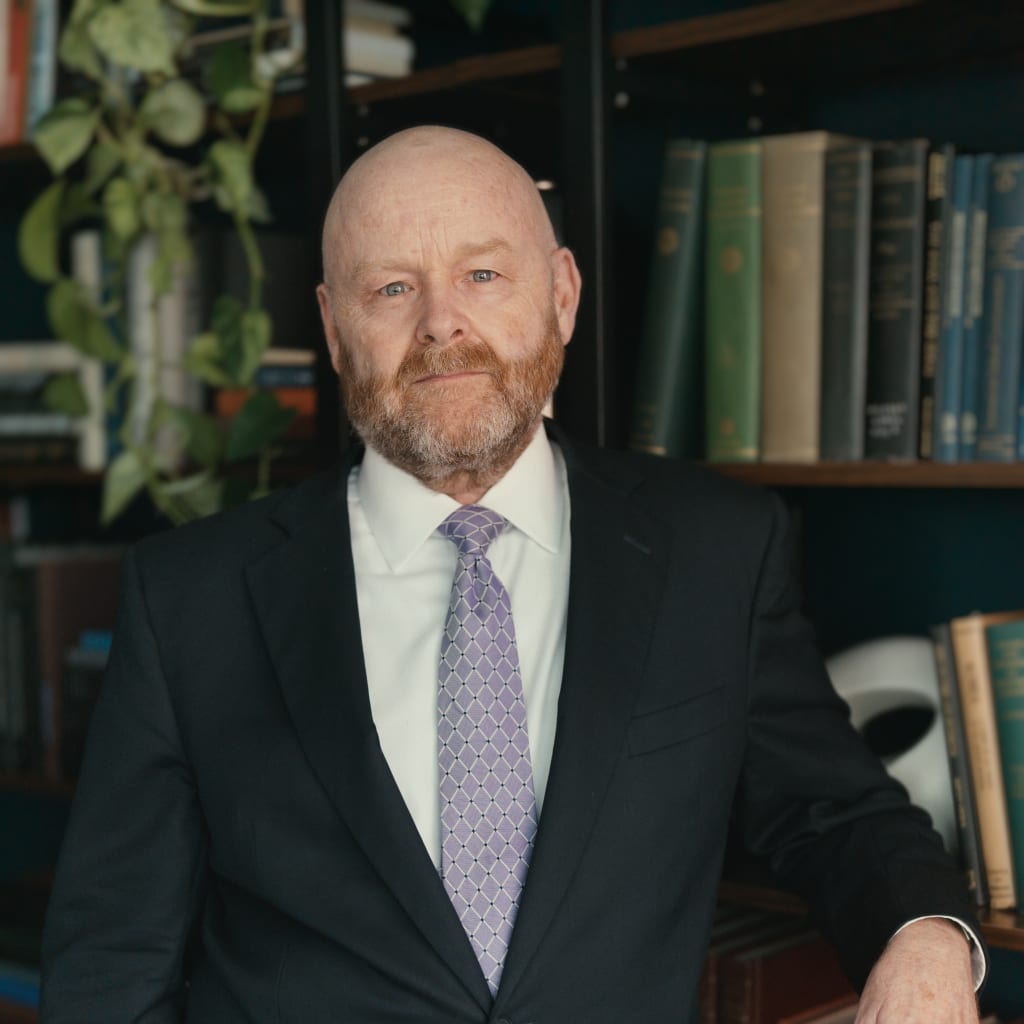 James M. LindsayCFR ExpertMary and David Boies Distinguished Senior Fellow in U.S. Foreign Policy
Guest
- Eliot A. CohenArleigh A. Burke Chair in Strategy at the Center for Strategic and International Studies and author of The Strategist: How to Think About War and Politics
TRANSCRIPT
LINDSAY:
Historians will be unkind to President Donald Trump’s decision to launch Operation Epic Fury, which has just entered its eighth month. His administration never fully vetted the war it was launching, determined its objectives, or considered how Iran might seek to neutralize the overwhelming U.S. military advantage. The United States now finds itself at an impasse that has shown the limits of U.S. power, exposed the Achilles heel of a U.S. military strategy built on small numbers of hard-to-replace weapons, and potentially emboldened America’s adversaries. But Trump is hardly the first U.S. president to launch a war with unbridled optimism, confident of quick success. The United States declared war on Britain in 1812, convinced, as Thomas Jefferson put it, that the acquisition of Canada will be a mere matter of marching. As we all know, British Canada remained unconquered.
Instead, Washington, D.C. was sacked and burned, and the United States nearly torn asunder. James K. Polk anticipated a swift victory over Mexico in 1846.
The war instead dragged on for nearly two years despite decisive U.S. battlefield victories. Seven decades later, Woodrow Wilson ordered an invasion of Veracruz, Mexico that he thought Mexicans would cheer. They didn’t.
He quickly reversed course. More recently, Vietnam, Afghanistan, and Iraq became quagmires. Smaller interventions in Somalia, Serbia, and Libya dragged on far longer than expected and produced debatable results.
In a bit of historical irony, the one major war the United States won quickly and decisively, the Spanish-American War, or what one Secretary of State called a splendid little war, triggered a protracted guerrilla war in the Philippines, a country that few Americans could have found on a map before the war’s start. That track record had me thinking about the questions that Americans should be asking when considering the use of military force. By chance, Eliot Cohen, one of America’s leading thinkers on military strategy, is out with a new book later this month titled The Strategist, How to Think About War and Politics.
Eliot is the Arleigh A. Burke Chair in Strategy at the Center for Strategic and International Studies, and he has held numerous national security positions in the U.S. government. So I asked Eliot to join me to discuss what questions policymakers should ask when contemplating using military force, why policymakers often misread situations that look blindingly obvious in retrospect, and whether U.S. policymakers can learn the lessons of history. Welcome to the President’s inbox, Eliot, and congratulations on the publication of The Strategist.
COHEN:
Well, thanks, Jim. It’s good to be back with you.
LINDSAY:
The reason I wanted to talk with you, Eliot, is I finished a big project back in January on the best and worst foreign policy decisions in American history. Not surprisingly, misguided wars and military interventions figured prominently on the worst list. Then came Operation Epic Fury, which President Trump said would last three to four weeks, and it’s now in its eighth month.
And of course, the United States is not the only country to initiate wars that don’t go as planned. Vladimir Putin’s invasion of Ukraine has to be way up there. And that leads me to ask you, I guess, initial question, which you begin your book with, and is it war just a matter of chance or is strategy, in fact, possible?
COHEN:
The case I make is that strategy is possible, that it’s extremely difficult. I mean, the basic idea of the book is that there are some very simple questions that strategists have to ask, some very simple choices that they have to make. The problem is those are all acutely difficult.
I also believe and make the case in the book that in war, everything is profoundly uncertain. So there’s a certain way in which I think reading it might give one a certain, I don’t know whether sympathy is the right word, maybe empathy with decision makers. Because the truth is I know of almost no leaders who got the war that they expected.
But the fact is some people do better than others. You know, if you look at the Allied powers in World War II, on the whole, they made the right choices, although they made plenty of bad ones. And the Axis powers on the whole were terrible in strategy.
So it’s consequential. But I think we have to understand and accept the extent to which war is just a profoundly uncertain endeavor, even when you have the best possible leadership in charge. And I also try to illuminate that in one of the later chapters in the book.
LINDSAY:
Well, let’s talk a little bit about terms, since we both went to graduate school and we were told that definitions matter a whole heck of a lot. What does the word strategy mean for you? And I guess perhaps as important, what doesn’t it encompass?
COHEN:
Well, I very deliberately adopted a narrow definition of strategy in this book. And that is to say, the pursuit of political purpose through the use of force, the use of organized force. So what are some of the things I’m ruling out?
Well, I’m saying criminal behavior, which can be violent, is not really, that’s not really about strategy because that’s about either simple sadism or the desire to acquire things. I think the word strategy has gotten blown out of proportion in that it can be applied to all kinds of things. What’s unique about war is violence.
It’s a level of human suffering and death that you’re not going to find, say, in the business world. I also have very little use for the term grand strategy, which is much more common these days.
LINDSAY:
I was going to ask you about grand strategy because that seems to be the term of the age.
COHEN:
It is the term of the age and I think it’s pretty useless. And the reason why I think it’s pretty useless is first, it means the same thing as policy. I was always taught by my eighth grade English teacher, never use two words when one word will do.
But I think somewhat more perniciously, what has come to me is a kind of integrated use of all the different means of government power and indeed societal power to achieve some sort of concerted end. And this is partly on the basis of personal observation, by the way, and not just the study of history. I think that’s profoundly misconceived.
It’s extraordinarily hard for governments to do anything, even when they’re focused rather more narrowly. So I think grand strategy sets up unreasonable aspirations. And when you see what people kind of churn out, you realize you’ve got a set of vague principles that don’t really give you much guidance about what you actually ought to do.
I mean, let’s say American grand strategy during the Cold War was containment. That didn’t really tell you whether or not you should be fighting the Vietnam War, and if so, how you ought to fight it. The other thing that’s happened that I’m reacting against in this book is first, a promiscuous use of the word strategy.
And if you just, I checked the New York Times and for the last few years, on average, the word strategy shows up 24 times a day. And not to mention, if you add terms like strategist or strategic, it’s even more. So, you know, when a village falls to either Russia or Ukraine in that war, people refer to it as strategic.
When people refer to people who are really just commentators, they call them strategists. And I believe in a much narrower and more useful definition that focuses on the essence of the problem, which is that higher level problem of integrating military power and political purpose. The other thing about strategy that I think has gotten out of hand is just the size of the books.
So I think I begin by talking about a wonderful book, Makers of Modern Strategy. I’m sure you read it in graduate school, as I did. It’s gone through three editions, and it was already a monster at about 600 pages when it was first produced in 1943.
LINDSAY:
Yeah, I was going to say, I remember it being very long and very heavy.
COHEN:
Well, it’s now like 1,100 or 1,200 pages. And there are wonderful essays in it. And the editors have done, in each of the editions, did a marvelous job.
I’m not criticizing them at all. But the point is, it’s gotten unwieldy. And what I wanted to do is write a book that people could pick up and just read in some reasonable period of time and think about the arguments.
LINDSAY:
Eliot, I want to do one last sort of definitional issue. And that is, you draw a distinction between strategy and planning. How are they different?
COHEN:
The key thing is, I put a lot of emphasis on the role of execution in strategy. People sometimes think that if you have a plan, that that means you’re doing strategy in some sense. And I don’t think that’s true at all.
I mean, a plan is essential. Ideas are essential. But I bake bread.
And, you know, when you bake bread, of course, you have to have yeast or if you’re using, doing sourdough, you know, a sour that you’re using. But honestly, that gets you nowhere unless you know how to mix together the flour and the water and the salt and how many rises and how much to knead them and what temperature and how to form them and all the rest. And one of the arguments that I make is you can’t really think of somebody as a strategist unless they’re actually involved in execution and not just planning.
And that’s particularly important because the plans never work the way you think they’re going to work. And so a lot of the test of a real strategist is how do they react when things go awry, say, you know, happened to Lincoln during the Civil War, for example. And so, again, a plan is not the same thing as a strategy.
LINDSAY:
You argue that a strategist essentially has to be willing to ask questions and you have seven. I don’t know we have time to go into each and every one individually, but I was struck that you had your first question wasn’t about what we’re trying to accomplish. You have a different first question.
Tell me about it.
COHEN:
Right. It’s actually what are we trying to accomplish is the third question. The first question is context.
What else is going on? If you’re thinking about war, you’re obviously thinking about an opponent. You have to be thinking about a lot of other things that are going on.
I think one of the critiques that I would offer of the Trump administration going into the Iran war is it kind of went off to war without thinking about the fact that our relationships with our allies, particularly the European allies, but even some of the the Asian allies whose resources and help we would need was in terrible shape. Or, you know, the extent to which we had failed to prepare our Gulf allies for this war. I think anybody who embarks in a war or is making some strategic decisions has to have a big picture.
The second question that I put is taken from one of my favorite movies, Butch Cassidy and the Sundance Kid. And, you know, that might seem like an odd, odd place to look for strategic wisdom. But but it isn’t.
It’s a great film with Paul Newman and Robert Redford, I think, from the late 60s, if I’m not mistaken. And it’s about two lovable train robbers who, in the kind of closing days of the Wild West, who are robbing a train and all of a sudden one of the box cars opened and they’re being pursued by half a dozen armed men. And after a bunch of very exciting chase scenes, they realize that they can’t throw them off.
And at one point, Paul Newman turns to Robert Redford and says, who are those guys? And that kind of becomes a theme throughout the film. It’s actually a profoundly important strategic question, because Paul Newman and Robert Redford or the characters that they’re playing, they know how many people are pursuing them.
They know what kind of weapons they have. They probably even know the breed of the horses. What they can’t figure out is why are those guys so skilled?
Why did the usual tricks not work? Why are they so persistent? Who’s behind them?
And I think it’s a huge mistake that strategists often make. I mean, again, I’ll just refer to the Iran war. It’s pretty clear that the Trump administration and that Trump personally, and probably the Secretary of Defense, Pete Hegseth, didn’t really know a whole lot about the Iranian regime and how it functioned and how it was likely to react in a conflict of this kind.
LINDSAY:
But that seems to be a trait of American military interventions over time. We tend not to think about the adversary and how they might react.
COHEN:
Well, look, we’re not the only ones. I think the Russians made that mistake about the Ukrainians. I think the Israelis have made that mistake about Hamas.
I think it is a particular failing that Americans have for two reasons. Partly because we’re just so big and powerful that we frequently don’t have to think about it a whole lot, or we tell ourselves we don’t have to think about it a whole lot. But also because the American way of war has tended to be very managerial.
It’s about assembling a lot of resources and smashing the enemy through either complex high firepower operations or kind of relentless attrition. It is the style of Ulysses S. Grant.
You know, Grant was not particularly fixated on who Robert E. Lee was. What he was fixated on was destroying the army of Northern Virginia, and it worked.
LINDSAY:
Right, but that was different from many of his fellow Union generals who were basically consumed with Robert E. Lee.
COHEN:
Right, and they’re the ones who lost, and he’s the one who succeeded. And so it doesn’t come out of nowhere. It actually frequently does work, but there are a lot of settings in which it doesn’t work.
I mean, another one which I vividly remember from my own experience in the early phases of the Iraq War, the failure to really try to figure out who are we fighting? And I remember being very frustrated. I was on the Defense Policy Board, an advisory panel.
You just have people saying, well, they’re bitter enders or former regime elements. Actually, we were in the middle of a very complicated civil war, which was also partly directed at us. And we found it very, very difficult to disentangle.
I would say, unfortunately, something similar happened to us in Afghanistan as well. I think I mentioned in the book, when I was counselor of the State Department, I asked the intelligence community, which had been telling us how they thought the war was going. Can you tell me how the Quetta Shura thinks the war is going?
In other words, the Taliban leadership or one segment of it, nothing.
LINDSAY:
I think that is a telling failure, and it seems to be consistent. I think you’re right that the United States is not the only country that can fall prey to not being able to see the fight through the eyes of the adversary. Let’s run to the rest of the questions.
Third one is what is the objective? And I’ll let you go four through seven.
COHEN:
Well, actually, let me just say one quick word about what is the objective. One of the points I try to make is, you know, everybody wants very clear, precise objectives. It’s in the nature, however, political objectives, I argue that they are political, and therefore they change during the course of a war.
And you have to be prepared for that. And you have to be prepared as well for unstated political objectives, political objectives you may not even be entirely aware of. So it’s a much less cut and dried thing than I think people think.
Fourth question, what are our means? What do we have to bring to the fight? And by that, I don’t really mean hardware, although that can be important.
But organizations, do we have the right organizations for this war? And here, I think an important point is nobody goes into a war having held the same responsibilities they’ve had in the past, or that’s that if it happens, it’s very rare. So everybody, to some extent, is dealing with unfamiliar tools, both in terms of technology and organization that goes for military people as well as political.
LINDSAY:
I’ll just note in that I think you talked about in Afghanistan, how the State Department didn’t have any Pashto speakers, which would have come in really handy if you’re trying to win hearts and minds of the Afghan people.
COHEN:
Yeah, well, you know, there’s a great, there’s a great study done by Robert Komer, who had been a very senior, I think he’d been Deputy National Security Advisor, and then he had been a very senior figure in counterinsurgency in Vietnam, called Bureaucracy Does Its Thing. And actually, I remember sending a copy of that RAND report, it’s unclassified, to friends in the government early on in the Iraq war, and I don’t think it went anywhere. But it was good, because his point is that, you know, standard routines tend to take over.
In the case of the Pashto speakers, there’s no other place in the world where you need Pashto speakers. So I mean, literally, the argument I got is, well, why should we train more Pashto speakers? You know, unlike French, which, you know, you can use in all kinds of places, you can only use it in Afghanistan, you know, my argument is, it only matters if you think we should win the war.
The fifth and sixth questions are, what is the priority? And what is the sequence? And again, something I think Americans wrestle with, we don’t like the idea of having to set priorities, because we have tended to be so rich and powerful.
And then sequencing. I think one, one very important concept from social science is path dependence, that the choices that you face today are the result of you having made some choices yesterday, which put you on a certain path. And I try to illustrate it with the way in which Franklin Roosevelt, I think, wisely decided on the invasion of North Africa in 1942.
But he, he didn’t think that that was going to prevent an invasion of France in 1943. Whereas his military advisors did understand that. So sequencing is important.
The last question, the seventh, which is one that I, in a way, I feel I’ve had personal experience with is, what is the theory of victory? What is the argument for why you think this will work? And again, I, you know, and I, I do try to bring a little bit of this into the book.
Having seen some of this up close, I know that what happens in the deputies committee in the situation room, which, you know, I spent a lot of time in, is people are talking about inputs. You know, should we send two brigade combat teams to Afghanistan? If so, when will they arrive?
Should we increase the aid budget from 2 billion to 2.5 billion? You know, do we need another 178 trainers for the Afghan security police or things of that? The question that almost never gets asked, and often for good reasons, is, okay, well, why do we think that this will take us to where we want to go?
And that’s, you know, it’s partly because the answers are imponderable. It’s partly because you’re dealing with very, very busy people who are trying to make things happen in the real world. And so, you know, some guy with a bow tie begins saying, well, why do you think that will work?
You’re really, in some ways, just an annoyance. But you have to have a theory of victory. You have to be able to tell yourself a story of, this is why I think we do this, this, and this.
The outcome is probably going to be that. And it’s, people often don’t do that. They also, I think an important point is that the theory of victory often shifts during a war.
So, if you think about the Russia-Ukraine war, it’s pretty clear to me Vladimir Putin’s theory of victory has shifted quite a bit over time. One, first one was, well, the Ukrainian government’s just going to collapse. It’s not really a country anyway.
The war will be over in 10 days. Then it becomes, well, we’ll kind of grind them down with a series of offensives. And they went through several more iterations.
And now it’s, well, we’re just going to pummel civil society so hard that they will crack and surrender sometime this spring. Every one of his theories of victory has been wrong, but he persists.
LINDSAY:
How in-depth does a theory of victory have to be, Eliot, to qualify as a theory of victory? I asked that question against the backdrop of the story told about Ronald Reagan that he told his first national security advisor, Dick Allen. My theory of victory is we win, they lose.
COHEN:
Look, a theory of victory is something about the future. And the future is intrinsically unknowable as all the philosophers tell us. So the test of a theory of victory is that at least it’s serious and at least it’s plausible.
By the way, this is one of the things that applies not only in war, but it applies in business too. I believe when Jeff Bezos started out at Amazon, he got rid of PowerPoint briefings, which I heartily applaud because I do think PowerPoint’s very destructive and pernicious medium, and instead had people tell stories. Tell me the story of how we introduced this product, we make this improvement, it leads to these kinds of outcomes.
And it’s not that you’re going to hold somebody, it’s not predicting the future, but it’s giving a plausible account of the future, which is really how we navigate our day-to-day lives, if you think about it.
LINDSAY:
As I look at the seven questions you put forth, Eliot, I think some people will read the book, it might be tempting to think that this is a checklist, that if you go through these seven questions and ask and answer them, you’re good to go. And I think people who do that miss sort of a deeper lesson you’re trying to convey here. Actually, two really jumped out at me.
One is really the ubiquity of surprise. You focus on that right at the beginning, it comes up time and time again. How should a strategist think about surprise?
I take the injunction that the battle plan generally doesn’t survive first contact with the enemy, or as Mike Tyson said, everybody’s thinking changes when they get punched in the face. So, how do you think about the surprise element?
COHEN:
So, the first thing I would say is, I hope when people read it, and I’m glad you pointed that out, that I’m not giving them a checklist. Instead, what I’m trying to do is show how difficult this enterprise is, because those questions are so deceptively simple. And so, in the commentary I have on each one, hopefully I’m actually making it messy.
And I make it messier further on as I talk to some of the ways in which strategists blind themselves. Surprise absolutely is ubiquitous. And then what I discuss in one of the chapters is, what are some of the habits of thought that can at least help you with that?
And I think one of them is a kind of holistic rather than linear mode of reasoning, by which I mean that when you’re looking at a strategic problem, you’re not simply thinking at the highest possible level. You are sometimes delving down into operational, even tactical or technical details, but then you have to go back up again. I mean, it’s a form of a continuous sort of circle of re-examining things.
And that’s an art. I mean, you don’t always want to be plugging up saplings to see if the roots are intact. The other thing, I reference a quote from the French Field Marshal Ferdinand Foch, which was originally cited by Bernard Brodie, one of the great thinkers in the golden era of American strategic thinking, de quoi s’agit-il, which is French and means, what’s this all about?
What’s the essence of the problem? And it seems to me when I look at some of the great strategists, in other words, people who didn’t only think about it, but actually were doing it, they had that quality of asking, what is the fundamental issue here that we have to wrestle with? But for the rest, you have to accept that this is going to be an iterative and shifting process.
I think if you can kind of steel yourself to the uncertainty, you’re going to be better off to deal with it. One of the ways to prepare for that uncertainty is to know a lot of history, which is something I wouldn’t accuse some of our current leaders of, because history does teach a certain kind of humility and, dare I say it, wisdom about the mutability of human affairs.
LINDSAY:
Well, as they say, smart people learn from their own mistakes, wise people learn from the mistakes of others, and history allows you to do that. Just one quick additional point on this issue of surprise, Eliot, because again, it’s very difficult to predict the future particularly accurately. There’s always a sort of question when things don’t go right, whether a leader should stand firm or adapt, and in part that depends upon one’s diagnosis of where the surprise comes from and how one should respond.
How should a strategist think about the notion that sometimes surprises don’t require you to change, but other times surprises demand that you change, and the wise strategist can distinguish between the two?
COHEN:
Well, this is why there isn’t a cookbook for how to be a great strategist. There are two essays by Isaiah Berlin, which have always struck me, one on political judgment and the other on the sense of reality, and Berlin is talking about the difference between how philosophers or professors think about the world and how political leaders do, and he says that frequently what they have to have is like a novelist’s sense for nuance and what fits with what, and being able to process a whole bunch of intangibles simultaneously. So, I hate to say it, it comes down to judgment, and so therefore the question is how do you cultivate good judgment, and we can have a separate conversation about that.
LINDSAY:
Well, I’ll ask, how do you cultivate good judgment besides knowing a lot of history?
COHEN:
Well, first, I wouldn’t knock knowing a lot of history. I think, secondly, there is an argument for having more experienced people rather than less experienced people. I think it’s, even beyond history, it’s having a broad education.
You know, recently the Secretary of Defense, Pete Hegseth, just said, okay, we’re getting rid of all these civilian tenured professors at the service academies, and it occurred to me that he really doesn’t understand what education is all about, because part of your education should be things like literature. You actually learn a lot about human nature from that, and I end the book in a way with making the case for liberal education, not liberal in a political sense, I’m actually a conservative, but a liberal education in the classical sense, which is education for judgment, and I think in a way, in this era of AI and drones and robots and everything else, there is a deeper need for liberal education in that classical sense than there ever was before, particularly for people who are going to be involved in the making of strategy.
LINDSAY:
Well, I’m a big believer in liberal education in the traditional sense, so you’re pushing on an open door here, Eliot. You know, I mentioned that surprise is one of the things that confounds the strategist’s job, but there’s something else that goes on, you write about it at length in the book, and that is the limits on human judgment, and you talk about those limits as being individual, collective, and systemic. Give me a feel for what you mean by that.
COHEN:
So the individual limits are people get sick. Look, there’s nothing more stressful than running a war if you’re a even somewhat normal human being, and it is very striking how many leaders that we know of right down to the present day were showing signs of dementia or had, you know, all kinds of physical ailments or strokes or heart attacks, limits on the amount of energy they could bring to bear, and sometimes this is self-inflicted. I mentioned that during the Afghan withdrawal, the National Security Advisor, there was a piece on the National Security Advisor, Jake Sullivan in the New York Times, saying he’s getting two hours of sleep a night, and the way the story was written, that was, I think, supposed to show how committed he was.
To my mind, that was a very, very bad sign because nobody makes good judgments after two hours of sleep a night.
LINDSAY:
You’re running down your batteries.
COHEN:
You know, one of the things, I spent a lot of time in Iraq and Afghanistan, and I have to say that the really capable commanders that I knew there, if there was one thing they were disciplined about, it was sleep. Getting seven hours of sleep, if humanly possible, and also being physically fit. So there are these kind of individual things.
Collectively, you have groupthink, and groupthink is real. It is very difficult to argue with the president, to tell a president that he’s wrong. I mean, again, I had a bit of an experience of that, and so I feel that particularly keenly.
That’s why good leaders, and this is, I think, true of leaders in any organization, they try to figure out ways of having some people who will tell them the truth, and they know they have to go out and fight for the truth. But other than that, groupthink, no question about it actually exists.
LINDSAY:
I would imagine a related problem is if people all view the problem the same way. There’s the old saying that when everyone thinks alike, no one thinks at all.
COHEN:
Yeah, I think that’s true. And then the problem is that some of the organizational fixes people try to come up with, they get to be problematic too. If you have a designated devil’s advocate, what happens at the meetings?
Okay, let’s hear from the designated devil’s advocate. We’ve now heard from the designated devil’s advocate. Let’s go back to thinking what we always thought.
And that was sort of the role I think George Ball may have played during the Vietnam.
LINDSAY:
Yeah, I think that’s the most famous example in US history.
COHEN:
And then there are other things which I do think are more systemic, some of which are psychological, the way in which we tend to anchor ourselves in particular events. There’s a very interesting idea by one of the great original thinkers at RAND, Nathan Leites, on the idea of an operational code, that in certain kinds of well-developed political systems, people have some very fundamental common beliefs about what’s the nature of conflict, what’s the nature of politics, what makes for success, which they all share. And even if you don’t have the mechanisms of groupthink, you get that some other way.
And it bites us. I did a study with my friend Phil O’Brien, who’s an excellent military historian, of the ways in which we misjudge both the Russian and the Ukrainian militaries before the latest round of fighting in 2022. And it’s just fascinating how there was a systemic misassessment of both the strength of the Russians and the strength of the Ukrainians.
LINDSAY:
So our starting assumptions can often shape the conclusions we reach. We very seldom check those starting assumptions.
COHEN:
They usually do. And that’s why I think the great leaders know that they have to have somebody around them who will be willing to look them squarely in the eye and tell them something that they may not want to hear. And by the way, that doesn’t get easier over time.
I think that gets harder over time, the longer you’ve been in power.
LINDSAY:
I think that’s certainly true. Eliot, as we come to the end of our time, I want to sort of end with a point you begin with. And we’ve had this discussion now for about 30 minutes, and we haven’t mentioned the C word, Clausewitz.
Clausewitz, who you write about extensively in the book, is famous for, among other things, saying that war is the continuation of politics by other means. My sense is that when Americans in particular tend to think about war, they tend not to think about politics. They tend to think about what the expenditure of military might can break.
So sort of walk me through how you interpret what Clausewitz meant and how should that insight guide what it is that future American strategists should be thinking about.
COHEN:
So I should explain. For my money, Clausewitz is the great philosopher of war. He had an enormous amount of practical experience, but a lot of deep thought.
But he’s also limited by the time in which he wrote and the kinds of warfare with which he was familiar. So this is not a, it’s not a hagiographic account, but it is the right point of departure. And I think part of what makes On War so powerful is he says, yes, war is a continuation of policy by other means.
It only makes sense if you think about it in that context on the one hand. But then on the other hand, he’s also extremely clear about all the ways in which emotion and psychology and passion and friction, things going wrong, get in the way of people trying to do that. So there’s this tension that he does not really try to resolve, but he wants to point out to us, which are really right at the heart of the book.
I have to say the idea of thinking about war as a continuation of policy by other means is it’s an unnatural way of thinking about war. You know, we tend to think of war as a catastrophe, as a disaster. Some people think of it as divine punishment or divine judgment if it’s being inflicted on one’s enemies.
Some people think of it as kind of a gigantic mistake. Some people think of it as an atavistic survival of a much earlier age. There are a lot of different ways to think about war.
And one of the points I try to make to my readers is let’s acknowledge that this is not the way we are instinctively going to think about war. It is a somewhat unnatural way of thinking about it. And we should kind of take that in before we plunge in.
LINDSAY:
On that note, I’ll close up this episode of President’s Inbox. My guest has been Eliot Cohen, the author of The Strategist, How to Think About War and Politics. Eliot, thank you very much for joining me.
COHEN:
Jim, thank you.
LINDSAY:
Today’s episode was produced by Justin Schuster with director of podcasting Gabrielle Sierra.
We Discuss:
- What strategy can actually accomplish, and whether the outcome of war is ultimately a matter of chance.
- Why Eliot Cohen adopts a deliberately narrow definition of strategy—and why he has little use for the fashionable term “grand strategy.”
- The distinction between strategy and planning, and why execution is what separates a strategist from a planner.
- The seven questions every strategist must ask, from “what else is going on?” to “what is your theory of victory?”
- Why understanding the adversary—“Who are those guys?”—is a recurring American blind spot, including in the Iran war.
- How surprise, groupthink, and the limits of human judgment repeatedly derail even the best-led war efforts.
- What Carl von Clausewitz meant by describing war as the continuation of politics by other means.
- Why a classical liberal education may be the best training for judgment in an age of AI.
Mentioned on the Episode:
James M. Lindsay, “The 10 Best and 10 Worst U.S. Foreign Policy Decisions,” CFR.org
Carl von Clausewitz, On War, Princeton University Press
Eliot A. Cohen, The Strategist: How to Think About War and Politics, Princeton University Press
Robert W. Komer, Bureaucracy Does Its Thing: Institutional Constraints on U.S.-GVN Performance in Vietnam, RAND Corporation
Peter Paret, ed., Makers of Modern Strategy: From Machiavelli to the Nuclear Age, Princeton University Press
This work represents the views solely of the host(s) and guest(s). The Council on Foreign Relations is an independent, nonpartisan membership organization, think tank, and publisher, and takes no institutional positions on matters of policy.
Associate Producer, Video and Audio
- Associate Producer, Video and Audio
Editorial Director and Producer
- Director, Podcasting
More Episodes
 33:42Podcast
 41:07Podcast
 39:26Podcast
 35:04Podcast
 31:46Podcast
 34:45Podcast