Trump Rolls Out the Red Carpet for Xi
This episode unpacks Xi Jinping’s high-stakes Washington visit, discussions of “constructive stability,” and tensions over Taiwan, AI, and Iran.
Published
Host
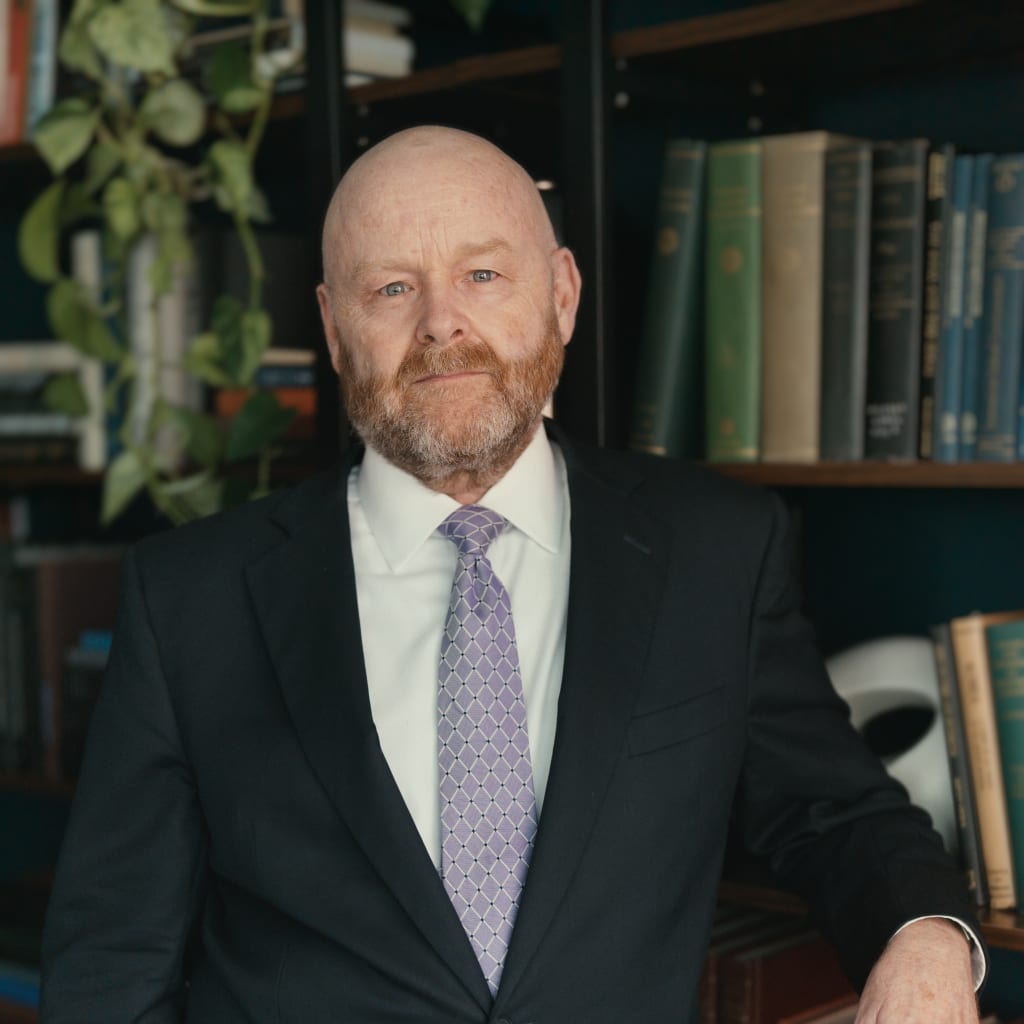 James M. LindsayCFR ExpertMary and David Boies Distinguished Senior Fellow in U.S. Foreign Policy
Guests
- Julian GewirtzSenior Research Scholar, Columbia University’s School of International and Public Affairs
- Bonny LinDirector of the China Power Project and Senior Adviser at the Center for Strategic and International Studies
TRANSCRIPT
LINDSAY:
If you are listening to this episode as it went live, Chinese leader Xi Jinping has just touched down at Joint Base Andrews in Maryland for a state visit to Washington, DC, his first in a decade. It is, however, the third time in just 11 months that he and President Donald Trump have met in person, the first time being in Busan, South Korea, last October, where the two leaders agreed to de-escalate what had been a growing trade war between their two countries. Then Trump traveled to Beijing this past May, where the two leaders agreed to begin discussions on possible guardrails on the development of artificial intelligence.
The meetings don’t end there. Trump and Xi are scheduled to meet twice more this year. In November, they will meet on the margins of the 2026 APEC Leaders’ Meeting in Shenzhen, in China.
A month later, they will both attend the G20 Summit, which will be held at the Trump National Doral Miami Golf Resort in Florida. Trump and Xi’s willingness to meet frequently is on one level a positive development. As Winston Churchill once said, meeting jaw to jaw is better than war.
But I’m unconvinced that these meetings are settling the significant issues that divide Washington and Beijing. China continues to tacitly support Russia’s war of aggression against Ukraine. China remains the biggest customer of Iranian oil, extending a lifeline that has helped Iran fend off U.S. military and economic pressure. And Taiwan remains an elephant in the room. Xi would love to see Washington abandon the Taiwanese. But failing that, concerns abound that China might use the U.S. preoccupation with the war with Iran to move against Taiwan. This list of differences doesn’t exhaust the questions surrounding Xi’s visit. Will Beijing and Washington agree to rein in AI that is evolving with blinding speed? Why did Trump greet Xi’s arrival personally at Joint Base Andrews when Xi quite pointedly did not meet Trump personally when he arrived in Beijing in May?
Was that a snub? And if so, does Trump’s willingness to overlook it signal a shift in who has the upper hand in the great power competition? And why did Xi travel to the Shanghai Cooperation Organization Summit in Kyrgyzstan and the BRICS Summit in New Delhi last month but skip attending the opening of the United Nations General Assembly this week when he’s already in the country?
To get answers to these and other questions about the status of Sino-American relations, I spoke with Julian Gewirtz and Bonny Lin. Julian is a Senior Research Scholar at Columbia University’s School of International and Public Affairs. He previously served in the Biden administration as Senior Director for China and Taiwan Affairs at the National Security Council and as Deputy China Coordinator at the State Department.
Bonny is the Director of the China Power Project and Senior Advisor at the Center for Strategic and International Studies. She worked in the Pentagon during the Obama and first Trump administrations as Director for Taiwan and Senior Advisor on China. Together, they helped me decode the current state of relations between Beijing and Washington, where they are headed and on whose terms.
Julian and Bonny, thank you very much for joining me on the President’s Inbox.
LIN:
Thank you for having us.
GEWIRTZ:
Delighted to be here.
LINDSAY:
If everything goes according to plan, President Donald Trump will be greeting Chinese leader Xi Jinping at Joint Base Andrews at the time our conversation goes live. The two men will have a full day of meetings and then Xi will depart after being on the ground in Washington D.C. for less than 48 hours. This is the third time the two men have met since Trump’s second term began, and it’s just four months since Trump was in Beijing.
So, Bonny, let’s start with you. Given all the other Trump-Xi visits this year and the fact that Xi has not been to D.C. in a decade, why this visit now?
LIN:
So, for this meeting, I think what’s really important for both President Trump and Xi Jinping is to be able to showcase that they can stabilize the U.S.-China relationship and in some ways build on their May meeting. You should recall one of the major outcomes that both the Trump administration and the Chinese side have identified from the May meeting was this new term for characterizing U.S.-China relationships, the constructive relationship of strategic stability. But I think it still needs to be filled out, right?
And I think a major task for this meeting is to be able to identify what it actually means, and also it provides another opportunity for the two presidents to engage and be able to argue that in meeting again, and by having a very cordial meeting, it looks like the two leaders are helping to stabilize U.S.-China relations.
LINDSAY:
Okay, Bonny, I want to dive into the substance of the meeting and what constructive stability actually might look like when we do finish fleshing it out. But I want to go over a little bit of the protocol surrounding this trip, and I want to go to you, Julian. I’m struck.
President Trump is going out to Joint Base Andrews to personally greet Xi when he arrives there. I will note that when President Trump went to Beijing in May that Xi did not greet President Trump personally, and indeed President Trump generally doesn’t go and personally greet leaders when they arrive. What should I make of the fact that this is happening?
Is this significant or is this just something that gives op-ed writers something to talk about?
GEWIRTZ:
Well, I do think it’s quite significant, Jim, because what we’re seeing across the board in the planning for this trip is that Washington and President Trump personally are giving China extraordinary optics. They are really pulling out all the stops. It’s not just the state dinner, a lavish celebration at the White House.
It’s not just what we’ve learned about plans for military guard flags, a flyover, all of that at the White House. But it’s this gesture that you point to which is even more unusual. Normally, when you have a state visit, and I say this having worked in the White House, the President does not go out to Andrews and greet the visiting leader personally.
That’s very unusual use of presidential time. In recent memory, the examples of that are really presidents greeting popes. This is the highest show of respect.
And I think we can even use the word deference to go out and do this. And so President Trump is making clear with this visit that he wants to show that high, high degree of, shall we say, respect or deference to Xi Jinping, which I think, as we can talk about, is reflective of a broader strategic dynamic at play here.
LINDSAY:
Well, answer me this, Julian. Is it common for President Trump to show deference to other foreign leaders?
GEWIRTZ:
It’s not. And, you know, I think it’s one of those questions where I know you’ll know the answer better than I do. But, you know, the other leader who President Trump has greeted in this way, though not in Washington, was when he met with President Putin in Alaska.
And he greeted Putin, again, on the tarmac out there. And they had a kind of red carpet military honor guard type setup. So what we see clearly is a pattern with President Trump where he views Xi Jinping, Vladimir Putin, these autocratic leaders of large states, as his peers, as leaders who merit this degree of respect or deference.
Whereas, of course, the leaders of traditional U.S. allies do not get this kind of treatment. I don’t think we’re ever going to live to see the day when President Trump greets Mark Carney on a tarmac.
LINDSAY:
I think it’s a safe bet to make.
GEWIRTZ:
Yeah, it feels like it. And so it’s a startling shift because, again, you know, looking at the history of this, JFK greeted Harold Macmillan on the tarmac during his presidency. I mentioned the popes.
This is about showing, traditionally, solidarity in addition to respect. Obviously, in this case, if that’s the message, it’s with quite an unusual set of counterparts.
LINDSAY:
I will just note that Dwight D. Eisenhower once went to the airport to meet Diem of South Vietnam, and it was a way of signaling, in essence, that the United States was backing him to the hilt. So there is some strategic calculation going on.
Just one last thing on protocol, particularly since you were very recently having to deal with protocol issues, which are very significant, particularly in U.S.-Chinese relations. This meeting is coming just six weeks before Election Day. Is there anything significant in that?
I’ve had some people suggest to me that there’s been this sort of informal norm that presidents don’t hold such big summit meetings in the run-up to a midterm election. I don’t know whether that’s actually true or not.
GEWIRTZ:
Well, you know, it’s a classic case of, I don’t think, a norm that anyone ever used to have to articulate. But a state visit for a Chinese leader is a distinctive thing in many ways. But one reason is that the American public generally has quite a negative perception of Xi Jinping.
Their polling shows somewhere between 10 and 20 percent of Americans have what we could approximate as trust him to do the right thing in world affairs. So you are inviting public criticism by hosting a visit that’s focused on honoring a Chinese leader. Now, I wrote an essay on my Substack that was really marveling at this fact 40 days before a midterm election in which the Republicans are fighting to keep control of both houses of Congress, razor-thin margins, affordability is the central message, to host a state visit for China.
Obviously, the state visit features, we’ve mentioned, a state dinner, billionaires coming to town. The whole thing is just candidly feels like a bit of a political loser. So the question is, why?
Why is President Trump doing this? And I think there are really two theories. One is that he believes China issues are just low salience politically in American politics at this point, that Americans just are kind of tuned out.
They don’t really care. But the other, which candidly is my own hunch, is that he personally just doesn’t care that much. He wants to do this visit.
He’s been waiting for it. It’ll be a huge event, a lot of media coverage. It’ll change the channel on the Iran war for a day or two.
And so he wants to move ahead, you know, and is not going to let something like a congressional election stand in the way.
LINDSAY:
Bonny, I want to come back to you on the protocol issue. But from the other end of the telescope, so to speak, what are the risks in this meeting for Xi Jinping? I mean, I have a recollection back, I think it was 2006, Hu Jintao came to the White House and they played the national anthem and they said it was the national anthem of the Republic of China, which happens to be the formal name of Taiwan, not of China.
My understanding was Hu Jintao was very displeased by that. I think there was also a protester who shouted something out during the conversation. I happened to be in Beijing back in June, and I heard from several Chinese experts there at the conference that there was some trepidation about the visit to Washington, that President Trump might do something that would embarrass Xi Jinping.
Can you give me a sense of how the Chinese are viewing this visit?
LIN:
Yeah, of course. And to Julian’s point, I think one thing to note is how abnormal the planning for this visit is, in addition to the planning for the May meeting. So in this second Trump administration, we haven’t seen the, you know, months of detailed planning between the two sides in which a lot of the details, including protocol details, are worked out one by one.
I think what we’re seeing is this weekend, Secretary Bessent was in New York and he was able to outline some of the key items that could come this week, but that’s about one week prior to a meeting, right? So typically, as Julian knows, we plan this months in advance. So I think from the Chinese side, they’re very anxious.
I think they would have liked all these details to be nailed out weeks before, and now we’re coming down to the wire. So there is, of course, a chance that from the Chinese perspective, they view President Trump as very unpredictable. There is, of course, a chance from the Chinese perspective that President Trump will say something or do something that would put President Xi Jinping in an awkward position.
I would just note during the first meeting President Trump had with Xi during his first term at dinner at Mar-a-Lago, in the middle of dinner, I think when they were having dessert, was when President Trump leaned over and whispered to President Xi that he had just used force on Syria, right? So right now we’re talking, we mentioned the Iran war. It’s possible that when President Xi is meeting with President Trump, the United States may take some action on Iran, and that could place Xi Jinping in a difficult position because he would not have necessarily known the details or been briefed about it, and it would be presented with information on the spot.
LINDSAY:
So are the Chinese doing anything to the best of your knowledge to try to avoid that kind of replay of past incidents?
LIN:
So I think the Chinese are trying to prepare Xi Jinping to the best possible, but I think within their bureaucracy, and President Xi also probably knows himself, that there is a degree of unpredictability. And it would be probably to his benefit just to focus on the cordial relations and to the extent any unexpected details or events happen, I think the Chinese and President Xi will probably just try to avoid addressing it on the spot, similar to what he did during their first meeting.
LINDSAY:
And Bonny, you mentioned Secretary of the Treasury, Scott Bessent. Is he the point person for the Trump administration’s China policy? I haven’t heard people talking about the Secretary of State, Marco Rubio.
Is there somebody else in the administration that is the point person? Or am I basically missing the conversation because there really isn’t a point person?
LIN:
So I think there are lots of folks involved in formulating President Trump’s China policy. But I think at least with respect to negotiating some of the key economic deliverables, he has Secretary Bessent. But before this meeting in New York, you did have Secretary Rubio have a phone call with his counterpart, Chinese Foreign Minister Wang Yi.
That was last Thursday, if I have that correctly. So we do have a number of touch points from senior Trump administration officials with their Chinese counterparts. But I would say at least for this visit, particularly with a focus on economic issues and foreign policy issues, it’s these two secretaries on our end that are probably leading the effort.
I don’t see Secretary Hegseth or some of the other folks playing a key role in terms of this summit. And I think Julian probably can also weigh in here too.
LINDSAY:
I’m sure Julian wants to weigh in this. And please do, Julian. But I also want to move us on to the substance of the meeting.
And maybe you could talk a little bit about that concept that Bonny introduced moments ago about this constructive stability, where you think we might be going on that score at this meeting.
GEWIRTZ:
Sure. So the concept of so-called constructive strategic stability, Bonny addressed earlier. And I guess all that I would add is, stepping back, there is this question of, you know, who’s in the driver’s seat about the US-China relationship right now.
I think a lot of people have had an image that, you know, the United States historically is in the driver’s seat on this relationship, and Beijing waits and sees what the United States does and then responds in some of the bilateral dealings. This is a striking moment because when Trump went to China in May, he accepted, by and large, without modification, Beijing’s proposed concept, constructive strategic stability, which we’re discussing. And that’s quite unusual in the history of US-China relations.
There have been other attempts by Beijing to define the relationship in some terms, but Washington has not traditionally accepted that. Now, President Trump is not the kind of person, I think, who cares deeply about these sorts of rhetorical labels. So to his mind, it might be a bit of a free giveaway.
But I actually think that’s the wrong way to think about it, because what Beijing is quite explicitly seeking with this concept is, yes, a period of stabilization, which is no small thing to, you know, sneeze at, but actually a period of stabilization on terms defined by Beijing, not simply at the conceptual level, but also quite practically in policy terms. So that means, for instance, that Beijing views any arms sales to Taiwan as a violation of so-called constructive strategic stability, even though the United States, under the Taiwan Relations Act, is obligated to provide defense articles to Taiwan for its self-defense. So the reality that by accepting this seemingly, you know, maybe to the President, free or cheap language, the United States has also ended up accepting a term of truce that actually favors the interests of Beijing, I think is quite challenging.
And I’d step back also and just say, to my mind, there’s nothing wrong with the goal of buying time in US-China relations for the United States to build up our strengths or deepen our partnerships. Buying time is a perfectly reasonable goal, which some people say is the purpose of this concept of constructive strategic stability. But if you’re going to buy time, everything turns on what you do with that time.
And on that score, I’m concerned because, of course, since May, the primary thing in foreign policy that the United States has done with the time that it bought is continue this war with Iran. And of course, we’ve also not been building up our partnerships with our allies. That’s not how the administration conceives of it.
So, you know, this concept, I think, on the surface may seem benign or even positive, but I think carries these really significant risks.
LINDSAY:
So you see it as both time saved, but time wasted as well.
GEWIRTZ:
And it’s quite unfortunate because, of course, the iron logic is that you don’t get time back. So they are spending this time, they are using this period of truce, which I think could be quite beneficially put toward building up American strengths, doing things that we need to do in this competition. But instead, I think they’re using it to make what I think is a war with Iran that has been quite negative for American interests.
LINDSAY:
So, Bonny, let’s talk about some of the issues that might make it difficult to have constructive stability. One of them has to be trade. One of them is Taiwan.
One of them is Iran. And one of them would be artificial intelligence. But let’s put trade to the side because my sense is the two sides basically struck a truce last November at the Busan meeting, and it’s probably going to be renewed going forward.
The president doesn’t seem anxious to want to slap additional sanctions or tariffs on China about the nature of the U.S.-China economic relationship, though I suppose we may hear something about to what extent China has or has not delivered on its economic deliverables or economic promises. But I want to talk about the other three, and maybe I can begin with Taiwan, because to me, that is just the biggest of elephants in the room. And the Chinese have a very different view of Taiwan and its relationship to the mainland than official U.S. policy. It’s not at all clear where President Trump is on the matter of official U.S. policy. So, do you expect an active conversation about Taiwan or trying to avoid the subject?
LIN:
I do see Xi Jinping as trying to bring up Taiwan, just as he did during the May meeting between the two presidents. To Julian’s point, Taiwan is such an important issue for China. It’s the number one issue.
It’s the core, it’s the red line that cannot be crossed. So I think at the very minimum, Xi Jinping will likely be pushing President Trump to delay, if not provide Taiwan with the 14 billion arms sales that’s waiting for President Trump’s approval. And then in addition to that, we have in the past, with the exception of last year, we have seen Taiwan presidents transit the United States once or twice per year for at least a decade or more.
We did not see a Taiwan presidential transit last year, and right now it’s already September. It’s looking unlikely that we will have the Taiwan president transit the United States. These are not only signals of U.S. support to Taiwan, but they are also very critical for building up Taiwan’s concrete capabilities, particularly when it comes to arms sales. So this is perceived quite negatively within Taipei. We have a survey out today, which is Monday, September 21st from Taipei, in which more people in Taiwan are doubtful of U.S. commitment and willingness to defend Taiwan than people who believe that the United States is willing and committed to defend Taiwan. I think it’s like 47 to 43%.
So this is viewed as a very consequential meeting, and people are going to look very carefully in terms of what President Trump might say, whether he’s going to provide any remarks that suggest less support for Taiwan, whether we will see any arms sales immediately after this meeting, or maybe after APEC or after the G20 meeting this year.
LINDSAY:
I’m struck, Bonny, when we talk about the language we use to discuss Taiwan, that it can be very nuanced, and China watchers on both sides of the Pacific can put a lot of weight into the appearance of an adjective, the disappearance of an adjective. Does that rule still apply when we’re talking about President Donald Trump, who doesn’t seem to really care about a lot of those fine-grained details?
LIN:
I think yes and no. Yes, in the sense that the Chinese will jump on anything that President Trump says and use that in their cognitive warfare efforts, whether that’s within the United States or to the international community. I also say no, because it would be not unexpected for President Trump to walk back his comments.
So even on the Chinese side, if they feel that they could have some short political or communications win from President Trump, they might not necessarily believe that that will hold over time.
LINDSAY:
Yeah, I will note the President was just in Ireland and made some offhand comments about unifying the island that caused a bit of a diplomatic row, because many people in Northern Ireland have no desire to be reunified with the rest of Ireland. So I think that’s something obviously to keep in mind. Julian, another big issue is artificial intelligence.
My sense was coming out of the May summit meeting that the United States and China had agreed on beginning discussions in terms of guardrails around AI. In the four months since then, AI has gone from being clearly on the side of, it’s going to allow us to solve so many problems, to now the locus of debate seems to be AI may kill us. Have we made any progress in terms of US-Chinese cooperation in the field of AI?
Is this something where we can see a breakthrough in the conversation between Xi and Trump?
GEWIRTZ:
Well, over this past weekend, Secretary Bessent brought a series of AI-related proposals into his discussions with He Lifeng in New York, which Bonny alluded to earlier. And the contours of those proposals are pretty common sense. They include a kind of mechanism for communicating about national security-relevant, significant AI-related incidents that rise to that level, as well as broader bilateral discussions on keeping control over AI agents, which could be developing autonomous capabilities, and a series of other kind of relatively straightforward issues.
And I would just emphasize this is not about existential risk to the Trump administration. The issues that you just alluded to, which have captured public imagination recently, but much more sort of near-term things that are happening right now, because of course, President Trump himself and Secretary Bessent as well have been quite dismissive of those broader sort of more existential risk type AI claims, which President Trump famously called a hoax. So they are going into this with that framework.
And candidly, Beijing, we have not seen take those more existential risks as its frame. Beijing’s AI safety focus is principally focused on political security. They’ve also introduced a range of AI regulations in some areas that are more sort of consumer safety-oriented or protecting children from becoming dependent on chatbots and the like.
So there’s a little bit of movement in each side. But the simple answer, I think, Jim, to your question is no, there will be no great breakthrough because neither side yet believes there needs to be such a great breakthrough at the senior political level. They are both willing to open this channel, explore these issues.
But the degree of urgency that many of us feel and many people in the public in the United States and elsewhere in the world feel is not something that I think is represented on either side of the table when Trump and Xi Jinping sit down. And then the last point, which I think is crucial to say, is it was a very positive sign that USTR Greer indicated that export controls, some of the things the United States does for its national security, are not a part of this AI dialogue. Those issues, of course, should be kept separate because they are separate.
But importantly, when we hear about grand hopes for a US-China AI truce or even a mutually agreed slowdown, we have to remember that for many in Beijing, the talk of an AI slowdown sounds to them like slowing China down, freezing in place China’s second place status. And so, you know, of course, the senior leadership of China does not currently see that as in their interest. And one of the big issues for us to all be watching in the coming months is how Beijing evolves in its views of AI risk and AI safety, just as Washington is.
LINDSAY:
Yeah, I think something that’s important on that score, Julian, was that Dario Amodei, the head of Anthropic, recently came out with a call for really sort of slowing down on AI. But he also made it very clear that the United States needed to maintain its lead over China, because if China were to get ahead, the consequences would be grave for the United States, both economically and in terms of national security. I can’t imagine the Chinese saw that as an invitation to want to jump in and regulate AI.
GEWIRTZ:
Yeah, you know, what I’ll say, Jim, on that is it’s been really striking to see Chinese state media roll out a range of attacks on Anthropic specifically over the past few weeks, even before the Pacing the Frontier essay that you were alluding to. But to me, in a way, the most striking thing is that while here in the United States, we tend to think about these different AI companies somewhat differently. And they’re certainly competing intensely with one another and sometimes have a very negative view of each other.
Beijing’s argument, you know, the language they have used is that Anthropic is, you know, quote unquote, symptomatic or emblematic of the American path and all the rest of this. So they’re not making some of those distinctions. Instead, they’re seeing the entire US AI sector as somehow in a zero-sum contest with China.
LINDSAY:
Bonny, let’s talk about Iran. Obviously, the United States has been unable to reach a settlement with the government in Tehran. President Trump appears to switch from using military force to using more concerted economic force against Iran.
We’ll see how that plays out. He has threatened to come down hard on countries that do business with Iran. Well, one of those countries is China, which has been the biggest consumer and purchaser of Iranian oil.
Where do you see this going at the meetings between Trump and Xi? Do you think President Trump is going to push Xi on this matter? And if so, what would you expect Xi’s response to be?
LIN:
So the Trump administration has made clear publicly repeatedly that they are not asking China or President Xi to do anything to help them with Iran. That’s their public message. But I think in terms of what they’ve been signaling, it’s been very clear that Iran is top of mind for President Trump.
And if China could help in any way, that would be appreciated. But the Trump team doesn’t want to give China any credit or to ask for Chinese help for doing this. But what we’ve seen so far is that China has been willing to play somewhat of a role in terms of at least trying to get Iran to negotiating table, mainly through empowering Pakistan to be a facilitator of some of these discussions.
From China’s perspective, while they do benefit from the United States being preoccupied in Iran, how the Iran war is consuming US munitions, China also is a huge importer of Iranian oil. I believe China has typically imported recently 90% or more of Iran’s oil. And recently with the escalation in tensions in the Strait of Hormuz, we’ve actually seen China had to increase oil purchases from the international market, including from Canada recently, in addition to Russia.
So there is Chinese interest to try to end the war in Iran as soon as possible. From their perspective, higher oil prices is bad for the Chinese economy and makes Chinese exports more expensive. And also higher oil prices also likely decreases the demand globally for Chinese exports.
So there is a economic motive for China to try to help. But at the same time, I don’t think Xi Jinping is going to use any political, significant political capital on Iran.
LINDSAY:
I’m curious on that score, Bonny, because there was a lot of talk when Operation Epic Fury was first launched that we could see price of oil go to $200 a barrel, in part because China needed to buy oil. While oil prices went up, they didn’t reach some of the more extreme numbers people talked about. And that seems to have been in good part because China substantially reduced its consumption of oil.
But that raises a question of how the Chinese were able to do that, and will they be able to sustain it over the long run? Do you have a sense of whether or not we know answers to those questions?
LIN:
So I don’t know if China reduced its consumption of oil significantly after we started military operations against Iran. I do know that China was anticipating our military operations and has significantly increased its import of oil before the operations.
LINDSAY:
So I should have said decrease in imports. Maybe I should have been more precise.
LIN:
I think China for a little bit also still sustained high imports of oil, too. But China does have a very large strategic oil reserve it’s been drawing on and has also been imposing price controls domestically on its oil prices. So that may have had some impact.
But I think as Xi Jinping is going into this meeting with President Trump, he’s been somewhat careful in terms of keeping his distance from the Iranian president. So at the recent meetings where the Iranian president was there, he has not given him much time. And in fact, in one of the meetings, I believe this was the recent SCO meeting, or was it the BRICS meeting?
I might be getting them confused.
LINDSAY:
SCO being the Shanghai Cooperation Organization meeting.
LIN:
That’s right. The Chinese media didn’t even report on their pull-aside where it was reported by Iranian media. And even when the Iranian foreign minister went to China last week to meet with the Chinese foreign minister, he did not get an audience with President Xi.
So at least Xi right now is trying to find some middle ground. He’s, of course, also very wary of potential U.S. sanctions, as you mentioned, the U.S. effort to sanction countries trading with Iran. So far from what I can see is the U.S. is wary of sanctioning any large Chinese banks because of the financial consequences of this potentially global financial catastrophe. I don’t know what the right word for that is. But we did see the U.S. sanction a Russian bank, the VTB, that operates in China and is allegedly playing a key role in providing some of the financing to Iran. So we are seeing ways in which the administration has stepped up pressure on Chinese banks, but indirectly so far.
LINDSAY:
Julian?
GEWIRTZ:
Yeah, I have a slightly different perspective on how the administration is trying to deal with this question of China’s support for Iran. I entirely agree with what Bonny said that the political signaling from Beijing has been quite a complicated tap dance where Xi Jinping and the Iranian president have been on the same diplomatic circuit. And Beijing is clearly at that senior level trying to do a degree of keeping at arm’s length to avoid generating American ire.
But from Washington’s perspective, it seems quite clear to me that they are wrestling with two stalemates at once. One, the economic stalemate with China, the truce that’s in place that we’ve been discussing. And then two, the military and strategic stalemate with Iran in the Gulf.
And time and again, when those two stalemates have come into tension, Washington has chosen to do what it takes to preserve the truce with China, even if that means bringing less pressure to bear on Iran. And so I don’t think the reason that they have been so reluctant to sanction a larger Chinese entity is that they really are that worried about the spillover onto the global economy. I think it’s principally that they are worried about upsetting Beijing and disrupting the truce, missing out on the visit the president is seeking for, perhaps triggering retaliation from Beijing on the export of critical minerals, et cetera, et cetera.
And so to my mind, it is a worrying indication of how Washington currently perceives the relative leverage of the United States and China, more than necessarily like a global macro concern. They’re trying, as Bonny said, to send a set of signals to Beijing, you know, to kill the chicken, to scare the monkeys, as the Chinese saying goes. In other words, to go after these third country banks that are doing business with Iran to see if they can get compliance out of China without having to go harder.
But I worry that those threats are not credible to Beijing because Beijing does not believe that they will actually go after a large Chinese institution.
LINDSAY:
And is that largely because the Chinese, at the end of the day, have the threat of cutting off access to critical minerals or rare earth minerals, Julian?
GEWIRTZ:
Well, I think maybe from the perspective of the White House, yes. I think we can’t also, you know, underplay the extent to which there’s also just the desire for this diplomacy, the state visit, president, you know, that level of engagement. And so, you know, if these are decisions that ultimately have to be taken by the president, it’s not simply the risk of retaliation, but also the risk of losing the opportunity for diplomacy that he seems to desire.
But so it’s a very, it’s a very striking reflection of this change in leverage, which again, I think has a lot to do with perceptions in Washington. I don’t think this is simply the objective reality, but it is how Washington is perceiving it.
LINDSAY:
I want to close, Bonny, with a question about Xi Jinping’s travels. I have been quite struck that after a period about seven years in which he seemed to be reluctant to leave China, and part of that was because of COVID. Since late summer, Xi Jinping has been on a major international travel gig.
I mean, he has been to Kyrgyzstan first for state visit, then he was there for the Shanghai Cooperation Organization Summit. He made it to New Delhi for the BRICS Summit. He has come here.
And I guess I have two questions. One, why the sudden outburst of international travel? Is it just a fluke of the diplomatic calendar?
But also, since he came all the way from China to Washington, DC, the same week that the UN General Assembly kicked off, why didn’t he stop in New York to give a speech? One would have thought, given the number of times that Chinese officials like to invoke the UN Charter and talk about Beijing’s commitment to the values embedded in the United Nations, that he would have loved to get up in the dais in the UN General Assembly Hall to tell the world about how great China is.
LIN:
I think those are two excellent questions and actually related. So the last time Xi Jinping has spoken to the UN General Assembly was virtually in 2021. And then before that, it was in person in 2015.
So it’s been over a decade since Xi has stepped foot in New York to speak to the UN General Assembly. And my sense of why he hasn’t come, because this is not something new, is from his perspective, to some extent, the lower importance that he attaches to the United Nations. And that’s where I think his visit to the SCO, the Shanghai Cooperation Organization, the BRICS Summit.
So from my perspective, as China thinks about reordering the international system and the global order, the two organizations that are most important, of which China also has some of the most influence and control, are the SCO and the BRICS. And in both of these organizations, you also have China’s closest partners, right? You have Russia, you have Iran.
So that’s why he was willing to go to these organizations, skip the UN General Assembly, and meet with President Trump.
LINDSAY:
Julian, you have some thoughts on President Xi’s travel choices?
GEWIRTZ:
Yeah, I mean, I very much agree with with Bonny’s lay down. And I would just say, you know, I’ve been struck that the sequence of his diplomacy over the past month is quite meaningful. You know, he has gone to all those places, to all those minilateral groupings that Bonny just alluded to, and is then coming to Washington.
And I’ve argued that that sequence is not a coincidence, but it is actually the point. The point is, as Bonny was saying, that Xi can build relationships across Eurasia and across the Global South, he can create organizations and empower existing organizations in which China plays a central role, and nonetheless, still be feted and celebrated by the American president in Washington. And so this sequence is not just about the confidence that Xi Jinping feels, which we see on ample display, but is also about the progress that China is making toward creating international institutions and webs of relationships that are not centered on the United States, don’t include the United States, but still permit China to have a relationship with the United States where it can manage the problems and extract some benefits, as we’ve discussed. So that, to my mind, is the diplomatic picture that we’ve seen emerge over the past month.
LINDSAY:
On that thought-provoking point, I’m going to close up the president’s inbox for this week. My guests have been Julian Gewirtz, Senior Research Scholar at Columbia University School of International and Public Affairs, and Bonny Lin, Director of the China Power Project and Senior Advisor at the Center for Strategic and International Studies. Julian and Bonny, thank you very much for the excellent conversation.
Thank you.
LIN:
Thank you.
LINDSAY:
Today’s episode was produced by Justin Schuster with Director of Podcasting Gabrielle Sierra. Research assistance was provided by Oscar Berry.
We Discuss:
- Why Xi Jinping has chosen this moment for his first visit to Washington in a decade, and what his concept of “constructive strategic stability” would actually require of both sides.
- What President Trump’s plan to personally greet Xi at Joint Base Andrews signals about Washington’s current view of the relationship.
- Whether hosting a lavish state visit forty days before the midterms is a political risk for Trump and his party.
- How Beijing aims to lock in a truce on its own terms, from Taiwan arms sales to the pace of diplomacy.
- Whether a pending $14 billion arms package and stalled presidential transits are eroding Taiwan’s confidence in U.S. support.
- What a U.S.-China AI dialogue can and can’t deliver, and why Dario Amodei’s call to “pace the frontier” lands differently in Beijing.
- How China’s purchases of Iranian oil are shaping Iran’s resilience, and whether Washington’s threats against Chinese banks are credible.
- What Xi’s recent diplomatic tour—and his skipping the UN General Assembly—reveals about the world order Beijing is building.
Mentioned on the Episode:
Dario Amodei, “We Must Pace the Frontier,” darioamodei.com
Julian Gewirtz, “Is Trump Really Giving Xi a State Visit 40 Days Before the Midterms?” Paper Tiger
“Taiwan Relations Act (H.R. 2479),” U.S. Congress
This work represents the views solely of the host(s) and guest(s). The Council on Foreign Relations is an independent, nonpartisan membership organization, think tank, and publisher, and takes no institutional positions on matters of policy.
Associate Producer, Video and Audio
- Associate Producer, Video and Audio
Editorial Director and Producer
- Director, Podcasting
More Episodes
 33:42Podcast
 36:05Podcast
 39:26Podcast
 35:04Podcast
 31:46Podcast
 34:45Podcast