Iran War Ignites Oil-Shock Stagflation Fears + Who Really Controls the Energy Market?
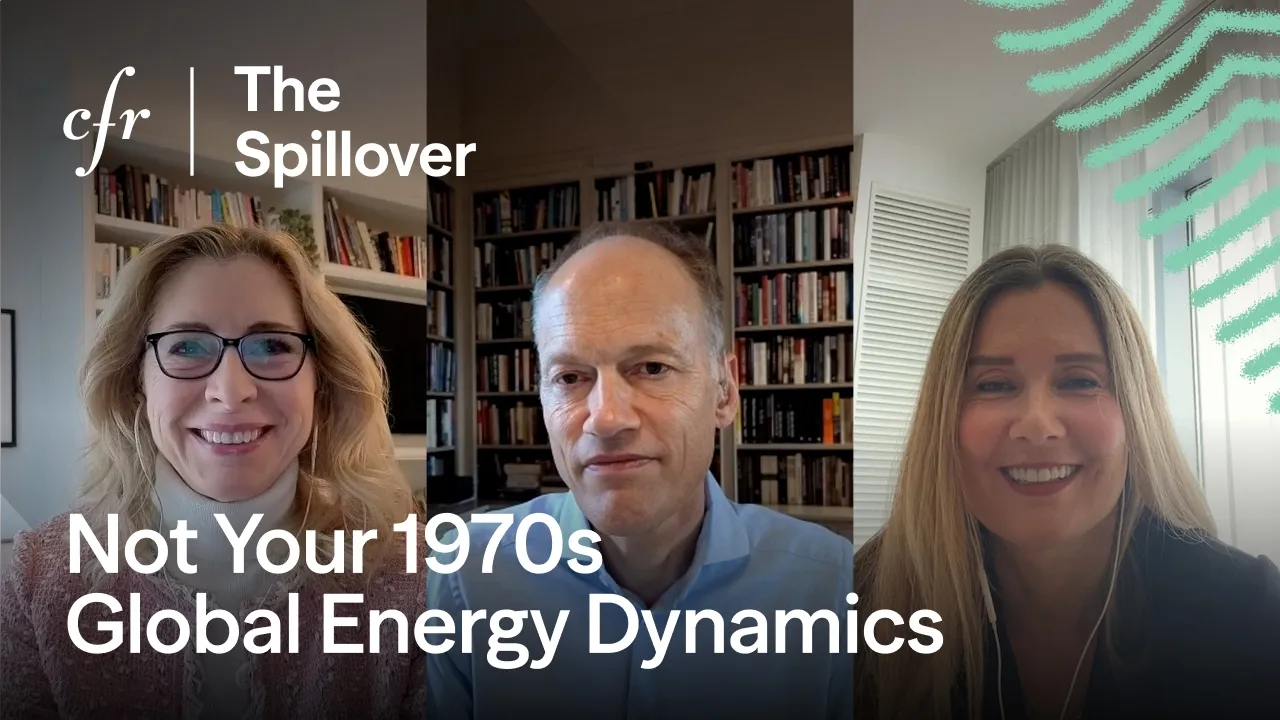
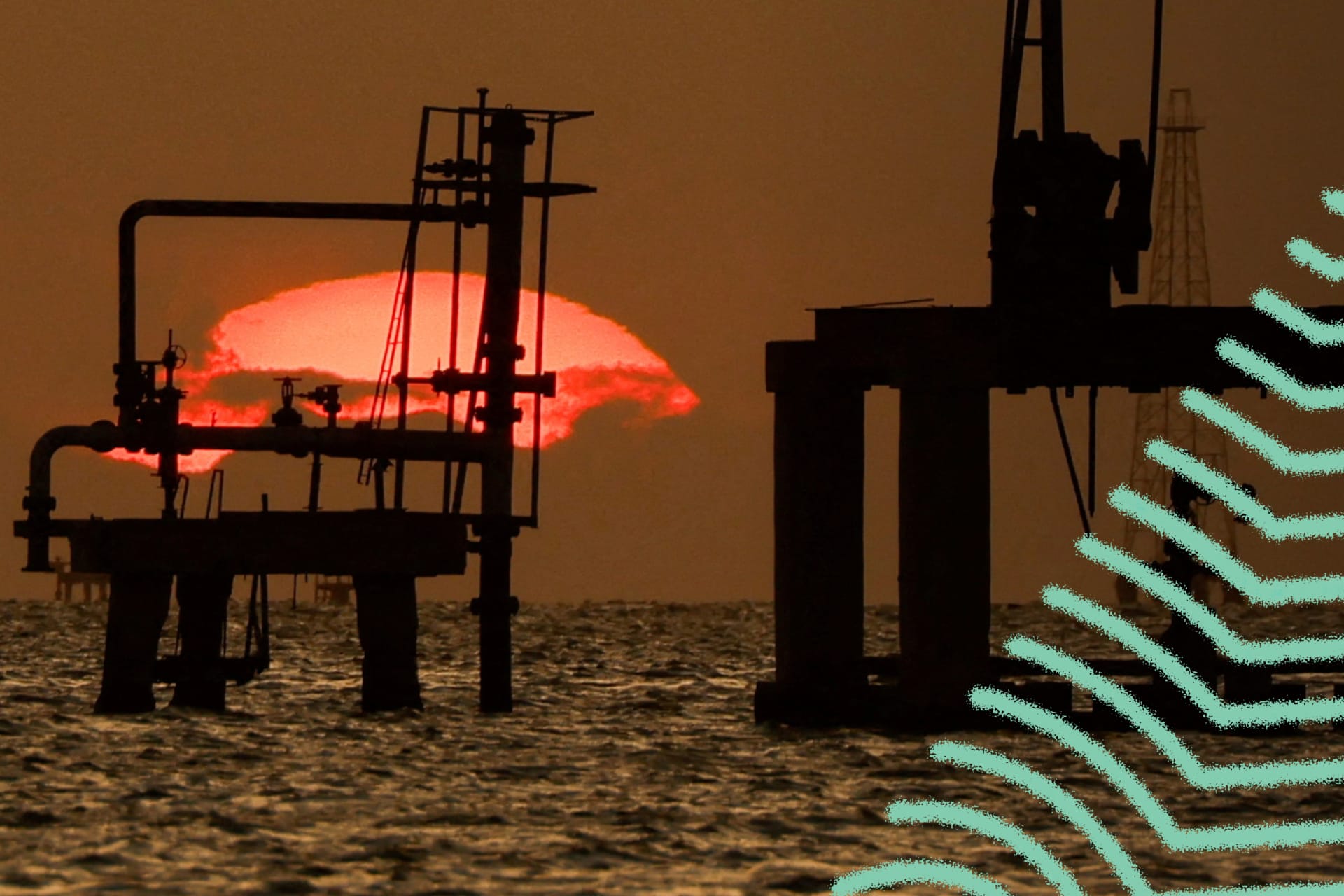
U.S. and Israeli strikes on Iran are disrupting energy markets. Iran’s production capacity has been hit, the Strait of Hormuz has essentially been closed, and Iran’s energy-producing neighbors have been dragged into the conflict. This episode looks at the spillovers from the resulting energy price shock and explores how structural shifts, including a surge in U.S. oil production, China’s emergence as a dominant buyer, and the growth of renewables have reshaped oil’s geopolitical and economic role.

Published
Hosts
 Rebecca PattersonCFR ExpertSenior Fellow
 Sebastian MallabyCFR ExpertPaul A. Volcker Senior Fellow for International Economics
Guest
- Natasha KanevaHead of Global Commodities Research at J.P. Morgan
[Video: https://www.youtube.com/watch?v=iP7Wkp7oiek]
Transcript
MALLABY:
I’m Sebastian Mallaby.
PATTERSON:
And I’m Rebecca Patterson.
MALLABY:
Welcome to The Spillover. Each week we examine the ripple effects affecting our world in technology, finance, geopolitics, and economics.
PATTERSON:
We appreciate all the engagement as we keep developing this podcast. Please keep it coming. Don’t forget on your various channels, YouTube, Spotify, what have you, to like and subscribe. It really helps us.
MALLABY:
I’ll second that, Rebecca. Liking, subscribing, all that stuff on YouTube and so on makes all the difference to the show. If you’re listening, you’re an early member of The Spillover community. Thank you very much. But by commenting and liking, you’re going to help others to discover the show. Okay. So, let’s start.
We’re going to go deep on oil markets this week. Obviously, the events in Iran and around the region are the reason we’re doing this right now. The attacks have triggered a bigger response than probably most people expected from Iran. The war is widening and that’s having an effect already on the markets. Brent crude prices are up 15% so far this month as of Tuesday and are up more than 37% year to date. And you can see it now also in the equity market as we record this on Tuesday, March 3. And we’ll be discussing all that.
But there is also a bigger question that we want to examine. Specifically, how has oil’s role changed? Not just in terms of shaping global power, but also economic and market trends. We often think about oil in the context of the 1970s when the two OPEC oil embargoes triggered stagflation in the United States and other advanced economies. And oil was really established at that point as the most political of all commodities, but so much has changed since that time.
We’ve had America’s rise as a leading oil producer, China’s rise as a leading oil consumer. We’ve had the rise of also alternative energy sources, wind, solar, and so forth. So, we want to take stock right now. How much does oil matter geopolitically and economically? Relative to the 1970s, how have the spillovers changed?
PATTERSON:
Sebastian, I could not agree more with your framing here. I understand why everyone is focused on the Middle East right now, and Iran in particular, but to really understand what it means, what the here and now means, you have to step back and understand these broader questions: the changing role of oil and the evolution of producers and consumers.
Too often, I see research analysts simply looking at historical patterns and assuming this time will be more or less the same. In the US equity market, everyone says December is the Santa Rally, or what happens in January, tells you what’ll happen the rest of the year. Military action in the Middle East means X or Y, because that’s what’s happened on average for the last 20 years.
This type of analysis makes me slightly crazy, Sebastian. When you look at historical averages or patterns, they can easily be misleading or wrong, especially historical averages. What matters more is what is driving the relationship, the why. Fundamentals do change over time, and that can impact these relationships, these correlations. So, history is a great place to start, I think you and I agree with that, but it’s not a sufficient place to end.
So, with that in mind, I am thrilled we’re doing this deep dive today. And we have a guest today who spends much of her time, her waking hours, studying all this, and she understands what’s changed and why it’s changed. And that’s Natasha Kaneva. Natasha’s a managing director and head of the top-ranked J.P. Morgan Commodities Research Team.
MALLABY:
Well, before we welcome Natasha though, let’s begin with the immediate news from Iran and what we need to be thinking about after the weekend strikes and the broadening conflict that we now see.
PATTERSON:
Sure. Yeah. The timing of this, the exact timing, I think was a surprise to some at least. But the overall fact that this war has begun, that’s definitely not a surprise. We had seen US military moving into the area for the last few weeks, even as negotiations continued. Oil prices, Brent crude prices were up about 20% through the Friday before the hostility started. And that was partly because investors were hedging against this possibility and a disruption in oil supply.
We saw gold prices up 22% in the year through February, again, also in part reflecting a hedge against a military risk and what that could bring. So, when you have that much priced into markets ahead of the event, that alone is going to shape the immediate reaction you get. Again, it means that historical averages have to be taken with a grain of salt.
Now, Sebastian, as we look ahead, I think one thing that’s stating the obvious is that we’re in a period of really heightened uncertainty. I think that’s in general, and specifically as it relates to the Middle East. First, we don’t know how long this conflict will last. Second, we don’t know if it’s going to be a sustained regional conflict, not just focused on Iran or perhaps Iran and Hezbollah and Lebanon. If it’s regional, does it impede key shipping channels? Do we see more energy facilities or even tourism facilities across the region affected? And then third, we need to see what, if any, effective policy response there.
As you know, OPEC on Sunday already announced it was going to increase production by about 206,000 barrels starting in April. The IEA, the International Energy Agency, has come out saying it can help stabilize the market. So far, the US has suggested it’s not thinking about using its own strategic petroleum reserves, but we’ll see. Certainly, policymakers in Washington are actively talking about how to mitigate any inflation risk that comes out of this.
MALLABY:
Well, look, there’s definitely a lot of uncertainty, but maybe the way to break it down is to look at it piece by piece, the mechanism here. And the first thing to start with is just how big of a producer is Iran in the first place. I mean, it’s got a lot of reserves. I think it’s the third-biggest reserve holder in the world, but Venezuela also had a ton of reserves, and yet that doesn’t matter, if you’re not actually producing.
PATTERSON:
Yeah, no, that’s a great point. What you have under the ground matters, but it doesn’t matter as much as what you can actually sell. And in this case, what we’re talking about mainly is exports. And at least before this weekend, Iran was exporting somewhere around one and a half million barrels of oil a day, and that’s not nothing. But for context, Saudi Arabia exports seven to eight million barrels a day, and America exports about 10 times as much as Iran. So, Iran matters, but again, in the grand scheme of things, it’s more of a marginal player. It’s not one of the absolute largest global exporters out there.
MALLABY:
Okay. So, if Iran itself is not a big player, let’s take the picture one level broader and ask about Iran plus the effect on the Strait of Hormuz, because almost 20% of oil that is consumed every day goes through that strait. If you look at just ocean-transported oil, I think it’s one third. So, if we add in the Strait of Hormuz, which Iran is now actively trying to block, does this then become a much bigger potential shock?
PATTERSON:
I mean, I think certainly the answer is yes. And look, we have to caveat that things are changing hourly. And by the time this episode drops, things might have changed at the margin at least. But I do think what’s important here is that we’re seeing a different approach by Iran in this conflict. The US and Israel are bombing Iran and now parts of Lebanon, but at the same time, Iran claims, as you just said, it’s closed the strait. It’s also going after other countries and places, oil and energy facilities. It’s going after embassies, it’s now going after hotels.
And it’s not just using missiles. People ahead of the conflict were saying, “Oh, well, they only have so many missile launchers. That means they can only attack for a few days.” Well, they’re taking a page out of Ukraine’s book. They’re using drones as well. They’re cheaper and they have more of them.
All of this means the risks are greater. It’s not just about Iranian exports, it’s about oil and natural gas exports and a big chunk of the region. Monday’s highlight to me was that the QatarEnergy halted liquified natural gas production and Saudis temporarily closed a major facility. This is a much bigger disruption than what we’ve seen recently.
MALLABY:
Exactly. So, it’s not just oil, it’s oil and gas. It’s not just Iran or Iran plus the Strait of Hormuz. It’s Iran plus the Strait of Hormuz, plus attacks on Iran’s neighbors that produce energy. So, it’s like twice as bad as it could have been on one level, like gas plus oil and triple on the other, because there’s those three different levels of regional disruption. This is clearly going to generate plenty of those spillovers we’d love to talk about. What are you watching for in the near-term?
PATTERSON:
Yeah, I think first and foremost, Sebastian, I’m watching how this changes inflation dynamics. After the pandemic inflation spike, the Russia-Ukraine related inflation spike, even though inflation rates have come down, that price change has made people, frankly, around the world, much more sensitive to inflation risk. So, it’s top of mind. In any little change, you’re going to get a bigger reaction now than you would’ve before the pandemic. So, that’s going to be really important.
I think the good news today versus history is that there’s a lot of real-time trackers for what’s happening in the Middle East to understand inflation risk. We can see ships moving real time through the Strait of Hormuz, for example. We can get costs of shipping real time. So, those things are helpful to understand how bad the inflation risk is. I think the other thing that was interesting to me in terms of tracking is that Monday, and so far Tuesday, we’ve seen market expectations for Federal Reserve rate cuts shift come down.
So, the market is looking at this event so far as a greater risk to inflation than growth. So, the Fed will see higher inflation for longer, relatively speaking, it’ll have less room to cut interest rates. That’s another interesting spillover, frankly, that we’re seeing in the immediate reaction.
MALLABY:
So, it leaves the Fed in a very tight spot because the president still wants it to cut interest rates very badly. We’ve seen those attacks on the Fed to try to get it to cut rates. And now the markets are not pricing in cuts quite so much anymore. And so the markets want one thing or expect one thing. The president wants the opposite thing. The Fed is in the middle one just slightly, where the President Trump thought through the potential domestic economic consequences for the US before he launched this war of choice that he’s embarked on. But anyway, I think you had another type of spillover you wanted to get to.
PATTERSON:
Yeah. No, the second thing I’m watching, which is related, is consumer sentiment and then the White House’s posture. The US administration, really since President Trump was reelected, but especially this year, has been talking a lot more about affordability, what can it do to lower inflation in general mortgage rates, but also oil and gas prices to help consumers. So, it’s going to want this military intervention over as quickly as possible, successfully of course, but as quickly as possible so we can have more oil supply ideally for the rest of the year, and that can hopefully bring down oil costs and help consumers.
It’s interesting from September to mid-January, that’s what we were seeing happening. Oil prices were coming down, retail gasoline prices were down about 13% from September to early January. But as the negotiations faltered and the risk of a military conflict started rising from late January to now, that’s all reversed.
As of early Tuesday, retail gasoline prices in the US were up about 11% from recent lows. So, the White House is looking at both of these things. They don’t want to jeopardize the election, they do want to win the war, and the clock is ticking. Which one is the bigger pain point? Which one matters more?
MALLABY:
I’m learning so much, Rebecca. I’m so glad you spent some period of your career in finance working in the oil markets. We’re reaping the benefit right now. But one thing that occurs to me big picture is that my memory is that it used to be OPEC that used oil as a weapon. And today, well, not just today, but in the last few years, it’s been more the US that has used oil as a weapon, sanctioning Russia over Ukraine, sanctioning Iran repeatedly over its weapons programs and other things, sanctioning Venezuela, before the intervention there a month or so ago.
So, we’ve shifted from OPEC using it as a weapon to the US using it a weapon. And I guess that must be linked to the fact that US production has gone up. And so the dependence on external oil supply has gone down. And so the US kind of feels freed to wield the oil weapon without fearing domestic blowback as much as it would’ve done before.
PATTERSON:
Yeah. Preparing for this episode this week and what you just said there, Sebastian, reminds me a lot of our episode last week on artificial intelligence, or AI, because in both cases with the US becoming a major oil producer and even exporter and AI, it really comes down to American innovation and to a degree, deep and broad capital markets.
In the case of oil, we had obviously ample capital. We had new technologies, things like fracking and horizontal drilling that really changed the game. It allowed the US to access sources of energy more cheaply, faster than it could before. And that’s what helped changed everything for the United States.
Production here surged from about five million barrels a day in 2008 to more than 12 million barrels a day in 2019 before the pandemic. So, the US became a net exporter, first of natural gas, then of oil. It’s a big structural change. The US, rather than OPEC, using oil as a political tool.
MALLABY:
Yeah, it’s amazing. I knew, of course, that US oil production had gone up. I didn’t realize it had more than doubled between 2008 and 2019. I mean, that’s just an incredible change. I guess with consumer-facing technology, something new gets invented, whether it’s the internet or the iPhone or AI chatbots or whatever, and everybody notices, but when the technological innovation is sort of buried inside a legacy industry like oil extraction, maybe we underestimate sometimes how profound the change is.
PATTERSON:
Which is exactly why we need to talk about it now. So, we have one structural change is the US is a bigger producer. Second structural change is the fact that the US has effectively replaced OPEC in terms of the leading area wielding that tool. I think a third change taking place over the period is China becoming an increasingly globally dominant energy consumer.
China, again, same rough period, its oil imports effectively tripled between 2005 and 2019. So, this is economy growing, infrastructure being built out, more people in the country buying different vehicles. And of course, China was building its own strategic petroleum reserves for its national security over that period. And those reserves, just by the way, Sebastian, are multiples bigger than what America has in strategic reserves, just throwing that out there. So, all of these changes are critically important.
MALLABY:
Yeah. Wow. We’ve got the huge expansion, the more than doubling of US production, we’ve got the more than tripling of Chinese consumption. And then we’ve got the way that, rather characteristically, China is so good at thinking strategically about geoeconomic weapons. And so it’s both got a much larger strategic oil reserve than the US does. But also, I guess it can kind of protect itself from the threat of having its import squeezed, which could be a vulnerability, by the threat of counter-punching with critical minerals, which it’s got a choke hold on. And so that strategic nature of China is yet another factor, I guess we have to think about.
I suppose it’s not just China though. I mean, India is also now a big oil consumer, as I understand it, and was buying oil from Russia in defiance of US policy, at least in the past, putting pressure on Russia through oil sanctions to punish it for Ukraine.
And the Indians were buying now… I think the US actually, in that instance, was able to put tariffs on India, punish India. It also put tariffs on the Russian oil companies that were exporting, which is less surprising. But there’s this tension in US policy between wanting to be a good ally to India because you need India in Asia as part of the strategic game against China. Plus India is the fastest-growing big economy in the world. It’s the most populous or is about to be overtaking China. So, it’s a very significant ally. You don’t want to alienate it, and the Indians can be prickly. So, there’s this sort of question about how far the US can use the oil sanctions weapon, if India wants to undercut it like China does, by buying at a discount sanctioned oil.
PATTERSON:
Yeah. No, looking at the pushes and pulls between the US, India, and China, I think is fascinating. And I know, Sebastian, you and I could quickly start doing a tour of the world with all the spillovers to every country from what’s happening in the Middle East. But I think in the interest of time, we probably shouldn’t do that.
I do want to mention one other country though right now, which is obviously top of mind, which is Russia. The Iran conflict creates a lot of cross currents for Russia as well. Obviously it’s a major oil producer, but there’s a big benefit here for Russia to the degree oil supplies in the Middle East are curtailed or there are fears that they could be curtailed and prices go up. It’s a source of revenue for Russia. It also takes the world’s focus away from the Ukraine war and to the Middle East, which maybe helps give Russia a little wiggle room as it’s figuring out its next steps. But again, there’s a lot of threads we could pull here.
MALLABY:
Yeah. I mean, that’s another maybe intended, maybe unintended consequence of this decision to attack Iran is that Russia could benefit from the high oil price that we’re seeing now, just as the US could suffer from higher inflation. So, there are these spillovers, as we like to say.
PATTERSON:
Indeed. I think highlighting the US and China’s roles in global supply and demand and the strategic tool… That’s right, I do want to mention just one other structural shift we should all have in the back of our minds, and that is how energy usage is fundamentally changing very slowly behind the scenes, but it is changing.
So, think about electric vehicles. The Tesla Model S came out in 2012. Here we are about 12 years later, and according to the International Energy Agency, more than a fifth of global vehicles today are electric. Half of all cars sold in China today are electric, and that trend is continuing. Now, we know there’s other forces pushing oil demand higher, and now the US federal government is pulling back, to a degree, on some renewables, but in contrast to 10 or 20 years ago, it’s just no longer a one-way street.
China added more solar capacity in 2024 than the rest of the world combined. So, as the growth of oil demand, not near-term, but eventually starts to slow and then eventually peaks and turns, that’s also going to reduce the political heft a country like the US has or oil exporters have in terms of using oil as a tool.
MALLABY:
Okay. We should bring in Natasha. Natasha Kaneva, managing director and head of commodities research at J.P. Morgan, and we’d love to get her perspective on these issues.
PATTERSON:
Natasha, thank you so much coming in for what I’m sure is an exceptionally busy time for you. You know I love following your work and your team’s work. We really appreciate it.
KANEVA:
Thank you for having me.
PATTERSON:
Natasha, when we started this year, you and your team were looking for oil prices to actually decline in 2026. With growing demand, but supply outstripping that demand growth, I’m just curious, how have the events in Venezuela, and now underway in the Middle East, how are they changing your view or how are they changing the risks to your view for the year overall?
KANEVA:
You’re absolutely correct. The bearish view on the oil was actually established in 2023. So, that was a counterview to the narrative that existed in the markets at that time that there is just massive amount of underinvestment in the oil and gas industry compared to 2014 levels because at that time we were investing about $800 billion. By 2022, this investment declined all the way down to about $350 billion.
So, in our case, we actually concluded the exact opposite. We realized that the very high prices in 2021, but also in 2022, as you remember, Brent averaged $100 that year. These prices did exactly what they supposed to do in the commodities markets. They incentivized a lot of supply, and oil behaved like a normal commodity. And so when we looked at the numbers, what we realized there will be a huge amount of supply coming from deep water production, but not the regional countries like UK and to Norway, but the countries like Brazil, Guyana. We modeled US supply as a function of price, not as a function of inventories or any other decision-makers.
And so what we concluded is there will be a lot of supply. The supply will be heating market in the second half of 2025, and there will be a $6 handle in the Brent by the end of that year. So, all of that materialized, nothing has changed. All of that supply will still be entering the market through 2026 and feeding through 2027.
Why it’s so important? Because in the case of the deep water production, as you guys know, it’s extremely cheap. Yes, it’s located at the very, very end of the very bottom of the global cost curve. Yes, Brazil is right now drilling seven kilometers deep. Mount Everest is 8.8 kilometers. Apologies for the Americans. I’m not sure in the feet, but it’s just for scale, yes, 8.8, they’re drilling seven kilometers deep in the sea in the water. Their cost of production is below $5. So, Guyana similarly, owing dividends, special dividend, buybacks, everything there below $30. So, it’s exactly the same field, yes.
And in the case of United States, last year, WTI averaged $64, US production grew by 800 KBD, 0.8, almost one million barrels per day. So, all of that is still there. Nothing has changed. We had a lot of inventory built up last year, still through January, we see that all it continues building up, but clearly the world has changed on Saturday morning. Yes.
A couple of things to keep in mind. So, on Friday, fair value for February for the price of Brent was $61. Even on Saturday, we noticed no disruptions on the production side despite this massive activity in the Middle East. The situation is changing today. The way to think about that is unprecedented. The first time ever in the written history of the Strait of Hormuz, the strait is actually the traffic through the strait is halted.
It’s not shut. The street is still open, but the boats are nervous. If you’re a pilot of a boat, would you go through the Strait of Hormuz? No. The insurance companies stopped insuring the boats, and so all of them are stuck on both sides of the mouth of this very, very narrow strait. So, the issue is that majority of the countries within the strait, the oil-producing countries in the Gulf, they have no other option but to ship through the Gulf. So, there’s two pipelines from Saudi Arabia and UE. There is some capacity there, but in general, majority, 16 million barrels per day of oil, that’s about 15% of the global supply has no other choice. They have to go through the Gulf.
So, if you’re stuck and you cannot traverse your supply, what do you do? You continue producing and you put this oil in storage. But the issue is that at some point you’ll be running out of storage if the Gulf does not reopen. Today that happened in Iraq. They ran out of storage. So, they already announced one million barrel per day of cut off supply with additional three million barrels per day coming. They have right now, as we speak today, they have three to four days left of storage.
On average, if we take a look at all the producing countries, that’s about 21 days left starting from today. So, that’s the ticking clock. But realistically, it’s happening already today. Today we lost one million barrel per day, which means it lifts my fair value immediately because now this is a real disruption. And the issue with the Strait of Hormuz is because the volumes are so big.
In the case of Russia, Russia exports seven million barrels per day. Here we’re talking about 16. What that means, the price reaction is not linear, it’s exponential. And that’s what you see right now, the market sitting and trying to figure out how long this will last. At the beginning, we thought maybe it’s three days. Yes, the Jewish holiday started on Monday night at sundown. So, we’re moving into Passover now. The administration is giving us different timelines. We heard a couple different… We heard the week, we heard two weeks, we heard five to four weeks.
The numbers I’m giving you right now, realistically, we had three to four days, yes, because the first production is shutting down now. There are many levers that US administration in particular, but others can do. It takes time, and that’s something that the market is trying right now to figure out. Number one, we have a precedent of US administration stepping in and offering insurance to the boats coming through the Strait of Hormuz. So, that happens.
The only example we have was 1914. So, you really, really have to go deep into the history to figure that out, but they can. They can step in the US Treasury and start offering insurance for boats. Here, this is more of a analysis for the bond holders. Yes, the holders of US Treasury, what will be the implication for that? There’s about 150 boats right now in the State of Hormuz. Usually, the insurance coverage for large scale boats is two billion per boat.
MALLABY:
I remember, to your point about insurance, that during the aftermath of 9/11, the US Treasury provided insurance for aircraft operators, as I recall. And I guess you’re saying-
KANEVA:
Excellent point.
MALLABY:
… in extremists, this is what happens, and maybe they will do it again for oil shipping. But just so we understand, how bad could this get? Let’s say the war, just for the sake of argument, carries on for three more weeks, and production therefore has to be stopped in various countries because there’s no more storage left and you can’t get through the strait. What happens to the price? I mean, how high can it go? And if you switch off production, does it damage the infrastructure as actually you can’t turn it back on again?
KANEVA:
Yeah. Excellent question. The way to think about that is one million barrel per day equals $4 in the price this year. So, you just multiply 16x4, plus you add it to the fair value, which at this point it’s for me even hard to calculate. So, the number way coming up was it’s $100 to $120.
MALLABY:
I mean, that’s a doubling since last Friday, right?
PATTERSON:
Right. In worst case, we get up to something like 120. Right. Okay, so we’ve got some production risk. The bottom line here, Natasha, if I’m understanding you, is there’s a huge amount of supply coming from some very-low cost providers that are places nowhere near the Strait of Hormuz, fortunately. And so you still have that support to hold down prices, I guess I should say.
At the same time, you’ve got a material percentage of the global oil supply stuck, unable to get through the strait. And so at a minimum, we’re going to have a spike in prices, question how long it lasts. Am I more or less summarizing correctly?
KANEVA:
Excellent. Excellent summary.
PATTERSON:
All right. Then in the interest of time, because I know, I mean, your world is blowing up right now and we appreciate you joining us. One other question, going back to our podcast, which is about spillovers, one relationship that I’ve watched my whole career is that between oil and the dollar. And right now we’re seeing the dollar rise-
KANEVA:
Bullish.
PATTERSON:
Pretty broadly. Yeah.
KANEVA:
Bullish.
PATTERSON:
And I think a lot of that, frankly, is technical. It’s a lot of investors who put money overseas last year and earlier this year, who are just profit-taking because they’re men Managing risk, but we are seeing a positive dollar with positive oil. At the same time, it feels like, Natasha, the relationship here between oil and the dollar is structurally changing as the US goes from net oil importer to exporter. And I know you and your team have done some work on that. Would love just to get your perspective on that issue.
KANEVA:
Yes. First of all, you’re absolutely correct the way you described the situation, because if you take a look at today’s conflict, so who is the biggest loser? It has to be Europe, unfortunately, again, because it’s not just the oil prices at the rising, it’s the European gas prices are back at 60 euros per megawatt hour. Why? Because one of the largest fields, gas-producing fields in the world, the Qatari Persian field is shut down.
And so if this field remains shut down for extended period of time, the impact for Europe’s supply will be the same as from the shutting down of Russian gas supply. So, I’m just trying to scale it up for you. At that time, the TTF price ranged 300 euros per megawatt hour. Right now it’s 60, but as you pointed out a week ago, we were at 30. So, it’s double of the price already now in couple days.
US is net exporter, you’re absolutely correct. So, we can weather that economically to some extent. So, oil prices are global. That’s something always the US administration needs to keep in mind. But at the same time, for consumers, it will be difficult, yes, because the gas bills will start going up and the driving season actually starts now in April. Yes, when Americans get on cars and start driving all around.
But the states that produce oil and gas will profit. That’s the Texas, that’s the Oklahomas, that’s the Dakotas. So, because of that, there is this balancing act within the total US economy that for some, it’s definitely a hit, but for some that’s a big bonus, and those are the states that will be spending a lot.
In the case of Europe, there is no cushion like that. Yes. It’s a massive net importer of energy. They’re short on energy and they’re being hit on both fronts, on the case of oil and in the case of gas. So, Japan is on the list as well because of gas. Korea is on the list because of gas. Taiwan already made a statement yesterday that they will try to operate with the local partners to start procuring gas and storing gas. But in general, so we need to look at China. This is an example that we should be paying a lot of attention because I think there could be an argument made that if you take a look… Because you mentioned Venezuela, so right now, if you add US, Guyana and Venezuela, that puts about 30% of the global oil reserves under the US influence.
So, Secretary Wright made a statement a month ago where he said that US would be happy to partner with Iran to start marketing Iranian oil at market prices. And clearly, it will be done in US dollars. Right now, Venezuelan oil is sold in US dollars. In 2025, it was sold in Chinese yuan. So, is China looking at the situation in Russia, Ukraine, and the involvement from the US side and analyzes that Russia will move under the US orbit? So, then China’s left alone, so what do you do? China’s a massive net importer of oil. Yes, 70% of Chinese crude is imported. 80% of that goes through the Strait of Malacca. If you’re China, what do you think right now?
PATTERSON:
It’s a great question. I mean, on one hand, I could see President Xi being very nice to President Trump when they meet in April and hope for the best. And if the US tries to extract something from China by squeezing oil, so to speak, I could also see China fighting back with critical mineral exports that the US needs. I mean, China, if it didn’t have that leverage, it would be problem. Okay, you’re shaking your head no.
KANEVA:
Rebecca, at this point, everything is on the table.
PATTERSON:
Yes, you’re right.
KANEVA:
Anything you want. Interestingly enough, so far we have had not an official statement from neither President Putin nor President Xi Jinping for both Venezuela and Iran.
MALLABY:
Well, I’m fascinated and scared. Thank you so much, Natasha, for being with us. It’s great.
KANEVA:
Thank you for having me. Yes.
PATTERSON:
Well, Sebastian, that was way more information from Natasha, and frankly, insight than I expected. So, very glad to have her.
MALLABY:
Agreed. She was amazing.
PATTERSON:
Yeah. No, that was super helpful. I want to pick up where she left off, talking a little bit about how now Venezuela is denominating oil trade in dollars, whereas before this year it was in Renminbi, and they’re now trading oil in dollars. And the dollar dominance, the international role of the dollar that’s being supported by the US’s role as a big oil producer and using that leverage. And I just want to build on that just for a broader currency point here, because I think there is this interesting relationship between oil and currencies.
The oil market is a huge commodity market. It’s the most liquid commodity market, but it’s still not liquid compared to government bond or currency markets. So, if you’re trying to position for a move in oil, sometimes you’ll look for proxies. I might use something like the Mexican peso, Canadian dollar, Australian dollar, Norwegian crown as proxies for oil. It’s not one-to-one, but it’s close enough. There’s a positive relationship because so much of those countries’ revenues come from commodity demand.
And we even saw an example of that last month. The Reserve Bank of Australia raised interest rates in part because commodity price strength had brought in a lot of revenues to the country, and that pushed up growth and also supported inflation. So, there’s this other spillover beyond the dollar to broader currency markets, and even central bank policy, that I just wanted to highlight.
MALLABY:
Yeah. And another piece of financial structure that maybe we should just add in is that if you go back to 2008, the energy sector was about 16% of the S&P 500. It’s now down to something like three. It’s a big shift. So, if you have oil prices go up, the energy sector does well, the wealth effect that feeds through into US households that own the S&P 500 and neutral funds used to be measurable, quite palpable, but now it’s gone from 16% to 3% of the S&P. That’s just not the case anymore. You don’t get much of a wealth effect. So, the main financial channel that we all talk about with oil going up is the inflation channel, the negative channel, and you don’t get so much of that offsetting positive wealth effect. And inflation, the Fed doesn’t actually include inflation in the index that it targets when it says it wants 2% inflation.
But it does know, of course, that higher oil prices are going to feed through into higher costs for other products, which then causes those other products to go up. So, you get about a 0.15% increase in the inflation rate if you have a 10% rise in oil prices in the first year. But by the second year, that’s roughly quadrupled. The effect on inflation is more like 0.6% for every 10% shift in the underlying oil price. So, we’ve moved from a world in which there are these offsetting effects with the wealth effect being positive, the inflation effect being negative, we only really get the negative one these days.
PATTERSON:
Yeah. The Fed definitely keeps an eye on oil and energy prices, commodities generally, for pass through to inflation, but also inflation sentiment, even though it doesn’t actually target it.
Sebastian, I think I want to try to stop us here. Again, there’s so much we could talk about with this subject with oil, but I want to try to take a step back, recap, and then as always, get to our fun facts for the week or interesting facts for the week. So, on our key points this week, let me highlight three.
The first one is the global energy landscape is structurally changing and you have to understand that to be able to react correctly as an investor, as a business person, as a policymaker to events like the ones we’re living today. And of those structural shifts, I think there’s four big ones. We would note, first, technology has helped the US through fracking, horizontal drilling, shift from a big oil importer to now a net energy exporter, both gas and crude.
Second, the US has effectively switched places with OPEC in terms of using oil as a geopolitical tool. Third, and however, China’s rise to be buyer of last resort, if you will, for oil means that it can blunt the effect of the US’s oil leverage if it chooses to use its own leverage and push back and buy oil barrels at discount. And we’ve seen that over the last couple of years through Russia, Venezuela, et cetera.
And then finally, and fourth, the rise of renewables and the fact that the world is becoming less energy-intensive means that not today, but over time, being a major oil exporter isn’t going to give you the same bang for buck geopolitically. So, that’s the big, big takeaway I hope people take from our conversation today, Sebastian.
But two other quick things. One is that even if the price of oil becomes slightly less impactful as a geopolitical tool, it still matters. We’re seeing that now in Europe, given its reliance on Middle East oil, and especially natural gas. We’re seeing that in the shift in Fed funds rate cut expectations for this year, people already pricing in that we could have higher inflation than they expected before. And then last, but not least takeaways, Iran, what’s happening there is clearly very fluid, but for now, Natasha, Sebastian, I were focusing on global shipping through the strait and hits on energy infrastructure.
And what Natasha was saying, I thought this was a great point. If they can’t get the ships through the strait, and even if the US provides insurance, it still might not be worth it to get the ship through the strait, they can only store the production for so many days before they run out of storage, and then they have to shut down production and that’s harder to start back up.
The clock is definitely ticking for the oil producers in the region, for the United States that doesn’t want to have inflation undermine voters as we get to the midterm elections. So, hopefully that means this conflict won’t last that long for everyone concerned.
MALLABY:
Well, that was a terrific summary, Rebecca. And to our listeners and watchers out there, if you liked the summary, I’m going to bang the drum one more time, please do leave us a comment, like us, follow us on Spotify, Apple and YouTube. That’s how we can spread the word about the show.
I’m going to give you the thing that piqued my interest this week. As the AI person, it’s going to be about AI. And that is really the spat between Anthropic, the AI lab, and the Department of War with the Department of War insisting on carte blanche to use the Claude model from Anthropic as it wished to, Anthropic refusing to give it that permission, refusing to accept a change in the contract, which I think really, somebody who’s tracked the AI labs over the past, since they were started back to DeepMind in 2010, this is the first time when a AI lab has really risked its commercial interests very directly by taking a stand on safety.
And sure enough, Anthropic was punished by the administration. It was told that not only would the Pentagon not use Claude models, but also suppliers to the Pentagon were not now supposed to use Claude models either. And depressingly, immediately another Frontier Lab, OpenAI, jumped in and did a deal with the Pentagon to provide alternative AI models, really underscoring how the race dynamic in AI makes efforts to do something about safety extremely difficult. I think that’s just a huge problem we’re going to come back to on the show because it’s not going away.
PATTERSON:
I’m sure we’re going to come back to that one, Sebastian. And I would guess this particular story is not over either, but we’ll save that for a future episode. I think my pick of the week, for better or worse, is also AI-related following up on our conversation in last week’s episode.
I noticed that China’s DeepSeek a is about to launch its latest model just ahead of the government’s annual two sessions parliamentary meetings. And I think it’s just a good reminder that the race isn’t just about the US last January when DeepSeek launched its R1 model, worries that it might be able to do something cheaper, faster than the United States, caused a pretty painful selloff in US tech stocks. So, keep an eye out on what’s going on overseas, not just here at home.
MALLABY:
So, now I read the credits?
PATTERSON:
Your turn.
MALLABY:
For resources used in this episode and more information, please visit cfr.org/podcast/spillover and take a look at the show notes. If you have an idea or you just want to chat with us, email [email protected], be sure to include The Spillover in the subject line.
This episode was produced by Molly McAnany, Gabrielle Sierra, and Jeremy Sherlick. Our video editor is Claire Seaton. Our sound designer and audio producer is Marcus Zakaria. Research for this episode was provided by Liza Jacob and Daniel Hadi and Ishaan Thakker. Thank you to all for listening.
The Hook: The war in the Middle East has effectively shut down the Strait of Hormuz, the channel through which nearly a quarter of the world’s oil passes, roiling global energy markets.
The Spillovers: The strikes have heightened geopolitical and economic uncertainty and refocused attention on energy supply and inflation. Oil and natural gas prices have surged, with knock-on effects across equities, bonds, currencies, and other commodities as investors reassess risks to their macro assumptions. Policymakers are weighing potential responses, while energy producers consider adjusting supply. Beyond the immediate volatility, shifts in production, demand, and global power dynamics over the past several decades have reshaped the way oil shocks transmit through markets and economies, and how governments can use energy as geopolitical leverage.
The Spillover is a production of the Council on Foreign Relations. The opinions expressed on the show are solely those of the hosts and guests, not of the Council, which takes no institutional positions on matters of policy.
Mentioned on the Episode:
“Outlook for Energy Demand,” International Energy Agency (IEA)
Ignacio Presno and Andrea Prestipino, “Oil Price Shocks and Inflation in a DSGE Model of the Global Economy,” Federal Reserve
John Kehoe, “Iran War Oil Inflation is a Nightmare for RBA,” Financial Review
Producer
- Producer, Podcasts
Supervising Producer
- Director, Podcasting
Supervising Producer
- Director of Video
Audio Producer
- Audio Producer & Sound Designer
Researcher
- Research Associate, Finance, Business, and Technology
Researcher
- Research Associate, Geoeconomics
More Episodes
 48:01Podcast
 47:25Podcast
 50:17Podcast
 47:25Podcast
 52:31Podcast
 48:40Podcast