The End of Convergence
Why the Developing World Is Falling Behind Again

Overview
The first two decades of the twenty-first century saw living standards improve across the developing world. The gap between poor and rich countries, long assumed to be self-reinforcing and perhaps persistent, was apparently closing. Yet today, many less developed countries have no clear ways to industrialize. Joining the global economy does not hold the same possibility of convergence as it used to.
 Zongyuan Zoe LiuCFR ExpertMaurice R. Greenberg Senior Fellow for China Studies
Introduction
The first two decades of the twenty-first century saw living standards improve across the developing world. At the turn of the century, then Goldman Sachs Chief Economist Jim O’Neill coined the term BRIC to capture the mounting importance of fast-growing emerging market economies, initially represented by Brazil, Russia, India, and China. Between 2000 and 2015, dozens of developing countries grew faster on a per capita basis than advanced economies. That growth was fueled by commodity booms, greater industrial integration into global value chains, and capital inflows. The gap between poor and rich countries, long assumed to be self-reinforcing and perhaps persistent, was apparently closing. Several prominent economists have described the era as convergence; low-income economies were growing faster than developed ones without necessarily adopting all the institutional features that traditional development economics theory had prescribed.1
The successive economic rise of several East Asian economies provided compelling examples of convergence optimism. Japan’s postwar rise was followed by the rapid rise of the Four Asian Dragons—namely Hong Kong, Singapore, South Korea, and Taiwan—which was in turn followed by rapid growth in parts of Southeast Asia. In 1993, the World Bank’s landmark study, The East Asian Miracle, attempted to draw from those experiences broader lessons about development policy.2 But the successes of East Asian economies were never simply the product of a replicable formula in development economics. Japan, South Korea, and Taiwan industrialized from an exceptional conjunction of Cold War geopolitics, strong state capacity, and disciplined industrial policy. The postwar liberal order allowed those late industrializers to use global markets as a developmental ladder to catch up. The enabling conditions were more than just economic. As strategically important partners in the U.S.-led Cold War order, those countries benefited from U.S. security protection, aid and military procurement, access to U.S. capital and markets, and technology transfer. Washington also largely tolerated substantial market-protectionist policies and state-directed industrial policies because their economic success and political stability served broader U.S. strategic interests during the Cold War.3
The recurrence of catch-up growth across different Asian economies, especially China’s economic takeoff after 1978, made what were historically conditioned successes seem like a generalizable development model applicable to the rest of the developing world. If Japan, South Korea, and later China could rise through import substitution, export manufacturing, foreign investment, and global supply-chain integration, perhaps others could, too. Such optimism inherently assumes that, if developing economies today can optimize their domestic conditions, they can still benefit from the international system that contributed to the East Asian Miracle. But most developing countries can no longer count on that same external environment.
Today, the formal architecture of that order still largely stands: World Trade Organization (WTO) rules remain, most-favored-nation language persists, and governments still profess support for trade, although increasingly using the language of economic security. But the conditions that made the system unusually permissive for late industrializers to catch up are changing. Security concerns now deeply affect trade, technology, finance, energy, data, and industrial policies. Climate regulations, labor rules, and domestic subsidy regimes are changing the costs and terms of accessing global markets. Forces driving those changes are beyond the control or influence of any single developing country. The developmental ladder that served industrializing nations over the last two decades is becoming harder to climb, and no clear alternative path to convergence has emerged.
The result of that change is unlikely to be a simple, clear division between winners and losers. Countries with large industrial scale and dominating strategic resources may be better positioned to gain from the emerging new system than other developing economies, but rising frictions in trade and cross-border investment and more frequent use of restrictive economic weapons can still make them and their trading partners worse off than they would have been under a more open system. Countries that are relatively poor, are less developed, are unendowed with strategic resources, and lack talent face an even steeper climb.
Globalization does not end here, but the developmental room it once created for less developed economies to catch up is disappearing and becoming less evenly distributed. For much of the postwar era, developing nations could profit from gaps in the global economy, such as wages, market and technology access, and regulations, to build productive capacity before those gaps were narrowed or eliminated. That was a form of developmental arbitrage: poorer countries used gaps between richer economies and themselves to climb the developmental ladder and converge toward affluence. Cheap labor allowed poor countries to enter global manufacturing. Open markets allowed their exports to reach rich consumers and their firms to absorb technology through foreign investment, licensing, and joint ventures. Relaxed environmental constraints allowed countries to industrialize before they could afford cleaner production.
Those developmental arbitrage gaps are now closing simultaneously. Cheap labor is still important, but the rise of automation and the power of large manufacturers mean that a low-wage workforce alone cannot deliver the same gains as before. Geopolitical rivalries, industrial subsidies, sanctions, export controls, and other forms of economic coercion are restricting access to lucrative developed markets, capital, and technology. The regulatory flexibility that helped keep production costs low in developing countries is shrinking as more countries and blocs, including the European Union, incorporate decarbonization into their trade rules. The result is a less even and less equal geography of development. A few favorably situated developing economies may still secure redirected investment or new resource rents. Many less developed countries, however, have no clear alternative ways to industrialize as former options disappear. Joining the global economy does not hold the same possibility of convergence as it used to.
The Old Paths to Development
The earlier apparent convergence masked significant differences in how developing economies attempted to catch up. East Asia’s growth was anchored in manufacturing integration and productivity gains, whereas much of sub-Saharan Africa relied on resource extraction, leaving it more exposed to commodity cycles and external demand, particularly from China. Latin America similarly relied on a commodity boom to reduce poverty and expand the middle class but fell short of translating that boom into durable structural change. When commodity prices collapsed between 2014 and 2016, the limits of the boom years were exposed: developing economies’ rising fortunes had come from riding a wave, not climbing a ladder.4
What distinguished manufacturing-led and export-oriented catch-up was the ability to convert temporary cost advantages into lasting productive capabilities. The postwar global economy gave late developers three forms of arbitrage that made such conversion possible: labor cost arbitrage provided an entry point into manufacturing competitiveness, access arbitrage allowed firms to turn short-term cost advantages into production scale and subsequently technological upgrades, and regulatory arbitrage lowered the near-term economic cost of building industrial capacity.
With labor cost arbitrage, less developed countries did not need to match the productivity of advanced economies if their wages were sufficiently lower to compensate for the productivity gap. That gap attracted labor-intensive manufacturing and foreign investment to less developed countries and, with it, export orders. But the developmental benefit came from what happened after factories arrived. Workers became more skilled, and their wages rose over time. Firms gained standardized production, managerial experience, supplier relations, and learning-by-doing expertise. Cheap labor was therefore a temporary cost advantage that could be converted into industrial capability.
With access arbitrage, selling into rich markets gave firms and factories in developing countries access to much larger demand than their domestic market alone could provide. Meanwhile, they gained access to technology and production know-how through foreign direct investment (FDI), joint ventures, licensing, and participation in multinational supply chains, all under the broadly nondiscriminatory global trade architecture. Both dimensions of access arbitrage—selling to wealthy markets and receiving foreign direct investment while protecting their domestic firms and managing the terms on which foreign capital entered their own markets—depended on the advanced economies’ willingness to accept the historical bargain of market access without full policy reciprocity. In the process, developing countries could move up the value chain, manufacturing more sophisticated products and components at higher prices.
For decades, rich countries imported goods produced under lower environmental and labor standards without conditioning market access on equivalent production standards. With regulatory arbitrage, as long as those differences did not result in market denial, developing countries could build factories and produce at lower costs when they had less stringent environmental, labor, and other standards than those in advanced economies, and could export to richer markets. Thus, lower compliance costs due to regulatory gaps became part of their comparative advantage, allowing developing economies to earn foreign exchange from exports that could support industrial upgrading in the future.
Regulatory arbitrage could also allow countries to sequence development.5 Developing countries do not always have to sacrifice their environment or practice loose labor protection rules. Governments could introduce pollution controls, carbon constraints, higher labor standards, and other regulations gradually as income, technology, management, and administrative capacity grow. As the domestic economy becomes more industrialized, governments could raise standards to accelerate market consolidation by forcing weaker producers out of business, leaving only those capable of producing at higher regulatory and technological standards.
China illustrates how those developmental arbitrage advantages could reinforce one another. Chinese manufacturers gained a cost advantage at first from cheap labor. After China joined the WTO in 2001, it had more access to foreign markets, which brought Chinese factories the needed volume of orders to scale up; it also obtained technology, capital, and expertise from foreign investment and joint ventures. Rapid industrial expansion proved cheaper without stringent regulations and enforcement, despite creating longer-term environmental and public health problems. In automobiles, for example, the Chinese government capped foreign ownership in manufacturing joint ventures at 50 percent from 1994 to 2022, while also imposing localization and knowledge transfer requirements. Chinese automobile manufacturers that emerged during that period, such as SAIC, First Automotive Works, and Guangzhou Automobile Group, absorbed technology, supplier practices, and production know-how that later fed into China’s indigenous auto industry.6 The foreign equity ownership cap in commercial vehicle joint ventures was gradually removed between 2020 and 2022, when China’s vehicle market had already been the world’s largest since 2009 and Chinese new energy vehicles were becoming globally competitive.
Today, however, it is becoming harder for developing countries to take advantage of those three developmental arbitrages like China and other East Asian economies once did. A country entering manufacturing through cheap labor can no longer assume that open markets will stay open long enough for its firms to scale and upgrade. Similarly, a country that gains market access cannot assume it will be allowed to access developed countries’ technologies for more sophisticated production. A country that tries to industrialize through carbon-intensive production that advanced economies prefer not to do within their own borders now faces border taxes, reporting burdens, and green subsidies that East Asian economies did not confront when they were trying to catch up. Although every arbitrage did not need to last forever in the old model, they did need to overlap for long enough that temporary cost advantages became durable industrial capabilities. As all three arbitrage doors are closing simultaneously, it becomes harder for developing countries to achieve that conversion.
Fewer Returns for Cheap Labor
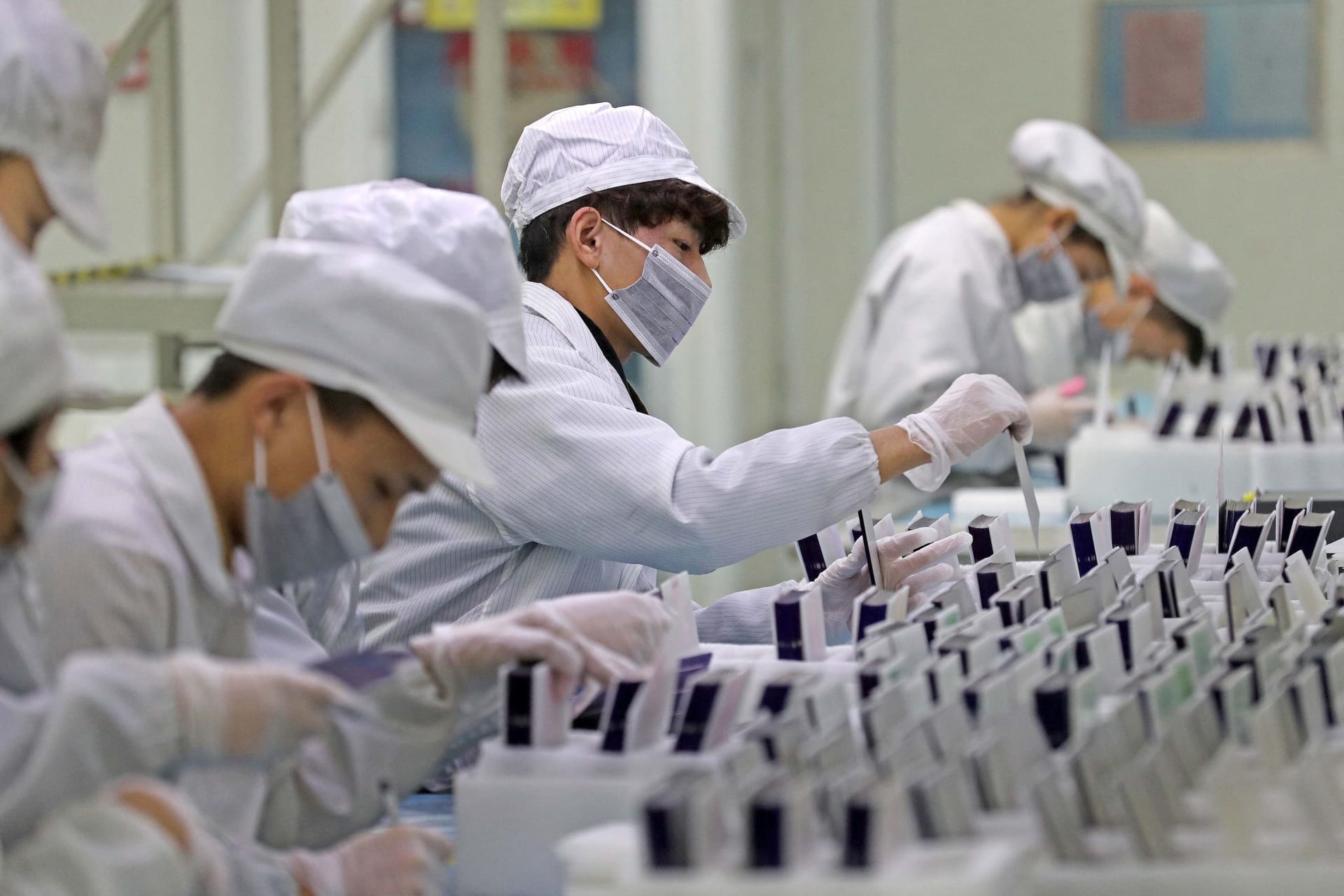
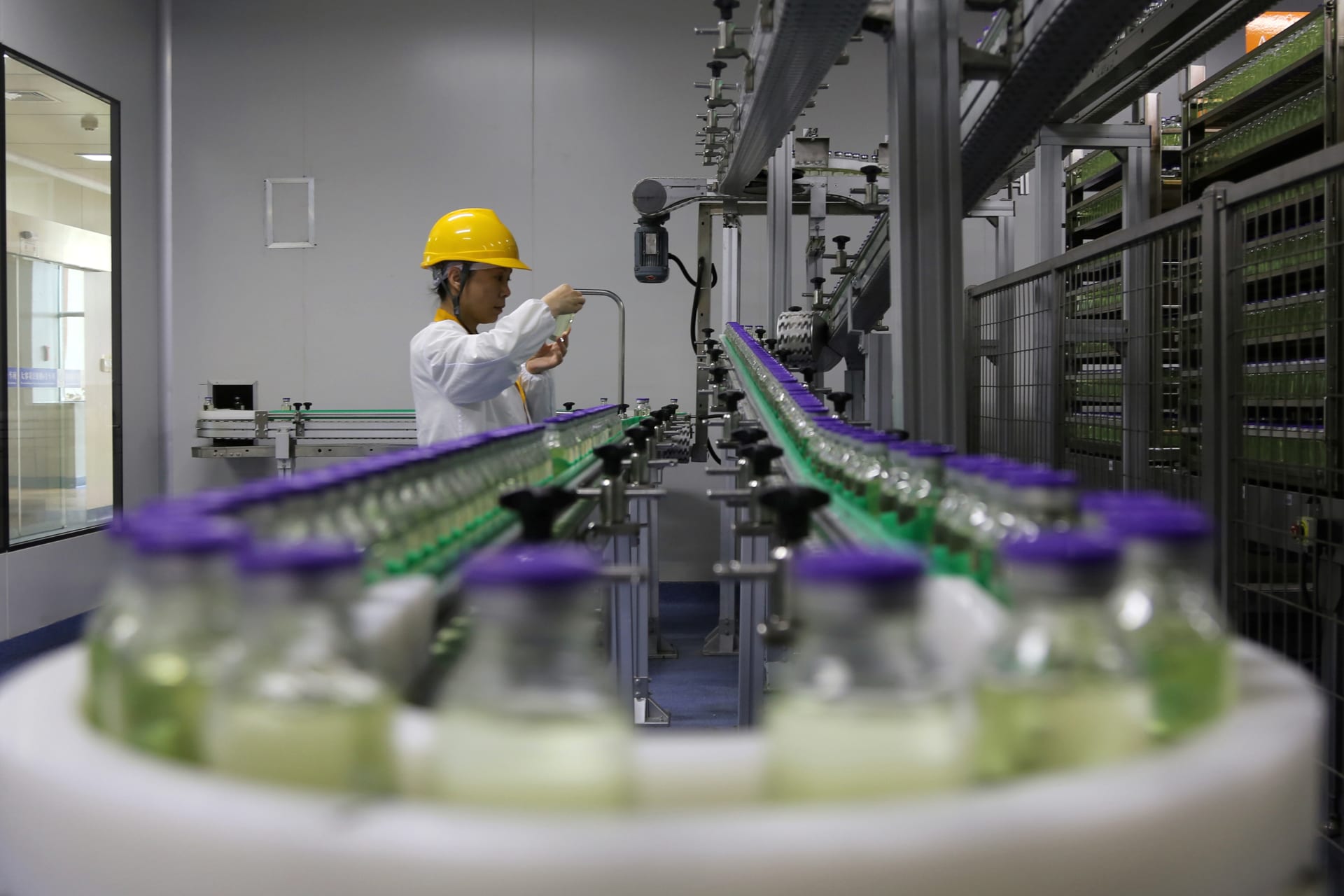
Labor cost arbitrage once had two advantages: it allowed less developed countries to enter manufacturing, and, as successful industrializers increased wages, it created space for new countries to industrialize the same way. Both mechanisms are weakening, and thus low wages alone are no longer enough to drive industrialization. In an increasing number of capital-intensive sectors, automation is reducing the share of production costs for which low wages provide an advantage in industries that once offered the greatest opportunities for productivity growth and technological upgrading. Labor cost advantage is further weakened when firms consider logistics, supply chain resilience, and geopolitical risk.
The density of industrial robots worldwide has roughly doubled since the mid-2010s. Yet it has been distributed unevenly. Although advanced economies and China have automated quickly and extensively, most developing countries have not caught up.7 For low-end manufacturing, where labor still plays an important role, that discrepancy matters less—but for higher-end sectors, such as electronics, machinery, and automotives, where automation is particularly intensive and productivity gains have long facilitated development, that difference is crucial.
Consequently, a divide is expanding within manufacturing itself. The shift from labor-intensive, lower-value production into higher-value industry is more difficult for countries to make. Labor-intensive industries, such as garments and basic assembly, remain accessible for developing nations but offer limited potential for technological upgrading; such industrializing has become a developmental dead end. Meanwhile, sectors that once supported durable industrial advancement are becoming more capital and technology intensive. According to the research of economist Dani Rodrik, countries now hit peak manufacturing employment earlier in development and at lower incomes, confining industrialization’s part in sustaining development.8 Although cheap labor provides benefits, it is more and more relegated to sectors less able to deliver widespread growth.
The decline in labor cost advantages has been worsened by China’s state-led economic model and its persistent industrial overcapacity.9 Chinese growth is sustained by subsidized credit channeled through the state-owned banking system, investment competition between local governments, and sectoral industrial policies. Chinese policymakers’ focus on supply-side industrial policies, combined with relatively weak household consumption, has led China to frequently seek external demand for its excess production.
That phenomenon is not a market failure but a structural feature of China’s economic growth model. The resulting excess supply associated with China’s ever-expanding industrial manufacturing scale spans many of the same manufacturing sectors that late industrializers seek to enter, such as steel, basic chemicals, consumer electronics, and clean energy manufacturing and technologies, among others. In 2024, China produced over half of global steel output, more than 80 percent of solar modules, 75 percent of lithium-ion batteries, and about 60 percent of electric vehicles.10 New entrants struggle to compete with Chinese firms, which have unprecedented scale, operate within tightly integrated global supply chains, and can frequently sell their products at difficult-to-match prices.
China’s industrial overcapacity and competitive pricing are driven by economies of scale reinforced by policy support and state investment. For developing countries, China’s policies have made industrial upgrading far more difficult, and even entry into manufacturing is increasingly contested. The global market for earlier industrializers was fairly competitive, but today’s entrants are up against one dominant producer that can compress margins simultaneously, across multiple sectors.
As tariffs in advanced economies have increased, Chinese excess capacity has been redirected to emerging markets. The share of Chinese clean-tech exports going to emerging markets rose from 24 percent in 2022 to 43 percent in 2024, squeezing the producers who might otherwise have occupied those segments of the market.11 In 2024, Vietnam’s electronics exports reached $126 billion, a figure that would have been a developmental success in the past.12 Less than one-third of that export value reflected domestic value-added production, which was estimated at 20–30 percent. The rest accrued to Samsung, Intel, and other foreign principals. In contrast, South Korea, with an equivalent export intensity in the 1980s, was capturing 55–65 percent of domestic markets and building industrial conglomerates that would compete globally within a generation.13 The path that carried South Korea from textiles to semiconductors is not the path that Vietnam is on today.
Access Becomes Geopolitically Conditional
Access arbitrage once allowed developing economies to export to rich markets and accumulate foreign exchange, attract foreign capital to finance industrial expansion, and import technology to move up the value chain and raise productivity. Today, such access is becoming conditional on geopolitics as economic security concerns shape who can reach Western markets, tap into foreign capital, and obtain advanced technologies, and on what terms and in what sectors. The International Monetary Fund estimates that geoeconomic fragmentation could reduce global GDP by up to 7 percent in the long term, or about $7.4 trillion in today’s dollar amount, equal to the entire economic outputs of France and Germany combined. Trade between geopolitically aligned blocs has grown roughly 4 percent faster than cross-bloc trade since 2022.14
Nowhere is the erosion of neutral access more consequential for industrial upgrading than in technology. The architecture of technology restrictions began in the first Trump administration with the 2018 ZTE denial order, which prevented U.S. companies from selling technology to the Chinese tech firm. In 2019, Chinese telecom giant Huawei was added to the entity list, which restricted its ability to buy U.S. technology. Under the Biden administration, selective company restrictions expanded into a sector-wide regime, culminating in the October 2022 U.S. semiconductor export controls on advanced chips and chip-making equipment and the Netherlands’ 2023 restrictions on exports of ASML’s equipment. Under the second Trump administration, those restrictions have grown: they now involve combined successive entity list additions with selective relaxation tied to revenue-sharing arrangements and bilateral leverage.15
FDI has become more concentrated as well. By 2024, just ten developing countries, led by Brazil, India, Indonesia, Mexico, the United Arab Emirates, Vietnam, and a few other strategically positioned Asian and Latin American countries, captured about three-quarters of all FDI flowing to developing economies, up sharply from the more diffuse distribution that prevailed before 2015. By contrast, FDI to China fell for a second consecutive year, dropping 29 percent, while the Association of Southeast Asian Nations (ASEAN) reached a record $225 billion.16
The concentration of FDI in a few developing economies has directly resulted from firms’ efforts to simultaneously optimize across several constraints, including political acceptance, sufficient infrastructure, proximity to major consumer markets, a credible and stable policy environment, and enough existing industrial depth to absorb large-scale supplier relocation. A “China Plus 1” or “China Plus X” strategy (in which companies diversify their Chinese operations or sourcing with investments in one or more other countries) therefore cannot be distributed evenly across the developing world. The strategy tends to bolster a few connector economies that are already geopolitically relevant and equipped with ports, power, suppliers, and workers. That is why the apparent diversification of FDI away from China can still produce concentrations among a smaller set of developing countries rather than broad-based diffusion.
Implementing effective industrial policies is also often beyond the capacity of many developing countries. Not all economies have the same fiscal ability to subsidize exports or domestic production, let alone the regulatory capacity to impose and monitor local content and procurement rules. For example, advanced economies have implemented aggressive industrial policies—such as the Inflation Reduction Act, the CHIPS Act, and the EU Green Deal—at a scale that developing countries cannot match, while the sovereign debt distress gripping 60 percent of low-income countries and 25 percent of middle-income countries precludes more modest attempts.17 And that is happening when China remains committed to supporting its strategic industries using industrial policies, as outlined in the fifteenth Five-Year Plan. Thus, developing countries are finding themselves in a global economic architecture that operates not on the sole principle of resource allocation to maximize economies of scale—which leads to concentrated risks and vulnerabilities—but on risk management. Consequently, late developers can no longer catch up in the same way with more developed economies; for fifty-eight countries, debt burdens now exceed health spending, which precludes a fiscal response.18
The Squeeze of the Green Transition
Decarbonization has emerged as another challenge for developing nations, eliminating regulatory arbitrage while narrowing the clean industrialization pathway that might have replaced it. The EU Carbon Border Adjustment Mechanism (CBAM) entered its full implementation phase on January 1, 2026, imposing carbon tariffs on six foundational industrial imports: aluminum, cement, electricity, fertilizers, hydrogen, and steel, which are sectors critical for early-stage industrialization. To prevent companies from importing finished goods to bypass such tariffs, the EU proposed extending the regulation to 180 additional downstream products in December 2025.19
Tighter regulations in advanced economies are increasingly paired with their own industrial subsidy programs. The Inflation Reduction Act authorizes approximately $369 billion in clean energy subsidies; the EU Green Deal Industrial Plan has responded with its own subsidies. Most developing countries do not have the fiscal capacity to subsidize industrial policies. Moreover, their debt distress combined with high energy prices may weaken the prospect of closing the developmental gap.20 The 2026 Iran war has accelerated that dynamic. Advanced economies, stung by approximately $26 billion in additional fossil fuel import costs, have doubled down on clean electrification as an energy security imperative, reinforcing the political economy behind CBAM and green industrial subsidies.21 Energy-importing developing countries bear the full price shock without the fiscal or resource capacity to respond through either clean energy acceleration or domestic fossil substitution.22
China’s established dominance in clean energy supply chains gives Chinese firms an incumbent advantage in the ongoing energy transition. Clean energy drove more than one-third of China’s GDP growth in 2025.23 China controls over 70 percent of global manufacturing capacity in almost every major clean-technology segment. Seventy-six percent of global clean-tech factory investment went to China in 2024, and 75 percent of global clean energy patent applications originate in Chinese firms. Chinese firms have pledged at least $227 billion across 461 green manufacturing projects in more than 50 countries, a scale some researchers argue exceeds the Marshall Plan. Those projects deliver manufacturing investment and jobs to developing countries, but Chinese firms still control the value chains.
What is looming is the closure of both old and new developmental pathways at the same time: the dirty industrialization pathway is being externally closed by regulation; the clean pathway is being closed by the inability to subsidize at the scale of advanced economies and the hard-to-break dependence on China-controlled supply chains and expertise.
The Emerging Global Economic Architecture
These changes are structural tendencies not yet complete, but the direction is clear: the external conditions that enabled prior developers have fundamentally changed. As global value chains reconfigure in a post-hyper-globalization era, uniform stagnation and a clean split between winners and losers are both unlikely.
A small number of economies, such as India, Indonesia, Mexico, Morocco, and Vietnam, are navigating the new environment better than others. Their advantage lies not as much their own attributes, such as cheap labor or loose regulations, as in a combination of geographic position, existing industrial base, and geopolitical orientation unavailable to most developing countries. Vietnam’s disbursed FDI reached a five-year high of $27.62 billion in 2025. Manufacturing and processing alone attracted $9.8 billion in new commitments. Mexico received a record $40.87 billion in FDI in 2025, its fifth consecutive year of growth. Similar to Vietnam, manufacturing captured $15.18 billion, or over 37 percent of the total. India’s Production-Linked Incentive scheme drew in roughly $26 billion in realized investment across 836 approved projects by the end of 2025.24
The manufacturing investment those alternatives to China are capturing is partly redirected from China as companies and governments diversify supply chains away. That pool of redirected investment is finite. Manufacturing growth in those economies is driven by geopolitical factors rather than pure efficiency considerations. That dynamic is driving a K-shaped divergence within the developing world itself: not the North-South binary of prior development debates but a fracturing within the Global South. Thus, terms such as emerging markets and the Global South are becoming unreliable categories for investors, development finance institutions, and multinational corporations to assess sovereign and political risks. The trajectories within those groupings are diverging in ways that increasingly undermine the portfolio and policy frameworks built around them.
That double divergence—pathway closure across most of the developing world and accelerating fracturing within it—is already reshaping global commerce, making international trade less international but more concentrated. Least developed countries, despite composing 14 percent of the world population, now account for less than 1.5 percent of global merchandise exports—a share that has declined over the supposed boom years.25 Trade is becoming more regional rather than global. In North America, despite trade tensions created by the Trump administration, the United States, Canada, and Mexico still enjoy some of the world’s most deeply integrated supply chains. In Europe, regional commerce is increasingly being organized within members of the European Union and around nearby production networks in east European countries and North Africa. In Asia, that commerce happens around China in Northeast Asia and ASEAN, and increasingly, in India. Countries outside those regional production blocs are more and more at risk of being structurally excluded from regional value chains, where most investment, technological upgrading, and growth now occur.
Trade itself has also become an instrument of strategic competition, especially between major powers. They use tariffs, export controls, sanctions, transshipment scrutiny, and supply chain restrictions with higher frequency and less frequent notice to achieve foreign policy goals. Developing countries that lack the scale to shield themselves from great power trade disputes find themselves caught in escalations they did not initiate. For example, Vietnam faces transshipment scrutiny over its exports to the United States, and Chile must navigate U.S.-China competition for its lithium. Resource-rich developing countries have gained greater leverage in specific bilateral negotiations over critical minerals. But that bargaining leverage is concentrated in a few specific commodities and does not translate into broader developmental advantage. Such resource-based leverage is also likely to be temporary rather than durable indefinitely. Just as clean energy is gradually eroding the monopoly power of major oil exporters, new sources of supplies, alternatives made possible by technology, and greater recycling capacity will eventually weaken the leverage derived from critical minerals. Developing countries with no strategic commodities or geopolitical positioning face a trade environment in which their commercial terms are increasingly dictated by dynamics beyond their control.
Conclusion
Those new dynamics are not simply a passing phase but are beginning to constitute an emerging global economic architecture under the new developmental arbitrage conditions. Whether developing countries will find new political and economic pathways to close the developmental gap remains to be seen. The absence of such pathways is one of the most consequential strategic concerns of the current moment.
Such an absence is itself a choice. In the postwar period, advanced economies extended the conditions that enabled developmental arbitrage largely for strategic reasons. Those conditions are now being withdrawn for strategic reasons as well. Nothing about such a change is irreversible or destined. The question for the United States and its allies is whether they still regard the development of less developed nations as a strategic interest worth supporting and financing, especially when they themselves are facing mounting domestic challenges that some analysts blame on globalization. If they give up or ignore their role in providing capital, technology, and market access for less developed economies, that role will fall to China. China has already been financing clean energy development and infrastructure on terms that deepen global dependence on its own companies and standards. The rest of the world needs to determine how to develop at all, now that the old development ladder has been pulled up.
Acknowledgments
The author thanks the participants of the Trade and Markets Working Group for their insights and feedback. The analysis and conclusions are the responsibility of the author.
About the Author
Zongyuan Zoe Liu is the Maurice R. Greenberg senior fellow for China studies at the Council on Foreign Relations.
ENDNOTES
This work represents the views solely of the author(s). The Council on Foreign Relations is an independent, nonpartisan membership organization, think tank, and publisher, and takes no institutional positions on matters of policy.
 Report
 Report
 Report
 Report
 Report
 Report