The War on Military Talent
How Pentagon Policies Toward Women and Minorities Undermine U.S. National Security
Overview
The Pentagon, led by Secretary of Defense Pete Hegseth, is purging female and minority officers from military positions and removing them from promotion lists. U.S. national security will pay the price.
 Linda RobinsonCFR ExpertSenior Fellow for Women and Foreign Policy
Executive Summary
The removal of women from leadership positions and promotion lists in the U.S. military has created numerous risks to the readiness and health of the institution and exacerbated national security vulnerabilities in a time of growing competition and conflict around the world. The actions, their long-lasting consequences, and the serious risks they pose are evaluated below. Congress and the executive branch should undertake urgent remedial actions to ensure the professionalism and apolitical nature of the armed forces and the wider national security community.
Introduction
Americans have long ranked the U.S. military as one of the most respected institutions. It has earned a reputation as a professional and apolitical organization bound by laws and regulations. It has been seen as a meritocracy that holds its members to high standards. Only with such a reputation can the U.S. military, an all-volunteer force, attract enough Americans to serve.
Recent actions by the U.S. government, however, are eroding these core principles. Since the advent of the second Trump administration, a disproportionate number of women and Black senior officers have been dismissed without any stated cause and removed from promotion lists. Male officers have been dismissed or sidelined apparently for supporting the advance of qualified women. More than a decade after direct ground combat positions were opened to women, Secretary of Defense Pete Hegseth has questioned the effectiveness of women in combat without evidence.
The Pentagon has conveyed through other actions that women are less valued in the force. Women’s photos, historical exhibits, and scholarly literature have been removed from military installations, service schools, and academies. Advisory committees and affinity groups that enhance their performance have been dissolved. Hegseth has denounced and resisted implementing the Women, Peace, and Security Act of 2017, a law signed by President Donald Trump designed to promote the participation of women in the military and peacemaking. Hegseth has ordered testing of male service members for testosterone levels to promote what he called a “high-T military.” In a further exclusionary move, the department has separated transgender personnel from military service, reversing a 2021 decision to allow them to serve openly. Despite a federal court ruling that the action likely violated service members’ constitutional rights, the Supreme Court has allowed the ban to continue while litigation is pending.
Together, these steps are altering the character of the armed services in both composition and culture—without the consent of Congress or evidence that would justify such a shift. These actions are resulting in the loss of talented leaders whose careers have been nurtured for decades. They are raising the odds of a renewed recruitment and retention crisis at a time when demographic, educational, and fitness factors already pose challenges to sustaining a high-quality force. They are eroding morale, trust, and unit cohesion throughout the institution, as well as its public standing. And they have degraded the efficacy of coalition operations as the U.S. armed forces diverge from standards and values shared by allied forces. The effect on U.S. national security is pernicious. At a time when the United States faces more intense challenges from peer competitors and accelerating technological change, it is undermining the quality of its own force and increasing risk to operational success.
To reverse these negative effects and the national security vulnerabilities they create, Congress should take a series of actions to compel compliance with existing laws, support legal remedies and restitution where warranted, amend or enact legislation to specify nondiscriminatory and meritocratic policies and regulations, and increase transparency, reporting requirements, and oversight of personnel policy including recruitment, retention, the setting and application of standards for promotion and physical fitness, and professional military education.
A History of Progress
Women’s roles in military and national security service have increased slowly over the decades. Women have participated in U.S. military and intelligence operations since the Revolutionary and Civil Wars, but permanent legalization of their roles and the opening of positions and promotions were won only after years of struggle. The service academies opened to women in 1976, and their numbers rose over the ensuing years. Then, in 1993, after witnessing the contributions of thirty-five thousand women in the Gulf War, Congress partially lifted the combat exclusion—the policy barring women from serving in certain combat positions. At that point, women could serve on navy warships and in combat aviation roles.
This partial opening gave women critical experience in combat formations, which allowed them to compete for top leadership positions; consequently, the number of senior female leaders began to rise. In 2008, Army General Ann Dunwoody became the U.S. military’s first female four-star general. Air Force General Janet Wolfenbarger followed in 2012, and Navy Admiral Michelle Howard in 2014. Howard, an African American woman, broke many barriers as she ascended through naval commands to become vice chief of naval operations, including at the helm of Combined Task Force 151, where she led the operation to rescue MV Maersk Alabama Captain Richard Phillips, who had been taken hostage in the Indian Ocean in 2009.
From the start of the wars in Afghanistan and Iraq, women served de facto in ground combat as the notion of a front line disappeared in the reality of a 360° battlespace. They were frequently attached (rather than assigned) to ground combat units, a designation that barred them from receiving combat pay or official credit that would have advanced their careers. But concerns over opening ground units to women persisted.
The final formal barrier fell in 2015, when Secretary of Defense Ash Carter ordered the opening of all ground combat positions. That year, the first two women successfully completed the arduous Army Ranger School. Major General Scott Miller, a decorated Delta Force soldier and commander of the Army Center of Excellence, which oversees the Ranger School, dismissed allegations that the course had been altered to allow women to pass. “Standards remain the same,” he said. “There was no pressure from anyone above me to change standards.” As of 2026, 174 women have graduated and received the Ranger tab.
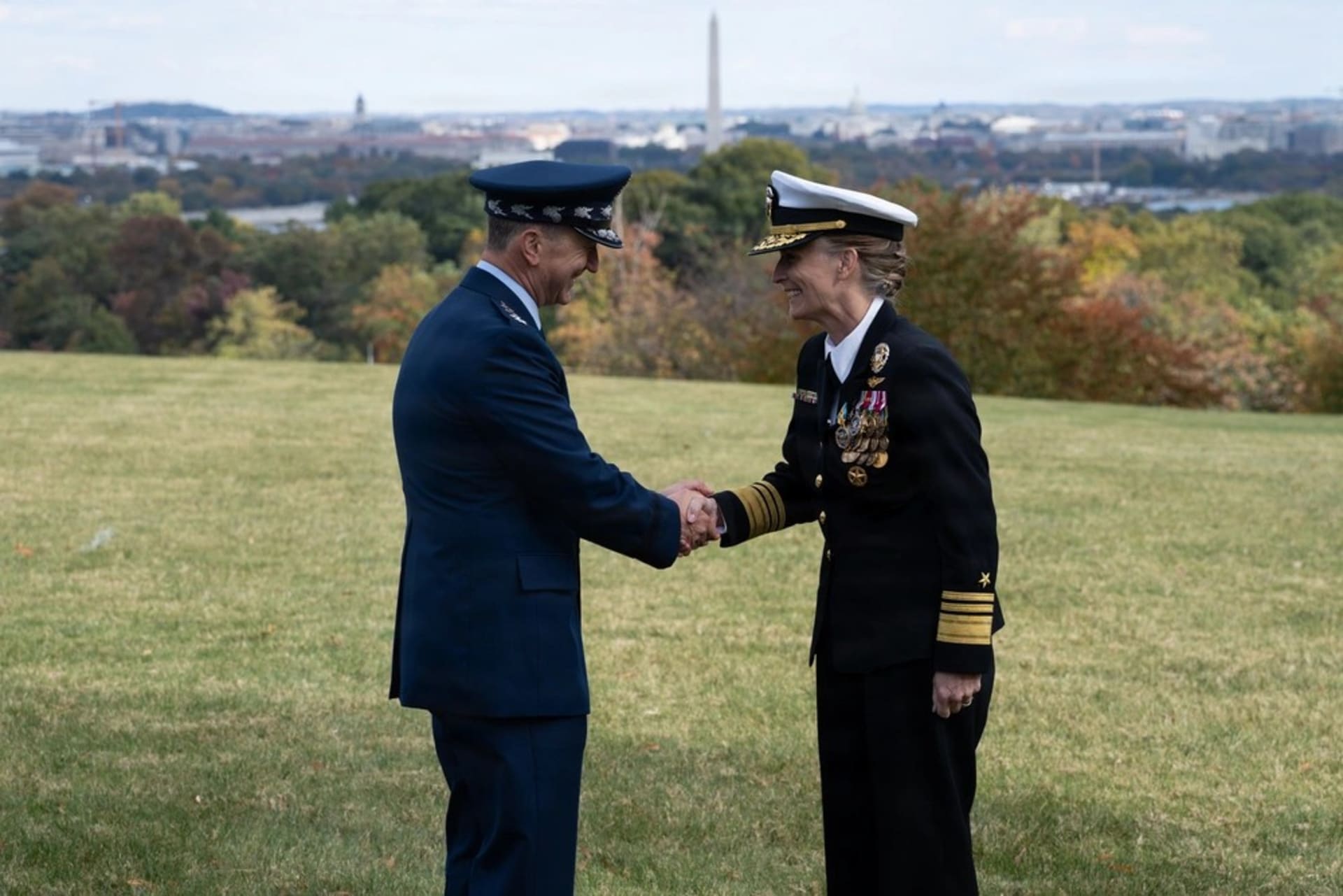
As they proved themselves in service around the world, more women earned promotion. In 2024, Navy Admiral Lisa Franchetti became the first female to head a military service and to sit on the Joint Chiefs of Staff, following commands of carrier strike groups and destroyers. Others who ascended to top positions included Admiral Linda Fagan, the first female commandant of the Coast Guard. Air Force Lieutenant General Jennifer Short, a pilot with more than 1,800 flight hours, was appointed senior military aide to the secretary of defense. Army Lieutenant General Telita Crossland became director of the Defense Health Agency, a joint combat support agency serving ten million people, after three decades in medical operations. Vice Admiral Shoshana Chatfield, a helicopter pilot who commanded search-and-rescue squadrons and deployed to Afghanistan, served as president of the Naval War College and then U.S. permanent military representative to NATO.
Backsliding
Then came Trump’s reelection as president. Despite their impressive leadership records in combat, command, and strategic policy positions, Franchetti, Fagan, Short, Crossland, and Chatfield were all fired or forced out in the first months of the new administration as part of a government-wide series of executive orders and policy directives that reduced the role of women and Black officers. General C.Q. Brown, chairman of the Joint Chiefs of Staff, who is African American, was also fired less than halfway through his term. He and the women were labeled “diversity hires” and fired without official cause. This represented a marked turnabout from Trump’s first administration, in which he and his daughter Ivanka championed women’s advancement in accordance with equal opportunity statutes. He began his second term with a sweeping array of orders and actions that eliminated diversity, equity, and inclusion programs throughout the government, offices such as the ambassador-led Office of Global Women’s Issues at the State Department, and most foreign aid for women and children.
Women’s leadership roles declined not only in the uniformed military but across the national security bureaucracy. Women were appointed to only 14 percent of senior civilian national security positions, according to analysis by the nonpartisan Leadership Council for Women in National Security (of which the author is a member). In contrast, the Biden administration appointed women to 46 percent of senior national security posts, ranging from deputy assistant secretary to cabinet positions.
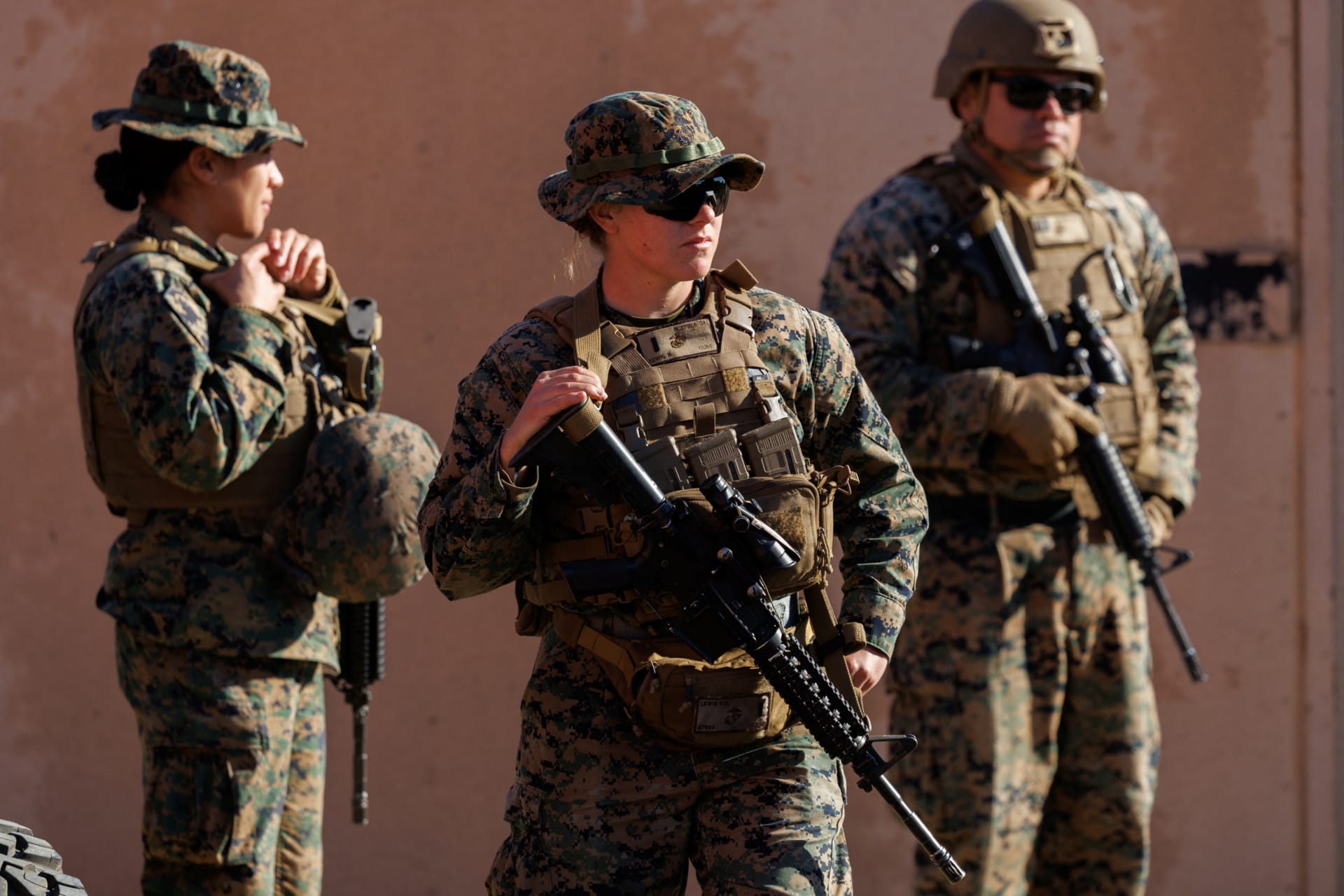
The Department of Defense (DOD) was hit particularly hard as women literally disappeared from the walls of public displays in the Pentagon. Women were removed from DOD, service, and academy boards. Hegseth ordered the disbanding of the Defense Advisory Committee on Women in the Services (DACOWITS), founded by George Marshall in 1951 to address issues such as making sure women had properly fitting uniforms, boots, and armor. Women’s initiative teams in the services were shut down, as were affinity groups in the service academies such as West Point’s Corbin Forum, a club for female cadets. The secretary’s views had been on display in his confirmation hearings and his books, where he falsely claimed that quotas for women had been imposed on the military. He told the Senate that “commanders meet quotas to have a certain number of female infantry officers or infantry enlisted.” In fact, the 1994 National Defense Authorization Act (NDAA) specifically bans “any gender quota, goal, or ceiling” and forbids the changing of performance standards “for the purpose of increasing or decreasing the number of women” in military positions.
Additional departures followed the initial wave of dismissals. In July 2025, Vice Admiral Yvette Davids, superintendent of the Naval Academy, was reappointed to a less visible post in the Pentagon despite serving less than half of a legally mandated three-year term; Vice Admiral Nancy Lacore, head of the U.S. Navy Reserve, was fired without stated cause in August. In October, Vice Admiral Sara Joyner, a director on the Joint Staff, retired after Hegseth turned down appeals from both the chairman of the Joint Chiefs and the navy secretary to appoint her to another senior position. Despite a distinguished record including command of a carrier air wing and service in highly classified roles, Joyner was deemed unacceptable because she had previously spoken, at the Pentagon’s request, at recruitment events.
In response to the firings, five previous secretaries of defense [PDF] sent Congress a letter expressing “deep alarm” and urging the body “to hold Mr. Trump to account for these reckless actions and to exercise fully its Constitutional oversight responsibilities.” Another letter, signed by former Army Secretary Louis Caldera and former Army Chief of Staff General George Casey, noted that “firing officers for following the directives of the previous civilian leadership of the Department of Defense would undermine that principle [of civilian control of the military] and place our military leaders in an untenable position—facing retribution for following the lawful orders of their civilian leaders.” Over one hundred former national security officials signed a different letter warning that the pattern of firing women posed risks to recruitment and retention, among other harms.
Beyond the firing and sidelining of three- and four-star senior officers, Hegseth has intervened heavily to remove female—and Black—officers from one- and two-star promotion lists of the army, navy, and air force that by law are selected through a rigorous process by boards of officers formed by the military services. Amy Bauernschmidt was the first woman to command an aircraft carrier and served as commander of a carrier strike group that conducted operations against the Yemeni Houthis; she was removed despite protests from senior officers who vouched for her competence and character. The army and navy secretaries both resigned after repeatedly objecting to Hegseth’s dismissals and removals of nominees who had been duly vetted by the boards.
In all, by fall 2026, Hegseth had fired or blocked promotions of more than eighty generals and admirals, roughly 10 percent of the senior officer corps. More than half of those removed were female or Black. Three female navy officers were removed from the promotion lists, leaving only men; two Black officers were also removed. For the first time in over a decade, no woman is likely to become an admiral this year, even though women make up 21 percent of the active-duty navy. The air force list was trimmed as well, leaving just one woman. A New York Times analysis calculated that as women on promotion lists were winnowed to just 8 of 201 across all services, the United States will nominate the lowest percentage of women to the rank of general or admiral in a quarter century. Dozens of other nominations have been delayed and may never be formally made as Hegseth contemplates even deeper cuts.
For the first time in over a decade, no woman is likely to become an admiral this year, even though women make up 21 percent of the active-duty navy.
By law, only the president is allowed to remove nominees from senior general and flag officer promotion lists and must then advise Congress. Title 10, Section 629, of the U.S. Code further stipulates that the president must “notify the congressional defense committees not later than 30 days after removing the name of an officer from such list for any reason other than misconduct.” For lower ranks, the president’s authority has been delegated to the secretary of defense, but even in those cases, Congress and the affected individual must be notified. The people removed have the right of reply and may have recourse to administrative or judicial appeal. Yet when questioned by Congress about the firings and blocked or withheld promotions, Hegseth repeatedly declined to cite law or facts as justification.
Instead, the secretary has defended his actions through broad critiques of a “woke” military distorted by political correctness. Speaking to the assembled officer corps in September 2025, he characterized his objective as “clearing out the debris.” “You might say we’re ending the war on warriors,” he said, claiming that officers had been promoted not on merit but “based on their race, based on gender quotas, based on historic so-called firsts.” This claim is contradicted by a review of the records of those dismissed or denied promotion, which include successful leadership of wartime commands, strike groups, and joint operational headquarters, as well as strategic and planning positions, recognized by duly awarded commendations. Far from winning undeserved promotion, women and racial minorities, the record suggests, continue to be underrepresented at the top levels, despite proven performance over twenty to thirty years of service.
Hegseth’s decisions undermine the chain of command and regulations that stipulate that the services’ uniformed leadership should nominate officers for promotion subject to Senate confirmation. Civilians are supposed to intervene only for reasons of moral, mental, physical, or professional failings. Hegseth has repeatedly overruled commanders’ disciplinary actions, including investigations of unapproved and risky flyovers of civilian areas. Disregarding laws and regulations spawns a lax culture where a variety of national security vulnerabilities can proliferate throughout the institution. The degradation of the professional military also affects the broader national security community that interacts with and depends on it.
National Security in Peril
The Pentagon’s recent policies have created four major national security vulnerabilities.
Loss of Leadership Talent
Senior leadership talent is a precious commodity. Human capital, including qualified leadership, is at least as important as military hardware and arguably more so, as humans will remain the planners, strategists, and decision-makers despite being increasingly aided by advanced technology. The military is a hierarchical institution, and so its fate is governed by the decisions made by its civilian and uniformed leadership.
The removal of senior and rising leaders from promotion lists without substantive justification has created a vacuum in top talent. Senior leaders are developed over decades of command positions, deployments, and taxpayer-funded training and education, and these ill-advised decisions waste millions of dollars of investment. Contrary to allegations of affirmative action, those removed or denied promotions had by all evidence earned their promotions. In the case of senior officers, they had been confirmed by the president to previous ranks and positions. The removal of women from those positions creates a compounding effect in which few or no women are available to be promoted to higher ranks, resulting in a dearth of candidates that will last for years. Even more sobering is the prospect that this dearth of leadership candidates will become permanent due to the secretary’s ordered review of women’s effectiveness in combat. A study finding that women have not been effective could be used to close positions, deprive combat formations of talented women, and dramatically narrow their opportunity to rise and contribute at the highest levels.
The removal of women from those positions creates a compounding effect in which few or no women are available to be promoted to higher ranks, resulting in a dearth of candidates that will last for years.
Depleting the military bench of qualified talent creates operational risks. Following the recent firings, the elevation of lower-ranking and less-experienced officers to top positions has already created a deficit of the experience and knowledge that promotion boards and the armed services committees deem necessary. For example, the elevation of Dan Caine, a retired three-star general, to become chairman of the Joint Chiefs of Staff is unprecedented; federal law requires the chairman to have served as vice chief, a service chief, or a combatant commander. A president may waive that condition if it is in the national interest, but Trump’s cited reasons were that Caine “loved” him and would “kill for him.” The Pentagon is also seeking to promote less experienced officers to top positions, including chief of the army, the military’s largest service that constitutes almost half of the total force.
Promoting those with less experience can jeopardize sound decision-making and erode trust in leadership, as less capable or experienced officers are selected for promotion and nomination. After years of serving alongside their peers, service members come to know them well. Although the secretary of defense and the president have the right to dismiss officers and deny promotions, the process in place has given due deference to members of the promotion board, who have years of knowledge from serving alongside the candidates. Personnel processes are highly regulated and legislated for good reason: less experienced or lower-quality leadership directly translates into increased risk in battlefield and national security decisions. The cost of poor decision-making will be tallied in lives and wars lost.
Courting a New Recruitment and Retention Crisis
Recent actions, rhetoric, and proposed policies are likely to create a renewed recruitment and retention crisis that reduces the size and quality of the force by discouraging qualified and motivated women from joining or continuing service in the armed services. Women compose 18 percent of the total active-duty force today, and female applicants pass the entrance exam at higher rates, hold higher education levels, and have a lower incidence of criminal records. Losing substantial numbers of those women would increase pressure to offer waivers to less qualified applicants, directly lowering the quality of the force. These are not theoretical risks: the current cohort of Americans ages seventeen to twenty-four shows a lower propensity to volunteer for the military, according to a Center for a New American Security study, which also found that 75 percent do not meet the physical or academic standards for entrance. Furthermore, a generational demographic cliff arrived this year—the total number of eighteen-year-olds in the United States dropped by 10 percent, compounding the recruitment challenge.
The services have met their recruitment targets since 2024. To reverse the recruitment crisis, the Biden administration adopted numerous process and recruitment targeting improvements. The army rolled out the Future Preparatory Course, a program to help recruits meet academic or body-fat composition entry standards; the main beneficiaries have been male applicants who did not meet the physical or academic entry standards. Although the proportion of female officers in the top ranks of the military has fallen in the past two years, the overall proportion of women in the total force has, for now, remained steady at 18 percent. The softening economy has likely contributed to the ranks of enlistees.
Among the officer cadre, however, many contemplate a longer-term career, and the current climate can weigh more heavily in their decisions. The female officer cohort may be more discouraged by policies and actions suggesting that they may face barriers to promotion. One sign that women may be shying away from a career in the military in this climate is that fewer women entered the Class of 2030 at the military academies. That in turn will reduce the number of women in the future officer corps.
Retirement data is lacking, but anecdotal signs suggest that women are increasingly leaving the military. Many women who left the service and some actively serving have spoken publicly about their fears of limited career prospects despite meeting or exceeding standards. Nancy Lacore ran for Congress after she was fired one year into her four-year term as head of the Navy Reserve. Such firings, she warned in an interview, send “a very clear message” that current and future military service members “are not wanted,” and that this is not only damaging to the armed forces—but “for our whole country.” Women have traditionally left the service earlier than men for a variety of reasons, and a large-sample survey would be required to determine the magnitude of recent separations from service and the motivations behind the exodus. Patti Tutalo, a retired coast guard commander who served on the DACOWITS advisory board before it was disbanded, predicts wide ripple effects. She told the press, “I definitely think there will be a retention issue for women. I also think that you’re going to see an increase in assaults, increase in harassment, increase in bullying, hazing, and I think there’ll be a lack of accountability for those things.”
Risks to the Military as an Institution
The third area of national security risk is institutional, as the actions and rhetoric against women can harm the armed forces as a whole. Fostering doubts about women’s ability even if they are meeting objective performance standards creates a climate of prejudice that erodes unit cohesion. Unit cohesion is essential to the functioning of tactical units, and a lack of trust and cohesion can be fatal on the battlefield. Just as serious, the entire institution is weakened when subordinates see that senior leaders do not defend them or the institution’s core values and ethics. Many senior male officers who advocated for qualified women under their command have been dismissed or removed from promotion lists in recent years.
To ferret out such officers, Hegseth’s staff has searched media and personnel records for any signs that an officer defended diversity in the force. Another group has aided such searches. “Diversity is our strength,” a common saying in recent years, became proof of political correctness and lack of fitness to serve. In the first wave of firings, General Jim Slife, vice chief of the air force and a career special operator, was dismissed for his vocal support of diversity in the air force and measures to ensure opportunities for qualified personnel. Rear Admiral Jamie Sands, the commander of Naval Special Warfare (NSW) Command, was relieved of command after a Navy SEAL board approved the promotion of a female naval officer to lead an NSW unit. That officer had ranked at the top of her cohort, deployed as the first female troop leader of a unit attached to SEAL Team 6, and received the Purple Heart for injuries sustained in combat in Iraq. The commander of the army’s 173rd Airborne Brigade was removed from the one-star promotion list on the grounds that he had continued a women’s affinity group and allowed an annual women paratroopers’ jump—a decades-old tradition among airborne units.
Uniformed leaders have been put into difficult situations as they seek to support women in uniform and heed their obligation to respect civilian control of the military. What was once an ethical stance of supporting one’s subordinates became evidence of politicization. Right-wing voices have branded statements supporting women’s value to the service as “woke” and somehow suspect. In 2021, Major General Pat Donahue, commander of the Army Center of Excellence, spoke out in support of female soldiers’ performance in response to TV commentator Tucker Carlson’s disparaging remarks about women in the service. He was investigated and then retired, after being cleared of any misdeed by the army’s inspector general. Yet as the norm has shifted under the second Trump administration, officers have largely fallen silent. Those who do not are shown the door.
The silence creates doubt about the need to uphold the ethical principles taught in service academies, and the specific failure to defend women in uniform is part of this climate of snowballing moral collapse. This climate is highly corrosive to the readiness, ethics, and proper functioning of any institution. Senior leaders are now faced with a litmus test for continuing their careers or cleaning out their desks if they support qualified female service members. Their departures demoralize those who stay, who now face disincentives to support their peers and subordinates in training, deployment, and the battlefield. In short order, this pervasive cascade of effects can destroy morale, ethics, and performance across the organization.
A dire scenario is emerging in which the U.S. armed forces could become rife with officers who dissemble to gain promotion and others who openly harbor prejudice and are rewarded with promotion. The public will become aware of these insidious actions and come to doubt an institution valued for professional and apolitical comportment. To some degree, careerism has always plagued hierarchical organizations, as ambitious officers curry favor with their superiors. But such corrosive behavior has rarely been so openly encouraged and rewarded from the top.
Degraded Effectiveness in Coalition Operations
The Pentagon’s treatment of women is also sowing doubt among traditional U.S. allies who have fought alongside the United States over the past decades. Allies have been vital to every extended military operation the United States has been engaged in since World War II and are still called upon despite the recent debate about the value of alliances. The divergence represented by the recent U.S. actions will affect the interoperability of coalition units, the development of common capabilities, and operational effectiveness.
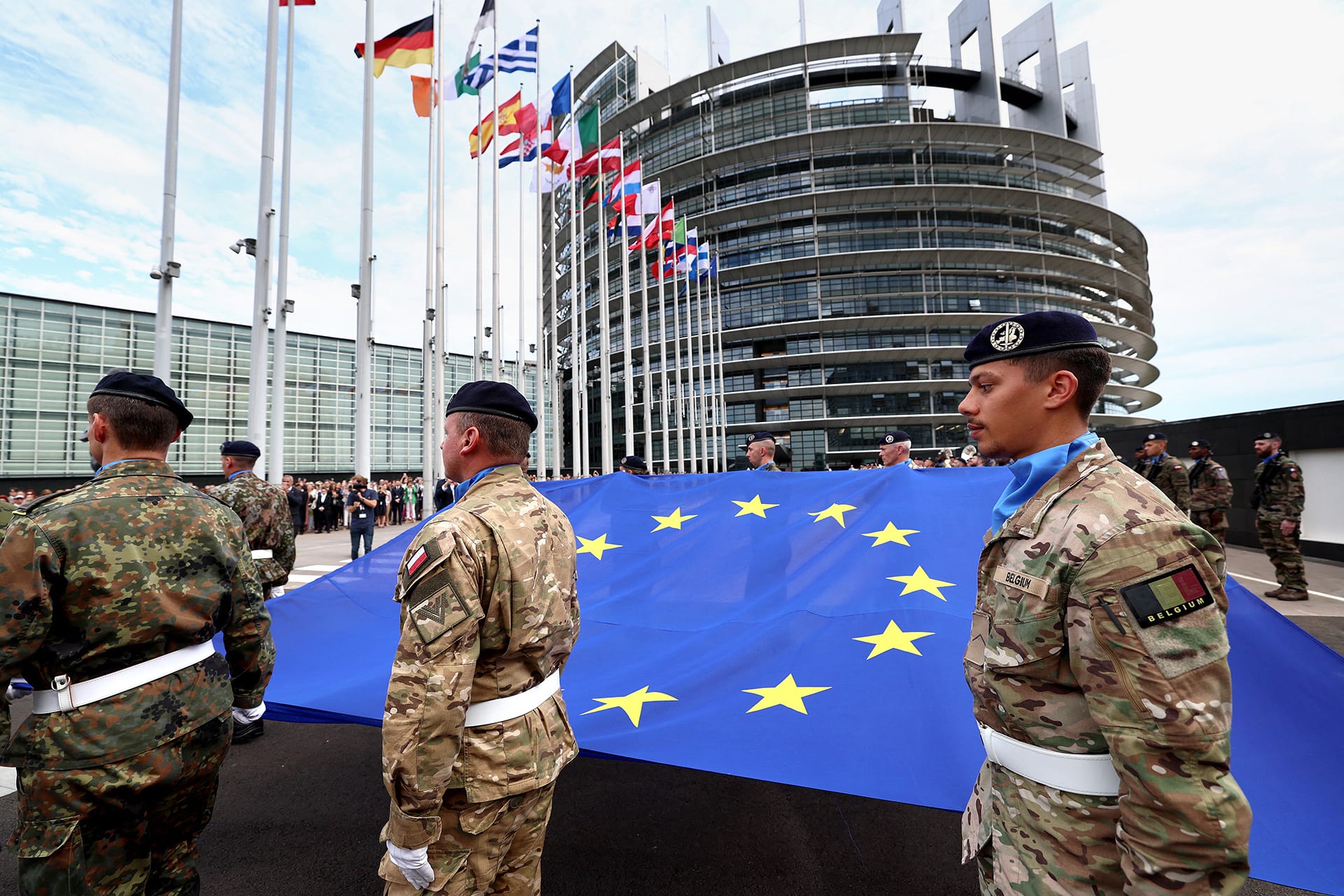
The divergence is apparent: NATO members and other allies have been moving in the opposite direction from the United States under the Trump administration to rely more heavily on the female talent pool at all levels and across occupational specialties, including combat. More women are serving in allies’ top military and civilian national security positions. General Jennie Carignan, for example, serves in Canada’s top military position as chief of the defense staff. Anita Anand, currently the country’s foreign minister, previously served as minister of defense. In the United Kingdom, the second-highest military official is General Dame Sharon Nesmith, who became vice chief of the defense staff following brigade- and division-level commands and promotion to lieutenant general and then full general.
Women currently compose 13 percent of NATO member states’ militaries, and several countries have 25 percent targets for women’s recruitment. Combat positions are open to women in 85 percent of NATO countries. Denmark, Norway, and Sweden have mandatory conscription for both women and men. Beyond NATO, women make up 34 percent of Israel’s active-duty force and half of its officers. In Australia, they make up 21 percent of the armed forces. The number of women in Ukraine’s military has steadily grown since the Russian invasion to fifty-seven thousand, with twenty thousand serving in combat roles, including drone operators. Over the years, the United States has trained women in allied and partner forces around the world to serve in peacekeeping and military operations. Many foreign officers attend U.S. military schools and senior service colleges as their careers advance, which has been an important part of preparing for coalition operations and cultivating deep ties with allies and partners. Those countries would expect the female members they send to be treated equally.
The operational effectiveness of coalition operations will be affected in several ways if the U.S. military restricts women from combat and command positions while women in allied forces are placed in command or alongside them. For example, UK officers routinely serve as deputy commanders in coalitions and task forces; severe friction would result if the Pentagon or senior U.S. military leaders were to cast doubt on the fitness, capability, and effectiveness of those commanders or the female coalition members serving alongside U.S. troops. Disparaging or untrusting behaviors by U.S. soldiers would also poison the command climate and unit cohesion, creating friction and risk that would compromise the safety of personnel and effectiveness of operations, just as it would within the joint force.
Turning Back the Clock
In December 2025, Hegseth ordered a review of women’s effectiveness in combat, which raised concerns that he seeks to close ground combat positions to women and perhaps extend restrictions to other positions as well. Over five thousand women have served in ground combat units since the 2016 opening of all positions to women. At a Senate Armed Services Committee hearing in February, Senator Mazie Hirono (D-HI) asked all the services’ senior enlisted officers if they had any evidence that women serving in combat had degraded effectiveness or readiness. They replied that they did not. The following month, she asked the vice chiefs of the services, who are responsible for personnel matters, the same question; they too said no.
The concern was heightened when the study was transferred to Johns Hopkins Applied Physics Lab. The lead investigator there is the same person who led a 2015 study for the U.S. Marine Corps, which found that infantry units with women performed at lower levels. Experts criticized the earlier study’s methodological rigor on several grounds; for example, it used battle-tested male Marines as a control group to compare to an experimental unit of newly trained Marines. It also failed to note the high performance of individual females. Despite the critiques, the Marines used the study to argue against integration. With support from the secretary of the navy, Secretary of Defense Carter ordered the Marines to comply with the opening of all positions to qualified applicants.
It is unclear what problem Hegseth is seeking to address; a 2026 study found that gender integration did not affect the effectiveness of military units. The military has established standards for each military occupational specialty, which in the case of ground combat units include physical standards that are gender neutral. In some units, such as special operations, the standards are extremely high due to the position requirements. The rates of women’s accession to special operations forces remain low, but the share of women in special operator and support roles increased from 8 percent in 2016 to 12 percent in 2023.
In recent years, the military has taken steps to level the playing field for accession in response to studies identifying barriers. The previous head of the Special Operations Command, General Brian Fenton, supported opening to women applicants. “Diversity of thought, education, experiences, culture, gender, race, and creed … all provide value to special operations,” he said. “To ensure that U.S. Special Operations Command draws upon the widest pool of talent, the SOF Enterprise has continued to progress in supporting women’s ability to join, serve, and advance within the SOF community, including among our most elite units.”
Those efforts, however, have now ended, as it appears the department is seeking justification to close combat units to women. In response, Representative Chrissy Houlahan (D-PA), a career air force officer, introduced the Warrior Act, which would prohibit exclusion of any service member from a position, career field, or assignment based on gender. It would also prohibit reinstating a combat ban by executive order, require that “military occupational standards remain strictly gender-neutral and based on scientifically rigorous job requirements,” give Congress 180 days to review proposed changes in personnel standards, and require regular Department of Defense reporting. The House version of the 2027 NDAA adopted one of the bill’s provisions, to require DOD to provide the full, unredacted version of the study on women’s effectiveness in combat, but not other provisions. The Senate Armed Services Committee approved an amendment to prevent use of sex-neutral physical fitness standards to positions other than combat, but some in Congress are concerned that the new sex-neutral fitness tests for combat positions may be manipulated to exclude women.
Recommendations
Historically, Congress has prioritized the health of the military institution, given its vital role in safeguarding the nation, yet recently it has struggled to fulfill its basic Article I responsibilities. But there is urgent need for Congress to examine, reverse, and forestall adverse effects on the force and national security. Friction between Congress and the Pentagon could grow after the November 2026 midterm elections, as Congress has increasingly questioned the secretary’s conduct on a variety of issues, including actions in Iran and the Caribbean, and grown frustrated at the lack of reporting from the Pentagon. Three sets of articles of impeachment against Hegseth have been introduced based on alleged violations of the War Powers Resolution and other acts. Congress may also vote to hold him in contempt for failure to provide written justifications for removal of officers from promotion lists, as required by law, and other requested documents.
The president may find these combined effects are impeding his agenda and decide to make personnel and policy changes. In any event, Congress should take several remedial and preventive steps to fully assert and fulfill its constitutional responsibilities for oversight and legislation. Congress should:
- Evaluate the impact of DOD actions on the all-volunteer force and national security. The House and Senate should immediately convene hearings and conduct a wide-ranging investigation to determine infractions of law and regulation as well as the national security impacts and implications of DOD actions taken in the past two years. Officials should be called to justify each firing and provide justification for violating legislative intent. The hearings should include testimony of recently resigned and current senior DOD officials about recent decisions and their impact on the force and its readiness and institutional health. Expert witnesses should be called to provide testimony on the impact of recent actions on recruitment, accession, service, and promotion of women in the military and the effects on readiness of the force. Congress should investigate reports of interference in the military chain of command and acts that undermine ethical leadership, conduct, and candid professional advice. Medical and personnel experts should be called to testify on the scientific basis for and risks of implementing a “high-T” policy with testosterone treatments. A report should assemble and publish the results of the investigation to inform further congressional action.
- Enforce and clarify existing laws and regulations pertaining to firing and promotion of officers. Legislation has been revised over the years to make criteria for positions, promotions, and access more specific and to avoid discriminatory policies, but loopholes and ambiguity remain. Congress should pass proposed legislation to eliminate ambiguity and clarify Section 618, Title 10, by requiring a written determination with factual findings and evidence; written notice to the individual and Congress within fifteen days; and a tightened definition of misconduct. The proposed law specifically prevents removal of an officer for following or supporting lawful orders of a previous administration and provides for expedited independent review. Congress should also limit delegation of the removal authority in Section 629 and enumerate penalties for failure to provide prior notice and written justifications to Congress and denial of access to due process and independent review. Previous nominations duly approved by boards and service chiefs should be reinstated and passed to Congress to avoid damage to the future senior leadership pipeline.
- Codify the opening of all military positions based on common and relevant standards. Congress should pass the central provisions of the Warrior Act to prohibit the exclusion of any service member from an occupational specialty, career field, or assignment based on gender, and require that military occupational standards remain strictly gender neutral and based on scientifically rigorous job requirements. It should review all proposed personnel standards changes, including fitness tests and their application to service and performance evaluations to prevent back-door barriers to service in combat positions, and require annual reporting on involuntary reassignments and separations and establish a 180-day review period for proposed changes, costs, and rationales to permit adequate congressional oversight. Finally, it should require delivery of the full and unredacted study commissioned by the Department of Defense, as well as related evidence from field tests, and commission an independent review by the Government Accountability Office.
- Ensure remediation and restitution for prior service members. Congress should conduct oversight and revise legislation as needed to ensure that members who have been forcibly retired or separated are provided access to legal or administrative remedy in the relevant courts and administrative bodies under the Administrative Procedure Act. This should include remedies for those dismissed for implementing and supporting the lawful policies and directives of previous administrations.
- Restore programs and other mechanisms proven to improve readiness and performance for the entire force. This includes reestablishment of DACOWITS for its intended purpose of identifying barriers to full participation of women in national security roles; full reactivation of women’s initiative teams in the services and affinity groups open to all personnel; and implementation of laws including the Women, Peace, and Security Act of 2017. Congress should also restore Sexual Assault Prevention and Response training, encourage reporting and reinstate victim services at DOD, and pass proposed bipartisan legislation to allow service members to sue the military for sexual harassment and assault.
- Restore historical information and resources for professional military education. Maintaining an accurate history and ensuring high-quality education are essential to a ready and effective force. The executive branch or Congress should order the reinstatement of public displays at the Pentagon, military installations, and museums to accurately depict women’s roles in the services throughout U.S. history using photos, placards, and memorabilia in museum exhibits, and the restoration of historical and scholarly books, documents, and other literature on women’s service to service academy libraries, service college course curricula, and military installations. Names of servicewomen that have been removed from vessels, facilities, and installations should also be restored. Commission a peer-reviewed study on the future force that documents the history of women in the military and identifies measures to address remaining barriers to service.
Conclusion
Physical fitness has been a central feature of Hegseth’s campaign on military readiness, which he equates to lethality. But in today’s high-tech warfare, understanding complex autonomous systems, electronic warfare requirements, and artificial intelligence applications is just as vital. For senior officers, strategy and management of the world’s largest government organization requires intellectual and policy know-how rather than tactical skill. Increasingly, it is the best-educated force that holds the advantage on today’s battlefields, and that requires not just state-of-the-art technology but a highly educated and trained force at a time when the United States is slipping in international educational ratings.
The stakes for the U.S. military, and for U.S. national security, could not be higher. The personnel issues and the human capital of the armed forces deserve as much attention as the many technological and material challenges that are transforming the nature of war. At all levels, it is humans who will be leading the fight and making the decisions. For that reason, the health of the force—physical, moral, and mental—urgently requires higher priority by the U.S. Congress as well as the administration. Failure to draw on all the available talent from the entire population, including female, Black, and other minority candidates, puts the country at a disadvantage in an increasingly complex world beset by the highest number of conflicts since World War II.
Those charged with responsibility for national security and the health of the force must give due priority to the legacy of unmet needs, as well as the current actions that disproportionately affect women. Women have proven their worth and represent an enormous resource as half of the talent pool. Their ability to serve will be compromised if their contributions are not optimized through reversal of recent policy actions, as well as increased effort to provide suitable gear, more effective measures to stop sexual harassment and assault, and reproductive health care and family support for serving and veteran women.
The national security community must continue to speak out about the long-term national security ramifications of excluding women. In the final months of the Biden administration, Secretary of Defense Lloyd Austin addressed a gathering at West Point: “So look, if I get a little fired up about this, it’s just because this isn’t 1950. It isn’t 1948. It is 2024,” he told the audience. “And any military that turns away tough, talented patriots—women or men—is just making itself weaker and smaller. So enough already.” To surmount the burgeoning global challenges, the United States must prioritize tapping the best talent in its population and reject regressive policies that stand in the way of that objective.
Acknowledgments
Gautami Kunde, intern for the CFR Women and Foreign Policy program, assisted in the research and production of this report.
About the Author
Linda Robinson is the senior fellow for women and foreign policy at the Council on Foreign Relations. She served on the National Defense University board of visitors and as chair of the Army War College board of visitors.
This work represents the views solely of the author(s). The Council on Foreign Relations is an independent, nonpartisan membership organization, think tank, and publisher, and takes no institutional positions on matters of policy.
 Report
 Report
 Report
 Report
 Report
 Report