Bypassing the Pharma Chokepoint
How the United States and Europe Can Secure Their Medicine Supply
 Thomas J. BollykyCFR ExpertBloomberg Chair in Global Health; Senior Fellow for International Economics, Law, and Development; and Director of the Global Health Program
- Research Associate, Global Health, Economics, and Development
Introduction
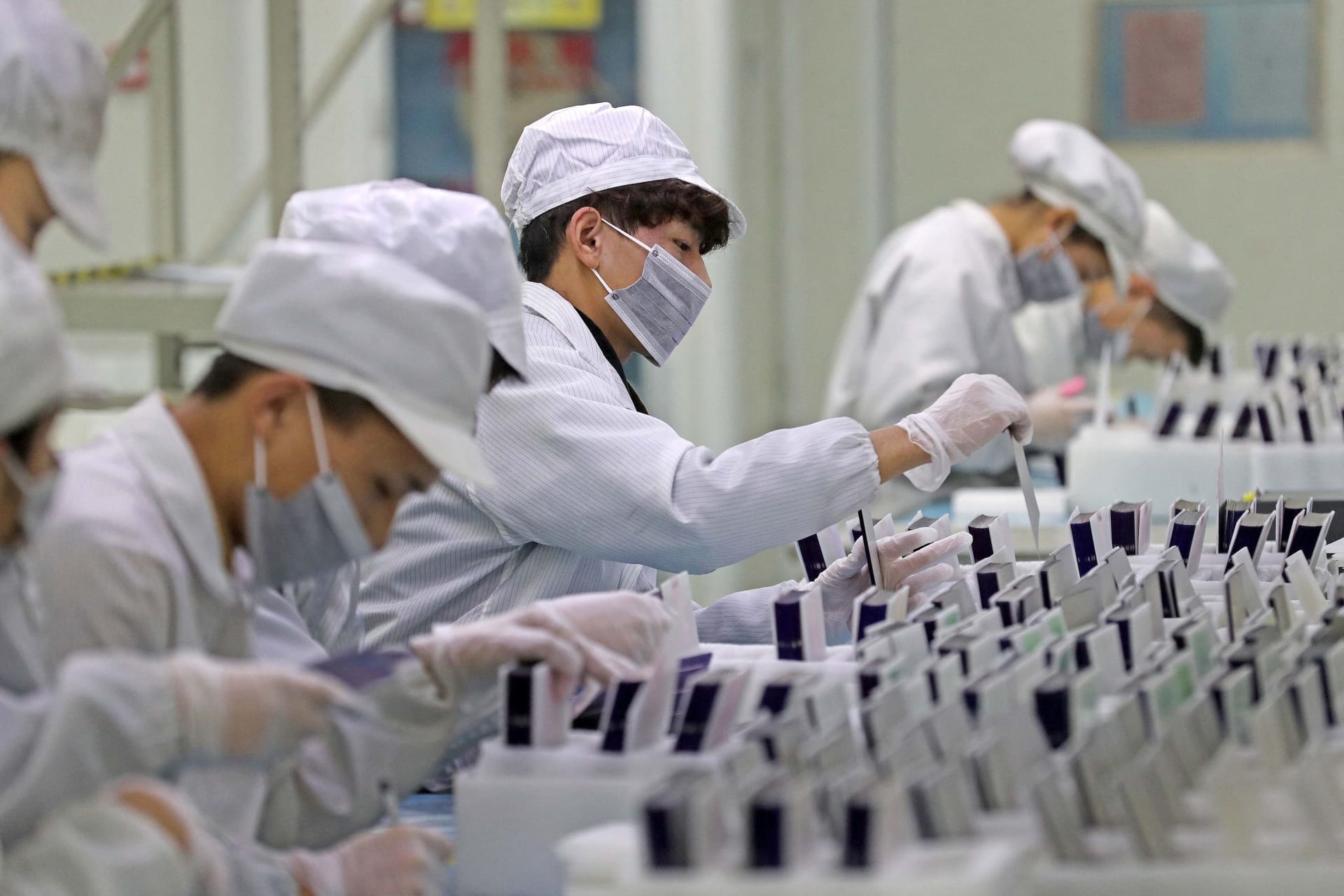
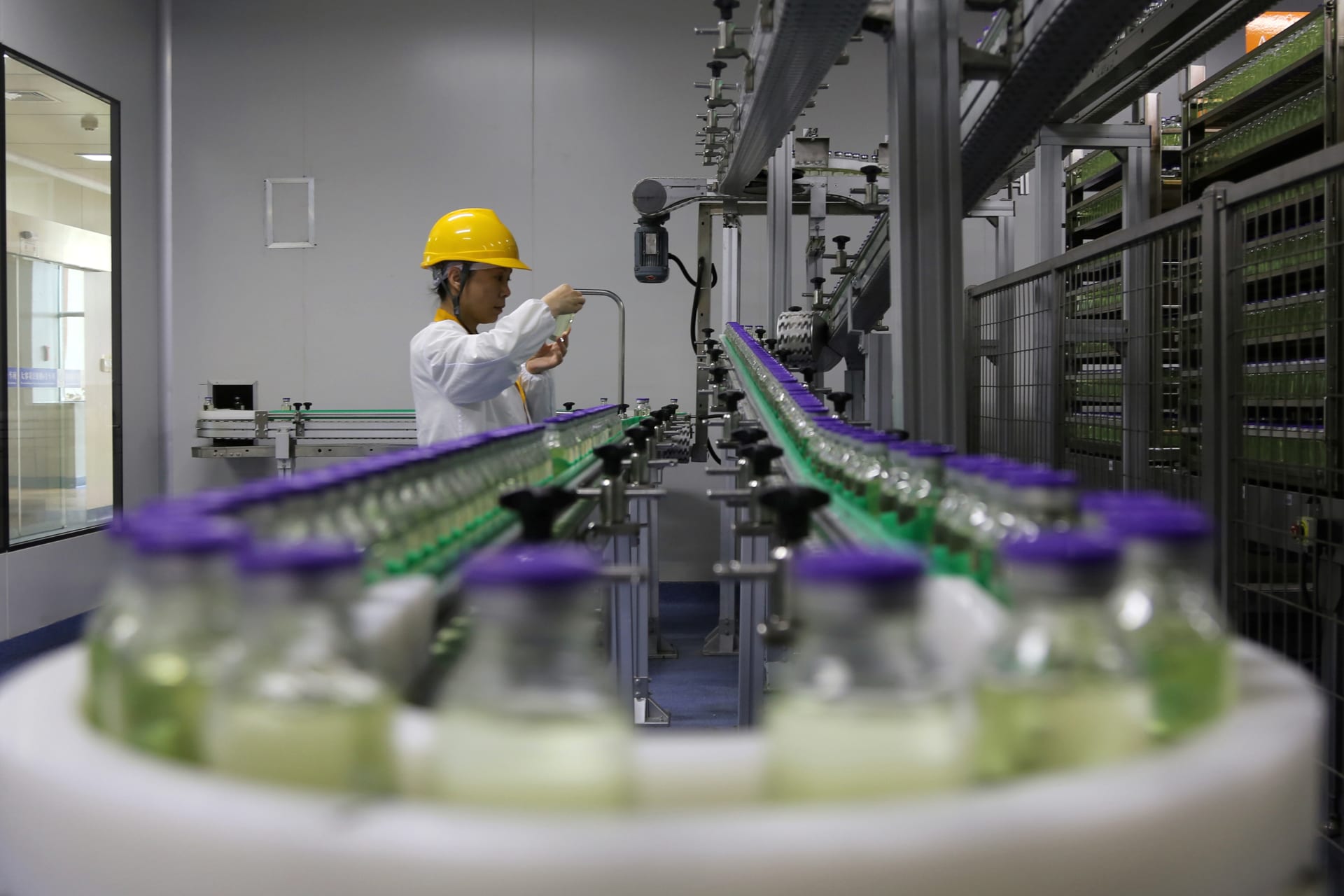
Over the last twenty years, China has emerged as the United States and Europe’s [PDF] most important foreign source of upstream inputs of critical medicines—namely, key starting materials (KSMs) and active pharmaceutical ingredients (APIs). As U.S. and EU regulators and media more heavily scrutinized API and KSM production, a process that often involves chemical reactions with toxic by-products, China offered laxer environmental laws, discounted water and power inputs, and, as more API and KSM manufacturing shifted to China, enormous economies of scale. Large plants for manufacturing antibiotics and other pharmaceuticals and their ingredients emerged in China, supported by below-market pricing and state subsidies. Well-integrated supply chains reduced material, shipping, and transaction costs, adding to its existing advantage in labor costs.
Chinese manufacturers supply most of the KSMs and some of the APIs to both the United States and Europe for many common antibiotics, sedatives, and emergency room drugs such as heparin. An estimated 80 percent of the global supply of heparin starting material originates in China, and five Chinese companies control more than four-fifths of global production of the main KSM for amoxicillin, a compound called 6-APA. As recently as 2008, nearly all U.S.-administered amoxicillin was domestically manufactured. But now 94 percent of its key ingredients come from China. The EU’s API imports from China nearly doubled between 2010 and 2019, from 12 percent to 23 percent.
In recent years, China has surged up the innovation ladder, becoming a preferred setting for critical first-in-human drug trials and for developing and manufacturing promising new medicines. With the global monoclonal antibodies market exceeding $380 billion [PDF]—and forecast to exceed $9 trillion by 2034—Chinese firms now hold approximately thirty-two of fifty-five late-stage monoclonal antibody programs globally, an innovative product class used in cancer immunotherapy, autoimmune treatment, and antiviral therapies. One of the three firms accounting for 86 percent of the global supply of synthetic DNA is Chinese, and the other two have a heavy presence in China. The global synthetic biology market has been projected to grow to nearly $70 billion by 2033, up from $19 billion in 2025. As synthetic biology becomes more sophisticated and experts discover new ways of leveraging the technology, the control of inputs and processes gains far more importance, particularly as artificial intelligence capabilities advance to the point of designing novel protein sequences and therapeutics. In the current landscape, the offshoring that hollowed out small-molecule API manufacturing is set to repeat itself in synthetic biology. Chinese biotech licensing already reached $137.7 billion in 2025—a tenfold increase from 2021.
China has achieved its success through deliberate industrial strategy—subsidizing manufacturing capacity, undercutting competitors on price, and gradually making itself indispensable to the global pharmaceutical system. That has created a structural dependence in nearly every step of the medicine supply chain.
Reducing the Security Risks of EU and U.S. Pharmaceutical Dependence on China
The competitive erosion of U.S. and EU capacity for innovative pharmaceutical discovery and development to China undermines economic security, public health, and the capability to rapidly produce effective countermeasures in a health emergency. Essential medicines are a dangerous chokepoint because when China dominates their supply chain, therapeutic substitutes will not be readily available if those supplies are withheld—and China has already proven it is willing to weaponize the pharmaceutical supply chain against other nations. China imposed export controls on dual-use products shipped to Japan, including those used in pharmaceutical manufacturing, after remarks by Japan’s prime minister on the Taiwan Strait. Chinese producers flooded the market with below-cost exports to cripple the pharmaceutical ingredient suppliers that India’s government had been seeking to establish for domestic resilience. In 2019, a prominent Chinese economist told the country’s top political advisory body that if China reduced exports of vitamins and antibiotic raw materials, the “medical systems of some developed countries will not work.”
The gradual loss of transatlantic pharmaceutical capacity to China is not simply the result of market conditions or a rapacious industry but the product of decades of coordinated Chinese state intervention. Reversing that loss will require an equal, coordinated, and sustained U.S. and EU response. Fortunately, there is a foundation for partnership.
A U.S.-EU mutual recognition agreement for post-approval pharmaceutical manufacturing inspections went into effect in 2019. The United States and Europe cooperated with India, Japan, and South Korea on the Biopharmaceutical Alliance, a coalition started in 2024 to strengthen the supply chain in the biopharmaceutical sector. The European Union, under the Critical Medicines Act, is moving to expedite approvals for manufacturing certain medicines dependent on Chinese supply chains. U.S. trade officials are pursuing a plurilateral critical minerals trade bloc that would offer preferential terms to partners and discriminate against Chinese-processed material. If paired with mutual recognition agreements, similar arrangements to those models could make allied sharing and purchasing of critical KSM and API stockpiles cheaper and far more effective. Shared ally stockpiles enable a more targeted, complementary approach to reserves, while mutual inspection recognition brings down regulatory cost and shortens timelines should countries need to seek imports to address shortages. Meanwhile, joint purchase commitments attract commercial investment in KSM and API production in partner countries where commercial incentives might otherwise be insufficient.
To be successful in that framework, the United States and the European Union need to overcome the tension in their transatlantic partnership, particularly on drug pricing. President Donald Trump has broken new ground, using trade tools to lower prescription drug prices at home by seeking to raise them abroad, especially in Europe, and to return drug manufacturing to the United States.
Recommendations
Scenario One: Feasible policies under a strained transatlantic relationship
If the transatlantic relationship remains strained, the United States and European Union should consider the following policies:
- Expedited U.S. market-entry pathways for EU suppliers that meet good manufacturing practice (GMP) standards, as well as EU pathways for the United States, would create mutual regulatory recognition for their respective API suppliers that would protect allied supply without the need for new legislation.
- If the United States and the European Union standardize their disclosure requirements for the sake of supply chain transparency, both could then pinpoint where KSMs are concentrated—particularly when transshipment routes obscure that those materials came from China.
- The United States and the European Union can set up joint communication procedures about risks in advance, to mitigate any panic purchasing should China’s grip on supply chains trigger shocks.
- U.S.-EU sequence-of-concern databases would prevent supplies from being routed to a third country as a means of evading biosecurity screening measures for synthetic DNA.
Scenario Two: A stabilized transatlantic relationship enabling greater mutual reliance
If the transatlantic relationship has stabilized, the United States and European Union should consider the following options:
- Coordinated strategic reserves between the United States and the European Union allow domestic holdings to be smaller and more targeted. Joint purchase commitments for prioritized KSMs and APIs can spur private-sector production when commercial incentives might not otherwise suffice.
- Plurilateral trade framework for critical medicines, modeled on the emerging critical minerals trade bloc, can offer preferential terms for allied KSM and API producers and raise barriers against Chinese-sourced inputs.
- Cofinanced contract research and manufacturing alternatives in allied countries by the U.S. International Development Finance Corporation and its European equivalents would reduce biologics lock-in before biomanufacturing dependence becomes too deep.
- The United States and the European Union should adopt allied procurement criteria that include requirements for supply chain diversification and resilience and not just low prices. That adoption will create more meaningful demand signals for allied producers, without recreating the subsidies under the CHIPS and Science Act.
Scenario Three: Ambitious policies if transatlantic partnership gains traction on both sides
Should the transatlantic relationship gain mutual traction, the United States and European Union should consider these policies:
- Formal operationalization of the Biopharmaceutical Alliance can move the United States and European Union toward strengthened supply guarantees with legally binding shared inventory obligations, crisis allocation rules, mutual inspection recognition, and joint procurement systems.
- They should harmonize allied contract research, development, and manufacturing organization standards and offtake commitments for synthetic DNA platforms and products.
- The two parties should leverage NATO as a platform for joint purchasing arrangements for defense and preparedness applications of synthetic DNA products. That approach will help create more demand for investments in non-Chinese, next-generation platforms.
Conclusion
The answer to reducing pharmaceutical supply chain dependence on China is targeted, meaningful transatlantic cooperation that maximizes the advantages of both the United States and the European Union—not resorting to uncoordinated protectionism, loosely defined partnerships, or squabbles over domestic drug pricing policies.
Acknowledgments
This report was informed by a Council on Foreign Relations (CFR) meeting convened in cooperation with the Mercator Institute for China Studies (MERICS) as part of a project on transatlantic cooperation on China policy. This report is adapted from CFR’s recent report, The Pharma Choke Point: How to Reduce U.S. Dependence on Chinese Pharmaceutical and Biotechnology Supply Chains. We thank the coauthors of that report for their contributions.
About the Author
Thomas J. Bollyky is Bloomberg chair in global health; senior fellow for international economics, law, and development; and director of the Global Health Program at the Council on Foreign Relations.
Elena Every is the research associate for the Global Health Program at CFR.
This work represents the views solely of the author(s). The Council on Foreign Relations is an independent, nonpartisan membership organization, think tank, and publisher, and takes no institutional positions on matters of policy.
 Report
 Report
 Report
 Report
 Report
 Report