The Making of a Global Hunger Crisis
How El Niño and Chokepoint Closures Threaten Food Security
Overview
Global conflict has threatened three critical maritime corridors simultaneously, interrupting vital flows of fuel, food, and fertilizer. Now, a record-breaking El Niño event is looking to make things worse. International donors and multinational organizations need to act early to prevent a worst-case scenario.
- David Miliband
Two months ago, Council on Foreign Relations Senior Fellow Michael Werz warned that food weaponization and the threat of El Niño were converging to pose a serious threat to global food security. At the International Rescue Committee (IRC), we are now seeing that convergence’s human toll and are urging action to intervene and prevent further loss of life.
The United States and Israel’s war with Iran has repeated a painful lesson taught by the pandemic and Russia’s invasion of Ukraine: we live in a chokepoint world, an interconnected, asymmetric order in which disruption to the flows of fuel, food, and fertilizer reverberates across the global economy and shapes the course and consequences of war.
Now, with war impacting three critical maritime corridors simultaneously—the Strait of Hormuz, the Bab el-Mandeb, and the Black Sea grain corridor—geopolitical conflict is poised to create an unprecedented global hunger and humanitarian crisis.
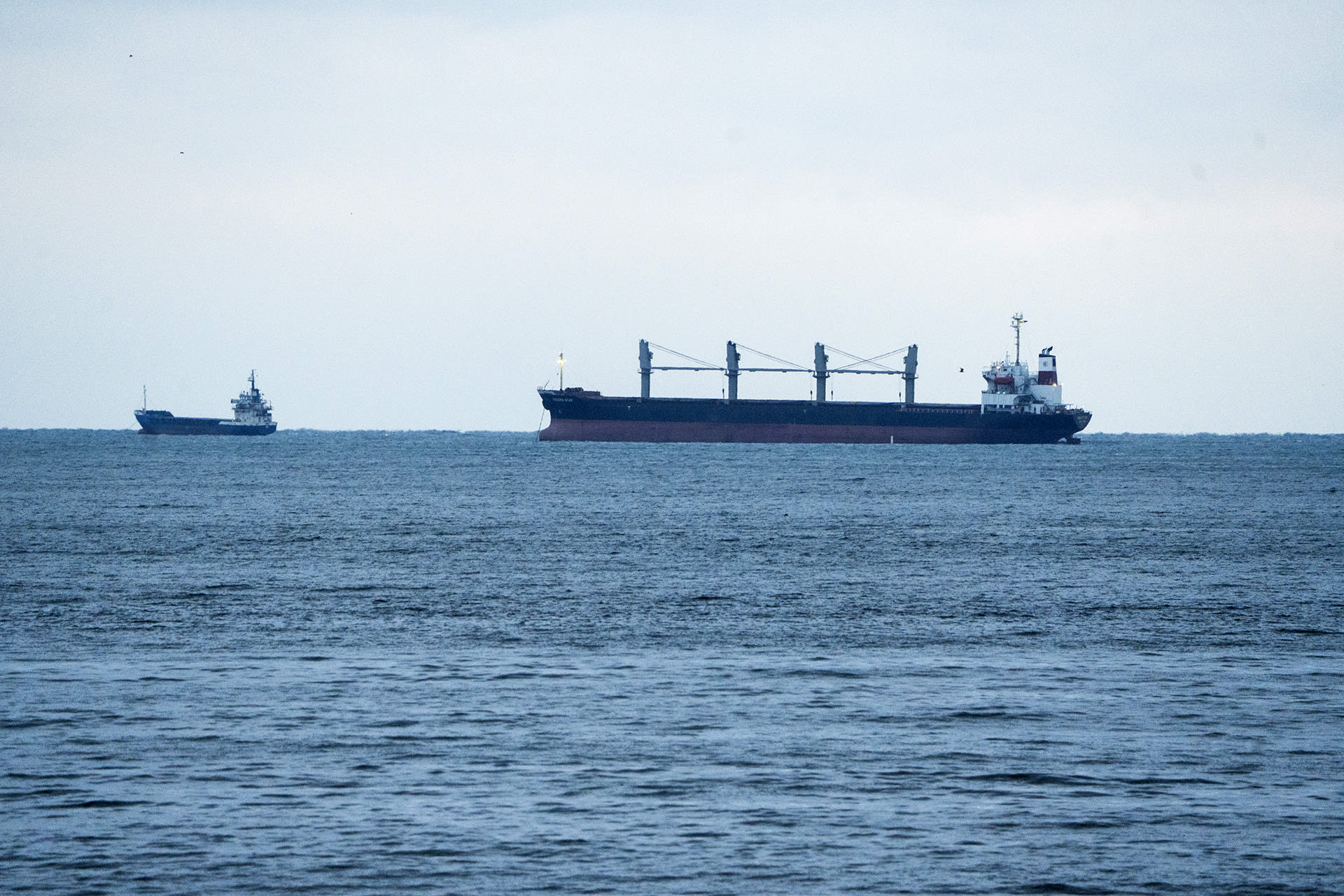
The first impacted route is the Strait of Hormuz, which Iran has effectively kept closed to commercial shipping since February 2026. The disruption has driven up energy and shipping costs, interrupted aid deliveries, and threatened the fertilizer on which smallholder farmers across East Africa, South Asia, and the wider Middle East depend (the strait conducts 30 percent of global supply). With attacks ramping up, there is little sign of relief.
For countries such as Yemen and Sudan, which rely on Red Sea shipping for vital imports and humanitarian supplies, a second chokepoint disruption compounds the problems stemming from the Hormuz closure. The Bab el-Mandeb, the southern gateway to the Red Sea, carries around 15 percent of global maritime traffic and is increasingly at risk of becoming another front of the war with Iran via the Yemeni Houthis.
As Houthi efforts to blockade the Bab el-Mandeb intensify, ships are being forced onto longer routes. A Saudi oil tanker bound for Asia can spend an additional month in transit by sailing north into the Mediterranean Sea before rounding the Cape of Good Hope, adding around $2.5 million in fuel costs and Suez Canal fees. The IRC has already seen its own supply chain absorb significant cost increases, with freight on a single shipment of therapeutic milk from India to Nigeria rising by over 20 percent in August 2026. And a war risk insurance premium of 0.25 percent pre-Hormuz has now skyrocketed to up to 10 percent—meaning a large oil tanker could pay as much as $20 million in insurance to travel the strait.
The third chokepoint is the Black Sea grain corridor, whose ports account for nearly 30 percent of global wheat exports. Escalating disruption to the export routes—now even riskier for vessels than the Middle East, according to shipowners and seafaring groups—is undermining the grain supply for global markets and humanitarian operations alike, including the Grain from Ukraine program, which has sent hundreds of thousands of tons of wheat to countries including Somalia, Sudan, and Yemen since 2022.
Add to this an unprecedented super El Niño event, expected to eclipse the strongest on record and threaten Latin America, Eastern and Southern Africa, Asia, and the Pacific with drought, heat, flooding, and destroyed harvests well into 2027. Its 2014–16 predecessor prompted more than $5 billion in humanitarian appeals and affected sixty million people—and the current predictions dwarf that impact. The African Development Bank warns the economic toll across Africa alone could reach $20 billion. And the International Chamber of Commerce warns El Niño–driven weather failure across critical global breadbaskets threatens 60 percent of the world’s calories. The toxic convergence of chokepoint warfare and climate emergency will devastate the world’s most vulnerable communities first, even as its economic ripple effects spread far beyond them.
The UN World Food Program determined earlier this year that should the escalation in the Middle East continue to destabilize the global economy, forty-five million more people would go hungry; at least another forty-nine million, in addition, would be pushed into acute food insecurity by the end of next year due to the adverse impact of El Niño on global agriculture. Those millions will add to the horrifying global tally of nearly 320 million people already facing hunger in 2026, all against the backdrop of falling aid funds—symptoms of a growing divergence between global shocks and global shock absorbers.
In import-dependent, conflict-affected countries—where agriculture, now squeezed on all sides by higher production and commodity costs, lower yields, and rapidly diminishing purchasing power, accounts for one-third of GDP on average—the convergence is already taking lives and livelihoods.
In Sudan, which has ranked first on the IRC’s Emergency Watchlist for three consecutive years, El Niño–related drought now affects more than half the country and half its cropland. Rangelands are drying up, and livestock herds are losing value as the cattle become emaciated. Upcoming harvests are expected to be exceptionally poor, with little opportunity for agricultural recovery as food stocks dwindle and prices climb. IRC staff report that the price of sorghum, a key staple, more than doubled between January and August, while fuel prices have doubled since February.
Nearly twenty million Sudanese are already experiencing crisis-level food insecurity, and the risk of famine is now growing by the day. Famine is classified by the Integrated Food Security Phase Classification (IPC), the global, impartial initiative for measuring food crises, only when three thresholds are crossed: at least one in five households faces extreme food gaps, more than three in ten children are acutely malnourished, and deaths exceed two per ten thousand people every day. A famine declaration is, by definition, a snapshot of catastrophe already unfolding. By the time all three thresholds are met, people are already dying of hunger and disease in large numbers. In Sudan, the IPC has now identified extremely critical levels of acute child malnutrition in Darfur, alongside growing starvation risk across Greater Darfur and Greater Kordofan. In one North Darfur town, admissions for severe acute malnutrition have doubled compared to last year. As drought and conflict spread, so does displacement. Thousands more people are expected to seek refuge in the city of Tawila, already home to hundreds of thousands who fled the siege of El Fasher. The evidence is unequivocal: urgent action is needed now to avert catastrophic loss of life.
In Somalia, households are now facing a double climate risk: a newly confirmed Indian Ocean Dipole—in which different ocean surface temperatures cause extremes in precipitation—together with El Niño, ushering in rains and floods after extended drought. Coming off years of depressed yields and decimated herd sizes, households have no time for recovery before facing this next shock. Flooding in Mogadishu has damaged an IRC-supported health center; mid-October flash flooding in the Mudug region alone displaced 12,000 people, and IRC modeling shows up to 2.6 million people across the country could be at immediate risk. In Baidoa, where the risk of famine is greatest, IRC teams report sorghum and maize prices have risen by nearly 70 percent and 90 percent over the past year, respectively. And in March and April 2026, IRC teams were unable to procure therapeutic food for severely malnourished children because of shipping disruptions linked to the Hormuz crisis, resulting in a three-week gap where the IRC clinics across Somalia were unable to serve clients.
The IPC projects that 5.4 million people will face crisis levels of hunger or worse by December 2026, up by 300,000 since September. Over the coming year, two million children are projected to be acutely malnourished.
In Central America, El Niño has already devastated this year’s harvest, while the shock from the Hormuz closure threatens the next. The Famine Early Warning Systems Network reports that diesel prices have risen by more than 60 percent compared to last year, while fertilizer prices are climbing. In one community in San Marcos, Guatemala, an IRC assessment projects losses of 70–85 percent in the November 2026 harvest. In another four communities assessed by the IRC in the same department, 75–100 percent of subsistence maize and bean crops were destroyed by delayed and irregular rain. As one colleague put it, “As soon as you get out of the city, you can see all of the crops are burned—corn, beans, even the ground itself.” Huehuetenango, one of the regions hardest hit by drought, is also receiving the highest share of returnees from the United States—further stressing resources in a Dry Corridor growing drier.
For households that have lost both harvests and livelihoods, rising food and transport costs further erode coping mechanisms. In El Salvador, households in northern and southern Morazán and northern San Miguel told IRC teams they were eating through reserves meant to last six months and selling livestock at a loss, and some families had nothing left to sell. The crisis will peak in the spring and summer of 2027, when what little was harvested runs out and the next harvest remains months away.
In Haiti, an IRC needs assessment conducted in September 2026 found that two-thirds of households had poor or borderline food consumption, and three-quarters had taken on new debt to meet immediate needs. Gang violence, already devastating lives and livelihoods, is growing in tandem with fuel, freight, and transportation costs. With El Niño expected to reduce the fall, winter, and spring harvests, humanitarian needs will reach their peak in early 2027.
Catastrophe is not inevitable. In his previous piece, Werz asked who will protect the world’s food systems. Practical measures can be taken now, and they require urgent action by the international community.
The first is to surge funding to the emergency humanitarian response where the shocks have already arrived. Sudan is the world’s largest humanitarian crisis, yet its response plan remains less than half funded as the year draws to a close. Somalia’s response plan is only about one-third funded as the UN appeals for an urgent scale-up. Exacerbated by the loss of bilateral aid, those gaps translate into shuttered clinics and community kitchens. The international donor community needs to come together now and fill these resource gaps immediately—not only to help save lives now but to build resilience ahead of future, and predictable, shocks.
For global hunger, the worst of a climate-shocked chokepoint world is still ahead.
Second, funding today’s emergencies is not enough. Because these emergencies are forecast, we can, and must, act before they escalate. The evidence shows that the earlier and more fully we act, the better. In Somalia in 2024, families who received cash from the UN Food and Agriculture Organization ahead of a forecasted drought were 66 percent more likely to have crop reserves and 39 percent more likely to repay debts than families who did not, and their food consumption scores were a third higher at the drought’s peak. And in Afghanistan, an IRC randomized study found that even holding back part of the payment made families worse off: those who received only part of their cash at the advent of predicted and failed rains had more than twice the odds of cutting back on food and taking on debt once drought set in. The consequences of waiting are also known. During Somalia’s 2010–12 drought-induced famine, some 250,000 people died, many before the world caught up to the unfolding catastrophe despite repeated and unheeded warnings.
What the IRC and others are seeing today should be the signal to scale up life-saving resources before the most severe impacts—including the anticipated arrival of La Niña—become visible in 2027. In Somalia, daily monitoring is triggering early warning messages, and cash transfers will be initiated once flood risk thresholds are met; in El Salvador, transfers are also imminent as drought deepens. The question is not whether this approach works, but whether it can reach the millions now in the path of crisis.
Third, international donor networks should strengthen farming systems to better withstand climate shocks. In fragile settings, markets, credit, and agricultural extension services often no longer function. Farmers cannot absorb rising costs, and the seed they plant becomes a high-stakes bet—and their only option. Agricultural investment should reflect that reality. Much of the seed available in those contexts fails under today’s increasingly severe climate conditions.
In northeastern Syria, the IRC has supported farmers in growing wheat varieties that perform better under drought and heat. IRC clients achieved yields 20 percent higher than those of their neighbors, even during record drought. The model could meet up to 60 percent of the region’s seed needs. It is ready to be piloted in Niger and South Sudan, where local seed multiplication could meet more than half of total needs and, in some localities, exceed needs.
Finally, no amount of aid or systems strengthening alone can break the chokehold on global trade routes. Freedom of navigation must become a diplomatic priority. Outgoing UN Secretary-General António Guterres helped broker the Black Sea Grain Initiative by engaging Russia and Ukraine directly to restore grain exports when the Security Council was deadlocked. His efforts to broker a similar agreement on the Strait of Hormuz have so far been unsuccessful, stalling due to lack of sustained engagement and buy-in from member states. The next secretary-general should take up the mantle against the weaponization of global chokepoints with renewed vigor, applied engagement, and commitment. The Group of Twenty leaders’ summit in December 2026, under the U.S. presidency, is a natural moment for leaders to agree on a path forward: backing a reinvigorated UN process, led by a dedicated high-level envoy, with the collective weight to negotiate safe passage and humanitarian access across these corridors.
For global hunger, the worst of a climate-shocked chokepoint world is still ahead. What is needed most is the willingness to commit life-saving resources before famines take hold, and before a deadly toll becomes a catastrophic one.
David Miliband is the president and CEO of the International Rescue Committee.
This work represents the views solely of the author(s). The Council on Foreign Relations is an independent, nonpartisan membership organization, think tank, and publisher, and takes no institutional positions on matters of policy.
 Report
 Report
 Report
 Report
 Report
 Report