Different Objectives, Same Photo Op: How Trump and Xi Will Approach the Beijing Summit
Trump arrives seeking headline deals and visible momentum ahead of the midterms. Xi is playing a longer game, focused on strategic patience rather than substantive compromise. The asymmetry between these two time horizons will shape what the summit produces—and what it quietly leaves unresolved.
By experts and staff
- Published
 Zongyuan Zoe LiuCFR ExpertMaurice R. Greenberg Senior Fellow for China Studies
Zongyuan Zoe Liu is Maurice R. Greenberg senior fellow for China studies at the Council on Foreign Relations
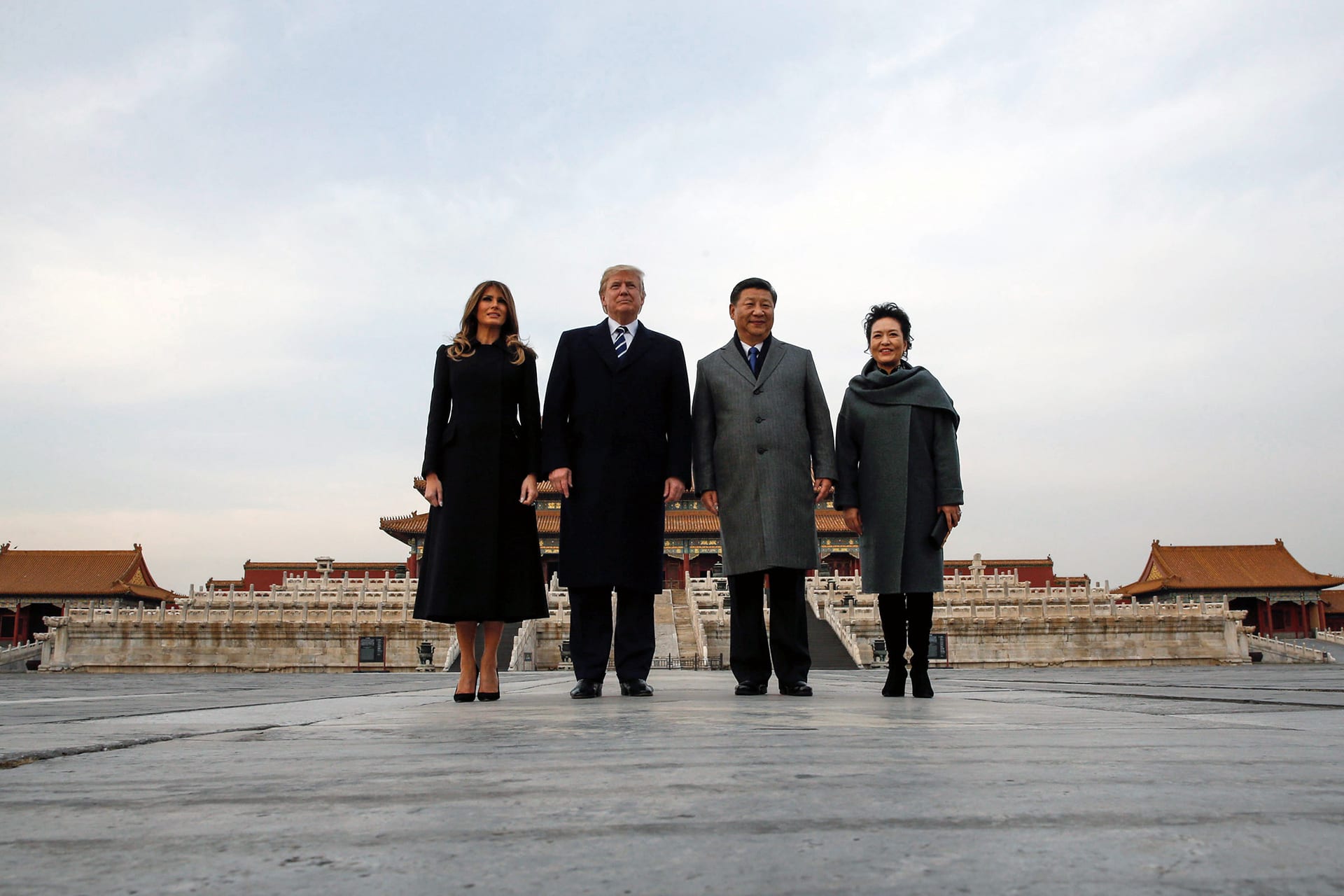
When President Donald Trump lands in Beijing for his first visit to China since 2017, both the United States and China will already have secured their minimum objective. The visit itself is the achievement. In a period defined by tariff escalation, technology restrictions, and war-driven energy shocks, simply restoring leader-level engagement allows both governments to claim stability without resolving the underlying sources of instability.
Beyond that, however, the two sides are pursuing very different objectives. The divergence is so sharp that the summit’s apparent symmetry should be read as a warning, not a reassurance.
Trump arrives under mounting domestic pressure. Rising energy prices linked to the Iran war, market volatility, and growing concerns about inflation have complicated the administration’s economic messaging ahead of the midterms. The White House is likely seeking three deliverables from Beijing: visible Chinese support for de-escalation with Tehran, large headline purchase commitments—Boeing aircraft, agricultural goods, and energy products—and a stable enough trade truce to present as evidence that confrontation can still produce deals. For Trump, the political clock runs to November.
Xi’s clock runs much longer. For Beijing, the visit itself—a sitting U.S. president received in the Chinese capital after an eight-year absence and amid deteriorating ties—carries domestic and geopolitical value. China’s economy continues to struggle with weak household demand, persistent deflationary pressure, and excess industrial capacity, but Beijing’s priority remains stability and strategic patience rather than major redistributive reform. Many Chinese policymakers appear to believe that competition with Washington will intensify again after the U.S. midterms or once Trump leaves office. From that perspective, the goal is not reconciliation but time: preserving external stability while continuing to strengthen China’s long-term position.
The asymmetry, of Trump’s short political time horizon versus Xi’s longer strategic patience, will shape the bargaining dynamics. Repeated discussion in Washington of multiple Trump–Xi meetings this year may have weakened U.S. bargaining leverage by signaling a strong American interest in leader-level engagement. Chinese officials likely calculate that Trump needs visible deliverables ahead of the midterms more than Xi needs substantive compromise.
The most likely outcome then is a package of carefully choreographed but limited agreements: an extension of the trade truce, modest easing of export-control tensions, resumed rare-earth shipments, and highly publicized Chinese purchases of U.S. goods. There may also be new bilateral working groups on trade or AI governance, along with familiar rhetoric about “responsible competition.” Even minor adjustments in Taiwan-related phrasing or “One China” language could be presented by both sides as evidence of stabilization despite little substantive underlying policy change. What is far less likely is meaningful progress on the structural issues driving the relationship: China’s industrial subsidies, manufacturing overcapacity, and the broader imbalance between production and consumption in the Chinese economy.
That deeper imbalance is what the summit should address, even if it probably will not. The trade conflict is not fundamentally bilateral—it is macroeconomic. China’s persistent external surpluses reflect structurally weak household consumption and exceptionally high industrial capacity. Tariffs may redirect those surpluses geographically, but they do not eliminate them. A more serious bilateral framework would link stable U.S. market access and technology restrictions to gradual Chinese consumption-side reforms—such as social welfare expansion, household transfers, and services liberalization—while giving Beijing greater predictability in trade and investment policy. Neither side currently appears politically prepared for that conversation.
Iran remains the major wildcard. Washington wants Beijing to use its economic leverage over Tehran to help contain escalation and stabilize energy markets. China, meanwhile, has its own reasons to avoid prolonged disruption in the Gulf: dependence on imported energy, shipping exposure, and broader concerns about global economic instability. Their interests are more aligned on de-escalation than either side publicly admits. Quiet understandings around sanctions enforcement, energy flows, or diplomatic messaging are therefore plausible even if no formal announcement emerges from the summit.
The visit will almost certainly be presented as a success by both leaders. Trump will emphasize deals, market access, and restored diplomacy. Xi will emphasize stability, respect, and China’s centrality in global affairs. Both narratives will contain some truth, because the two leaders are answering different questions. For Trump, the summit is about demonstrating momentum. For Xi, it is about managing competition without conceding strategic ground.
The summit may stabilize atmospherics for a time. Whether it stabilizes the relationship itself is a much harder question.
This work represents the views and opinions solely of the author. The Council on Foreign Relations is an independent, nonpartisan membership organization, think tank, and publisher, and takes no institutional positions on matters of policy.