The Frankenstein of Tahrir Square
By experts and staff
- Published
 Steven A. CookCFR ExpertEni Enrico Mattei Senior Fellow for Middle East and Africa Studies
This article was originally published here on ForeignPolicy.com on December 19.
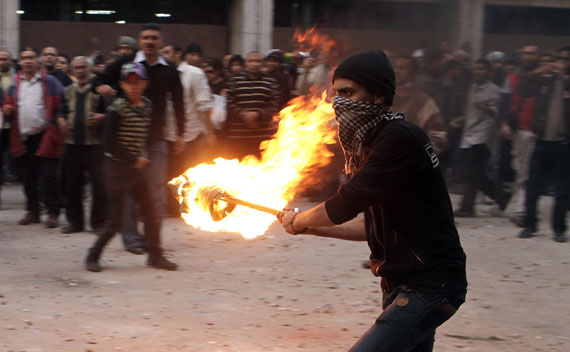
The latest affront to the revolutionary promise of Tahrir came this past weekend, just to the south of the square on Qasr al-Aini Street, where Egypt’s parliament and cabinet buildings sit. There, military police and protesters engaged in a pitched battle using rocks, glass, metal, truncheons, and Molotov cocktails. At one point, an Egyptian soldier standing on the roof of the cabinet building literally appeared to urinate on the protesters below. (The symbolism was lost on no one.)
The proximate cause of Cairo’s current spasm of violence was the military police’s ill-advised effort to clear a relatively small number of protesters from in front of the cabinet building. The clashes, however, have revealed a deeper, more profound problem afflicting Egypt. The country has retreated from the moment of empowerment and national dignity that the uprising symbolized and is now grappling with a squalid politics and the normalization of violence.
What is perhaps most disturbing is that the weekend’s battle, which left 10 dead and hundreds injured, didn’t seem to have a point…