How Rebeca Grynspan Would Lead the United Nations: Three Interview Takeaways
The next secretary-general of the United Nations will need to lead at a time of crises in all three pillars of the institution: peace and security, development, and human rights. In CFR’s UN Secretary-General Candidates Series, Rebeca Grynspan explains why she is suited for this moment.
By experts and staff
- Published
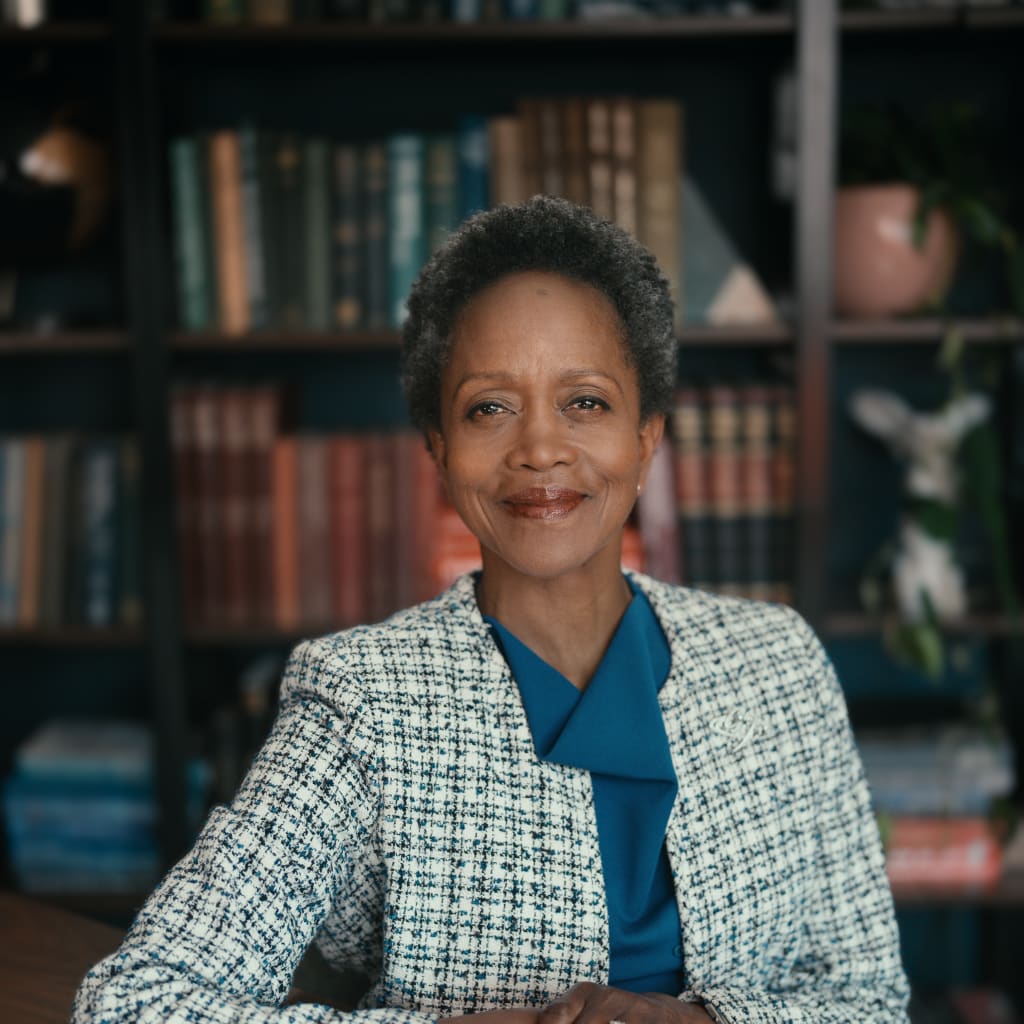 Esther BrimmerCFR ExpertJames H. Binger Senior Fellow in Global Governance
- Research Associate, Global Governance
Esther Brimmer is the James H. Binger senior fellow in global governance at the Council on Foreign Relations (CFR). From 2009 to 2013, she served as U.S. assistant secretary of state for international organization affairs. Alexander Sarchet is a research associate at CFR.
The United Nations needs to be reorganized and revitalized while it confronts mounting challenges to its core mission. These include the conflicts in Iran and Ukraine, the sharp drop in development assistance from wealthy nations, and an authoritarian rollback of human rights gained over decades. The person charged with leading the revival will be the next secretary-general, due to be selected this fall by the UN General Assembly, with the assent of the UN Security Council. The candidate must have the approval, or at least the acquiescence, of all five permanent Security Council members.
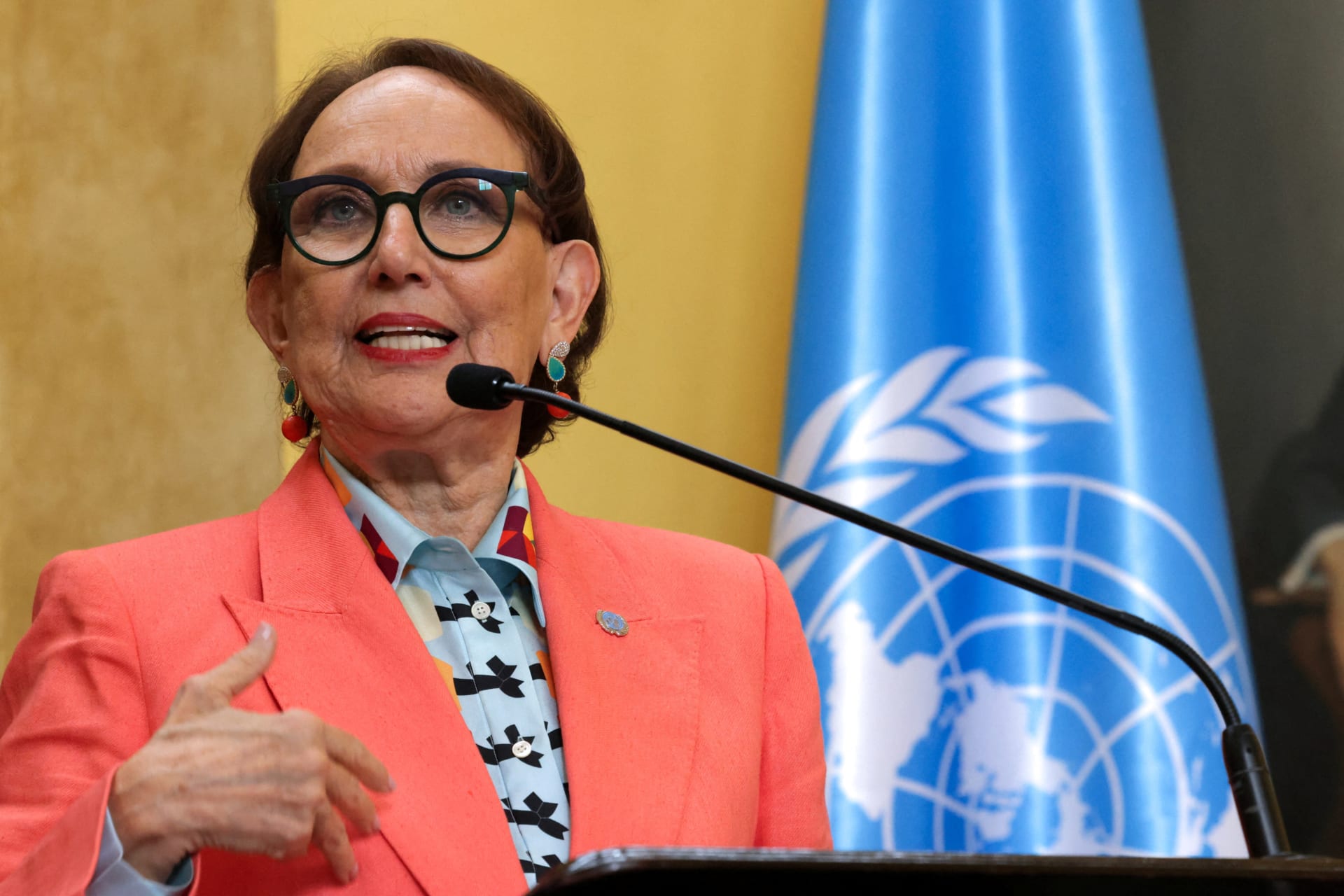
The Council on Foreign Relations has continued its UN Secretary-General Candidates Series by hosting an on-the-record conversation with one of the nominated candidates, Rebeca Grynspan, who currently heads the UN Conference on Trade and Development (UNCTAD). Here are the main takeaways from Grynspan’s October 28 conversation at CFR.
[Video: https://www.youtube.com/watch?v=2AUD2CbAsjA&t=14s]
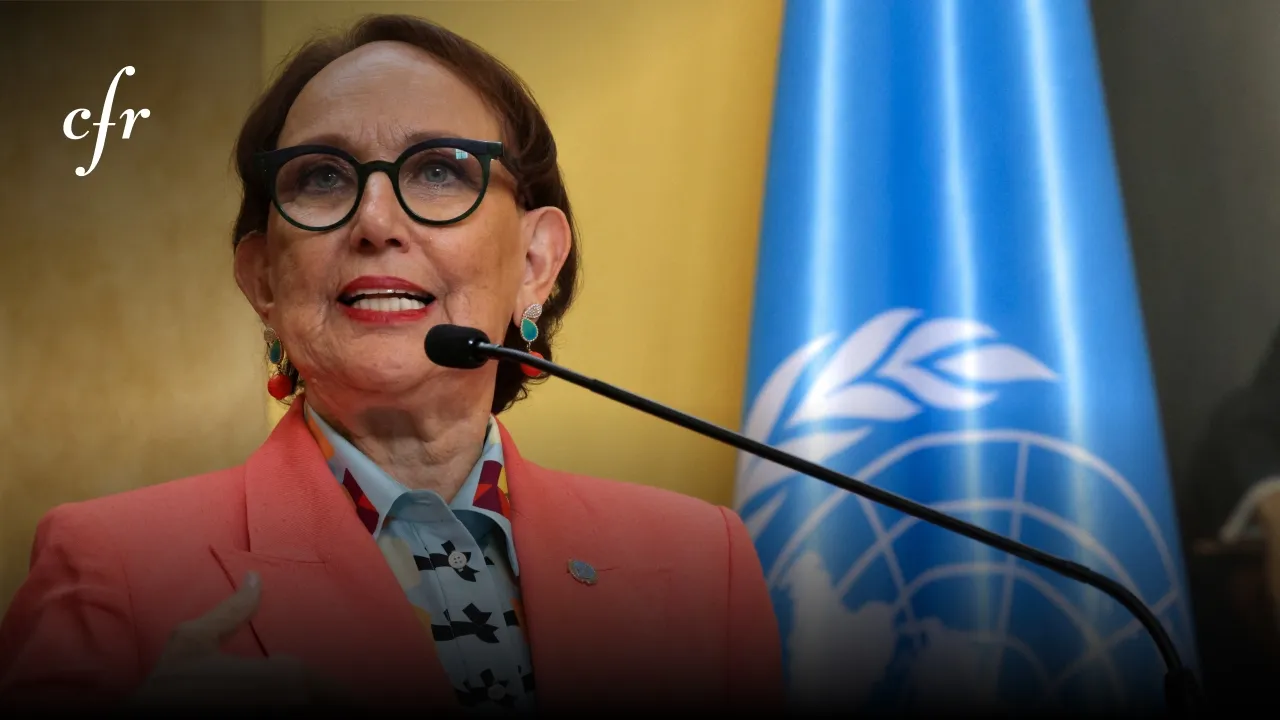
Believes the UN Secretary-General should be an active negotiator. On peace and security, Grynspan has previously noted an “absence of diplomacy” and during the CFR conversation said that the United Nations “has become risk averse.” She noted that bureaucracies are inherently risk averse, but argued that “leaders cannot be, and that’s why I talk about the good offices of the secretary-general.” She also highlighted the importance of solving what is possible and not assuming that “…we have to solve everything to solve something…”
Grynspan recalled her experience as secretary-general of UNCTAD, where she led negotiations on the Black Sea Grain Initiative to allow food to be transported across the Black Sea after Russia’s 2022 invasion of Ukraine, as helping to inform her views of operating in crisis settings. She believes that “we lost the opportunity to do something in the Strait of Hormuz,” which is experiencing “consequences very similar to the Black Sea.”
The candidate said that the United Nations could have been more active in some conflicts, but she also recognized the organization’s shortcomings, saying the organization “has failed Haiti.” However, she added that the UN Security Council is now “testing a model that we didn’t have before” in Haiti and is keen to see how it evolves.
Says goal should be for countries to graduate from development assistance when no longer needed. On the issue of development goalsetting, Grynspan said that ultimately, “the goal is for you not to exist in the development side—you know, for countries to be able not to need you.” She placed the responsibility for international development policy on international financial institutions (such as the World Bank) not on the United Nations. Instead, she said, UN agencies could help with capacity-building. As an example, she explained that over the past two decades, UNCTAD has helped over one hundred countries and territories digitalize their customs systems, a long-term benefit since trade is a source of revenue.
As the former vice president of Costa Rica, the candidate said it is important to listen to what countries actually need, arguing that “the development part is to support countries to be able to do it better on the priorities that they set for themselves.” She noted, “I really believe that the UN should be much more demand driven than supply driven.”
Believes she can be both an insider and an informed reformer. Grynspan said that being an insider will actually help her to reform the United Nations. She reflected, “…I think that being an insider is becoming a strength for me because I know exactly how to navigate the UN…because I know how to navigate the system, I can start from day one to reform,” she said. However, reflecting on her experience as a vice president, she also highlighted what she sees as the problem of many people within the United Nations having not served in roles outside the organization.
The candidate also suggested that part of the necessary reforms should be a recognition that the United Nations needs to refocus and rethink its role. “You have to do better with less, and to do better with less you have to refocus. You have to do those things where the UN is unique…”
Outlook. Grynspan has widely been seen as the leading candidate throughout this year’s competitive selection process, so far placing first in all but one of the UN Security Council’s straw polls. However, no candidate has been able to gain the assent of all five permanent members (P5) of the Security Council. At the time of writing, the most recent straw poll on October 30 revealed Grynspan becoming the first candidate to break eleven votes to encourage. However, the most recent straw poll did not use color-coded ballots indicating which encourage or discourage votes came from P5 countries, so there is no way to know for sure if any candidate has the necessary P5 support. With two new late-stage candidates entering the race in October, and the possibility for more in November, the selection of the next UN secretary-general continues to be unpredictable.
This work represents the views solely of the author(s). The Council on Foreign Relations is an independent, nonpartisan membership organization, think tank, and publisher, and takes no institutional positions on matters of policy.