Israel: The Excellent Election That Settled Nothing
Netanyahu’s Likud came first, but neither his bloc nor Gadi Eisenkot’s has a path to sixty-one seats without breaking a campaign promise. The deadlock that will follow is certain to play to the incumbent’s advantage.
Elliott Abrams served as deputy assistant to the president and deputy national security advisor in the George W. Bush administration, where he supervised U.S. policy in the Middle East. He later served as special representative for Iran and Venezuela in the first Donald Trump administration. Abrams wrote this piece from Jerusalem.
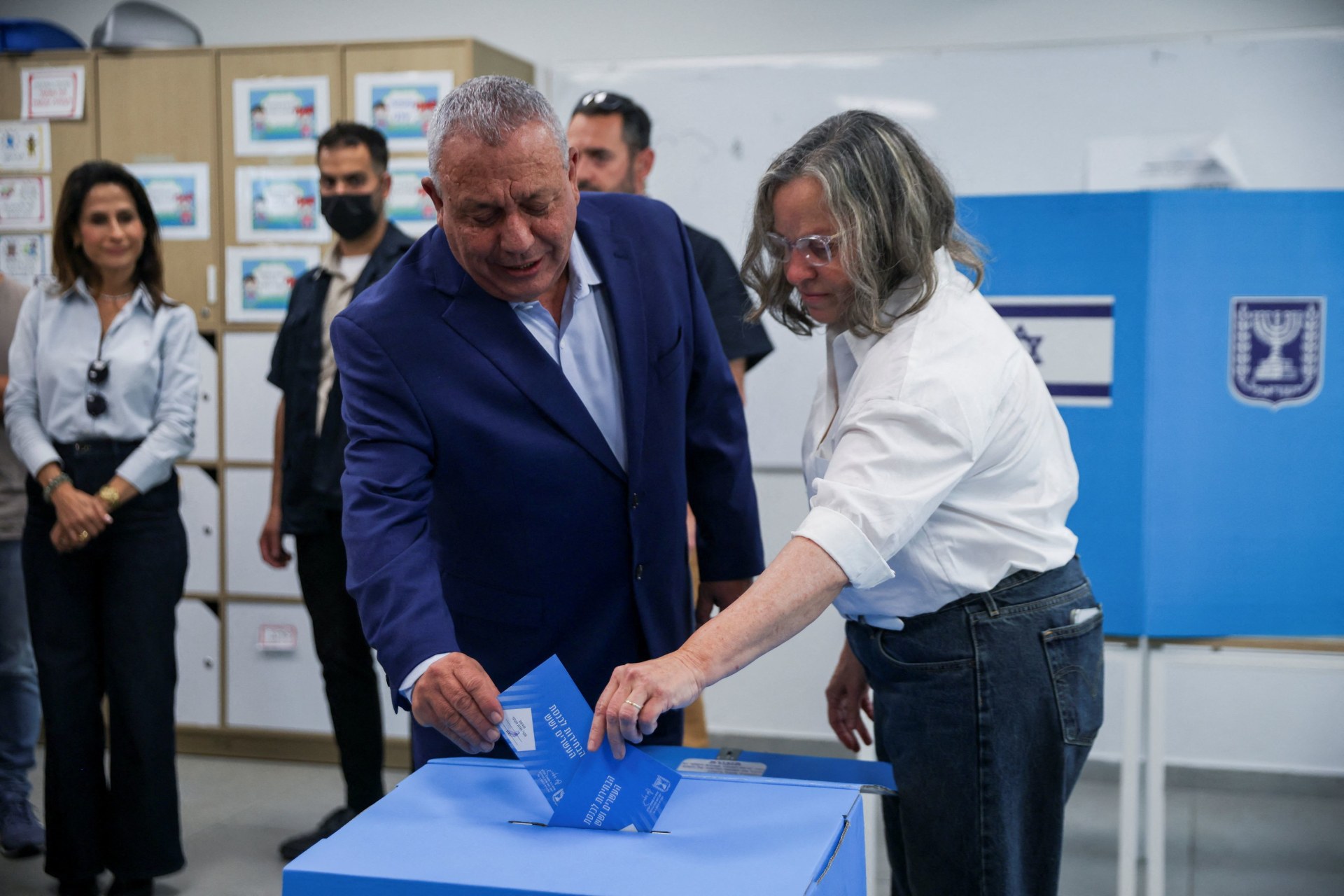
Israel’s election this week was an excellent democratic exercise. Overall turnout was well over 70 percent, and among Arab citizens of Israel turnout approached 80 percent—the highest in decades and likely enough to win the Arab parties nineteen seats in the 120-member Knesset. The campaigns were well run and hard fought.
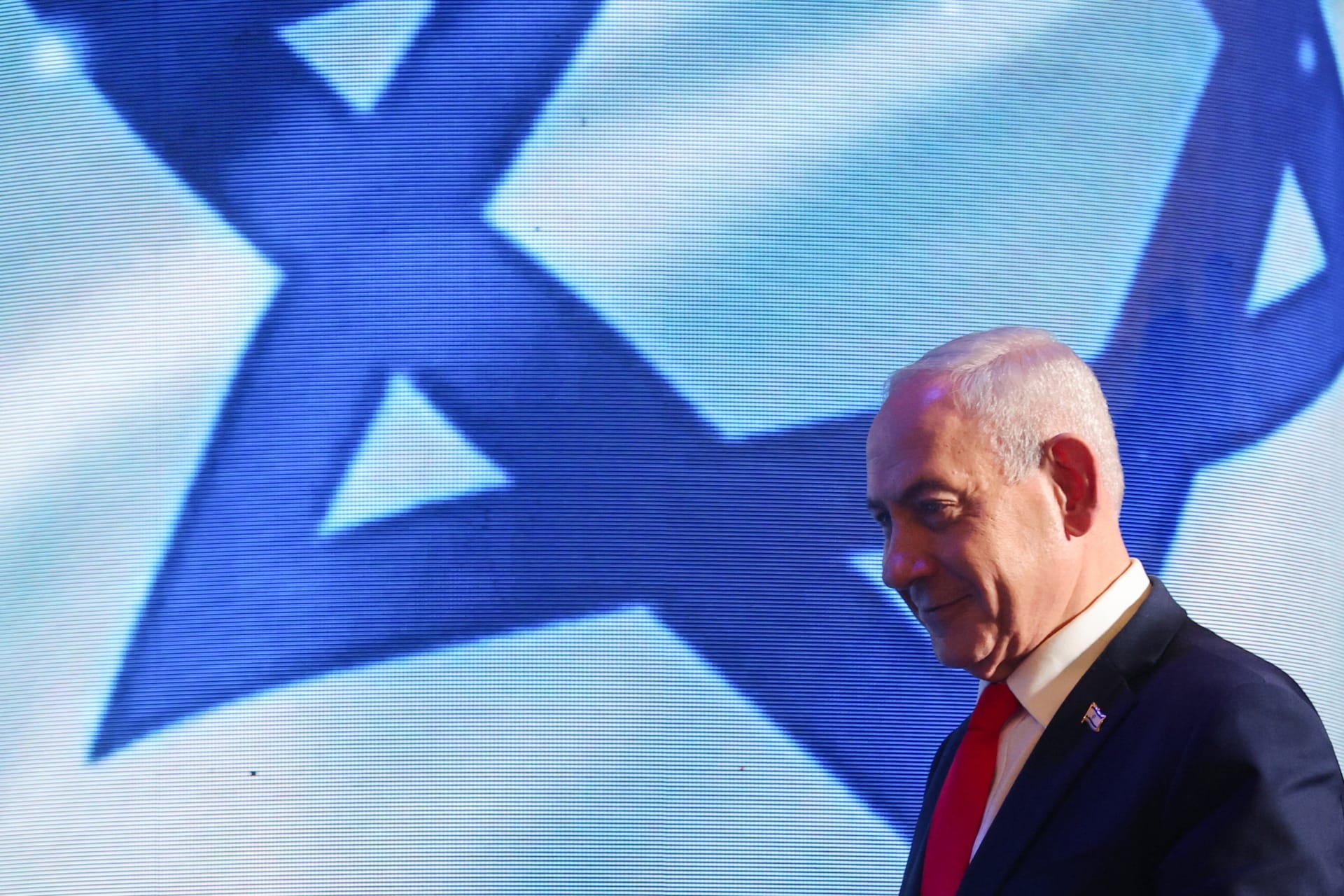
But as I write from Jerusalem on Thursday morning, with nearly all of the vote counted, the outcome is still not clear. Prime Minister Benjamin Netanyahu did better than polls had predicted; his Likud Party is the largest and his coalition is ahead of the opposition coalition by about five seats (fifty-three to forty-eight). Yet neither coalition is near the sixty-one votes needed to form a government.
For Netanyahu, that is both a defeat and a victory. His outgoing coalition had sixty-eight seats at its peak, so this is a real reduction, yet he is positioned to continue as prime minister. In the Israeli system, the president must ask the politician whom he thinks best situated to form a government to go ahead and try. That has to be Netanyahu, given his lead over opposition leader Gadi Eisenkot.
But how does Netanyahu get from fifty-three seats to sixty-one? Where are the eight additional seats? The opposition has promised not to serve in a new Netanyahu government nor to claim a majority based on Arab support. Can Netanyahu break off some opposition politicians to join him? Could he form a grand coalition with Eisenkot and have a government with one hundred seats? Might he agree to step aside after a couple of years?
If Netanyahu fails to get to sixty-one, President Isaac Herzog will turn to Eisenkot, but again, where does he get the votes he needs to go from an apparent forty-eight to sixty-one—without relying on Arab support?
In both cases, campaign promises about sitting with whom and relying on whom would need to be broken, which is always within the realm of possibility. But there are serious issues behind the political divisions and there is more at stake than personal ambitions and animosities. No issue is more prominent and divisive than conscription of ultra-Orthodox (Haredi) young men for the Israel Defense Forces—which badly needs them, but which the leading Haredi rabbis adamantly oppose. For a grand coalition, Eisenkot and other opposition parties would have to give up on conscription and likely break up their coalition—or Netanyahu would have to agree to drafting ultra-Orthodox youths, thereby breaking up his.
As Yaakov Katz of the Jewish People Policy Institute said, “The voters have spoken, but the politicians still have to decide what to do with the result. Israel’s next government may depend less on who won the most seats than on who is prepared to break a campaign promise—and what they demand in return.”
President Herzog has said he wants a coalition, rather than endless and failed wrangling that leads only to a second round of elections. From 2019 to 2021, failed negotiations led to four elections in three years, and that is exactly what Herzog wants to avoid. He will press Netanyahu to make Eisenkot a serious offer, and press Eisenkot to be equally flexible. But the odds are against such a deal, partly because the opposition leaders do not trust Netanyahu to keep any pledges he makes—especially a pledge to step aside to allow Eisenkot to become prime minister.
For Israelis this was not really a foreign policy election, but outside observers will wonder how all of this affects Israel’s foreign policy. On many issues, including Gaza, Lebanon, Syria, and Iran, there is a broad consensus in Israel. An Eisenkot government would be less likely to attack Iran soon only because it would be new, and the ministers would be unlikely to order a strike on Iran before their chairs are warm. But Netanyahu will likely soon ask President Donald Trump about a renewed assault on Iran’s nuclear sites.
For Netanyahu, failed bargaining and another election probably look attractive. He remains prime minister while the negotiations are under way, and many analysts think that this week’s opposition numbers are probably their high-water mark. They were well organized and showed high levels of enthusiasm that may be hard to recreate. The opposition parties may now start dreaming of getting Netanyahu out in two years—when President Herzog’s seven-year term ends and, one theory has it, Netanyahu might step aside as prime minister to take that job (assuming he has the votes in the Knesset, which makes the choice).
Netanyahu just turned seventy-seven, so leaving as prime minister to take the presidency in two years might seem attractive. Nice way to edge into old age. But this election has shown everyone once again that Netanyahu is still the dominant figure in Israeli politics, and he will likely remain so for years to come.
This work represents the views solely of the author(s). The Council on Foreign Relations is an independent, nonpartisan membership organization, think tank, and publisher, and takes no institutional positions on matters of policy.