Russia’s Attacks in Europe Are Escalating. Here Is How to Push Back.
European countries have been too slow and too reactive in response to escalating Russian attacks. They need a coordinated playbook.
By experts and staff
- Published
 Liana FixCFR ExpertSenior Fellow for Europe
- Research Associate, Europe Studies
Liana Fix is a leading authority on European security and transatlantic relations, and author of the forthcoming book Germany Rearmed: The Return of War and the End of Illusions. Rafaela Uzan is a research associate for Europe studies at CFR.
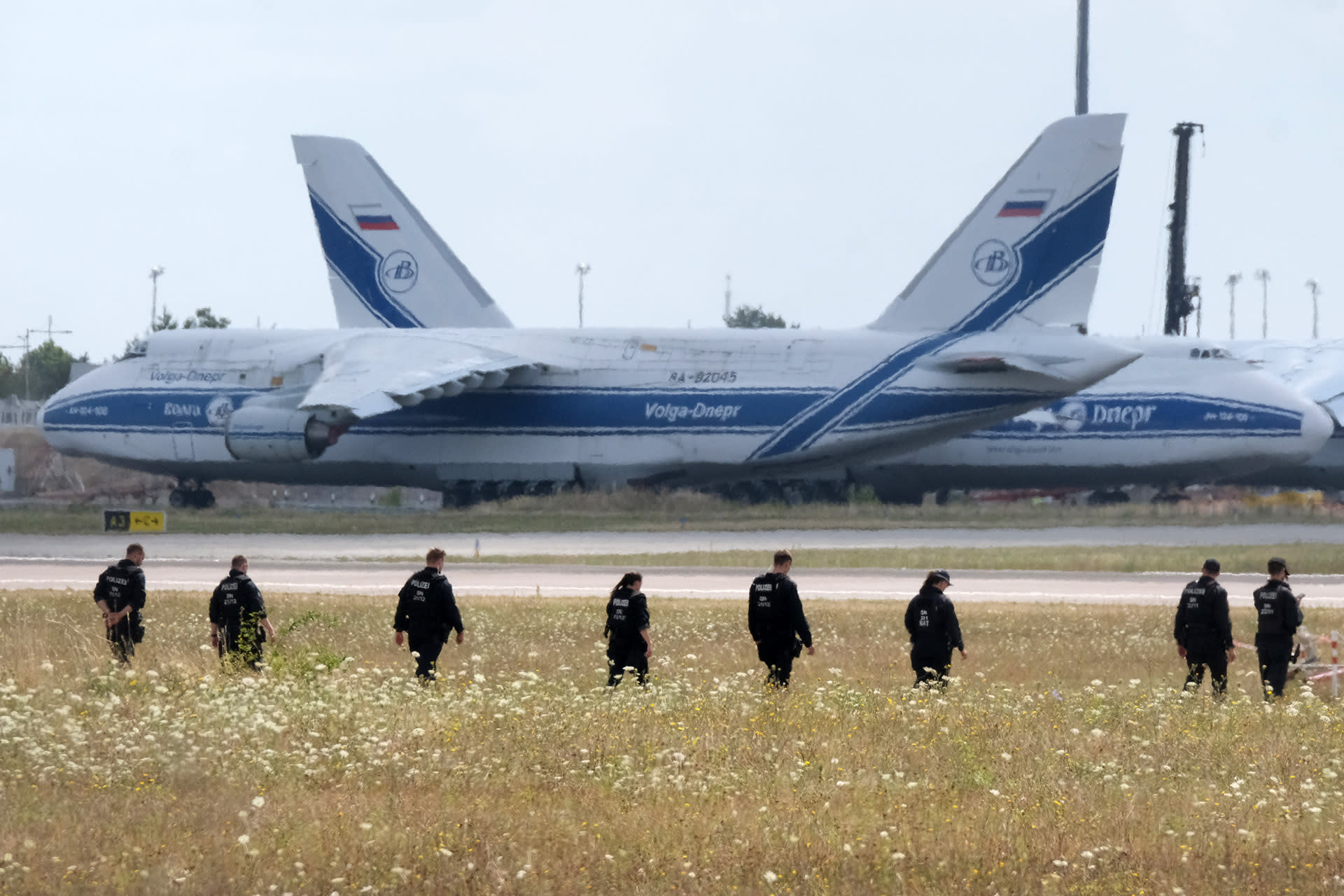
Any hopes that growing economic pressure and mounting battlefield losses might push Russia into negotiations—or even concessions—have been dashed by intensifying aggression not just in Ukraine, but across Europe. In recent weeks, Russia has stepped up its attacks on civilian targets in Ukraine, including a strike this week that hit two public buses, killing at least thirty people. But European intelligence services have also noted a steady and sustained rise of suspected Russian aggression elsewhere on the continent, including the foiled drone attack on Leipzig/Halle Airport in early August, an airspace breach and explosion of five Russian weapons on Moldovan territory in early October, and numerous airspace violations in Poland.
So far, the damage has been limited. But if Russia continues at this intensity, it is only a matter of time before there are significant civilian casualties. To respond, Europe needs to update its playbook and pivot from a response that has been too slow, too fragmented, and too reactive, to a coordinated approach that builds asymmetric leverage and impresses on Russia that the costs of its escalating campaign are too high.
Initially, Russian attacks on Ukraine’s European allies were limited to infrastructure that supports Ukraine, such as railways. However, these attacks have now expanded to include broader political and industrial targets. For example, in 2024 U.S. intelligence uncovered a Russian plot to assassinate the chief executive of Germany’s Rheinmetall, which supplies critical weaponry to Ukraine. Such attacks are aimed not just at disrupting supplies to Ukraine, but also destabilizing Europe, paralyzing critical infrastructure, and hurting European economies. They are also intended to undermine support for Ukraine among European publics, and call into question the United States’ commitment to defending its allies in Europe.
European leaders have been sounding the alarm about the uptick in attacks. French President Emmanuel Macron gathered presidential candidates and party leaders for a confidential briefing on the rising threats coming from Moscow. Polish Prime Minister Donald Tusk called the attacks an attempt to “paralyze NATO” or at least to “weaken the alliance’s willingness to respond collectively” by demonstrating that Article 5 is only theoretical. Sweden’s prime minister echoed this sentiment, writing that “Russia wants to intimidate us, to undermine our united deterrence and scare us into backing down from our support to Ukraine. This will fail.” Meanwhile, Denmark’s military intelligence service recently shared its assessment not only that Russia will continue carrying out these acts in the future, but also that there is a “low but growing risk” of Russia launching a conventional military attack against one or more NATO countries.
The U.S. response so far has been mixed. During his August visit to Moscow, CIA Director John Ratcliffe reportedly warned Russia against attacks on NATO members. Yet the ongoing U.S. force posture review, which could include significant cuts to forces in Europe, undermines the credibility of the U.S. commitment to the continent. Earlier this year, U.S. President Donald Trump also announced that he would withdraw thousands of U.S. troops from Germany as well as the cancellation of a planned long-range missile deployment, after a spat with German Chancellor Friedrich Merz over the war in Iran. The fear is that U.S. ambivalence toward Europe’s security could embolden Russian President Vladimir Putin to engineer a security crisis on the continent, for example by repeating—or dramatically expanding upon—something like the September 2025 incursion that saw at least nineteen drones cross the border into Poland.
A Creative Way Forward
So far, European governments have responded with a combination of attempting to prevent attacks and exposing threats through early attribution. One problem with this approach has been that governments have dealt with Russian attacks as separate, country-by-country incidents handled by national law enforcement agencies, not through a coordinated Europe-wide campaign. This should change. Europeans should not respond in kind and symmetrically—they cannot and should not, for legal and normative reasons. Instead, they should explore a coordinated response that finds creative ways to exploit Russian vulnerabilities.
European governments should focus on four avenues to pressure Russia to avoid further escalation:
The most important avenue runs through Ukraine. European governments should boost support for Ukraine generally and also enable it to expand its deep-strike campaign into Russia. At the same time, they should clearly signal to Russia that this approach is directly connected to its escalation toward Europe. These efforts can and should be supported by the United States, especially through ongoing intelligence cooperation with Ukraine.
Second, Europeans should go after Russia’s shadow fleet, which has become not only a tool that Russia uses to circumvent energy sanctions, but is also becoming a platform for Russian drone espionage and sabotage. The one-off boarding and seizure of a few ships is an important first step, but these efforts need to be part of a wider campaign of pressure, as the International Institute for Strategic Studies has called for already. The goal should be to signal to Russia that if it continues to use its shadow fleet for offensive purposes, its energy transit routes will be increasingly at risk as more and more ships are boarded and seized. The U.S. Congress has advanced several important pieces of legislation on this issue, including the recently passed Lindsey O. Graham Sanctioning Russia and Iran Act, signed into law on September 18. Legislators should keep up the pressure to support European allies.
Third, Europeans should revive the debate on frozen Russian assets, framing it explicitly as a reaction to Russian attacks. These funds are an immense source of leverage, and Europe should not shy away from using them to demonstrate that support for Ukraine will be redoubled if Russia continues to threaten Europe. Belgian concerns blocked a past European attempt at using these frozen assets (which are largely housed in Belgium), but skilled diplomacy should help overcome these reservations. Most important, U.S. negotiators should refrain from using the frozen assets as a tool in Ukraine negotiations, as has been the case in the past, but instead support Europeans in their efforts to use these assets as leverage against Russia.
Fourth, European allies and NATO should expand their political and military responses, especially given the fear that Russia might engineer a broader conventional attack or crisis. This means more exercises, such as those that took place in August 2026 in Poland and the Baltic states, as well as more signaling, for example through intelligence flights close to Kaliningrad. European and NATO leaders need to convey that these attacks are taken seriously at the political level. For example, after undersea cables in the Baltic Sea were cut, NATO established the Baltic Sentry maritime vigilance initiative in early 2025 and the UK-led Joint Expeditionary Force was activated for the first time in November 2023. Similar steps need to follow. To prevent escalation risks, exercises and flights should also be clearly labeled as a response to Russian escalation, a response that can be toned down if Russia tones down its activities, too.
The European Union (EU) has a role to play here, too. European Commission President Ursula von der Leyen has proposed a “counter-hybrid playbook” and the creation of a new Emergency Security Protocol that would equip the EU with an agreement akin to NATO’s Article 4 to respond to incidents below armed aggression. EU defense ministers are set to discuss this proposal in the coming weeks. In her State of the Union Address, von der Leyen also made the case for establishing a new European Security Council that would include Canada, Norway, Ukraine, and the United Kingdom, to better coordinate Europe’s security response.
None of this will be easy, particularly given the political headwinds in France and Germany. Although assertive coalitions of willing European states can bridge immediate divisions, the long-term strategic direction remains unclear—especially as Washington turns inward ahead of midterm elections. But Russia’s escalating campaigns in Ukraine and beyond mean a crisis could occur sooner than expected, and Europe and its allies must adapt and prepare, now.
This work represents the views solely of the author(s). The Council on Foreign Relations is an independent, nonpartisan membership organization, think tank, and publisher, and takes no institutional positions on matters of policy.