The G7’s Alignment on Iran and Ukraine Is Deeply Fragile
The G7 summit produced the transatlantic alignment—albeit a fragile one—that Europe had hoped for on Iran and Ukraine. But European leaders shouldn’t feel relieved. Now is the time to focus on building the strategic independence they will need if this consensus doesn’t hold.

Liana Fix is a historian, political scientist, and leading authority on European security, transatlantic relations, Russia and Eastern Europe, and European–China policy. She is the author of the forthcoming book Germany Rearmed: The Return of War and the End of Illusions.
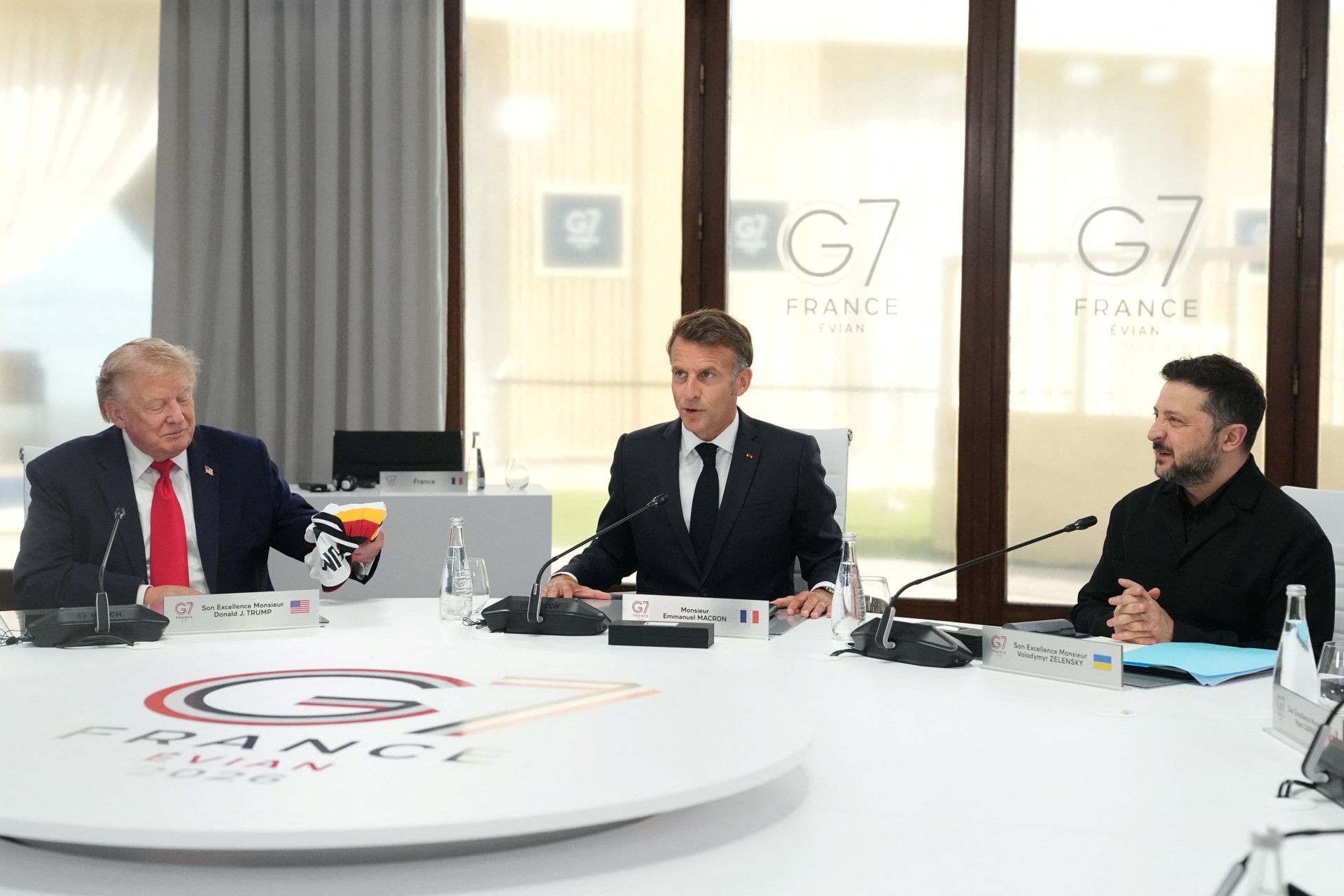
This year’s Group of Seven (G7) summit was officially dedicated to reducing imbalances in the global economy, in particular the economic threat from China’s subsidized exports. In reality, geopolitics—especially the wars in Iran and Ukraine—took over the agenda.
It appeared as if the meetings in Évian-les-Bains, France, produced a rare moment of transatlantic alignment on both fronts—though this consensus is much more brittle than it appears. It is built on a framework agreement that the Europeans privately doubt and a Ukraine negotiating window they fear the United States will squander. The question now is not whether cracks will emerge, but how quickly.
Undoubtedly, the announcement of a framework agreement between the United States and Iran led many Europeans to cautiously breathe a sigh of relief. Stabilizing global energy prices and preventing a further escalation of hostilities is strongly in their interest. However, their expectations for the implementation of U.S. President Donald Trump’s agreement are modest. Given how fast it was produced and the short upcoming negotiation period, Europeans are concerned it may end up significantly weaker than the Iran nuclear deal and fail to resolve the question of the Islamic Republic’s regional proxies.
On the plus side, the framework agreement has almost overshadowed the serious rift that had emerged between Europe and the United States over the continent’s limited contribution to the Iran war, which has led to U.S. troop withdrawals from Germany. This is good news ahead of the NATO summit that will take place in Ankara, Turkey, at the beginning of July. It helps Europeans to have a friendly U.S. president on their side, especially as the Pentagon and the Trump administration at large have used this moment of discord to push for a reduction of the U.S. conventional military presence in Europe and U.S. capabilities dedicated to NATO. Secretary of State Marco Rubio has already flagged the “significant changes” needed for NATO.
On the downside, Trump’s announced return to Ukraine negotiations is a fresh stress for the Europeans. They worry that the United States’ previously demonstrated leniency on Russia could once again undermine what they see as a moment of opportunity for Ukraine. They see a shift in the battlefield trajectory to Russia’s detriment, along with domestic discontent over the country’s economic situation, as a real opportunity to increase pressure on Moscow and force it into an unconditional ceasefire.
Their idea is to ramp up sanctions pressure on Russia while opening their own channels of communication (led by the E3—France, Germany, and the United Kingdom) to convince President Vladimir Putin that he holds the weaker hand and should consider serious talks. G7 countries appear to have reached consensus regarding new sanctions on Russia’s oil and gas exports, especially on Moscow’s shadow fleet. The United States has also indicated that it may not extend the waivers it created in response to the Iran war energy crisis that allowed for the sale of Russian crude oil and petroleum already at sea. But European allies worry this consensus may be short-lived, and that the return of Trump, his Middle East envoy Steve Witkoff, and son-in-law Jared Kushner to the Ukraine file will do more harm than good.
European allies and Ukrainian President Volodymyr Zelenskyy worked hard in Évian to dissuade Trump from his often-held belief that Russia has the upper hand no matter what—and to convince him that it is Russia, not Ukraine, that needs to make concessions. But because Russia sees a favorable U.S. deal as the best way out of the current impasse, Europe and Ukraine fear the president may blink.
Russia is currently pounding Ukraine with an unprecedented air campaign, but Ukraine is by now strong enough that it need not accept an unfavorable deal brokered by the United States. The most important leverage the United States holds is intelligence support for Ukraine, which Congress is trying to shield, and air defense interceptors, which have grown scarce as the Iran war depleted U.S. global munition stockpiles.
This makes it all the more important for Europeans to pursue a two-track approach: try to get Trump on board while ensuring that Europe and Ukraine can adopt a more independent negotiating position if needed. To do so, Europeans must dramatically increase their own production of air defense systems and seek co-production agreements with the United States. Zelenskyy is currently doing this by asking the United States for licenses to produce Patriot missiles in Ukraine. Closing this crucial vulnerability will allow Ukraine to define on its own terms when—and on what conditions—it accepts a deal.
For Europeans, the takeaway from the summit in Évian is that alignment with Washington is worth pursuing—but it cannot be counted on. The stronger they make Ukraine and themselves, the less it matters whether Trump blinks.
This work represents the views and opinions solely of the author. The Council on Foreign Relations is an independent, nonpartisan membership organization, think tank, and publisher, and takes no institutional positions on matters of policy.