Ten Issues to Watch at the Trump-Xi Summit in Washington
The honors for Xi exceed what Trump got in Beijing, but the asymmetry goes beyond the pageantry. A quick brief on ten issues that will define the state visit.
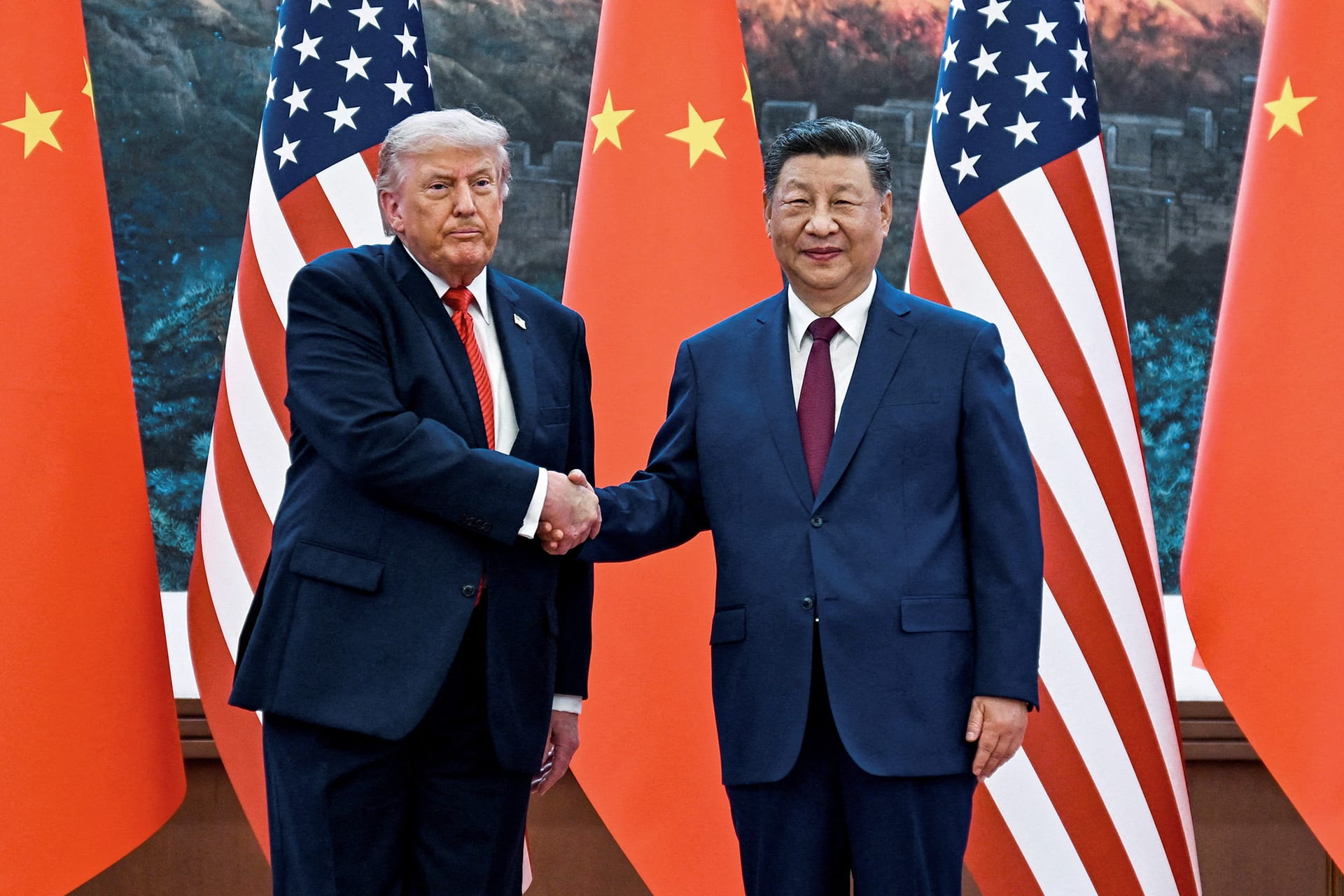
By experts and staff
- Published
 Rush DoshiCFR ExpertC.V. Starr Senior Fellow for Asia Studies and Director of the China Strategy Initiative
On Wednesday, President Xi Jinping lands at Joint Base Andrews for his first state visit to Washington in eleven years. President Donald Trump, in an unprecedented gesture, will be waiting for him on the tarmac. Later, a B-2 Spirit and four F-22 Raptors will overfly the ceremony, and Melania Trump will host Peng Liyuan, the first lady of China, for their own meeting. Nothing like this occurred when Trump visited Beijing in May of this year.
Although “reciprocity” is the Trump administration’s watchword for the summit and for China policy, the asymmetry in pageantry reveals something about an overall asymmetry in the relationship. Beijing believes it has tamed the Trump administration with rare earth export controls, and the Trump administration at times seems to believe it too. The Trump administration had retaliatory tools back in 2025 (from sanctions on smaller Chinese banks to export controls targeting a range of other chokepoints), but it opted not to use them and instead reduced tariffs in response to Beijing, culminating in the October “Busan deal.” Beijing’s ability to turn back U.S. tariffs marked an inflection point that established, as I wrote in The New York Times, China as a true peer of the United States, albeit one ahead on some metrics of power and behind on others.
The current “détente but not quite a détente” suits Beijing just fine. It believes the world is undergoing “great changes unseen in a century,” the foremost of which is the “rise of the east and decline of the west,” and that competition with the United States has entered a period of “strategic stalemate” as China gains in relative strength. It wants to use the next few years to consolidate its rise and reach what one might call escape velocity in its competition with Washington, using the calendar of leader meetings in November (Shenzhen) and December (Miami) to “manage” Washington. After that point, Washington’s leverage diminishes further. All the same, tensions are brewing.
Beijing wants to extend what it sees as Trump’s de-escalatory approach through the rest of his term. It has escalated in some cases: issuing new State Council directives that effectively criminalize decisions by firms to move production out of China, throttling supplies of rare earths despite the Busan deal, detaining U.S. citizens, and, reportedly, providing satellite imagery to Iran used in a strike that caused American fatalities. Washington has taken some steps of its own, including de facto bans on Chinese drones and robots, an advisory accusing Chinese firms of distilling American AI models, and a new law authorizing tariffs of up to 100 percent on the largest buyers of Russian oil and gas, China among them.
But the President favors stability, and the administration has taken far fewer such steps than many, including Beijing, expected. It has postponed a Section 301 finding that would raise tariffs on China, delayed a Taiwan arms package possibly until the end of the year, shrugged at China’s support for Iran, and kept tariff rates on China close to those on close allies.
In the background are two time-sensitive items: the expiration of the current tariff truce on November 10, and growing concern about AI risk.
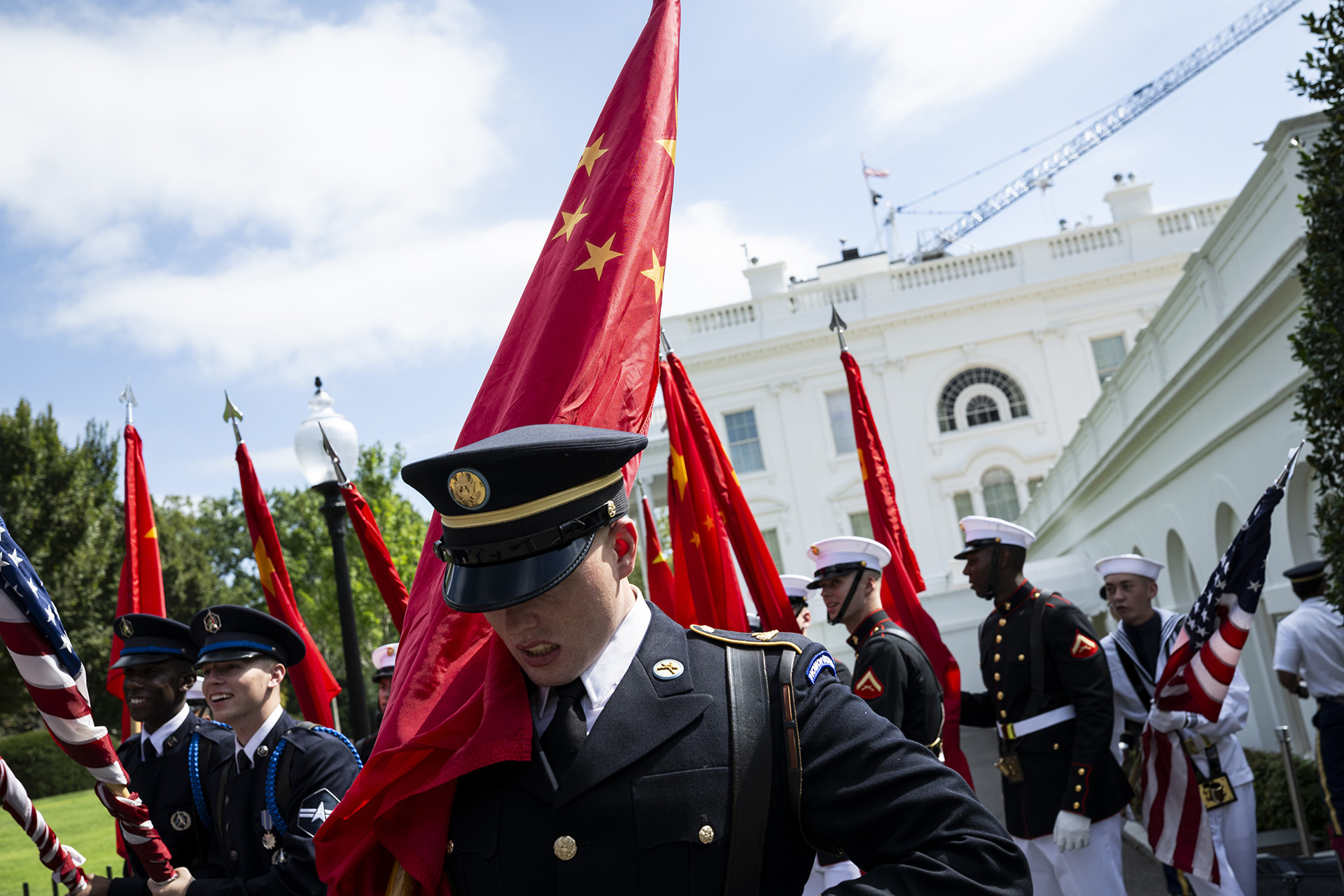
The summit isn’t likely to produce many deliverables. Both sides want favorable optics. Trump faces midterms in under six weeks. Xi returns home to begin a year-long run-up to next fall’s Party Congress, where he is expected to secure another five-year term. At most, we will likely see a temporary extension of the Busan truce, some agricultural and energy purchases by China, and an AI dialogue.
Below, a quick summary of the state of play, issue by issue.
1. The Busan truce expires November 10, and Washington says Beijing hasn’t held up its end.
Beijing reportedly wants the truce extended through the end of Trump’s term, while U.S. Trade Representative Jamieson Greer has said three to six months would be acceptable. The administration believes China hasn’t kept its side of the deal, telling the Financial Times that only two-thirds of its rare earth commitments have been fulfilled and that a shorter extension “serves as a compliance period for assessment.”
What this suggests is that the administration is reserving the right to again raise tariffs. Much depends, as officials put it, on whether Beijing’s rare earth throttling is “a glitch in the system” or “an intentional haircut.”
2. Washington is holding its tariff actions in reserve.
Washington has delayed a Section 301 report recommending a 7.5 percent tariff on China, which was part of an excess-capacity investigation launched in March involving 16 countries. Beijing says the Trump administration promised to cap “replacement” tariffs, imposed after the Supreme Court struck down the IEEPA tariffs, at 20 percent. Washington hasn’t confirmed that.
Washington also has a new, unused lever. On September 18, Trump signed the Sanctioning Russia and Iran Act, which authorizes tariffs of up to 100 percent on the largest importers of Russian oil and gas, China among them, and extends the Iran Sanctions Act by five years.
3. Purchase commitments remain murky.
Something remarkable happened at the Beijing summit in May: Trump announced Chinese purchases of 200 Boeing aircraft and new agricultural commitments. Beijing, however, declined to confirm any of it. It is rare to see such misalignment over core deliverables hours after a summit.
Some progress on agricultural exports to China seems likely. Boeing aircraft, though, are probably being held hostage to disagreements over parts. Beijing doesn’t want Washington to have a chokepoint.
4. The Board of Trade is the likeliest vehicle for new deals.
For now, purchase commitments will probably flow through the still-nebulous “Board of Trade” announced in May. Greer says the Board is operational and that the two sides are drafting initial lists of products to trade. These likely include consumer and low-tech goods from China, and energy (such as LNG), farm goods, and medical devices from the United States. Some reports suggest tariff cuts on $30 billion in two-way trade, and Beijing might drop its tariffs on LNG.
5. A breakthrough on Chinese auto investment is unlikely.
Trump told Fox News he would be “OK” with Chinese automakers building plants in the United States if they employ Americans. The auto industry pushed back, arguing such investment would disproportionately benefit Chinese companies. American cabinet officials and unions, as well as Chinese regulators and automakers, have all been cool to the idea. A breakthrough seems unlikely, though a senior official told the Financial Times that the issue is not fully settled.
History suggests the need for some caution. In 2017, China promised $83.7 billion in investment in West Virginia. None of it materialized.
6. The AI dialogue moves forward. But questions linger.
Bessent, Greer, and He Lifeng agreed to an AI dialogue and possibly a new crisis communications line for AI. What will come of it is unclear. Bessent says the next meeting will likely be in two months, probably in Shenzhen. That is quite a gap.
I think four questions are outstanding:
- Are the right agencies at the table? Treasury and USTR negotiated this with He Lifeng, which is the right way to secure a summit deliverable but does not involve the agencies that deliver AI safety. Progress runs through NDRC, MOST, MIIT, the CAC, MOFCOM, and the MSS, and it is unclear whether they were in the room or will be.
- Will participation be real? Nominal participation is not real participation. When we negotiated the 2023 dialogue as a summit deliverable, we focused on who would show up. When it met, the PRC side did not send the right people, and the ones it sent did not speak.
- Will either side regulate? The lowest-hanging fruit is not a negotiated slowdown but coordinated parallel regulation, with each side adopting similar safeguards on its own. Beijing will not move if it judges the American deregulatory turn to be permanent, and a president who last week called AI risk a “hoax” is not sending a costly signal. China has taken regulatory steps (albeit primarily focused on Congress) and seems increasingly concerned about “extreme loss of control” among its top AI risks (in a CAC briefing). But there’s a long way to go on both sides.
- Will anyone pick up the phone? A crisis line works only if someone answers. The existing channels failed during the EP-3 and balloon episodes. It is not obvious which Chinese ministry would pick up, and the mechanism may need to sit in a party body to be used at all. Or, as Carnegie’s Matt Sheehan suggests, it may need to function more like a fax than a phone, because Beijing answers documents through committees, not calls.
7. Chip controls and distillation hang over the dialogue.
Chip export controls were seemingly kept out of the AI dialogue, according to Greer, and neither side linked the two this time around. Washington has already licensed H200 sales to about ten Chinese firms, but it seems very few have shipped, with Beijing steering buyers toward domestic suppliers like Huawei. Beijing, of course, continues to object to restrictions on exports of powerful chips critical to training Chinese models. And restrictions on inference chips continue to slow global deployment of Chinese models.
The other issue is distillation. On September 8, the NSA, CISA, and FBI issued an advisory accusing six Chinese firms of “industrial-scale” distillation of U.S. frontier models since late 2024, likely with Beijing’s knowledge. It also quietly advised U.S. labs to feed suspected distillers degraded answers without telling them. The advisory followed Bessent’s threat in July to sanction Chinese firms after the U.S. found watermarks from American models in Chinese systems. Beijing called the charge a pretext for monopoly and warned of countermeasures if it is used to target Chinese firms. Whether the issue comes up at the summit is unclear.
8. U.S. declaratory policy on Taiwan seems unlikely to change (on paper). But informal remarks may matter more.
Beijing may continue to insist that the United States shift its declaratory policy from “does not support” Taiwan independence to “opposes” it, and that Beijing be given a say over arms sales. Beijing reportedly threatened to cancel the meeting if new arms sales went forward, and some suggest the sales will not happen until next year, even as Beijing continues to increase its military exercises around Taiwan.
In May, Trump called arms sales a bargaining chip and suggested that the Six Assurances are obsolete, exceeding Beijing’s expectations on those issues. Admittedly, the administration did not formally revise policy in May, which suggests it is unlikely to do so in September. But Trump’s informal, unscripted, remarks may be as consequential as any formal change.
9. On Iran, the stakes have risen while Trump shrugs.
At the Beijing summit in May, Trump said he declined to ask for Xi’s help on Iran. At the time, the U.S. Navy was blockading the Strait of Hormuz and intercepting tankers bound for China. Since then, Treasury’s “Operation Economic Outcast” has raised the stakes with possible secondary sanctions on Chinese institutions.
The stakes have also risen in another dimension. Reports that Chinese entities supplied satellite imagery used against U.S. bases — the kind of imagery they supplied to Russia during its invasion of Ukraine — have caused congressional concern. But when asked about it, Trump dismissed the issue entirely.
10. The fentanyl track seems quieter now.
In Busan, Washington halved its fentanyl-related tariffs in exchange for a Chinese crackdown on precursor chemicals, and there has since been some notable law enforcement cooperation. But no new commitments have been reported ahead of this week. It is possible some token announcements (perhaps law enforcement cooperation) may emerge from the dialogue, but nothing has been previewed.
By Friday, we’ll have a sense of (1) whether the truce is extended by months or instead by years, (2) whether the Board of Trade produces real product lists for purchase commitments, (3) whether the AI dialogue becomes “thick” or remains “thin,” (4) and whether Taiwan language shifts at all.
Other items may come up to. But the larger questions about where the U.S.-China relationship is going, and whether the period of relative calm will continue, may be determined less by the summit than the unexpected events that so often reshape bilateral ties.
This work represents the views solely of the author(s). The Council on Foreign Relations is an independent, nonpartisan membership organization, think tank, and publisher, and takes no institutional positions on matters of policy.