How War, Tariffs, and Other Foreign Policy Issues Could Affect the U.S. Midterms
What is notable this year is how four foreign policy issues—the Iran war, U.S. trade policy, artificial intelligence (AI), and immigration—could be affecting voter perception ahead of the midterms.
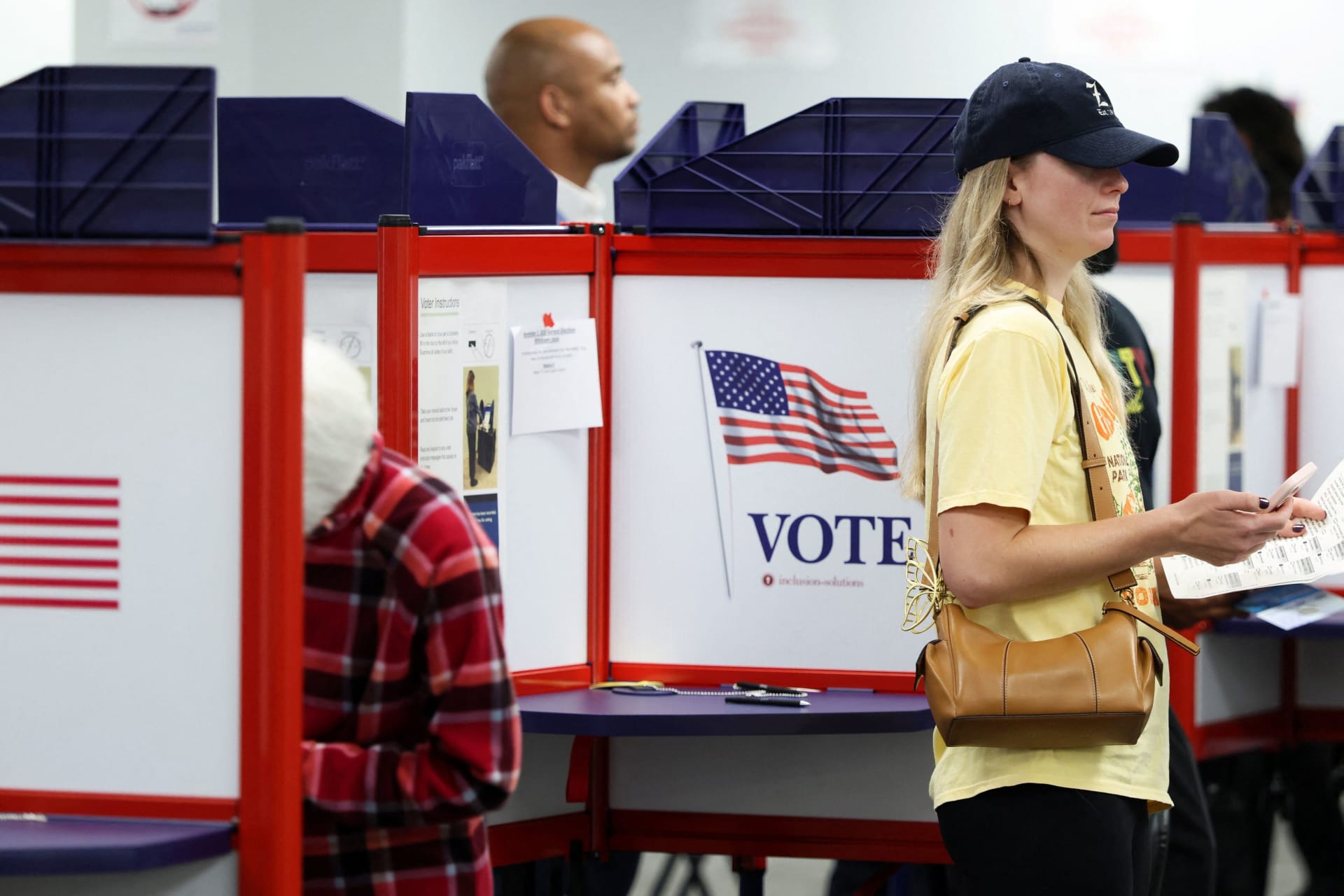
On November 3, voters in the United States head to the polls to cast their ballots in the midterm elections. They will vote to elect 435 members of the House of Representatives, a third of the Senate, and numerous state and local offices. The outcome will decide whether Republicans maintain control of Congress for the final two years of Donald Trump’s second presidency.
Economic worries typically dominate midterm elections, and 2026 is no different. The affordability question, which directly ties to the economy and direction of the country, appears to be the core issue driving voter sentiment.
What is notable this year is how four foreign policy issues have affected those economic issues. CFR experts break down how the Iran war, U.S. trade policy, artificial intelligence (AI), and immigration could be shaping voters’ perceptions of the economy and the United States’ role in the world.
[Video: https://youtube.com/shorts/qhEwQALLwwM?si=cyuemt0K9vJ50KXV]
Iran War
When Trump announced the start of military operations against Iran in February 2026, he said the goal of the joint U.S.-Israeli attack was “to defend the American people by eliminating imminent threats from the Iranian regime” and pointed to “menacing activities [that] directly endanger the United States, our troops, our bases overseas, and our allies throughout the world.” This included, for example, Iran’s military buildup and support of terrorist acts through proxy groups throughout the Middle East.
Trump has further justified the war by maintaining that the conflict will prevent Iran from developing a nuclear weapon. U.S. military officials have indicated that the strikes in June 2025 and those since February 2026 have significantly degraded Iran’s nuclear infrastructure and the accessibility of its stockpile of highly enriched uranium.
But Iran retaliated against the campaign by attacking ships and laying mines in the Strait of Hormuz, one of the world’s most critical waterways for the transit of oil, gas, and other commodities out of the Persian Gulf. In 2025, around 25 percent of the world’s maritime trade in oil and 19 percent of its liquefied natural gas passed through the strait. Maritime traffic has been drastically curtailed, causing energy supply shocks across the world. The U.S. Navy has also imposed a blockade of the waterway, which contributed to the shocks.

According to a Reuters/Ipsos poll conducted in mid-October, 34 percent of respondents said they approve of the U.S. strikes on Iran, and 54 percent think the war has not been worth fighting.
Among voters, there is a “lack of enthusiasm about continuing involvement in Middle East wars,” said Elliott Abrams, the special representative to Iran during the first Trump administration and now a senior fellow for Middle Eastern studies at CFR, where he oversaw a study group on foreign policy attitudes among Trump supporters. They sense that foreign wars divert resources from domestic needs and, more importantly, have started to feel a “direct and immediate” economic effect, Abrams added.
The Iran war has been a significant driver of higher fuel prices domestically, according to the International Energy Agency. The conflict has hampered oil and gas exports from the Middle East, and Iranian strikes have damaged or destroyed dozens of refineries in Gulf states. (The Russia-Ukraine war has also reduced global refining capacity and contributed to price hikes.) A majority of Americans say they are very concerned about gas prices, with the national average again climbing above $4 per gallon, according to the U.S. Energy Information Administration.
Bureau of Labor Statistics data indicates that higher energy costs have stoked higher-than-expected inflation. The Consumer Price Index (CPI) showed prices rose 0.6 percent in September, bringing the annual inflation rate to 3.7 percent, with gasoline prices accounting for more than half of the overall increase. Rising inflation is one of the chief concerns among U.S. voters, with a plurality of respondents in an October Economist/YouGov poll picking it as the issue most important to them in the midterms.
Pierre Yared, a CFR senior fellow who served on Trump’s Council of Economic Advisers from 2025 to 2026, noted that core CPI, which excludes food and energy products, is only “mildly higher than the long-run average.” He pointed to the COVID-19 pandemic and the U.S. housing shortage as true drivers of the affordability crisis.
“Voters’ concerns come from the sticker shock from the cumulative inflation they experienced after the pandemic, which is still around since the price level has not come back down,” Yared said. “While it’s possible for the price of some individual goods to decline, broad-based deflation cannot happen without a major recession, so it’s not a policy that should be pursued by any administration.”
Trump has argued that recent fuel deals with Russia and Venezuela would help to lower fuel prices, although experts suggest these agreements are unlikely to do so in the short term.
If Democrats take back control of one or both houses of Congress, the biggest change to U.S. Iran policy will likely be with regard to funding, Abrams said, because Congress still controls the purse strings. “The president might face an inability to get the money he wants for various programs. Military programs, for example, [or] the defense budget,” he said. “You could imagine a Democratic Congress voting for much less money than [Trump] wants.”
Tariffs and Trade
Over the past two years, the Trump administration has imposed wide-ranging tariffs on both U.S. adversaries and major U.S. trading partners. The White House’s case to the U.S. public for reciprocal tariffs—levies on imported goods equal to the rate a foreign country charges on imports from the United States—has been that the tariffs raise revenue, protect U.S. industries, and bring back jobs.
“Each tariff has a different legal justification. Section 232 tariffs are driven by national security concerns and are applied to specific sectors or products. Section 301 tariffs are driven by unfair trade practices by neighbors and are applied to goods from specific countries,” Yared said.
“While not part of their legal justification, tariffs do raise significant federal revenue,” which Americans may not fully appreciate, he added.
Despite these justifications, the Supreme Court and the Court of International Trade have struck down some of Trump’s tariffs, ruling that he exceeded his executive authority in imposing them. At the same time, U.S. businesses and consumers have raised concerns that these tariffs are affecting the cost of living. The Tax Policy Center estimated in September that tariffs under current law will impose an average burden of about $920 per U.S. household in 2026.
A CFR/Morning Consult poll authored by Allison Smith, deputy director of CFR’s Greenberg Center for Geoeconomics, found that Americans understood tariffs to raise prices of not only goods but also services. Smith said that this could have an effect on voter sentiment.
“Consumers are definitely making the connection between tariffs and the higher prices that they’re paying,” she said.
Many Americans report spending less over the past six months and postponing big purchases due to increased costs. However, even if control of Congress changes, Smith said it will be difficult to roll back the tariffs because of the revenue they generate for the U.S. government, and other experts have raised that the authority Congress has delegated to the executive branch could prove to be an additional impediment. “A lot of these tariffs are here to stay,” she said. “It’s a sticky situation.”
Artificial Intelligence
The AI technology boom has only accelerated since the last election. In 2026, almost half of S&P 500 growth in earnings per share came from AI investment, according to Goldman Sachs. But as AI has moved off the screen and into U.S. workplaces and communities, voter sentiment against it appears to be hardening. The adoption of AI tools has increased the share of Americans who fear that the technology could cause their jobs to become obsolete, and public polling indicates that voters are connecting data center buildouts nationwide to rising electricity bills.
Voter mood around AI heading into the midterms is “more anxious than enthusiastic,” Jessica Brandt, CFR senior fellow for technology and national security, said.
Since returning to the White House, Trump has maintained that in the geopolitical battle against China, “whoever wins AI wins.” That reasoning has been part of his justification for seeking to reduce government restrictions that could slow U.S. tech companies in the race against Chinese rivals.
But as Trump has implemented U.S. policy to support tech firms in that competition, voter sentiment toward the new technology has declined: 64 percent of U.S. adults say that AI is developing too quickly in the United States and only 31 percent approve of how the president is handling AI policy, according to a September AP-NORC poll. And a Pew Research poll conducted earlier this year, in June, indicates that 71 percent of Americans believe AI will lead to fewer jobs in the United States over the next twenty years.
Another leading concern among the U.S. public centers on the view that data centers—which require vast amounts of power, land, and water—have driven up electricity prices and taken a toll on the environment.
The United States has more than 3,000 operational data centers, with at least 1,500 new ones under development, according to a Pew analysis of data from Data Center Map. Those data centers consume 6 percent of the U.S. grid’s electricity, and that share is expected to rise dramatically in the coming years.
Since January 2025, the average monthly price of electricity for residential customers has risen by 14 percent, according to data from the U.S. Energy Information Administration. In a Pew survey conducted in July, 54 percent of Americans said they are very concerned about the price of electricity, and 60 percent would not be comfortable with a new data center operating in their area.
Brandt said that data centers may prove critical to beating China in the AI race, as the Trump administration has said, but voters “care about what’s close to home,” especially “what data center buildouts mean for their communities.”
This tension between affordability concerns and global competition is why the AI and data center issue has cut across party lines. “There are both populist skeptics of Big Tech and pro-innovation camps within each party,” Brandt said. “Neither party has earned the trust of voters.”
Immigration
Unauthorized immigration into the United States peaked during the Biden administration, feeding voter appetites for tougher border and enforcement policies. In 2022, migrant “encounters” at the U.S.-Mexico border—a proxy term for attempted unauthorized border crossings—surpassed two million. About half of U.S. voters who cast their ballots for Trump said the situation at the U.S.-Mexico border was the biggest factor in their election decisions, according to a November 2024 AP VoteCast survey.
With the backing of many Americans, Trump entered office on the promise that he would rein in unauthorized immigration and deliver “mass deportations.” He has since granted significant authority to U.S. Immigration and Customs Enforcement, which has carried out record numbers of arrests over the past two years.
The administration has also effectively closed the U.S. southern border. The number of migrants attempting to cross the U.S.-Mexico border is the lowest it has been in more than fifty years, while the foreign-born population also saw a sharp decline after 2024.
Immigration and immigration policy remain important issues in the 2026 midterms. Republicans have faced some backlash for the enforcement tactics adopted by the U.S. government. Polling suggests that disapproval of the White House’s immigration policy has generated a shift in voting patterns away from the Republican Party, especially among the Hispanic population.
According to an October CBS/YouGov poll, the percentage of Hispanic voters planning to back Republicans is lower than it was in the 2024 presidential election. Some 59 percent of Hispanic voters say the Trump administration is deporting more people than they had expected, and the same percentage feel the president is too focused on deportation efforts.
“I don’t think that American voters were prepared for what the Trump administration has delivered, and I think that’s what you’re seeing in the polls now,” Edward Alden, a CFR senior fellow specializing in immigration policy, said. American voters want a sense that the U.S. government is maintaining control over immigration, he added.
This would include modest levels of immigration, with a sizable proportion of high-skilled workers; control of the border; low levels of unauthorized migration; and a resolution to the question of undocumented people who have resided in the United States for several years, according to Alden.
“Voters are pleading for moderate approaches, and what they get are relatively extreme positions on both sides,” he told CFR.

Trump has also created new barriers to legal immigration by “launching the most aggressive crackdown we’ve ever seen on these high-skilled visa programs,” which could negatively affect the economy, Alden said.
The administration argues that restrictions, such as those on the H-1B visa, are designed to “curb abuses and protect American workers.” In a presidential proclamation in September 2025, Trump said that the H-1B program was “created to bring temporary workers into the United States to perform additive, high-skilled functions, but it has been deliberately exploited to replace, rather than supplement, American workers with lower-paid, lower-skilled labor.”
U.S. Citizenship and Immigration Services announced in March that “properly submitted” H-1B applications for fiscal year 2027 had dropped by more than 38 percent from the year before.
This work represents the views solely of the author(s). The Council on Foreign Relations is an independent, nonpartisan membership organization, think tank, and publisher, and takes no institutional positions on matters of policy.
Colophon
Data Visualization
- Austin Steinhart