The CIA Director’s Not-So-Secret Trip to Moscow
This episode unpacks the potential purposes and implications of CIA Director John Ratcliffe’s recent surprise trip to Moscow.
Published
Host
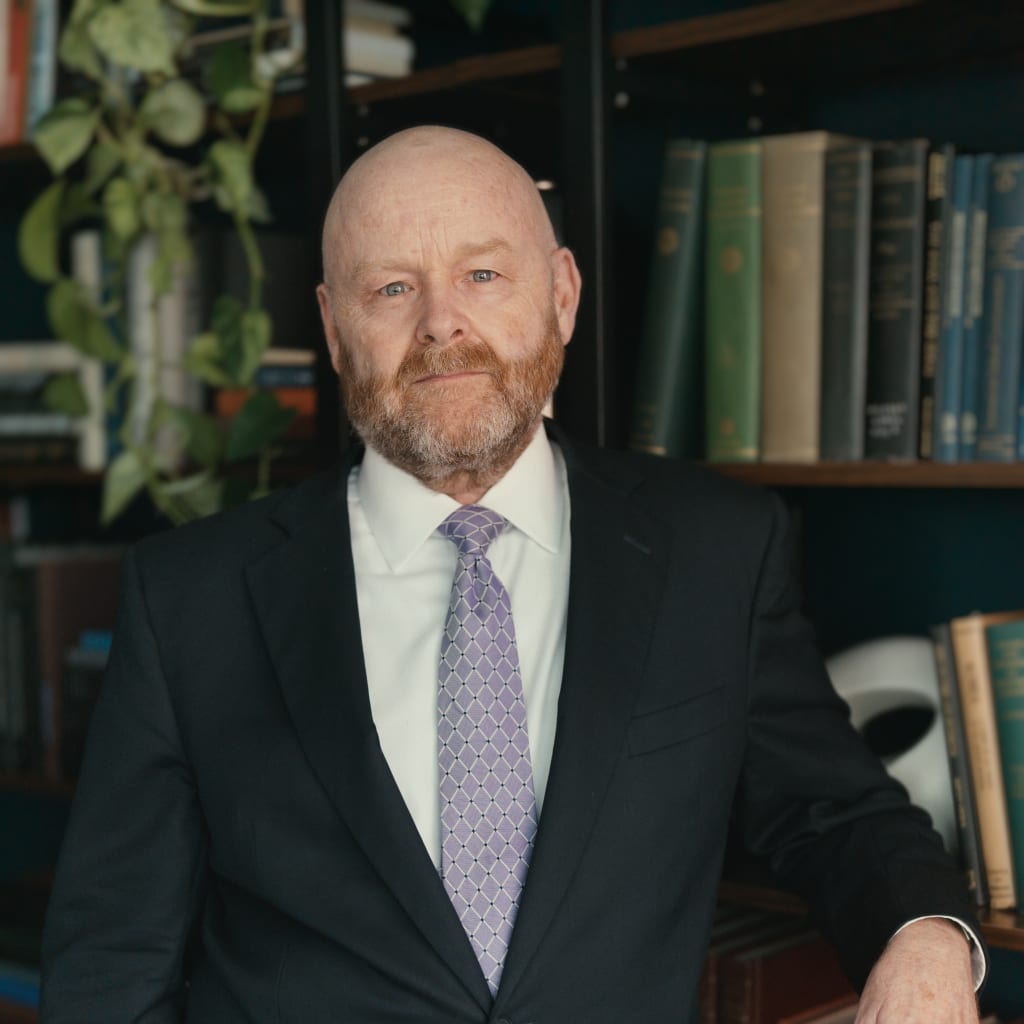 James M. LindsayCFR ExpertMary and David Boies Distinguished Senior Fellow in U.S. Foreign Policy
Guest
 Stephen SestanovichCFR ExpertGeorge F. Kennan Senior Fellow for Russian and Eurasian Studies
TRANSCRIPT
LINDSAY:
Does CIA Director John Ratcliffe’s surprise visit to Moscow last week signal new dangers ahead for the United States? The last time a CIA director traveled unannounced to Russia was in November 2021. Bill Burns flew to Moscow to warn the Kremlin that the United States knew of its plan to attack Ukraine.
Burns’ effort failed. Russia invaded Ukraine three months later. The memory of Burns’ trip explains why the news that Ratcliffe flew 5,000 miles to spend just eight hours in Moscow triggered anxiety on both sides of the Atlantic.
Tensions between the United States and Russia have been rising in recent months. The United States is sharing critical intelligence that is enabling Ukraine to hit targets deep inside Russia. Russia is in turn sharing intelligence and technology that has allowed Iran to hit U.S. military forces in the Persian Gulf. Tensions between Russia and Europe are running even higher. Moscow reacted to the United Kingdom’s decision last month to provide Kyiv with cruise missile technology by threatening Russian attacks on British targets. Russia is already suspected of sabotaging weapons factories in Bulgaria, Estonia, and the Netherlands.
And Germany has accused Russia of attempting to attack the Leipzig-Halle airport last month with three armed drones. These events are fueling speculation that Putin may soon test NATO’s cohesion in its Article 5 pledge because he sees the West as using Ukraine to wage a proxy war against Russia. Ratcliffe’s decision to stop in Latvia, which shares a border with Russia, on his way to Moscow added to concerns that the purpose of his trip was to warn the Kremlin against challenging U.S. and European resolve. Does Ratcliffe’s trip foreshadow intensified conflict in Ukraine or a clash between Russia and NATO? Could it signal something quite different, like a new diplomatic initiative to end the war in Ukraine? And if the visit was semi-routine, as President Trump has said, why did he keep it secret from many senior White House officials?
To better understand the significance of Ratcliffe’s trip, I sat down with my Council on Foreign Relations colleague, Steve Sestanovich. He is the author of the terrific book, Maximalist, America in the World from Truman to Obama. And he served for four years as U.S. ambassador-at-large for the former Soviet Union. Steve, thank you for coming back on the President’s Inbox.
SESTANOVICH:
Pleasure.
LINDSAY:
As you know, Steve, CIA Director John Ratcliffe made an unannounced trip to Moscow last week. There has been a lot of speculation about why he was there. Before we get into that, what can you tell me about what we know about Ratcliffe’s visit?
SESTANOVICH:
Well, no is a very loaded term here. Fair. And I want to answer that question, but I think it’s also kind of good to just start with something of the drama of the visit and the way it became known.
You know, bloggers on Russian telegram channels and open-source Intel outfits suddenly started reporting that a C-17 military aircraft had left Latvia, crossed the border into Russia, and was heading for Moscow. It makes you think that if Henry Kissinger tried to do his secret trip to Beijing from Pakistan today, social media would have been all over him right away.
LINDSAY:
Things were very different in 1971, Steve.
SESTANOVICH:
There were fewer social media opportunities to blow the cover of an otherwise secret trip, that’s for sure.
LINDSAY:
Well, that raises a question, Steve. Do you really think the Trump administration thought this trip was going to be secret? I mean, we live in a world in which people track pizza deliveries to the Pentagon on a daily basis as a way of determining whether or not a crisis is brewing somewhere up in the world.
That couldn’t have been lost on senior administration officials.
SESTANOVICH:
For sure. I think, though, that if they’d wanted it to be secret, they could have done a lot more to keep it that way for a while. Coming across the Latvian border in a C-17 is just a way of advertising what you’re doing.
LINDSAY:
So do you think that was deliberate? Oh, sure.
SESTANOVICH:
Yeah. I mean, if the CIA director who has, shall we say, access to smaller, less conspicuous planes had wanted to get to Moscow without activating all of these Russian military bloggers, he could have done so. He didn’t.
But we can get to the way in which publicity was part of this. You asked, what do we know about what the purpose was and what he said? And there’s not a single answer to that because many different claims have been made by different backgrounding Trump administration officials, former officials, Ukrainian officials perhaps, some Russians as well.
One line that came out immediately from American sources was he was warning about the risks of a Russian escalation, possibly attack on a NATO ally. A second line that emerged rather soon after that was that he was sharing the American intelligence community’s assessment of Russia’s difficulties in the war, the military difficulties it faced, the economic challenges resulting from the war. A third was that he was exploring Russian support against Iran.
A fourth, this came from the president himself, was that it was a nothing burger. He called it semi-routine. Semi-routine, yeah.
And the Russians, to be fair to the president here, sort of echoed this. The head of the Russian foreign intelligence service said this is just restoring contacts between intelligence agency, normal channels and so forth. The most recent revelation has come from President Zelensky and others who seem to have told Axios earlier in the week that Ratcliffe proposed a three-way Trump-Putin-Zelensky summit.
It does seem as though there is a sort of revival of contacts between the Russians and the Americans on the question of ending the war. Zelensky has given a public statement, one of his evening addresses to the Ukrainian people, saying that he’d just spoken to Witkoff and Kushner, the president’s personal envoys. He referred to them as Steve and Jared and says that they are proposing an early consultation with the Russians and a trip to Ukraine, which they’ve, of course, never taken.
And he said as well that there’s a need to consider steps to take to encourage Russia to end the war. No specifics there. He’s also said, because one of the questions that this sort of contact between Russia and the United States always raises is whether the Ukrainians are being betrayed, he said that there’s a convergence between U.S. and Ukrainian assessments of the state of the war and that there is a realism on the part of the United States about what it would take to end it.
LINDSAY:
Steve, before we get into your assessment of which of these explanations for the visit sounds truest, just a couple of more housekeeping bits about the trip. Do we know who it was that Ratcliffe met with? And did he meet with Putin?
SESTANOVICH:
He for sure did not meet with Putin. He met with two intelligence officials, the head of the Federal Security Service, Bortnikov. He’s a KGB lifer.
And with Sergei Naryshkin, who is the head of the Foreign Intelligence Service, somebody who went to the KGB higher school just out of high school. Bortnikov has been the head of the FSB since 2008. Naryshkin has been the head of the Foreign Intelligence Service since 2016.
Now, you might ask, well, why didn’t they talk to the foreign minister or perhaps Yuri Ushakov, Putin’s essentially national security advisor?
LINDSAY:
Well, I want to know why you laughed at my suggestion that he might have met with Putin.
SESTANOVICH:
Because this would be way above his pay grade, although let’s remember that when Witkoff and Kushner have gone to Moscow, they did meet with Putin. And Putin sat them down at his fabulous big white table in his conference room and treated them like peers. The Ratcliffe meeting was handled in a very different way, just a sort of bureaucratic counterparts conversation.
LINDSAY:
And he wasn’t on the ground for that long, I think.
SESTANOVICH:
He was there for, I think, five, six, seven, eight hours. Much of that coping with Moscow traffic.
LINDSAY:
I was going to say, it can take time to get from the airport downtown.
SESTANOVICH:
And much of it consumed in translation as well. You know, Ratcliffe has a kind of reputation, you’ll read this in all the accounts of the trip, as a Russia hawk. And it may be that Putin thought, you know, if he’s coming to deliver some kind of stern message, I don’t want to hear it.
LINDSAY:
Okay, so how unusual, Steve, is it for a CIA director to get on a plane, travel 5,000 miles and turn around and immediately come home? Is this something that CIA directors normally do in the course of business, especially when they go into a rival capital or capital of a country the United States has some significant differences with?
SESTANOVICH:
It’s a good question. The famous comparison that is always being made here is to Bill Burns’ trip to Moscow a few months before the war started, in which he wanted to warn Putin that the United States knew exactly what he was up to, that he had a very good intelligence read on the preparations and planning. He didn’t speak to Putin, by the way, personally, directly.
Putin talked to him on the phone.
LINDSAY:
This is Burns, Bill Burns.
SESTANOVICH:
I would note a couple of other cases, though, that are, you know, it’s worth having in mind. George Tenet was recruited by the Clinton administration to be the guy handling preparations for a kind of two-state diplomacy in the Middle East, and was a kind of point man with both the Israelis and the Palestinians. William Casey, who was Reagan’s head of the CIA, loved going around on his plane, pretty much incognito.
The way in which CIA directors can typically move around quietly and unobtrusively and not with this kind of fanfare is part of the kick of the job for the people who have it. So it’s not so unusual. What’s a little unusual in this case is the extraordinary level of attention given to it, and I think intentionally given to it by the administration.
LINDSAY:
What do you mean intentionally by the administration? Because I understand for the public or certainly for foreign policy professionals, precisely because everyone has the Bill Burns visit in mind, and they’re wondering if Ratcliffe is going or has gone to Moscow to deliver a stern message about some Russian activity that the U.S. intelligence agencies has uncovered.
SESTANOVICH:
I think one of the reasons that you have a public meeting of this sort, public visit, is to deliver the message more broadly to the elite and not just to your intelligence counterparts. And Burns was doing that, by the way, in November 2021.
LINDSAY:
And by elite you mean Russian elite, Steve.
SESTANOVICH:
Russian elite, but in this case I believe also European elites. If one of the messages was the United States is not letting the Russians threaten NATO in a way that seems sort of limp, you like the idea of having your CIA director fly in on a big military plane and get the message that Putin was told to knock it off. I believe there are other potential audiences for it, though, that are worth having in mind, and in particular the U.S. Congress. The Senate and House have been deliberating on a bill to significantly increase sanctions on Russia. The administration has not been wild about this idea, but they’ve encouraged it partly because President Trump has wanted to kind of keep Senator Lindsey Graham, one of the big backers of the bill, on board, partly because there’s a lot of other support in the Congress for pressure on Russia.
LINDSAY:
I think something like 86 senators voted for it.
SESTANOVICH:
Yeah. I mean, it has overwhelming support and is past the Senate and will be taken up by the House. The interest of the administration in conveying that it’s tough on Russia is part of showing either that the bill is unnecessary or that the bill, if passed, grants authority to the president to impose tariffs on lots of other countries that do business with Russia, but that he doesn’t have to use because he’s being so tough or because he’s activated a diplomatic process that he doesn’t want to compromise with a lot of tough sort of new friction between Russia and the United States.
I think the administration has been trying to dodge this bill just as it’s been trying to dodge the question of whether or not it stands behind NATO allies. And a Ratcliffe visit did something to communicate to both of those audiences that the administration has got this one, that there’s nothing to worry about, and that there will be at least a clear message continuing to be sent to the Russians and possibly a re-energizing of diplomacy. By the way, I think Ratcliffe is a better messenger for that kind of message than Witkoff and Kushner, who have a reputation in Washington and in Europe as perhaps amateurs at diplomacy, too enthused by their personal contacts with Putin sitting around that big table in the Kremlin and so forth.
Ratcliffe goes in a big military plane and with a reputation as somebody who doesn’t take any BS from the Russians.
LINDSAY:
So, Steve, when you talked about signals to European elites, does that include what I think happens to be one of the more overlooked aspects of this trip, which is that while Ratcliffe was in Latvia, he met with the Latvian prime minister. I don’t know how long the meeting was for, but the prime minister came out and went on record saying this was a very good signal from the administration.
SESTANOVICH:
For sure. And I believe Ratcliffe had at the table the chief of intelligence of Latvia, and there have been multiple meetings with Baltic officials and intelligence people who’ve been quite vocal recently about the dangers that they feel they face from Russia. This so-called hybrid warfare that you have seen across Europe with drones appearing mysteriously here and there, that’s not the only fear that the Baltic states have.
They worry about a true cross-border incursion. So the choice for Ratcliffe of Latvia as the jumping off point was, again, part of the message. He could have stopped in Brussels on his way back.
He could have stopped in any number of other European capitals, but maybe he’ll be following up in other ways that we don’t know about. Surely the attempt by the administration to convey that it is talking tough to the Russians is one that they’re going to try to make the most of, while also trying to tamp down pressures from other quarters to do more things. For example, as I mentioned, the Congress wants to impose more sanctions.
The Europeans have their own agenda of things that they want from the United States. They would like the United States to announce that they’re not continuing to draw down forces. So that will be under discussion between the administration and NATO allies and the Congress.
LINDSAY:
So as you look at this, Steve, and maybe I’m hearing you wrong, you see this more as an effort by the administration to basically put off political pressure to get tough with Russia rather than deliver a tough message to the Kremlin.
SESTANOVICH:
The administration has had some difficulty, shall we say, fine-tuning its message to the Russians. They have, for example, been very equivocal about what was agreed at the summit between Putin and Trump in Alaska. Was there an agreement, as the Russians say, that the United States has backed away from?
But it would be embarrassing to admit that because the agreement that the Russians claim was reached was not a good one and would certainly have been rejected by the Ukrainians. Trump has a Putin problem in conveying a mix of real firmness and receptivity to diplomacy. And I think the Ratcliffe visit captures some of that ambiguity.
It’s interesting that at the same time that administration people are saying, you know, he issued warnings about not testing Article 5, made clear we think the Russians are having trouble militarily. And of course, we’re continuing to help the Ukrainians. At the same time, administration people have leaked to the press that Ratcliffe came away with the impression that his counterpart, Bortnikov, could play a constructive role in reviving diplomacy.
Now, most people who follow the Russian intelligence services will laugh at that. But it shows you the attempt that they are making to try to combine tough talk with openness to agreements. You know, you could say the same thing about the proposal for a tripartite summit.
Zelensky obviously thinks that’s a nonstarter. And Putin has said, well, we only have meetings of that sort if we’ve already got an agreement beforehand that the Ukrainians are going to back down. Zelensky doesn’t say that.
He says, great, we love that idea because he’s counting on Putin to reject it. So the administration has had for a long time a problem kind of making the different elements of its relationship with and policy toward Russia kind of add up.
LINDSAY:
So, Steve, on the score, if that is what is happening right now, and this is really a messaging issue for the Trump administration, are we likely six months, 12 months, 18 months down the road going to be talking about how the Trump administration missed an opportunity, a critical opportunity in August of 2026 by not, in fact, reading the riot act to Moscow, whether it is about Russian aid to Iran or about Russian gray zone activities or potentially an actual Russian effort to test Article 5 of NATO?
SESTANOVICH:
I think the answer to that is no matter what time frame you pick, that kind of uncertainty is a real problem for for the administration. But I wouldn’t go so far out as you do in saying, are we going to think a year or 18 months from now? Zelensky has said in talking about the revival of a kind of diplomacy receiving Steve and Jared and so forth, he said we’re going to continue everything that we do.
We’re committed to keeping the war going and so forth. But he said September could change a lot rather rather interesting formulation, because that suggests something that he’s thinking about in the near term that either is a worry or an opportunity. Do you know what President Zelensky might be referring to, Steve?
I think he’s surely referring to the possibility of more American pressure and support. He wants the Congress to pass this bill. He wants the United States to provide better air defense, especially Patriot interceptors.
He wants the United States to help him get support from Starlink to be able to use that communications technology for Ukrainian drones over Russian territory. He wants new support of various kinds from Europe as well.
LINDSAY:
On that score, Steve, wouldn’t that really escalate things? I mean, because that would increase the ability of Ukrainians to target places inside Russia, which is why they want it. And I’ll just note that recently the British government said it was going to allow Ukraine to have access to technologies for building cruise missiles.
And that produced a blistering response by the Russian foreign ministry. Its press spokesperson threatened to hit targets in Britain. I mean, maybe that’s just saber-rattling empty threats, but that could take us into a very different place than we are today.
SESTANOVICH:
Not necessarily saber-rattling, Jim, because one of the other things that Zelensky could have in mind when he says September could change a lot is increased Russian pressure. Attacks outside Ukraine in greater Europe, but also escalation inside Ukraine in addition to, you know, the pretty robust attacks that are being conducted every couple of days against major Ukrainian cities. In addition to that, the Russians have announced, you know, we’re making pressure on the front line in Donbass.
So things that could change in the next month or six months significantly increased American and European support for Ukraine, significantly increased Russian activity. And, of course, greater pressure and initiatives on Ukraine’s part as well. You know, we have seen a real escalation on the part of Ukrainian long-range strikes, but those are, you know, on the upswing and can continue.
And so the war is often described as a stalemate. And yet all the parties have choices to make about the kind of effort that they’re going to make greater, less great in conducting this war. But I’d add one other thing.
When Zelensky says September could change a lot, he could also be talking about a kind of de-escalation. And he may, who knows, think that the Americans are going to be able to discover some greater Russian interest in, this would surprise me, but some greater Russian interest in de-escalation. I’d note that the Russian finance minister has made a surprise appearance at the G20 summit of finance ministers.
And this has triggered a lot of outrage. But, you know, if I were Scott Bessent, one of the things I would want to do is have John Ratcliffe send me his talking points about all of the trouble that the Russian economy is in. And tell Siluanov, you know, we have the opportunity to do a lot of these, to make a lot of your problems worse.
And you should take this message home to Putin. I’m not sure that’s what Bessent is going to do. But, you know, it may be that the administration and level below the president, you know, is trying to figure out some way to combine greater pressure and, you know, greater diplomatic movement.
LINDSAY:
Let me ask you a closing question on just that point, Steve, which is there’s a lot of talk about how you should up the pressure on Russia to get Russia to back off in Ukraine. But could that be counterproductive? And I ask that against the story that seems to be told over and over again about Putin when he was a young man and the cornered rat and how a rat behaves when it’s cornered.
And talk about, you know, escalating to de-escalating. Could threats boomerang by bringing about an escalation nobody wants?
SESTANOVICH:
For sure. You don’t know how Putin is going to react. And there’s a surge of op-ed pieces about whether the Russians would really escalate to use nuclear weapons, whether Russian domestic discontent is so great that Putin has to pay attention to it, whether the parliamentary elections are going to reveal a surge of, you know, antipathy toward the war.
And Putin says of all of to all such questions, including when people invoke either directly or indirectly your famous rat story, he says, you know, nature is all about struggle. And if you’re not tough, you get eaten. That seems to be his his view.
On the other hand, he’s pressed that line for a number of years with rather poor results, all in all, and the discrediting effect that it has had on his place in Russian history, his place in contemporary Russian politics, his standing in the world. Certainly his ability to be received, you know, in in most European capitals. You know, all of this has done terrible damage to to him.
Putin is somebody who is certainly capable of reacting impulsively. We’ve sort of long ago put aside the the Putin is the kind of jujitsu expert, you know, somebody who could carefully undo you. Now we think of Putin is just somebody who’s only capable of grotesque violence and he remains capable of that.
On the other hand, it hasn’t paid off all that well for him, which is why you may have greater receptivity within his elite. People like the finance minister are generally thought to be horrified by the war and think it’s wrecking the Russian economy. So from that point of view, an increase in pressure could be what, you know, brings the horse to water and make some drink.
We can’t predict this. I mean, I think it is important, however, you know, to realize that the Russian the way the Russian decision making happens, you know, it’s like a lot of political decision making. If you want to keep fighting the war, you’ve got to show people that there’s some prospect of doing better.
And if that looks completely implausible, then I think the Russians are more likely to cut a deal. But when it gets to Putin mind reading, I get I get uncomfortable because Putin’s is a Putin’s mind is a pretty dark place to go. What we can try to imagine is what we know about Russian decision making, what we know about the way in which different institutions in that system interact with each other and try to make the choice seem as clear cut as we possibly can.
And that argues, I think, for more support for Ukraine. It doesn’t have to argue for completely, loudly, belligerently taking the Russians on at every turn. Sometimes you can do this quietly and more effectively.
Trump has one advantage in that he’s seen by the Russians as somebody who’s not incorrigibly hostile to them. But to make that work, to get us a kind of solution that he will be applauded for, he needs to combine it with a kind of toughness that he hasn’t shown so far.
LINDSAY:
On that note, I’ll close up the president’s inbox for this week. My guest has been Steve Sestanovich, Senior Fellow for Russian and Eurasian Studies here at the Council on Foreign Relations. Steve, thanks as always for joining me.
SESTANOVICH:
Thanks, Jim.
LINDSAY:
Today’s episode was produced by Justin Schuster with director of podcasting Gabrielle Sierra. Bryan Mendives was our recording engineer.
We Discuss:
- What is actually known about CIA Director John Ratcliffe’s unannounced trip to Moscow, and how the visit became public.
- Whether Ratcliffe’s conspicuous arrival by military aircraft across the Latvian border suggests the publicity was deliberate rather than a failed attempt at secrecy.
- Competing explanations for the visit’s purpose, from warning Russia against escalation to sending a message on Iran.
- How unusual it is for a CIA director to make such a trip, and how it compares to Bill Burns’s 2021 visit to Moscow.
- How the intended audiences for the visit may include not just the Kremlin but also Russian and European elites, as well as the U.S. Congress as it weighs a new Russia sanctions bill.
- Whether the trip is part of an effort to relieve domestic political pressure on Donald Trump, who faces demands to get tough on Russia.
- How the Trump administration has struggled to reconcile firmness toward Russia with openness to diplomacy, including ambiguity surrounding the Alaska summit and a proposed tripartite summit.
Mentioned on the Episode:
Vladimir Putin, with Nataliya Gevorkyan, Natalya Timakova, and Andrei Kolesnikov, First Person: An Astonishingly Frank Self-Portrait by Russia’s President Vladimir Putin, PublicAffairs
“Sanctioning Russia Act of 2025 (S.1241),” U.S. Congress
This work represents the views solely of the host(s) and guest(s). The Council on Foreign Relations is an independent, nonpartisan membership organization, think tank, and publisher, and takes no institutional positions on matters of policy.
Associate Producer, Video and Audio
- Associate Producer, Video and Audio
Editorial Director and Producer
- Director, Podcasting
More Episodes
 33:42Podcast
 36:05Podcast
 41:07Podcast
 39:26Podcast
 35:04Podcast
 34:45Podcast