Media Briefing: Unpacking the Trump-Xi Summit
Event date
Speakers
 Rush DoshiCFR ExpertC.V. Starr Senior Fellow for Asia Studies and Director of the China Strategy Initiative, Council on Foreign Relations
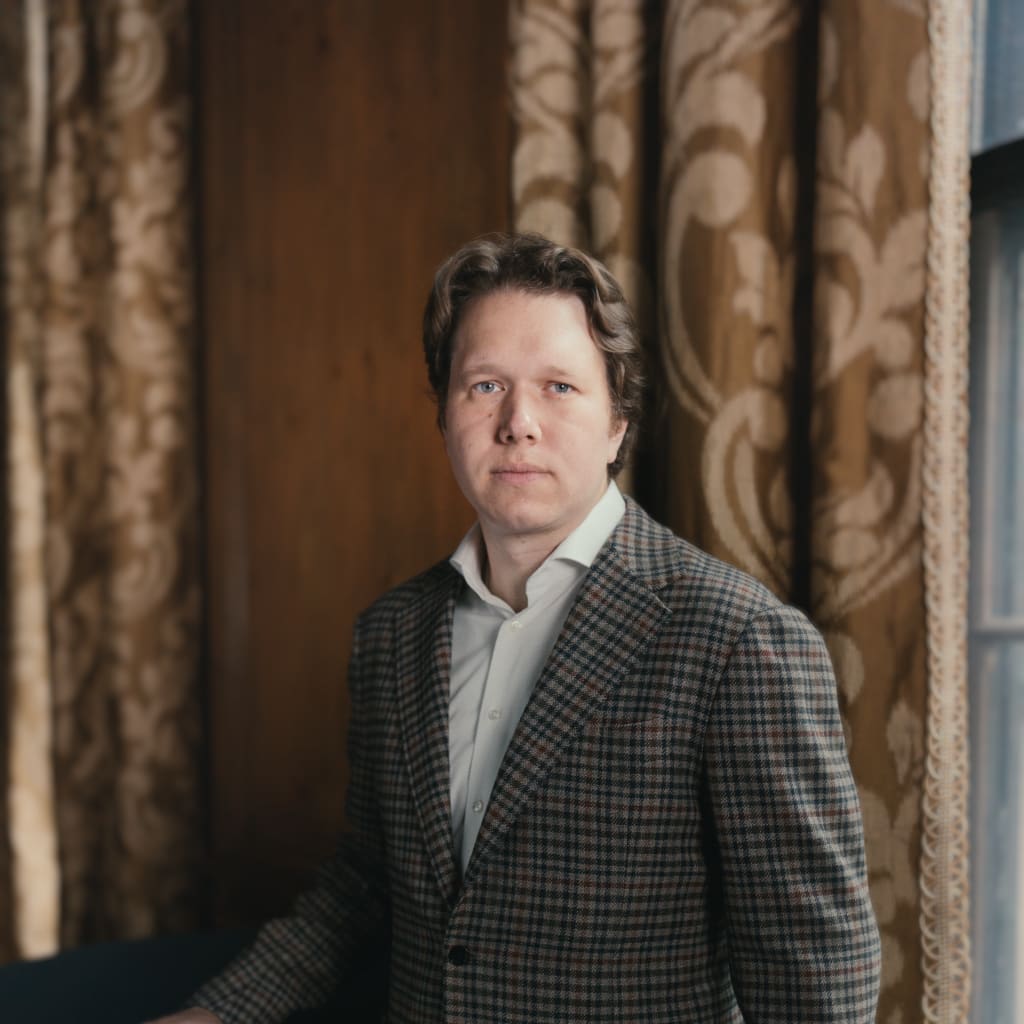 David SacksCFR ExpertFellow for Asia Studies, Council on Foreign Relations
 Zongyuan Zoe LiuCFR ExpertMaurice R. Greenberg Senior Fellow for China Studies, Council on Foreign Relations; CFR Term Member
 Kat DuffyCFR ExpertSenior Fellow for Digital and Cyberspace Policy and Director of LEAD AI, Council on Foreign Relations
 Chris McGuireCFR ExpertSenior Fellow for China and Emerging Technologies, Council on Foreign Relations
Presider
 Ishaan TharoorCFR ExpertEdward R. Murrow Press Fellow, Council on Foreign Relations
CFR experts discuss the meeting between U.S. President Donald Trump and Chinese President Xi Jinping.
As the summit unfolds, read the latest CFR expert analysis:
“Xi Jinping Visits the White House” by Jim Lindsay
“Ten Issues to Watch at the Trump-Xi Summit in Washington” by Rush Doshi
CHANG: Good morning, everyone. As people join our Zoom, I’ll do a brief introduction. My name is Ben Chang. I am the vice president for global communications here at the Council on Foreign Relations. Welcome to the CFR briefing on the summit between President Trump and President Xi.
The contents of this discussion and the question-and-answer period will be on the record, and a recording of this session will be posted online at the conclusion of the briefing.
This briefing is a part of the Council’s ongoing mission to inform U.S. engagement in the world, work that also includes the analysis and resources posted across our channels, including on ForeignAffairs.com and CFR.org. Thanks to our colleagues and events across the Council, and in particular to my colleague Lilly Behbehani for helping organize this. Thanks very much to our array of expert speakers.
On that note, let me now hand off to our Edward R. Murrow press fellow, Ishaan Tharoor.
THAROOR: Thank you, Ben. And good morning, or good morning to all. It’s a pleasure to be presiding over what I hope will be a very informative and helpful conversation. Selfishly, for myself as well, I’m the Edward Murrow fellow at CFR but also a columnist at the New Yorker, and I’m very eager to talk through what we’ve seen over the last couple of days with this expert panel here. I’m sure all of you joining our call will have lots of questions, so please get them in the chat.
To quickly introduce our panel, we have of course Rush Doshi, senior fellow for Asia studies and the director of the China Strategy Initiative. We have Kat Duffy, senior fellow for digital and cyberspace policy; and David Sacks, fellow at CFR; Zoe Liu, the Maurice Greenberg senior fellow for China studies; and Chris McGuire, senior fellow for China and emerging technologies.
Folks, we have a lot to talk through and a lot of you here, so I want to get through it and spare everyone any preamble from me. I’d like to go to begin this discussion with each of you, just can you offer us your topline thoughts of what you’ve seen over the last couple of days with President Xi here in Washington, and then perhaps offer one thing that has surprised you about the last couple of days? Rush, can I start with you?
DOSHI: Sure. Thank you to the CFR comms team for organizing. Thanks to all of you for joining. And thank you, Ishaan, for agreeing to moderate this discussion. We hope it’s useful for everybody.
Look, this was the first state visit in eleven years. It was the first time that Xi has visited D.C. in eleven years. And he’s actually the first Chinese president to have been a recipient of two state visits. So this was a summit that had a lot of, you know, history and symbolism to it, but unfortunately a lot less substance. And I think what surprised me most was that it sort of fell below what were already somewhat low expectations. And let me give you some quick examples.
From what we’re hearing, the working meter was—the working meeting was probably shorter than expected. The truce on the trade war was actually also shorter than expected. The purchase agreements are fewer than expected. The AI dialog is thinner than expected. And the pageantry was more to Xi’s benefit than expected. To be specific, President Trump met President Xi at the tarmac, but Xi has never done that for President Trump before.
I think a key point for me, maybe a second surprise, is that the summit ended before the economic deliverables were fully negotiated, which is highly unusual. Usually, when a summit is happening, the negotiations conclude before so you can announce the outcome at the summit. But as we heard this morning from Jamieson Greer on CNBC, it looks like there will be further negotiations over the purchase commitments into Monday. That’s a bit like turning in your test a week after it was due.
So there’s a lot more to say about this on each of those categories, but I think that would be my overall reflection.
And I guess I’ll end with this, which was each side came into this summit with slightly different objectives. I think for President Xi the objective was to maintain what they see as a more stable U.S.-China relationship after their deployment of the rare earths tool against the United States; to keep that stability going throughout the rest of President Trump’s term, to lock it in; and then to use the time that they bought with that stability better than the United States did, perhaps to achieve some kind of escape velocity relative to the U.S. when it comes to questions of leverage. And for the U.S. side, I’m not entirely sure what the purpose of the summit was other than to have a meeting with President Xi and have all the pageantry associated with it, because when it comes to the objectives and the goals, again, the results are a bit thinner than we would have ordinarily expected.
Let me—let me stop there so we can hear from others as well. Thank you, Ishaan.
THAROOR: Kat, can I turn to you?
DUFFY: Sure.
You know, I agree a lot with Rush in that I was—I was hoping I might be surprised in some pleasant ways, and I wasn’t. And that that wasn’t surprising. I wasn’t expecting guests at the state dinner to be invited into a construction zone. So, I mean, I guess from a surprise factor there’s that.
I was—I was, I guess, a little bit surprised to see in his speech to the U.N. General Assembly both President Trump and then-OSTP Director Michael Kratsios double down on the language that they did in AI, especially after Secretary Bessent had come out with a more open and diplomatic message concerning AI safety. And, you know, this is a week where we also had twenty-two governments, including nine of the signatories to Pax Silica, come together in signing a call, essentially, for greater collaboration on questions of AI safety. And to see the U.S. be truly the only nation in the mix pushing back on the idea that collaboration, broader collaboration, would be required here or helpful, I think is not constructive and, frankly, positions China much more effectively than it positions the U.S.
THAROOR: Oh, that’s—thanks for putting that on the table. And I think we’ll be circling back to AI quite a lot in this chat.
Zoe, can I turn to you?
LIU: Yeah. Thank you, Ishaan. Also, many thanks to those people who have joined us right now. I just say, Ishaan, I agree with very much what Rush and the Kat mentioned. But I’d say I’m honestly not surprised. Not because the expectation is low, but because, you know, the purpose of these summits these days is really not to resolve the problems, because there are structural factors in the bilateral relationship that just cannot be resolved by head of state level. But what I think the summit actually have achieved, perhaps in more than symbolic way, is that it keeps negotiation open so that working-level technocrats can continue to iron out some of the details. And perhaps very much helpful for the midterm on the Republican side is that the trade truce that was supposed to end on, if I remember it correctly, on November 10, now that can be extended to January. I think that is a huge win for—(laughs)— from domestic politics perspective, but not necessarily for U.S.-China relationship point of view.
And I think Secretary Scott Bessent, he was honest laying out that, yes, you know, this is the trade truce, but China has been falling behind in terms of making commitment deliverables, in terms of the $15 billion of purchase of agricultural product, right? So from that perspective, I say, not really surprised. But, you know, there are some practical gains. In terms of, I’d say, wasted opportunities, I’d say there should be more first lady’s coverage. And I think, you know, the fact that Madam Peng seemingly—just in the background of footage—seems that she was able to communicate in English with no interpreter with First Lady Melania. I think that should be more broadcasted. It’s sort of, like, a soft power for America—and for China, probably.
But then, on top of that, I think if China were to take this seriously, I understand that President Xi Jinping was on a long winding tour around the world, almost, and culminated in this kind of a grand reception in the White House. But at least this is UNGA week. Even if he doesn’t want to do something, he was in New York, at least Madam Peng could have done something. But, you know, that’s a wasted opportunity. Back to you, Ishaan.
THAROOR: That’s really interesting. And, of course, it didn’t really help that some of the press corps was not allowed inside the White House, and then we had boycotts thereafter. Which is, you know, a very interesting backdrop to this meeting. And, yes, I think a fascinating point that, you know, we should see this as a continuum of President Xi going to the SEO meeting, going to the BRICS, and then ending up in the White House. There’s a thread there to pull.
David, can I turn to you?
SACKS: Sure. Thanks to everybody for joining us this morning. I mean, I’ll just add a couple of brief points on this. I think, first of all, there was a clear winner from the summit, which is the Atlanta Zoo. It received two new pandas. So, panda diplomacy is alive and well. I think that is the main deliverable that was achieved at the summit.
On a more serious note, I think that, you know, Rush mentioned many issues, and so did Zoe. One additional issue that seems to have been left unresolved is the detention of an American citizen in China, Min Zin, as well as the continued jailing of Jimmy Lai. I think there was actually a lot of movement and a lot of engagement from Jimmy Lai’s family with Congress ahead of the summit. I think there were some hopes that Xi would move on this and offer that and others as a goodwill gesture. And we didn’t see any progress on that as well. And so we shouldn’t lose sight of that element of the relationship.
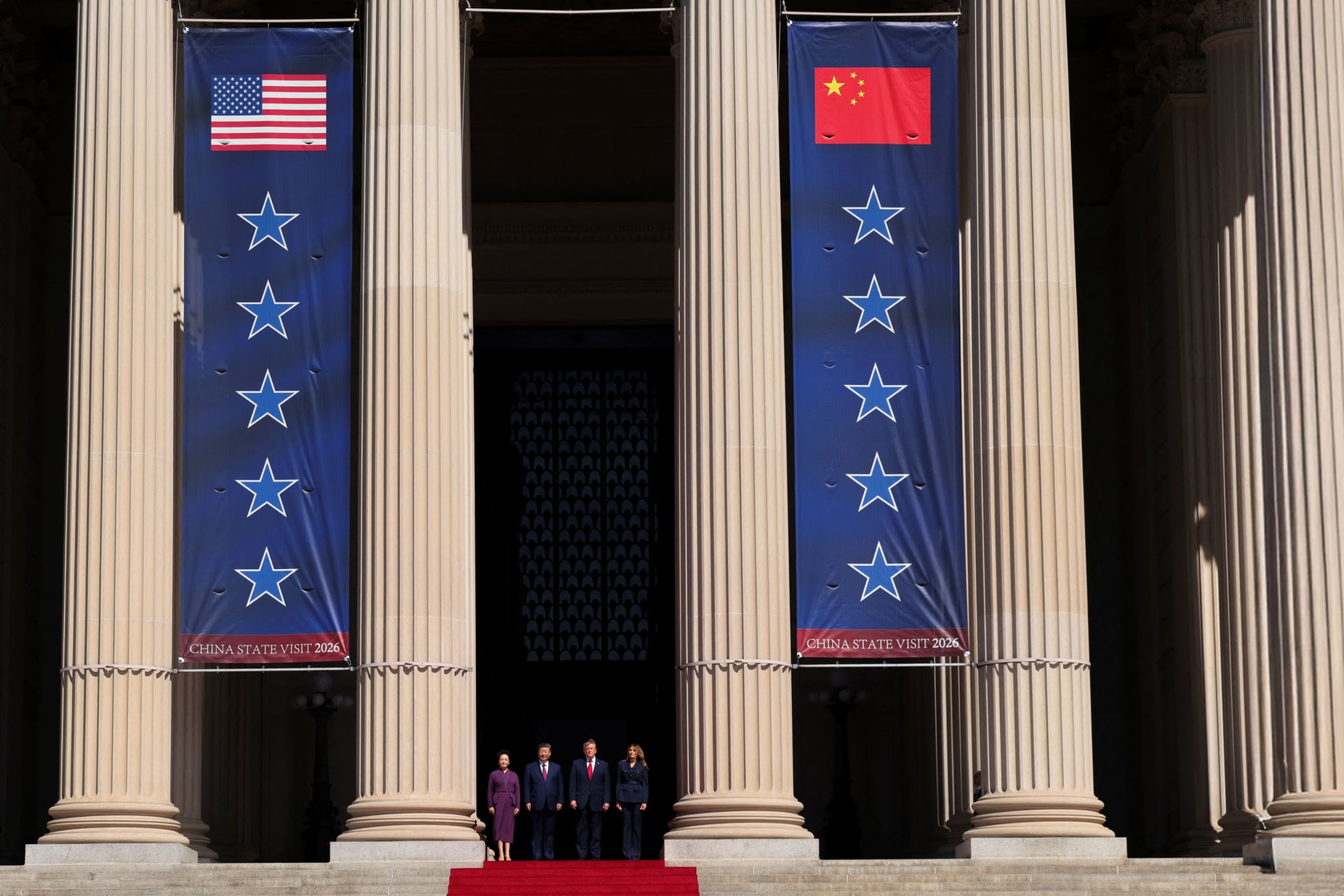
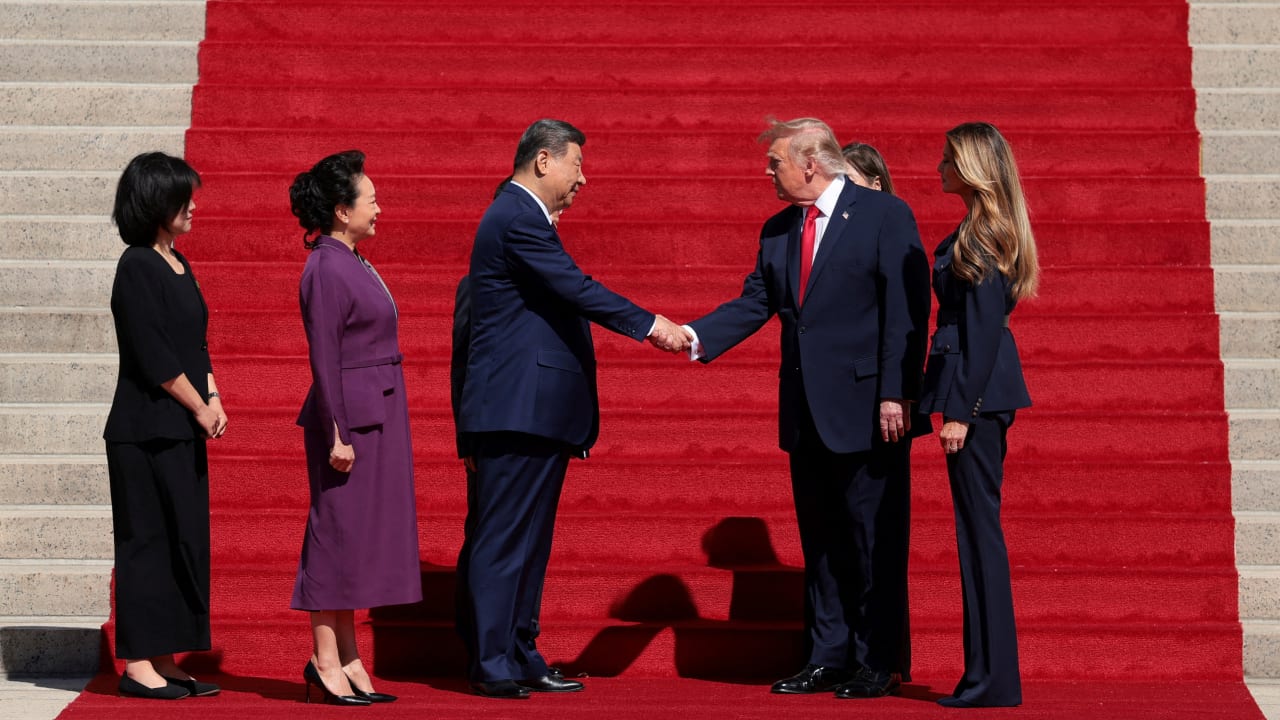
I’ll go deeper on the Taiwan element as we drill down, but I would just leave my opening statement by just noting that, you know, yes, we all expected a lot of pomp, a lot of symbolism, a lot of flattery of Xi Jinping and, and as Rush said, not much substance. But I think even the flattery was above my expectations going in. Not only meeting Xi Jinping at Andrews Air Force Base, but also the tour of the colonnade, stopping at all the portraits, the tour of the West Wing, and admiring their photo together.
And that matters, because actually, as Rush noted, there was not much time for a substantive discussion between the two leaders. So even though Xi Jinping was in Washington for a day and a half, if you actually look at the time that the two of them spent together in real serious conversations, the one-on-one meeting in the Oval Office as well as the larger but still small meeting between their teams, those are actually quite short. And so I think it should come as no surprise that the issues that we’ve all put on the table remain unresolved.
THAROOR: That’s great. I’m glad you got that on the table in terms of the amount of time they actually had together, substantively.
Chris, can I turn to you?
MCGUIRE: Sure. Just a few things on top. I’ll keep it brief. I think on AI, I’m actually less surprised. I think that, look, it’s just very clear that neither side is super interested in kind of taking, you know, especially big collaborative steps, but really kind of any steps on AI safety right now. I agree with Kat that I’m surprised that the administration isn’t doing anything on this front, but also just their intent is clear. And the president’s been clear. His approach is full steam ahead. No regulations. We have to beat China. And on the China side, I think they see themselves—I think from Xi’s statement is true—they see—it’s apparent that they see themselves as kind of a co-leader with the United States. And as a result, they don’t think they can slow down because that would brand them as a not co-leader.
So I kind of see though actually what was announced, given those incentives, which is a creation of a dialogue to discuss risks, then a kind of rudimentary hotline agreement between Secretary Bessent and He Lifeng, that is—like, that actually is in the realm of, I think, what is the most that the system and relationship can bear right now. So I think it’s logical. Look, the reality is the United States is ahead in AI, but China thinks that it can catch up. And that’s actually a very, very difficult structural position for negotiations. There’s actually no historical precedent for an arms control negotiation in that circumstance between those two states.
Now, what I’m surprised about is that the United States is generally not doing more to be proactive in this regulatory space, separate from the bilateral China discussions. I think that there’s plenty of space to do more to expand their lead over China, first of all, and then that then gives breathing space to do more from the—on the domestic regulatory side, as Kat was alluding to. I think that this is, you know, both good policy, given the emergence of—emerging risks that we’re seeing, and it’s also increasingly good politics. You know, we’re seeing a strong desire to actually, you know, do more in this space, and real concern in the United States about how this technology is going to develop.
So if the administration’s goal is to keep its lead over China but also ensure AI safety, there are policy levers that they can pull to do that. That ultimately also kind of can resolve this structural dynamic over the longer term of, you know, creating a wider lead over China that then makes negotiations more likely. So that’s a path that I think they should pursue and go down. But from where we are right now, I think that what we saw in the last couple days is reasonably the most that we could expect.
I’ll just say briefly on other technology issues, I’m broadly surprised that there was no agreement on other things. You know, there was—there was a bunch of rumors about deals on Chinese investments in U.S. tech sectors, on cars and batteries. But we didn’t see any of that come to fruition. I think that was mostly kind of rumor. I don’t think the administration was, frankly, ever really interested in that, because the structural conditions still don’t permit for that, which is why those restrictions exist. And, as others have noted, we haven’t seen any effort to change those structural conditions. I think the U.S. side is still frustrated with Chinese compliance in the Busan deal, which makes it very hard to then do anything else on top of that.
It’s interesting in this summit there was no noise about loosening U.S. export controls. I think that was always—you know, every single other meeting that the president had with Xi, this was really top of mind. In Busan it was top of mind. In Beijing it was top of mind. This time, not at all. Which I think kind of shows that really the two sides are very, kind of, focused on this compliance with the existing agreement, and this idea of kind of prospects on way forward, on kind of loosening controls or restrictions, either on imports or exports from both sides. It doesn’t really seem like it’s in the cards right now.
THAROOR: Great.
We’re going to circle back on this, but, Rush, if I can turn to you. You know, I don’t want to make you into a pop psychologist, but given what we saw in terms of Trump’s behavior towards Xi—yes, the scene in the airport, the slightly cringeworthy tour through the White House—what do you think President Trump has gotten out of this? And I think for a bit of context, could you just situate this moment in the past decade of, you know, Trump’s very—China’s been at the heart of his kind of foreign policy agenda for a decade. Where are we now? And what is this arc?
DOSHI: It’s a great point, and maybe two quick thoughts here.
The first one is that I think President Trump has never truly been sort of hawkish on China. Even in his first term, he was focused on flattering President Xi in their summits. Remember, President Trump has said to President Xi: I’m happy to lift export controls on Huawei. I’m happy to lift the export controls on ZTE. On Xinjiang he said, go ahead and build the camps. On Hong Kong publicly he said, I stand with President Xi, when asked if he stands with Hong Kong or with President Xi. And on trade, he was able to claim victory before even achieving it. He just said the trade agreement is great, when in reality the purchase commitments never went forward and none of the structural issues were ever resolved. So that pattern of behavior is sometimes missed because in the COVID moment President Trump was so vocally willing to condemn China. But if you look at the policy record, he was often at odds with his own staff. What’s changed in the second term is that Trump is freed in many ways from that staff. Nobody is holding him to a more tough line on China. And he’s willing to explore and ultimately implement a much more Trumpian China policy, which does indeed involve more flattery and perhaps less substance.
And so when we saw—and this brings me to the second point—President Xi land, you know, again, President Trump was willing to break decades of precedent and meet President Xi at the tarmac. Now, that might seem trivial to those of us on the line today, but in the grand sweep of diplomatic protocol those things matter enormously. And the last time we’ve ever met a foreign leader at the airport, you know, was—if you don’t include Pope Francis, I believe, was many decades ago. And so—it was in the ’60s. And so it’s quite consequential to do this, and certainly no American president has met President Xi, and President Xi has never met Trump at the airport. So why did President Trump do that?
And I think part of this gets to the fact that he’s not beholden to matters of precedent. He believes that being able to play against precedent, to break precedent, can actually send a more powerful signal. And so, by meeting President Xi, he probably thought he was sending a signal of warmth, which is what he wanted to convey, whereas in reality I think that the Chinese probably saw it as a signal of deference. And remember the image here: President Xi standing atop the stairs, looking out from the airplane, while President Trump is below, and uniformed personnel from both sides in dress uniform are laying out a red carpet before him. President Trump waits patiently. So that’s part of what I think this is about.
And let me end with this: The asymmetry in pageantry largely seems to me to mirror an asymmetry in the relationship itself, one that dates back to last year. Now, last year President Trump took tariffs on China to 145 percent, which was, I think, a reckless move. The result was that President Xi was backed into a corner. He had no choice but to reach for his most powerful coercive instrument, which was control over the rare earth minerals upon which the entire world depends and upon which 90 percent of production is centered on China. And when he reached for that tool, President Trump did back down immediately, cutting tariffs almost one hundred percentage points. President Xi did not expect, I think, to win so decisively that particular confrontation. What he took from that is that if he pushes Trump he can succeed. And I think President Xi made a gamble in that moment. He wasn’t playing the cards he was dealt; he was playing the player that he was up against. And that lesson has carried to this moment. I believe that President Xi believes he has temporarily tamed the United States, and he wants to extend that as far as he can. And President Trump, so far, has been willing to oblige.
A last point, if I might. Even though there is this leader-level pseudo-détente that exists, and even though there’s all these good feelings and nice pictures, we do see both sides kicking each other under the table. We see the U.S. side putting restrictions on imports of Chinese drones, and Chinese routers, and Chinese robotics, even though those are framed as country-agnostic actions. And we see the Chinese side continue to take steps on Taiwan, to throttle the supply of rare earths—it’s somewhere, you know, maybe a half to two-thirds what the U.S. side was expecting—and to take steps to almost criminalize any U.S. company from leaving China under State Council Directives 834 and 835. So, in that grand sweep, we have this leader-level element that stabilizes, we have continued kicking beneath the table, and a summit that I think doesn’t bridge the gap between the structural tensions and the tactical reality.
THAROOR: OK. That’s great framing. I think Julian Gewirtz referred to it as the K curve, right? You know, one—on one level you have these incredibly sort of cuddly scenes between Trump and Xi, but then you have, of course, the vast tectonic structural tensions on the other side.
Zoe, at the state dinner, what was conspicuous about this time compared to, say, a decade ago was the complete absence of major Chinese CEOs in the formal proceedings. I know some came on this trip, but not the same kind of level of contingent as the previous state visit. What does that tell us about the discussions that have happened? And were you surprised by that?
LIU: Ishaan, I think that’s a very, very shrewd observation. I’d just say, again, I’m not surprised. Part of the reason is because U.S.-China relationship, now a lot of the structural confrontations are not purely economic; a lot of these are at a strategic level. And because of the securitization of economic and financial issues, and the technology technological issues, CEO-level engagement, perhaps at this—at this stage, is not as meaningful or practical as head-of-state and senior-government-official-level engagement.
Now, putting that aside, I’m also—I’m not saying that, like, CEO-level engagement do not matter, but what matters should be the ability to compartmentalize economic issues and security issues. Unfortunately, we are not—we are not there at this stage. What the state dinner could potentially put together is at least the signaling effect—the idea that the high-level officials are being nice to each other, perhaps there are doors to open for conversations. But even that, I’m highly skeptical that Chinese CEOs, especially tech CEOs who actually matter for U.S.-China strategic and technological rival, I’m not sure that they are comfortable to be reliant on U.S. tech suppliers again. So the point is, given that we are in this very high-stake(s) AI-technological and more broadly speaking strategic rivalry, who is going to waste time to do this kind of actually not necessarily meaningless engagement?
But that also has the other effect, which is China at this stage is revamping its entire financial system to fund technological self-sufficiency. So the tech companies themselves know that they not only have new IPO route for—and with fast track; they also have perhaps new instrument and new lending facilities using the central bank’s balance sheet to support their technological self-sufficiency. The need to get American tech funding is not there either. So from those two point(s), you know you don’t necessarily want to be reliant on American technology and expertise. And then, on the other hand, the need to get American funding is not there.
So, again, I guess long story short, Ishaan, I’m not surprised that the tech CEOs from the Chinese side aren’t there. And then perhaps it’s also a good thing in the sense that, well, you know, both sides have their cards out. Let’s see what kind of constructive strategic stability that we can—we can iron out going forward. But the fact is, strategic stability perhaps also means that both sides’ best-case scenario is a carefully managed, stabilized confrontation in the long run.
Back to you, Ishaan.
THAROOR: Thank you. I mean, but there is an asymmetry there, too, because if you think about all the CEOs who went with Trump to Beijing earlier this year and who are desperate for the Chinese market in various ways, the similar need on the Chinese side is just not there or the similar expectation is simply not there.
Kat and Chris, could I just—let’s get to the AI piece of this. If I can ask you both, what would a realistic positive deliverable have looked like? We may not get one, but what would it have looked like coming out of this?
MCGUIRE: Happy to start. So, look, I think that a realistic deliverable, given the structural conditions that exist between the countries, is actually more or less exactly what we got. I think it is a dialogue with the U.S. and China to talk about risks, because it is important that the U.S. and China have a common understanding of the technology itself. And I think that’s not really there right now. Like, the U.S.—keep in mind, the U.S. is ahead, so we’re starting to see risks and emergence of kind of capabilities that the Chinese are not. So—and especially on the government level, I don’t think that’s fully translated up yet.
So I think getting to a common understanding of what are the ways that this can go wrong for both of us is the most important thing. And that’s something that I think can and should happen independent of any unilateral steps that either side takes. So having a discussion about that is good.
And then this, like, very rudimentary hotline agreement. I think is, like, kind of, the most basic confidence-building measure that you can—you could introduce. I mean, I think it’s difficult to create space for confidence-building measures because the lack of trust is so significant, but, like, this is a fine first step. I think that anyone who’s calling for the U.S. and China to reach some kind of mutual slowdown agreement is not only—you know, I think it’s not only not realistic because the president has been very clear that he doesn’t want to slow down, which you could debate whether that’s a good idea or not but regardless, like, that clearly was not in the cards on the U.S. side. But even if it was, I think the fact that you have—you have this very unstable dynamic right now between the U.S. and China, where the U.S. is ahead but it is not way ahead, China is behind, but it thinks it can win. And that is a dynamic that in the history of arms control has never produced a negotiated agreement.
The conditions that produce some kind of negotiated agreement in which one side caps capabilities are either when both sides are at parity or if one side is so far ahead that the other side agrees to kind of tap out and put constraints on its own capabilities to prevent the other side from running away. From, like, a realpolitik perspective, that is how you get to an agreement. So I think when you’re talking about how are the U.S. and China going to get to some kind of substantive AI agreement over the longer term—and when we say over the longer term, I mean, we think, like, oh, this will take decades, like the Cold War. This technology might be moving faster. Like, we might have to get there faster. But I think structurally, you’re either going to have to get to a point when the two sides are at parity, which is then a very different conversation from a strategic perspective in both the U.S. and China, or the one side gets a very big lead.
And until we see that, I don’t think that we’re going to get a lot more than the dialogue and hotline agreements. So I actually see that what they got was positive. But really what’s necessary and what we have to watch for is what happens after. What does the administration do to try to create the conditions for successful negotiated agreements down the road? Because there is a lot that they could do. They could impose export controls to expand the lead. They could impose unilateral safety measures to show the Chinese what responsible leadership means and what’s necessary, because I think the Chinese are also looking at us and saying, hey, what do you want us to do? Like, what is realistic here? And I think that there’s things that we could do on both sides that are then both mutually reinforcing and also kind of make an agreement more likely. But in the short version, what do we see—like, you know, what could we get now? I think it’s basically—it’s basically what we got.
THAROOR: Kat.
DUFFY: I mean, I agree. I would say, you know, many of us were just hoping, keep the door open. Keeping the door open is important. Continuing discussions in two months. You know, presumably and hopefully there will be working-level conversations and different ways of exchanging thoughts in that two-month period. But also two months in the age of AI is two years, two decades, depending. So who knows where we could be, frankly, in two months. I would also say, you know, I agree with Chris certainly on the fact that the U.S. is ahead, if the way that we are defining the competition is benchmarking capabilities of top models. And by those standards, yes, we are ahead.
But if you were to look at different metrics, there’s a question as to how far we actually are ahead. If you were to think about domestic governance capability of AI as a part of winning an AI race, China is lapping us. If you were to look at the data from OpenRouter, for example, which is kind of, like, the—it’s kind of like Kayak for models, in June for the first time token consumption for Chinese models outpaced that of U.S. models. Chinese open-weighted models are being used across American industry, across industry all over the world. And it’s also very likely being underreported because, again, you can just download these models and then use them on your own local networks. And so we don’t have good metrics for understanding how the different models are being used, the way that they are being diffused.
And we are also seeing a real tension right now between escalating prices for the American models, because especially at the enterprise level the American models have gone from a seat-based charging standpoint to token consumption. And that is dramatically increasing the cost of using the U.S. proprietary models. We also saw Hugging Face needing to bring in a Chinese open-weighted model in order to defend itself against OpenAI agents having gone rogue, because the other frontier models, the U.S. frontier models that it had available to it, were guardrailed to a degree that they couldn’t actually use them effectively for cybersecurity defense.
And not all open-weighted models are Chinese. You know, Meta just released Muse Glimmer. It had a tremendous number of downloads. Meta stock was—as of a few days ago, was up 11 percent as a result of it. So I also think it’s important to remember that we’re not talking about that the U.S. is proprietary and China is open-weighted. We are talking about very different constructs in that regard.
And so this is where I think it would be—it’s helpful for us to also be rethinking what it means to be ahead, because right now most of the risk sits with us and China is much better positioned to sit back, watch, see how it plays out, and then adapt and respond to that, and be putting out models that can be potentially more reliable, and that are certainly going to be more adaptable for local needs. And so if you think about diffusion in terms of use as opposed to benchmarking capabilities, I think it’s a different metric. And it’s—absent a U.S. government that really does get into the mix in terms of proving that the U.S. is committed to exporting artificial intelligence that is safe and reliable and trustworthy and based on best practices that have been shared and based on standards that the United States is helping to lead and develop around the world—absent that, it becomes increasingly unclear why you would want to rely on an American model versus the other models.
THAROOR: Chris, I’m curious. Do you want to respond to anything Kat just said?
MCGUIRE: Yeah. I mean, look, I agree that I think there’s a lot of opacity in this argument. And it’s very, very hard for us to get, you know, good data and good metrics on exactly what’s happening, including on some, like, super critical questions, such as, like, who actually has a deployment advantage. And, like, I agree with Kat, it’s really hard to tell. I would emphasize, I think, the lead at the frontier matters a ton, right, in AI. It matters a ton because it—you know, first of all from, a nation-state perspective, you’re talking about, you know, who actually has the better capabilities, which is, I think, how the governments are thinking about it, especially when you’re talking about how can we integrate this into, you know, various kind of national infrastructure or strategic, you know, capabilities.
You know, there obviously is a deployment difference between the U.S. and China, who takes more time to do that. But that’s a separate question. But, like, I think that there is a lot of uncertainty also on exactly how widespread, you know, Chinese models are. Obviously, yes, they can be used very extensively. I think also, you know, it’s important to note that, like, the U.S. labs are the fastest growing companies in the history of the world. They are also seeing explosions in revenue growth. Most of that explosion of revenue growth is in enterprise. A lot of the enterprise data doesn’t show up in the OpenRouter data. So I think that there’s—look, when we’re talking about the actual inference usage of, you know, cloud infrastructure for models—now, granted, some Chinese models can be run locally but increasingly they run on the cloud—it does look like U.S. models are still the vast, vast majority of that.
So I think there is a big advantage. And many of that is because, you know, the U.S. models are better. They’re better. And not only that, but, like, the internal models that the U.S. has are even better than that. So, look, there’s a lead. But I don’t want to downplay the importance and significance of Chinese models, because they’re good. And this is exactly the point I was making, that, like, this is not a competition where one side is kind of just down and out, Like, they’re close. And they’re good. And there is appeal for them, because of the cost differences. And I think that’s—so I agree with Cat on that, that, like, this is—this is a competition that I think the U.S. has to take seriously. And the question is, how do you go forward with both winning the competition, which I think is and should be a national priority, while also trying to promote the safety interests that we have to, both domestically and together with China?
And this is a very complicated dance that you have to do. You’re going to have to implement policies that can kind of triangulate between our safety, China’s safety, and U.S. leadership at the same time. There is a path to do it. It’s narrow. It’s hard. I don’t think that we’re there to do it yet. But, look, I will also say I agree that, like, we do have to be talking with the Chinese about this. And that is not—I think that you have to figure out that policy triangulation now. Much of that is unilateral domestic policy that we need to take to set the conditions for it. But none of that precludes dialogue with the Chinese now about risks, because none of it matters if the Chinese don’t take this seriously and don’t actually, you know, move forward with any kind of regulations when the time is right. I’m not saying they don’t, but I’m saying, like, that is obviously a necessary precondition. So I’m generally supportive of that. Good to see that we’re doing that. But just triangulating this is going to be hard.
THAROOR: David, I want to come to you on Taiwan, but I know Rush wants to quickly jump in on AI. And just as a reminder to all the participants, please use the raise-hand function so you can get your questions in. And we’ll be turning to you guys shortly. Thank you.
DOSHI: Oh, thanks, Ishaan. Yeah, and I’ll be very brief so we can get to other issues too. But I just wanted to say, the world was kind of hoping that we would have some kind of announcement between the U.S. and China on AI. And for reasons you heard from Kat and Chris, that was going to be difficult. But there’s a bigger question here, which is, what does it really take—this is a diplomatic question—for distrustful great powers, adversarial great powers at times, to work together on something important that might also slow each of them down? This is a kind of endemic question of international cooperation among great powers.
If you look back across time, you know, it took the Cuban Missile Crisis to even begin talks with the Soviet Union on nuclear issues that were credible. And if you look at COVID, you know, we didn’t, from COVID, actually gain progress on the regulation of gain-of-function research. So we’ve got these two examples, one time a crisis led to positive outcomes and another time a crisis didn’t. And the question is, if we had a crisis on AI, would that produce actual progress, or would it not?
Part of the reason for skepticism is some of the structural dynamics that Chris mentioned. But there are other ways to look at this too. Not all of the ways in which we could advance safety require one side or the other to slow down. And so there might be unilateral, coordinated, or harmonized regulations that each side could take. That would be great. But we didn’t see discussion of those in this conversation. In fact—and this is why I’m a little bit disappointed—you know, even in the Biden administration we worked ahead of the 2023 Woodside Summit to launch an AI dialogue and to launch a commitment that neither side would connect AI to nuclear command and controls. And that was a big deal.
Well, that was three years ago, before we knew today how powerful AI could really be, before that was a widespread view. So why is it we don’t have the kind of progress we had three years ago now? Why is it that the AI dialogue that was announced between Secretary Bessent and He Lifeng still hasn’t fully been confirmed by the Chinese—Vice Premier He Lifeng, excuse me—and is essentially not institutionalized? Why is it that the crisis communications line isn’t a real crisis comms line, but two people calling each other on a cellphone? Again, Scott Bessent and Vice Premier He Lifeng.
I think that both of those could have been stronger. And I’m not entirely sure the reason why, at least, those elements weren’t. I’m not sure we expended the capital to get there. And, as Chris and Kat said, maybe the Chinese perspective is, why should we expend the capital if President Trump is saying none of this matters at all? So I was a little disappointed. I’m not surprised, but I thought we could do a little bit better. And, hopefully, maybe in the period ahead, we will.
DUFFY: And if I could just add on to that quickly, I think as much discussion as there is about an AI slowdown, I wish I was seeing a greater discussion, domestically at least, around an AI safety speed up. And there is a lot that we can do domestically that has nothing to do with China that would respond to both domestic and global concerns around frontier risks. And it’s been really—it was really interesting being in New York for the U.N. General Assembly, while also watching the dialogue in Washington, because it was such a global discussion in one American city, and then right down the Accela corridor we were in a sort of hard binary in terms of focus. And, you know, the world does not—every other country in the world does not think of the world as U.S. and China. They think of it as a number of other nations. (Laughs.) So it was a pretty stark dichotomy this week on that front.
THAROOR: Yes. Absolutely. I just came back from New York as well, and the dissonance there, especially when it comes to conversations around AI governance and—well, and so many others, of course—I mean, climate, for one—it’s quite stark. David, sorry to keep you waiting. Let’s talk Taiwan. Was there something you heard that was striking, or that you didn’t hear that was striking, in the last couple of days?
SACKS: Yeah. So please let me indulge my Talmudic reading of the statements on Taiwan. So if you quote the official English translation that China put out, it is that, quote, “it is hoped that the U.S. side will adhere to the correct position of opposing Taiwan independence and handle the Taiwan question with caution, so as to lay a solid foundation for China-U.S. strategic cooperation in the development of bilateral relations.” There’s been a lot of emphasis on the opposing Taiwan independence clause there, as the U.S. policy is that we do not support Taiwan independence, not that we oppose Taiwan independence. But I think that that emphasis is actually misplaced, because if we look at the November 2024 statement between president—that the Chinese released when Xi Jinping met with President Biden in Lima, the Chinese side urged the United States to ensure that it, quote, “handles the Taiwan question with extra prudence and unequivocally opposes Taiwan independence and supports China’s peaceful reunification.” So there the language actually on Taiwan independence was even stronger.
So I think that there’s two significant parts of the new Chinese language on Taiwan here. While the Chinese translated it as, “hoping the United States would adhere to the correct position,” the Chinese is actually more faithfully translated as, “hoping that the United States will persist in the correct position.” In other words, the Chinese already believe that they have moved President Trump on Taiwan, and the key challenge here is making sure that President Trump stays where he is on Taiwan and doesn’t deviate and revert to a previous policy on Taiwan. So it is not—so with President Biden it was, you have the wrong policy, you need to change your policy. Here it is, President Trump has already basically changed his view on Taiwan, we need to ensure that he persists with that view.
The second thing is to explicitly link Taiwan to constructive strategic stability, and to make the argument that you cannot have constructive strategic stability if you change your policy on Taiwan and give more support to Taiwan. So what does this mean in terms of actual policy from the U.S. perspective? I think that the first aim, of course, for the Chinese is to indefinitely delay the $14 billion in pending arms sales to Taiwan. We know that those arm sales were teed-up many months ago, but that the United States decided not to notify those to Congress before the May summit in Beijing. President Trump, after that summit, said that he was holding the arms sales in abeyance and that they were a very good bargaining chip with the Chinese. Beijing also messaged between May and now that if the arms sales were notified to Congress before Xi Jinping’s visit to Washington, the visit might be canceled. So the Chinese have successfully delayed them to this point.
Now I think that the messaging from Beijing is that if the arms sales are notified before the APEC summit in Shenzhen or the G-20 summit in Florida, that would not be conducive to another leader-level meeting between Xi and Trump. So I think that Beijing will likely be successful in pushing the arms sales off into early 2027 and getting Trump to delay them for at least another couple of months. The big question is whether they can get Trump to delay them beyond that. There is a window to notify this to Congress early in 2027, potentially break up the package. But unless it is notified somewhere in the early months of 2027, then it will have real implications for the delivery of capabilities to Taiwan. Taiwan will get moved down the list in terms of when they are receiving critical capabilities. And the delays will start to compound. So it is a very critical window. I think the Chinese know that, which is obviously why they’re trying to push the arms sales further down the road.
Another element I think is transit from Taiwan’s president. We know that last summer President Lai hoped to transit the United States, and that transit did not go through. There has not been a Taiwan presidential transit during the second Trump administration. I think that Beijing is also likely linking that policy to constructive strategic stability, and hopes that it can indefinitely delay any Taiwan presidential transit through the United States. So the bottom line is, I think that, you know, for Beijing to call on the United States to oppose Taiwan independence is nothing new. That is China’s position. It’s not our position. But to use the language that the United States has to persist in this view, rather than change policy, is, I think, reflective of Xi Jinping’s view that Trump has already given ground on Taiwan policy, and that the key objective is to ensure that he doesn’t do a 180.
THAROOR: And just quickly to follow up, could you, for the benefit of our audience here, talk a bit also about other cross-trade developments in the shadow of all this? Some of the overtures they’ve made to the Taiwanese opposition, and what seems to be happening there?
SACKS: Yeah. Well, you know, one thing that I would put on the table is that since May, and you had, you know, this new concept of constructive strategic stability between the two leaders endorsed by President Trump and his administration, I would argue that we have not seen any alleviation of pressure on Taiwan from Beijing.
And so when you look at Japan and the Philippines announcing delimitation talks over their overlapping exclusive economic zones, the Chinese Coast Guard began doing exercises off the east coast of Taiwan. It hailed commercial vessels, requested information on what they were carrying, where they were going—attempting, essentially, to assert jurisdiction over, you know, the waters close to Taiwan. And then we also saw even China and Indonesia conduct a joint military exercise off of Taiwan’s east coast. So, actually, you know, I would argue that Beijing’s policy towards Taipei has not become milder as a result of this rapprochement between the United States and China or what they would say is a rapprochement.
On cross-strait, you know, yes, Xi Jinping is trying to cultivate the KMT, is trying to cultivate the chairwoman, Cheng Li-wun. My view is that Xi Jinping wants to lock the KMT into a more pro-China position long term, and is less focused necessarily on winning the 2028 presidential election. And I think that that’s actually a revealing part of China’s unfolding strategy.
THAROOR: OK. Great.
We have fifteen minutes left. I have more questions, but I want to take the backseat and cede it to the audience. So, if I can turn it over to the audience. If you have a question, please, of course, raise your hand in the Zoom function.
OPERATOR: Yes. We’ll take our first question from Heike Guguratz (ph).
Q: Hi. Thanks for holding this.
I’m kind of curious how this summit matched your expectations on the issue of Iran. The Chinese readout talked about Xi suggesting to go back to the memorandum of understanding. There isn’t really much discussion from the U.S. side on it. So curious to hear your thoughts. Thank you.
LIU: Yeah. Ishaan, I’m happy to take it.
Hi. Thank you very much for asking the question and for joining, and say hi to your friends at Argus (ph).
I’d say, you know, I’m actually not surprised, because China’s position has been very consistent, and from China’s point of view China is not part of this conflict. And you know the twenty-fourth Foreign Ministry’s press conference, you know, they were asked about this, and you know, the position was, you know, this is—you know, the conflict is in no interest of those two parties who are involved, and suggesting that you should—suggesting deescalation.
But what is revealing, Heike (sp), is that China is not going to in any way materially support Americans’ sanctions, and China is always going to oppose and criticize U.S. unilateral sanction. But here is the deal: Major Chinese banks and state-owned oil and gas companies, they do not do business with Iran because of—they are afraid of U.S. secondary sanctions or losing access to the dollar system. The challenge for the Trump administration in terms of having China to actually enforce sanction without agreeing to do it is really with regard to the smaller and regional banks inside China that the Treasury has very little visibility of. And on top of that, there are a huge amount—there is just thousands of front companies that the Iranian regime run.
So, from that perspective, I’d say if at the working level the two—the two countries, the two governments really wanted to achieve something, the Trump administration shouldn’t push China to, you know, support American sanctions. Instead, what they need to do is to just tell the Chinese counterpart: You know what, you guys have your anti-sanction—anti-money-laundering system; just enforce that. And it actually can achieve the same kind of effect.
But thank you for the question.
OPERATOR: And we’ll take our next question from Chase Winter.
Q: Hi. Thanks for doing this. Sorry. I’m a little sick, so I might sound poor.
This is a little bit related to the Iran question. But you know, the Iran war, the U.S. intervention in Venezuela, all these things have kind of come together to, like, take away the discount that China has been buying on oil for a long time. I’m wondering a little bit how, you know, China is looking at that, because it does seem also intentional on the U.S. part, right? For a long time, officials have talked about removing that discount to China so they’re not getting $10-a-barrel cheaper oil. And so, how is China kind of looking at this as, you know, they’re facing high energy prices?
And sort of related to that, you know, there’s this petro-state/electro-state model that the U.S. and China are competing against. Can you kind of address that? Because you’ve seen, you know, a big jump in Chinese EV exports, all sorts of renewables, right? Meanwhile, you know, the U.S. kind of seems to be causing chaos, right, in the global energy market.
LIU: Happy to take this as well and others can join.
You know, this is the—this is, I think, the big myth here in terms of how China actually absorbed the shock. What is clear is that the Chinese government has not outright tell the refiners just stop buying crude oil. They have actually been doing—they did two things. One is to immediately put an export ban on refined product. The other thing that they did was to put a cap on how much price can increase. None of these are new instrument. They exist previously. And what—the two instrument that they did was—as a result of that was Chinese refiners actually absorbed most of the shock, and especially the smaller and independent refiners who count a lot on the discounted oil from Venezuela, and Russia, and Iran.
Now, because of the inventory buildup, they didn’t have to rush to the—to chase the missing barrels. Now the question is—and if you look at the import data from the—from customs, the import from Iran actually—we have fairly—we are—we can fairly confident say that import from Iran has been going through Indonesia and Malaysia, because the increase is just dramatic. But from May, since May, independent refiners, they already have to tap into inventories because you know, it’s just going negative.
So the question now becomes to what extent these independent refiners, they are going to go back to market to replenish their inventory. And my guess is that they are not in a rush. Part of the reason is because on the one hand they have been losing money domestically because of our overcapacity, and not because, you know, they need more refined product but because specifically when you talking about electrification, and they need to do more petrochemicals. And then, on the other hand—one part is lose money. Then the other part is that they simply can’t use the excuse of, you know, maintenance to not do more refiners and use the opportunity to do equipment upgrade, that end, now that there is both fiscal and monetary policies to support equipment upgrading.
So, overall, I’d say, yeah, they are not in a rush to go back to buy Iranian oil if that’s in any way relevant for their operation.
THAROOR: Rush, I know you want to jump in—
DOSHI: Yeah. Maybe I’ll jump in on this too, just quickly.
I mean, just to kind of put the numbers down, China has a—had a 1.4-billion-barrel stockpile, which was, you know, extraordinarily large and helped them weather some of this disruption. But as Zoe mentioned, they also reduced imports in addition to drawing on the stockpile. And there’s a lot of opacity here. There’s a lot of questions about what exactly they did to reduce the imports. But there’s some indication part of that reduction was because they were drawing down the stockpile and some of the reduction came from the fact that maybe—and this is the question—maybe they weren’t sending some of the crude to refineries for a little while, so that that reduced further some of the import draw.
If that’s true, you know, think about this. There was about 5 million barrels a day coming out of Hormuz going to China before the war. After the war, that 5 million has reduced substantially. So China has been able to weather this, but that weathering can’t continue indefinitely. And all the efforts they’ve made on EVs, et cetera, they’ll help, and there are some estimates that suggest that over time that’ll have brought down the total imports by 1.5 million barrels a day, but the 5 million gap is still quite substantial. So they’ve got enough capacity in the refinery to keep running this play a little longer, but it does seem that they are now going to the markets and increasingly buying more. And since June, we’ve seen a gradual uptick in China’s oil imports. And that is going to put upward pressure on the price of oil in the larger market. But it’s not going to happen in an explosion; it’s going to happen gradually over time.
So I think, you know, long story short, yes, there’s been this discount that they’ve lost. That’s important. More importantly than that, there’s been this hard volume that they’ve lost. They’ve replaced it maybe through two or three different mechanisms, each of which is going to fall under stress, and I don’t know if it’s sustainable indefinitely. So the longer this goes on, perhaps the more upward pressure we’ll eventually face on prices.
But what is interesting about this is that China’s been able to convert that enormous stockpile into a political tool. It’s been able to say: We’re going to ban exports of refined petroleum, except for certain countries. We’re going to use this stockpile as a way to get better prices, because people know we can always go back to the stockpile if we need to. And all of that has made China perhaps a more powerful player in the oil market, even though, or perhaps because, it is still a significant consumer of oil.
OPERATOR: We’ll take the next question from Jill Gentry.
Q: Hi. Good morning, or afternoon.
My question is for Mr. Sacks. What can U.S. military units engaging foreign counterparts at the tactical level in Asia express, one, to remain consistent with this administration’s relationship with China; and, two, abide by our standing commitments with allies and partners in building their capacity and defending sovereignty?
SACKS: Thanks for the question. I think that, you know, as Rush said in his opening remarks, there is somewhat of a, maybe, disconnect between what the president has articulated with Xi Jinping and what is happening at a lower level in many elements of the administration. And I do think that U.S.-Taiwan security cooperation has been something that others in the administration have pointed to, to try to reassure Taipei that there is no change to our policy and that U.S.-Taiwan cooperation continues. And so I am confident that the day-to-day security cooperation that that is ongoing between the United States and Taiwan will continue. I don’t believe that Xi Jinping succeeded, or at least has not succeeded yet, in actually pulling that back or reducing that. I am I am concerned that the arms sales will be delayed longer than, you know, expected, and well into 2027, and what that would—what that would mean for Taiwan’s ability to receive capabilities that it will need, particularly air defense.
But I also think that, you know, one thing that the administration is going to have to consider is that at some point there will have to be some more visible demonstrations of U.S.-Taiwan security cooperation to allay concerns in Taipei about what the dynamics between Trump and Xi mean for the island’s security. So one example that we saw earlier is that we saw AIT publish a photo of the U.S. Coast Guard and Taiwan’s Coast Guard operating together in the waters near Taiwan. That was pretty unprecedented and, I would argue, was necessary given concerns in Taiwan about, you know, U.S. reliability. And so my point going forward is that I think that as China continues to try to message that this new era of Trump-Xi friendship, or whatever you want to call it, will necessarily mean that U.S. support for Taiwan will decline, the administration might have to take more visible actions and steps to reassure Taiwan that that’s not the case.
OPERATOR: And we’ll take the last question from Tim Young (sp).
Q: Hi, my name is Timothy Young (sp) from Pacific Defense Fund (sp).
Quick question for David or Rush. How does the recent visit affect your estimation of a possible hot engagement or blockade in Taiwan?
DOSHI: David, you want to go first?
SACKS: Sure. You know, for my own analysis, I don’t believe that this meeting really changes much in terms of the Chinese timeline on Taiwan, or how they’re looking at broader cross-strait dynamics. My own view is that 2028 will be a very difficult year for Taiwan and for the United States. I do believe that if President Lai is reelected, Beijing will want to do something qualitatively different to impose a cost on Taiwan and to signal to the Taiwanese people that there are consequences to electing the DPP into power on four consecutive presidential elections. So that’s not to say that we’re going to see a blockade or invasion of Taiwan in 2028, but I do think that China’s response will be different and more serious than it was after President Lai’s initial election.
And I also think that another reason for that is because it will also occur at the tail end of the Trump administration, when you’re going to see a lot of people leaving the administration, potentially a vacuum there in Washington. Maybe the Chinese calculate that President Trump doesn’t really want to respond in the last months of his presidency. And so I think that 2028 will be difficult. But I don’t believe that this will, in a very meaningful way, change how Beijing is looking at cross-strait dynamics. I think that Beijing is very focused on reducing U.S. support for Taiwan. I think that they believe that this is a unique opportunity to do that. And I think that is where the center of gravity is going to be for the next two-plus years.
DOSHI: Maybe since we’re at time, almost, I’ll just be very quick. I think that the probability of a high-end contingency is low, but the probability of a low-end or gray zone contingency is high, and increasing. And the reason for that is less what happened at this summit, in my view, and more what happened at the Beijing summit in May, where President Trump, after the meeting, basically gave full expression to President Xi’s view of Taiwan, suggested that arms sales were a negotiating instrument, suggested that Taiwan was indefensible. And I think that our PRC interlocutors were ecstatic about those comments on Air Force One. I think they found those quite significant. So what that means is Beijing will feel more confident pushing in the gray area, taking an island or surging closer to the territorial waters or the contiguous zone, than they might have in the past. And the date where that will perhaps be most significant, as David correctly mentions, is not this year, but perhaps 2028.
THAROOR: OK, great. Well, we are at time, unfortunately. We could have gone on for much longer. And I hope we will continue the conversation in the weeks to come. And I just want to thank all of you for joining. I want to thank Rush, Kat, Zoe, Chris, and David for their terrific insights. And then there’s plenty more of them where they came from. So please reach out to them. I’ll turn it over to my colleague Lilly. Have a lovely day.
BEHBEHANI: As a reminder, this event was on the record. The recording and transcript of this event will be posted on CFR.org. If you would like to reach out to any of our experts, please email [email protected]. Thank you again.
DOSHI: Thanks, all.
(END)
This is an uncorrected transcript.