After the Blue Wave, What Do Voters Want From the Economy?
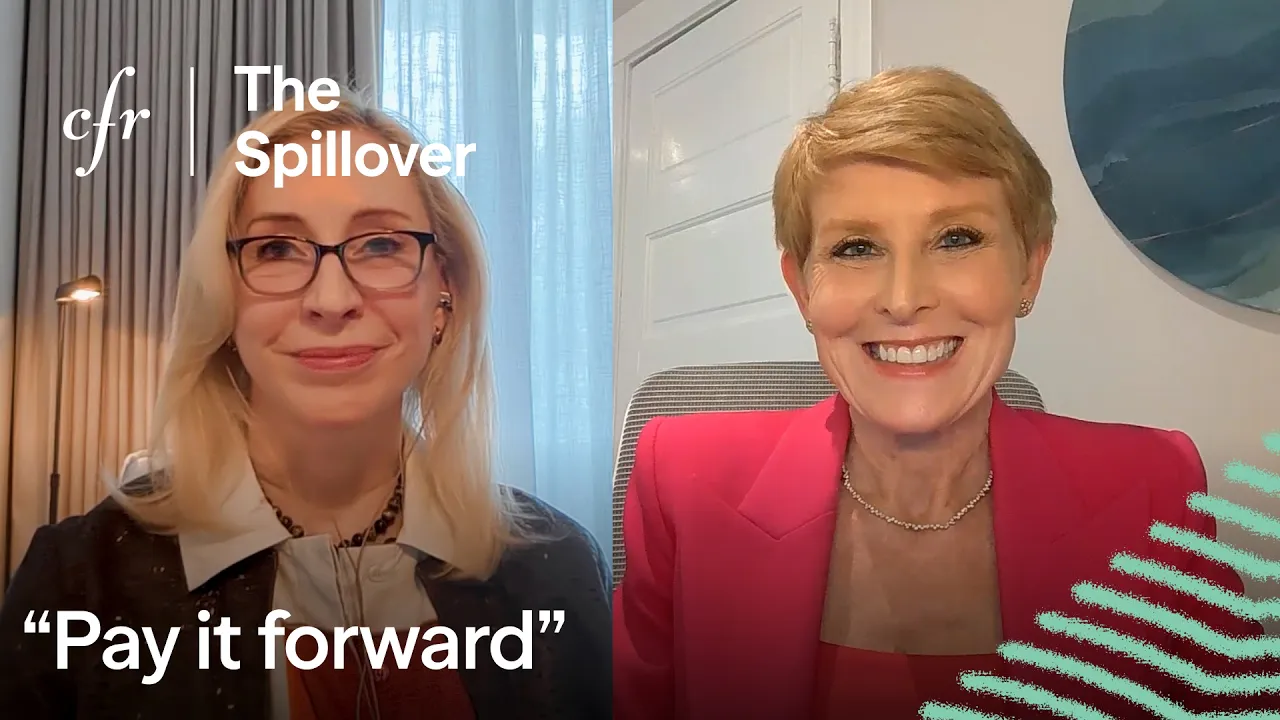
Democrats have swept the midterms, with voters sending a clear message of frustration with inflation, health-care costs, and wage stagnation. This week on The Spillover, Rebecca Patterson and Diane Swonk, chief economist at KPMG, unpack what the midterm outcome means for the economy going forward, and what the Fed will have to do to keep inflation under control.

Published
Host
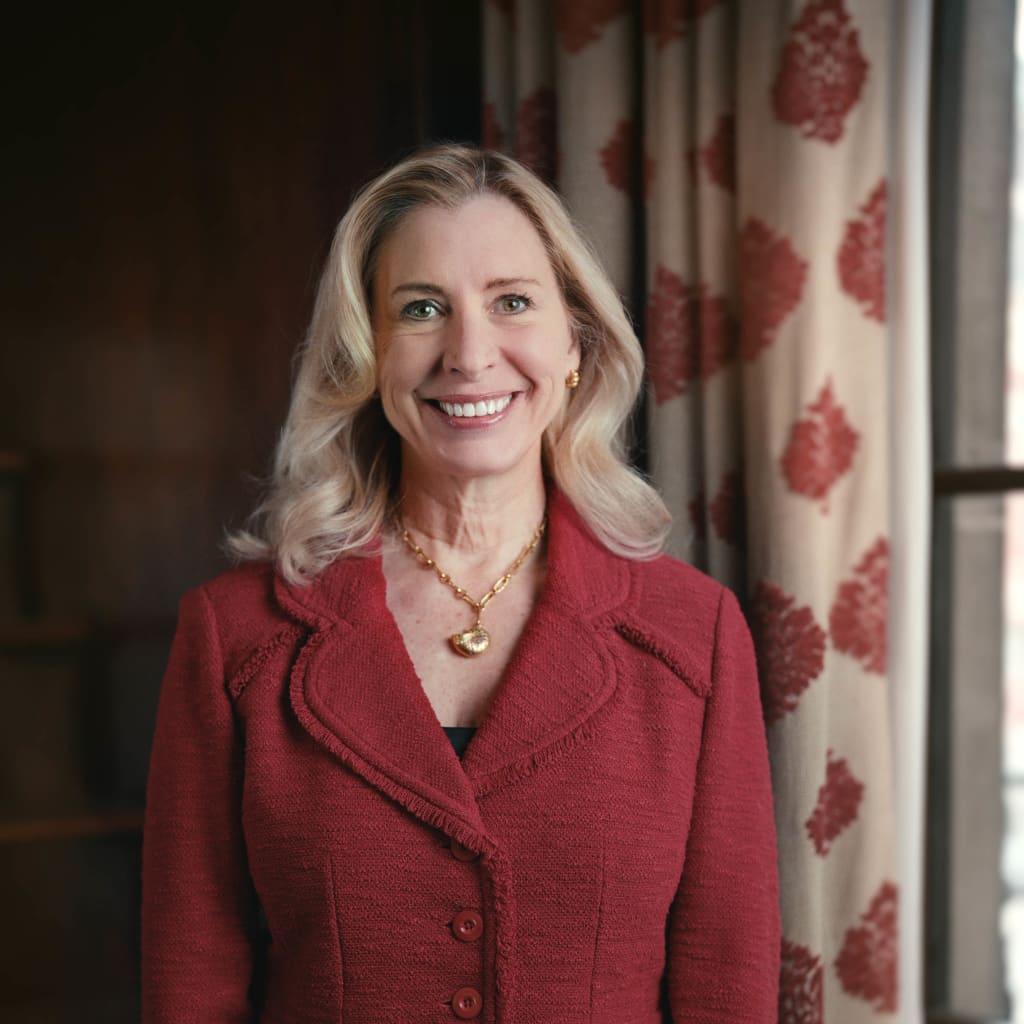 Rebecca PattersonCFR ExpertSenior Fellow
Guest
- Diane Swonk
[Video: https://youtu.be/AtLcdBfnGN0]
Transcript
This transcript was generated using AI and may contain errors.
PATTERSON:
Whatever the ballots say, the economy keeps moving. Payrolls land this week in the United States, inflation is still testing the Fed’s patience, and a lame-duck Congress may have a lot to say about the midterm blue wave that just occurred before the year is out. Today, I am here with KPMG Chief Economist Diane Swonk to give you a quick early read on the election and then dig into what the jobs numbers, the wage picture, and AI are all telling us about the labor market.
We’re also going to talk about Federal Reserve policy, how to narrow the opportunity gap, and why helping people understand money and investing is something worth paying forward. I’m Rebecca Patterson, and this is The Spillover. Hey, Diane, I am so unbelievably happy to have you here today.
You aren’t just an incredibly gifted, thoughtful, clear-spoken economist. I also just think you’re a wonderful human being. For anyone who hasn’t had the pleasure of hearing Diane talk about the economy and financial markets before, she is the Chief Economist at KPMG.
She spent four decades forecasting the U.S. economy. She started when she was 12. She helps companies think about economic trends.
She’s also been a longtime advisor to the Federal Reserve, White House, Congressional Budget Office, I could go on and on. It’s no surprise to me, but Barron’s Magazine named her one of the 100 most influential women in finance this year. Diane, welcome to The Spillover.
SWONK:
I’m just thrilled to be here with you, Rebecca. The feeling is completely mutual.
PATTERSON:
Oh, well, that is very nice of you, and you’re welcome back anytime. Look, I know you and I are, as you just said before we started today, running on little sleep and a lot of caffeine. It was a big night last night in the United States with our midterm results.
I have two immediate observations. I’m still processing, but two things about how the markets have reacted, at least early Wednesday. First, I think there’s just relief.
That’s not a political comment. It’s just we’ve taken uncertainty out of the market. The size of the Democratic wins makes it very hard for many votes to be contested in any way that could change the overall congressional map.
That would be the first thing. I think that’s what we’re seeing primarily in equity markets. I also think as a second point, there is now a mandate, and I use the word mandate, for Congress to focus on cost of living and affordability.
To the degree, this is a question that Congress can agree on anything in the coming year, we could see a few legislative steps or other steps aimed at lowering costs on different items, whether it’s healthcare, tariffs, other things. I think when you put those two factors together, it does help explain why we’ve seen equity futures higher, bond yields in the dollar slightly lower so far the day after the election. I know you and I are doing the same thing.
You probably woke up at the crack of dawn this morning, had your coffee and started looking at the results, thinking about what does this mean? In terms of the early reaction to the election, anything that has surprised you? Any early takeaways for you?
SWONK:
I think the most important issue is that it’s very similar in some ways to what we saw in 2024, and that is that not only is inflation an issue, but cost of living and the fact that price hikes have compounded for over five years, we’re almost lapsing to six years now. The level of prices are too high and too far out of reach for too many. That is clearly an issue that was in 2024, and it’s even more so now.
I think that’s really important to keep in mind. The Federal Reserve released their Survey of Consumer Finances for 2025, and we looked back on that. You can really see the inequality that is growing out there and the fact that in that survey for 2025, before we got to the increase in prices at the gas pump and other spillover effects that we’ve seen, we actually saw 20% of households, which is the highest level since 2010, that were behind on their actual debt payments.
That really gets to that underlying stress in the bottom quintile of households, where you even hear of a lot of anecdotes, one of which I heard from one Fed president who talked about the fact that she had manufacturing workers she’s been talking to for two years now, and this is one of our Fed presidents that’s very hawkish, talking about the idea that the manufacturing workers started out two years ago saying, we’re trading down, we’re not buying as many discretionary items, these were good manufacturing jobs, to now one gave a very heartbreaking story about whether or not he could afford to fill his tank to get to the food bank to get food, and that really gets to the crux of the issue, is when you can’t afford the basics of food and shelter for your own family and the ability to get to your job, that is a really important thing, and I think that’s what we see in response to this election.
PATTERSON:
Yeah, and it’s interesting, affordability has, the voter perception of affordability has taken different forms. There’s definitely, I think we see in the data and the surveys after the election, polls suggesting that voters, rightly wrongly, are blaming the war in Iran for higher energy costs and some of the higher costs, and they’re also blaming AI, and specifically the data center build-out, and I think it’s kind of the physical manifestation of AI right now, that’s the thing you can see that’s getting built in your backyard, and again, rightly or wrongly, people are saying, no, this is pushing up my electricity prices, it’s changing the cost of water, etc., and you’ve mentioned this before, before the election, that we could have some sort of AI backlash, voters upset about this, and we did see Texas and Ohio, I mean those, Texas going blue, are you kidding me? Yeah, I know.
SWONK:
And it’s one of the, Texas and Virginia are two of the highest data center states, highest concentration of data centers, and so I think that was a key issue there, and you mentioned the physical, there is the physical crowding out, we actually, my colleague just released yesterday a new study that she did of the 12 most data center concentrated states, and we looked at wages of those specific skilled trades that are used to build the data centers, about 1,000 workers per data center to build them, and the wages have gone up so much more rapidly, and are actually crowding out the home builders in the area, because there’s a shortage of workers as well, many of them also foreign born, and those workers are no longer there, they are disproportionately represented in the skilled trades, but all that together, and the ability of the hyperscalers to lock into multi-year contracts that bid up those wages, and get those workers, that is actually building up the cost of building a home at the same time that tariffs, and the cost of diesel, and all those other factors are in the mix as well, making it harder for home builders to build, and in fact, home builder sentiment in the month of October fell to its lowest level since 2012, which is of course, just coming out of the subprime crisis, which really gets to some of these hurdles that I think people are, the AI has a sequencing issue, and I think we’ve talked about this before, the costs are landing before the productivity growth can be scaled to the point that it could ameliorate those costs.
PATTERSON:
Right, right, and so is there a real economic risk from the backlash? So, you know, I read this morning, I haven’t had time to check it myself, so this is just me reading to you what I read in the press, that there were voters in 29 jurisdictions, so these could be state or local, pass bans, or at least restrictions on data center construction, and is that magnitude big enough that we slow down the AI build-out, that it could actually have a negative economic impact? Because we know, especially over the last couple of years, that that AI infrastructure build-out has been a major support for the U.S. economy. I mean, how big a risk is this to growth, do you think?
SWONK:
Yeah, you know, it’s an interesting question, I’ve been thinking about that a lot, because even though AI construction has been one of the major drivers of the U.S. economy, often liking it, as you know, Rebecca, AI, boom, and the wealth it generates, which I think that part we forget, that is like the one-legged stool, and I think of Alfred Nobel and his designing the one-legged stool to, you know, have people not nod off while they’re watching nitroglycerin and have it blow up.
In fact, you know, at one point in time, he was prematurely named in the French newspaper as the Merchant of Death in a premature write-up of his obituary when he was still alive. But I think that’s really important to understand, because, you know, what we’re seeing out there is that even though the AI construction itself, mostly imported parts are the inputs, and in fact, the imported parts of the data centers are even more import concentrated than they were a year ago. So a lot of it’s coming in imports, and it doesn’t generate as many jobs, and that acts as, of course, a subtraction on GDP.
But in local communities, it has caused, you know, minor booms, but also crowded out other investments as well. And what we’re starting to see is actually the power grid itself being a larger constraint and delays in the ability of being able to build the data centers, not because of the backlash yet, is the delays actually in the pipeline of the backlogs to be able to build the data centers, which is slowing down the build rate for 2027. We expect after 70% gains two years in a row, and some of it’s off a larger base, to increase 40 to 50% in 2027.
Now, there’s still a lot of states who have not voted on this, but, you know, I wouldn’t want to go out to ranchers in Miami and all of a sudden say, we’re going to build a data center and take up your water for your cattle or anything like that and see what the backlash is. And I think this is, we’ve already seen some of the big hyperscalers that have major plans, say one of the risks is the speed bumps that could come into play due to this backlash. And I think, you know, in some parts of it, we know the technology is changing rapidly, and they’re going to have to rethink how they build data centers as well to make them more amenable, and where they put them is going to shift.
Right now, the U.S. has an enormous share of global data centers, and that may change as well.
PATTERSON:
Right. I mean, this morning, Elon Musk was saying it’s a really good time to be thinking about data centers on the moon. I think that was partly what he was referring to, that Texas might not welcome new Elon Musk data centers in the coming months or quarters.
It’s an interesting point you’re to, Diane, about just the GDP math. So, hypothetically, we have relatively fewer data centers being built. In some ways, that could actually be good for GDP because that means we’re importing less, and imports are a mathematical negative on the GDP report.
SWONK:
And we could free up some crowding out that is beginning to occur in the broader investment landscape. And I think even though we have higher interest rates and there’s other costs that have gone into that, the costs of data centers, and it’s intertwined with defense as well, and AI is important, strategic defense on the defense side. But I think this is important to think about is, what have we crowded out, and what could maybe fill that space if it’s not going as rapidly?
And I think there’s certainly the CEOs themselves of the major tech firms have talked about hitting the brakes a bit in terms of these models as well. And this is part of that whole sort of a more holistic look at what does this really mean for all of us in the economy?
PATTERSON:
Yeah. I think about, okay, so maybe this takes a little wind out of the sails of some of the hyperscaler and related stocks, and that could have a negative wealth effect. But to your point, if you have less crowding out of other sectors of the economy, those stocks might benefit from better prospects.
And so you would actually have a broadening of the participants in the stock market. It could be a healthier stock market. So it’s really good to think about how these pieces fit.
SWONK:
Sitting on a one-legged stool of fragility. I mean, now so much so that we actually are working on a scenario that we’ll be releasing next week. And I spent the last two days on it with my whole team on what would a bear market scenario look like?
What would an AI bust look like? We know that innovation is one of those things that it is historically technological innovations do tend to stoke bubbles and the bubbles themselves help us to build out the infrastructure needed to eventually scale it. But the timing is off and off from when the returns come from those investments, which causes this front running and a needed adjustment.
And the question is, want to get that adjustment in before it reaches credit markets too much? Because that’s when you can have a larger tail effect if you have a bust.
PATTERSON:
Yeah, I had a dinner last week with several very large investors and we were talking about AI and there was a general agreement in the room that we’re not going to just keep having a straight line up. And they weren’t saying we have a bubble about to burst and it’ll be cataclysmic, but they all expected we’re going to have some ups and downs. What was interesting is they also all agreed that this is such a transformational technological event that even if they lose 20, 25%, 40% along the way, they’re holding on or even buying a dip because they think just like the railroads, just like eventually the internet, it’s going to be such a massive boost for growth.
And again, we don’t know which companies ultimately will win. They want to stay invested. So it was interesting that people who have been large successful investors for 30, 40 years and have researched this carefully, they might be wrong, but their general view was, yeah, we’re going to have some ups and downs.
We could have a bear market. I want to hold on to this regardless. They can, but there’s going to be a lot of investors in the world who can’t.
And so you are going to, they might win, but other people I think are going to feel a lot of pain if that scenario plays out, but I’ll look forward to seeing.
SWONK:
Yeah. And that’s only once in your research. That’s not our base case.
Our base case is that we see more of a broadening in the stock market and that helps carry us. And we also need to see, of course, lower energy prices, which depending on when the situation in the Middle East comes to an end, we also have the situation in Ukraine. We have a shortage of refining capacity that has a tail on to, and also low inventories, a floor under prices, even as we start, you know, seeing demand destruction.
And we have seen some demand destruction, particularly in emerging markets, where they frankly had to stop, you know, even flights and a lot of uses in terms of public transit to be able to deal with the costs of what they’re dealing with today.
PATTERSON:
Yeah. I don’t want to get us off on a tangent, but at some point I may have to do just a Southeast Asia spillover episode. I have been watching Indonesia a lot lately and it’s not getting as much press as it should.
When you think about the size of the economy, there’s a chance that they’re going to get kicked out of the global equity index. There’s a lot of reasons things aren’t going well there, but certainly the spillovers from the war and those inflation issues are part of the challenge they’re facing. It is super interesting.
All right, I want to keep going. I told you we’re not going down that rabbit hole today. You’ve got enough rabbit holes.
We have lots of rabbit holes. All right, here’s another rabbit hole. So taxing the billionaires.
So California’s bill did not pass last night. I don’t think that was a huge surprise to me anyway, but there were a lot of votes on taxing the wealthy and there’s still a lot of local and state ballot measures that are still on the table. So you have been writing and speaking for a while about how we got to this point.
I think you call it the revolutionary gap where corporate profits as a share of GDP are about 16 percent, double from the early 1980s, while employee compensation, employee pay has fallen to under 62 percent of GDP. That was closer to 67 percent in 1982. So you see this widening wedge between corporate profits and what typical workers take home.
Biggest gap we’ve seen since World War II, I believe, between capital and labor’s share of the economy. And voters want that to feel a bit more fair. So, you know, when you think about what we got from this election, blue wave, blue tsunami, whatever you want to call it, we also have a president who can still veto.
So it’s not clear what legislation gets through. Where do we go from here on this issue in your mind?
SWONK:
You know, in terms of workers, one of the things that has really been the case for some time is, you know, we’ve chipped away at, you know, labor unions, a lot of issues that gave workers power in different eras. You know, there was good things and bad things in all of that. But to see how much is now, if you look at profit margins, have widened quite significantly, really over 19 percent right now from 12 percent pre-pandemic.
And the fact that now rising health care costs and premiums are being pushed onto workers and cutting into wage gains as well. We’ve had 13 months in a row where average hourly earnings have fallen short of the overall inflation number. There’s only three times in history we’ve seen anything like that.
One was 1978 to 1981 during the stagflation, a lot of part of the 1970s. And the other one was post-pandemic 21 to 23. So that’s a lot of compounding inflation that we’re dealing with.
We’re in the longest bout of inflation that we’ve had really since the 1970s. And I think that’s important to remember. But I also think this idea that it’s a policy choice that firms are making as well to short shrift their workers for the profit margins.
And what plays on Wall Street doesn’t always play on Main Street. And if you don’t have your workers buying in and you cut into that worker morale, you also have them undermining you. And to be able to have more productivity growth and to be able to have people see an innovation, they need to have innovation requires technology, productivity growth requires trust.
And I think that’s the gap that is missing right now as we’ve seen a multi-decade erosion in trust. It’s really been since the latter part of the 1990s that we saw inequalities narrow instead of widen. And that was because we got to tight enough labor markets with productivity growth that was going to both workers and the profits.
It was good for both the financial markets and to workers. And I think we need to be thinking in those terms again. I don’t think enough employers are, especially large employers, are thinking about what really is happening to their workers and what kind of stress are they feeling when they say a return to office.
I think it’s really important to be talking in front of an office and talking to people in the same room. That’s hard for me with a national team for us all to be in the same place at one time. That said, we know that the costs of getting to the office right now are very, very high.
And anything that employers can do to be thinking about what makes this a little easier for their employees to feel engaged and be part of the solution instead of being seen as just a cost center, I think is really important. And Rebecca, you and I have talked about this, and this is one of the issues with AI in particular and how people are viewing it as a threat in this country. One of the most countries, I think you said you looked at it across countries, and I think Canada, you said, is the only one that’s lower than the US in terms of AI backlash, if I remember what you had said.
And that’s important as well because people have to see their own fortunes being lifted with the tide of a revolution like what we’re seeing in technology to buy into it. And that permission, we’ve not asked for it, which is the first part, and it requires being asked. And it also requires keeping the human in the center of the loop.
And I know you’ve looked at some other stuff about AI, which I have some strong opinions about in terms of the research that’s coming up, but I really do worry about the fact that I don’t, right now, I don’t see a lot of AI productivity growth in the overall economy. Productivity growth has picked up, but wages haven’t, and profits have. So we’ve seen that happen.
But there is uncertainty about AI, and I do think there’s some hesitancy to hire, and part of the low hire, low fire environment we’re in is actually a residual of that uncertainty about what will our workflows look like. I mean, people forget it’s not just that you bring in AI to your workplace, you have to redesign the nature of work. But we know that oftentimes AI can lift and intensify the work of those like us with a large foundation of knowledge.
At the same time, it can erode the skills of those with less knowledge, and it begs the question, who’s going to replace those workers going forward? And if we don’t keep the human in the loop, and people in the center of this discussion, and one of my colleagues has told me, he saw this presentation from Silicon Valley of, get rid of blood workers in favor of GPUs.
PATTERSON:
Oh, gee.
SWONK:
Blood workers. Blood workers are human. That’s huge.
PATTERSON:
A human being.
SWONK:
Yeah. I mean, this is- Oh, that is an unfortunate descriptor. Well, and this is not the first time we’ve heard Armageddon from Silicon Valley.
But I think it is really important to be talking about people as human beings and be thinking about, that’s what the voters are telling us is they voted because they’re also afraid of what this means. Now, new college graduates, the unemployment rate finally fell a bit over the summer, but it’s still a large gap relative to the overall unemployment rate. What was stunning was underemployment.
And that’s people taking part-time jobs instead of getting full-time jobs. The underemployment rate among new college grads is at its highest levels now as they accepted jobs since 2020, which is not where we want to be.
PATTERSON:
And I’m seeing anecdotally that trickling down. So friends of my daughter would report to me that they’d go into summer internships and a lot of the interns were in their 30s because they couldn’t find full-time work. So at least this was a paid part-time job or temporary job that could turn into something.
But all the 30-somethings taking internships meant the college kids trying to get that experience before they graduated, they were crowded out. So you’re seeing this playing out through the ages. And you do wonder about what are those longer-term consequences going to be for this younger generation and both the skills they need to get by learning on the job and then just the ability to land that first job at all.
SWONK:
Exactly. And I mean, we’ve talked about this. I had it in my own family.
And actually, my son was right. I mean, he saw the computer science majors all get laid off, especially from the large tech firms in 2022. Correlation is not causality when ChatGPT was first announced in November of 2022.
But 2022 was the first year that the MAG-7 lost market cap. And all of a sudden, we started seeing mass layoffs among tech companies that we hadn’t seen. Remember, these were major hirers in the past.
They are now, even though we’re in a low-fire environment, some of the biggest sources of layoffs. But then you’ve got a lot of experienced workers that are in that sector that new college grads are competing with. And my son actually took a very different turn.
And he’s now teaching autistic children instead of computer science, which I couldn’t be more proud of him for. And especially given he’s gotten one child that’s five that he worked with last year that was nonverbal and is now verbal and has exceeded all of their goals. And so, you know, there are other things out there.
But I think it’s very hard because you’re starting... What we don’t want to lose is we don’t want young people to lose the feeling that the ladder has been just pulled up on them entirely. They can’t even get a foot in the door, nor can they gain those skills, like you said, once they get on the job of watching a more experienced individual and sort of the apprenticeship that goes with that.
PATTERSON:
Yeah, yeah. Well, I want to come back to that in a minute because I do want to talk about the payroll report coming up, which is always the Super Bowl of U.S. economic data. But before we get to that, just a couple more quick questions or topics, I think, tied to last night’s election outcome.
You know, it’s the whole thing is I’m still just, again, processing because normally midterm elections aren’t that interesting. And certainly...
SWONK:
And nobody votes for them usually either.
PATTERSON:
No. And a lame duck session after a midterm is a big yawn. This time, maybe not so much, right?
So the Republicans, since they know they’re going to lose both houses of Congress come January 3rd, they may be motivated to do more during the lame duck session while they still have control.
SWONK:
And only 24 days to do it.
PATTERSON:
Yeah, it’s a very, very, very short time to get agreement on everything and the votes. And Henrietta Treyz, who is a political strategist at a firm called Veda, was on with me a few weeks ago. She was terrific.
And she was talking about the possibility that the Republicans try to push through a reconciliation package where, again, they just need a simple majority vote in the Senate while they have control, which could push up spending, certainly on defense, probably to support farmers, maybe a preemptive increase in the debt ceiling. That would be a big deal.
SWONK:
You know, the last... That’s a sleeper issue, but I think that’s a really important one. You and I are both worried about the bond market and the debt out there.
And the idea that we would at either party, and both parties have raised this issue, that we would default on debt obligations that we’ve already made at a time when Moody’s just rated France above the U.S. in terms of its investment grade status. Kind of mind-boggling environment, Ren, Rebecca.
PATTERSON:
Yeah, yeah. And then the other thing in the lame duck, you know, we will have some changes happening from the big beautiful bill’s passage last year. And I remember when that bill passed and I was going through the details.
It’s very clever, right? And I’m not pointing a finger at the Republicans because both parties use this, timing issues, right? So one thing that was in the big beautiful bill, you have Medicaid cuts, which were passed, but don’t start until January 1st, 2027.
And that follows requirements to get food assistance, post so-called SNAP benefits that just went into effect, I think the last month. So I guess what I’m asking, I don’t know if you’ve had time to think about this much yet, Diane, I know you’re, you’re going in a million directions at once with all your clients and your research, but is there anything Congress can do with President Trump still in power to try to help households with some of these costs before 2028? Or does this, is it just, it is what it is until we get to the next presidential election, and then it depends on the outcome.
SWONK:
Well, I think there is going to be some areas of bipartisan support, especially as we get into the new year, even though, you know, the warring between the parties, I, I would hope that we pursue, we see that, you know, Congress pursue some reform instead of just revenge. We don’t want to just keep going down this sort of rabbit hole, but I think we need, we really need to have some difficult problems. We have a huge debt and deficit problem.
The size of the debt held by the public eclipsed the size of the economy for the fiscal 2026. And by our estimates, it’s on track to at least grow even more to 2.2 trillion in fiscal 2027. And that’s without a lot of add-ons.
Tariffs were a major issue. They are a revenue source, but they are also a major issue of costs. And, you know, can we reallocate where the costs, where the revenues come from, and instead think about what makes it easier for people to work and increase the supply of workers where they aren’t in places like the healthcare system.
We’ve got the first baby boomers turning 80 out there. Many of the places where we’re seeing wages go up the most or rationing in care has been in areas where many of the Temporary Protected Status, which were legal workers, lost their Temporary Protected Status, and they are no longer providing that care. And foreign-born and native-born workers are often complements rather than substitutes.
You know, I would love on my wishlist, as I’m sure you would, Rebecca, that, you know, you could have a grown-up conversation about what is legal immigration in this country, and we could have a grown-up conversation of what is reasonable border controls, what is reasonable about strategic in terms of what we do with tariffs versus blanket, and how do we think about what our relationships are around the world. It seems that, you know, they get caught up in these political lenses in both political parties, and we don’t get enough of that middle ground where we actually compromise.
And to me, democracy is always about compromise. And that’s what I worry the most about is, is there enough room to find some compromise going forward in the year ahead? And in the next year and a half, it’s clear that if we don’t do something about inflation, which is in the Fed’s hands as well, that this will just come around and be another election issue in 2028.
PATTERSON:
Yeah. I mean, I’m sitting in Miami, Florida today. I’m speaking at a conference later, and I grew up in Florida.
This is my home state. I can tell you there is such a mismatch between demand and supply of healthcare workers. You know, Florida’s demographics have changed, but it’s still a state that is tilted towards older households, and increasingly they need healthcare workers, and there aren’t enough of them, largely because a big chunk of that population, worker population, was immigrants.
Not always legal, but often legal.
SWONK:
Yeah. In Florida, it was the largest recipient of all the Temporary Protected Status workers in the country. About 40% of them were in one state.
And so they’re not there anymore.
PATTERSON:
No, no. And so the costs are going up. It’s harder to get someone’s loved one into an assisted living facility or get home healthcare because there’s just, there’s no supply.
Anyway, again, I’m sorry. Rabbit hole. No rabbit holes.
I know.
SWONK:
I know. It’s easy for both of us to fall into these, but these are the real issues that are affecting people’s everyday lives. I mean, you know, one of the things we track as well is how much unpaid care does the average worker do in the economy doing eldercare that a lot of employers don’t realize.
And that is something, you know, I think is really important. It’s in every single profession. Men and women are more evenly split than they are in terms of childcare and it’s affecting their participation.
It’s affecting their productivity growth, their stress levels. Anyone who’s cared for someone whose memory is going knows how hard this is. It requires a lot of physical labor.
And in fact, among the 35 and under, we know that it’s dominated by young men providing eldercare in their homes. And I’m sure part of that is the physical needs of what it requires. I know one of my colleagues is helping to care for her father who’s got dementia with their mother, but he’s over six feet tall.
And when he falls, they have to call him in one more.
PATTERSON:
Yeah. Yeah. Yeah.
That would be good research to do. Anyway, we’ll come back to that on another conversation.
SWONK:
I have a colleague who’s dug in deep on this.
PATTERSON:
Oh, that’s cool. All right.
SWONK:
And actually what’s interesting is many states, and it doesn’t matter if they’re red or blue, it’s been really interesting to see they want both solutions to childcare and eldercare. Yeah. And that’s been really interesting because he’s working on those solutions with our partners.
And just by showing the data, like, oh, wow, this makes a big difference. If you have those care solutions, you have more supply of workers where you need them most. And that’s been really, really fascinating to see and encouraging that there is at the state level, it doesn’t matter what colors or which party affiliation, this is something that crosses and affects everybody.
PATTERSON:
Yeah, absolutely. Well, I didn’t intend for this to be a KPMG infomercial, but- Sorry, I didn’t mean it that way. No, no, no, no, no, no, no, not at all.
I was just going to say, I want to give you all a shout out because a lot of the research you produce is available publicly on your website. So some of the things you’re talking about, I’m sure some of our listeners would love to actually read it. So just to let them know that they can find a lot of it publicly.
All right, let’s get to something beyond the election now, which obviously they’re related and that is the labor market. We’ve already talked about it quite a bit, but we do have nonfarm payrolls coming out this Friday. And as I said earlier, briefly, anyone in our profession, this is the Super Bowl.
I spent much of my career on a trading floor and payrolls comes out the first Friday of the month at 830 in the morning. And from 820 to 830, you could hear a pin drop. Everyone is poised, waiting for it.
And then when it comes out, there’s just wave of yelling, everyone’s saying what the number is, shouting out what it means. And it’s interesting because it gets that much attention, even though it’s very volatile, it gets revised a lot sometimes, but it gives you such a detailed, rich picture of the economy, both the jobs being created and where, who’s getting the jobs, but also the wages, everything. It’s a great report.
I think you and I agree we’re in a low hire, low fire economy, not a lot of new jobs, but also not many people wanting to quit. Not a lot of companies letting people go unless they have to. Just big picture, Diane, I’m curious how you’re seeing the labor market today.
I know your official forecast for this Friday’s report is an increase, I think it’s 45,000 jobs. And what’s so interesting to me about that is, you know, that’s now a good result because the break even to keep our unemployment rate steady is closer to zero today. And I just Googled this morning, or I shouldn’t say Google, I Claude’d this morning, just to remind myself how much that’s changed.
And if you go from 2010 to 2019, the average monthly payroll increase was 183,000. So the break even has changed drastically because of demographics, because of immigration. So if we got 45 on Friday, even though that doesn’t seem like a great number, it’s actually good given where we are.
So anyway, that’s a lot from me. What are you thinking about with the job market?
SWONK:
So the break even shows there’s been some really good pioneering research by both American Enterprise Institute and Brookings, Wendy Edelberg and Stan Veuger, whose both have done this work together. And, you know, they’ve come up, they had come up with this sort of as of 2025, given changes in immigration and the aging demographics and baby boomers retiring out of the labor force, that that was accelerating the reduction in curbs on supply of workers at the same time the demand for workers was falling. So the break evens were really within that plus or minus 100,000, which is the statistical, you know, difference, basically, that’s what’s statistically significant.
So we’re under that 100,000 plus or minus, and we’ve had two red months, months in the red this year already, the average year to date is about 68,000 per month, it slowed over the summer. But we are in that sort of sweet spot of holding the unemployment rate steady. And that 68,000 per month actually did bring the unemployment rate down from 4.5%, a little over in November of last year or so when we had the government shutdown and the spillover effects of that. October, remember, we have a hole in the data, because we had that six week government shutdown that we did not get data for CPI, or the employment report. So that’s a bit of a hole that we’ll have to get through. But it is important also is to look at the participation rate in the labor market, to look at the employment ratio, to look at what bothers me is, you know, when you look under the hood, the good news is that we’re at historically low, we’re at now 59 months, I think, as of October, of four and a half percent or lower on the unemployment rate.
The only thing close is the 1960s and 1970, which was 57 months. So we’ve now lapsed and eclipsed that, but it sure doesn’t feel like it. Now remember, in the 1960s, you had baby boomers just entering the labor market, women entering the labor force, and so you had a lot of supply of workers.
So with those low unemployment rates right back then, you had a healthy amount of turnover in the labor market. In the most recent job opening labor turnover survey, there was a bit of a pickup. And indeed, job openings have a little bit of a pickup.
But the quit rates are, except for one sector, leisure and hospitality, which has been disproportionately affected by those temporary protected workers and immigrant labor no longer being able to work, the quit rates there have picked up. But outside of that, that’s kind of an anomaly, and it’s a noisy data, and it’s still very low and more like the kinds of numbers we saw emerging from the Great Recession. People forget, you know, 2008, 2009 was a really horrible period, which you and I remember quite well, but that we’re still seeing a very low level of turnover.
Those who have a job are sort of clinging to it, and those who want a job are either accepting something that’s underemployment, not at their education level of new college grads, and that the long-term unemployed, the ranks of those that have now rolled off of unemployment over the summer actually continue to swell and are well above levels we saw pre-pandemic. And that gets to this sort of this low hire, low fire, low turnover. There’s a healthy level of turnover we’d like to see in the labor market of people jobs switching and having the opportunity to earn more at another employer.
And, you know, that’s where we’re starting to see wage compression. And in fact, you know, we expect wages, even if they accelerate at an 0.3% rate, which would be three times the pace of September in the month of October, the year over year would slip to 2.9% from 3% on average hourly earnings. That is still well below the pace of inflation and further below the pace of inflation.
So you can have aggregate incomes increasing because you’re adding more paychecks, but individuals, their lived experience doesn’t feel as good because, of course, their wages are not keeping up. And if you give someone more benefits in your benefit packages, but they also have to pay more for those benefits, they don’t see that as an extra dollar to be able to spend, even though it is part of the package and their compensation package is equally true to say, as an economist, that’s part of compensation. While as a worker, it feels like you’re not getting paid as much as you need to.
Right.
PATTERSON:
Well, that was a perfect segue because I did want to get into wages is that is another piece of the nonfarm payroll report is you do get the number of hours worked and you get the increase in wages. And when you put those things together, it gives you a sense of disposable income. But the point you just made about wages possibly rising this latest month by about two point nine percent year on year, that would be 13 months below the rate of inflation.
So we’re just we’re not keeping up. And the hard thing with inflation to me right now is, I mean, one, everyone feels it differently. Everyone’s inflation experience is personal.
It depends on how you spend your money, what you spend it on. You know, I have two kids in college. My inflation experience is definitely shaped by that.
My mother’s inflation rate is probably more biased towards her health care costs. But there’s common sore spots. Right.
And we saw that in the election. Food, energy, health care that we just talked about. And just to give an example for our listeners, you know this, Diane, but overall consumer price inflation up three point seven percent in September.
Gasoline prices in September were up 34 percent from a year earlier. Medical care services up seven percent from a year earlier. So double the overall rate basically of inflation.
And again, people are hoping that AI creates this disinflationary growth. We don’t know if or when that happens, how much. How do you as an economist, given all these uncertainties and all these different variables, how do you approach forecasting inflation?
And do you think consensus has CPI at the end of next year getting down to two and a half percent? To me, it feels like you have to have an end of the war and much lower energy prices to do that. But how are you approaching this?
SWONK:
Yeah. So and this is something the Fed is doing as well. And that is looking at there are the shocks.
But I’ve said this before, Rebecca, is the Fed will always say that inflation expectations are well anchored in financial markets. And I worry that and talking to some individual, the more hawkish members of the Fed, they’re more concerned about the fact that we’re seeing inflation in places that you shouldn’t see it, like the service sector, like you just mentioned in health care, but also because you’ve got affluent households, they disproportionately spend on vacations and discretionary purchases and also are less interest rate sensitive because they can pay cash for a new vehicle or a new home. These are all things that are buoying some of the discretionary inflation that we’re seeing out there. And actually, you mentioned it on higher education because we’ve had a change in immigration policy with fewer foreign born students on college campuses and cuts by the federal government in terms of funding at the federal level for many of the elite institutions and universities and campuses across the country.
What we saw in the month and last month in the PCE index was higher education went up. So this is why you’re feeling it, Rebecca, at its fastest rate since August of 2003. And I think, you know, people don’t remember that, you know, those foreign born students also tended to pay full tuition, which allowed more native born students to get extra assistance to be able to attend some of the more expensive colleges.
And the loss of federal funding is also drying up some research. And all of these things are important when we look at the inflation equation. But the underlying service sector inflation, that stripping out housing for a service sector economy that accelerated last month.
And you saw it in all these places. In addition to health care, the health care didn’t accelerate during the month, but the year over year was a sticking point. And the last time we saw the PCE index, which the Federal Reserve targets its core running much hotter for an extended period of time than what the CPI measures, because they measure a little bit different things.
What we saw was it was in the early 1980s and the back to back recessions that broke the back of inflation, broke all inflation except for health care inflation, which persisted well into the 1990s. And that’s something important to remember is how much offsets you need in goods deflation and falling prices elsewhere to offset those costs. Now, once we hit the 2000s, we had China’s ascent in the WTO.
We can all argue good, bad or indifferent. I think there were that we jumped the gun a bit. But the influx of cheap goods that we saw actually caused quite a deflationary impulse in the United States.
And it was at a time now we have things like consumer electronics going up in price due to AI as well. And I think these are important things to keep in mind as things that were falling in price are no longer falling in price. And it makes the Fed, even though I think the Fed is acting with caution instead of conviction.
I wish they had more conviction. You know, I’m a little more hawkish, but they’re cautious, I think, because they’d like to. I’ve heard them describe it as they like to cool inflation around the edges without derailing the economy for an inflation that may be four percent double their target as opposed to seven percent on the PCE index or nine percent on the CPI index that we saw in 2022.
But of course, back then when they raised rates, they could destroy job openings, not jobs. Right, right. And I think that’s where the tension lies.
And it’s very hard without some of the steam coming out of affluent household spending to actually get to it’s something we call the K loop. And what we look at, it’s hard to get to the numbers that you need to buy the Federal Reserve. And I think they need to really work on that.
PATTERSON:
So we have one more Fed meeting this year, December, and the market is discounting. As of yesterday, last night, I haven’t checked this morning, but I think it was around 79 percent odds that we get a rate hike in December. You know, I was at the Shadow Open Market Committee meeting in New York, which is just basically a group of former Fed people and a lot of economists getting together to talk about the Fed.
It is it is wonderfully nerdy. I absolutely love it. It’s a full day just on the Fed and the economy.
But Alberto Musalem, who’s the president of the St. Louis Fed, attended and gave an on the record speech, and he laid out two possible scenarios for the economy and his not forward guidance, but reaction function if either of those scenarios played out. But his base case was that inflation is still sticky and the Fed is better off doing more small cuts now than taking the risk of higher inflation later that requires more cuts. So I hear your point on the caution, right?
If we raise rates more now, we do have to destroy some jobs. We are going to be weighing on the wealth effect that’s supporting equity markets and consumption. But if we don’t, we run the risk that we have to do a lot more later, which could have even greater economic consequences.
So if you were at the Fed today, what you would I’m guessing you’re advocating for higher rates in December. What about next year?
SWONK:
Yes. So we right now we have at least two hikes by early next year, and I think we’re going to need more. That is not in our forecast yet because the markets aren’t there yet, although we lay out that we think we need more.
And I think we’re starting, I’ve talked about this and you’ve heard me talk about this. We’ve got shocks that have moved from being episodic where it happens and it’s over. And you say these look through events to endemic, they’re persistent and it’s creating a drumbeat and muscle memory.
It’s like a rhythm you can’t get out of your head, a song you can’t get out of your head and it keeps rolling around. And that the fact that firms and consumers and hearing some of the Fed officials that are the most hawkish talk about people’s changing their behavior and dealing with anticipating the next shock before the last one is faded, that is exactly the behavior the Federal Reserve is tasked to avert. And so they can do all the market measures they want and say inflation expectations are well-anchored and it’s just going to magically come back down.
I don’t buy it. And I am more hawkish because I am worried that I know what the consequences after growing up with stagflation in the 1970s and the corrosiveness of inflation. And actually as a cancer survivor, I always talk about this because I know you want to catch it earlier because the later you catch it, the more it metastasizes.
And that’s how inflation is. And we don’t want it to metastasize and have the cure be those two back-to-back recessions we saw in the early 80s. Those had scars that live on the complexion of the U.S. economy to this day. And I think that’s very important to understand. And that’s why I would rather, even if it causes, I hate to use the word mild with recession because it’s not humane and recession is hard, but the Fed has to be willing to make hard choices. And if you want lower mortgage rates, if you want to unlock the housing market, you need to derail this inflation.
Now, would it help if suddenly tariffs disappeared? Would it help if suddenly the war was over? Absolutely.
But we’re a service-based economy and the service sector is still there. And how much have we learned? And the bottom line is there was talk a few years ago about, well, maybe we could just stop around 3% inflation.
That’s not a problem. Two elections in a row told us it is.
PATTERSON:
Yeah. Yes. A hundred percent.
A hundred percent. That was a very powerful analogy and one that is going to stick with me too. And I’m so glad, Diane, that you are sitting here with us today.
SWONK:
Me too. Believe me. My juice has been through a lot.
You know that, Rebecca. But between my husband and my kids, they’re my North Star. And so I actually, as a little aside, I learned to go axe throwing with my son and his girlfriend and my husband and I.
My husband, the old farmer, he was the best axe thrower. I am not very coordinated and my daughter was quite terrified that I’d lose limbs. So we took pictures afterwards that I didn’t lose any limbs nor take anyone else.
That’s good.
PATTERSON:
Yes. I have done axe throwing once and I was able to throw it, but I was equally terrified that I would let go of it at the wrong time or someone else near me would let go of theirs at the wrong time. One and done for me.
Thank you very much.
SWONK:
I’m done. I’m back. Yeah.
PATTERSON:
I’ll let other people throw axes. Okay. I want to end.
There’s so much more I could talk about with you, but I do want to keep an eye on the time for our listeners and for your schedule, which I’m trying to be respectful of. I wanted to end on a topic that I know is near and dear to both of us. You have a sign off line in every research piece you write, which just makes me warm and fuzzy.
You say, be kind, pay it forward. And I absolutely love that. And I’ve been trying to follow your example.
I shared with you earlier that I’ve been working on a book project for the last year.
SWONK:
I’m so excited about it. Yes.
PATTERSON:
Oh, thank you. We have a group of 25 women who spent their careers in and around finance. And we asked each of them, write a chapter about what you would tell someone close to you.
It could be a family member, a friend, a colleague, when they come to you and say, I might be a successful fill in the blank, but I just don’t really know a lot about personal investing. So where do I start? What do I do with this situation, that situation?
So each of these women wrote about how they answer those questions, what their go-to wisdom is that they share, and then they tied it to their careers and lives. And I found the chapters were so interesting because we didn’t tell them what to write. It just all came back organically.
And I would say anyone who picks up the book, regardless of where they are in their life or their knowledge, will probably have at least a dozen chapters that speak to them and are useful. And it’s not drink less Starbucks because we all know that. But it’s stuff you can actually use and put into action.
But I’m very excited about helping to educate people, which I think you and I both share that passion. We love to research, understand the world, and then share what we learn. But I’m equally excited about, and this gets back to your line, pay it forward.
All the author profits we make are going to go to the Council for Economic Education, which is K-12 Financial Literacy and the Boys and Girls Clubs of America. And the book comes out mid-November. So I know I’m giving myself an infomercial now.
No, tell them the title as well. So the name of the book is called Investment Wisdom for Our Friends and Loved Ones. It comes out November 17th.
There is a website called investmentwisdombook.com that has all the different places you can order the book. We have it in audio for people who prefer to drive or walk and listen. Again, any money we make, the author profits are going to pay it forward to the next generation.
And we just hope it helps people because you and I know, Diane, it’s not just about financial education helps narrow the opportunity gap that we talked about earlier. And if you are someone who is in business or invests in the stock market, it’s also in your interest to make sure people are educated because the more educated consumers we have, given that we’re a consumption-driven economy, the stronger the economy will be and the less financial instability risk we’ll have. So it’s literally...
SWONK:
And more cushions for people to be able to retire in a world where... It’s in everyone’s interest.
PATTERSON:
It’s a no-brainer.
SWONK:
Yeah, it’s a no-brainer. And it’s so important. I just can’t stress enough how important I think this is and making it accessible to so many people.
I know so many young people who are just overwhelmed when it comes to even doing their taxes and they’re simple taxes. They’re not complicated, but they get overwhelmed about these things. And the idea of being able...
I was lucky enough to be an only child and my parents would talk about things. And I’m oftentimes worried about money. During the 1970s, when I was a kid, it was hard to listen to some of what I saw.
And I think I’ve shared with you, my best friend went into poverty when I was a young kid, when her father died young. And here, going to school and realizing that she didn’t have money for lunch. And she ended up getting an education because she had one in her family that taught outside of the country, but she never came back.
And we don’t want to lose talent like that. And the tragedies that I see, so much of it could be avoided with some of this literacy, which even in the groups that I work on, like Posse Foundation, which gets these people that are incredibly talented to get educations. But a lot of them say, listen, they’re first generation high school grads in their families.
And now they’re first generation college grads going Fulbright scholars, but they’ve never had money. And all of a sudden they get into trouble with credit cards because nobody talked to them about the financial literacy part. And so I’ve been working with them saying, we need to also help these new college grads that are first time generation that haven’t had this exposure, but it’s not just that it’s, a lot of families.
Right.
PATTERSON:
We had the Genesis, the book, actually one of my coauthors, one of her best friends, husband suddenly died tragically. And she called and said, he took care of the money. And this was a woman, very successful in her career, very smart, educated.
She’s like, I’m panicking. I don’t know what to do. So I think it’s both the younger generation, as well as people who just didn’t grow up in that world.
So anyway, I’m hoping it can help a little. I feel like at the end of the day, if we can all be a force for good in whatever shape that takes, the world’s a better place. And I know that’s very kind of kumbaya, but that’s where my head is today.
SWONK:
Rebecca, we’re on the same page, break bread, not ties. And no matter who we talk to at the end of the day, there is commonality, we’re all human beings, right? Not blood workers.
Yeah.
PATTERSON:
Oh, goodness. Yes. Human beings, not blood workers.
That’s the tagline today. I don’t want that to be the tagline. I think pay it forward is our tagline today.
SWONK:
Pay it forward. Yes. Pay it forward.
PATTERSON:
Absolutely. Diane, thank you so, so much for this conversation today and for taking time out of your busy schedule to be on The Spillover with me. It’s been an absolute pleasure.
And I would love to have you back soon because there is always a lot for us to talk about. But for now, just thank you.
SWONK:
There’s not a shortage of topics. And Rebecca, it’s an honor. Thank you so much for having me on.
PATTERSON:
Would you like to stay up to date on the latest episode of The Spillover? Please sign up to receive an email alert when a new episode drops at CFR.org backslash newsletters or click the link in our show notes. If you have an idea or you just like to chat with us, please email podcast at CFR.org and make sure you include The Spillover in our subject line.
Our episode today was produced by Molly McAnany, Gabrielle Sierra. Our video editor is Claire Seaton and our sound designer and audio engineer is Markus Zakaria. Thank you.
This week on The Spillover, host Rebecca Patterson and guest Diane Swonk, chief economist at KPMG, discuss the economic fallout from the midterm elections and whether policymakers can address the cost-of-living pressures that voters have signaled as their top priority.
One day after the elections, Patterson thinks markets are experiencing “relief” from uncertainty. She suggests that there is now “a mandate” for Congress to focus on “cost of living and affordability.” Swonk agrees, noting that price hikes “have compounded for over five years” and that even before the “increase in prices at the gas pump and other spillover effects . . . twenty percent of households…were behind on their actual debt payments,” the highest share since 2010. Voters are also blaming AI and the data center build-out for higher electricity and water costs. Swonk says data center construction is driving up wages for skilled trades, “crowding out the home builders in the area.”
The labor market is the other big source of strain. Swonk says corporate profits have widened while U.S. workers have faced “13 months in a row where average hourly earnings have fallen short of the overall inflation number.” Swonk forecasts about 45,000 new entries in Friday’s jobs report, which Patterson says would be a good result in an environment where the number of jobs needed each month to keep unemployment steady has fallen sharply. Patterson currently sees a “low hire, low fire” economy. Swonk agrees, noting that the U.S. job market is “seeing a very low level of turnover. Those who have a job are sort of clinging to it, and those who want a job are accepting something that’s underemployment.”
Patterson argues that inflation is concentrated in “common sore spots”: food, energy, and health-care.With markets pricing in roughly 79 percent odds of a December rate hike, Swonk argues the Fed should be more decisive. Her forecast calls for at least two rate hikes by early next year, because shocks have gone from “episodic” to “endemic.” Swonk compares inflation to cancer: “the later you catch it, the more it metastasizes.” A few years ago, economists argued that allowing inflation to settle around 3 percent was not a problem, to which Swonk argues: “two elections in a row told us it is.”
Patterson closes by discussing her new book, Investment Wisdom for Our Friends and Loved Ones. The book is out November 17, with all author profits going to the Council for Economic Education and the Boys and Girls Club of America. Patterson and Swonk agree that financial literacy not only narrows the opportunity gap but also strengthens the economy.
Mentioned on the Episode:
“Things That Go Bump in the Night,” KPMG
“AI’s Hidden Costs,” KPMG
Want to keep up with The Spillover? Sign up to receive an email alert when new episodes are released.
The Spillover is a production of the Council on Foreign Relations. The opinions expressed on the show are solely those of the hosts and guests, not of the Council, which takes no institutional positions on matters of policy.
This work represents the views solely of the host(s) and guest(s). The Council on Foreign Relations is an independent, nonpartisan membership organization, think tank, and publisher, and takes no institutional positions on matters of policy.
Producer
- Producer, Podcasts
Supervising Producer
- Director, Podcasting
Audio Producer
- Audio Producer & Sound Designer
More Episodes
 52:27Podcast
 41:30Podcast
 35:24Podcast
 48:01Podcast
 47:25Podcast
 50:17Podcast