Lame Ducks, Black Swans, and the 2026 Midterm Elections
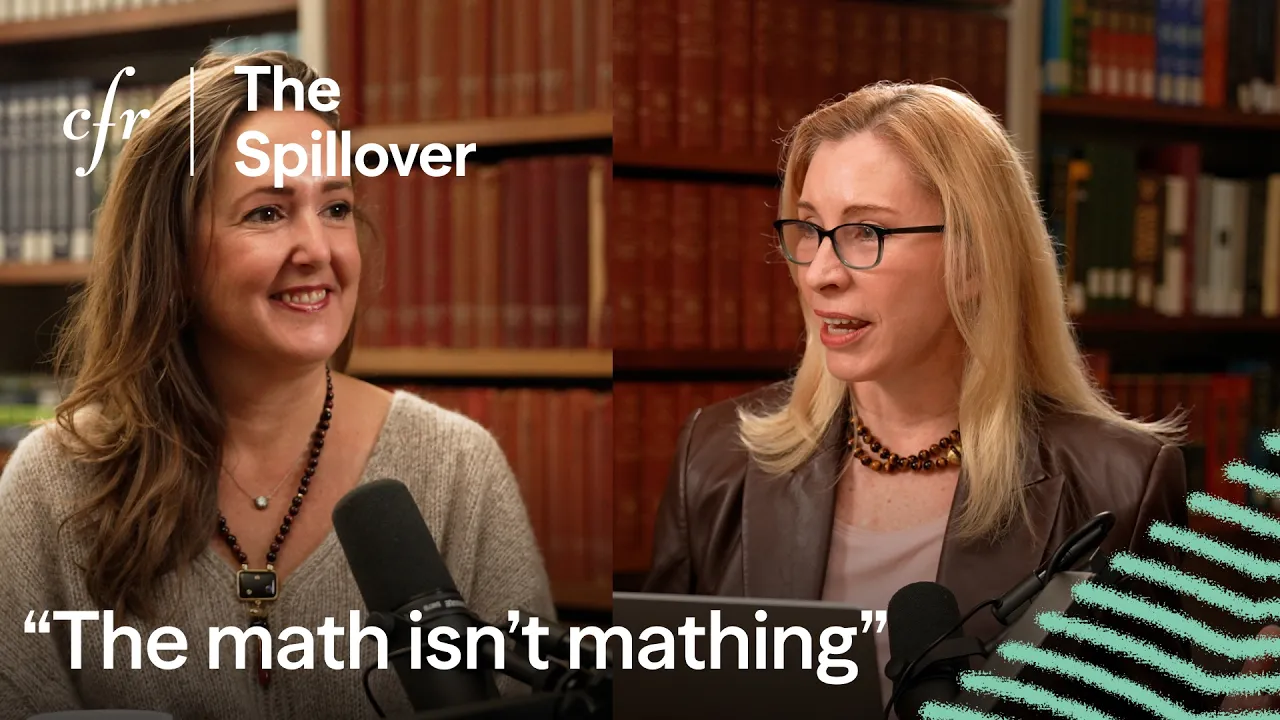
With the 2026 U.S. midterm elections just weeks away, Rebecca Patterson and Veda Partners Cofounder Henrietta Treyz discuss an impending confrontation over the debt ceiling in the lame-duck session. They warn that a 2011-style standoff could unfold if political brinkmanship and a lack of serious effort to stabilize the country’s debt trajectory continue.

Published
Host
 Rebecca PattersonCFR ExpertSenior Fellow
Guest
- Henrietta Treyz
[Video: https://youtu.be/bZIXcFDkr2k]
Transcript
This transcript was generated using AI and may contain errors.
PATTERSON: America’s midterm elections are just weeks away. On November 3rd, we’re gonna see voters choose governors in 18 different states. We’re gonna go through Congress and especially including a Senate seat in Ohio that’s getting a special election, a race that’s already seen probably more than, at this point, $53 million in fundraising and tens of millions more in outside spending from both parties.
Now, there’s tons of predictions out there about who’s gonna win this or that, and there’s a lot of coverage about election. Some people are probably like, oh, please, Rebecca, don’t talk about the election. We’re tired of it already.
But you need to be focused on the election, and you need to be especially focused in the weeks after the election, what we call the lame duck period between the vote on November 3rd and January 3rd when the new Congress takes its seats. If the Democrats gain even one chamber in Congress in this election, they can use the government debt ceiling as leverage against the Trump administration and the Republican part of Congress next year. And that means the Republican Congress in this lame duck session might try to increase the debt ceiling preemptively way before it expires to make sure the Democrats don’t gain that leverage next year.
Now, that sounds pretty simple, but it’s not as simple to do as to say. So what would an Ohio upset mean for the Senate math? How much more can the bond market absorb before the lame duck session becomes a black swan?
Okay, that was a pun intended. I’m Rebecca Patterson, and this is The Spillover. While Sebastian Mallaby has left us to write an incredible new book, this one on Anthropic, I am absolutely delighted to have a perfect guest with us today here on The Spillover to talk about the midterm elections, the lame duck session, and everything else that might be underappreciated by people ranging from Wall Street, inside the Beltway, outside the Beltway, someone who’s followed this for decades.
Henrietta Treyz has been at the intersection of politics, policy, and financial markets for more than 20 years. She’s a co-founder of Veda Partners where she serves as director of economic policy research. And before Veda, she spent years working in the U.S. Senate, including during the 2008-09 financial crisis, which was obviously a learning moment for all of us. So welcome to The Spillover, Henrietta.
TREYZ: Hopefully a lesson I never need to learn again, but yes.
PATTERSON: Yeah, probably we will learn it again.
It just will take a new shape. But thank you, thank you for being here.
TREYZ: Oh, I’m honored to be here, really, truly.
PATTERSON: No, this will be great. Look, I don’t wanna spend a lot of time on the specific outcomes of each race in the election today. I feel like there’s so much coverage of that.
And at the end of the day, we don’t know what trigger people will pull in the voting booth on the day. You are a person who makes educated guesses at this.
TREYZ: I still think it’s a bit of a guess, even on Cali.
PATTERSON: But I think what we do know with decent amount of confidence from history, very consistent trends, and from the polls, is that the Democrats have pretty strong odds to take the House of Representatives. I think what’s interesting to me beyond that are just the number of open seats for this election and how that affects your confidence in making predictions, how big the swings we could see. And just to give some numbers on that, okay, we have 435 House members.
We have 35 Senate seats, 36 governors. None of that is particularly unusual. But in the Senate, we have 11 retiring senators, seven Republicans, four Democrats.
That’s the most, if I have my math right, the most we’ve seen in a cycle since 1996. Is that right?
TREYZ: I think 96.
And then overall, at a minimum, no matter what happens in the election, we’re gonna get 63 new members of Congress, just from attrition, retirements, like you’re pointing out. And that is a record in modern history.
PATTERSON: So how does that affect how you’re trying to predict the election? How does that affect the potential for surprises?
TREYZ: It’s a great question.
So incumbency advantage is extraordinary. If you’re in the United States Senate, you have an 88% chance of winning your election if you are already the incumbent. So in this cycle, it’s amazing, right?
Even in a wave, you still have a 50% chance of holding your seat. So that incumbency advantage is one that I’ve experienced firsthand, working on campaigns and doing this for investors for 20 years. The benefit of incumbency is one not to be wasted.
That’s what makes this cycle so unique, is President Trump actively primaried three sitting senators, including John Cornyn, Bill Cassidy in Louisiana, and Thom Tillis in North Carolina. So you’ve squandered that incumbency advantage. It lost you North Carolina immediately.
And it’s put Texas on the map and a $200 million fight on both sides. And it’s really creating a disadvantage that Republicans should not be worrying about this year, but now they are.
PATTERSON: So how is that affecting how you’re predicting the outcome? Do you think, first of all, do you think the Dems will get the House? And where are you leaning right now on the Senate, given what you just said about Trump actually hurting his own party by taking away or putting at risk those incumbent seats?
TREYZ: I think the House is a guaranteed pickup. You can tell by the campaign fundraising. So yesterday, Republicans pulled out of one of the House districts in New Jersey, and then today in Texas.
So for my money, the House is a lost Democrats.
PATTERSON: So basically, they’re pulling out money because it’s a lost cause. It makes no sense to waste your money there because you’re not going to win it.
TREYZ: Exactly.
PATTERSON: Good.
TREYZ: On the Senate side, it’s that incumbency advantage that I bake into my forecasts that are just not being met yet. If this is a D plus eight wave, which is what we’ve seen in the generic ballot for many months now, and it’s been very consistent, the reality is that the races Democrats need to win are too red to fail. So you’re talking Kansas, Nebraska, even Ohio, a state that Trump won three times, and the last time by 11 is a tough ask.
The good news for the Democrats in Ohio is that 25% of the population already thinks that Sherrod Brown is the senator anyway. So he also gets his incumbency advantage, and I think that’s a race that will give Democrats 49 seats. But D plus eight is not, for my money, it’s not enough to get you Alaska, which is Trump plus 14, or Texas, or Kansas, or Nebraska.
The one wild card really seems to be Kansas right now. But it’s a heavy lift, and you don’t need 50, you need 51, and then John Fetterman is the most important person in DC.
PATTERSON: Yeah, yeah, no kidding, and I think he knows that.
TREYZ: I think he does too.
PATTERSON: But we could spend a lot of time on Fetterman, we won’t today.
I wanna drill down a few minutes more on Ohio specifically. So super interesting that 25% of people think Sherrod is still senator, so that’s very interesting. This is J.D. Vance’s old seat. When Trump became president, there was an appointment, so immediately a Republican took the seat, that’s Jon Husted. So help us understand, when do we get the outcome of that vote? How does that affect the lame duck session?
It’s hugely fascinating.
TREYZ: So if they adhere to Ohio law, and Sherrod Brown wins, because this is a special election, he should be sworn in December 16th. So they would- During, like right in the middle of the lame duck.
PATTERSON: Right in the heart of it, yeah.
TREYZ: So we have to do a CR, a government funding bill, by December 11th. That effectively gives Republicans four days to pass a reconciliation bill. I served on the budget committee with my former boss, Frank Lautenberg of New Jersey, and we have seen that the reconciliation process has gotten a lot easier, a lot smoother for both parties over the last couple of years, really since the ACA was passed.
And it is possible to get a reconciliation bill through before the end of the year. But say you have, talk about black swan events, it’s not really that hard to see that maybe a couple senators can’t make it for whatever reason. Physically cannot make it.
There’s gonna be an attendance issue. John Cornyn, Bill Cassidy, Thom Tillis, Susan Collins, a whole host of senators, not to mention Rand Paul, who’s usually opposed to these kinds of bills. They’re going to all have to come back to DC after the Republican Party gets a shellacking.
We’re going into the last two years of the end of the Trump dynasty. And you’re gonna ask them to take a massive deficit increasing vote to pass a debt ceiling hike, fund an unpopular war, provide a bailout to farmers, and then leave town and have that be their last vote in Congress. And that’s a really heavy ask.
If Sherrod Brown gets sworn in, you can only lose one, maybe two senators max, and that’s gonna be tough.
PATTERSON: So it’s not, what I’m hearing is it is absolutely not a given that they’re able to do a preemptive debt ceiling increase. Like this is gonna be a nail biter.
TREYZ: Absolutely.
And I’ve been checking with Republicans across the board on the Senate side, the special interests, the lobbyists who are gonna be pushing for this, and I can’t get above 30% odds that they succeed in passing a reconciliation bill in the fourth quarter. And the thing is they need to. As you were alluding to, they need to if the House flips to Democratic control, which I think it already has.
PATTERSON: So let me step back for a second because I started my career in DC as a journalist, not working within Congress. You spend time working in Congress. But for better or worse, we both understand all these processes, probably, maybe for worse.
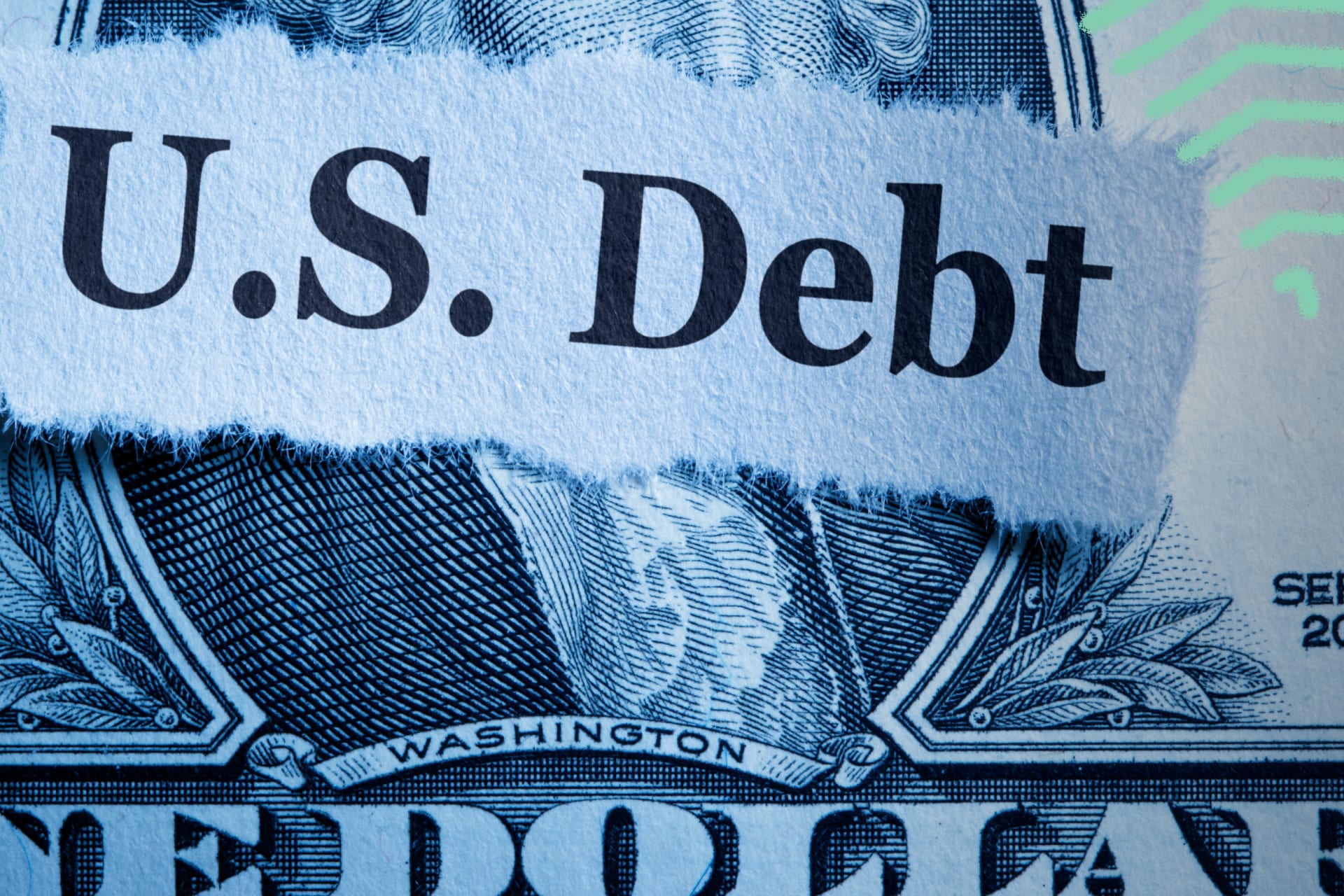
But just for people here listening who might not be as familiar with it, for the last century, basically, the debt ceiling has been trying to serve as a check and balance on government spending. And right now it’s at just over $41 trillion, and Congress increased it by $5 trillion just about a year and a half ago. Not even, right?
It was part of the big, beautiful bill passed on 4th of July. So it’s pretty extraordinary that we have blown through that $5 trillion increase already, but we’ll leave that aside. I think most estimates suggest we’re gonna hit that new ceiling again sometime spring, summer, but of course the Treasury can use special measures to extend it for some months, not forever, probably not a year, but for some months.
What’s interesting to me too about this is that you have people on both sides of the aisle now saying, this thing is a joke, let’s just get rid of it. President Trump has said that repeatedly. And then on the other side of the aisle, obviously, Elizabeth Warren, Senator Warren, has also said we should get rid of the debt ceiling.
So there are some people saying it doesn’t work, it’s leverage for the other party, kill it. At the same time, I think most Republicans in Congress don’t wanna kill it, they just wanna raise it. Is that, am I off on anything there?
TREYZ: No, that’s correct.
I would layer on that the bond market and investors who have a concern over federal debt want us to have some leash on Congress, something painful that they have to do in order to keep their fiscal house in order. This debt ceiling check serves as that, that leash. I would also say that under reconciliation, you are permitted to raise the debt ceiling by a certain dollar figure.
You cannot do what they did during the Boehner era where they extend it through a certain date. You remember when they were doing that? This is a really politically toxic vote.
And as you suggested, we’re not increasing it by a trillion dollars at a clip now. We’re doing five trillion and running through it in less than two years, that’s a huge problem. So the bond markets and investors in general want to have that leash, but it’s really not serving a purpose.
My point is under reconciliation, you cannot just simply abolish the debt ceiling. You will have to increase it by a dollar figure. They’re gonna have to eat that awful vote to say, yes, I do support a $45 trillion debt ceiling.
That sounds great, and that’s gonna be the vote.
PATTERSON: Yeah, and then we’ll come back to haunt them in 28, for sure, yeah. So hypothetically, let’s just do a scenario. Hypothetically, the Republican lame duck Congress is not able to get this done in time.
They go home for the holiday and year end, not passing this vote. So now fast forward to next summer or fall, and we’re at the X date, whatever that is, or D day for the debt ceiling. So two questions, what would the Democrats be pushing for as leverage to do this?
And do you think a divided Congress or one where the Democrats have that leverage, would they actually flirt with even a technical default? I mean, that’s a big card to play.
TREYZ: I think it would be overly optimistic and borderline irresponsible to think that we wouldn’t take it to the limit. That’s just how they operate now. So it’s going to the X day.
I imagine that it will. So under extraordinary measures, the Treasury Secretary historically gets somewhere between three and eight consecutive months of fixes. They stopped funding the G fund, payouts to veterans.
You can do some squishy math. Maybe we’re talking about this in September of next year. Regardless, they’re going to have a crunch time.
And the last time we had a confluence of the government shutdown, which is at the end of the fiscal year, September 30th and the debt ceiling, we shut the government down in a massive organized display and we got a downgrade, if you’ll recall. So I think there’s going to be a number of factors that play in here. Number one, we probably will get a downgrade again from S&P or Moody’s or something along those lines.
Investors will be prepared for that and they’ll respond to it. But we also have some major differences, which is that our debt is outrageously high at that $40 trillion mark that you just mentioned. We are seeing the debt continue to grow exponentially.
I believe the figure is $12 trillion came from just President Trump. So that’s a 30% of the entirety of our debt. So it’s compounding.
And then we have the other issue that’s really going to play into this to some extent, which is AI. So if AI is coming and displacing federal workers, sorry, not federal workers, just American workers, and the rate is something along the lines of what Bridgewater expects, which is 18%, you’re now out at the Treasury almost $800 billion a year. Because we are workers, we pay income tax and payroll tax that we were just talking about.
And that goes to pay whatever it is that the Treasury wants to spend money on. So if you have this confluence of events all occurring, you’re going to be talking about the need for revenue in this deficit increasing, debt ceiling increasing bill. And at that point, Democrats are going to ask for quite a lot.
They’re going to say-
PATTERSON: So that’s what, yeah.
I want to come back to taxes and AI later, because you’ve written some really good research on that recently. But first let’s talk about what would the Democrats ask for in order to secure their support to raise the debt ceiling? And what can they get from the Republicans?
TREYZ: I think it would be several things. Number one, end the war. So we’ve had a number of war powers resolutions votes.
They have not passed. They have not gotten a veto-proof majority, but they would be able to hold the president’s feet to the fire on that. And let’s recall that if we don’t get a reconciliation bill in the fourth quarter, that means the Pentagon does not get the $350 billion they’ve been asking for.
They don’t even get the $100 billion that Congress, I think, is prepared to provide them on the Republican side. So votes on the war, votes on tariffs. Not all tariffs.
The Democrats are still finding their true north on tariffs now that we’ve set the world upside down and Republicans are no longer the party of free trade and Democrats may be becoming the party of free trade. The one thing that they’ve really coalesced around is the Canada tariffs. Those in particular create unity amongst the Democratic Party.
So we’ll want to get those taken off. They have obviously a number of investigations that they’re going to want to see, whether it’s into the president’s own family’s involvement in the crypto space or predictive markets. They’ve found that after inflation and affordability, corruption and the war and there’s one other issue that really pulls what data centers, obviously, that really attracts voter opinion, especially on the Democratic side and increasingly on the independent voter side.
So they’re going to seize on that piece as well. And then I think they’re going to migrate into the potential for a big tax bill that we can discuss.
PATTERSON: Yeah, yeah. Yeah, I mean, I keep thinking about, and you mentioned briefly, the bond market, the potential reaction both into and if we had another downgrade, if we flirted with a technical default. So America’s not going to default default, but you could have a partial default where certain things aren’t paid or extended just for a few weeks, that would be bad enough.
But so, I was at JPMorgan in 2011 when we had that one.
TREYZ: Right, so, right, we’re both having a little bit of PTSD here, I think.
PATTERSON: And again, I want to just quickly monologue for a second, just, you know this, I know this, but to make sure we’re all on the same page, what it can look like.
Because I honestly think what happened then may feel similar to what we could live through this coming year if we don’t get that preemptive debt ceiling raise in the lame duck. So it started in April in 2011, the S&P ratings agency put the US credit rating on negative watch, like that was step one. The debt ceiling was actually hit in mid-May, but Treasury Secretary Geithner at the time used extraordinary measures, as we just discussed, to extend and August 2nd became the new X date.
TREYZ: My heart’s beating faster.
PATTERSON: I know, I know, I know, it’s just like, oh God, yes, I can picture myself on the trading floor right now, like it’s all, like when I was writing this up and thinking about it, I’m like, oh, that was a long summer. That was a really bad summer.
So they kept talking all summer, both sides. Investors were getting more and more nervous. The stock market started getting wobbly, I’m sorry.
And President Obama announced a deal on July 31st. The market was like, okay, maybe, maybe. The House passed the Budget Control Act on August 1st.
The Senate passed it on August 2nd, which was literally the X day that Geithner had identified. So when you said earlier, we’re gonna go to the wire, you’re sure of that? That’s what that looks like, that we don’t actually get an agreement till the literal day.
It was so, look at you, you’re like this.
TREYZ: We should all just curl up into the fetal position.
PATTERSON: I know, I know.
So what the market really disliked though was that whole episode led S&P to actually downgrade the U.S. on August 5th. So it was after a deal was struck. The downgrade wasn’t because of the deal, it was because of the behavior by Washington.
It was political brinksmanship, lack of serious effort to get the country’s debt trajectory under control.
TREYZ: Can I pause you really quickly?
PATTERSON: Yeah, jump in.
TREYZ: That is a huge source of core memory for lawmakers that were there. They were furious at the ratings agencies when they downgraded, judging them on their behavior and their interpretation of democracy and how to vote.
And they still haven’t forgiven them.
PATTERSON: Both parties too, both parties. I’ve spoken with lots of Democrats who are very, very angry about that, still are. I agree with you.
You would hope that would lead them to think more this time around, but you know, whatever. So the Monday after the downgrade, we all come into the office, the S&P 500 falls 6.7% in one day. And that was the worst one day fall since 08, another thing that we enjoyed living through.
What was so interesting to me then, and we actually had the right call, which I’m happy about, but I’m not sure about this time, is how bond markets react. In 2011, when the stock market, and from peak to trough, it fell about 20%, bonds rallied, yields came down, right? People went into bonds as a safe haven, despite the fact that we were downgraded.
And I look at then versus now, the level of our debt, the size of our deficits, the rise in yields, the fact that the market is getting less stable. We see that there’s a volatility index for treasuries called the MOVE index. I know you know this.
And it’s up a lot. It’s disengaged from the stock market. So the market, as President Trump would say, is already yippy, right?
So we’re yippy. Now, if we don’t get the debt ceiling increase in December, and you’re at a period of time where market liquidity is poor to begin with, this is creating that perfect scenario for the bond market to have a pretty big move. I’m not convinced it’s gonna be a repeat of 2011 where bonds are a safe haven.
Maybe if they are, it’s gonna be by a fraction of the amount of 2011. But I’m curious, you’re advising a number of investment shops. Does that ring true, what I just said to you?
Are they thinking about it differently? How are you thinking about it?
TREYZ: That is exactly why I have 30% odds of them raising the debt ceiling in the lame duck. They will tell me actively, you’re gonna have attendance problems. There’s not enough votes.
They don’t have enough time. They won’t pass it. The thing is they have to.
Having this fight with a president who as a historical context has said, let’s just default and find out what happens, that’s not funny. And that won’t be a laughing joke or throwaway line. The president has said that in the past.
And we’re gonna have a conversation about the ridiculous things like minting the coin and hiking it by some absurd figure. Again, abolishing it would be an option, but you cannot do that under reconciliation. So it would have to be bipartisan.
And you’re not gonna see votes from the Freedom Caucus for that. And I don’t think Democrats would let the president off the hook with that. So you’re gonna have this brinksmanship.
And at that juncture, when you have an opportunity to really extract concessions and pain, I don’t think it’s gonna just settle on, I want you to take some of the tariffs off of Canada. That’s not enough. I’m not gonna force Republicans to take a war powers resolution vote.
At that point, you’re gonna have to open up the tax code. So then we’re talking about what are we doing? And God forbid we also have an event where unemployment has risen as a result of AI coming to fruition, being used by small and medium sized businesses and leading to any kind of hit to unemployment.
Then we have a perfect storm. And at that point you get a big bill.
PATTERSON: Okay, so 30% odds, we get a debt ceiling increase in the lame duck, which means your base case is that this is gonna be a mess at some point next summer or fall. And the big bill you think could include a big tax bill. So let’s talk about AI and taxes for a minute.
Anthropic, I mean, there’s so many firms now doing, I think great economic research about AI and I’m happy to see it. Anthropic came out with something in the last week or so where it looked at three scenarios of the speed of AI adoption and the impact on growth, on wages and on jobs. And they found the faster the adoption, the bigger the potential hit to jobs, which I thought was, I kind of think it makes common sense, but it was useful to see how they quantified it.
But what that tells me is if we do continue to see fairly rapid adoption in the US and we do see some job losses in the next, call it 12 months or so, that’s gonna put even more pressure on Congress to have bills out to help their voters who might be losing their jobs or are fearing that they’re losing their jobs. So, the question to me is what kind of bills do you think could get passed? Could it get bipartisan support?
I mean, I think it’s hard, this seems like a bipartisan issue. No one wants to see their voters taking a hit from AI. So, when we talk about AI bills, what do you think we’re likely to see next year?
TREYZ: I find comfort in the tax code, which I understand makes me an Uber nerd, but.
PATTERSON: Comfort in the tax code, all righty.
TREYZ: I’m telling you, it helps.
PATTERSON: I’m gonna have you and Natasha Sarin on together soon because the two,
TREYZ: Yes, that could be fun.
PATTERSON: Okay, good. Just get super nerdy on taxes, I love it.
TREYZ: Look, it makes the world go round. I used to have this fight.
PATTERSON: Death and taxes.
TREYZ: That, true. And there’s a fight to be had about whether energy really makes the world go round, but as we’re seeing with the Strait of Hormuz, that’s a tax problem. It’s a tax and regulate problem through the Strait, not an energy problem.
So, although it is that too, but I digress. Okay, so here’s the way to think about it. What I would concentrate on the tax writing committees, AI is unwieldy.
It’s gonna have impacts across the environmental committees, across labor committees, commerce, et cetera. I would really concentrate on Ways and Means in Senate Finance. Like I said, that’s my happy place.
So Ron Wyden has a bill. If the Senate goes down, he will be the chairman next year. And his bill focuses predominantly on what you would expect, the easy lifts, which is repealing the preferences provided in the one big, beautiful bill.
So his bill seeks to eliminate the bonus depreciation allowance for data centers, the permanent R&D tax preferences, all those pieces that aren’t tax hikes. They’re the removal of a preference, which is DC speak for, I’m gonna take your money, but I’m not gonna raise your taxes.
PATTERSON: But in that case, couldn’t the Republicans just say, oh, the Dems, they’re anti-business as always. The immediate expensing, I mean, that has been a stimulus. That is part of the reason the S&P is up so much this year, beyond AI.
I appreciate why they would do that. We need the revenue. But that particular one, like data centers, easy, right?
No one’s gonna fight you on taxing data centers or taking something away. But the immediate expensing, you think that would get through?
TREYZ: That’s one of the top pieces. So right now it’s only on data centers. Based on my estimates, the bill that Senator Wyden is getting worked on right now, it’s a white paper at this juncture, is maybe a $300 billion package.
That’s nothing.
PATTERSON: I mean, that was my reaction in my head. I’m like, 300 billion.
TREYZ: Correct.
PATTERSON: Right, and we’re raising the debt ceiling by 5 trillion. And you’re suggesting, or Bridgewater, my former employer suggested that the job losses could be something like 18%?
TREYZ: Correct.
PATTERSON: Yeah, okay, so the math isn’t mapping.
TREYZ: Not even remotely. And by the way, that $300 billion score is over a decade. And we’re losing $800 billion a year if the unemployment rate is hit at the 18% threshold that Bridgewater is suggesting.
Although that is an extreme number, right? It’s an extreme number, but we’re all sort of grasping in the dark on this one.
PATTERSON: Yeah, fair.
TREYZ: So on the one hand, Congress is telling you that they don’t think this is a huge victory event on the AI front. It’s not gonna come and change our entire universe. It’s gonna be a $300 billion over a decade problem.
And the industry itself is saying, no, no, it’s gonna be much more than that. So you have an automatic disconnect. But your question is exactly the correct one.
Are they really gonna be able to claw back tax preferences that have been stimulative? Well, one of the best things about the tax code is that when we go into, and I get anxious about this, I would like for bonus depreciation to be not permanent, to be temporary, because I know we’re gonna have a recession in the future and I’m gonna wanna use it again. I remember when we put it into all the different tax bills we’ve had since the Great Recession.
It’s hugely stimulative. I think Bush did it for the first time. And you get this 100% bonus depreciation allowance and then you get to stimulate the economy.
I want that back. I want the option to stimulate back.
PATTERSON: So take it away now. So when we have the next crisis, you have a tool you can use to help the economy bounce quickly.
TREYZ: That’s my PTSD reaction to the tax code. But the other alternatives are increasingly progressive and increasingly not the kind that you would expect from a traditional Republican party. It’s much more populist.
This president and J.D. Vance, who’s widely viewed as at least a contender on the presidential field for the next cycle, would take a share in these AI companies. So fine, give us some stake.
PATTERSON: How much do you want? I find that one hard. So Natasha Sarin from Yale Budget Lab, we did a deep dive on AI and taxes specifically a couple of weeks ago.
And I know Sebastian Mallaby, my former co-host, now writing his beautiful book on Anthropic, others, the sovereign wealth fund idea, right? Take a stake in the companies, distribute them to Americans. It sounds good, but if I’m on the board of one of these companies or I’m a shareholder of one of these companies, I know it’s a small piece of the pie compared to the whole pie, but still, am I happy about that, that the government’s just taking away my money as a shareholder?
How are they gonna oversee it? How are they gonna be accountable? If you’re in a position, how do you take profit?
Look, Norway has an amazing sovereign wealth fund and the dividends it is able to give to the government help go back to citizens and improve their quality of life. And Norway has a huge budget surplus, but this is very different than that. So I’m open-minded on the possibility of taking stakes and having some sort of sovereign wealth fund, but I also am having a hard time seeing how it would be a quick, easy solution, if doable at all.
TREYZ: Absolutely, hitting the nail on the head. First of all, what rate are you taking it at? There’s a proposal out there for some incredible economists in a white paper that suggests taking a 5% equity stake, but Bernie Sanders has a plan to take 50%.
PATTERSON: Don’t you think that’s performative?
TREYZ: 100%, for sure, just to keep the percentages flowing. That’s absolutely correct.
But the one thing I have learned from all of my time covering D.C. is that whatever one Congress does, no future Congress is limited by. So we take a 2% golden share, let’s just say, there’s nothing that prevents the next Congress from coming in and saying, actually, it sounds better if that’s 4% or 10%. And you’re talking about now having to appropriate those funds out after you receive them, that requires Congress.
So the president can take a share, like we’ve seen him do in Intel or IBM or even the golden share of U.S. Steel, but if you wanna spend that money, which theoretically we would want to if we’re displacing American workers, you need Congress to get involved, and it gets real messy real fast.
PATTERSON: Right, and are you hearing any bills on universal basic income as part of the solution? I am skeptical doesn’t even do it justice, on my view on UBI, because the amount you would need and does it have impacts, I think the data is pretty mixed on how useful it is. Actually, there was a great article this week in one of the major papers, and I apologize, I’m forgetting which one right now, that tracked people who got basic income for a year and how it affected or didn’t affect their lives.
Net positive, life-changing, no. Did they save the money? No, so it helped them for a year, and then it ended in ta-da.
But are you seeing any bills with UBI attached to it, or not yet?
TREYZ: That’s a $7 trillion package, as you suggested, so at that point, you’re gonna need a substantial equity stake in order to get to that threshold.
PATTERSON: That’s the only way to get there.
TREYZ: There’s not enough taxes to pull, and it needs to offset lost human work. The only thing I like about what you just said is that the people spent it. We are obviously a consumer economy.
That’s what you would want. The worst-case scenario would be people get it and then they save it. You want them to spend it.
PATTERSON: Before I wrap up, I can’t help myself. Your home base these days is New Orleans.
TREYZ: It is.
PATTERSON: And I think that’s amazingly cool. I love good food. I am a food person, and I love jazz, and my husband loves jazz even more.
Those are good reasons alone to live there.
TREYZ: My hair doesn’t like New Orleans very much. Humidity’s not my friend.
PATTERSON: Is it just a personal choice? Do you actually find being there outside the Beltway, outside Wall Street, gives you some interesting perspectives as you do your job? I’m just curious about that.
TREYZ: I will say that I find it very stark right now. The odds of Democrats winning the Senate is 64%. In Polymarket, I would say the enthusiasm I hear, you know, I convene lunches for investors all the time, and some people are saying Dems are gonna pick up 56 seats.
PATTERSON: Hmm.
TREYZ: I live in Louisiana, and to harken back to 2016, if you don’t have a friend with an F-150, you are not participating in the American experience.
PATTERSON: All right, just to make sure everyone understands, F-150s are a big, you know what, American truck.
TREYZ: Yeah.
PATTERSON: I accidentally rented one once, driving around Florida in my four-door F-150.
TREYZ: Yeah, you are.
PATTERSON: I couldn’t even see the road, but man, no one was getting in my way.
TREYZ: No.
PATTERSON: That was fun. All right, sorry, back to New Orleans. Yes, perspective.
So everyone you know has a F-150. You’re describing the demographics.
TREYZ: Yeah, exactly, and you know, you go there, and I would say that it’s really helpful because the enthusiasm you see here is so starkly concentrated here.
PATTERSON: Yeah.
TREYZ: It is not felt throughout the rest of the heartland, and so when you say to me, you know, this is gonna be a massive wave election, I hear you.
It’s a wave. Dems are gonna take the House, but D plus eight is not the same as, you know, hope and change like you saw with Obama. This is not that.
So there are gonna be uniquely unqualified candidates like we have seen in some of the key states. I would say Texas is a pretty obvious example, and maybe that’s what it takes to get you over the line, but the rest of the American public is just trying to pay for gas, and if they don’t feel like they have enough money to go get gas and go vote on Tuesday, that’s how Democrats will win, if Republicans sit it out, but there’s not this overwhelming Democratic wave that I see. Dems need a leader, and they will get one as we go into the 2028 presidential candidacy.
You know, there will be 20 people on that list of folks that are running, and they’ll find their leader, but it’s very helpful not just to be in IRIS, the longest running all-female crew in New Orleans, which I’m a part with my best friend Prudence.
PATTERSON: Very cool.
TREYZ: It’s awesome, and the music is amazing, as you suggest, and I get to go fishing, and I love it.
PATTERSON: Oh, that sounds good. Well, listen, I’m gonna make sure I grab you the next time I’m down there for coffee, a beignet, and maybe some fishing. I could do that.
I’m not afraid to put a worm on a hook, but for now, just a huge thank you for coming on The Spillover today. I think this was incredibly useful to unpack for people. I don’t think it’s appreciated enough, and so everyone who has the luxury of watching or listening to us is gonna be more educated today, thanks to you, so thank you.
TREYZ: A delight to be here. Best of luck. Hopefully, none of the scary stuff that we just walked through happens over the next year, but really appreciate it.
PATTERSON: Thank you, Henrietta.
TREYZ: Thank you so much for having me. It’s a treat.
PATTERSON: Do you wanna stay up to date on the latest episode of The Spillover? Please sign up to receive an email alert when new episodes drop, or go on to cfr.org slash newsletters, click the link in our show notes, it’ll all get you there, and if you have an idea or just wanna chat with us, please email podcast at cfr.org, and make sure you include Spillover in the subject line.
Our episode today was produced by Molly McAnany and Gabrielle Sierra, our video editor, Claire Seaton, our sound designer and audio engineer is Markus Zakaria, and our video producer today is the wonderful Justin Schuster.
This work represents the views solely of the host(s) and guest(s). The Council on Foreign Relations is an independent, nonpartisan membership organization, think tank, and publisher, and takes no institutional positions on matters of policy.
Producer
- Producer, Podcasts
Supervising Producer
- Director, Podcasting
Audio Producer
- Audio Producer & Sound Designer
Video Producer
- Associate Producer, Video and Audio
More Episodes
 48:01Podcast
 47:25Podcast
 50:17Podcast
 47:25Podcast
 52:31Podcast
 48:40Podcast