What We Got Right (and Wrong) This Year
This week on The Spillover, hosts Sebastian Mallaby and Rebecca Patterson unpack what they got right—and wrong—in their forecasts over the course of the year so far, covering the “Fragile Four” economies, OpenAI’s funding crisis, the AI IPO race, the Iran war, and more.
Published
Hosts
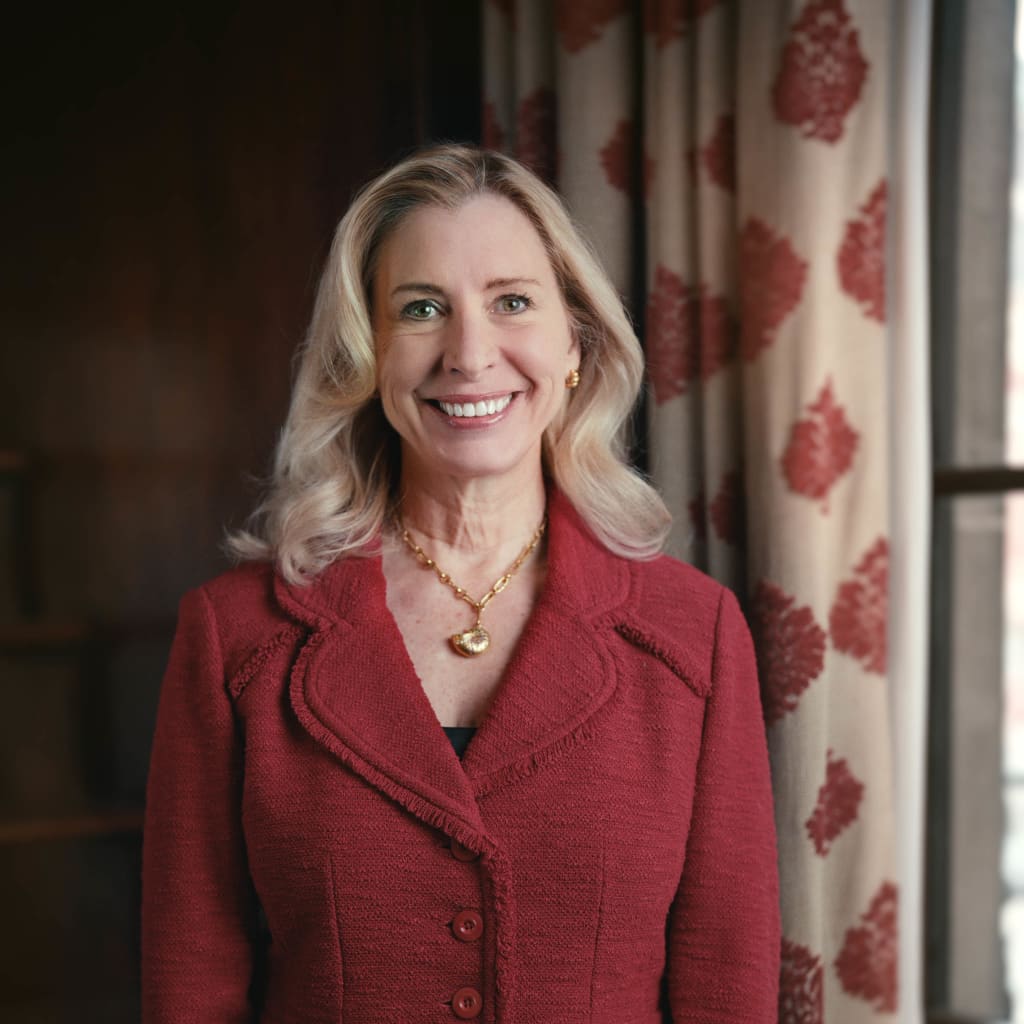 Rebecca PattersonCFR ExpertSenior Fellow
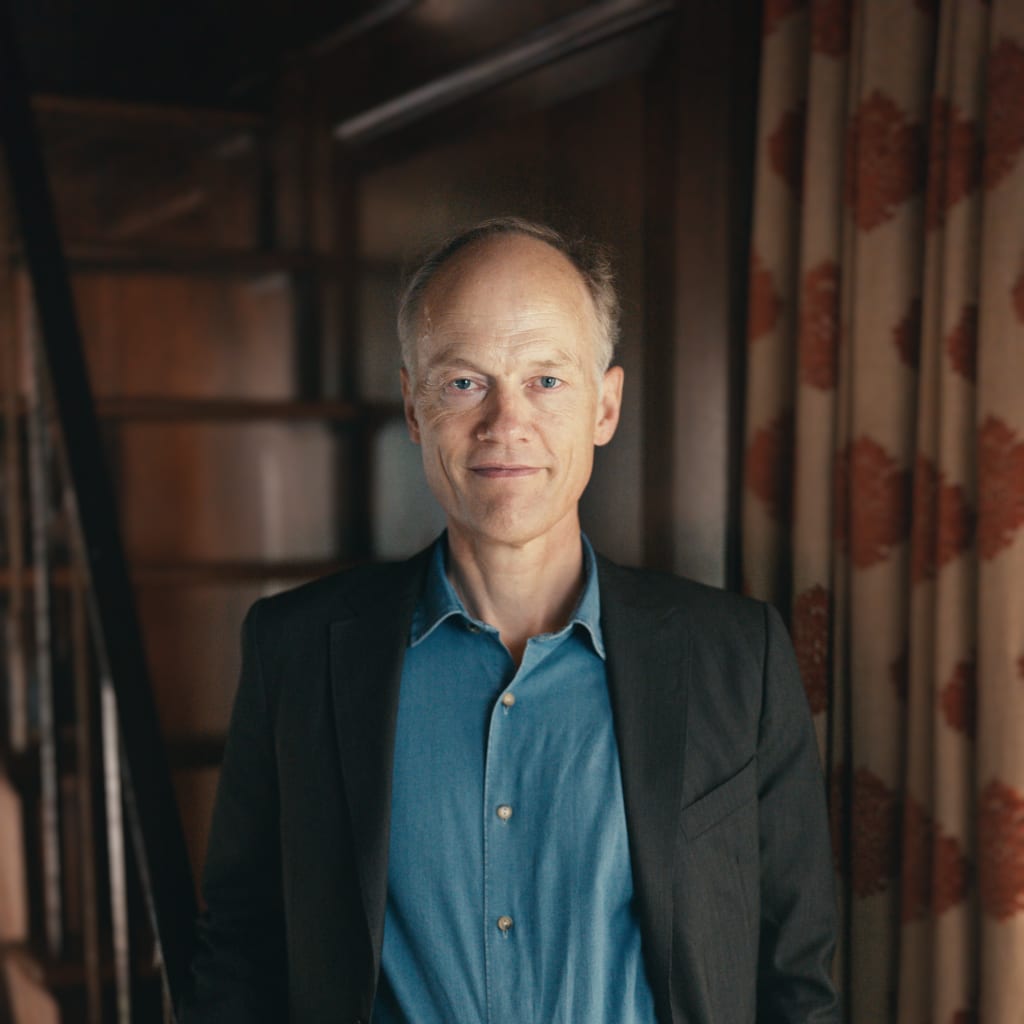 Sebastian MallabyCFR ExpertPaul A. Volcker Senior Fellow for International Economics
[Video: https://youtu.be/Hs8SgQ9FxZ0]
Transcript
This transcript was generated using AI and may contain errors.
PATTERSON: Sebastian, today is very bittersweet for me. I am so excited that you’re embarking on an incredibly, incredibly cool new book project. And I know when that book comes out, it’s going to be something that the whole world appreciates.
So I’m happy for you for that. But it means that you have to leave The Spillover as my co-host. And I’m going to call you from time to time for guest appearances.
As you travel the world doing your book research, you’ll be like, where’s Waldo? And I’m asking you this now at CFR Live, because that way there’s a lot of guilt, and you have to say yes.
MALLABY: I say yes. I do feel guilty. I’m also very regretful.
I was actually, you know, my typical commute, I fly in from London on a Monday, London, New York, I’m in midtown, I’m looking for a salad, I go to Sweetgreen. I’m in there buying the very glamorous dinner, the avocado chicken option. And some complete stranger comes up to me and says, I recognize you from The Spillover.
So I do know that we are, you know, getting traction. We are getting viewers. We are getting viewers who tend towards healthy options in the evenings.
So yeah, I regret it.
PATTERSON: Well, if you regret it so much, why are you bailing? Come on.
MALLABY: Well, I wouldn’t accept that this new book project is kind of special. I’ve gotten an agreement to write a book about Anthropic and Dario Amodei, the founder. It’s only the biggest revenue ramp in the history of capitalism.
You know, the most frontier technology in the history of humanity. A founder who doesn’t mind saying his mind on all kinds of public policy issues and safety issues. So it’s just one of those things.
I have to give it my best shot. And that means bye bye to The Spillover, leaving my friends and family in London, moving to San Francisco and really all in.
PATTERSON: I mean, I do hope that you stay in one of those Silicon Valley frat houses where you get all these tech bros sharing a house and then you can vlog it and we can see what your life is like out there on the West Coast. So just consider that. Consider that.
MALLABY: Message out there into the ether if there are any Spillover listeners with group houses where you talk about nothing but AI, you know, with a spare room.
PATTERSON: A spare room or at a minimum, a good dinner party now and then. That’s a healthy option. All right.
So the good news, Sebastian, is I really believe The Spillover is much bigger than just the two of us. You know, over the last several months, we’ve had 36 episodes and we’ve had two dozen guests in those episodes. And we need those people because you and I only know so much.
And we’ve gotten some amazing experts to come on and help us make sense of the big picture trends that are shaping our world today. So we’re going to figure out The Spillover new world order. And in the coming weeks, while we’re doing that, we’re going to make sure we cover some really important topics.
I mean, we just had a first round election in Brazil. We’re going to have a runoff at the end of October. And I think this is an important election on a lot of levels, not the least of which is that the markets are acting like this is a referendum on fiscal policy, which to me is kind of interesting when you think about a lot of developed economies today.
So that’s one I definitely want to hit. I want to come back to something we talked about last week with Adam Posen. It’s the 50-year anniversary of the UK bailout by the IMF.
And, you know, when you watch what’s going on with interest rates and bonds around the world, could we be facing that again? I think we should dig into that. What does it look like?
How does it transmit around the global economy and markets? And then I just came out of a very cool session with CFR’s Global Board of Advisors. And one expert who came into the room was talking about a midterm lame duck session.
And I don’t know about you, Sebastian. I’ve never thought about a midterm lame duck session. So between the election and when the new Congress comes in, the old Congress that’s still in power still can make policy.
And there’s some very interesting risks. And I don’t think anyone’s talking about it. So I want to come hit that.
So I’ve got at least three non-AI topics. Not that we can’t do AI without you, but I think they’re pretty important. So we’re going to keep going while we figure this out.
And as I said, we’re going to get you back as a guest.
MALLABY: Sounds fantastic. You’re fizzing with ideas. I have every confidence.
It’s going to be great.
PATTERSON: Yeah. Well, thank you. I appreciate that.
And look, I think what would be fun today is if you and I give ourselves a little bit of a report card. You know, growing up as an investment bank researcher, at the end of every year, we would say, okay, what calls did we get right? What calls did we get wrong?
I mean, that was pretty important to determine our bonuses. I think for us, you know, this is a labor of love. So maybe it’s just in street cred and respect rather than money.
But I thought we could spend some time talking a little bit about some of our forecasts that we’ve made so far this year and how we’ve done. Are we super forecasters? Should we just let Claude do it all for us?
MALLABY: Sounds good. That sounds, I think the accountability part is good. And also the learning from mistakes part is good.
PATTERSON: I agree. I agree. And as it happens, our podcast team has kept track of all of this.
So they’re going to hold us to account. And I want to start with our first episode in February. You know, early February, we talked about how Japanese Prime Minister Takaichi was trying to increase growth in the country as a way to, as Scott Bessent would say at the Treasury Department, grow their way out of the debt.
They wanted to make big investments in infrastructure and defense in technology. And, and they were also trying to appease. She was trying to appease voters who are frustrated by affordability.
And the challenge there is that all of that pushes up bond yields and Japan’s debt is already 200 and something percent of GDP. So it’s not great. That led us to a conversation about what we call the fragile four, Japan, US, UK, and France.
And, you know, they all share some of those same fiscal political dynamics.
MALLABY: Right. And I remember I think at the end, we had a vote between us on like, which was the most fragile of the fragile four. And we picked France.
And we, the argument was that politics in France make austerity close to impossible. The deficits were big, the budget deficits, well over what the European Growth and Stability Pact allow for. And France, unlike the other three countries in our fragile four, does not have its own central bank.
It’s part of the euro area. So the European Central Bank makes the decisions for it. And so it seems like France was the most vulnerable to the kind of debt crisis we saw 15 years ago with Greece and Italy.
I mean, Greece and Ireland, Portugal and Spain. And although the French economy hasn’t blown up yet, it’s definitely not doing well. The 10-year bond rate, the government bond rate, highest level since 2010.
And whereas 15 years ago during the euro crisis, people would say, you know, if there’s one big European economy that’s kind of too big to fail, that might nonetheless get in trouble. Everybody was talking about Italy. Now, it’s really France that takes that slot of the big one that might go down.
French government yields are trading well above Italian 10-year bond yields. There’s clearly a worry about where the budget deficits are headed and whether politics are going to make it possible to course correct. Right now, if you’ve seen the headlines, France is going through yet another of those periodic bouts of violent protests and demonstrations in the street.
It’s a tough place to govern.
PATTERSON: Yeah. Yeah. I mean, you hear people asking if some of these countries are literally ungovernable.
And I don’t know if that’s a real word, but it’s being used that way. And I get it, right? Anytime you even hint at fiscal austerity or not spending enough to help voters with affordability issues or quality issues, right?
In France, there’s frustration about education, about pensions, about health care, all of it. They push you out of office. So I was looking just how our fragile four bond yields have been changing since that Spillover episode in February.
And we got it. So France has seen the largest rise in its 10-year government bond yield, about 150 basis points or one and a half percentage points. The U.S. was number two at 121 basis points, the U.K., 97, Japan, 86. So they’ve all seen large increases in their 10-year government bond yields. But the French ones have been the most pronounced, and they have definitely created contagion to their stock market. French stocks are one of the few European markets that are down year to date.
And so I’m kind of sad that we got this forecast spot on.
MALLABY: All right. So maybe stop congratulating ourselves. What else do we predict?
PATTERSON: Yeah, that was our best prediction.
MALLABY: So yay us.
PATTERSON: Okay, now let’s get to the things that weren’t so great. And I don’t like being right for reasons that are not good for economies or markets. But look, since the end of February, you, pointing at you, sir, threw down the gauntlet in a very big way on OpenAI.
And I remember that episode. You got my attention. I think my mouth literally dropped open.
Because if you had a large AI company having a crisis of that magnitude, even if temporary, it would be hard for me to imagine that it wouldn’t pull the whole market down, at least for a period of time. And given how important that wealth effect from equities is for the consumer and consumption and growth, OpenAI having a problem would be a problem for the whole U.S. economy and probably the global economy a bit. So that was scary to me.
On the other hand, look, OpenAI, it has been able to keep going to the market so far to get funding. It’s testing that, right? They pulled their IPO.
But you said that OpenAI had a 50-50% chance, if I’m getting this right, of running out of money effectively by summer of 27. And the window’s still open. You still have time to be right and OpenAI to have a crisis.
And OpenAI is doing some things well, some things not well. It’s projecting free cash flow of negative $278 billion now through 2030. And its spending needs on compute and infrastructure are about $856 billion.
So as we’d say, the math does math. So do you still stick with your crisis view?
MALLABY: Yeah, look, I think on this one, we don’t really know yet. I mean, I said 50-50. I still feel it’s 50-50.
PATTERSON: Just a high probability, right? Even if you could, some people would say like, oh, he’s on the fence. No, 50% odds is high.
MALLABY: Yeah, of going from a valuation which is around a trillion at the moment and they’re gunning for something higher to basically being taken over and absorbed into another company at a big discount. Yeah, I’m definitely on the negative end of the spectrum. And I would start by saying, look, in terms of products and science and engineering, they were good, they are good.
That’s not the problem. I mean, if you look just at the last month, they’ve released a whole new suite of products, the GPT 6.0, GPT 6 products, which have the names, you know, Sol and let me see if I got this, Sol Astrolunar, that’s right. Anyway, these are basically equivalent to Anthropic, which had been the number one, and now they’re kind of equal number one, depending on which kind of task you want to do.
If you look at the coding assistant, Codex, which OpenAI produces, that got a big upgrade earlier this year. It’s also very good. It’s also equal number one.
And given that OpenAI has had a very, you know, crazy and well-publicized staff churn, with lots of top people leaving to do their own startups or joining a rival like Meta or Anthropic or what have you, it’s pretty impressive that the pipeline of fantastic products and fantastic science is as strong as it ever was. And so I think kudos to Greg Brockman, Sam Altman, the leaders there, that they’ve kept that on the road. But the problem is not the products.
The problem is, as you said, the burn, the cash burn, right? And back when I made this call at the beginning of 2026, the leaked documents on their internal financials, which they always have to produce to raise money in the private markets, and then they get leaked. So they were saying the projected loss, the gap, was $660 billion between now and 2030, or then in 2030.
That’s now in the latest number, as you said, almost $280 billion. So it’s smaller. But $280 billion is still a very big number.
And they are talking about a new fundraise. They’re targeting $30 billion. You’d have to do a lot of $30 billion fundraisers in order to get to covering that $280 billion gap.
So that’s the question.
PATTERSON: And what are you watching to see if they can pull it off, or if they do end up facing a financial come-to-Jesus moment and they have to get absorbed by someone?
MALLABY: So we’re talking now about a private company. So you can’t just look at the stock price. But what you can look at is the kind of gossip on how keen the investors are to put money into the private rounds.
And just since I got into town yesterday, I’ve talked to two senior tech investors.
PATTERSON: That’s Sweetgreen.
MALLABY: Not just Sweetgreen. No, I talked to them in another context. And they both said variants on the same thing, which is, look, back in 2024, 2025, if you heard about a new investment round in OpenAI, and you wanted to put in, say, half a billion dollars, because they were going to cut you back by two-thirds because it was oversubscribed.
In the round they did earlier this year, end of March, where the headline amount they raised was $120 billion, so very big. The bad news for them was that if somebody said they wanted $1.5 billion, they immediately got the full allocation because, in fact, they were scrabbling around to raise that money. And furthermore, a lot of the promises they got were conditional.
They were conditional upon, you know, you have to go public, and then we give you the money. Or we’ll give you the money, but in the future in tranches. Or we’ll give you some, you know, GPU chips and other computational resources instead of money, right?
So there was some hedging around the pledges. And the other thing I watch is that, you know, there are certain other private actors which are very closely intertwined with OpenAI. And one of them is SoftBank.
And SoftBank has been scrambling to raise money to make good on the cash it promised to OpenAI in the last round. It had to raise junk bonds at a very high interest rate recently. It wanted to float its subsidiary that builds data centers called SB Energy.
And that flotation, they released the prospectus, and then they delayed just recently the IPO. So there are signs with SoftBank that they’re under stress. So as a source of fresh capital for OpenAI, they’re not so dependable.
I just feel like, you know, they’ve been to the well. And the products are great. Don’t get me wrong.
But I think the funding is just really precarious.
PATTERSON: And part of that is their own doing, in a way, because AI is such a tsunami of capital going into the market. It’s supporting growth. In certain areas, it’s pushing up inflation.
That means the Fed has to raise rates, which pushes up bond yields, plus the competition they’re putting on other bond yields. But what it does is it raised their borrowing costs. So when you mention things like SoftBank or issuing debt and, you know, the cost of capital, it’s partly because of them.
And it’s partly external factors. But either way, as you said, they could have a great product. But the external financing environment gets harder and harder and harder.
And I think there’s a chance it gets worse even from here in the coming months. And that would certainly go into your view of something going pear-shaped. But I’d be curious also, like just stepping away from OpenAI specifically for a minute in the financing, you know, as you’re going out west and diving into the book project, are you also going to be keeping an eye on things like Anthropic’s IPO?
I mean, I have to think, yes, on one hand, it’s Anthropic and there’s going to be a ton of demand. And yet we’ve seen other IPOs pulled recently. The environment is not as strong.
Would you be watching that as another data point or something else?
MALLABY: Yeah, I mean, sure. I mean, if they don’t manage to do the IPO, which is now expected in November, that would be a big deal.
PATTERSON: That would be a very big deal.
MALLABY: If they on the other hand manage to do it, it may be the biggest valuation of any IPO in the history of capitalism. Right. So either way, it’s going to be a huge event.
PATTERSON: Would it help OpenAI by showing that you can have a huge, massive deal and it’ll get absorbed regardless of the borrowing environment? Or does it satiate investors who want AI exposure and so it’s harder for OpenAI because they’re the follower and people are like, oof, I already have enough. Thank you very much.
MALLABY: I mean, it kind of depends on like the perception of which company is ahead in terms of both the products and the revenue ramp. You know, for most of 2026, what distinguished Anthropic was that it had a faster revenue growth and it even made a profit. I mean, that’s very untrendy in tech, but they did make a profit in the second quarter.
Whereas, you know, OpenAI had a slower revenue ramp and was losing tons and tons and tons of money. And so this was the big distinction between the two companies. Now, I’m told by one of these investor friends that when the data for September come out, it’s going to show that there will be faster revenue growth at OpenAI this time, right?
Because they have had a good run of products recently. They’ve also discounted the products to try to get market share. So, you know, if you had a situation where Anthropic’s IPO was sort of put on ice and this was associated with falling behind OpenAI in terms of how fast the revenues were growing, then OpenAI might have the best possible shot of going public as the new leader.
On the other hand, if Anthropic remains sort of slightly ahead and slightly more credible and it can’t go public, then that’s bad for OpenAI. Because why would the second runner have a better shot than the first runner?
PATTERSON: And you’re also keeping an eye, that makes sense. You’re also keeping an eye on enterprise users. We all say enterprise now.
Basically, we’re just talking about corporates, right? Or large entities. So what exactly are you focusing on there and why?
MALLABY: Well, the thing is that, you know, at the start of this year, one of the parts of my argument about why I was worried about OpenAI’s, you know, durability was that they had focused on retail. And they had, they’re very proud of their, you know, ChatGPT app. It had a billion users.
This was the biggest, you know, market for any AI company. And, you know, that was their big distinguishing virtue. Turns out as, you know, if you just looked a bit, you saw this, they had tons of people using it, but they weren’t paying any money, like zero.
And, you know, a not very well known fact about their product is that huge numbers of users are in sort of the big emerging markets, India, Indonesia, Brazil, right? It’s gonna be hard to monetize those people. And we’re talking, you know, middle income countries, not people with tons of money.
So, and even in the US, consumers were mostly not paying for it because you could just switch to another model that was free. And that dynamic has only gotten more intense because of open weight models, which are cheaper. So the way you make money in this game is you don’t do what OpenAI did, which is to build a big retail customer base.
You build a big corporate customer base and the corporates want a premium product, which they can really rely on, which is really differentiated from the other models. So if you’re trying to be, you know, get revenue in this game, it’s really enterprise. And so Anthropic did that first brilliantly.
Well, they basically didn’t do much on the retail side. They focused on getting corporate customers because their coding tool was very good, very early. They were ahead in that.
And what OpenAI has done this year, and this is like, you know, since I made that first prediction, which makes my prediction weaker, is that they have focused on the corporate side. They have closed down sort of distractions like their video generation model, Sora, which was just a total money loser. And they’ve got a whole new sales team, I’m told, which is really good at going after corporate customers.
And they’ve doubled down on things like Codex, their coding models. So, you know, that’s the thing to watch, I think. If you want to know, can they make it to solvency, it’s to know how much is their corporate customer base growing and how much does that reduce the cash burn that’s projected.
PATTERSON: Okay, good. Those are good markers. All right, I want to keep moving and talk about another forecast that we had, again, fairly early in the year, right after the Iran war began.
And we brought in the ever-wonderful and candid Natasha Kaneva from JP Morgan, who runs their commodity research group. And at the time, I think you and I, well, we hoped, of course, that it would be a very short-lived war. And we believed that not just out of hope, but because politically, I mean, voters generally are not super happy about wars that you choose to have, especially if it comes with a cost and inflation’s already high.
So we thought, along with Natasha, that the war would likely be short and that if there were a sustained conflict, that oil prices would go through the roof. I think I went back and with help from the team, we were thinking Brent crude could get to maybe $120 a barrel or so.
MALLABY: Right. So we were definitely wrong on the short war. Unfortunately, yeah.
This is a black mark on our forecasting and there’s no way to duck the truth on that one. On the other hand, Natasha was right on the oil price spike. Brent did get close to $120 a barrel at the end of March.
I have to confess, though, although Natasha was right, my memory is that I might have been wrong. I thought the oil price might go higher, given this was the biggest supply shock. I don’t quite remember if I said that out loud.
Maybe I was so in awe of Natasha’s brilliance that I kept my view to myself, but I do remember thinking it. So I want to be transparent about that. And I guess the question is, why was I wrong?
What did I get wrong? And I think we kind of covered the main answer in a later episode on The Spillover, because the big surprise in the oil market this year has been the extent to which China played the role of the swing consumer, not swing producer. But they had enormous reserves.
They’re highly dependent on oil imports coming through the Strait of Hormuz. So they planned ahead. And when the shock came, they had a lot of reserves they could draw on.
They had other tricks, because it’s a command economy and an autocratic government, they can tell people to stop commuting by car and stuff like that. And so they really changed the dynamics of the oil market in a way which served them first and foremost, but actually served the whole world in terms of protecting the whole world from a price spike that could have been worse.
PATTERSON: Yeah, no, I completely agree. I mean, China was a surprise, I think, to everyone, not just us. I’ve also been surprised just at the innovation from so many economies around the world, governments, whether that’s quickly building or rebuilding different pipelines to divert oil or getting ships to go through their transponders off so no one can track them, but just all the different ways different economies are dealing with supply shocks.
And I reflect that maybe some of this could be the fact that this is our third big one in six years, right? COVID was the first one, and then the Russia invasion of Ukraine, now this. So unfortunately, we’re getting reps on big supply shocks, and maybe that is helping companies and governments get better at those crisis response or crisis planning.
And that’s not to say there haven’t been real costs from the war. I mean, the humanitarian one, obvious and horrible, put that aside for this conversation, but there’s still been pretty darn large economic costs.
MALLABY: Yeah, yeah. I think the U.S. military estimates are that through the start of September, the war cost well over $43 billion.
PATTERSON: And we know that’s a low ball.
MALLABY: Right, right. Of course, the retail gasoline and diesel prices have risen substantially, both in the U.S. and globally. I recently noticed that energy prices in Italy are feeding through into extra inflation.
And of course, all that has a further spillover, which is for the political cost for incumbent governments. Incumbent politicians have been doing badly in the big European countries, the UK. You know, the prime minister fell.
We have a new one. We’ve become a bit Italian in that habit. In Germany, Chancellor Merz is very much on the back foot, losing elections to the AfD and to the Linke, the left-wing party in Berlin.
In France, the centrist incumbents are probably going to lose to the far right in six months time at the presidential election. And in the U.S., of course, you know, Republicans are feeling the pain of the war in their approval ratings as we head into the midterms. And probably the Democrats are going to take the House and they may well take the Senate.
PATTERSON: Which is a big deal. And it’s a big change since we started The Spillover. And again, I feel like we could talk about each of these topics for another hour.
We’re not going to do that today. So I’m going to switch to one where I get to gloat a little bit. And I bet you can guess where I’m going.
But this summer, we had a fun episode where we decided to have a good debate, a family fight, as Kevin Warsh would say, about gold versus Bitcoin. The smackdown. I was gold and you were Bitcoin.
And we were trying to decide, not just for a week, but longer term, what is the better investment? And I think we had, you clearly were a debater in college, were you?
MALLABY: I did actually debate a little bit, but I got despondent about the whole thing because I noticed that I did this debate with Boris Johnson, who was at my school and he later became UK Prime Minister. And I felt I had won the debate on the merits. But he was so much funnier than I was that, you know, in terms of the audience reaction, I was like nowhere.
I’d been crushed. So I kind of gave up debating after that.
PATTERSON: I mean, if you’re going to lose, losing to Boris, I’m still impressed. And that was a nice flex. So well done.
All right. So back to gold versus Bitcoin. You know, I won.
MALLABY: You’re just being laid off because you won.
PATTERSON: Yes, I am.
MALLABY: It’s okay. It was a good debate regardless. We had fun.
You had the better arguments, you know. But what’s interesting, Rebecca, is the following, right? If you look at the year to date, or even just at September, Bitcoin, my thing, I performed gold.
So in fact, rather than graciously conceding defeat to you, which I did at the time, which I do think is one of the all time, you know, sort of like chivalric high points of The Spillover experience, right? You know, I should actually have been obnoxious, refused to concede defeat, and then today I would have been vindicated.
PATTERSON: You could have channeled your inner Boris Johnson. Look, I’m going to stop you. You know, whatever chivalric gold stars you might be claiming, you forfeited them now with that comment.
So Bitcoin performance is speculative and you have been lucky. I mean, if we think about one of the drivers of gold that we talked about on that episode, it’s yields. Gold doesn’t have a yield.
If you make money, it’s because the price goes up. And so when we’re in an environment, and we talked a minute ago about how bond yields are rising, how central banks are being forced to raise rates because of inflation and AI driven growth, etc. Obviously, gold is going to underperform for a period of time.
I still think if you’re trying to have a long term focus, diversified portfolio, a small position in gold makes a lot of sense.
MALLABY: Okay, well, you had it right here. And it’s also true that the clarity bill?
PATTERSON: Yes.
MALLABY: In Congress, which was supposed to help Bitcoin, that didn’t pass. So that part of my argument was wrong.
PATTERSON: It didn’t pass. And what’s interesting is Bitcoin sold off right as it didn’t pass. There was some disappointment, but it has rallied back sharply since then.
And I don’t think it’s the safe haven with the war and so forth, driving money into Bitcoin right now. I think it’s that the current administration had a plan B ready to rock and roll. As soon as the clarity bill failed to go through, you had the CFTC and the SEC with taking a regulatory approach to rulemaking.
So even if you didn’t get the legislative process, you could still have a regulatory process putting some guardrails in place. And I think the cryptocurrency optimists think that this will be enough to pull more investors into that ecosystem. And it might happen.
I don’t know.
MALLABY: Right. Right. I seem to remember arguing that, you know, whereas the Trump administration is very keen on gold insofar as it goes in the new ballroom on the White House, when it comes to an investment obsession, crypto was the top one.
PATTERSON: The Trump family certainly seems very keen on crypto.
MALLABY: I would agree with that. OK, we’ll touch on one more prediction.
PATTERSON: OK.
MALLABY: We talked about NVIDIA and the prospects for AI in the U.S. And we discussed the enormous bid for Hugging Face.
PATTERSON: All right. You have to do the face. It’s your last episode.
Do the face.
MALLABY: Is it like this?
PATTERSON: Yes. So that just makes my whole week.
MALLABY: All right. Now we can get as dark as we want about the world. And basically, you know, whether the U.S. is going to lean more towards open weight AI models versus the proprietary models that have been driving firms like OpenAI and Anthropic.
PATTERSON: Right. And gosh, I mean, just since that episode, there has been so much going on in the AI space. You know, President Trump renamed AISI superintelligence.
We’ll see if that sticks. I haven’t seen a lot of traction yet, but maybe Sam Altman will change the name of his company. We’ll see.
MALLABY: OpenSI?
PATTERSON: Yes. It sounds like CSI, the crime show. Anyway, and President Trump posted all the tech leaders at the White House, and they signed a voluntary accord where they all said they will behave and they’ll make sure they have enough guardrails.
And, you know, my understanding, correct me if I’m wrong, is that this accord does not include open weight models. Is that right?
MALLABY: Yeah, I think it was, you know, a general thing about, you know, bringing in independent evaluators to look at what your safety protocols are when you’re training these models and so forth. And I don’t know if that’s really specific to one or the other. Right.
But it certainly wasn’t addressing the issue that we were talking about in the episode, which was whether open weight would be deemed dangerous and therefore would be regulated, and therefore we would move to a world where proprietary models were the norm.
PATTERSON: Right.
MALLABY: Because in the absence of government action, I mean, proprietary has trouble fighting against the free ones.
PATTERSON: Well, and now we’re going to all be watching Jay Clayton to see what he does about it. So the other thing that happened since our NVIDIA Hugging Face episode is that the administration has named Jay Clayton to be the AI czar. He’s doing that in his spare time because he also runs national intelligence for the country.
So, look, I have had the pleasure of getting to know Jay Clayton a little bit, and I think incredibly highly of him. But at the same time, it seems like a lot for a single person’s plate, national intelligence for the world’s most important economy and the most transformational technology innovation in modern history. I don’t know, you know.
MALLABY: Well, I guess Marco Rubio is both national security advisor and secretary of state.
PATTERSON: That’s true.
MALLABY: That’s the whole world he’s got to deal with. But look, I know Jay Clayton too. I like him.
I respect him. He was, you know, a senior regulator before because he ran the Securities and Exchange Commission.
PATTERSON: Good point.
MALLABY: So, look, he’s experienced at regulating. I’m sure he’ll understand the issues with AI very well. But I think the big issue here is like, however good the individuals may be, the fundamental issue with regulating AI and specifically open weight is that you’ve got to talk to China.
I mean, they make most of the best open weight models. And so they have to agree to be taking action. And, you know, I think and I’ve argued kind of most of the year that, you know, the Chinese have an interest in controlling open weight.
They don’t want, you know, either a criminal with an open weight model to attack them, nor do they want, you know, autonomous rogue AI to attack their internet in China. And you see senior people in the Chinese government. Just recently, there was a New York Times front page story about this coming out and saying, yes, this is potentially destabilizing to our own political system, and they don’t want that.
So I think there is a common interest in controlling open weight systems. But there isn’t enough trust between the US and China or enough will to create trust to invest the kind of energy that would be needed to really, you know, build towards an AI accord with China. I just don’t see it for now.
And so I fear that, you know, whatever was agreed just now in the White House with independent evaluators coming inside the labs, it’s good. But it’s small potatoes compared to the big thing of getting a deal with China on coordinated safety.
PATTERSON: I mean, maybe between now and the Group of 20 meeting in Miami at the end of the year, we see Scott Bessent and Jay Clayton, others reaching out to Chinese counterparts, and there’s some progress. But I agree, that’s going to be an important piece to watch.
MALLABY: Yeah, I agree. I mean, I think we pointed out before in The Spillover, there’s going to be potentially two more Xi-Trump summits this year.
PATTERSON: Yes, at the APEC meeting, if I’m right, and then the G20 down in President Trump’s hood.
MALLABY: So it would be great if, you know, I’m wrong, and they do dig in and do the work. But I will say that, you know, a former treasury secretary said to me that, you know, as I was making these arguments, even if like everything I say about, you know, we negotiated with Nikita Khrushchev, you know, he was the guy who put missiles in Cuba. If you can talk to him about the non-proliferation treaty, you can talk to the Chinese about AI.
Now, even if everybody in the White House agreed with that, the question of whether they will allocate enough energy to sustaining a long, difficult technical negotiation where you have to think about verification mechanisms, which maybe some of these have to be created from scratch, it’s difficult. And are we going to see that level of political commitment? I doubt it, but I hope I’m wrong.
PATTERSON: Yeah, me too. Look, I want to wrap up, but before we do that, I thought we could each share maybe one more thing we’re watching as we go into the end of the year in 2027, and I can kick off since I just threw that out there. You know, I’ve been, partly through all these conversations with you this year, Sebastian, I’ve been thinking more and more and more about the intersection of AI and the fragile four and the polarization around the world.
And I think I’ve come up with a line. AI is too much of a good thing happening at the wrong time.
MALLABY: Okay, explain that.
PATTERSON: Okay. So AI is like enormous, enormous fiscal stimulus. It’s just this tsunami of money going into the economy and supporting growth, not just in the US, but look at places like Taiwan and Korea as examples.
I mean, it’s global.
MALLABY: Yeah.
PATTERSON: If this were, and so it’s a good thing, right? It is a good thing. It’s helping growth.
It’s certainly helping stock markets. If you take the hyperscalers, they’ve done double the returns of the S&P 500 since the end of 2022 when ChatGPT came out. I think if you just take four of those companies, Amazon, Alphabet, Meta, Microsoft, they’re from N22 to now, they’re up something like 270%.
I mean, it’s, right? So a lot of wealth generation from that. So that’s good.
And again, it’s happening in lots of countries. Good, good, good. Too much of a good thing is because it’s happening when the economy is already fairly resilient.
You have a low unemployment rate in the US is 4.2%. You have inflation that’s above the Fed’s target. So you’re adding all this stimulus to an already growing inflationary economy. And so it’s too much of a good thing.
It’s too much of a good thing. And it’s crowding out construction workers and inputs from non-data center construction. It’s too much of a good thing because all of the AI debt being issued is crowding out demand for other corporate and now government debt.
It’s too much of a good thing because it’s lifting growth and inflation to a level that central banks have to raise interest rates. And that’s leading to this bond yield issue. So that’s the too good of a good thing.
The wrong time is partly because the economic backdrop and it’s partly because of the fiscal backdrop and the affordability backdrop. And with the fiscal backdrop, if you have all this AI debt and it’s crowding out demand for treasuries at a time when treasury issuance is going up to fund these deficits. And again, we can play that story in France, UK, et cetera, et cetera, et cetera.
It makes the fiscal crisis worse. And so this year, the US is going to issue about $2 trillion of debt to fund the budget deficit. More and more of that’s going to interest payments as rates go up, which adds to the debt.
And then we have a slow motion debt doom loop. And so that’s the wrong time. If AI had come in 2020, 2009, when we were in a recession and we had slack and we had low interest rates and low inflation, it would have been a miracle.
But it’s coming now. And so it’s still potentially a miracle. But it’s having a lot more costs on the way to the miracle because it’s so big and it’s happening now.
So that’s my thesis that’s been gelling in my head. And I’m hoping to turn it into a proper research note to share with people soon.
MALLABY: That’s great. I mean, it’s a good riff. And I take your point.
It’s a good riff.
PATTERSON: I get a good riff.
MALLABY: All right.
PATTERSON: What are you focusing on?
MALLABY: Well, let me just reiterate. I think it speaks to something that I’ve also thought about, which is that AI is not just an experiment and a gamble with a new technology. It’s sort of testing other things as well, like the depth of our capital markets, the resilience and adaptability of our political systems, our capacity to build out our energy grids, which have basically been stagnant and nobody’s added to them for decades, and even our ability to sort of adapt as human beings to the idea that there’s a rival form of cognition in the world.
And so I think you’re right, and you’re highlighting the economic stresses that AI is imposing. And I guess the question is, given that AI is doing this, right, we’re not going to stop it from doing it. Can other systems that we have adapt?
I mean, just to take the obvious example, rather than just complaining about what the AI infrastructure build out is doing in terms of tons of bond issuance, which is driving up interest rates, which is making the US government’s position tougher, what I would wish is that the people in the government were adaptable enough, flexible enough to say, oh, there’s this enormous stimulus coming from AI spending, so we should stimulate less. We should be the swing producer here.
We should adapt around the facts on the ground. And so this is a test of how far the political economy can accommodate AI.
PATTERSON: A hundred percent. I mean, the AI stimulus, to a degree, is creating the need for monetary tightness. But I hear you if we had a political system that was functional.
And again, what I’m saying about the US, it’s not dependent on a single party, and it’s also true in a number of economies today. But if you had a political system that was functional, you would be using this opportunity probably to do a little bit of fiscal austerity, because you can, and you would still have strong growth. And that would improve the debt dynamics, which would reduce your borrowing costs, and then maybe you’d have a wonderfully benign outcome.
I just, sadly, not sure politically we have that as an opportunity. But you never say never. Listen, Sebastian, I am going to miss seeing you every week on my Zoom or here at Council on Foreign Relations.
I know you’re still a senior fellow here, or distinguished fellow of da-da-da-da-da-da, some long name. But it’s still been an absolute joy doing this with you for the last several months.
MALLABY: Absolutely. Still a loyal CFR fellow. And just before we wrap, I want to show you, and anybody who’s watching this instead of just listening, I want to show you something down here.
Okay. This is the mascot. Do you remember this from our first podcast?
PATTERSON: It is the sad horse. This year, the zodiac was the fire horse in China. And I saw this, and I knew we were going to talk about China.
And the Chinese sad horse, it went viral because the maker of this horse accidentally put the smile on upside down. And it went viral in China because, especially among the young population, there are all these people who can’t find jobs, and they feel stuck in the economy. So everyone wanted a sad horse.
And not that we’re sad, but we just thought it was a little bit sad. Sweet and an interesting statement on the current global economy.
MALLABY: I was actually going to say that, you know, I read just now that the Chinese government put in a mini stimulus.
PATTERSON: Yes.
MALLABY: So maybe at some point, the Chinese consumer will be less like the sad horse, but I’m feeling a bit sad. So it’s still a relevant thing to bring up.
PATTERSON: Well, I mean, if we’re feeling sad, why don’t you do something about it?
MALLABY: Whoa.
PATTERSON: I know you’re on your way to Italy. So I got some Prosecco.
MALLABY: OK, so I will try to take this thing off.
PATTERSON: And this is me torturing you a little bit, because I don’t like opening champagne bottles. I’m always afraid the cork’s going to fly in my face or something. So I’m very girly about that.
I always hand it to the guy and say, you do it.
MALLABY: Typical female maneuver. You know, you give this job to the guy, and then you laugh and complain if I get it wrong.
PATTERSON: Yeah, I will. I absolutely will.
MALLABY: So I guess I shouldn’t hit the camera with this thing.
PATTERSON: Just don’t aim it at me.
MALLABY: OK, so the camera’s fine.
PATTERSON: And you can’t see it, but our CFR room is this beautiful old Beaux-Arts.
MALLABY: But it’s a very high ceiling. I think I’m safe here. So I think that’s fine.
All right.
PATTERSON: Watch, it won’t even pop.
MALLABY: All right.
PATTERSON: That was fun.
MALLABY: Give me your glass.
PATTERSON: Hopefully that doesn’t blow the ears out of our listeners. That was exciting. That was more exciting than I expected.
MALLABY: Last time I had Prosecco, you know, other than in the evening. Can’t even remember. But this is a special occasion.
PATTERSON: You know, CFR day drinking. There’s a first for everything. To you, Sebastian, and to your wonderful book on Dario and Anthropic.
MALLABY: And to you and the continuous Spillover.
PATTERSON: Absolutely. We will continue spilling, but not our Prosecco. All right.
We are going to keep doing The Spillover. We’re going to hit Brazil. We’re going to talk about what a midterm lame duck session means and why people should be aware of it.
We’ll probably come out on something on bailouts of major economies. There’s so much to discuss. So The Spillover is going to live on in some fashion.
And you are going to come back and visit us. But, you know, I just, again, want to say thank you. This has been so much fun.
MALLABY: And thanks also to our amazing production crew who are kind of around the room, but they’re not in the camera. Do you guys want to come? Molly, Gabby, Justin, Markus, Claire, Liza Jacob, my great research associate.
Maybe you’re going to come in the camera or not. You want to try it? Try it.
And then I will read the credits.
PATTERSON: Yes.
MALLABY: With you here.
PATTERSON: And I just want to say we are incredibly lucky to have this team with us making this Spillover every week, making us look good, sound good.
MALLABY: Come in the middle.
PATTERSON: Oh, my. You can chug the bottle of Prosecco if you like.
MALLABY: Right eye to the bottle. There you go. In the meantime.
Want to stay up to date on the latest episode of The Spillover? Sign up to receive an email alert when new episodes drop at cfr.org slash newsletters or click the link in our show notes. If you have an idea or just want to chat with us or these great people here, email podcasts at cfr.org. Be sure to include The Spillover in the subject line.
And this episode was produced by Molly McAnany, Gabrielle Sierra. Our video editor is Claire Seaton. Our video producers are Jeremy Sherlick and Antonio Antonelli. He’s hiding over there. Our sound designer and audio engineer is Markus Zakaria. And research for this episode was provided by Liza Jacob. You can subscribe to the show on Apple Podcasts, Spotify, YouTube or wherever you listen to podcasts.
PATTERSON: Cheers. Salute.
MALLABY: Salute. Salute.
PATTERSON: Cheers. Oh, you’ve gone. That was so good.
It’s impossible to not start laughing out loud. I didn’t even want to make a hole in the ceiling. No, I’m like trying to figure out where it went.
That crack was already there.
This week, Rebecca Patterson bids adieu to cohost Sebastian Mallaby as he departs for San Francisco to undertake a new book that will give a behind-the-scenes perspective on Dario Amodei and Anthropic. In honor of the occasion, the hosts check in on the accuracy of their forecasts so far this year, from France’s bond market to the Iran war.
Their best call was on the vulnerability of the “Fragile Four”—the United States, France, Japan, and the UK—with France being picked as the weakest. With France facing a potential bailout in the near future, Patterson notes that it “has seen the largest rise in its ten-year government bond yield: about 150 basis points,” adding, “I’m kind of sad that we got this forecast spot on.”
Mallaby revisits his concerns about a funding crisis at OpenAI, and reaffirms that the odds remain “50 over 50.” “The products are great, don’t get me wrong,” Mallaby argues, “but I think the funding is just really precarious.” Patterson notes that “it’s projecting free cash flow of negative $278 billion now through 2030 . . . and its spending needs on compute and infrastructure are about $856 billion. So as we’d say, the math doesn’t math.” Compared to OpenAI, Mallaby says Anthropic’s initial public offering (IPO) will be a key signal of which company investors see as the leader in the AI race, noting that “if they don’t manage to do the IPO, which is now expected in November, that would be a big deal.”
The Iran war was a partial miss. “Brent [crude oil] did get close to $120 a barrel at the end of March,” Mallaby recalls, revisiting a prediction made by guest Natasha Sarin. But to Mallaby, the surprise was that “China played the role of the swing consumer, not swing producer” despite its “enormous reserves.” On the political fallout of the war, Mallaby notes that “incumbent politicians have been doing badly in the big European countries,” as anticipated.
On AI regulation, Mallaby sees the White House Accord on Super Intelligence as a start. Signed by President Donald Trump and executives from leading artificial intelligence companies, the accord is a nonbinding, voluntary self-regulation. He calls the accord “small potatoes compared to the big thing of getting a deal with China on coordinated safety.” Mallaby questions whether the two countries will have sufficient “political commitment” to sustain “a long, difficult technical negotiation where you have to think about verification mechanisms.“ “I doubt it,” he concludes, “but I hope I’m wrong.”
Patterson closes with her thesis that “AI is too much of a good thing happening at the wrong time.” She argues that AI-driven stimulus pushes up inflation and rates, crowds out other borrowing, and risks “a slow motion debt doom loop.” Mallaby frames it as “a test of how far the political economy can accommodate AI.”
The show will go on following Mallaby’s departure, with upcoming episodes on Brazil’s runoff election, the U.S. midterms, and the anniversary of the UK’s International Monetary Fund bailout on the agenda. Patterson proposes a toast and promises, “we will continue spilling, but not our prosecco.”
This work represents the views solely of the host(s) and guest(s). The Council on Foreign Relations is an independent, nonpartisan membership organization, think tank, and publisher, and takes no institutional positions on matters of policy.
Producer
- Producer, Podcasts
Supervising Producer
- Director, Podcasting
Audio Producer
- Audio Producer & Sound Designer
Researcher
- Research Associate, Finance, Business, and Technology
Video Producer
- Director of Video
More Episodes
 47:25Podcast
 50:17Podcast
 47:25Podcast
 52:31Podcast
 48:40Podcast
 1:05:00Podcast