Beyond ‘Drill, Baby, Drill’: Why Efficiency Is the Real Path to Energy Security
This week, host Rebecca Patterson sits down with energy and climate expert Vijay Vaitheeswaran to discuss the U.S. government’s acquisition of 35 percent equity stake in a Venezuelan oil company and how managing demand and boosting efficiency are critical for long-term energy security and climate progress.

Published
Host
 Rebecca PattersonCFR ExpertSenior Fellow
Guest
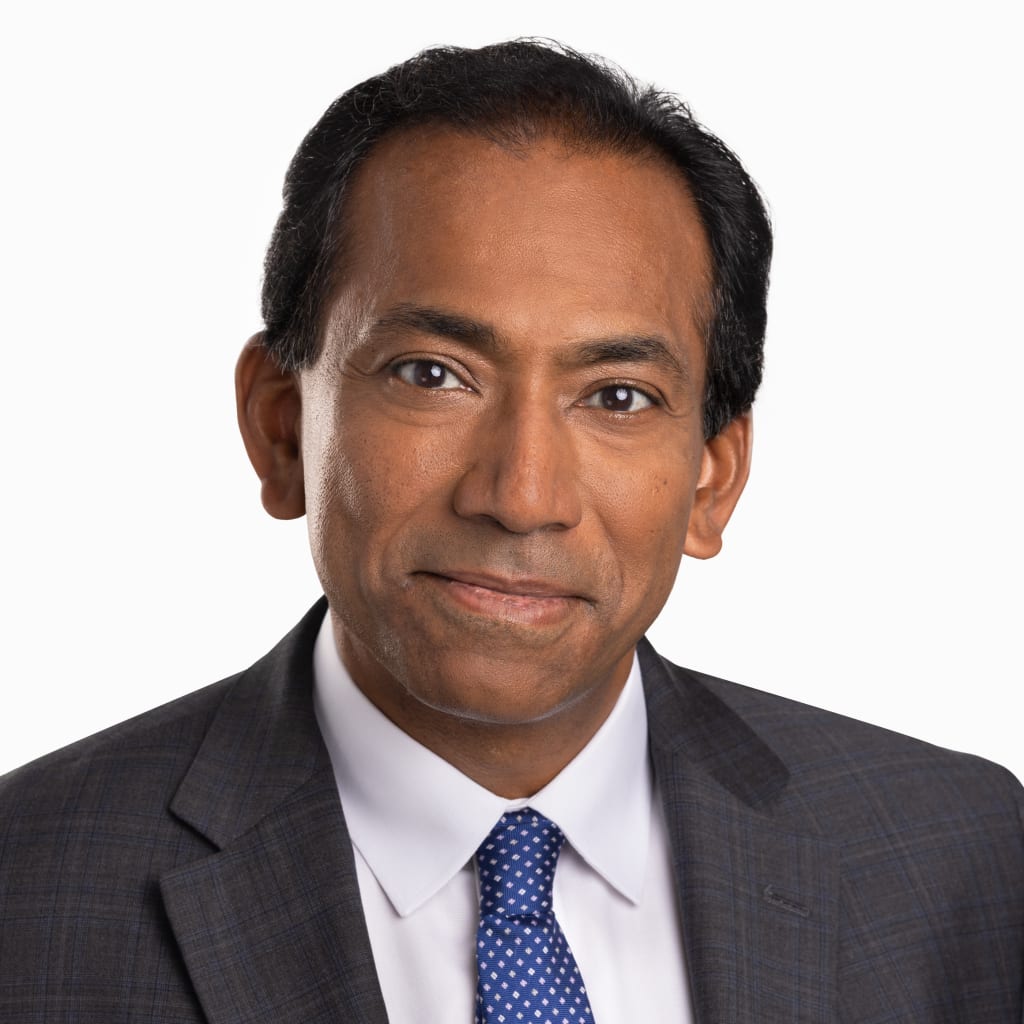 Vijay V. VaitheeswaranCFR ExpertPhilip D. Reed Senior Fellow and Director of the Energy Security and Climate Change Program
[Video: https://youtu.be/kxKsaHQw334]
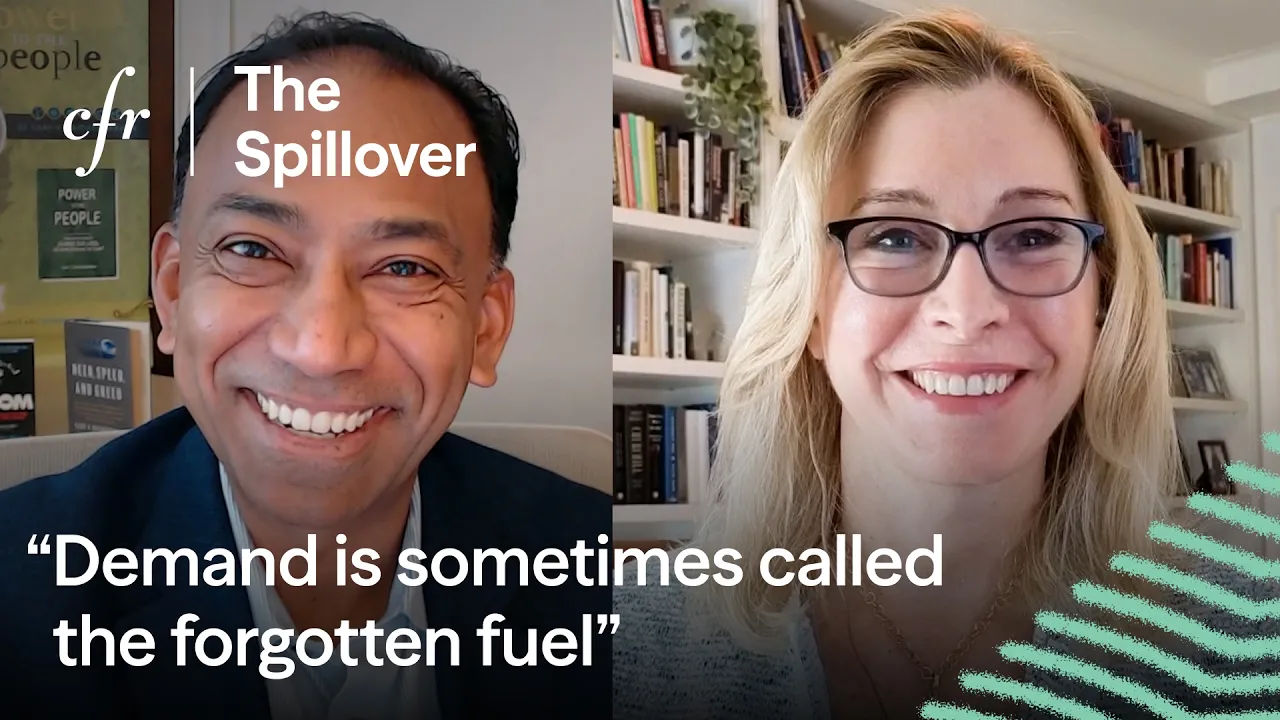
Transcript
This transcript was generated using AI and may contain errors.
PATTERSON:
Energy and climate continue to dominate the news. Just in the last few days, we saw the collapse of a melting glacier trigger sudden floods with massive loss of life in Nepal. Local authorities believe rising temperatures contributed to the disaster separately.
Over the weekend, we saw the U.S. government, just as the Iran war hit its six-month mark, with hostilities continuing, announce that it’s going to take a financial stake in a company so it can access Venezuelan oil reserves. The goal here appears to be increasing U.S. oil supplies and lowering energy costs. While Sebastian Mallaby is away this week, I am thrilled to be joined by Vijay Vaitheeswaran, a perfect guest to discuss these trends and their spillovers.
Vijay is at the Council on Foreign Relations. He’s the Philip D. Reed Senior Fellow and Director of the Energy Security and Climate Change Program.
Vijay and I are going to flip the script on climate and energy this week. Instead of focusing on top-down energy supply-focused solutions, we’re going to talk more about the bottom-up innovations that could reduce demand as a way to address energy and climate challenges. I’m Rebecca Patterson.
Welcome to the spillover. Vijay, thanks so much for joining the spillover today. It’s so great to have you now as a colleague at CFR.
VAITHEESWARAN:
Rebecca, it’s fantastic both to recently join CFR, a wonderful institution I’ve been a member of for 20 years and now get to help shape some of our energy and climate programming, but also to join the spillover, which I think is a fantastic program. So I’m already a long-time listener, I guess first-time joiner.
PATTERSON:
Well, Flattery will get you everywhere. Thank you. Thank you for being here.
I’m going to return the flattery because you are coming to CFR from one of my all-time favorite publications, The Economist. Back in the day before we had our issues 24-7 online, my husband and I literally got two copies each week, so he wouldn’t have to fight each other over who got to read it on the weekends. I don’t know what that says about us, but...
VAITHEESWARAN:
You’re both very successful people, very intelligent, smart.
PATTERSON:
Curious, curious.
VAITHEESWARAN:
Exactly.
PATTERSON:
Yes. And while you were there, you had a number of different roles, but most recently, you were the global energy and climate innovation editor, and you’ve had some great posts over the years in China, Mexico, New York, and other places, and you’ve also written three books on energy, innovation, and climate. So I want to start, before we get into the weeds here, just by asking you to reflect a little bit, you have been spending much of your career thinking about the intersection of business, innovation, climate, and energy.
And I’m sure along the way, with all those assignments in those different locations, there must have been a couple moments that were aha for you. I know when I lived in Europe and Asia, suddenly I would see things in a different way, getting perspectives that helped me connect the dots when I’m thinking about global macro and global spillover. So from your career to date, what have been a few of your aha moments?
VAITHEESWARAN:
Sure. Well, thank you for that question. You’re right.
I’ve had the great opportunity to live on multiple continents. I’ve opened bureaus on two different continents during my time at The Economist and to cover different things, policy, business, technology, innovation. And one of the things that strikes me is that it’s a very big world, and depending on where you are and your local conditions, what matters to you varies.
Now, at the moment, just to take an energy example, one of the hot topics in America is AI and data centers, perhaps the hottest political topic in some ways. And so energy is seen as a question of, you know, is there enough energy? Will grandma’s power rates go up in AI, AI all the time?
But actually, when you look around the world, air conditioning is a much bigger deal when it comes to energy and economic growth, for example. So energy for development and for prosperity or even basic opportunity in the case of millions of women and girls around the world who still walk miles a day to get informal kinds of fuels, cow dung or crop residue, that’s still a problem for almost a billion people on Earth. And when they burn that dirty fuel, it leads to preventable deaths from indoor pollution, one of the leading causes of that category of people.
And so for them, energy security needs something very different than what it might mean in Virginia with yet another data center’s turning out. And people have, you know, legitimate but different kinds of concerns. So I try to take a look at the question from multiple points of view and really thinking globally, not just locally, and try to find what motivates people and how do we find common sense solutions.
That’s really something I’m hoping to bring more of into our thinking, is climate is an enormous challenge, absolutely the century. But if we don’t get energy right, we have no hope of tackling climate. And so finding common sense ways to make progress on how we use energy is an area where I think there is actually hope and more on that to come.
PATTERSON:
Yeah, I appreciate that. And I also think that, you know, one of the potential huge positives of AI is that it might help us discover new innovations on the energy side, be it supply or demand, that can help us tackle climate that maybe we couldn’t have even imagined a few years ago. So I’m crossing my fingers for that.
I appreciate your point on data centers and the need for power to run them. And that’s also a negative as we think about climate and energy availability. But hopefully the pros will outweigh the cons, but I agree with you.
It’s going to require collaboration and common sense solutions. Speaking of AI, you know that Sebastian Mallaby and I spend a lot of our time here on the spillover talking about AI because it just weaves into everything, every industry, so many different macro considerations around it. And a few weeks ago, we had Kristian Coates Ulrichsen from Rice University’s Baker Institute.
And we were talking about the Iran war and energy in particular. And we sort of concluded there that China had, in a way, won the war. It was the new OPEC in a sense.
You know, its actions had an outsized impact on global oil markets. And, you know, it was, I think, a surprise to most analysts who, at the beginning of the war, couldn’t imagine that China could, in effect, manipulate the oil markets enough that we wouldn’t see a higher rise in prices. And it came through a strategic building of supplies, diversification of supplies, but also on the demand side.
You know, China was the world swing consumer. It cut crude imports roughly in half between February and June. So I think China is a discussion, and we’ll come back to it later.
It might be a template for other countries to think about. But for now, again, I think you and I want to focus on demand more than supply as a way to possibly manage shocks like the Iran war and climate challenges. And before we get into that, I do want to talk about one piece of news, which is more about supply, and that’s Venezuela.
You know, we’re still just starting to get details about this announced deal. My understanding is the deal has not been signed yet, just announced, but in any event, what we know now, the U.S. government, which removed Maduro as its leader back in January and hoped that very quickly, U.S. companies would flood into the country, start rebuilding oil and energy infrastructure. We would see much more production coming out of Venezuela, and that alone would help reduce energy costs, which would help U.S. voters, which would help the incumbents. And what we’ve seen instead is that, yes, there has been some movement into Venezuela. Yes, production has increased, but nowhere near the degree or the speed that I think this government wants. So my sense is that part of the move, this deal with Venezuela, was a way to provide some reassurance to U.S. companies that the government is there side by side with you, so to speak, as an investor. It’s pretty interesting, the details, Vijay. I mean, 100-year deal, U.S. is getting a financial stake, but alongside a private investor who appears to have a pretty questionable track record, both within Venezuela and globally, is it legal? What happens if there’s a different Venezuelan government in the future and they don’t feel the same?
There’s a lot of questions here, but let me just ask you, Vijay, as you’re thinking about what’s going to matter about this deal, how much it moves the needle, what are you going to be focusing on most in the weeks and months ahead?
VAITHEESWARAN:
Well, Rebecca, you outlined it pretty well. There are a lot of question marks about this deal, including some details of the deal we don’t know, but the broad outlines, we generally get the idea. It’s in line with what we heard at the early days of the Maduro snatch and grab operation, which comments from the White House saying that the U.S. will take this oil. This is going to somehow pay for the operation and beyond, and American companies will in effect control the sector. I was reminded immediately, because I covered an earlier war, originally billed as a war for oil, which was the Iraq invasion, and Dick Cheney at the time, very vociferously, said the oil in Iraq will pay for the war, and then some. And so, of course, that did not happen, on the contrary.
And a lot of it had to do with what are known as above-ground risks. There’s no doubt Iraq had the oil, still does, but a lot of it still hasn’t come out. And in Venezuela, there’s even less doubt, in the sense that the nature of these reserves are different.
This is not the light-sweet crude, as it’s called in the industry parlors. It’s in the Middle East. In Arabia, we have the world’s cheapest, easiest to extract oil reserves.
In Saudi Arabia, four of its biggest neighbors. That’s where the lion’s share of the world’s remaining reserves are concentrated. Unless you start looking at hard-to-extract stuff in Canada, known as the tar sands, or here in Venezuela, which on paper has the world’s biggest reserves.
But it’s really very expensive, costly bitumen. That is, it’s a mining operation with a lot of risk and complexity and infrastructure investment and long-time horizons, which is why it is a very small oil producer at the moment. It is not one of the world’s biggest oil producers, even though, on paper, it has a lot of hydrocarbons in the ground.
And so, we know where the oil is, but it’s not easy or attractive to get out of the ground. And the political environment is highly volatile. This is a country that’s had multiple waves of expropriations of foreigners taking away assets.
The rule of law is in question. The government there now is almost certainly illegitimate and will be deemed so by, not just international authorities, but any new government that comes along may invalidate contracts, for example. And so, there’s a lot of reason to doubt the grandiose promises that are being made, even if they’re taken at face value.
And you add to this skepticism with the U.S. energy industry, generally. When President Trump gathered together U.S. oilmen at the White House in the wake of, that Maduro grabbed, the Exxon chairman. Exxon’s a company that’s had its assets seized twice in Venezuela.
He was the only one, perhaps, brashing up to say publicly what everyone was thinking. He said, Venezuela is frankly uninvestable. And that’s the reason we’ve seen such a slow pace of investment in the last few months.
With the exception of a few companies that are close to the entrepreneurship or close to the administration in Venezuela, you’re beginning to see a certain kind of crony capitalism emerge. And I think what’s happening here is because of security concerns and investment challenges, the U.S. government in the big way that it is now, including the role of the Pentagon, coming in and providing some sort of sovereign cover maybe is a hope that private investors will follow through with the guarantee and pledge of American taxpayer support and perhaps Pentagon support on the security front. I think that’s the idea here. Will it work?
We’ll have to see. But I would have to say, let’s wait a couple of years and see. The reserves are no more attractive in terms of economic and geological terms because of this deal than they were a week ago.
PATTERSON:
Yeah, when you say a couple of years, I’m thinking, okay, a couple of years, we have midterms in a couple of months and gasoline prices are still averaging over $4 a gallon and the U.S. voters don’t like that, plus the strategic reserves in the United States. While they’re not at dangerously low levels yet, they’re quickly getting to those levels where actually the infrastructure, the salt caves could be at risk. So the timing mismatch, I think, is not unimportant here.
I mean, maybe as a signal, this helps somewhat. I guess the one thing maybe the White House might be hoping for is that Chevron, which is, I believe, you correct me if I’m wrong, Vijay, the only major U.S. company that has had continuing operations in Venezuela throughout all this, there’s some speculation they might announce that they’re going to add efforts there in the coming days or weeks on the back of this deal, so to speak. But I mean, strategic reserves, Venezuela’s not going to help us fill them.
Am I missing anything there?
VAITHEESWARAN:
No, I think you’re right. First of all, Chevron did right out the storm. They’ve been in the country and they’re doubling down.
Rumors are we’ll see some more news on that front. So they’re playing ball with the administration and they have assets on the ground, so their interests are different than those of Conoco or Exxon, the other big players that have basically been sitting this one out on the sidelines. And there’s some other European players, and there’s some small gas plays that could make sense.
So this is an oil and gas provenance, so this is not a barren wasteland. So there are things that could be attractive for the industry in concept. It’s probably not those, again, those bitumen, those very heavy hard to extract reserves that are so vast on paper, but there are conventional reserves as well, smaller amounts.
There’s also gas, and also it’s noted, the gas infrastructure in Trinidad is nearby, already built, connected to international markets and is under capacity. So one could imagine, and this is where some companies are looking, can we develop some gas fields and get them to pre-existing infrastructure? That’s a smart play, could make sense for some companies.
And others who are dreamers say, hey, hold on a minute, the hottest oil and gas province in the world is Guyana of the last three years, a massive boom, and they had developed, it was actually Exxon, there was a pioneering company there. But the Venezuelan side has not been explored with the great new technologies of the last 15 years because of the Chavez regime and the hostile kind of attitude to foreign investment. What’s to say there isn’t an equally big or bigger boom waiting offshore, all we need is the right rule of law, right investment framework, right technology, this could be the next bonanza, could be.
But there’s a lot of ifs in there and especially what I call above ground risk, that is the investment framework, political stability, rule of law, contracts, all these things matter because with oil and gas, we’re talking decades-long investment. And so, in a world that’s frankly awash in oil and gas, there is no shortage of opportunity and this is high-cost oil and gas, this is not low-cost oil and gas. So why would an investor with producer responsibilities choose to do this unless you had some sort of implicit government guarantee from the Pentagon of the US or some other sweetheart deal, it’s not entirely clear or you’re a wildcatter, you know, somebody who’s used to taking high risk in expectation of high rewards.
And those are the kinds of characters you’re seeing lining up the buccaneers, the bandits I see as we saw in the early days of shale or other frontier provinces.
PATTERSON:
Right, right, so, okay. So we gotta stay tuned is what I’m taking away from this. Get some more detail on the deal.
Is there enough of a security financial and otherwise that US companies that aren’t already there are willing to go in in any kind of meaningful way? Maybe this deal, which is aimed more at the supply side of the equation and is definitely top-down, that’s a good segue for us to think more broadly about supply versus demand and top-down versus bottom-up. Top-down really kind of governments dictating and directing bottom-up more the entrepreneurs and the innovative companies coming up with new solutions.
You just published, Vijay, a piece on CFR’s website, I think at the end of last week, noting that while the Iran war has triggered what has clearly been the largest oil supply disruption in market history, even after six months, it’s barely dented global growth. I mean, the IMF, I was just checking over the last couple of days to see if they had changed their forecast. We’re still looking at global GDP growth this year, around 3%.
So the global AI build-out, we know, is definitely helping that meaningfully. And so maybe it’s just a lucky offset for some of these other shocks. But the CFR piece you wrote focuses more on the supply and demand responses to the war, helping the world get through this.
You wrote that you think we underappreciate and even misunderstand the demand side of the equation. So I’d love you just to walk us through some of the highlights of the arguments you made in your CFR piece on that.
VAITHEESWARAN:
Sure, and thank you for shedding light on this, because demand is sometimes called the forgotten fuel. The great energy thinker, Amory Lovins, who wrote a seminal piece for Foreign Affairs 50 years ago on this topic called The Road Not Taken on US Energy Strategy at a time of similar wars in the Middle East, oil shocks. He argued that the US economy could prosper by using a lot less energy in future than forecast by almost everyone, including the US government, and was widely derided at the time.
It’s one of the most widely reprinted and read articles in Foreign Affairs in subsequent decades, and he was right. He was proven right by subsequent events. The US consumed a lot less energy than most official forecasts indicated, and a lot of that had to do through demand response, efficiency gains, and yet that’s still seen as some kind of sideshow.
Real men drill baby drill. We look for supply. We want big oil and gas or supply side solutions.
If it’s AI, let’s have more gas plants. Let’s go for a quick kick. There’s a role for supply, of course, but what people misunderstand is that actually, what matters to people, the consumers, ultimately, is energy services.
Nobody’s such one thinking about energy other than energy nerds, and so what people want are cold beer and hot showers, Lovins said back then. That is the things that energy makes possible, and equally, AI companies, they don’t want to think about energy. They want the input to create intelligence, which is where the value is in all those Nvidia chips, right?
So they’d really rather not deal with energy. Now they’re putting their smartest women and men engineers on the task to figure out this energy problem, which is a very small share of their cost, but it’s become a huge choke point for them, right? So energy is a problem to be managed, and what they’re discovering in the case of the AI data centers, as well as the broader grid, let’s take America as an example, is that actually, there isn’t an energy shortage in America.
Most of the grid lies fallow much of the time. Most of the time we are using peak power only 20, 30, 40 hours a year. Distribution system, transmission system is not overloaded most of the time, quite the opposite.
What we lack is visibility to how we use power and the digital and ultimately AI control systems, so that we can be flexible in how we manage that power. And those are the tools that are coming online quite rapidly. They’ve already been around forever in the form of distributed power, virtual power plants in terms of software to connect these things.
Now we see in Texas, which is by far the most advanced state in deploying these resources, batteries, solar, distributed energy, they’re connecting them up and they’re shifting power from the daytime when they have tons of sun or wind to nighttime. They’re arbitraging in a flexible way. In other words, they’re shifting when time, the time of use of that power, and they’re getting rewarded by the grid.
And even some of the more conservative parts of the grid, the so-called PJM operator, the main operator on the East Coast of the US, does not recognize that demand response is every bit as reliable as a gas turbine and is rewarding it. So this is a shift in mindset that’s happening, but because it’s an invisible fuel, it’s the dog that didn’t bark, it often gets underrepresented in terms of planning, in terms of payment, in terms of really thinking about how we come up with solutions. And I was hoping to shed some light by pointing out that actually demand response can often be much more effective, but it takes a little bit of forethought, requires some planning.
And in your example, and that wonderful show you did with Sebastian, that’s what the Chinese did, not because they’re so green or care about climate change, is they care about energy security, keeping the lights on. So they planned ahead for demand response. And when you do that, it turns out you can actually find it as a very valuable resource.
PATTERSON:
And I want to contrast what you’re saying, intentional planning, using technology to maximize the supply you have, to manage it versus the demand with something that, I think for at least a generation, when they hear demand dealing with a shock or higher prices, they think demand destruction. And that’s not what we’re talking about, but I want to spend a minute on it just to make sure it’s clear to everyone the difference between the two. I spent part of my career researching and investing and trading commodity markets, including during 2008 and nine.
So you can imagine that was quite an education for me. Seeing Brent prices fall near zero for the first time in my life, of course, since then we’ve seen oil prices, crude oil prices go negative. So who knew?
But historically when analysts like myself thought about demand as a response to a shock, you thought about basically killing demand, the old adage that the best way to solve high energy prices is with high energy prices. So you get prices high enough and people can’t afford it. They just have to shut it down.
And we did see some of that during the war. We had a bunch of Asian countries, for example, rationing energy, actually preventing demand, preventing spending. That was India, South Korea, Thailand, Philippines, Vietnam, others.
You had European governments. They didn’t ration, but they did urge households and businesses to curtail demand. And of course, we saw lots of European airlines canceling thousands of flights after the war began.
And so basically, curtailing demand. And the problem with this type of demand response is that it hurts growth, right? It has a very direct, immediate feedback or spillover to the underlying economy.
Whereas what you’re talking about, as we saw in China’s case, thoughtfully planning how to manage demand doesn’t have as much or any economic hit. So I think that’s a really important point that we’re talking about a demand efficiency channel. And I think we’ve seen that efficiency push.
It’s not new. What you’re saying, I think, is important. And as you said, underappreciated, but it is something that’s been around.
I mean, you’ve written about, I believe, the UN’s 2023 climate summit in Dubai, the COP, which got about 200, nearly 200 countries, including the United States, to commit to doubling the global average rate of improvement in their energy efficiency from a 2% per year improvement to 4% a year by 2030. Now, who knows if we’ll get there? I mean, I’m sadly skeptical, but the idea is that countries get the efficiency argument.
And my sense is that to get there, it has to be top-down and bottom-up, as you said. We need both. And China’s maybe leading the way on the top-down.
So what other top-down approaches do you think we should be doing more of? What have you seen that’s effective?
VAITHEESWARAN:
You’re right to be skeptical. You know, we constantly miss targets, and I’m the first to be skeptical about any government targets generally, especially global targets set by the UN gatherings. Nevertheless, I think one of the most promising developments from the point of view of efficiency that I see is electrification.
The global rate of electrification is rising at two to three times the rate of overall energy demand growth globally. And why does this matter? Simply put, electrification is a much more efficient way to use energy to do anything than burning fossil fuels.
When you burn, for example, gasoline in an internal combustion engine, much of the energy content goes out the tailpipe as heat. And so, in contrast, of course, electric drive motors are much, much more efficient in converting input energy into the thing you want, which is to move your car in a forward direction, or if you’re in an industrial setting or in a building for heat or other purposes. So electrification is just a better way to use the energy that we have on Earth.
Regardless of whether you’re green or you’re anti-green, it doesn’t matter what your values are. It’s more efficient. And that’s the kind of thing that thankfully is taking off quite dramatically.
That’s a lot to do with bottom-up innovation. Yes, policies matter in terms of China pushing electrification, but the reason Britain, for example, you can’t swing a cap without hitting an electric vehicle on the streets of London these days, it’s really not very much to do with people being environmental, or it has to really do with the availability of very attractive, in this case, Chinese vehicles. And so I think like that, you will see more examples of a mix of top-up and bottom-down working in a virtuous cycle, pushing towards efficiency.
That’s good when we’re concerned about volatility of fossil fuels, about problematic regions like the Strait of Hormuz. We’re going to see a lot more interest among countries that don’t particularly care about climate change or environmental challenges, but say, hey, LNG coming from Qatar, that’s a problem for my country. The prices of oil and gas being volatile or being held hostage by fortune, I would rather diversify my economy by having electricity, which I can make at home.
PATTERSON:
Right, right. So I want to stay on this demand side and efficiency, but keep moving more from the top to the bottom and talk more about bottom-up. So I haven’t read all three.
I had Claude read all three. I’ve read one. But when I have had my LLM of choice go through all of your books, it was interesting because they all included a lot of thoughts on this, including the 2003 book.
So you’re ahead of your time, sir, that talked about using energy technology to help economies leapfrog. And it’s interesting, I’ve had the fortune to talk with the president of the World Bank about using energy and technology to leapfrog, for example, getting power to Africa, to households in Africa. You’ve been looking at this for more than two decades.
And this year, you’ve noted specifically that India has been able to electrify faster than China did at its same stage of economic development in part because China had already invented a lot of the tools, and India could just say, thank you very much, kind of call it tech transfer, if you will, or they could just buy it from China and then leverage it. So I would love for you to just go in the weeds a little bit more in India because I think it could give people who may be listening to us today ideas about how they could apply this in other emerging economies.
VAITHEESWARAN:
Absolutely, yes. And it’s a great example you picked up on India, although the lesson is visible in East Africa, in other developing countries as well. That is, there’s a great potential to leapfrog to the cleanest and latest technologies without having to reinvent the wheel, right?
I mean, economists have always known that developing countries don’t have to reinvent the wheel. You can learn from those at the leading edge. Catch-up growth, right, is a formal term.
But with energy technologies, what’s happened is because of the Chinese investment, again, it’s a centralized economy, there’s an enormous amount of waste. I was bureau chief in China for many years, so I saw all of the flaws and failings of that system, as well as some of the extraordinary innovations and developments that happened side by side in China. Both things are typically true at the same time.
But the gift that China has given to the, particularly the developing world that’s ready to accept it, is affordable clean energy technologies that can rely on fuels that can never be embargoed or cut off, that is, the sun, the wind, and increasingly an enabling technology, batteries, which are the fundamental transformative technology in energy for the 21st century, where the batteries for EVs are much more so, the batteries that are large, grid-scale batteries, because that fundamentally allows you to change day into night, that is, to store power for long periods of time, to be able to arbitrage and get over the problem of intermittency that has bedeviled solar power, and to be able to get the clean, firm power, as it’s called.
In India, no country has done as much as India has in being able to, with smart policy, among other things, not heavy subsidies like Europe did, but rather auctions. They have developed a series of auctions and small policies that don’t cost the government very much, because they don’t have a lot of money in government, so they encouraged, in clever ways, private sector developers and their state utilities to take on clean energy, and we find India is the fastest growing renewable market in the world, and as you rightly said, at their stage of GDP per head, which is maybe one-third of what China was, they’ve achieved a level of electrification of the economy, and the amount of solar that they’re installing is extraordinary, 150 gigawatts worth, that is, think of 150 nuclear power plants worth of theoretical capacity, because that’s how much solar has been installed, and the government has doubled down on that target going forward. The biggest industrialists in India, the Ambani’s, Adani’s, you know, these sort of big titans of Indian industry are making enormous bets, and in April, I actually went out to one of these conglomerates where they’re developing multiple gigawatts worth of wind, solar, and batteries near the Pakistani border, and they’re already up and running. They’re already producing energy that’s feeding into the grid that’s perfectly clean, and they’re also going upstream.
They’re building their own solar wafers and ingots, and so I double-checked to make sure that this is actually happening, because there’s a lot of vaporware in India also, but there’s a major push-on to become a green superpower, including in replacing fossil fuels in industry. So it may be that India is the first country that gets into real industrialization, large-scale industrialization, without having to rely entirely on fossil fuels.
PATTERSON:
And I just want to double-click for a second on your comments just here, because a lot of what you were just laying out still feels to me more supply, right? It’s supply of different types of energy, but it’s still creating the technology extended to support greater supply, but going back to an earlier part of our conversation, part of what allowed China to reduce demand of fossil fuels is having the alternative supplies. So is the intentional demand response contingent on having a diverse set of supplies, energy supplies?
VAITHEESWARAN:
You have a chicken and an egg, right? So, but you make a fair point. Those examples were large-scale supply.
We have bottom-up response as well. Some of this is enabled by price signals, right? If you allow and enable responses that can be rewarded, virtual power plants is sort of what the nerds call them, but lots of solar panels all over the place are small batteries or little micro-generators connected together.
Now in California, they’ve been around for a long time, but they’re scaling up quite dramatically, even to the level that they can power data centers. So we’re seeing this development from the bottom up. In Britain, to give an example, there’s an AI-powered unicorn company called Kraken, which is one of the world’s largest sort of software companies in energy.
Think of it as a new generation of Oracle or SAP product, but for the energy industry. But what they do is they aggregate lots of remote bits of energy, batteries in the EVs, to solar panels, to heat pumps, to batteries on the grid. And they now produce enough power from these little teeny, often small micro-generators to be more than several nuclear power plants’ worth of energy that they can feed into the grid and get a price signal that it’ll pay back.
And so if you sign up for their software and say, look, here’s my electric car, I just want it charged by 7 a.m. to 80%, they’ll do it at the right time on its cheapest, and they’ll share the savings with you, but they’ll feed into the greater peak as well. And that’s an example of demand response. We see this in Pakistan where the failings of the coal-fired grid, it’s a classic example of a bankrupt utility and with institutional problems, governance, corruption, et cetera, people are getting blackouts on such a regular basis.
Ordinary people just imported, very informally, no government policy, balcony solar. It’s got no sort of cheap little solar panels turned up at every bodega around Pakistan to the point where multiple gigawatts worth. It’s one of the world’s greatest success stories in the last two years.
All over Pakistan, that’s a demand response for sure. Now, of course, you have to have the supply of cheap solar panels from China, but what happens to it depends a lot on demand. And that’s why I say we’re seeing demand organically coming together.
And we’re seeing this, of course, the classic example that I gave at the beginning of our conversation, which is the AI data centers. The old paradigm used to be, we cannot be demand-responsive. We must always keep the Netflix on.
We always need to have our training loads. We can’t have any kind of demand response. Now we see that, actually, with a little bit of foresight, a little bit of planning, identifying which loads are actually less significant and can be delayed or can be sent to a nearby data center with a bit of latency, data centers can, in fact, be flexible.
And a seminal study at a Duke University showed we just had 20 hours of flexibility at a data center. We would dramatically reduce the loads and costs to the system of having a data center in the neighborhood. So we just need a little bit of flexibility, less than 1% of the time.
And Google has entered into binding contracts in the Midwest, in Michigan and nearby states, that promise that flexibility. In return, they’ve been able to connect to the queues faster. And I think that’s the deal that’s going to happen is if you can show that your data center, in addition to being a good citizen, not consuming all the local water or annoying the neighbors, but if it can be flexible and support the grid, rather than be a drain on the grid, you can connect to the queue faster.
And that’s a winning proposition for getting all those Nvidia chips monetized to make the intelligence that these companies need.
PATTERSON:
Right. And I’m glad you moved to the United States because that jumps out to me as well, that it’s one thing to have the baby solars on the balconies in Pakistan, but it’s another thing to get that bottom-up response at scale with the top-down government support in countries like the United States where you have all of these invested parties, all of these incentives that are so deeply, deeply embedded in the system. So, yes, we know that the traditional fuel industry supported President Trump’s campaign.
He’s in office now, and he’s trying to reward his supporters by opening lands to more drilling, by trying to provide them with some benefits of his term, which, and you have seen their stock prices go up, especially in recent months, but how do we get more of the Kraken technologies? I think it’s important we say Kraken technologies because there’s a crypto company Kraken, which is something completely different, but Kraken technologies in the UK, I look at that and I think, how come we don’t have that everywhere? It seems like a no-brainer.
If you can use AI and technology to optimize your usage of energy, whether it’s through the utility, etc., that seems like basically free money we’re leaving on the table.
VAITHEESWARAN:
It’s coming. It’s a good news.
PATTERSON:
Is it a constraint, though?
VAITHEESWARAN:
It’s coming. That company alone, which is a division of Octopus, a UK company, which is also a pioneer, they’re in a couple of states in the US already, in Texas and a couple of other states, but they have competitors as well, as you would expect. There’s an offshoot of Google that’s working on applying AI to the grid, one of their moonshot factory offshoots doing their crazy ideas, but there’s four or five others that are already working with utilities using AI and other digital tools.
You don’t always need the latest digital to make this work because we’re so backward. We’re 30, 40 years behind in the power sector in upgrading our ancient grid, and oftentimes, utilities don’t even have visibility into what power is being used where on the distribution system. Making that embedded intelligence into the system and then allowing it to be controlled, which now we can do with the tools that are available, is happening.
The impediment is rules. We often have local state-by-state rules or regional rules that are the impediment, but that’s one of the beauties of our federal system. You have a system like Texas where the governing body is ERCOT, as it’s called, the grid, which is almost its own stand-alone grid, not connected very tightly to the rest of the U.S., and where their rules are more laissez-faire, and you see much more dynamism, including bottom-up response. And again, it’s a deep-break state, right? The most Republican, arguably, of all the big states, yet you have the most wind, the most solar, the most batteries installed, regardless of what the politics are in Washington. And even at the national level, regardless of the politics favoring fossil industries and new drilling, 90% of all new power generation capacity installed in Trump’s America last year with the anti-solar, anti-wind policies, heavy tariffs, and discouragement on the supply chain front.
90% of that generation was carbon-free, led by solar, in America.
PATTERSON:
I love that you just gave me some good news on energy, because I do feel sometimes that we can get in our own way in some of the advanced economies just because of these embedded interests and regulation. Some regulation is important and it’s needed, but there is a tendency to put little Christmas tree ornaments on everything, every spare branch you can find, to the point that the Christmas tree just falls over. That’s probably a terrible analogy, but I don’t know, it popped in my head.
All right, before we wrap up today, Vijay, I want us to do, just for a minute, a little bit of crystal ball gazing, and I appreciate up front, I bought myself a crystal ball, maybe a decade ago, because everyone would always say, Rebecca, what does your crystal ball say? And I bought it, and I’m still no better a forecaster with it, but I have one. All right, I want to do a short term and a long term.
So, I think it’s safe to assume that the U.S. and most countries in the world want the Iran war to end ASAP. And the U.S. wants a way to end the war that it is a clear victor. Unfortunately, for the U.S., Iran wants the same. If energy supplies are still meaningfully disrupted, let’s just give it a month, right? Here we are at the end of August. Let’s say a month from now, we still have a hot war, we still have the Strait of Hormuz largely shut, maybe a little bit of hostility in the Red Sea.
What’s the policy reaction? I mean, do we have, can China keep coming to the rescue, or are we finally at that hockey stick point where prices are going to spike higher, which was what the fear was at the beginning of the war? What do you think?
VAITHEESWARAN:
I think a month is too soon for that scenario. I think you’re right to raise the question. Look, there are molecular limits, if we can call them.
There’s only so many barrels that are at the bottom of that salt cave in Louisiana. And we know we’re scraping bottom of what’s technically safe to do. There’s more oil in there, but we can damage our SPRs if we go too far.
But it’s not one month away, right? We haven’t even fully released what we were committed to previously. So there’s a little bit more wiggle room.
The world is well supplied in oil. Look at the price mark, both futures and current markets in Europe. From that world, so you know what I’m talking about, we are not in a scarcity situation.
And China, though no one knows the true extent of their SPR, the reserves, we suspect they have more to go. So one month is too soon for the crunch. But if you say six months, then I get very worried.
Because that takes us through the European winter. It could be a very bad winter. We don’t know what the weather will hold, but there are low levels of storage because of the war and the LNG that did not make it out.
Maybe a fifth, I think, of global tradable LNG was trapped behind Hormuz. And Qatar is out of action for now. And so prices are going to spike even more than they are now.
So we could see a bad winter for sure on the gas front, which of course affects prices in poor countries in Asia. Because that must compete for it. We saw this four years ago.
This bad movie played out with the Ukraine war. We may see that again. And of course, on the oil front, we’ll have to see what happens with levels of storage declining.
So I say it’s a little too soon. And I would say there is probably at least one country that doesn’t mind this conflict continuing. And then I think Iran.
And maybe China doesn’t mind a few more months of America getting its nose bloodied and having some challenge. Because as long as it’s sitting pretty on the domestic front, and its economy is doing okay for now in China, it is not in crisis, I would say that they’re probably enjoying America getting into trouble overseas.
PATTERSON:
If we were here in six months, would Russia be happy? I mean, I guess it depends a little bit how the US responds with secondary sanctions, etc. But it’s certainly a distraction for the rest of the world, which lets Russia continue on its war with Ukraine.
VAITHEESWARAN:
That’s right. Now, I think you’ve played it. Russia sees this as a useful distraction from what’s happening in Ukraine.
So it can carry on executing its war. And also, of course, there’s a market for its products. Its products are, you know, oil and gas are getting to China, getting to other players.
And let’s not forget, the Northern Arctic route is now open. The Chinese are shipping their first, what they call the ice silk road shipments through the Northern route. Thank you, global warming.
And the beneficiary is actually Russia, because Russia is providing the security. So in effect, we have created a new choke point, or potential choke point, in the Northern route of not just oil and gas, but shipping getting through there. So I think Russia is looking at a brighter, a world of conflict like this, which creates value for its monoculture of oil and gas benefits Putin.
PATTERSON:
Yeah. Okay, final question. And this is the hardest one, I think, because anytime you go out more than a year or two, the cone of outcomes, the cone of different universes, we could find ourselves in, just multiplies very, very quickly.
But let’s just pretend for a second, three or five years from now, I think climate challenges probably are with us. And personally, I would guess they’re worse, not better at that point, even though how the world responds through innovation, top-down, bottom-up policies, will help determine the degree. I think the parties in power will also help determine the degree.
I would guess three to five years from now, we’re also still seeing all of the above energy strategies, like just let’s do everything we can to keep the world supplied, keep prices low, because that’s what voters want. I would imagine three to five years from now, hopefully we continue to see AI and other technologies benefit this, both in adaptation and mitigation for a warming world and climate challenges. But look, we know how long it takes to build a nuclear plant.
We know how long it takes to commercialize things like Kraken Technologies or Fervo, which is geothermal. I’m curious if you have a different view of the world than mine and what you think we could see three to five years from now, appreciating that this is educated guessing, even by someone like yourself with lots of experience.
VAITHEESWARAN:
One thing you learned, having looked at energy a long time, is that the pace of change can be quite slow. Legacy systems are embedded. There’s a lot of incumbent power and rent seeking.
But what we also have seen in multiple systems is change can come quite quickly. When you see an actor like India moving at the speed that is moving on entirely new kinds of technologies, not because again, one factor like climate change, which is maybe a little bit nebulous in the here and now, although it’s very tangible in the longer term, but because energy security, the bread and butter of getting there, not just LNG and oil, but India got most of its cooking gas, that was called LPG, propane gas, through the Strait of Hormuz. I mean, there’s massive starvation amongst the poor populations in India because of the absence of this cooking gas.
And so we’re seeing India move much more aggressively on acting on domestic sources of energy. Some of that will be coal in the short term, but some of it will be nuclear, which is carbon free. But of course, a lot of it will be solar and wind and batteries.
So I think we see the potential for the conversion technologies like heat pumps and industrial boilers as well as transport. So if you say five years, I would say surprise is going to be, I think, in a more complicated world where energy security is the number one issue, not climate or other issues that have been maybe important in the last 10-15 years. You’ll be shocked, I think, by the advances, we all will, in a positive way, on energy innovation.
You mentioned a couple of them, enhanced geothermal and next generation geothermal is coming quite rapidly. And we’re seeing, this is an American innovation where oil and gas techniques like fracking, multilateral drilling, met with big data’s thirst for clean, firm power, as it’s called. It’s an extraordinary example and according to the American Department of Energy, has the potential to produce more energy from across America than all the nuclear plants we have today, more than the 100 we have today, can come from our potential for geothermal in the next couple of decades and globally, that potential is much faster than that.
So that’s an example and small modular reactors you had mentioned coming down the road, but much more so and much more quickly the demand side efficiencies that are enabled by digital and AI technologies. I think in the five-year timeframe we’re going to see enormous advances enabling that era of prosperity that people aspire to in America with AI leading the way. And I think that outline will become clear.
America may even play an important role in helping solve the world’s climate change problem through innovation.
PATTERSON:
I absolutely love that we’re ending this conversation on such a positive note. It isn’t always the case on this podcast. So Vijay, I want to leave it there and I just want to thank you so much for sharing all your perspectives and experience which comes through very loud and clear with me and with everyone else who tunes in.
But thank you and I look forward to speaking you again on the spillover and seeing you around at the Council on Foreign Relations. Thank you.
VAITHEESWARAN:
It’s been a great pleasure, Rebecca. Thank you for having me.
PATTERSON:
So if you want to stay up to date on the latest episode of The Spillover, sign up. To receive an email alert when a new podcast drops at CFR.org slash newsletters or click the link in our show notes. If you have an idea or would just like to chat with us, please email podcasts at CFR.org and be sure to include the spillover in the subject line.
This episode was produced by Molly McAnany, Gabrielle Sierra. Our video editor is Claire Seaton. Our audio producer is Markus Zakaria. And research for this episode was provided by Liza Jacob. You can subscribe to our show on Apple Podcasts, Spotify, YouTube, or wherever you get your podcasts.
This week on The Spillover, Rebecca Patterson sits down with Vijay Vaitheeswaran, senior fellow and director of the Energy Security and Climate Change Program at CFR, for a conversation about climate change and the future of energy security.
Vaitheeswaran is skeptical of a newly announced deal that would give the United States access to a huge portion of Venezuela’s oil fields. “We know where the oil is,” he notes, “but it’s not easy or attractive to get out of the ground. And the political environment is highly volatile.” He points to industry perspectives, recalling that an Exxon chairman “said Venezuela is frankly uninvestable,” and reads the deal’s structure as an attempt to backstop that risk. Vaitheeswaran suggests that the structure of the deal reflects “the role of the Pentagon coming in and providing some sort of sovereign cover,” in the hope that “private investors will follow through.” The bottom line, as he puts it, is that “the reserves are no more attractive in terms of economic and geological terms because of this deal than they were a week ago.”
The smartest fixes for climate change come from using energy more efficiently, not just producing more of it. Vaitheeswaran argues that the United States has more energy slack than many think, noting that “there isn’t an energy shortage in America. Most of the grid lies fallow much of the time.” Vaitheeswaran suggests the key is efficiency, pointing to China’s management of Iran war–related oil cuts, which succeeded “not because they’re so green or care about climate change. They care about energy security and keeping the lights on, so they planned ahead for demand response.”
Climate planning and renewable energy solutions are moving fast in some developing countries. Vaitheeswaran notes that “India is the fastest growing renewable market in the world,” adding that “the amount of solar that they’re installing is extraordinary. 150 gigawatts worth.” At the same time, Pakistan realized that the “failings of [its] coal-fired grid is a classic example of a bankrupt utility” and decided to informally import cheap panels from China for balcony solar, which Vaitheeswaran calls “one of the world’s great success stories in the last two years.”
AI data centers can be flexible, Vaitheeswaran says. He cites a British AI company that combines “remote bits of energy, [from] batteries in EVs to solar panels to heat pumps to batteries on the grid.” He notes that these “little, teeny, often small microgenerators” can now generate power in excess of “several nuclear power plants worth of energy that they can feed into the grid.” The incentive is already there for data centers and AI companies, Vaitheeswaran concludes: “If you just had 20 hours of flexibility at a data center, we would dramatically reduce the loads and costs to the system of having a data center in a neighborhood.”
Vaitheeswaran’s vision of the future has a silver lining. “[In] five years,” he continues, “I would say the surprise is going to be…a more complicated world where energy security is the number one issue.” This, he notes, is likely to spur progress: “I think in the five year time frame we’re going to see enormous advances, enabling [an] era of prosperity that people aspire to in America with AI leading the way. And I think that outline will become clear.”
Mentioned on the Episode:
Vijay V. Vaitheeswaran, “Why Nuclear Energy Is Making a Global Comeback,” CFR.org
Vijay V. Vaitheeswaran, “Crude Calculations: Why the Iran War Hasn’t Yet Caused an Oil Shock,” CFR.org
Vijay V. Vaitheeswaran, “Geothermal’s Time Has Finally Come,” The Economist
Vijay V. Vaitheeswaran, “Americans’ Electricity Bills Are Up. Don’t Blame AI,” The Economist
Want to keep up with The Spillover? Sign up to receive an email alert when new episodes are released.
The Spillover is a production of the Council on Foreign Relations. The opinions expressed on the show are solely those of the hosts and guests, not of the Council, which takes no institutional positions on matters of policy.
This work represents the views solely of the host(s) and guest(s). The Council on Foreign Relations is an independent, nonpartisan membership organization, think tank, and publisher, and takes no institutional positions on matters of policy.
Producer
- Producer, Podcasts
Supervising Producer
- Director, Podcasting
Audio Producer
- Audio Producer & Sound Designer
Researcher
- Research Associate, Finance, Business, and Technology
More Episodes
 48:01Podcast
 47:25Podcast
 50:17Podcast
 47:25Podcast
 52:31Podcast
 1:05:00Podcast