Side Effects May Include Dependency on China
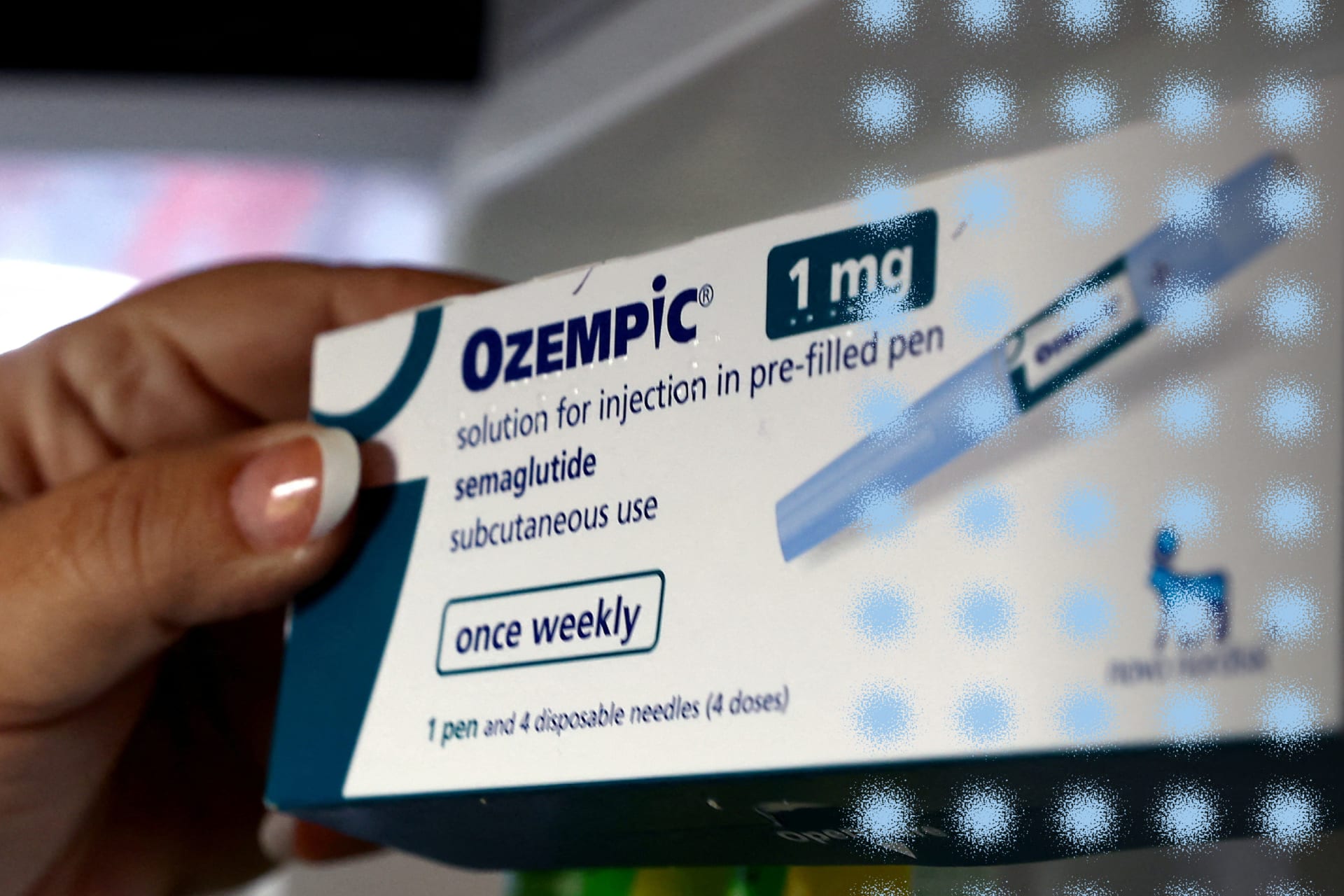
What happens if the world’s pharmacy decides to close? From ibuprofen to amoxicillin, a majority of the essential medicines used in the United States depend on ingredients from China. This dependence has left the United States vulnerable to a geopolitical rival that could decide to cut off its access at any time. On this episode of Why It Matters, Rush Doshi, senior fellow at CFR, and Olivia Kosloff, senior fellow at the American Economic Liberties Project, unpack how the dependency came about and what’s at risk if the pharma supply chain snaps.
Published
Host
 Director, Podcasting
Guests
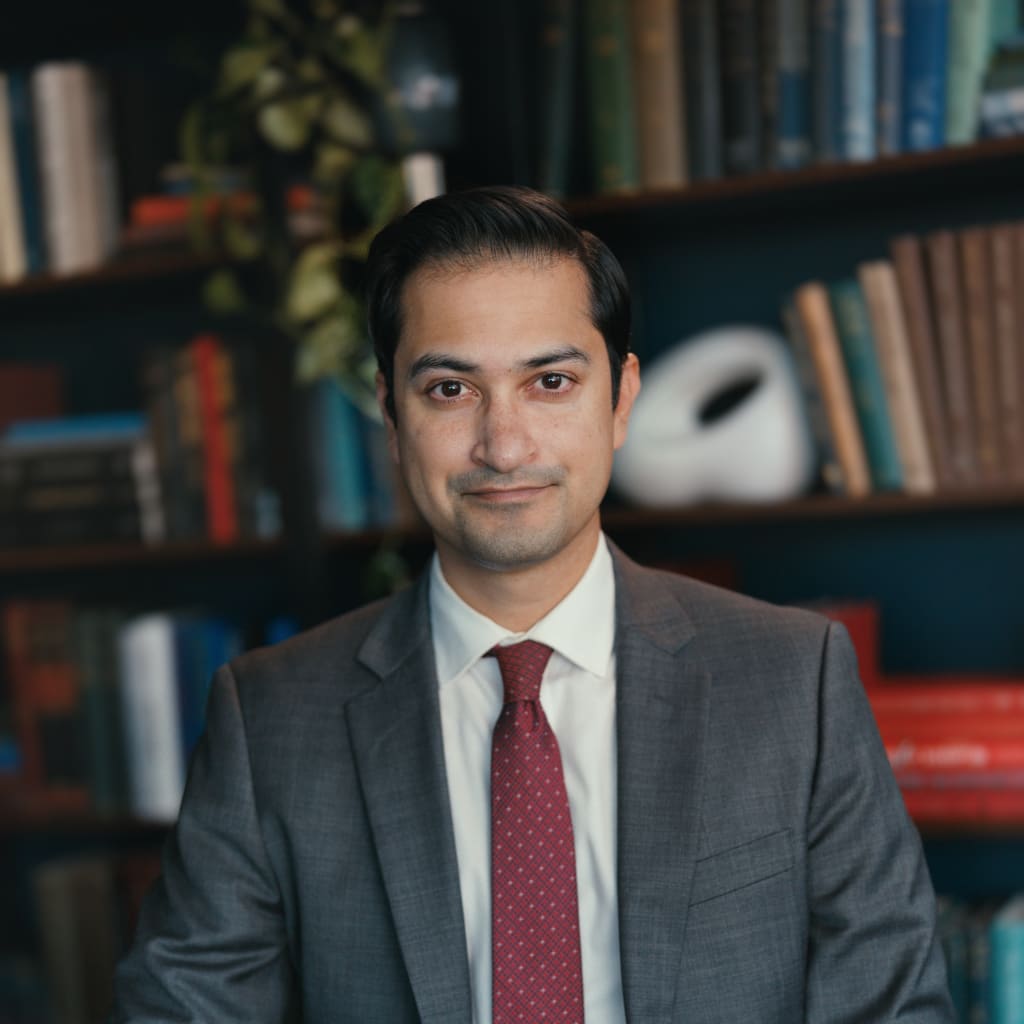 Rush DoshiCFR ExpertC.V. Starr Senior Fellow for Asia Studies and Director of the China Strategy Initiative
 Olivia KosloffSenior Fellow, American Economic Liberties Project
[Video: https://youtu.be/X6Hpq9ZLwuk]
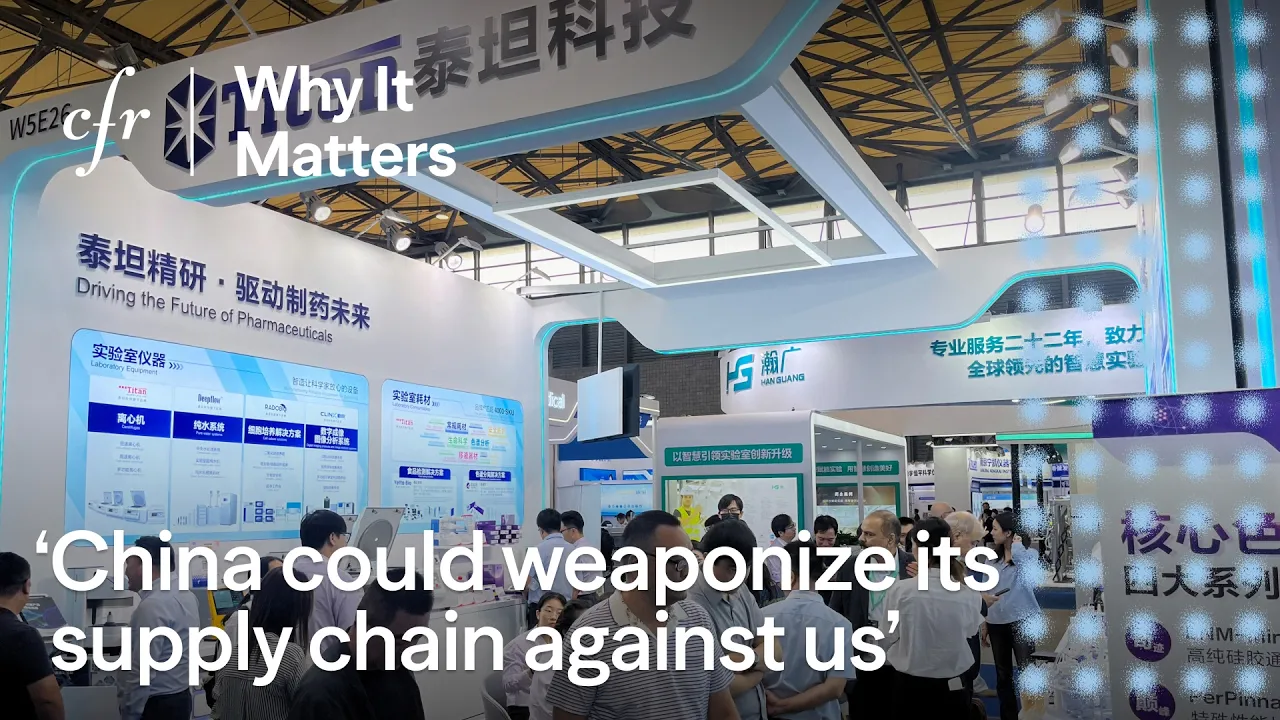
What happens if the world’s pharmacy decides to close? From ibuprofen to amoxicillin, a majority of the essential medicines used in the United States depend on ingredients from China. This dependence has left the United States vulnerable to a geopolitical rival that could decide to cut off its access at any time.
Transcript
Mom, Cathy’s sick! She has a fever! Please get the children’s Tylenol.
Yes, Dristan is like sending your sinuses to Arizona. Helps dry runny nose, itchy, watery eyes.
When you’re headache-y and feverish with a cold, take Alkaseltzer! To help you feel better, while you’re getting better.
Medicine. It is a crucial part of our everyday life. But behind that memorable ad, catchy jingle, and child-locked plastic bottle is a global network of manufacturers, chemical suppliers, and pharmaceutical ingredients, and at the very center of it all is China.
Take ibuprofen. Today, China accounts for roughly 95 percent of U.S. ibuprofen imports. Going a different pain relief route? Well, around 70 percent of acetaminophen imports also come from China. And it doesn’t stop at painkillers. From critical antibiotics to medications used to treat blood disorders, China plays a major role in supplying the ingredients, and at times the finished drugs, that the U.S. depends on.
So, how did China become so deeply embedded in the medicine cabinet of the United States, and what happens if that supply is disrupted?
I’m Gabrielle Sierra and this is Why It Matters. Today, we’re examining America’s dependence on China’s pharmaceutical supply chain, and the risks of relying on a critical supplier who also happens to be a geopolitical adversary. Episode two of a series in which we take a look at the fragility of the global health system, and the vulnerable position the U.S. finds itself in today.
Rush DOSHI: There’s analysis that shows that if you take 700 drugs in the U.S., every one of them has a sole source dependence on a key starting material that comes from China. So what that means is that if that material, for example, were denied to the United States, or if we weren’t able to procure it, many of the people who are making the medicines that Americans rely on wouldn’t be able to produce those medicines. We’d have shortages all because there’s that sole source dependency.
I’m Rush Doshi. I direct the China Strategy Initiative here at the Council on Foreign Relations.
Gabrielle SIERRA: So is it that China just literally has more access to these starting materials or are they just better at manufacturing than us?
DOSHI: Well, it’s a few different things. One of them is that for a long time, the U.S. basically was focused on lower cost drugs, which is a good thing to focus on. But as a result, we often prioritized low cost over resilience. And what that meant in practice was even if a particular producer of an active pharmaceutical ingredient was procuring all of their key starting material from China, nobody else would know and nobody else would care. Even if they did know, they wouldn’t be able to do anything about it. And so that’s one half of the equation. The other half of the equation is that China got really good at doing low cost and sometimes cheap and polluting chemistry. A lot of the chemical industry is critical to be able to produce key starting material, but the U.S. has largely offshored a lot of its chemical industry because it’s dirty and because it’s polluting. We could have instead invented or innovated new methods of doing chemistry that weren’t dirty or that weren’t polluting and that were in fact cheap. But instead of doing that, we decided it was easier to just import from China.
SIERRA: What exactly are we talking about here when we say medicine?
DOSHI: A lot of the medicines that people receive are what we could call small molecule drugs. They’re basically chemicals. And a lot of the upstream inputs into those medicines come from China. In some cases, we import directly from China the full finished drug. In other cases, we import some of the key material like the active pharmaceutical ingredient. So there’s two parts that people should be familiar with, key starting materials and then active pharmaceutical ingredients. And those ultimately lead to what we call your finished drug, you know the pill you take or the injection you might take. The key starting material comes almost exclusively from China. And in still other cases, we may not import the active pharmaceutical ingredient from China. Maybe we import it from India. But India relies on all the key starting material that comes from China. And so in the end, significant amounts of medicine that are critical have that dependency. And so the problem is, how does China weaponize this instrument? They’ll say to you, essentially, we won’t sell this input to India if India is going to sell to America. They did a version of that in rare earths, and they could do a version of that in pharma. That’d be highly escalatory. It would look really bad. But I just should note that that was threatened in the past as a tool against the United States. So it’s not like totally crazy that they would consider something like that.
Fox Business: This morning, a talk of China weaponizing rare earth materials to hurt American companies and consumers again proves there are several ways to measure opportunity costs or what we give up in any trade relationship.
The Daily Show: Okay, so rare earth metals are critical. Well maybe we should have thought of that before we launched a trade war against the country that has them all...
DOSHI: Even if we have a facility in the U.S., all the things you need to make that facility work, kind of like your rare earths are needed in your auto plant, those come from China now. So if we are unable to source them, then we’re not able to make that medicine in America anyway. That’s not the same as controlling the medicine. It’s controlling the inputs, into making the medicine.
Rare earths, as Rush mentioned, are a key material inside almost everything modern: electric cars, laptops, even next gen missiles. But over the last decade, the U.S. let the process of extracting and processing them slip overseas. China now controls roughly 70 percent of global extraction and 90 percent of global processing.
And we’ve already seen the weaponization of this supply chain. It happened to Japan in 2010, and Western allied nations in 2025. And it isn’t limited to just rare earths. This method of supply chain weaponization has also been seen in Beijing’s dealings with Australia, Lithuania, and at least 15 other countries.
This is the pattern Rush is warning us about.
SIERRA: So when did we decide to offshore our pharmaceutical industry? Like when did all of this start?
Olivia KOSLOFF: So the pharmaceutical industry is not as old as you might expect. Pharmaceuticals as a category really started to pick up around World War II.
I’m Olivia Kosloff. I’m a senior fellow at American Economic Liberties Project.
KOSLOFF: And so a lot of the drugs that were taken in the U.S. were manufactured by U.S. companies that were industrial suppliers that were coming out of World War II. Around 2000, when we normalized trade relations with China, is really when this offshoring process started. And it happened very slowly at first. So I think it was in 2004 that the last U.S. plant that was making penicillin shut down. And that was because China had invested very heavily in their ability to make penicillin and then had decided to pursue the industrial policy of lowering the cost of penicillin such that it drove all of the U.S. manufacturers out of business. That also happened with vitamin C and then started to happen with more and more medications, even when it wasn’t as explicit, even when there were one or two U.S. manufacturers China started to take a bigger and bigger slice moving beyond the year 2000.
DOSHI: In some cases, we saw erosion happen decades ago. In some cases, we saw it happen much more recently. There are categories of drugs, for example, like amoxicillin, which we produced domestically just 12 to 15 years ago. Almost all of it was produced domestically. Today, almost none of it is produced domestically. That’ll happen in just 12 to 15 years. And that’s one drug almost everybody that’s listening has probably taken at some point in their life. Now, if you have to take that drug, it’s going to be imported.
SIERRA: Okay wow, amoxicillin that is a big one. How did we go from nearly 100 percent domestic to essentially zero in just 12 years? That does not feel very long.
DOSHI: It’s a great question. And you’ve got to understand that the production of some of these medicines isn’t that profitable. This is old stuff, right? And it’s dirty sometimes to make it, and it produces a lot of environmental waste. And it’s expensive to build a plant. And at the end of the day, if somebody overseas is selling the key ingredients or the finished amoxicillin for cheaper, in our country, we reward low price right now in our sector. So they’ll buy from the lowest cost provider. And you do that enough for enough time, eventually your own domestic producers go out of business. Now, some of those domestic producers were crying, “Hey, could you throw a contract our way? Could you change the terms a little bit so that we can stay in the game?” And basically, our policy is to say no. But let me just add one other thing. That policy can change, but we also don’t want to just say, “Hey, let’s do this stuff the old way in America.” We should be innovating, right? It can’t be the case that there aren’t better, cheaper, less polluting ways to make some of this stuff, right? We’ve been making some of it for 50, 60, 70 years. So there are interesting, innovative technologies we could apply, but right now there is no incentive to try. Because if you’re a company and you have to choose, do I want to invest money in a new, innovative way to make medicines so that I can go after a market where there’s no margin, or should I just import from China and not worry about it? It’s going to be import, right? The government has to create an incentive structure to innovate. And this problem in pharma, we see in sector after sector. It’s why we stopped doing the refining of rare earth minerals. It’s why we stopped doing the essentials of chemistry. It’s why we stopped doing some of the production of batteries. Ultimately, in every sector, what you’ve seen is the U.S. has opted for hitting the easy button. And the easy button is to import, not to find ways to revolutionize production for a new world. And that’s what we need to change.
SIERRA: Alright let’s talk more about medications. What other drugs are we talking about here? Are they important ones like amoxicillin because that one seems pretty important?
DOSHI: They are important ones. In fact, if you look at the list that the U.S. government has for this, it’s called the Essential Medicines List. You’ll find a significant number of the drugs on that list, we have sort of choke points that China controls across the stack. So, heparin is a really important anticoagulant. It’s also used in hospitals pretty much on a daily basis. Millions and millions of people take it daily. But pretty much all of the crude heparin, more than 60 to 70 percent of it, which is what creates the medicine, comes from China. It used to be that it all came from places like the United States but we lost the ability to manufacture it for a variety of reasons. And now we import it. If, for example, we couldn’t get those imports then the people who create the heparin dose that you take in a hospital wouldn’t be able to do that anymore and we’d have a shortage. And there are many, many other drugs like that: immunosuppressants relevant for organ transplant, antibiotics are a huge category where this is a problem where we have these dependencies.
SIERRA: I want to circle back to what we have seen before, right, we’ve established that the rare earths chokepoint is an apt comparison, so how can we stop ourselves from stumbling into the same trap?
KOSLOFF: To combat this would require so much investment from the U.S. and such a concerted multi-year effort across the government that it has been easier and cheaper for us to just say, well, we’re still getting the drugs and they are cheaper because China has fewer labor restrictions, fewer environmental restrictions. They have greater scale. And so it is very, very difficult for politicians to say, “Heart disease medications and antibiotics will be more expensive for all of my voters because we have decided that this is a strategic priority.” I think rare earths are a similar case, although a little bit less directly related to the consumer where we have been getting it. And so it is easy to say, okay, it’s fine that China has this choke point, but as our relationship becomes more competitive or more hostile, it becomes more of a concern. Of course, now the challenge is to convince politicians that they have to tell people that this is a worthwhile measure to pursue, and that is always like the sticking point.
SIERRA: If we invented a new drug or a new process today that cures some disease or breakthrough therapy that really moves the needle, would we have to get China on board to even move forward with that process or that new drug?
DOSHI: So you’ve raised a really important question. There’s another part of pharmaceuticals, which are really about larger molecules, what we call biologics. And those more complex medicines, we see that same problem now replicating itself in that sector of the market too. These are much more complicated, and they’re very advanced and they’re very exquisite, and some of the most exciting therapies in the world are in this category. It’s the cutting edge. And it has been for a while now. The problem is that we’ve also lost the capability to do this. Like we’re losing the ability to do what’s called biomanufacturing. If there’s a really novel biologic that we want to make, we can’t always make it in America.
As Rush points out, most of the drugs we’ve been talking about, Tylenol, amoxicillin, the pills in your cabinet, are small molecules: tiny, stable compounds built through chemical reactions and simple enough to copy into generics.
Biologics are a different thing entirely. They are large molecules like proteins and antibodies, and they’re grown inside living cells rather than mixed in a vat, and they make up much of the frontier of modern medicine. One is chemistry, the other is biology, and the latter can be messier, slower, and far harder to replicate. And that difficulty is exactly what makes biologics the next frontier of pharmaceutical dependency.
Take one we’ve already talked about: heparin. It’s extracted and purified from living tissue, primarily pig intestine. Building the capacity to grow these drugs takes years, specialized facilities, and rare expertise. So the question of who can do it, and how cheaply, is already shaping where the industry goes.
DOSHI: Increasingly, we’re going to have to make it in China. And the reason why is very simple. China subsidized biomanufacturing. It subsidized groups that will basically do clinical research and development for these biologics. And what happens is that our pharmaceutical companies would prefer to contract sometimes with those Chinese companies. And they may save a lot of money, and they may also be able to move a lot faster. And increasingly, because they’re working with these Chinese companies, those Chinese companies do a better job. But the result is that over time, the gap between what the Chinese companies are capable of doing and what we’re capable of doing is growing because we’re not letting our ecosystem thrive. We’re not training it. And over time, it locks in dependency. And I’ll add one last thing. When you go to the FDA and you say, I’ve got this biologic. I’ve got this great way of making it. I’m going to make it in China at this company. The FDA has to say, all right, that site is basically validated to do this production. Once you get that, it’s really hard to change from one site to another for manufacturing. And that means that oftentimes we get lock-in, where a company becomes dependent, essentially not only on that Chinese site, but even if they wanted to move to another site or diversify, they got to go through the whole FDA process again, which could take years. So it is a real, true dependency. Now, the innovation may happen here, but the production may increasingly happen there.
SIERRA: What risk would there be from moving the supply chain back to the United States? You mentioned a potential environmental impact? What other risks could there be?
KOSLOFF: The downsides are that it would require a heavy investment from the U.S. It would probably have to take place over multiple administrations, possibly of different political parties. It would require the involvement of Congress. It would require a lot of messaging to the American people to explain why their medications might be going up a little bit in price. And I think it would also require us to think about ways to invest in manufacturing that are not necessarily replicating the facilities that we had in the post-World War II era, but in ways to leapfrog that and bring in new technology, make these jobs cleaner and better, but that’s like the flip side is that I think this would create a lot of new jobs. It would reduce the dependencies and it would provide us an opportunity to invest in quality manufacturing in a way that we haven’t been able to, or that we haven’t prioritized in the last few decades.
SIERRA: Could China weaponize its positions here?
KOSLOFF: Yeah, and there are a breadth of ways that China could weaponize its position that are short of there being a hot war where they just cut things off suddenly. It can be a threat if the U.S. wishes to levy a tariff or do some kind of other action that China doesn’t like. They can threaten to cut off supplies. They have a very detailed knowledge of ways to cut off different areas of their exports in a way that I don’t think the U.S. shares. And that provides them with a lot of leverage, both directly and then also, because we’re dependent on India, which is dependent on China, it also puts us in an even more precarious position because we’re dependent on several different countries that are themselves all dependent on China. It just becomes a mess geopolitically to have to take all of these things into account. And it really puts the U.S. in a weaker diplomatic position.
DOSHI: Remember during COVID, we had shortages all around the world of key drugs, especially because other countries needed them. So one problem is if you don’t have some capacity at home, then the next time there’s an earthquake or a tsunami or a pandemic or a local need that trumps foreign need, you end up on the short end of that stick, right? You don’t want to be in that position. So we want to have some capacity in the U.S. no matter what. But what is particularly urgent right now is to make sure that our capacity is not dependent on China entirely. And so that does mean we want to look at allies. And there are allies like South Korea, for example, who are very good in some of these spaces. They’re very good in biologics, for example, India, very good in API manufacturing, parts of Eastern Europe, the same thing. Europe has a lot of facilities that do this kind of thing. And if you look across all the drugs, it could look overwhelming. Look at all the things we want to be able to make ex-China. That’s really hard to do. So what we have to do is build what I call and what I’ve written about, called “allied scale,” right? China has the scale in this sector. We need scale among our allies so that we can divide and conquer each of these choke points together. That might mean that we depend on Japan for some things or Korea for some other things or India for some things, but it means that we’re not putting all our eggs in the China basket. And I think when you look at these statistics, Gabrielle, I mean, in some cases we have 90 percent plus dependence on Chinese supply, either for the upstream inputs or the finished dosage, and that’s really not a good position to be in with a country that already has weaponized its supply chains against us once significantly just last year.
SIERRA: What are the chances that some breakthrough, amazing processor drug could come through that China is capable of producing, and they just won’t share it with us because they would just want it for their own people?
DOSHI: I think that China will be innovative. They’re going to have new therapies. And I think that’s a good thing for the world. The thing is, is there a possibility that maybe some of those therapies aren’t shared? It’s possible. I can’t rule it out. I mean, it would be highly escalatory. It’d be highly provocative. It would receive a lot of criticism, but there’s ways you can argue it, right? I mean, this has happened before, right? When there’s shortages, or there’s a lot of domestic demand, you say, “Look, I’d love to sell this to you, but we just don’t have the ability.” Or “We’d love to sell this to you, but we’ve got so much need from our allies and partners instead, that you’ll have to wait in line.” And I think the way this would happen is it would just be rationed to us on unfavorable terms and implicitly that would be, “Hey, if you want this breakthrough, you’re going to have to give in here or there on some other issue to get it.
We don’t want to lose our drug discovery engine, which is going off to China, because China can cut corners on human proof of concept in ways that we can’t. We’re getting squeezed at the discovery part of the stack and at the production part of the stack. And that means, Gabrielle, if there is a new breakthrough medicine, if we keep these trends going, it’s not just that China will produce it because it’s innovative. We won’t produce it because we’re less innovative, because we don’t have the capability. So it’s better for the world for there to be many, many sectors of biotech excellence, not just China, not just America, but many sectors. It’s better for the world. And I also fear that if things keep going the way they’re going, there will be one sector of biotech excellence in the world. And that’s just China. Just like there’s only one place for a lot of key starting materials are made. That’s China. The same way there’s only one place where rare earth minerals are refined. That’s China. We don’t want that kind of concentration in an industry, which could substantially improve human life and longevity. And we want many, many people to research this stuff. And we want them to have different views and have different cultural experiences they draw on. We want diversity in the world of biotech researchers, and we get that by investing in our capabilities here.
And the U.S. isn’t increasing funding for innovation to combat this issue - in fact, the government is actively cutting it. Over its first year in office, the Trump administration froze or cut more than $2.3 billion in research funding to the National Institute of Health, with approximately $1.4 billion in unspent funding still frozen.
As it stands today, the cancellation or suspension of over 7,800 NIH and NSF grants left scientists and researchers in a lurch—some 25,000 scientists and personnel have left U.S. research agencies, with many choosing to work abroad.
The cost of these funding cuts has experts arguing that this could “potentially set technology, health care, and the economy back decades.”
SIERRA: I can’t help but think about, like, current cuts. So have current cuts to the American biotech sector, let’s say, impacted the separation between the U.S. and China’s, you know, industry dominance?
KOSLOFF: Yes, for sure. The research cuts to the NIH, the cuts to just research funding in general have had a huge impact on, I think, both chilling the willingness of up-and-coming scientists to want to do this research because it is increasingly difficult to get grants. But it also just means fewer total dollars in the research ecosystem. And it is impossible to know where the next breakthrough is going to come from. I mean, I’m sure you heard this when GLP-1s were popular because this was like the thing that all the media outlets fixated on. But it came originally from studies of Gila monster saliva. Like, it was just the most niche possible research that became this blockbuster drug. And so, like, my perspective is that the more research dollars we have, the more random scientific coincidences we’re going to have, which mean more drugs that are saving people’s lives. And that seems to be China’s strategy, more or less, is let’s invest in research parks and scientists and clusters of innovation and see what happens. And our take has been to reduce those dollars. It does just widen a gap that shouldn’t exist.
And we might be missing out on some pretty cool stuff.
KOSLOFF: This is the most science fiction-y of the things that we’re talking about in that DNA comprises all living things. Synthetic DNA is the synthetic building blocks that are used to make up DNA. And it is used in synthetic DNA biology, which is mimicking DNA structures of living things and things that you wish existed or genetically modifying things. Not humans, not true science fiction stuff. But this has relevance in agriculture. It has relevance in development of therapeutics, drugs. And so it is a really important category when we’re talking about cancer drugs specifically. This is a huge area of research for new cutting edge oncology drugs. It is also an area in which we are increasingly dependent on China in a few different ways. One is that to do this research and to create these drugs, you need the chemical building blocks of the individual synthetic DNA molecules. China has like a total lock on that market. We couldn’t find, it was really hard to find data. We were really trying. What we ended up doing was interviewing a few different biotech CEOs and saying, if you wanted to, could you get these from U.S. companies? And they were like, I don’t think so. They couldn’t really even come up with a way that if they wanted to source these all American that they could. So the inputs are coming from China. And then China is also conducting a ton of its own research in the synthetic DNA field. And that’s, again, it’s a huge problem because this is probably where a lot of the breakthroughs are gonna come from. And so they might get to them first.
SIERRA: I can’t help but ask, have we sort of already lost the most important race?
KOSLOFF: I don’t think we have lost, but we are running with a hand behind our back. The U.S. FDA has been the gold standard and I think is still considered the global gold standard for drug safety. The FDA is also very, very small C conservative in making changes to the way that it evaluates drugs. And I think that is increasingly becoming a liability because we are not experimenting to the same degree that China is with implementing new technologies and making things cheaper, making things easier on clinical trial patients. And I think that is another input that is making it more difficult for us to compete when we’re talking about this.
SIERRA: It sounds like China is at the cutting edge of this research and development. What does this mean for the U.S. when it comes to innovation and talent here?
KOSLOFF: The temperature is changing. Chinese-born scientists who trained in the U.S. are tending to go back to China in greater numbers because they have bigger research packages waiting for them and they get to go home. Like, there’s a lot of upside for them. And there have also been some notable cases of American-born, American-trained scientists who are enticed to China because of the research packages awaiting them there. So yeah, I think it’s a huge, I think it’s a shame. We’re the place to do, like, open, democratic, free, innovative, like all these amazing values that we treasure and we’re losing all of it for want of some research funding. So yeah, I think it’s a huge problem.
DOSHI: China has a policy which they call dual circulation, which is basically to make the world dependent on China and to make China independent of the world. So the world relies more on them. They don’t rely on anybody else. They have that desire also to dominate new technology, right? So they believe that they lost the last few industrial revolutions. The first one was steam power that made Great Britain a great power. You could argue the second and third were electrification and mass manufacturing, which America dominated that made America a world power. And they think we’re now in the middle of the fourth, right, which is going to be AI and robotics and quantum and biotechnology and many other sectors. And they have a plan to dominate that, not just to be rich, but to be powerful, because they believe that winning technological breakthroughs means that you dominate the next stage of politics. Now, we in America have taken for granted our industrial capacity, which has been substantial since 1870. We’ve taken for granted our technological leadership, which has been substantial since 1900. But we are now falling behind both in industrial capacity and in technology. And China is surging ahead in both. And it’s impossible to think it’s just for the sake of jobs, just for the sake of wealth. It’s also for the sake of national power.
Advanced medicine is no longer concentrated in a handful of wealthy countries. Cutting-edge surgical centers, specialized treatments, and world class doctors now exist in places many Americans wouldn’t have thought to look. And as demand continues to outpace what patients can afford or access at home, more people are boarding planes to get their care elsewhere.
Valorie CROOKS: Oftentimes people go abroad because of multiple factors coming together.
Glenn COHEN: There’s also people who are travelling for something that is life saving, like a cardiac bypass, something that’s restoring function, like a hip replacement, an experimental therapy that’s unavailable, trying to get surrogacy, so it really is a very wide range of things.
More on that next time.
Want to keep up with Why It Matters? Sign up to receive an email alert when new episodes are available at cfr.org/newsletters or click the link in our show notes. If you ever have any questions or suggestions or just want to chat with us, email at [email protected] or you can hit us up on X at @CFR_org.
This episode was produced by Molly McAnany, and me, Gabrielle Sierra. Our audio producer and sound designer is Markus Zakaria. Our intern this semester is Abigail Breyfogle. Our theme music is composed by Ceiri Torjussen.
You can subscribe to the show on Apple Podcasts, Spotify, YouTube or wherever you get your audio. For Why It Matters, this is Gabrielle Sierra signing off. See you soon!
Read More:
Thomas J. Bollyky, Rush Doshi, Prashant Yadav, Olivia Kosloff, and Elena Every, “The Pharma Choke Point,” CFR.org
Tim Rühlig, “The China Drug Dependency,” CFR.org
This work represents the views solely of the host(s) and guest(s). The Council on Foreign Relations is an independent, nonpartisan membership organization, think tank, and publisher, and takes no institutional positions on matters of policy.
Producer
- Producer, Podcasts
Audio Producer and Sound Designer
- Audio Producer & Sound Designer
Intern
- Abigail Breyfogle
More Episodes
 26:04Podcast
 38:36Podcast
 31:35Podcast
 37:32Podcast
 32:26Podcast
 32:47Podcast