Trump-Xi Summit: How to Reach an AI Arms Control Deal With China
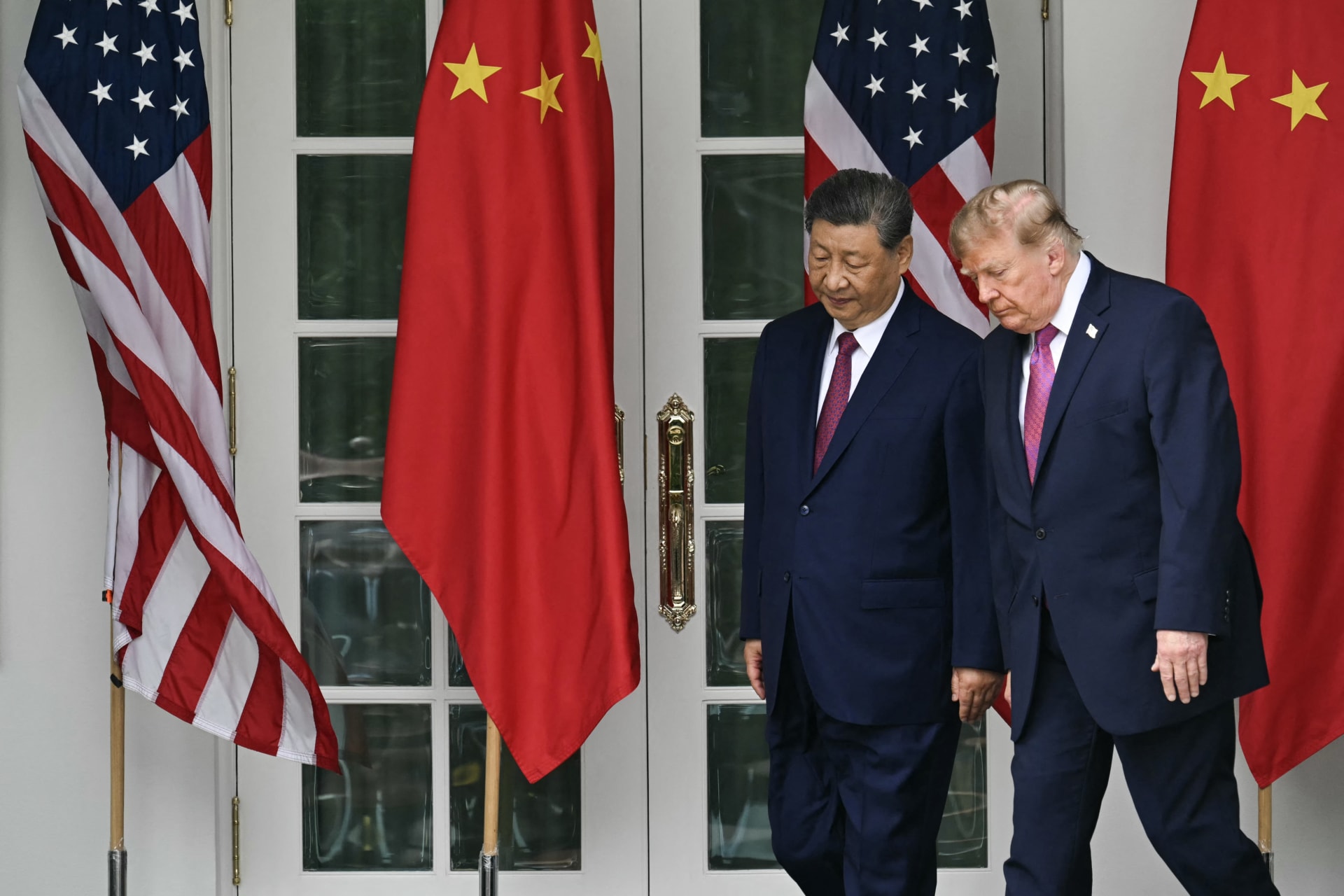
Trump’s meeting with Xi in Washington has intensified pressure to pursue a U.S.-China deal on artificial intelligence (AI). Although a deal is extremely unlikely today, Washington can take steps now that make one more likely in the future.
By experts and staff
- Published
 Chris McGuireCFR ExpertSenior Fellow for China and Emerging Technologies
Chris McGuire led U.S.-China AI policy while serving in the National Security Council under President Joe Biden. Before that, he served as the State Department’s lead expert on U.S.-Russia arms control policy during the first Trump administration.
There are mounting calls in the United States for President Donald Trump and Chinese President Xi Jinping to negotiate a U.S.-China agreement on AI safety, given warnings from leading U.S. AI companies—Anthropic, OpenAI, Google, and others—that humans could soon lose control of advanced AI models. The United States and China will eventually need to reach such a negotiated agreement to ensure neither country fields an AI model that poses a danger to public safety. The current situation has drawn parallels with Cold War arms control negotiations, given that the United States and the Soviet Union found ways to reduce nuclear risks even while in vigorous competition.
While dialogue between the United States and China to share perspectives on AI-related risks is warranted, a U.S.-China agreement governing AI development is exceedingly unlikely under current strategic conditions and would be without precedent in the history of arms control. However, there are steps that Washington can take today that would create the conditions conducive to successful negotiations down the road.
The United States has a clear, albeit not dominant, lead over China in AI. U.S. AI labs are somewhere between six months and one year ahead of their Chinese counterparts, but China’s AI capabilities remain competitive, and crucially, China still believes it can surpass the United States. Both the United States and China correctly view AI leadership as strategically existential, which means their top priority is maintaining—or, in China’s case, obtaining—leadership in the technology. For both countries, mitigating AI risks is a crucial objective, but secondary to AI leadership.
This strategic posture is rational given the critical national security importance of AI, but also extremely unconducive to reaching an arms control agreement. Every past bilateral strategic arms control agreement was either negotiated between countries that were already at overall strategic parity or was agreed to only after one country concluded that it was better to lock itself into a disadvantageous position because it could not win the strategic competition. There is no historical case in which two states of unequal strength concluded an arms control agreement to regulate a strategically critical technology that either caused the leader to cede its overall strategic advantage or that constrained the trailing state’s development and deployment of that technology before that state had concluded the race was lost.
But this does not mean an AI arms control agreement is impossible. Rather, it means that if the United States wants to maximize the chances of reaching such an agreement with China but preserve its lead, it must first take steps that cause China to conclude that it will not be able to catch up to the United States in AI and that it therefore should strike a deal sooner rather than later.
The Lessons of Arms Control Past
Nearly every U.S.-Russia arms control agreement that constrained a strategic capability was negotiated when both countries were at overall strategic parity and also preserved that parity:
- The SALT II (1979), START (1991), and New START (2010) agreements capped strategic nuclear weapons delivery vehicles for both sides at identical levels.
- SALT I (1972) froze current levels of deployed nuclear missiles in place. Although this did lock in a numerical Soviet missile advantage, SALT I intentionally did not contain any restrictions on how many warheads could be deployed on each missile—an area in which the United States had a significant edge. Thus, it preserved overall strategic parity.
- The Limited Test Ban Treaty (1963) and Threshold Test Ban Treaty (1974) put identical constraints on U.S. and Soviet nuclear testing and were concluded only after both sides had conducted extremely large numbers of tests and collected extensive test data.
- The Anti-Ballistic Missile Treaty (1972) put identical caps on the deployment of missile defense systems. While the United States did have an advantage in the underlying technology, the Soviet Union had an advantage in deployment, plus the United States assessed that it could not use missile defense technology to gain a strategic edge because the Soviet Union would inevitably scale comparatively cheap missile production to overwhelm any system.
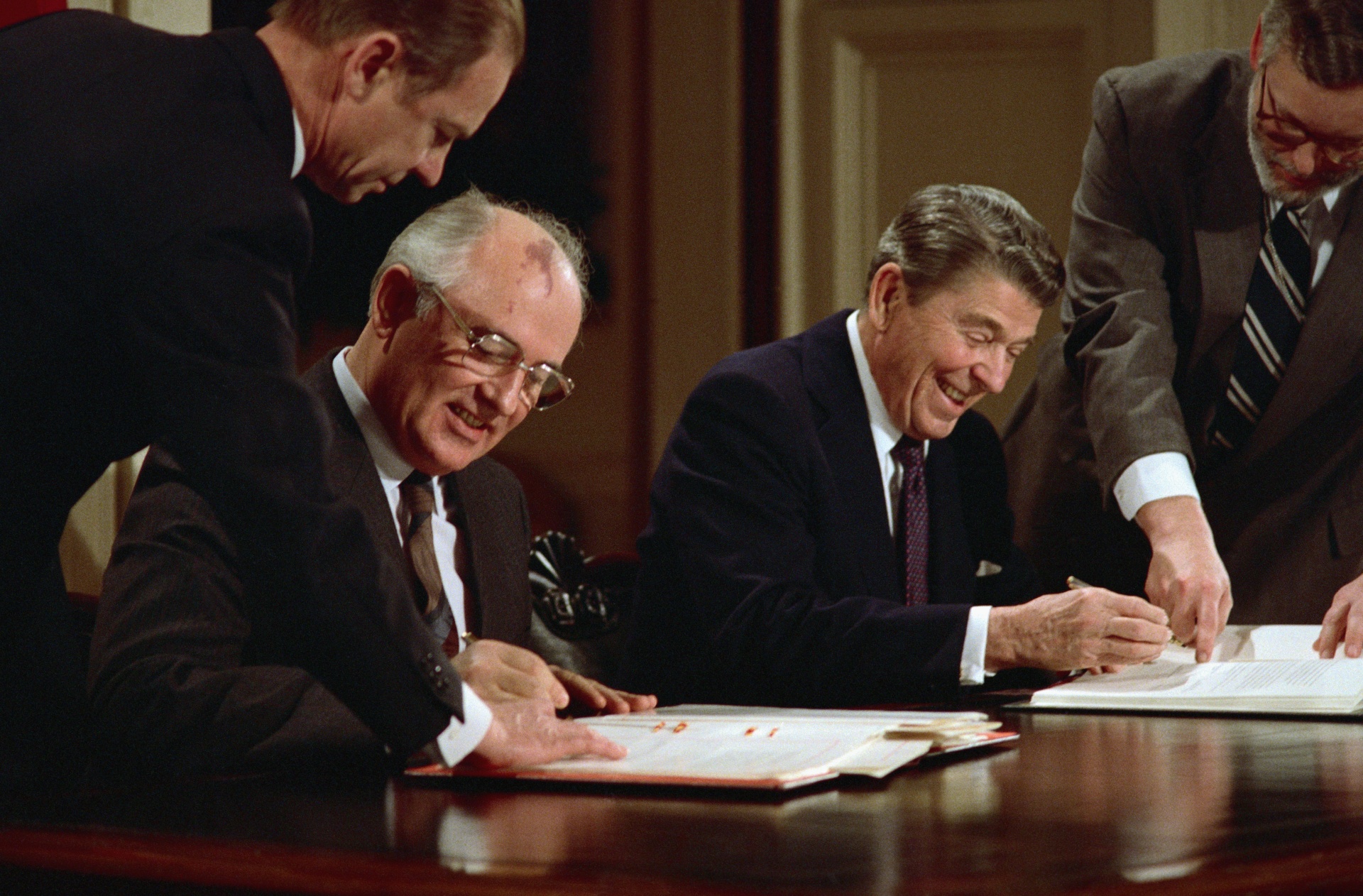
The final phase of the Cold War did produce arms control treaties that locked in U.S. strategic advantages over the Soviet Union. Most significantly, the 1987 Intermediate-Range Nuclear Forces (INF) Treaty heavily favored the United States. It required both sides to eliminate all ground-launched intermediate-range missiles and launchers, an area in which the Soviet Union held a massive advantage, and did not restrict sea- and air-launched intermediate-range missiles, areas in which the United States maintained a large advantage. The Soviet Union ultimately eliminated 1,846 missiles and 825 launchers, compared to 846 missiles and 283 launchers for the United States. The INF Treaty was also the first major arms control treaty to rely on binding and intrusive verification measures; all previous treaties had been verified almost exclusively via national technical means (which refers to each side’s unilateral intelligence collection capabilities).
The Soviet Union agreed to the INF Treaty because by 1987, Soviet General Secretary Mikhail Gorbachev had concluded that the Soviet Union could not afford to continue the arms race with the United States, particularly as U.S. technological advances in missile defense and precision strike were degrading the Soviet strategic position. Gorbachev made this position clear in 1986 during negotiations with President Ronald Reagan in Reykjavik, when he proposed that both sides eliminate all their nuclear weapons. This proposal was rejected, but it laid the groundwork for the INF Treaty the following year. Only once Gorbachev concluded that the Soviet Union was at an overall strategic disadvantage and that continuing the arms race with the United States would only deepen those disadvantages, was he willing to agree to arms control treaties that locked in U.S. advantages and significantly reduced tensions.
One of many reasons China has rejected U.S. efforts to engage in strategic nuclear arms control negotiations is because Beijing is reluctant to accept constraints on its nuclear forces while they are not at parity with the United States. When the New START Treaty expired in February 2026, a Chinese Foreign Ministry spokesperson stated that because the nuclear forces of China and the United States are not on the same level, it would be “unfair and unreasonable” to ask China to join strategic arms control negotiations at this stage.
The Calculus Complicating a U.S.-China Deal
So long as the United States maintains a lead over China in AI but China believes it can catch up, the strategic conditions will remain unfavorable for a U.S.-China agreement that places constraints on both countries’ ability to develop AI models. It would be unacceptable for the United States to accept parity with China in AI since this would nullify Washington’s single most significant strategic advantage over Beijing—its lead in advanced technology. Abandoning this lead would also sharply raise the risk that China overtakes the United States in AI, which would grant it technological, economic, and military dominance over the United States.
However, China similarly will not agree to terms that materially constrain its development of AI so long as it views obtaining AI leadership as a strategic imperative, until it concludes that overtaking the United States has become impossible.
And this is to say nothing of the substantial challenges associated with verifying compliance with any treaty should the conditions ever become ripe for negotiation. Joint verification of compliance with arms control treaties that does not hand over national security-sensitive information is an extremely complicated technical challenge. Both states must have faith in the accuracy of any technology used and also have confidence in its integrity to ensure it is not used for espionage. This is why the only arms control treaties with intrusive verification regimes were negotiated at the tail end of or after the Cold War, not at its peak when mistrust was highest.
The Path to a U.S.-China AI Agreement
History does show one viable path for the United States to reach an AI arms control agreement with China that would not sacrifice its current lead: the United States must convince China that it cannot catch up. Beijing must believe that if it does not agree to a deal, the United States will race further ahead and China’s strategic position will further deteriorate. Washington could take actions today to make this more likely, which would both decrease risks and increase the likelihood of an eventual deal.
To create the conditions for successful U.S.-China negotiations on AI, the United States must take two steps.
First, it must increase the U.S. lead in AI by cutting off China’s access to the U.S.-origin chips that China needs to stay competitive with the United States. China’s own production of AI computing power is only around 1 to 4 percent that of the United States, and continues to fall. The vast majority of China’s computing power comes from smuggled and remotely accessed U.S. chips, which Chinese firms access by exploiting loopholes in U.S. export controls. Closing these loopholes would expand the U.S. lead in AI, increase U.S. leverage in negotiations with China, and could force China to conclude that cutting a deal soon would be preferable to an even more lopsided deal later.
Closing these export control loopholes would also give the United States critical breathing room to take the second necessary step to create the conditions for a negotiated agreement with China: imposing some regulations on the development of U.S. frontier AI systems. Widening the gap with China would permit the United States to take more robust domestic regulatory steps without conceding AI leadership. This would reduce the risk of an AI-related incident, and provide China with a roadmap for the type of AI safety measures that it must agree to implement as part of any deal.
Additionally, as the U.S. lead over China in AI grows, verification of any agreement becomes easier. This is partly because China could be willing to agree to more intrusive or one-sided verification measures in an agreement that also prevents the United States from racing further ahead. But even if China refuses to accept such measures, U.S. national technical means could offer significant verification capability—assuming a large AI lead also yields a large lead in cyber espionage capabilities. If the U.S. lead is large enough, Washington could grow confident that it could verify Chinese compliance without joint verification measures.
None of this precludes U.S.-China discussions about AI-related risks. Such talks are a necessary precursor to any agreement, because both sides must share a common understanding of the risks associated with a technology before they can agree on how to regulate it. But Washington must not allow these discussions to prevent it from taking the steps that would make an agreement possible.
Taking these two steps today—closing loopholes in export controls and imposing some domestic safety regulations—would minimize short-term AI-related risks and preserve U.S. AI leadership. And crucially, it also maximizes the odds of a successful U.S.-China AI agreement over the long term. History suggests that China will accept a deal that secures a U.S. lead in AI only once it concludes that continuing the race will cause it to fall further behind. The United States has the tools to bring Beijing to that point, but it must have the resolve to use them. Washington does not need Beijing’s trust; it needs Beijing to believe that it cannot win.
This work represents the views solely of the author(s). The Council on Foreign Relations is an independent, nonpartisan membership organization, think tank, and publisher, and takes no institutional positions on matters of policy.