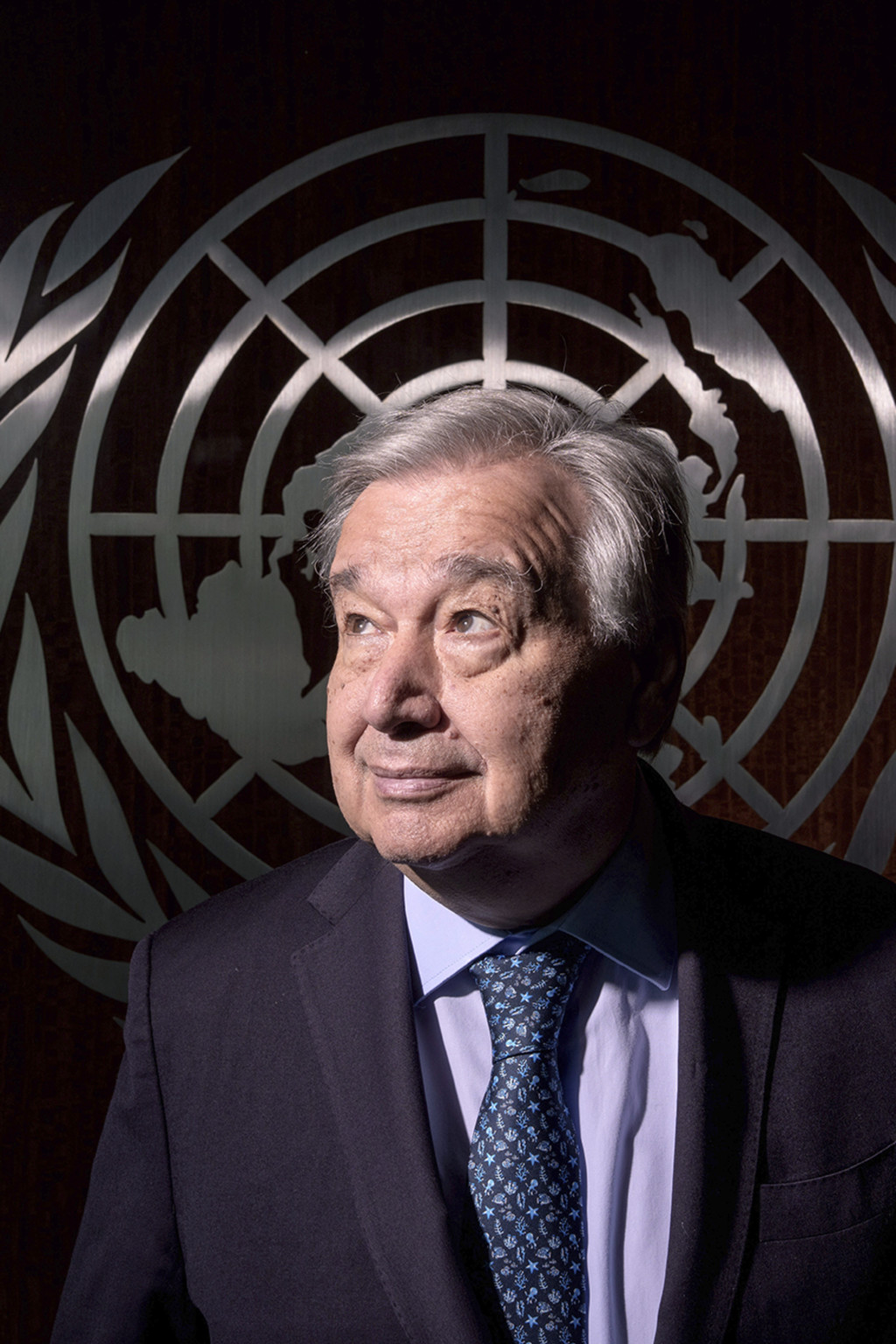
What Is the Role of the UN Secretary-General?
Updated
The United Nations’ top leadership position has broad authority to steer the organization’s agenda. Yet its impact has varied widely since 1946, shaped by global crises, political constraints, and personal diplomacy.
- The UN secretary-general, appointed by the General Assembly’s 193 member states, serves as the chief administrative officer and de facto head of the United Nations.
- Common responsibilities include preparing the organization’s budget, overseeing peacekeeping missions, mediating conflict, and coordinating UN responses to global emergencies.
- Secretary-General António Guterres, who has focused on addressing climate change, inequality, and UN reform during his tenure, will step down in December 2026. His successor will take office in January 2027.
What are backgrounders?
Authoritative, accessible, and regularly updated Backgrounders on hundreds of foreign policy topics.
Who Makes them?
The entire CFR editorial team, with regular reviews by fellows and subject matter experts.
Introduction
The United Nations’ first secretary-general, Trygve Lie (1946–1952), called it the most difficult job in the world. Some of the difficulty lies in the job description. Though U.S. President Franklin D. Roosevelt, several years before the United Nations’ creation in 1945, saw the secretary-general’s role as that of a “world moderator,” the UN Charter formally defines the secretary-general as the body’s “chief administrative officer.” Each of the nine secretaries to date has tended to favor one of these two approaches to the role.
The current secretary-general, former Portuguese Prime Minister António Guterres (2017–2026), has spent his two terms focused on advancing sustainable development, promoting peace and human rights, addressing global inequalities, and reforming the UN system. These ambitions have been balanced against a staggering range of crises, including worsening climate change, the COVID-19 pandemic, and wars in the Gaza Strip, Iran, Ukraine, and elsewhere.
While all secretaries-general have confronted varying challenges, what appears constant is the ambiguous nature of the position itself—a role bifurcated between the tasks of “secretary” and “general,” often leaning more toward the former. As Guterres prepares to leave office in December 2026, the question of who will succeed him puts the role of the secretary-general back in focus.
What is the UN secretary-general?
Beyond the role of chief administrative officer, the UN Charter leaves the secretary-general’s desired qualities, candidate selection process, and length of tenure open to interpretation. The UN website describes the role as “equal parts diplomat and advocate, civil servant and CEO.”
The secretary-general is required to uphold the values of the United Nations, even at the risk of challenging or disagreeing with member states. For example, when tensions escalated between Serbs and ethnic Albanians in Kosovo in 1999, Secretary-General Kofi Annan (1997–2006) famously said that “no government has the right to hide behind national sovereignty in order to violate human rights.” Still, in their book Secretary or General?, international law experts Simon Chesterman and Thomas M. Franck wrote that the officeholder is sometimes treated as “an errand boy and punching bag,” expected to be both an independent political force and a public servant.
Despite the broad requirements of the job, some informal norms are observed in appointments for the post. Secretaries-general usually come from countries considered to be small- or medium-sized neutral powers. To date, all appointees have been male career diplomats, and since 1961, all have served two five-year terms, with the exception of Boutros Boutros-Ghali (1992–1996). Although no Eastern European has held the seat yet, regional rotation is observed. The five permanent members of the Security Council—the United States, China, France, Russia, and the United Kingdom, known as the P5—traditionally avoid nominating their own nationals to the post.
Does the secretary-general play a political role?
Yes. According to Article 99 of the UN Charter, the secretary-general “may bring to the attention of the Security Council any matter which in his opinion may threaten the maintenance of international peace and security.” This provision allows the secretary-general to choose between playing an activist role—in the tradition of Dag Hammarskjöld (1953–1961), who died in a plane crash while flying to ceasefire negotiations in Northern Rhodesia (now Zambia)—or more of a bureaucratic role, as Kurt Waldheim (1972–1981) did.
Annan was considered an activist secretary-general and won a Nobel Peace Prize, but he faced much criticism during his tenure, including for his management of the Oil-for-Food program in Iraq. His successor, Ban Ki-moon (2007–2016), was seen as more of an administrator; he successfully pushed forward the 2015 Paris Agreement on climate change and increased the number of women in UN senior management. However, he too faced criticism, including for his handling of the 2010 cholera epidemic in Haiti.
Guterres, who won a second term in 2021, has adopted an outspoken role on issues including climate change—describing it as “collective suicide” and calling out governments and companies for “adding fuel to the flames”—artificial intelligence (AI), and the layout of global governance. At the same time, some critics have argued that Guterres’s preference for quiet diplomacy has limited his willingness to publicly condemn human rights abuses, especially those by powerful countries like the United States, China, Israel, and Russia.
What are the main responsibilities of the secretary-general?
Administrative. The secretary-general oversees the UN Secretariat, the United Nations’ executive office, and its operations, which include research, translation, media relations, and preparation and proposal of the regular budget. The Secretariat has a staff of more than thirty-one thousand, and each secretary-general has handled his administrative responsibilities differently.
Hammarskjöld established a system of offices in charge of legal, political, personnel, and budgetary aspects of the secretariat, while Boutros-Ghali added undersecretaries-general to oversee operations. During Annan’s administration, the deputy secretary-general position was created to handle day-to-day tasks and operations. Under Guterres, the protocol for delegating authority in the Secretariat was revised and two new management departments were created.
Human Resources. The secretary-general appoints undersecretaries to dozens of UN posts, including roles within the executive office and the heads of agencies such as the UN Children’s Fund and the UN Development Program—though these appointments are often made in consultation with member states or executive boards. Member states often lobby to fill these posts with their nationals, highlighting the secretary-general’s role in ensuring broad regional representation in UN leadership.
Peacekeeping. The secretary-general’s office oversees peacekeeping missions and appoints the undersecretary in charge of that department, which manages approximately a dozen operations worldwide. While the Security Council initiates and establishes peacekeeping missions—with the General Assembly stepping in when the council is deadlocked—operational control rests with the Secretariat.
Guterres has introduced several reforms to the UN peace and security framework, including his Action for Peacekeeping initiative in 2018. This effort aims to strengthen peacekeeping operations by implementing reforms across eight major areas, including increasing gender parity among peacekeepers, improving coordination with local governments, and strengthening accountability for misconduct.
Mediation. As part of the “good offices” responsibility of the position, the secretary-general practices independence and impartiality to prevent, contain, or resolve conflict. Examples of UN leaders taking on mediation roles in the past include Hammarskjöld’s promotion of an armistice between Israel and Arab states and efforts by Javier Pérez de Cuéllar (1982–1991) to negotiate a ceasefire to end the Iran-Iraq War.
The secretary-general also appoints envoys and representatives charged with leading mediation efforts and brokering peace deals. However, because these envoys report to the Security Council, their appointments can often be influenced by the preferences of the council’s members. In 2017, for example, the United States blocked Guterres’s appointment of former Palestinian Prime Minister Salam Fayyad as special envoy to Libya. The intervention raised the question of whether such appointments are subject to approval by the Security Council, as the UN Charter authorizes the secretary-general to make the decision.
How is the secretary-general appointed?
Selecting the secretary-general is a multi-step process. Candidates must first be nominated by at least one UN member state. Before a formal vote, the Security Council usually conducts straw polls—informal, anonymous polls in which members indicate whether they encourage, discourage, or have no opinion about each candidate.
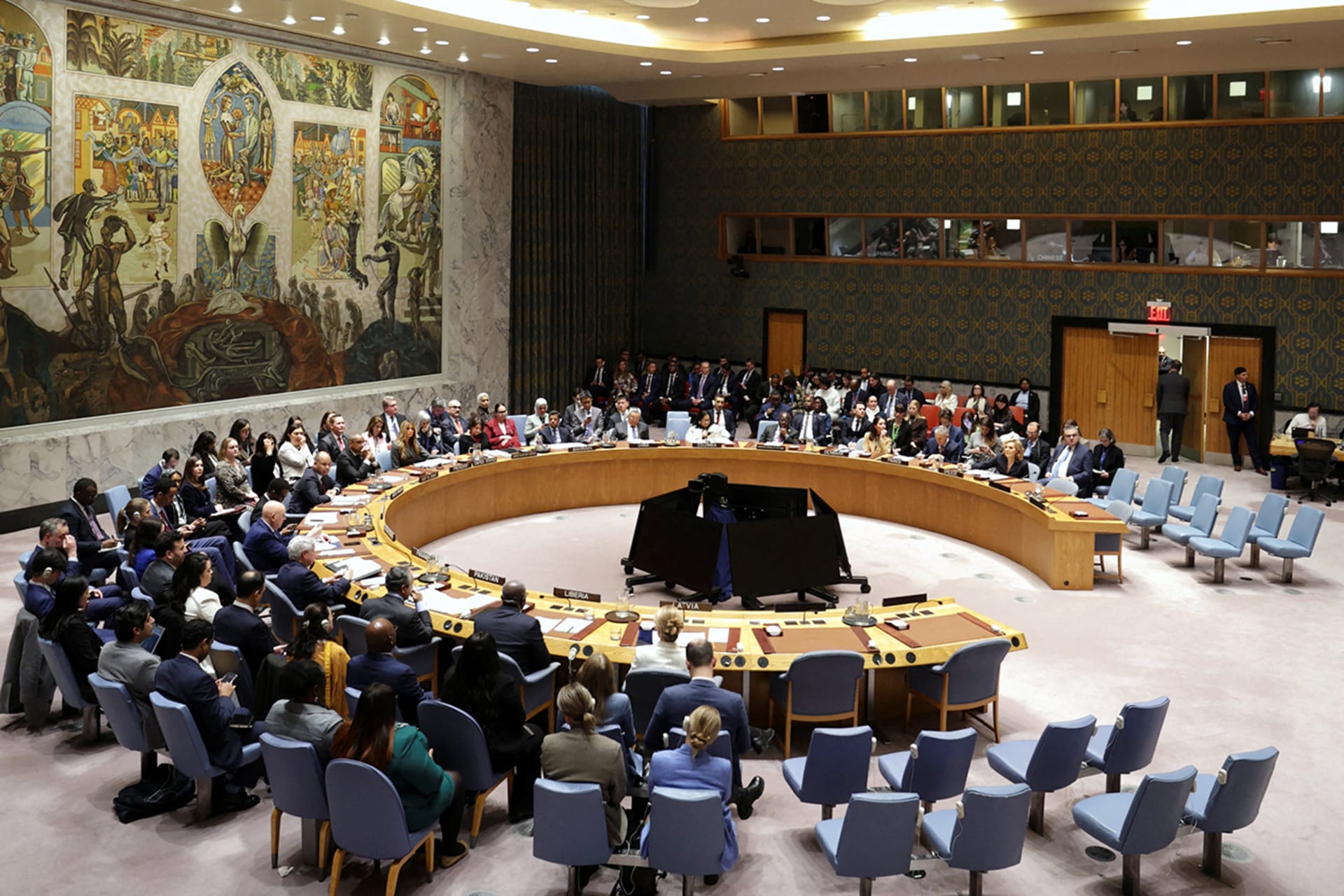
The Security Council then holds a vote. Although all UN members have a voice in the selection, the five permanent members of the Security Council hold the most influence because any one of them can veto a nominee. For example, China vetoed a third term for the fourth secretary-general, Austria’s Waldheim, while the United States vetoed a second term for the sixth, Egypt’s Boutros-Ghali. Candidates need at least nine votes from the fifteen-member council, without a veto from any P5 member, to be recommended to the General Assembly. This means that the body’s ten elected members still hold crucial power despite lacking veto authority.
However, some critics argue that the appointment process lacks transparency and falls prey to cronyism because of permanent members’ veto power and the Security Council’s private meetings to discuss candidates. The selection of Guterres in 2016 was more open than any previous election, with a televised town hall meeting and informal dialogues between the candidates and the General Assembly.
The 2026 secretary-general election will be especially significant because it occurs amid growing calls for a woman to be chosen. While gender isn’t a formal selection criterion, all previous secretaries-general have been men. Many experts also believe that it’s time for Latin America and the Caribbean to assume the role under the tradition of regional rotation; only one person from Latin America, Pérez de Cuéllar, has previously held it.
What is the secretary-general’s relationship with the Security Council?
The secretary-general is tasked with upholding the interests of underrepresented states and balancing the demands of the Security Council with those of General Assembly members. The relationship between the Security Council’s five permanent members and the secretary-general is similar to one between constituents and their elected representatives.
Critics say the structure of this relationship has made the secretary-general beholden to Security Council members, particularly the United States, which has historically been the United Nations’ largest funder and hosts its headquarters. “No secretary-general can afford to alienate the United States if they want to have success in the job,” said UN expert Stephen Schlesinger.
Proponents of UN reform often criticize the Security Council’s veto powers for obstructing efforts to respond to humanitarian calamities and violations of international law. “When the P5 agree, the Security Council possesses almost unlimited potential authority,” Richard Falk and Hans von Sponeck wrote in their book, Liberating the United Nations. But when they disagree, the council “is generally paralyzed.”
For example, Russia’s veto power prevented the United Nations from taking action against Moscow’s invasion of Ukraine in 2022. “What the crisis has revealed are the inherent limitations of any structure of international peace that depends on great power unanimity,” wrote former CFR Senior Fellow Stewart M. Patrick. Meanwhile, the United States has often used its veto power to protect Israel from Security Council decisions related to the Israeli-Palestinian conflict.
The secretary-general often struggles to balance the interests of other large funders and powerful member states. Threatened with the substantial defunding of certain humanitarian operations in 2016, Ban acquiesced to Saudi Arabia’s demand to remove a Saudi-led coalition in Yemen from a list of groups that had exploited children. Similarly, despite repeatedly calling on the Security Council to intervene in Syria’s civil war, Ban was unable to reconcile council members’ divergent concerns, resulting in their failure to adopt a unified multilateral response. He later stated that “the Syrian tragedy shames us all.”
What is likely to be the future focus of the secretary-general?
The secretary-general is likely to continue focusing on the world’s most pressing issues, including climate change, global health crises, emerging technologies such as AI, and the increasing number of global conflicts.
However, great power competition among powerful member states is increasingly undercutting the secretary-general’s ability to facilitate international peace and security. “As the scope of great power competition extends to new regions and issue areas, the secretary-general will inevitably find it more difficult to engineer workable Security Council majorities to back his conflict mitigation and resolution efforts,” Patrick said.
The secretary-general will also have to navigate competing demands from major powers—notably the United States, China, and Russia—while preserving the United Nations’ institutional independence. Meanwhile, experts warn that growing economic strain, exacerbated by deep funding cuts made by the second Trump administration, will likely limit the secretary-general and the broader United Nations’ ability to carry out its mandates.
The selection of Guterres’s successor will shape the future of the office. Candidates running for the position have emphasized priorities such as restoring global trust in the United Nations, reforming the Security Council, and improving its effectiveness at addressing major global challenges. Still, experts agree the next secretary-general will inherit many of the same obstacles Guterres faced.
Recommended Resources
These Backgrounders explain the role of the UN General Assembly and the UN Security Council.
For Time magazine, the International Crisis Group’s Daniel Forti and Richard Gowan unpack the challenges facing the next UN secretary-general.
This timeline explores major moments in UN history.
For the Center for International Relations and Sustainable Development, the International Crisis Group’s Richard Gowan lays out the seven parts the secretary-general must play.
The United Nations profiles Guterres’s journey to becoming secretary-general.
Colophon
Staff Writers
- CFR Editors
Additional Reporting
Diana Roy, Ellora-Onion De, Lindsay Maizland, Melissa Manno, and Chelsea Padilla contributed to this Backgrounder. Will Merrow created the graphic. Header image by Adam Gray/Associated Press.
 Backgrounder
 Backgrounder
 Backgrounder
 Backgrounder